Creamy Tuscan Orzo Recipe
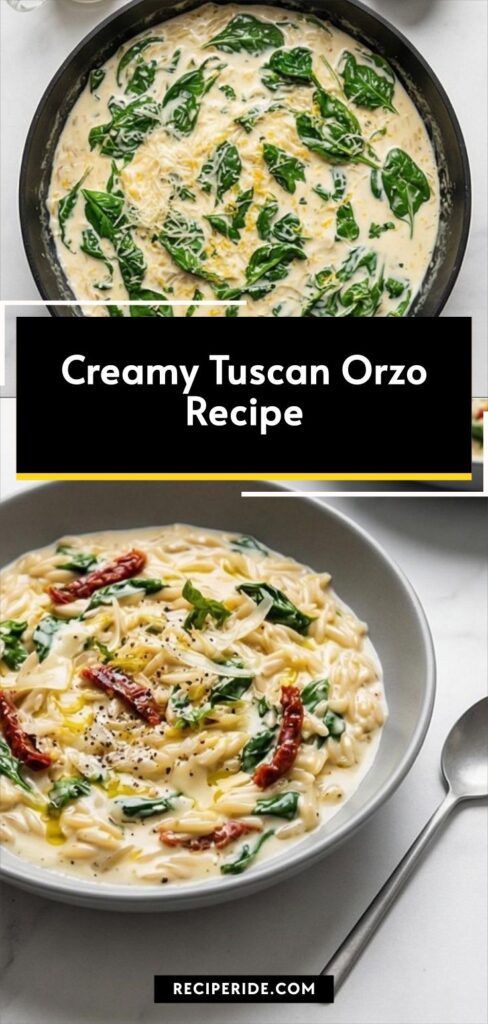
Make Creamy Tuscan Orzo Recipe: silky orzo with sun-dried tomatoes, spinach, and Parmesan ready in 35 minutes.
Ingredients
- 2 tablespoons extra-virgin olive oil
- 1 tablespoon unsalted butter
- 1 small yellow onion (about 1 cup / 140 g), finely diced
- 3 cloves garlic (about 1 tablespoon / 9 g), minced
- 1/2 teaspoon crushed red pepper flakes, optional
- 1 1/4 cups dry orzo pasta (about 8 ounces / 225 g)
- 1/2 cup dry white wine (120 ml), such as Pinot Grigio, at room temperature, optional
- 3 cups low-sodium chicken or vegetable broth (720 ml), warmed to a gentle simmer (185–195°F / 85–90°C)
- 1/2 cup additional warm broth or hot water (120 ml), as needed to adjust consistency
- 1 teaspoon fine sea salt, plus more to taste
- 1/2 teaspoon freshly ground black pepper, plus more to taste
- 1 teaspoon dried Italian seasoning (or a mix of dried basil and dried oregano)
- 1/2 teaspoon smoked paprika, optional
- 1/2 cup oil-packed sun-dried tomatoes, drained and finely sliced (about 70 g)
- 1 cup heavy cream (240 ml), at room temperature
- 3/4 cup freshly grated Parmesan cheese (about 2 1/2 ounces / 70 g), plus more for serving
- 2 cups loosely packed baby spinach (about 2 ounces / 60 g)
- 1 teaspoon finely grated lemon zest (from about 1/2 medium lemon)
- 1 tablespoon freshly squeezed lemon juice (about 15 ml)
- 2 tablespoons chopped fresh basil or flat-leaf parsley, plus more for garnish
- 1 tablespoon extra-virgin olive oil, for finishing, optional
- Flaky sea salt, to finish, optional
- Freshly ground black pepper, to finish
Instructions
Step 1: Warm the broth and gather mise-en-place
Place a small covered saucepan of broth on low heat and keep it just below a gentle simmer; this stored heat is how you'll coax the orzo to a silky finish later. As the broth warms, quickly prep: finely dice the yellow onion, mince the garlic, drain and thinly slice the oil-packed sun-dried tomatoes, grate the Parmesan, and zest the lemon. Tuck the cream and wine (if using) at room temperature nearby in small glass vessels so everything moves smoothly when you start cooking.
Step 2: Soften the onion and bloom the garlic
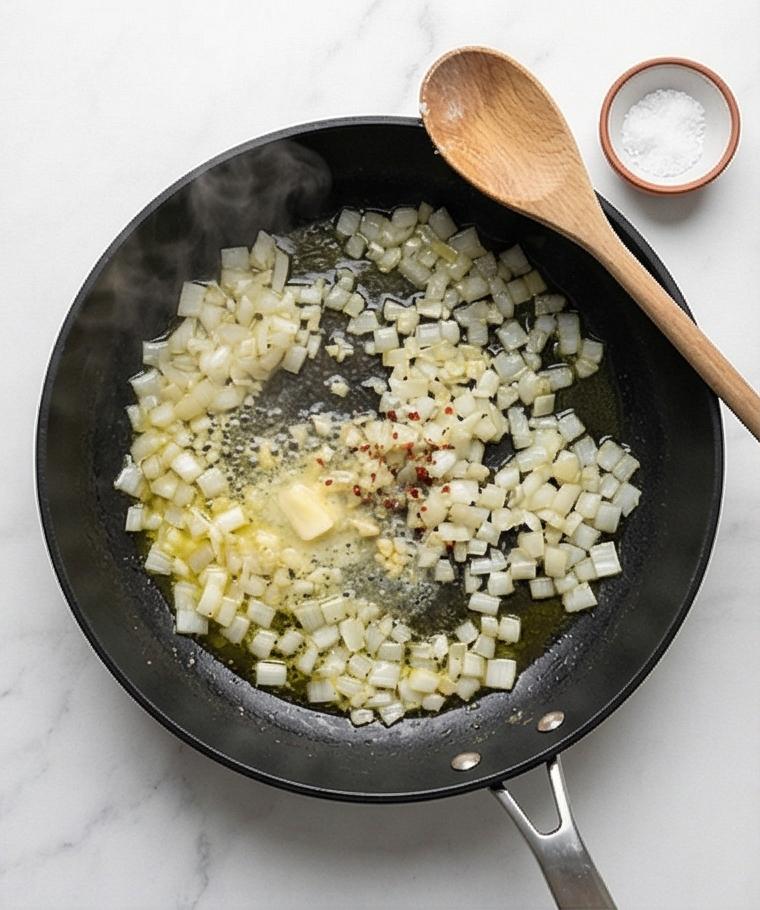
Heat the skillet with olive oil and a knob of butter until the fat is shimmering, then add the diced onion with a small pinch of salt. Sauté gently until the onion is soft and translucent, then add the minced garlic with a whisper of crushed red pepper and cook only until fragrant. The visual milestone here is glossy, translucent onion ribbons and tiny pale garlic flecks just warmed through—soft, slightly slick, and never browned.
Step 3: Toast the orzo and deglaze
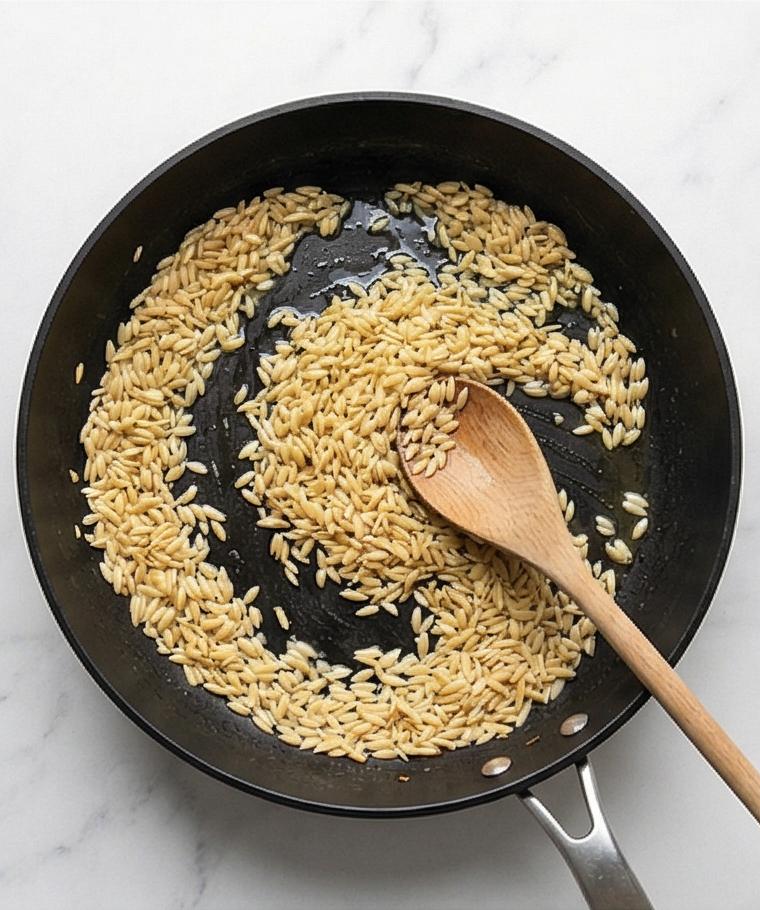
Tip the dry orzo into the warmed fat and stir constantly so each tiny grain becomes coated and picks up a faint, nutty toasting—look for very light golden edges on some pieces. If you’re using white wine, pour it in now so it sizzles and evaporates, concentrating the toasty aroma; the pan should look nearly dry and the orzo should glint with fat. This stage reads as dry-to-just-moist, fragrant, with separated glossy grains.
Step 4: Add hot broth and simmer to just al dente
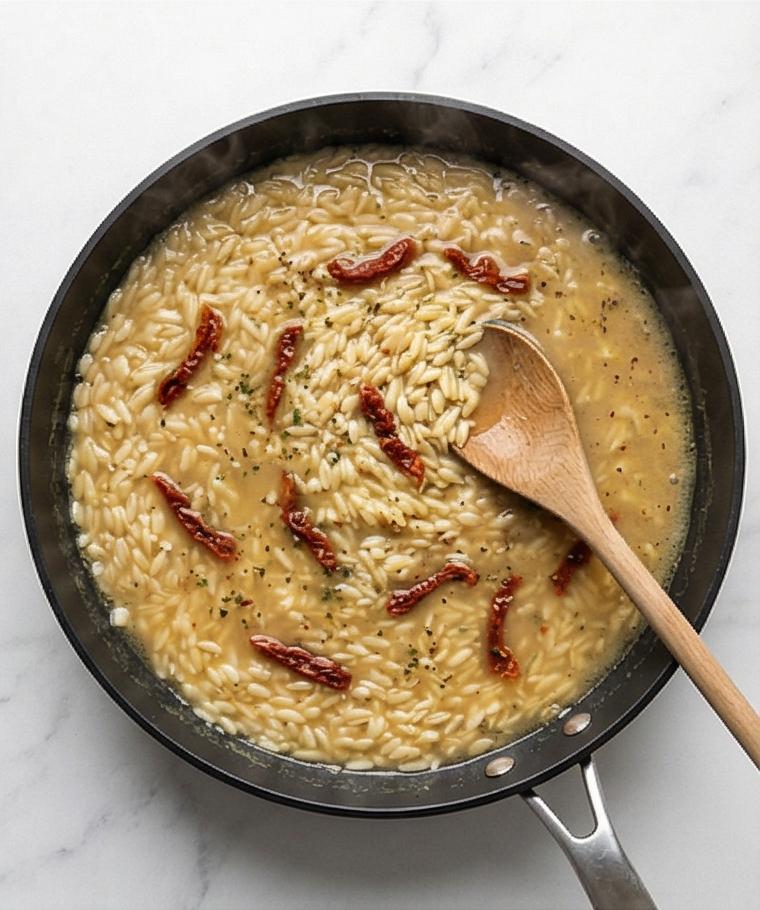
Ladle most of the hot broth into the pan, stir in the salt, pepper, Italian seasoning and smoked paprika if using, and bring to a gentle simmer. Maintain a low steady simmer and stir every minute or two as the orzo absorbs liquid. The goal is a loose, risotto-like texture with the grains plump but with a slight bite and the surface looking saucy rather than claggy—an even, al dente creaminess rather than dry pasta.
Step 5: Fold in sun-dried tomatoes and adjust consistency
Stir in the thinly sliced sun-dried tomatoes and, if the mixture feels too thick, add a splash of the reserved hot broth so the orzo remains glossy and slightly saucy. Simmer just until the tomatoes soften and integrate, leaving visible ribbons of deep red amid the pale golden grains; this is a tactile, juicy contrast—tender, chewy tomato pieces suspended in a loose, creamy matrix.
Step 6: Enrich with cream and gently thicken
Lower the heat and slowly stir in the room-temperature heavy cream, keeping the pan below a bare simmer so the cream heats through and the sauce begins to thicken. The visual change is immediate: the surface becomes silkier, the orzo acquires a creamy veil and a reflective sheen. Keep everything gentle so the cream remains emulsified and satiny rather than split.
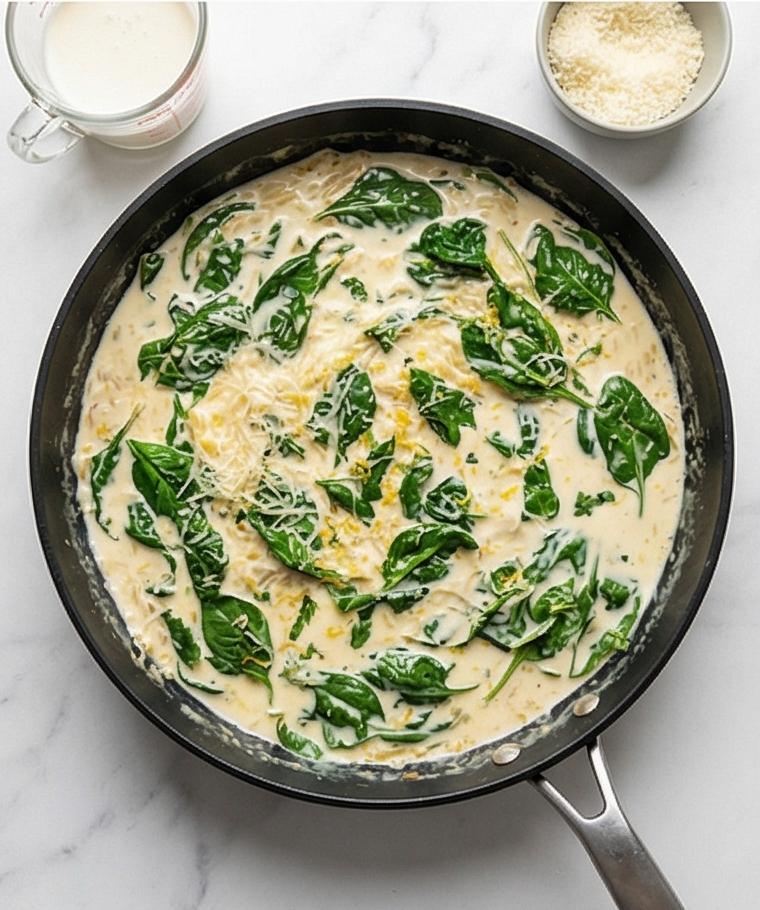
Step 7: Finish with Parmesan, spinach, lemon and herbs
Turn off the heat and add the grated Parmesan in batches, stirring until it melts into the grain, producing a glossy, cohesive sauce. Fold in the baby spinach just until wilted but still vivid green, then stir in lemon zest, lemon juice and chopped basil or parsley, finishing with a drizzle of extra-virgin olive oil if desired. The mixture should be spoonable and luminous—cheesy ribbons, bright herb flecks, and glossy green pockets of spinach.
Step 8: Rest briefly and serve warm
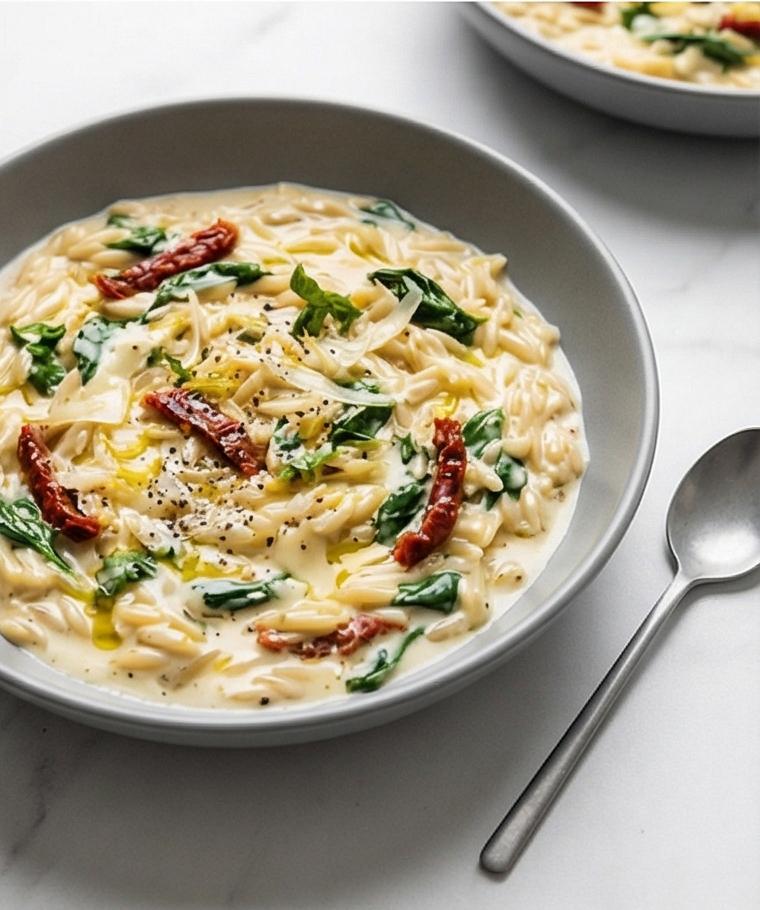
Let the orzo rest off the heat for a couple of minutes so it settles to a silky, spoonable consistency; loosen with a splash of hot broth if it tightens up. Spoon into warm shallow bowls and finish with extra grated Parmesan, torn basil or parsley, a sprinkle of flaky sea salt and a few fresh grinds of black pepper. Serve immediately to preserve the creamy texture and the contrast of glossy sauce, tender grains, sun-dried tomato specks, and bright herb highlights.
Notes
- Keep broth warm so the orzo cooks evenly and finishes silky.
- Toast the orzo briefly for a nuttier flavor and better texture.
- Bring cream and wine to room temperature before adding to prevent splitting.
- Adjust consistency with reserved hot broth rather than cold water.
- Reheat gently with a splash of warm broth to restore creaminess.