Feta Stuffed Flatbread Recipe

Make Feta Stuffed Flatbread Recipe: warm, herb-flecked flatbreads filled with creamy feta—perfect for sharing.
Ingredients
- 2 1/4 cups (280 g) all-purpose flour
- 1 teaspoon (5 g) fine sea salt
- 1 teaspoon (4 g) granulated sugar
- 1 teaspoon (3 g) instant yeast (rapid-rise yeast)
- 3/4 cup (180 ml) warm water, 105–110°F (40–43°C)
- 3 tablespoons (45 g) plain full-fat Greek yogurt, at room temperature
- 2 tablespoons (28 g) extra-virgin olive oil, plus more for greasing the bowl and cooking
- 7 ounces (200 g) feta cheese, preferably in brine, drained and crumbled, at room temperature
- 1/4 cup (60 g) whole-milk ricotta cheese or plain full-fat Greek yogurt, at room temperature
- 2 tablespoons (8 g) finely chopped fresh flat-leaf parsley
- 1 tablespoon (4 g) finely chopped fresh dill or fresh mint
- 1 small garlic clove (about 3 g), finely minced (optional)
- 1/4 teaspoon (1 g) freshly ground black pepper
- 1–2 tablespoons (15–30 ml) whole milk, at room temperature, as needed to loosen the filling
- 1 tablespoon (15 g) unsalted butter, melted, warm (for brushing cooked flatbreads)
- 1 tablespoon (15 ml) extra-virgin olive oil (for brushing cooked flatbreads)
- 1 tablespoon (4 g) finely chopped fresh herbs (parsley, dill, or mint), for garnish
- 1/4 teaspoon (1 g) flaky sea salt or coarse sea salt, for garnish
- 1/4 teaspoon (0.5 g) red pepper flakes, for garnish (optional)
Instructions
Step 1: Make and proof the dough
In a large matte-grey ceramic mixing bowl set on the Carrara marble, whisk the dry flour, salt and sugar briefly, then combine the warm water and instant yeast, stir in the room-temperature Greek yogurt and olive oil, and add the flour until a shaggy mass forms. Turn the shaggy dough onto the floured surface and knead by hand until it becomes smooth, elastic and only slightly tacky — soft, with a satiny surface and faint stretch marks where the gluten has developed. Lightly oil the same mixing bowl, place the dough inside, turn it once so the bowl shows a thin film of oil, cover and leave in a warm spot until the ball has visibly doubled and the surface is domed and slightly dimpled when poked. The bowl should read as a pillowy, taut dome with a soft sheen of oil on the sides, tiny flour dusting at the rim, and a clear difference between the earlier shaggy mass and this smooth, taut risen dough.

Step 2: Prepare the feta–ricotta filling
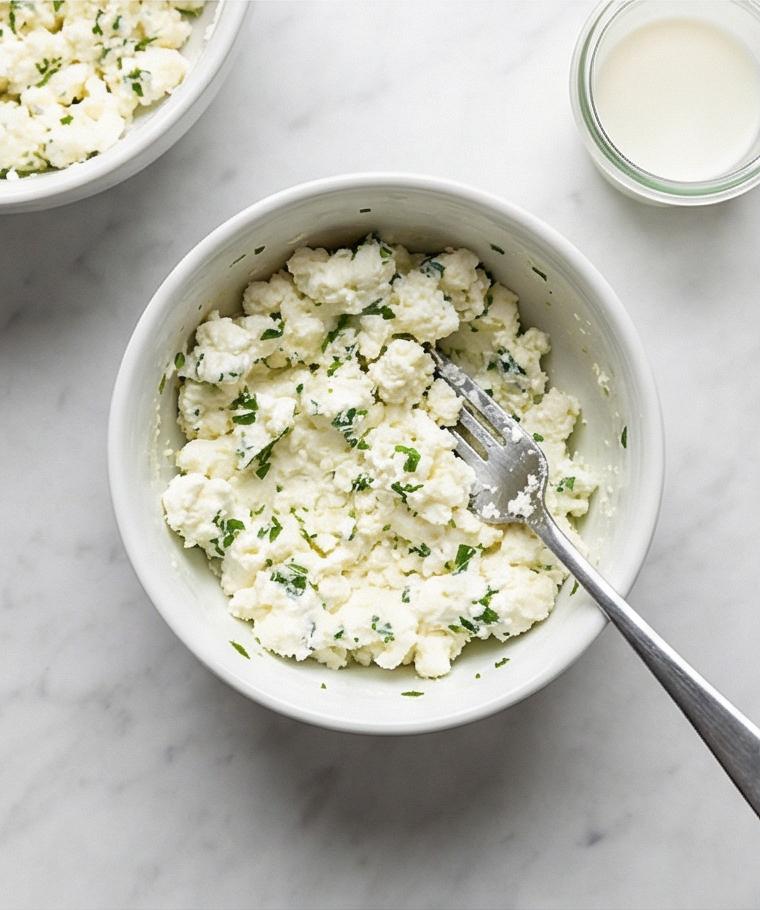
In a smaller matching white ceramic bowl on the same marble, crumble the brined feta and gently mash it with a fork until large chunks break down to coarse granules. Fold in the whole-milk ricotta (or yogurt), finely chopped parsley and dill (or mint), a whisper of minced garlic if using, and freshly ground black pepper. The result should read as a creamy, slightly chunky spread — white and ivory curds with flecks of bright green herbs, a faint sheen from the dairy, and a fork resting in the bowl dusted with a few crumbs. If the mixture feels tight, add a teaspoon of milk at a time until it spreads but holds texture; keep the bowl uncovered at room temperature so it reads soft and immediately spreadable.
Step 3: Divide, rest, and shape into filled pouches
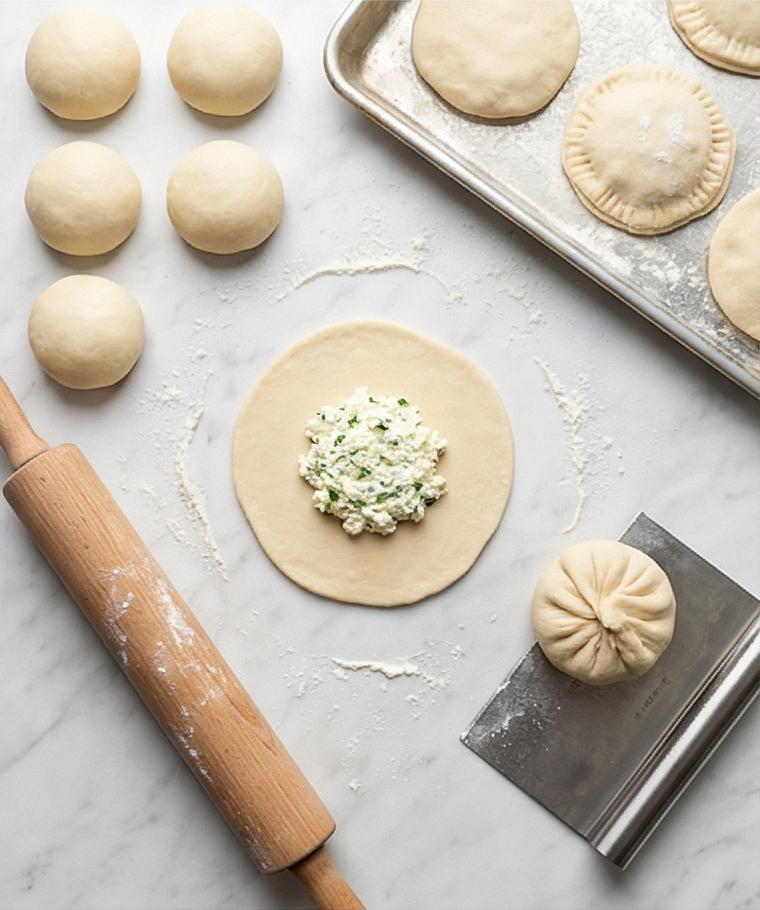
Turn the risen dough onto a lightly floured patch of marble, gently deflate and form a smooth ball, then use a bench scraper to divide it into eight equal pieces. Shape each piece into a tight ball by tucking seams under and rolling under your palm; place the balls on the marble, cover loosely, and let them relax so the surface smooths out and the dough is easy to roll. Working one at a time, roll a dough ball into a 5–6" thin circle (dusty underside with flour), spoon about two heaping tablespoons of the feta filling into the center, leave a narrow border, then pleat and pinch the edges together into a sealed pouch. Turn each pouch seam-side down, gently press into a thick disk and let it rest briefly until relaxed and smooth. These sealed pouches should read as compact, slightly lumpy pillows with distinct pleated seams, a dusting of flour at the edges, and a rolling pin and bench scraper nearby as the active tools.
Step 4: Roll thin and finish the flatbreads
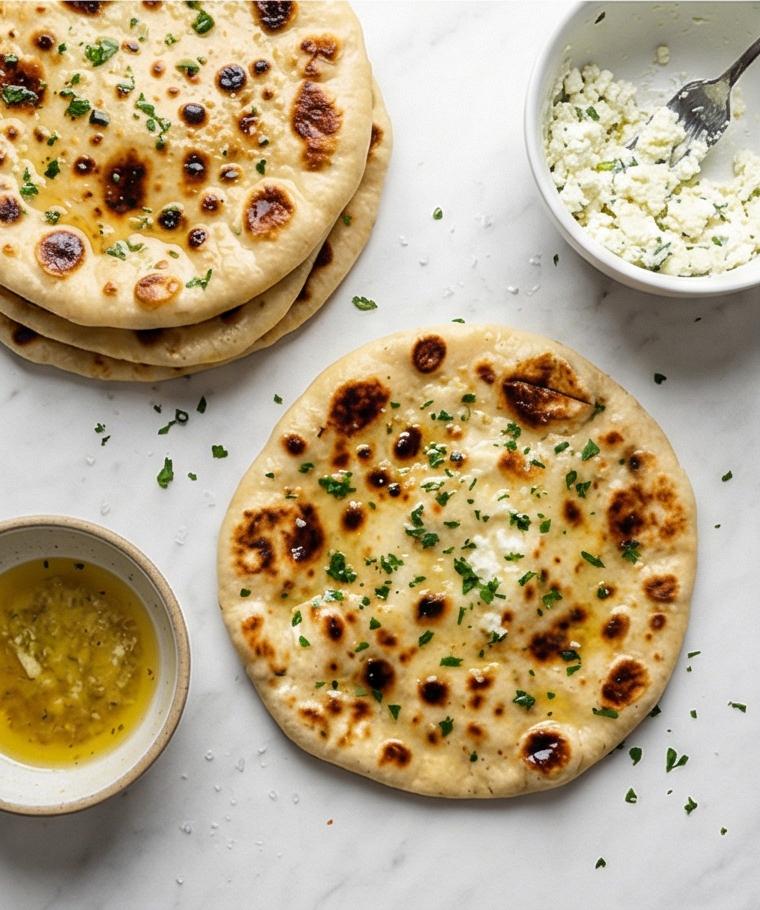
On the floured marble, carefully roll each filled disk into a 6–7" thin flatbread, turning frequently so the filling spreads without tearing — minor pinches reseal any tiny tears. Arrange the rolled, filled flatbreads on a lightly floured tray, covered with a towel to stay supple. After cooking (see note below), transfer the warm breads back to the marble: each one should present with puffed blisters and deep golden-brown spots, an amber-to-gold mosaic across a thin, pliable surface. In a small ceramic bowl whisk together warm melted butter and olive oil and, as each bread comes off heat, brush lightly to create a soft glossy sheen; finish directly on the marble by sprinkling finely chopped herbs, flaky sea salt and optional red pepper flakes so the surface reads glossy, herb-flecked and slightly crinkled at the edges.
Step 5: Plate and serve the finished feta stuffed flatbreads
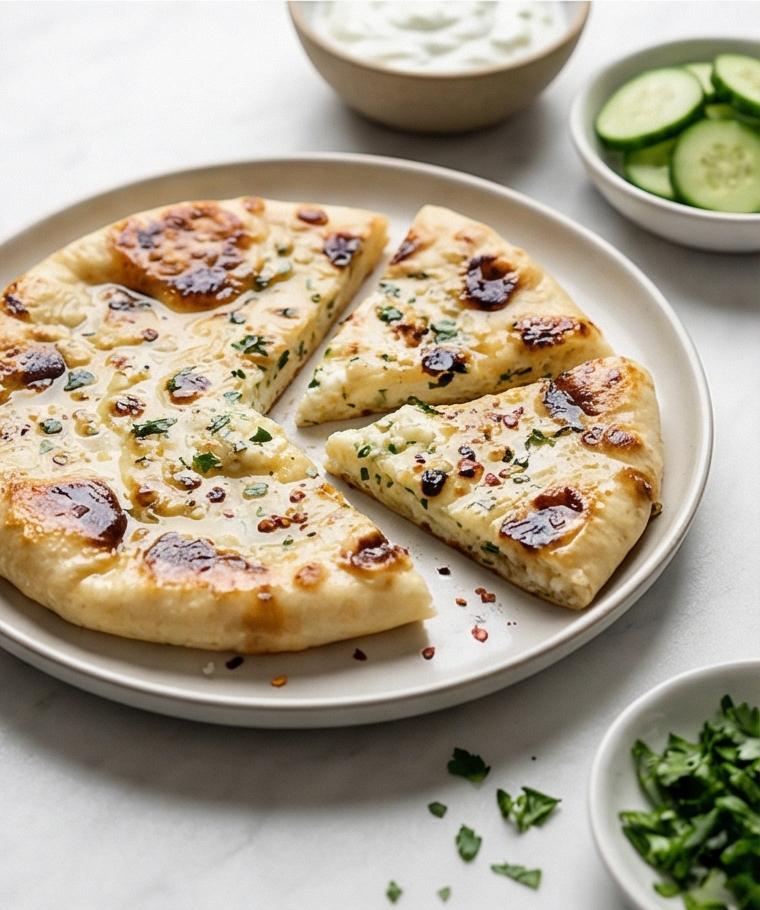
Arrange the warm flatbreads on a low, shallow matte ceramic serving plate on the same Carrara marble — one whole and one cut into wedges so the pillowy interior and melted pockets of feta are visible. Accompany them with small matching bowls of plain yogurt or tzatziki, sliced cucumbers, olives and wedges of tomato; scatter a little extra chopped herb and flaky salt across the bread. The final composition should be intimate and tactile: crispy-golden spots, tender layered interior with creamy white filling and green herb specks, a glossy butter–olive film, and tiny flakes of sea salt catching the light.
Notes
- Drain the feta well to prevent soggy filling.
- If dough is sticky, dust with a little flour but avoid adding too much to keep breads tender.
- Keep cooked flatbreads warm in a low oven if serving to a crowd.