Elote (mexican Street Corn) Recipe

Make Elote (mexican Street Corn) Recipe: char corn, slather with cotija-crema, and serve with lime for a smoky, tangy snack.
Ingredients
- 4 medium ears fresh corn on the cob (about 1.75–2 lb / 800–900 g total), husks and silk removed
- 1 tablespoon neutral oil (15 ml), such as canola or vegetable oil, for brushing grill grates or corn
- 1/4 cup mayonnaise (60 g), full-fat, at room temperature
- 1/4 cup Mexican crema or sour cream (60 g), at room temperature
- 1/2 cup finely crumbled cotija cheese (about 2 oz / 60 g), plus 2 tablespoons (15 g) extra for garnish
- 1 small garlic clove (about 2 g), very finely minced or grated
- 1 tablespoon freshly squeezed lime juice (15 ml), from about 1/2 medium lime, plus more to taste
- 1/4 teaspoon fine sea salt, plus an extra pinch for seasoning the corn
- 1/4 teaspoon freshly ground black pepper
- 1/2 teaspoon chili powder (about 1 g), such as ancho or a mild chili blend, plus extra for sprinkling
- 1/8 teaspoon ground cayenne pepper (about 0.25 g), optional, for extra heat
- 2 tablespoons finely chopped fresh cilantro leaves and tender stems (about 6 g), plus 1 tablespoon extra for garnish
- 1 tablespoon unsalted butter (14 g), melted and warm (optional, for brushing on hot corn)
- 1 medium lime, cut into 8 wedges, for serving
Instructions
Step 1: Preheat the cooking surface
Warm the grill or grill pan until it’s a steady medium-high heat—about 400–450°F (205–230°C) on an outdoor grill, or hot and shimmering on a heavy grill pan on the stovetop. If you prefer the broiler alternative, slide an oven rack 6 inches below the broiler and preheat on high. Close the lid or let the broiler preheat for several minutes so the cooking surface is uniformly hot; this ensures rapid charring and caramelization rather than steaming.
Step 2: Prepare the corn for charring
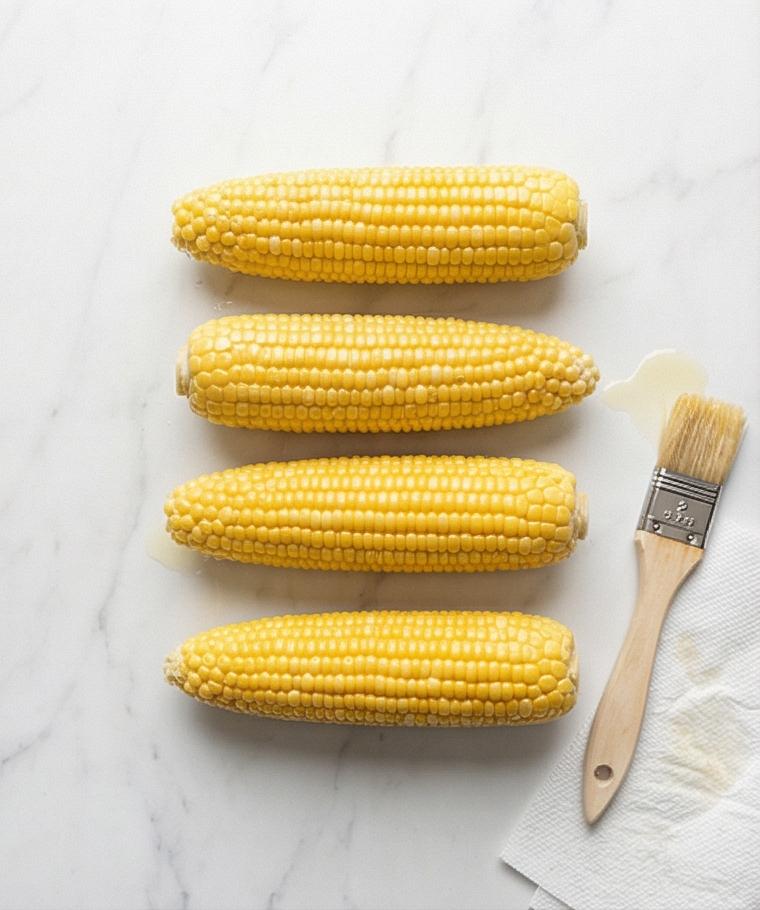
Husk and silk the ears, then pat each ear completely dry so surface moisture won’t steam the kernels. If your grates or pan tend to stick, brush each ear lightly with a thin film of neutral oil from a small glass jar—just enough to promote even browning. Lay the four ears in a neat row on the marble while you finish the sauce mise en place, with the small oil jar, a clean pastry brush, and a folded paper towel nearby for tidy handling.
Step 3: Make the creamy elote sauce base
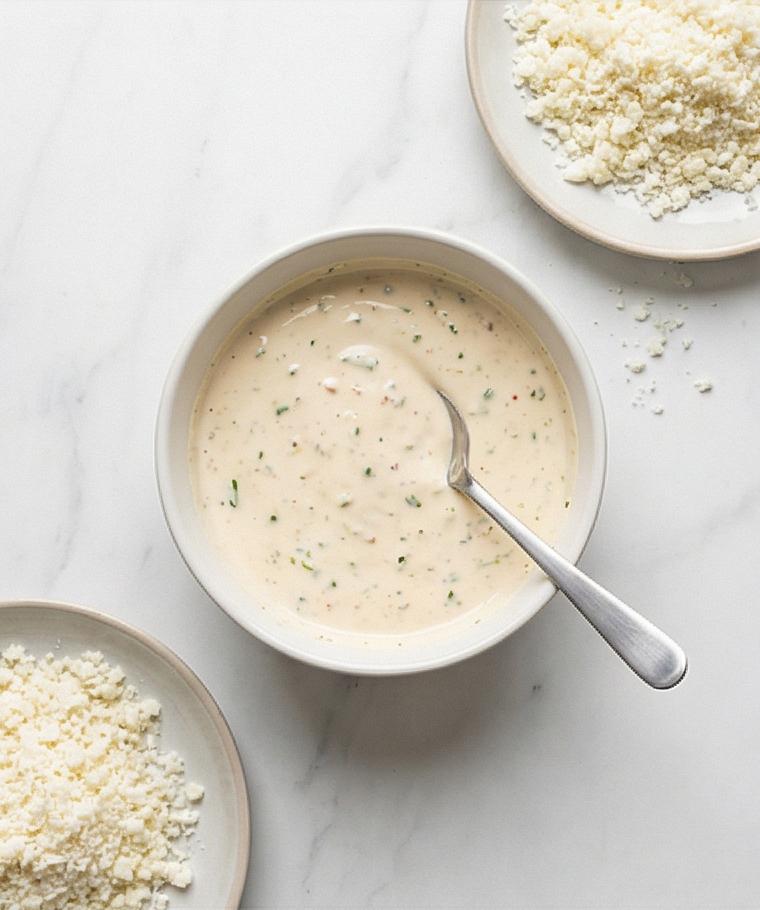
In a medium matte white ceramic bowl combine the room-temperature mayonnaise and Mexican crema (or sour cream) with the very finely minced garlic. Stir with a small stainless spoon until the mixture is homogeneous and glossy, the texture thick but spreadable. Keep the same bowl and spoon visible throughout the sauce work to maintain utensil persistence and visual continuity.
Step 4: Brighten and season the sauce
Add freshly squeezed lime juice, fine sea salt, freshly ground black pepper, chili powder, and a pinch of cayenne if using. Whisk until silky and slightly thick; the surface should hold gentle peaks and smell tangy, garlicky, and faintly smoky from the chili. Taste and tweak—another squeeze of lime or a pinch more salt will sharpen the flavors without thinning the emulsion.
Step 5: Fold in cilantro and cotija to finish the spread
Fold 2 tablespoons finely chopped cilantro and about 1/4 cup crumbled cotija into the sauce until distributed but still speckled — the cotija will add gritty, granular texture against the smooth cream. Reserve the remaining cotija in a shallow ceramic plate for coating. Arrange the sauce bowl, the cotija plate, and a small spoon or offset spatula together on the marble so they read as a single sauce station.
Step 6: Grill the corn until charred and blistered
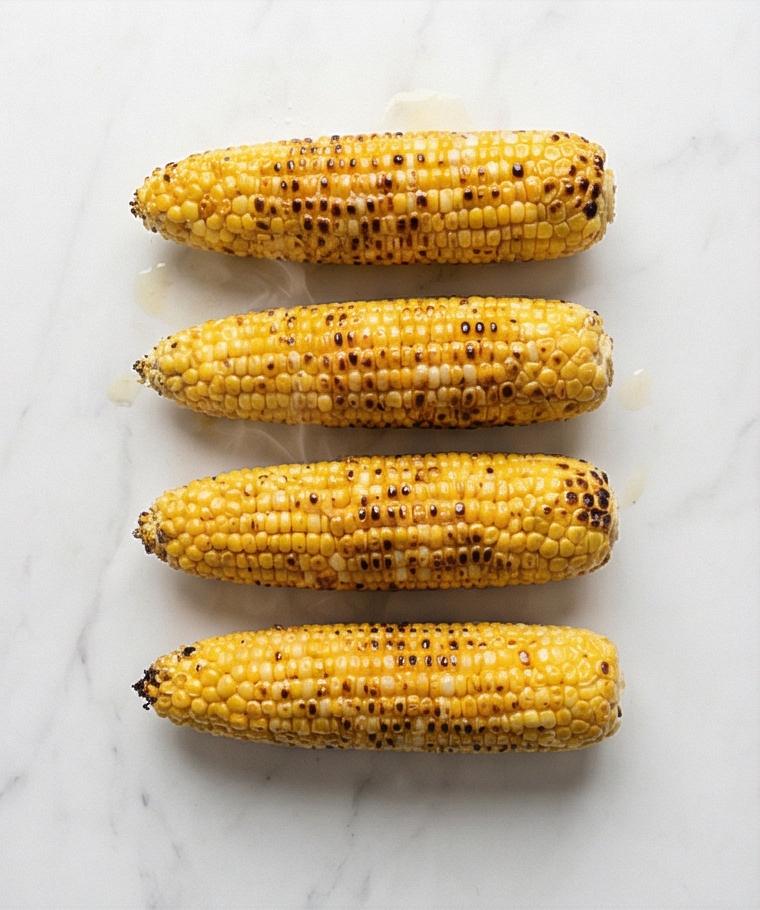
Place the oiled, dried ears on the hot grill or hot pan and turn every 2–3 minutes for 10–12 minutes total, until each side has pronounced char lines and some kernels are slightly blistered. The corn should appear glossy from the oil, with a mix of golden-yellow kernels and deep brown char freckles; remove when the ears smell toasty-sweet and the kernels are tender to a skewer.
Step 7: Season the hot ears and optionally brush with butter
Right off the grill, sprinkle a small pinch of fine sea salt over each hot ear while they’re still steaming slightly. If you like a richer finish, brush a thin coat of warm melted unsalted butter over the hot corn with the same pastry brush used earlier. Place the finished hot ears back on the marble in a single file ready for saucing.
Step 8: Coat each ear with the prepared sauce and press in cheese
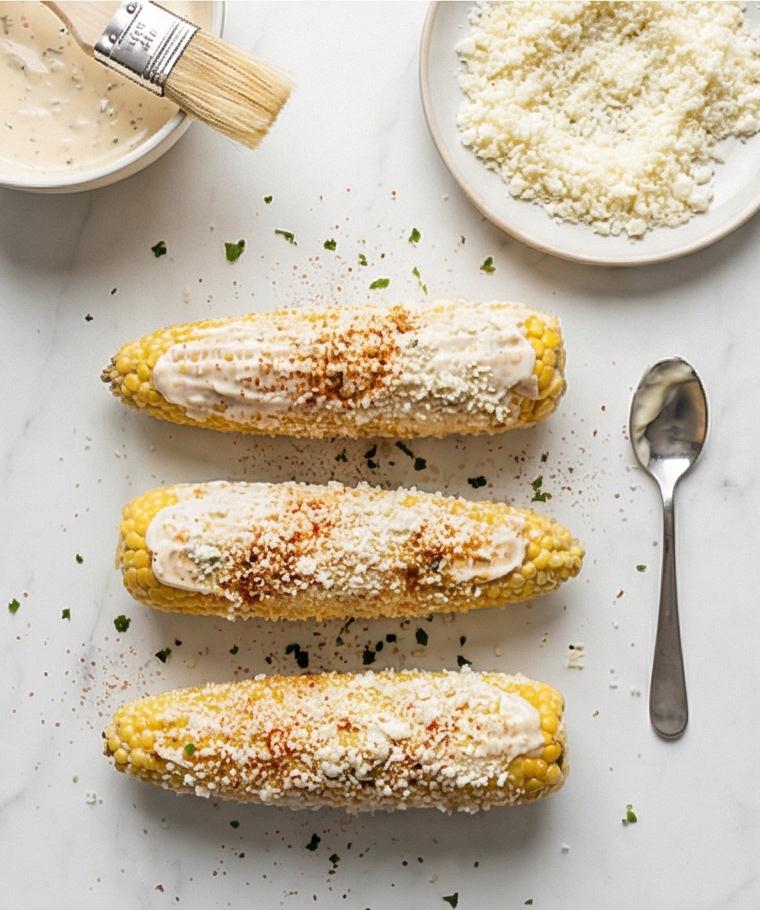
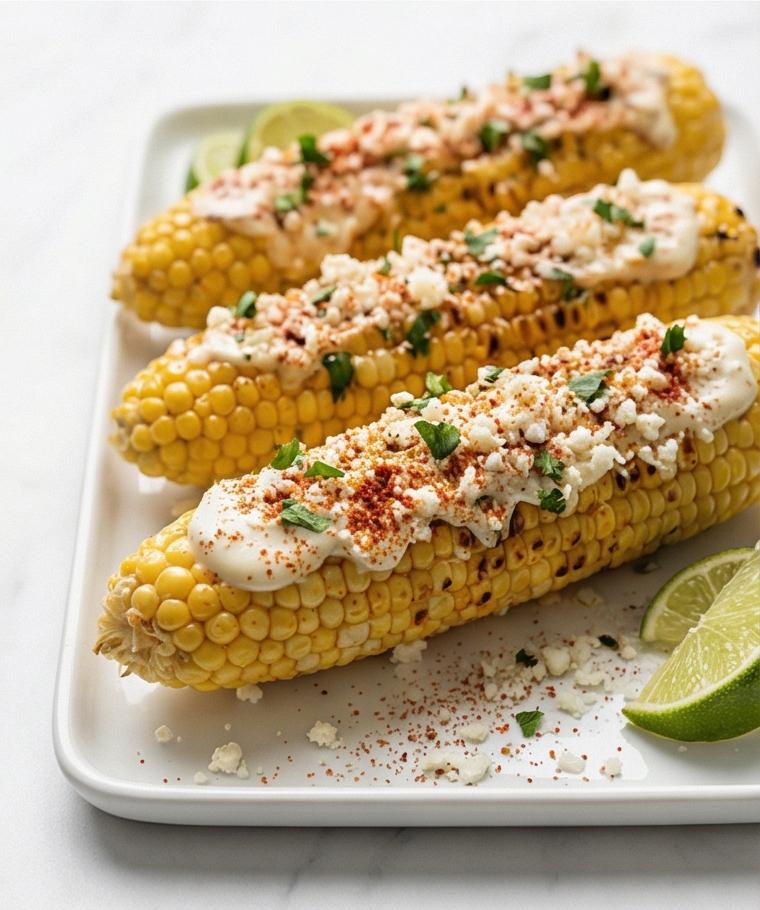
Working one hot ear at a time, use a spoon or pastry brush to spread a generous, even layer of the cotija-speckled crema all around the corn; the sauce should cling as a thin visible coat without dripping. Immediately roll or press each sauced ear in the reserved crumbled cotija on the shallow plate so the cheese adheres and creates a rough, crumbly surface. Finish with a light dusting of chili powder for color and a faint heat.
Step 9: Garnish, arrange, and serve
Transfer the coated elotes to a simple rectangular matte white ceramic platter that contrasts with the Carrara marble. Sprinkle the remaining crumbled cotija and the extra tablespoon of chopped cilantro over the ears, and tuck 8 lime wedges around them for squeezing. Serve immediately while hot—the cheese should remain distinct and the sauce should not have soaked into the kernels.
Step 10: Broiler alternative (if you don’t have a grill)
If you used the broiler, follow the same finishing sequence: salt and butter the hot ears, spread the crema mixture, roll in cotija, dust with chili, and garnish with cilantro and lime. The visual result and plating remain identical whether charred under coals or the broiler—only the source of the char differs.
Notes
- Keep crema and cotija separate from corn if storing to prevent sogginess
- Use a brush of neutral oil to prevent sticking and promote even charring
- Taste and adjust lime and salt before coating the corn
- For vegan option, swap mayo and crema for cashew cream and use smoked tofu as cotija substitute