Katsu Curry Recipe
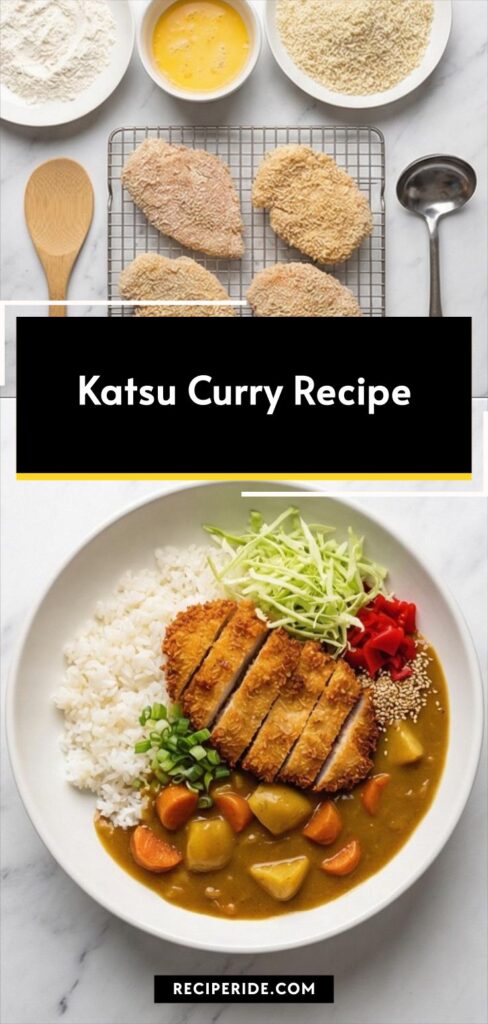
Make Katsu Curry Recipe: crispy panko chicken with silky Japanese curry and fluffy short-grain rice. Serve hot and enjoy.
Ingredients
- 1 1/2 cups (285 g) Japanese short-grain rice, rinsed until water runs mostly clear and drained well
- 1 3/4 cups (420 ml) water, for cooking the rice
- 1/4 teaspoon (1.5 g) fine salt, optional, for seasoning the rice
- 2 tablespoons (30 ml) neutral oil with a high smoke point (such as canola, vegetable, or rice bran oil), for sautéing the curry
- 2 medium yellow onions (about 300 g), thinly sliced
- 1 1/2 teaspoons (9 g) kosher salt, divided (for curry, chicken, and final seasoning)
- 3 cloves garlic (about 9 g), finely minced
- 1 tablespoon (8 g) fresh ginger, finely grated or minced
- 2 medium carrots (about 150 g), peeled and cut into 1/2-inch (1.25 cm) thick half-moons
- 2 small Yukon Gold or other waxy potatoes (about 300 g), peeled and cut into 3/4-inch (2 cm) chunks
- 2 tablespoons (28 g) unsalted butter
- 3 tablespoons (24 g) all-purpose flour, for curry roux
- 2 1/2 tablespoons (18 g) Japanese-style curry powder (or mild curry powder)
- 1 teaspoon (2 g) garam masala
- 1/4 teaspoon (0.5 g) ground turmeric, optional, for deeper color
- 3 1/2 cups (830 ml) low-sodium chicken stock or broth
- 1/2 medium apple (about 60 g), peeled and finely grated (Fuji or Gala recommended)
- 1 1/2 tablespoons (22 ml) soy sauce
- 1 1/2 tablespoons (22 ml) Worcestershire sauce
- 2 teaspoons (10 ml) honey or granulated sugar
- 1 small bay leaf
- 3/4 teaspoon (1.5 g) freshly ground black pepper, divided (for curry and chicken)
- 1/4 teaspoon (0.5 g) cayenne pepper or hot chili powder, optional, for heat
- 4 small boneless, skinless chicken breasts or thighs (about 600 g total), patted dry and trimmed of excess fat
- 1/2 cup (65 g) all-purpose flour, for dredging chicken
- 2 large eggs (about 100 g total), at room temperature
- 1 tablespoon (15 ml) milk or water, to loosen the eggs
- 2 cups (100 g) Japanese panko breadcrumbs
- 3 cups (720 ml) neutral oil with a high smoke point (such as canola, vegetable, or rice bran oil), for deep-frying the chicken
- 2 cups (140 g) finely shredded green cabbage, for serving
- 2 green onions (about 20 g), thinly sliced on the bias, for garnish
- Cooked Japanese rice from above, for serving (about 3/4 to 1 cup per person)
- 4 tablespoons (40 g) Japanese pickles such as fukujinzuke or beni shoga (pickled red ginger), for serving
- 1 teaspoon (3 g) toasted white sesame seeds, optional, for garnish
Instructions
Step 1: Rinse and Cook the Rice
Rinse the short-grain rice under cold running water, gently rubbing the grains together until the rinse water runs mostly clear, then drain thoroughly for several minutes. Combine the drained rice with water and a pinch of salt, bring to a gentle simmer, then cover and cook gently until the water is absorbed. Let the rice rest covered for at least ten minutes, then fluff with a rice paddle so the grains are glossy, slightly sticky, and perfectly plump—keep covered and warm while you move on to the curry.
Step 2: Soften the Onions and Add Aromatics
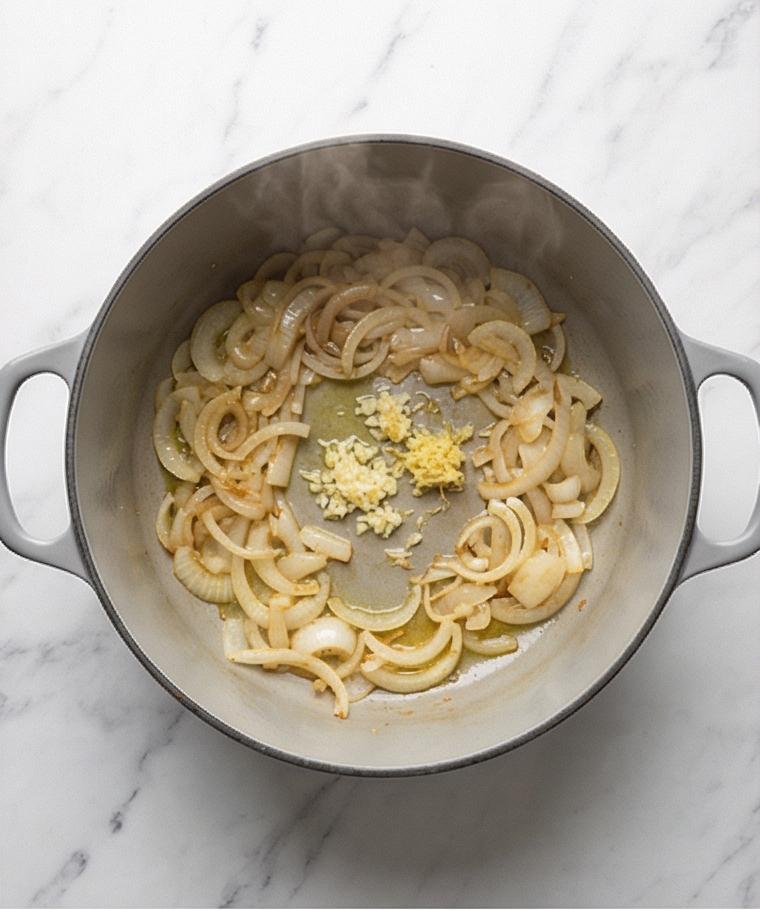
Heat neutral oil until shimmering and add thinly sliced yellow onions with a generous pinch of kosher salt; cook slowly until they become satin-soft, translucent, and just beginning to turn golden at the edges. Stir in minced garlic and grated ginger and cook only until fragrant, about a minute—this stage smells bright, oily, and sweetly savory, the onions developing a soft, silky texture that will become the curry’s backbone.
Step 3: Add the Root Vegetables and Make the Roux
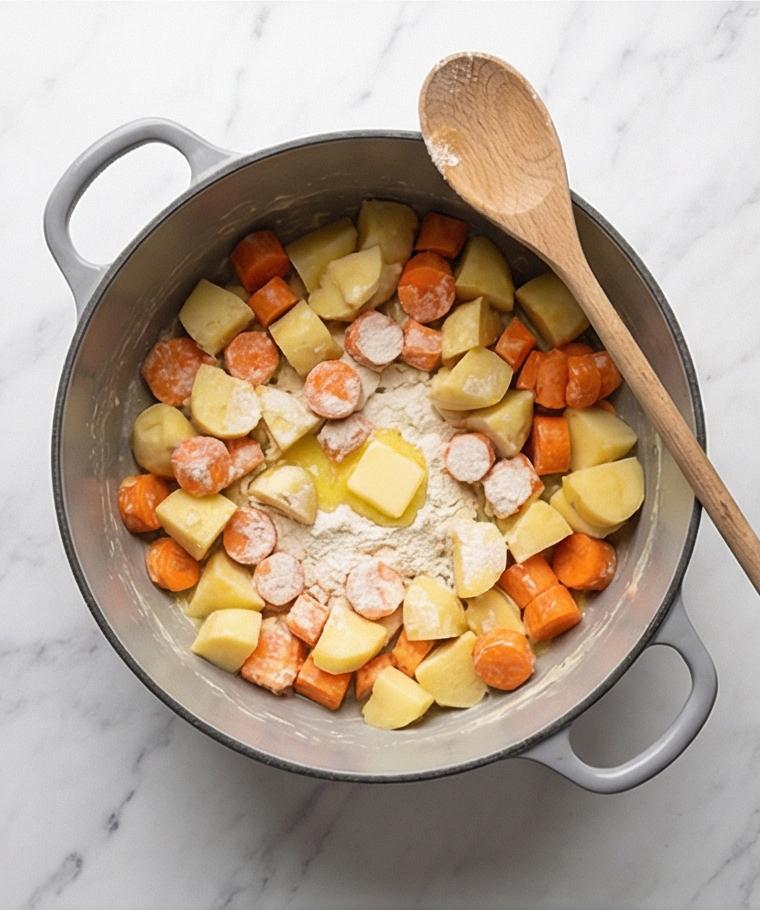
Toss in the peeled, chunky carrots and potatoes, coating each piece in the fragrant onion mixture until glossy and slightly softened at the edges. Add butter and then sprinkle the flour over the vegetables, stirring constantly to create a pale, pasty roux that clings to the vegetables—smooth, matte, slightly tacky, and without any raw flour pockets. This is the moment the curry gains body and a faintly nutty aroma.
Step 4: Toast Spices and Build the Sauce
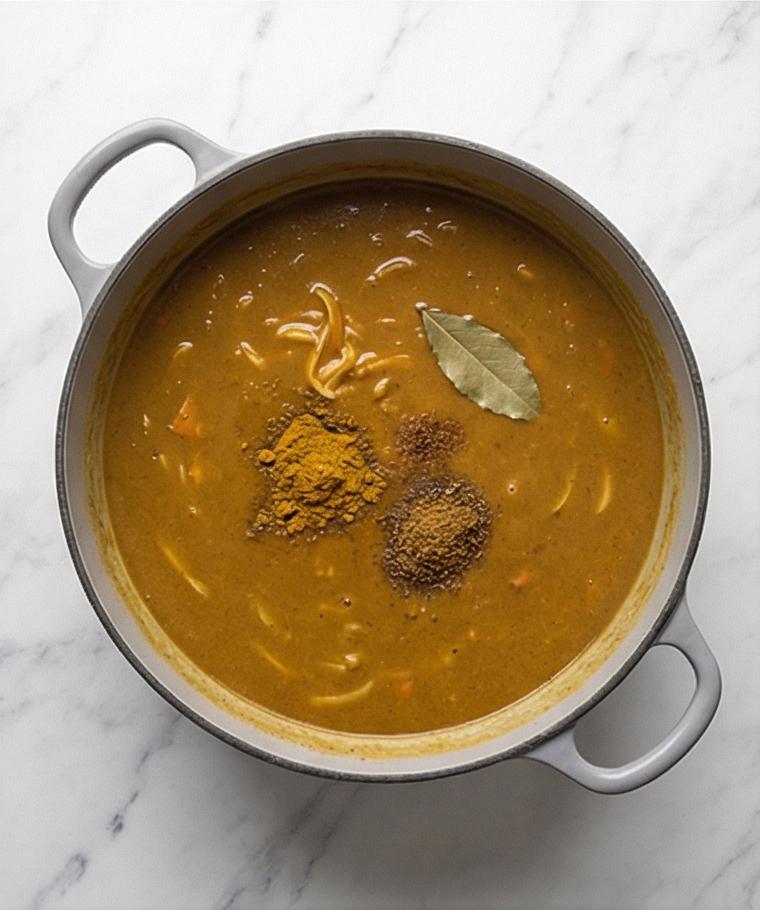
Sprinkle in the curry powder, garam masala, and turmeric and toast briefly until fragrant, then gradually whisk in chicken stock in several additions until the mixture becomes a smooth, slightly thick sauce that coats the vegetables. Stir in finely grated apple, soy sauce, Worcestershire, honey, and a bay leaf; bring gently to a simmer to marry the savory and sweet layers, then reduce heat and let it bubble down to a gravy-like consistency.
Step 5: Simmer to Tenderness and Final Seasoning
Cover the pot partially and simmer gently until the carrots and potatoes are very tender and the sauce has become glossy and deeply flavored, stirring occasionally so nothing sticks. Remove the bay leaf, taste, and adjust salt, black pepper, and a touch of cayenne if you want heat—the finished curry should be rich, slightly sweet, and silky-thick, with visible soft chunks of carrot and potato suspended in the gravy.
Step 6: Prepare and Season the Chicken for Breading
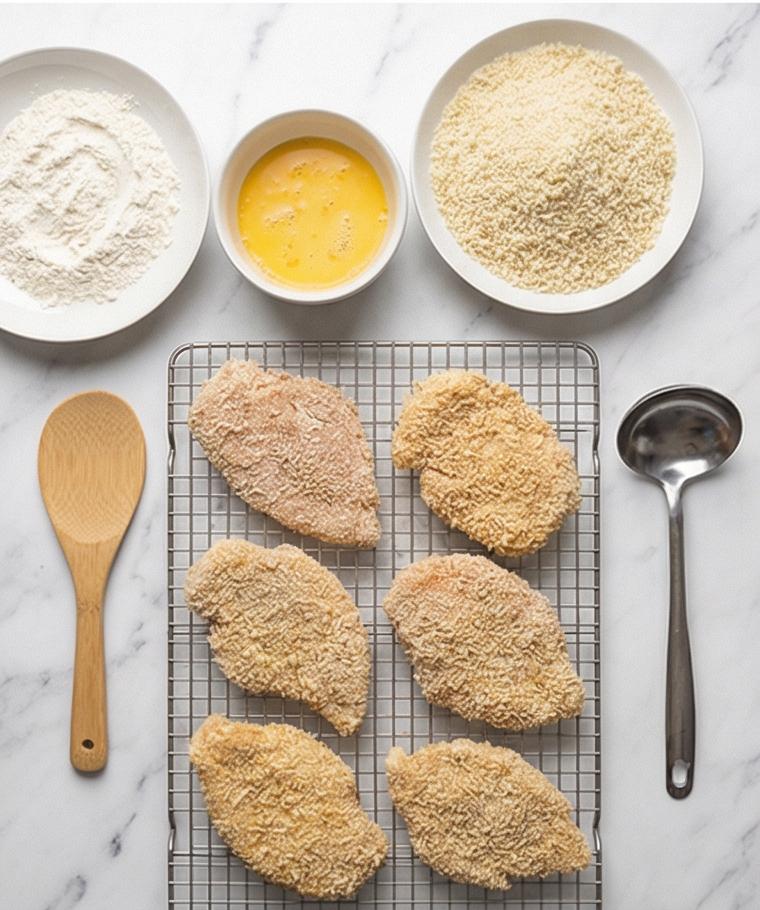
Trim and, if necessary, halve or gently pound the chicken to an even 1/2-inch thickness, then season both sides with salt and pepper and let rest briefly at room temperature. Set up a tidy breading station with flour in one shallow dish, beaten eggs loosened with a splash of milk in a second, and panko spread in a third. Work methodically to dredge, egg-wash, and press the panko onto each piece so the crumbs adhere in a thick, even coat; let the breaded cutlets rest on a rack for a few minutes to set.
Step 7: Fry, Drain, and Rest the Katsu
Deep-fry the breaded cutlets in oil heated to the proper temperature until the crust is a deep, even golden-brown and very crisp, then transfer to a wire rack to drain and rest so the crust stays crunchy and the interior remains juicy. Allow the pieces to rest at least five minutes, then slice each cutlet into neat 3/4-inch strips, keeping the slices fanned together for a tidy presentation.
Step 8: Plate, Garnish, and Serve
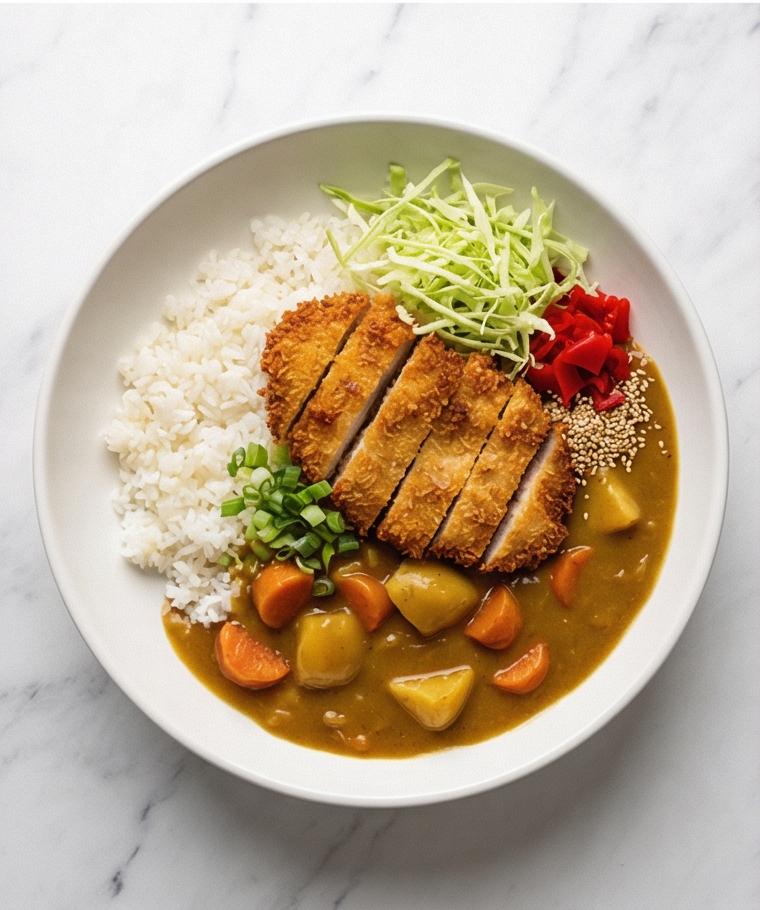
Mound hot, fluffy rice on one side of a wide shallow serving bowl, place a small tuft of finely shredded cabbage beside it, ladle a generous portion of hot curry with visible carrots and potatoes into the remaining area, and lay the sliced chicken katsu partially over the curry so the crisp crust is clearly visible. Finish with thinly sliced green onions, a scatter of toasted white sesame seeds if using, and a small portion of pickles on the rim; serve immediately so the katsu stays crisp and the curry steams.
Notes
- Rinse rice until the water runs mostly clear to get glossy, slightly sticky grains.
- Use a thermometer when frying to maintain oil between 350 F and 365 F for a perfect crust.
- Let breaded cutlets rest a few minutes before frying so the coating sets.
- Store curry separately from katsu to preserve crispness; reheat katsu in oven to re-crisp.
- Adjust curry powder and cayenne to control heat; add more apple or honey for sweetness.