Basque Burnt Cheesecake Recipe
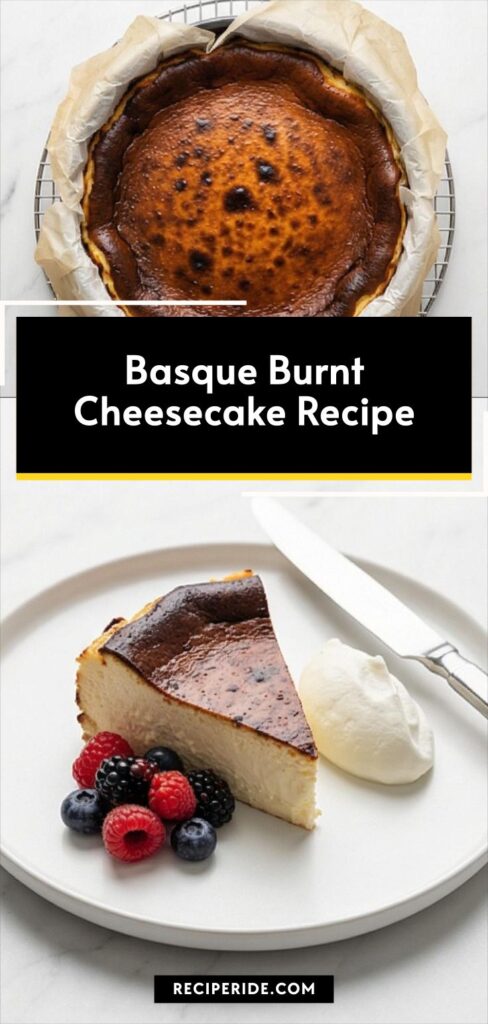
Bake the Basque Burnt Cheesecake Recipe: rich, caramelized top and creamy center—serve chilled with berries.
Ingredients
- 1 tablespoon unsalted butter, at room temperature, for greasing the pan
- Parchment paper: 2 large sheets, for lining a 9-inch (23 cm) springform pan
- 2 pounds (900 g) full-fat cream cheese, brick style, at room temperature
- 1 1/4 cups (250 g) granulated sugar
- 1 teaspoon fine sea salt or kosher salt
- 5 large eggs (about 250 g without shells), at room temperature
- 2 teaspoons (10 ml) pure vanilla extract
- 2 cups (480 ml) heavy cream or heavy whipping cream, at room temperature
- 1/4 cup (30 g) all-purpose flour, sifted
- 1 1/2 cups (200 g) mixed fresh berries, such as strawberries, raspberries, or blueberries (optional, for serving)
- 1 cup (240 ml) cold heavy cream, whipped with 2 tablespoons (16 g) powdered sugar until soft peaks form (optional, for serving)
Instructions
Step 1: Prepare and line the pan
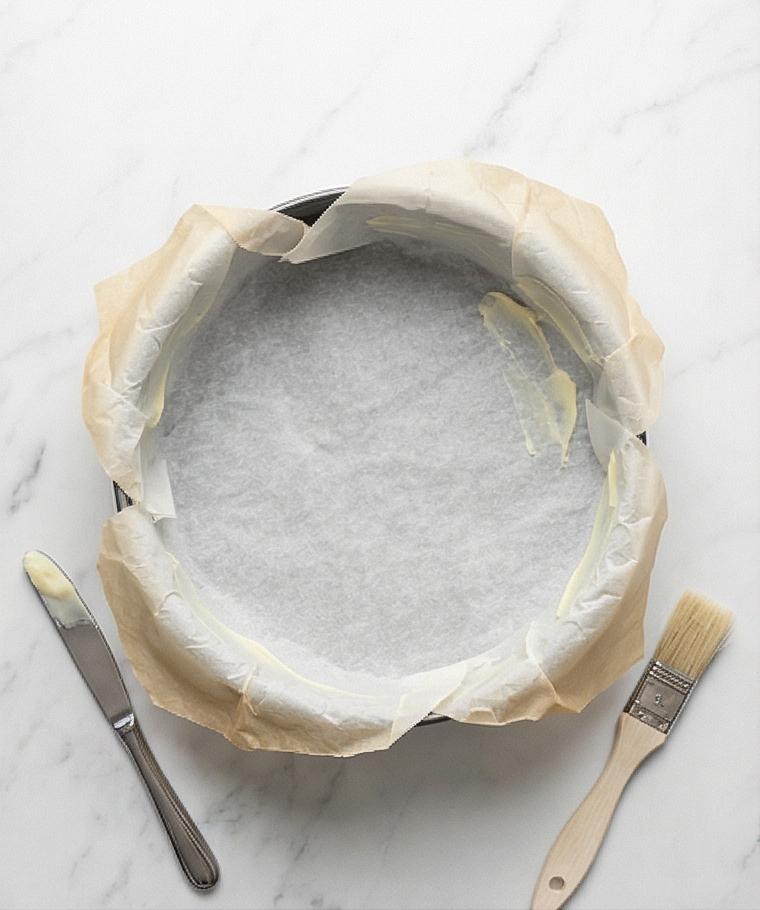
Grease a 9-inch springform pan lightly with a tablespoon of room-temperature unsalted butter, then cut two large sheets of parchment paper. Crumple each sheet and uncrumple to help them mold; press the first into the pan to cover bottom and sides with 2–3 inches extending above the rim, then rotate and press the second sheet to overlap gaps. The paper should look rustic and wrinkled, with soft creases rising above the rim—this intentional texture will create the cheesecake's signature uneven edge. Preheat the oven to 450°F (230°C) and let it stabilize for at least 20 minutes so the oven is very hot before baking.
Step 2: Soften and smooth the cream cheese base
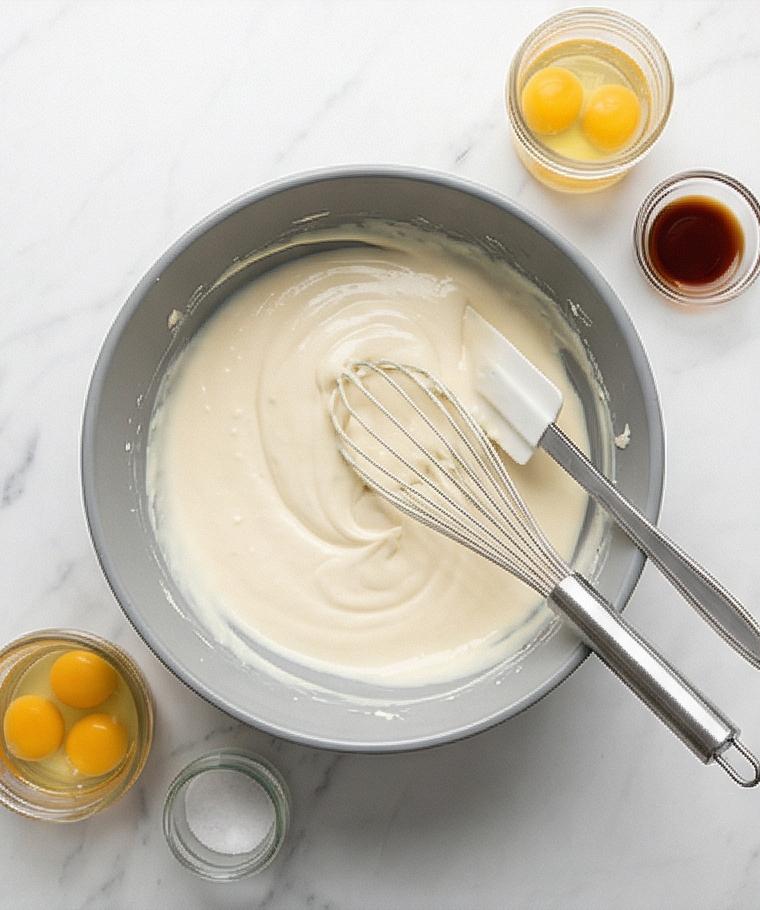
Make sure 2 pounds of brick-style cream cheese are fully at room temperature and silky; if they are cool, cut into cubes and let them sit to soften. In a large matte grey ceramic mixing bowl (kept for subsequent steps) add the softened cream cheese with 1 1/4 cups granulated sugar and 1 teaspoon fine salt. Beat on medium-low, scraping once or twice, until the mixture is lusciously smooth, creamy, and free of graininess—think velvety, slightly dense ricotta-like paste without air pockets. This stage is all about eliminating lumps and achieving a homogenized creamy foundation.
Step 3: Emulsify with eggs, vanilla and cream to a pourable batter
Add the 5 large room-temperature eggs one at a time, mixing gently on low after each addition so the emulsion stays silky rather than airy; scrape the bowl as needed. Stir in 2 teaspoons pure vanilla and then pour in 2 cups room-temperature heavy cream, continuing to mix on low until the batter becomes glossy and noticeably more fluid—pourable but still creamy. Sift 1/4 cup all-purpose flour over the batter and fold in gently until no streaks remain; if any tiny lumps persist, pass the batter through a fine-mesh strainer into a clean bowl for an ultra-smooth, ribbon-like texture. The final batter should be pale, glossy, and slightly thin, able to be poured smoothly from the bowl.
Step 4: Fill the lined pan and prepare to bake
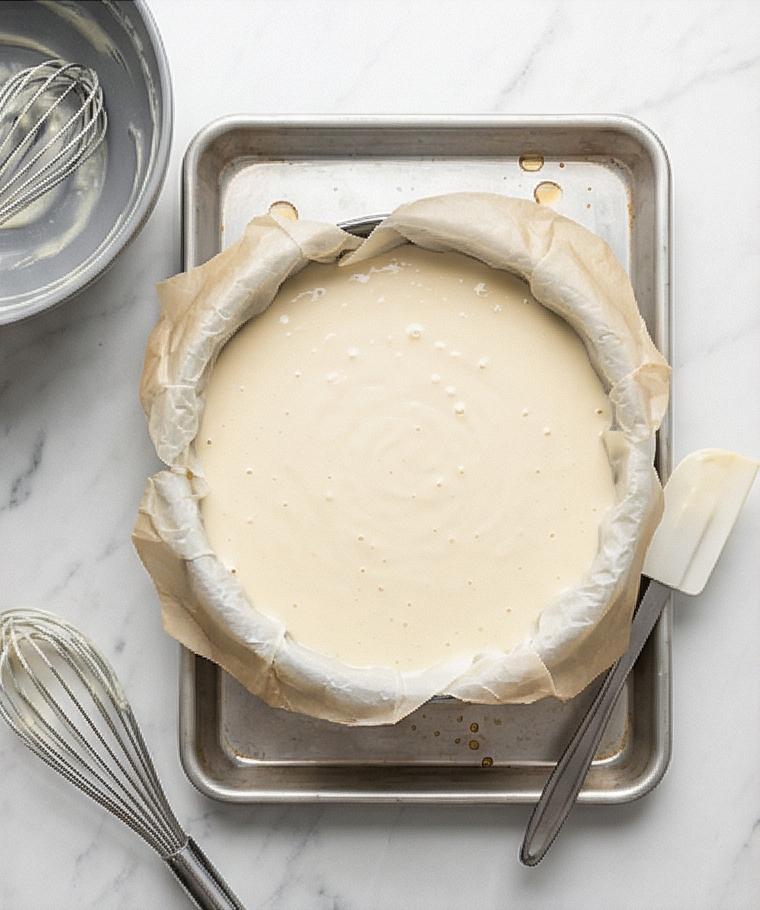
Place the lined springform pan on a rimmed baking sheet and pour the glossy, pourable batter from the same matte grey bowl into the pan, smoothing the top very lightly with a flexible spatula. Tap the baking sheet gently on the marble surface 2–3 times to release large air bubbles; leave the spatula and the whisk resting neatly on the rim of the bowl—tools remain part of the scene but not intrusive. The assembled pan should show the rustic parchment collar surrounding a silky, pale batter surface with a few tiny bubbles and a glossy sheen, ready for the intense oven heat.
Step 5: Bake until deeply caramelized and cool to set
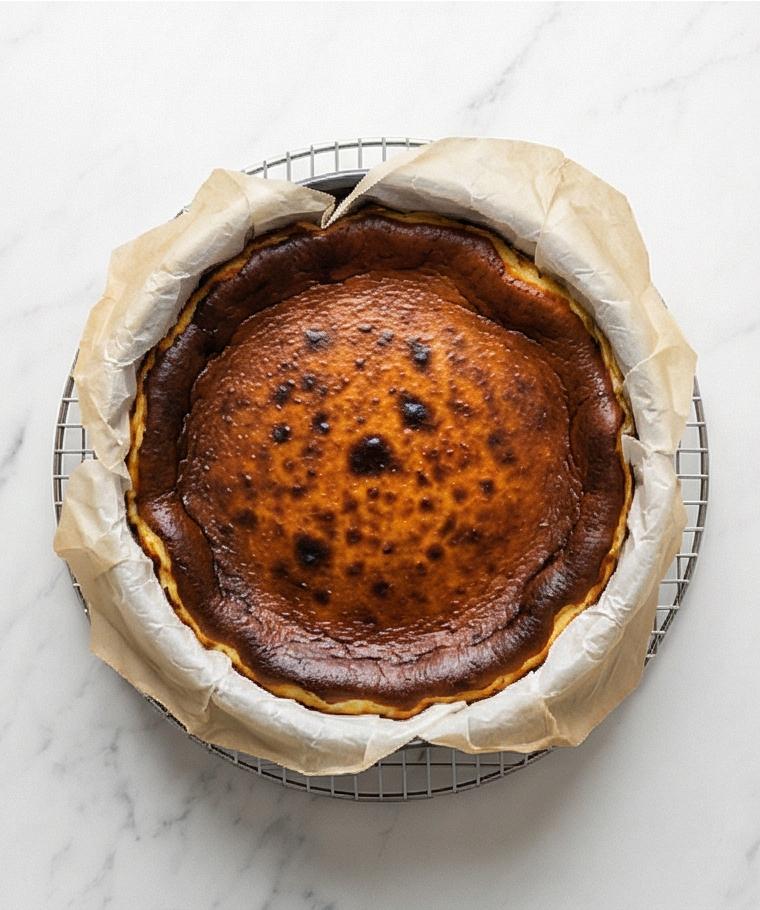
After high-heat baking, the cheesecake will emerge with a deeply caramelized, almost burnt mahogany top, puckered and blistered in places, with edges set and the center still noticeably jiggly. Transfer the pan to a wire rack on the same marble surface and allow it to cool in the pan for 1–2 hours until it deflates slightly; for cleaner slices, loosely cover and chill in the refrigerator at least 4 hours or overnight. Leave the rustic parchment collar intact during cooling; the surface texture should read as crisp, blistered, and deeply browned while the interior promise is custardy and soft.
Step 6: Release, slice, and serve with berries and whipped cream
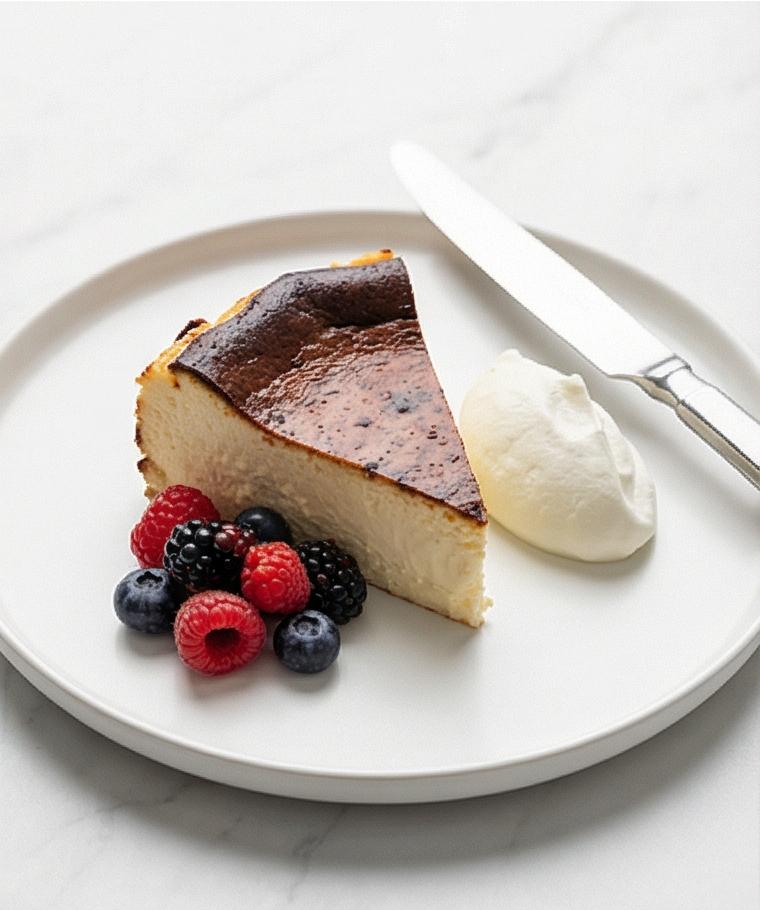
Unlatch the springform ring and gently peel the parchment away from the sides, transferring the cake (still on its parchment base) to a simple round white serving plate. Use a long sharp knife warmed under hot water and wiped dry between cuts to yield clean wedges that reveal a creamy, pale interior contrasted with the dark, caramelized top. Plate modest wedges, each topped with a small cluster of mixed fresh berries and, if desired, a delicate quenelle of lightly sweetened whipped cream. The final presentation is restrained and elegant—rustic browned crust, custardy interior, bright berry accents.
Notes
- Bring cream cheese and eggs to room temperature for a lump-free, silky batter.
- Preheat the oven at least 20 minutes to ensure the high heat will caramelize the top.
- Use heavy-duty parchment and overlap sheets to create the rustic collar without tearing.
- For cleaner slices, chill at least 4 hours or overnight before slicing.
- Warm and dry your knife between cuts to get neat wedges.