No Knead Focaccia Recipe
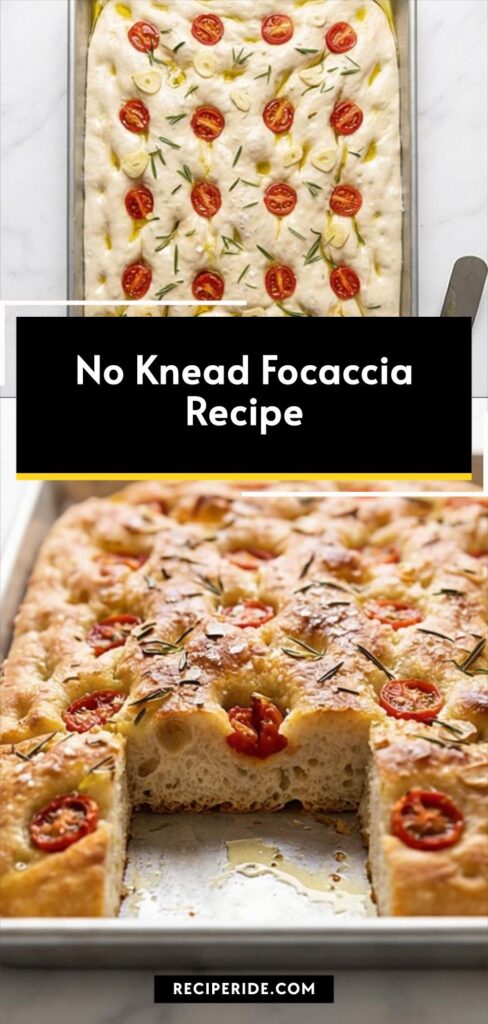
Bake the No Knead Focaccia Recipe for a glossy, herb-scented loaf that’s easy and crowd-pleasing.
Ingredients
- 2 cups (480 ml) warm water, 95–105°F (35–40°C)
- 2 1/4 teaspoons (7 g) active dry yeast
- 2 teaspoons (8 g) granulated sugar
- 5 cups (600 g) bread flour
- 2 1/2 teaspoons (15 g) fine sea salt
- 2 tablespoons (30 ml) extra-virgin olive oil, for the dough
- 3 tablespoons (45 ml) extra-virgin olive oil, for coating the pan
- 2 tablespoons (30 ml) extra-virgin olive oil, for drizzling on top before baking
- 1 1/2–2 teaspoons (5–8 g) flaky sea salt, for topping
- 2 tablespoons (about 4 g) fresh rosemary leaves, finely chopped
- 1 cup (150 g) cherry or grape tomatoes, halved (optional topping)
- 3 cloves garlic, very thinly sliced (optional topping)
- 2 tablespoons (30 ml) extra-virgin olive oil, for serving (optional)
- Freshly ground black pepper, for serving (optional)
Instructions
Step 1: Activate the Yeast and Sugar
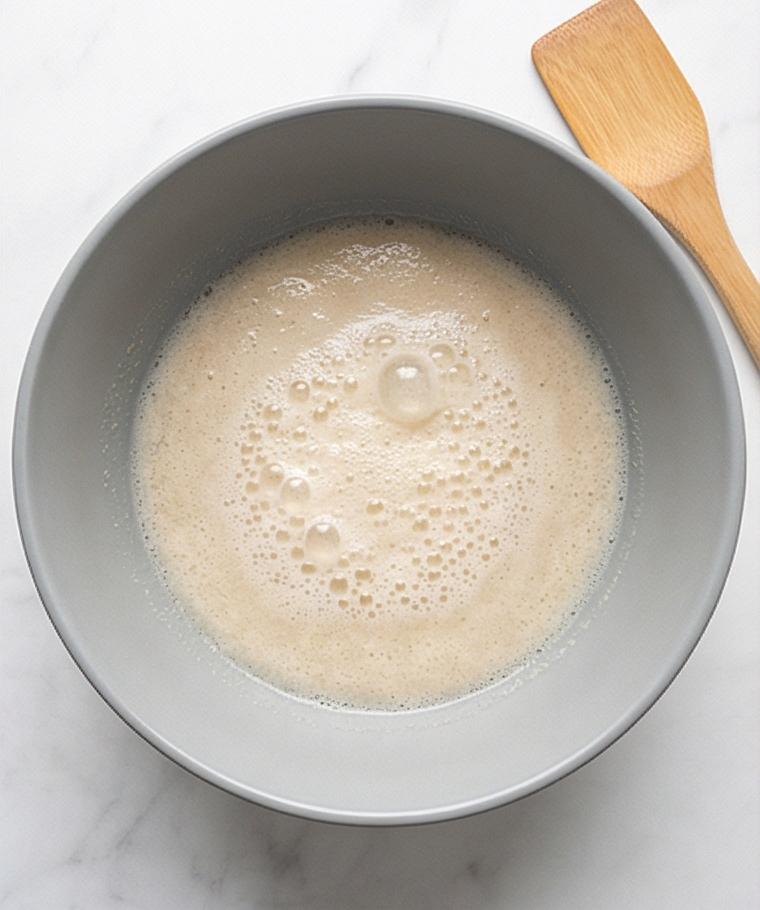
Warm 2 cups (480 ml) water to about 95–105°F (35–40°C) and combine it with the active dry yeast and granulated sugar in a large modern matte grey ceramic mixing bowl; stir just to dissolve. Leave it undisturbed at room temperature for 5–10 minutes until the surface is frothy and bubbly with a yeasty aroma — that glossy foam and fine bubbles are the visual signal you’re ready to move on. Friendly tip: this bloom should sit in the same mixing bowl you’ll use to make the dough so tools and vessels remain constant.
Step 2: Combine Flour, Salt, and Olive Oil into a Shaggy Dough
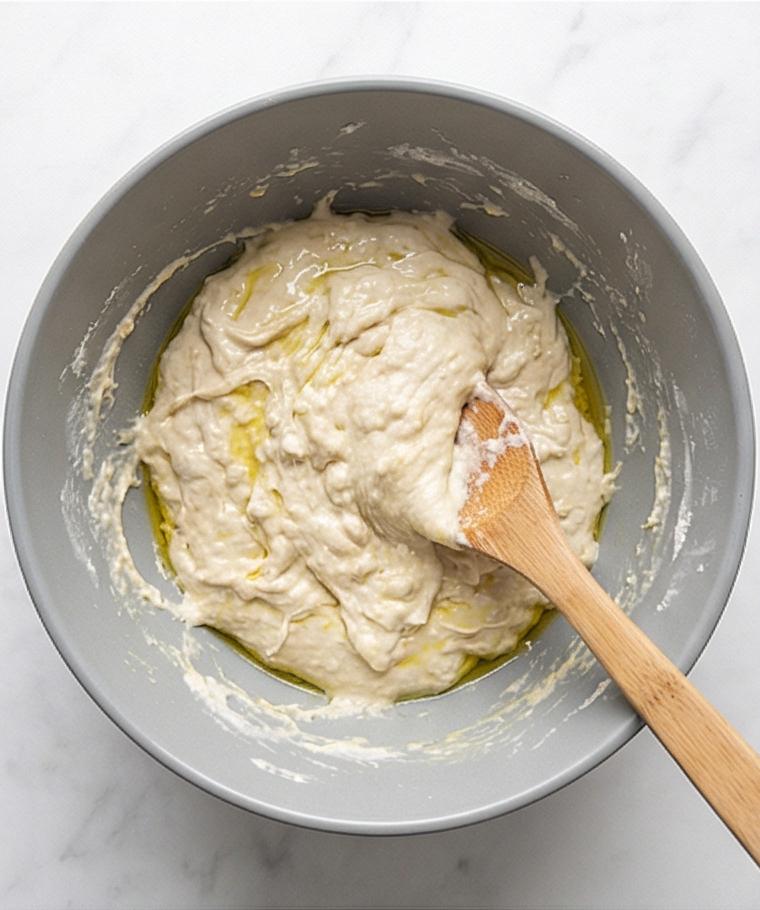
Pour 5 cups (600 g) bread flour and 2 1/2 teaspoons (15 g) fine sea salt into the bowl with the foamy yeast, then add 2 tablespoons (30 ml) extra-virgin olive oil for the dough. Using a sturdy wooden spatula, mix vigorously for 1–2 minutes, scraping the sides until no dry flour remains; the result is a very loose, shaggy, ultra-sticky mass — wet-looking clumps and uneven strands of flour bound by oil and water. Keep the spatula resting on the bowl rim so it’s visually present for the next frames.
Step 3: Cold Fermentation — Dough Doubles and Becomes Bubbly
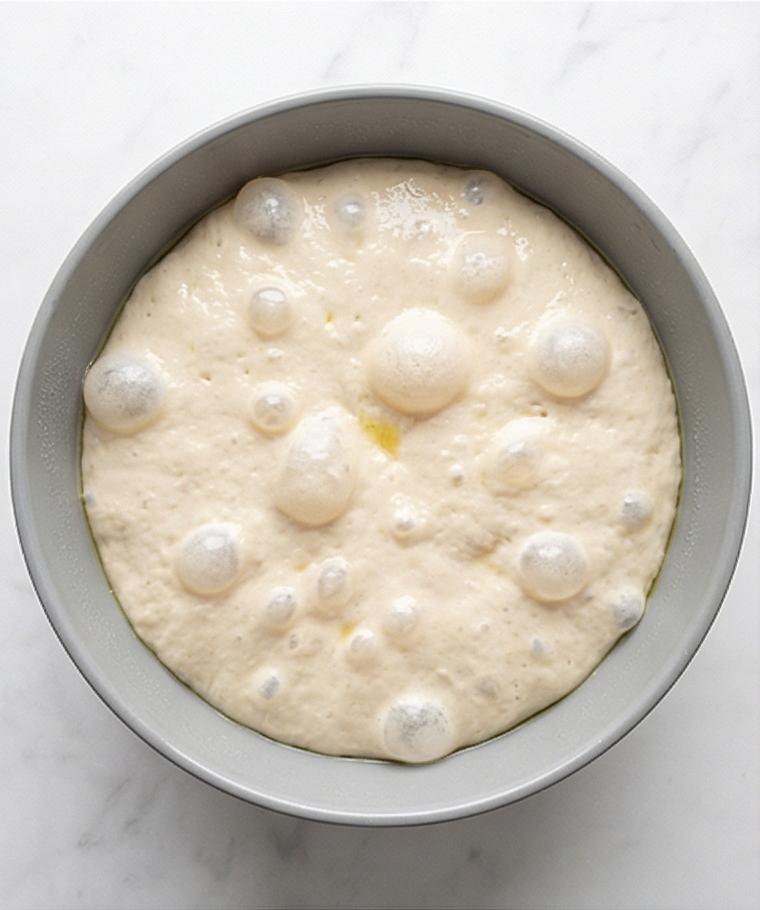
Scrape the dough into a rough ball, cover the bowl tightly, and refrigerate for 12–18 hours for slow cold fermentation at about 40°F (4°C). After the long rest the dough should be visibly expanded, airy and bubbly across the surface, with a soft, relaxed structure and a slightly domed top. This is the mellow, gluten-developed state that gives focaccia its open crumb and tender chew — photograph the bowl with its taut yet fragile bubbly skin.
Step 4: Oil the Pan, Transfer, Gentle Stretching, Proofing, and Dimpling with Toppings
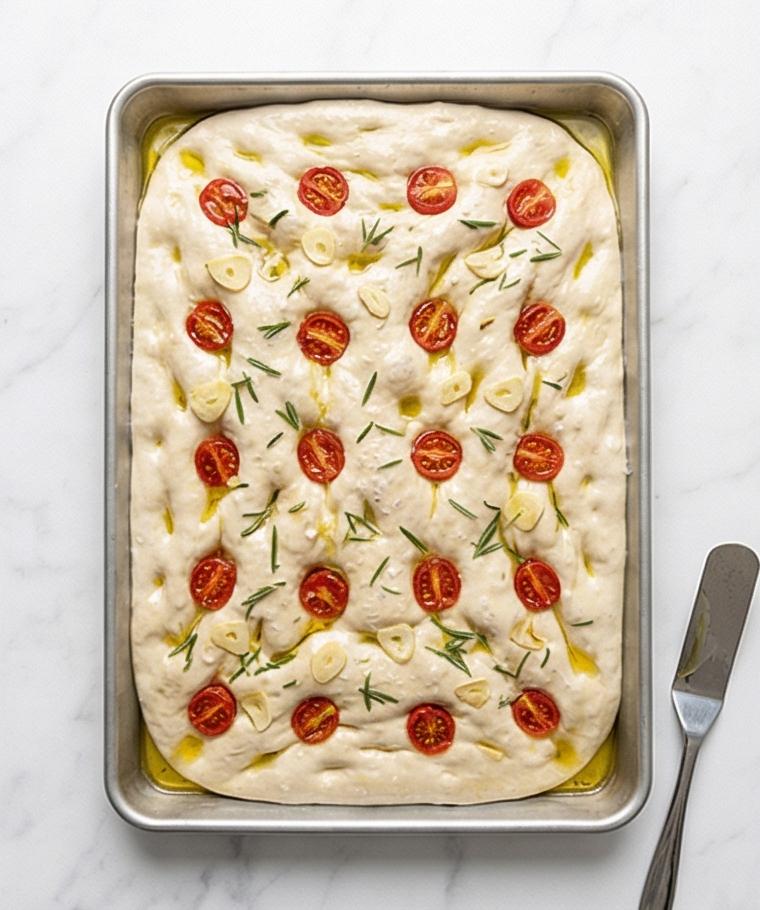
Generously coat a 9 x 13-inch (23 x 33 cm) rectangular metal baking pan with 3 tablespoons (45 ml) extra-virgin olive oil. Using a lightly oiled spatula or your (hidden) oiled tools, gently turn the chilled dough into the pan so it slumps into the center, then with thoroughly oiled fingertips nudge and stretch the dough toward the edges without tearing. Cover and proof at warm room temperature for 45–75 minutes until it puffs and becomes jiggly. Remove the cover, drizzle 2 tablespoons (30 ml) extra-virgin olive oil evenly over the surface, then press deep dimples straight down across the dough with oiled fingertips. Evenly scatter flaky sea salt and 2 tablespoons finely chopped fresh rosemary; if using, nestle halved cherry tomatoes into some dimples and tuck thinly sliced garlic over the top so toppings sit snugly inside the wells. The pan should read glossy with oil, studded with herb green, bright tomato reds, and crystalline sea salt.
Step 5: Bake, Cool, and Serve from the Rectangular Pan
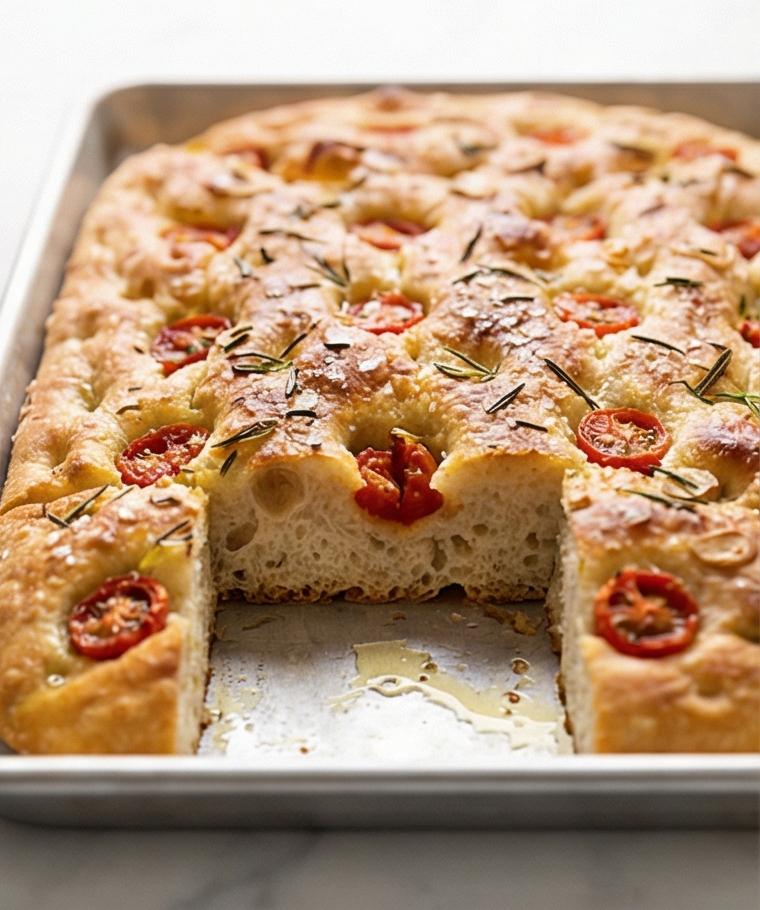
Place the rectangular pan on a rack (not shown) and bake at 450°F (230°C) for 20–25 minutes until the top is deep golden brown, the edges crisp, and the underside a rich golden tone. Let the focaccia cool in the pan for 10–15 minutes so the crumb sets; optionally loosen the edges and transfer but keep the rectangular geometry — finish with an extra 1–2 tablespoons of olive oil and a crack of freshly ground black pepper before cutting into squares or rectangles. The final image shows the baked focaccia still in its 9x13 metal pan: glossy olive oil sheen, blistered tomato jewels, toasted rosemary, flaky salt crystals and an open, tender crumb where a square has been removed.
Notes
- Use a fresh, fruity extra-virgin olive oil for finishing to highlight flavor.
- For a chewier crumb, use bread flour as written; all-purpose will yield a softer loaf.
- If dough is hard to stretch, let it rest 10 minutes, then continue shaping.
- Freeze sliced focaccia in a single layer before bagging to prevent sticking.
- Taste and adjust flaky salt after baking; a little more right before serving brightens each bite.