Korean Kimchi Soup Recipe
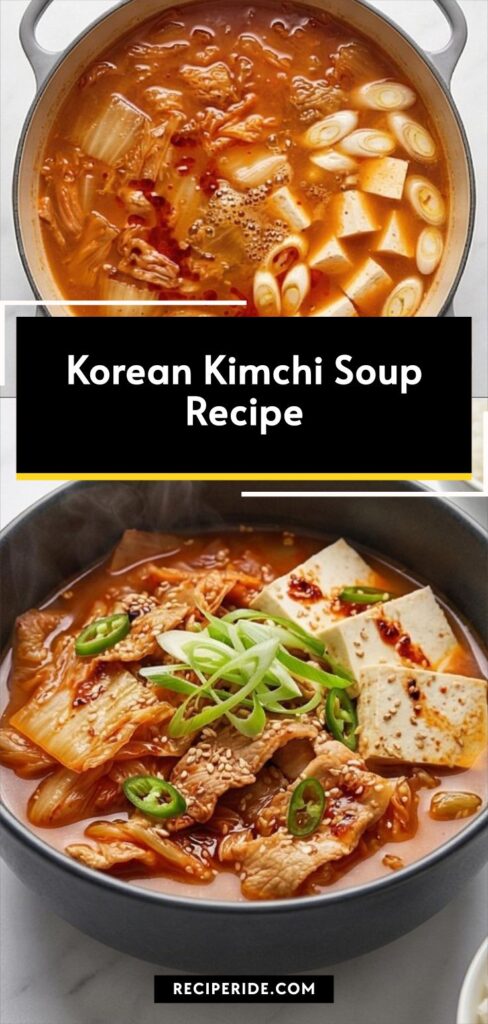
Make Korean Kimchi Soup Recipe tonight - tangy, spicy, and comforting with pork, tofu, and rich kimchi broth.
Ingredients
- 1 tablespoon (15 ml) neutral oil (such as canola or vegetable oil)
- 6 ounces (170 g) pork belly or pork shoulder, thinly sliced into bite-size pieces
- 1/2 small yellow onion (about 75 g), thinly sliced
- 2 cloves garlic (about 8 g), minced
- 1 teaspoon (5 g) finely grated fresh ginger
- 2 cups (300 g) well-fermented napa cabbage kimchi, roughly chopped, plus solid pieces only (reserve juice separately)
- 1/2 cup (120 ml) kimchi juice (brine) from the kimchi container
- 1 tablespoon (15 g) gochujang (Korean red pepper paste)
- 1 to 2 tablespoons (8 to 16 g) gochugaru (Korean red pepper flakes), to taste
- 1/2 teaspoon (3 g) granulated sugar
- 3 1/2 cups (840 ml) unsalted anchovy stock, chicken stock, or vegetable stock, at room temperature
- 1 tablespoon (15 ml) soy sauce
- 1 teaspoon (5 ml) fish sauce (optional but recommended)
- 7 ounces (200 g) firm tofu, drained and cut into 1/2-inch (1.25 cm) cubes
- 2 green onions (scallions), thinly sliced, white and green parts separated
- 1 teaspoon (5 ml) toasted sesame oil
- 1/4 teaspoon (1 g) freshly ground black pepper
- 1 teaspoon (3 g) toasted sesame seeds, for garnish (optional)
- 1 small green chili (such as Korean Cheongyang) or jalapeño, thinly sliced, for garnish (optional)
- Hot steamed short-grain white rice, for serving (about 1 cup / 200 g cooked rice per person)
Instructions
Step 1: Sear the pork and soften the onion
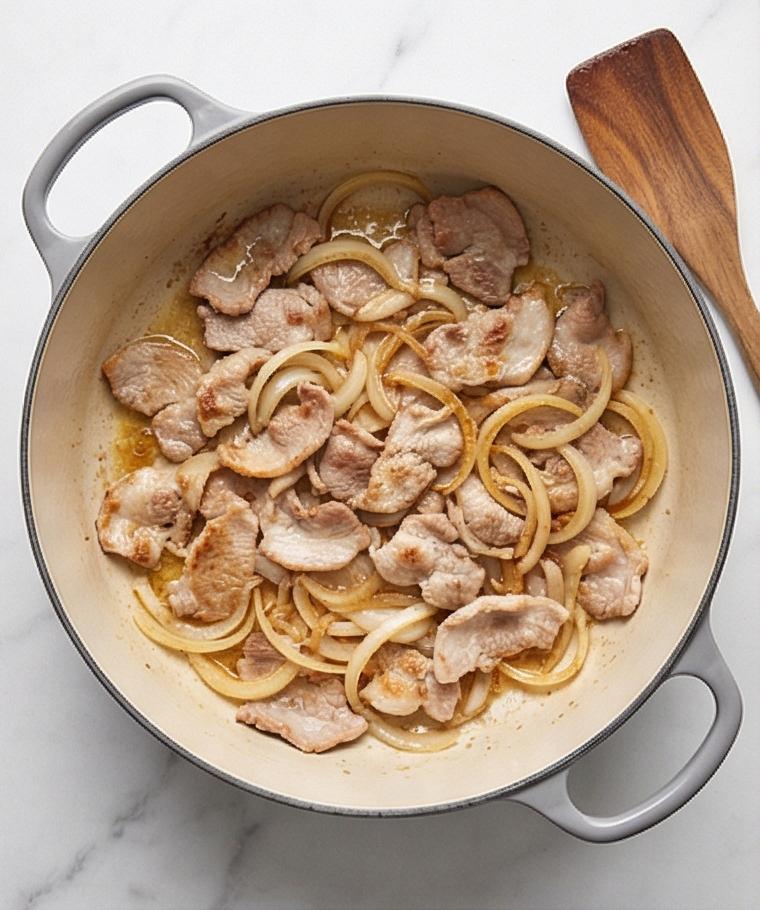
Heat a tablespoon of neutral oil in a heavy, wide cooking vessel and add the thinly sliced pork in a single even layer. Cook the meat until it loses its raw pink color and the edges begin to caramelize — look for small bronzed edges and glossy rendered fat pooling at the base; add the thinly sliced yellow onion and continue cooking until the onion is translucent and just beginning to soften. The resulting mixture should read as warm bronze ribbons of pork punctuated by soft, glassy onion strands, with fat rendered but not greasy; transfer the finished sear back onto the cooking vessel and set the scene for the next stage.
Step 2: Bloom aromatics and fold in the kimchi
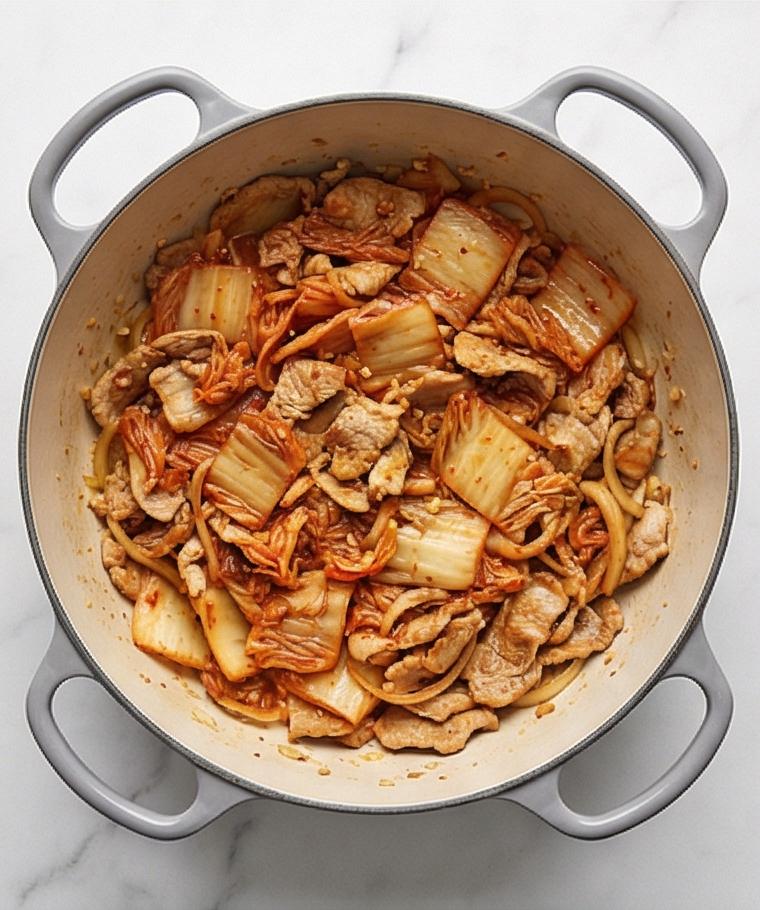
Lower the heat and add the minced garlic and finely grated ginger to the pork-and-onion mix, stirring constantly until fragrant but not browned — the mixture should smell lively and sharp. Immediately fold in the roughly chopped, well‑fermented napa kimchi (solids only) and continue to cook until the kimchi softens, its edges slightly wilted and showing hints of deeper, roasted red color. At this point the pan holds a textured, layered medley: tender pork pieces, softened strands of onion, and kimchi that has relaxed into the mix, syrupy at the edges and releasing a savory umami perfume.
Step 3: Build the spicy paste and toast the pepper
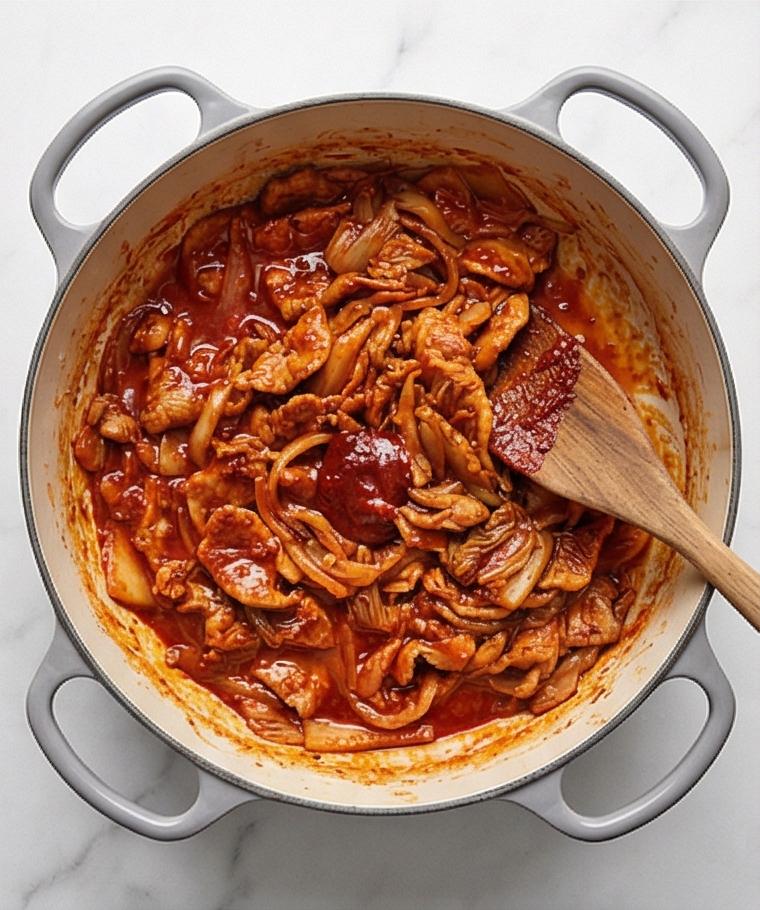
Reduce heat to medium-low and spoon in the gochujang, sprinkle the gochugaru and sugar, stirring vigorously so the pork–kimchi mixture becomes evenly coated in a thick, glossy red paste. Keep the motion steady for about a minute so the paste dissolves and toasts lightly against the meat and vegetables — the surface should look cohesive and paste-like, with the chili oil separating slightly at the edges and the whole pan taking on a unified deep-red sheen. This is the concentrated flavor core of the soup, sticky and aromatic.
Step 4: Add stock and kimchi brine, bring to a gentle boil and simmer
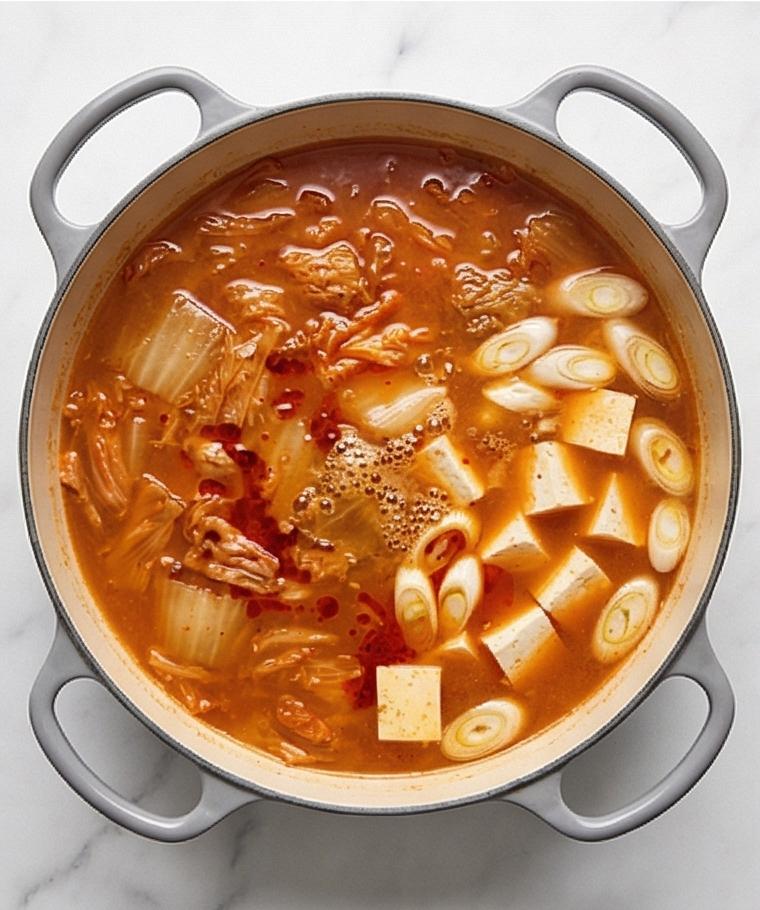
Pour in the room‑temperature stock and the reserved kimchi juice, scraping any fond from the bottom so those brown bits dissolve into the broth. Bring the mixture up to a steady gentle boil (visible consistent bubbling across the surface) and add the soy sauce and fish sauce; then reduce to a low simmer and cover partially, letting the broth mellow for 15 to 20 minutes until the kimchi is very tender and the liquid tastes deep and balanced. The pot at this stage should show a translucent reddish-orange broth studded with softened kimchi and floating droplets of chili oil — the texture has moved from paste to a rich, soupy glaze.
Step 5: Gently warm tofu and finish cooking
Carefully slide the drained tofu cubes into the simmering broth along with the white parts of the sliced green onions, stirring with a gentle hand so the tofu remains intact. Simmer for a few minutes until the tofu has absorbed some of the broth and warmed through; taste and adjust seasoning with small splashes of soy or fish sauce if needed, or dilute slightly with hot stock or water if the soup feels too intense. The soup will now display soft, satiny tofu, tender kimchi and thin strips of pork suspended in a silky, savory-red broth.
Step 6: Final seasoning, garnish and serve
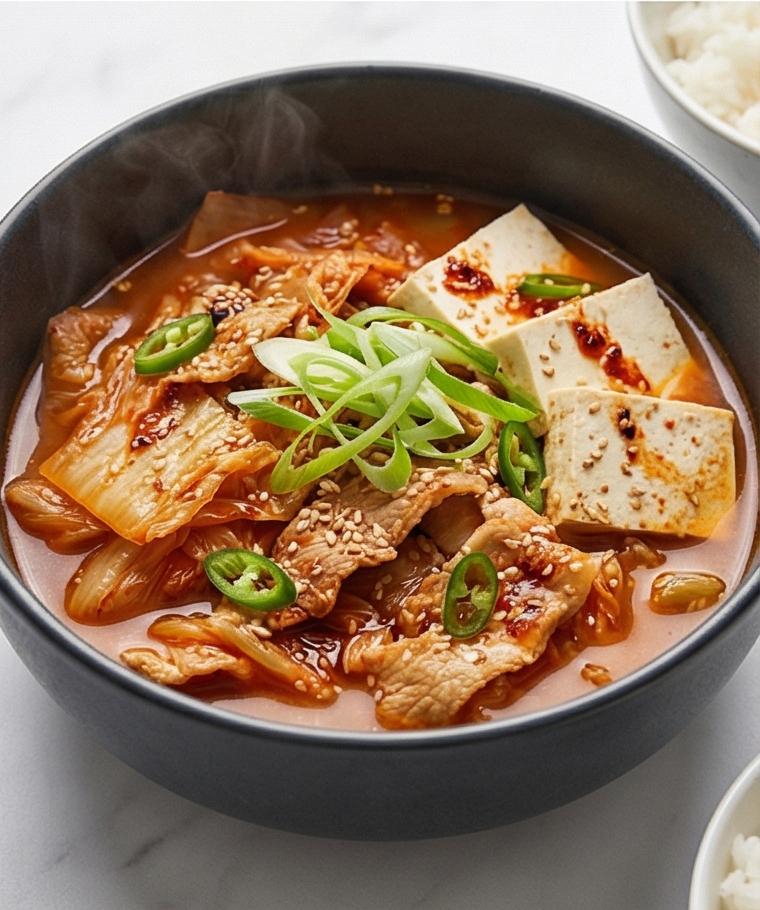
Turn off the heat and finish with a teaspoon of toasted sesame oil and a grind of black pepper, then fold in the green parts of the scallions. Ladle the steaming soup into a deep, wide-rimmed matte bowl and garnish with toasted sesame seeds and thin slices of fresh green chili if desired; serve immediately alongside a small bowl of hot short-grain rice. The final bowl should feel invitingly rustic yet refined: glossy chili oil rims, tender tofu cubes, curled strips of pork and bright scallion ribbons resting on a luminous, warm broth.
Notes
- Taste and adjust seasoning gradually - add soy or fish sauce in small amounts.
- If soup is too intense, dilute with hot stock or water and re-season.
- Use well-fermented kimchi for deeper flavor; fresh kimchi will be brighter.
- Warm leftover soup slowly to preserve tofu texture.
- Substitute mushrooms for pork to make a vegetarian version.