Beetroot Latte Recipe
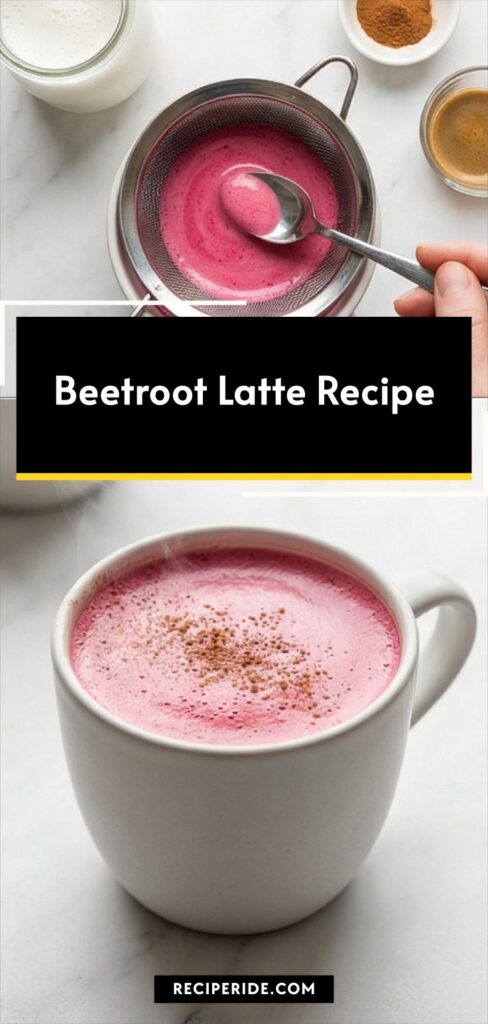
Make Beetroot Latte Recipe: blend cooked beetroot with milk and spices for a vibrant, cozy latte.
Ingredients
- 50 g cooked beetroot, peeled and roughly chopped (about 1/3 cup loosely packed)
- 1 cup (240 ml) whole milk, cold or at room temperature
- 1 tablespoon (15 ml) honey or pure maple syrup
- 1/4 teaspoon pure vanilla extract
- 1/8 teaspoon ground cinnamon
- 1 small pinch ground ginger (about 1/32 teaspoon), optional but recommended
- 1 small pinch fine sea salt
- 1 shot (1 ounce / 30 ml) freshly brewed espresso, very hot (optional, for a beetroot coffee latte)
- 1 teaspoon frothed milk or milk foam, for topping (optional)
- 1 small pinch ground cinnamon or beetroot powder, for garnish (optional)
Instructions
Step 1: Prepare the beetroot
Start by confirming your cooked beetroot is peeled and roughly chopped into small, even pieces so it will blend into a silky puree. Place the roughly chopped 50 g of beetroot into a clear blender pitcher along with a small ceramic ramekin holding 1 tablespoon of honey (or maple syrup), a tiny amber vial of vanilla, and two small porcelain tasting bowls with the ground cinnamon and the minute pinch of ground ginger and fine sea salt. Arrange a small glass measuring cup with 1/4 cup (60 ml) of milk nearby — everything contained neatly in vessels on the marble so liquids never touch the surface directly. This is a mise-en-place captured flat and tidy, highlighting the raw textures: the beetroot’s matte, slightly fibrous flesh, the glossy viscosity of honey, and the dry powder granularity of the spices.
Step 2: Blend the beetroot base
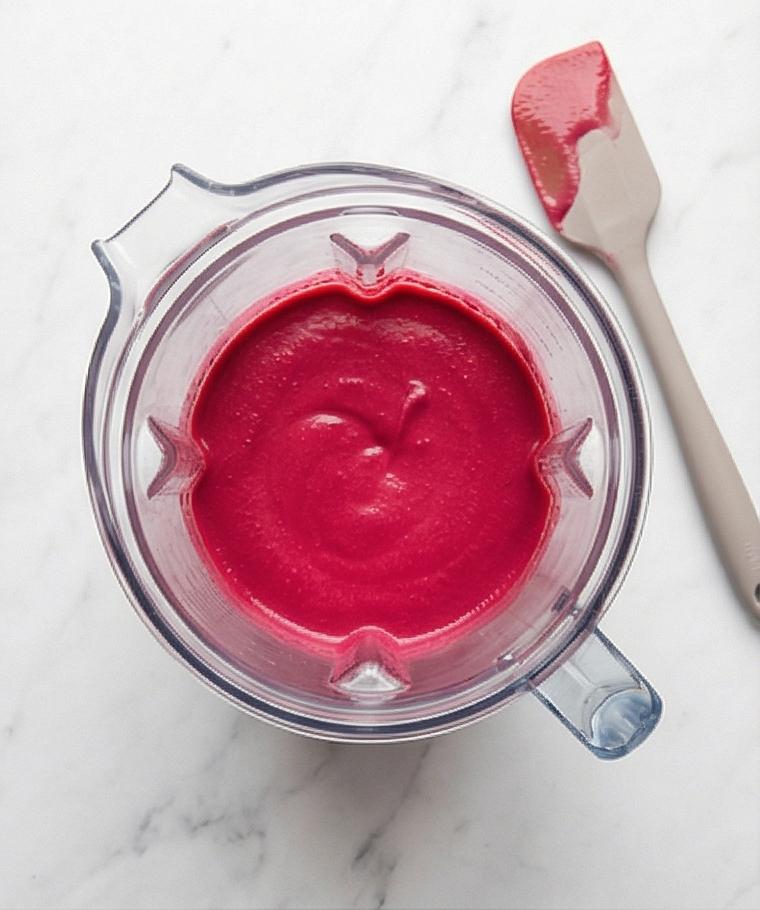
Add the honey, vanilla, spices, salt, and 1/4 cup milk to the blender with the chopped beetroot. Blend on high for 30–60 seconds, pausing to scrape the pitcher’s sides with a small silicone spatula so there are no visible beet fragments. The result should be a completely smooth, vivid deep-pink liquid — silky, homogenous, and glossy, with no granular bits. Transfer the blended mass back to the same clear pitcher and set it centered on the Carrara marble while you heat the rest of the milk.
Step 3: Heat the remaining milk and create foam
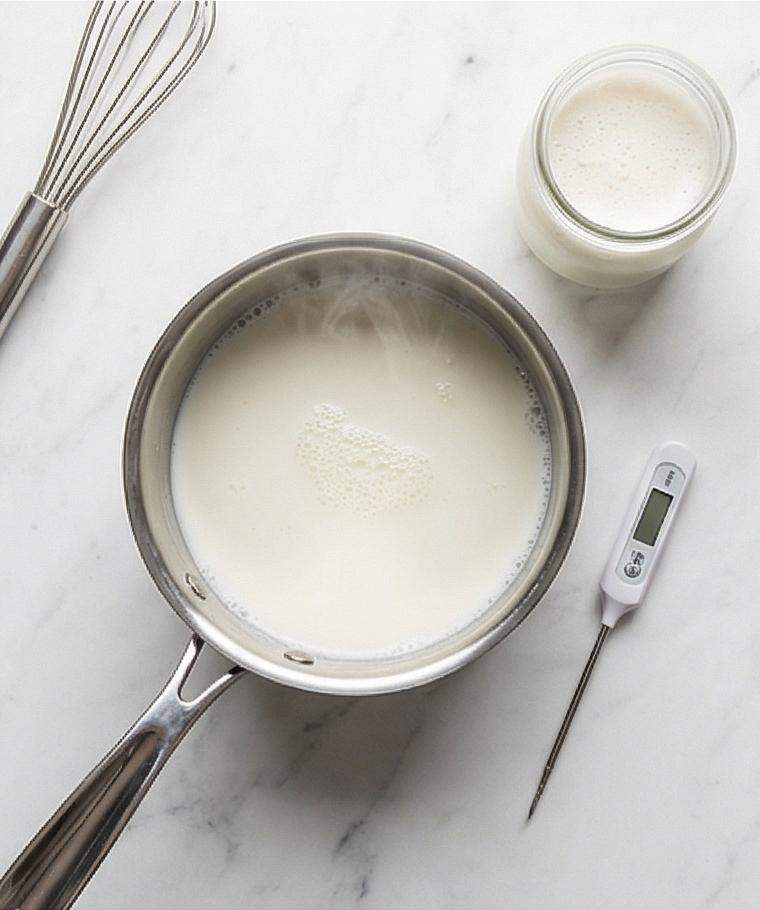
Pour the remaining 3/4 cup (180 ml) milk into a small stainless-steel saucepan and heat it slowly until steaming and around 150–160°F (65–70°C) — look for wisps of steam and tiny edge bubbles, never a boil. Reserve 2–3 tablespoons of this hot milk in a small glass jar and froth it until velvety and fine-celled for the foam topping; set the foam jar aside on the marble. The saucepan, thermometer, and a slender whisk rest on the surface as evidence of the gentle heating; capture the milk’s surface tension, micro-bubble pattern near the edges, and the glossy sheen that indicates proper steaming.
Step 4: Warm and integrate the beet base with hot milk
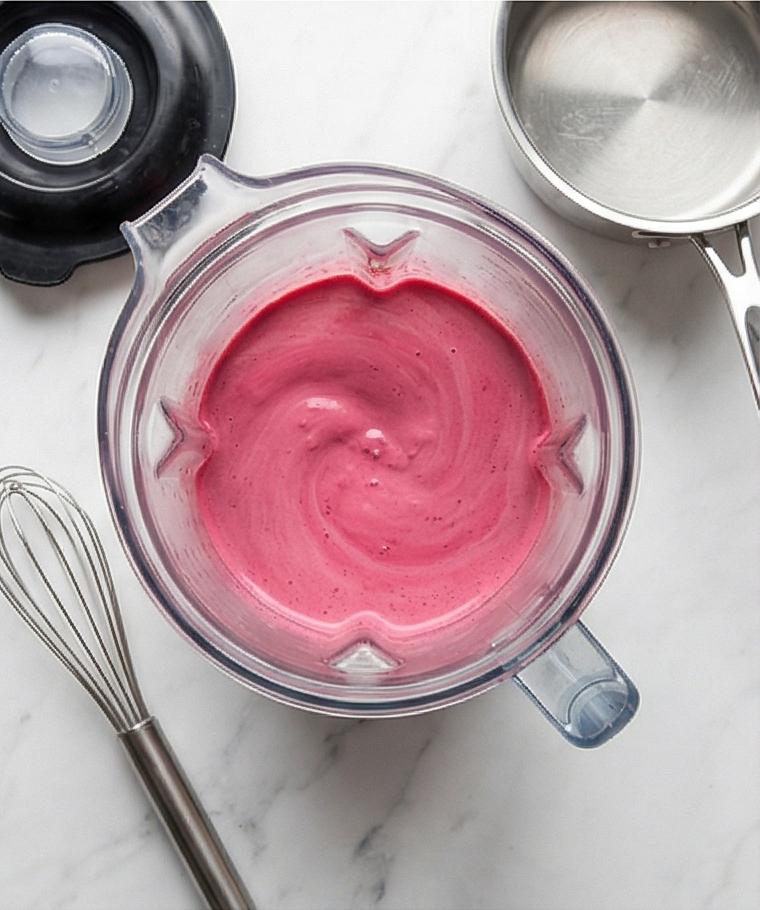
Carefully pour 2–3 tablespoons of the hot milk into the blender pitcher with the beet mixture, leave the lid slightly ajar to let steam escape, and pulse on low for 5–10 seconds — the mixture should loosen and warm, becoming more fluid and luminous. Pour that warmed beet-milk back into the saucepan and whisk gently until the color is an even, bright pink and the texture is uniformly smooth. Keep everything on low heat just long enough for uniform temperature; the saucepan and the same whisk remain the active utensils on the marble surface, showing continuity of tools and motion.
Step 5: Strain and assemble over espresso (optional)
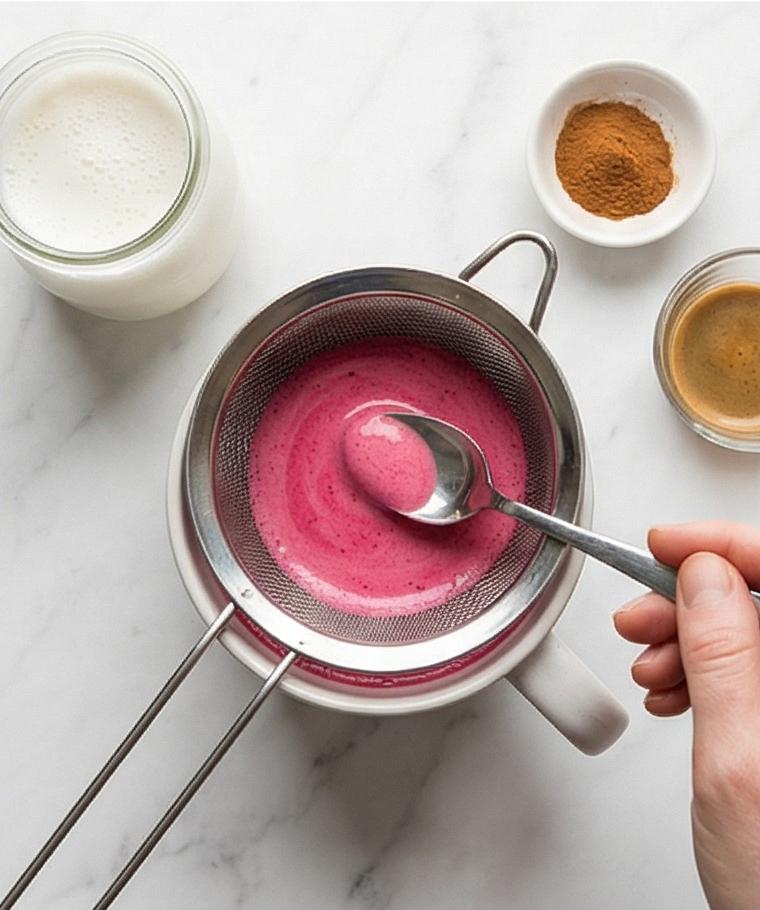
For the silkiest texture, strain the hot beetroot latte base through a fine-mesh sieve directly into a pre-warmed 10–12 oz ceramic mug set on the marble — if using espresso, place a small, hot espresso shot cup in the mug first and pour the beet base over it to create a gentle layered integration. Use a small spoon to gently press the liquid through the sieve; discard any residual pulp in the sieve. Position the froth jar and a tiny pinch bowl of ground cinnamon or beetroot powder nearby as you complete this assembly; the focus is on the liquid’s glassy surface and the thin ribbon of foam you’ll add next.
Step 6: Top, garnish, taste, and serve
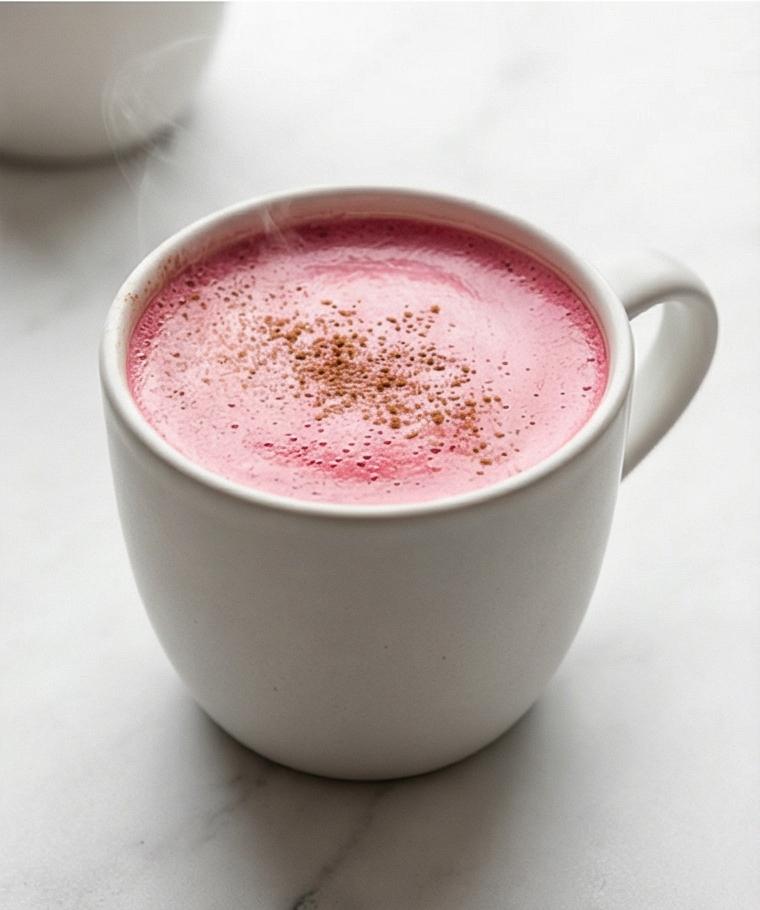
Spoon the reserved velvety milk foam on top of the latte to create a fine, airy cap, then finish with a delicate pinch of ground cinnamon or a dusting of beetroot powder for aroma and visual contrast. Taste carefully and, if you want it sweeter, stir in tiny increments of honey or maple syrup. Present the finished beetroot latte in a matte white 10–12 oz ceramic mug placed on the Carrara marble — the foam should show microbubbles and a soft satin sheen, the latte body a luminous deep-pink, and a faint steam wisp rising. Serve immediately while hot and aromatic.
Notes
- Use oat milk for a vegan, creamier texture.
- Blend thoroughly and strain for the silkiest mouthfeel.
- Heat milk slowly to 150-160°F to avoid scorching.
- Store the beet base in the fridge up to 48 hours and whisk before reheating.
- Adjust sweetness with honey or maple syrup to taste.