Lotus Biscoff Cheesecake Recipe
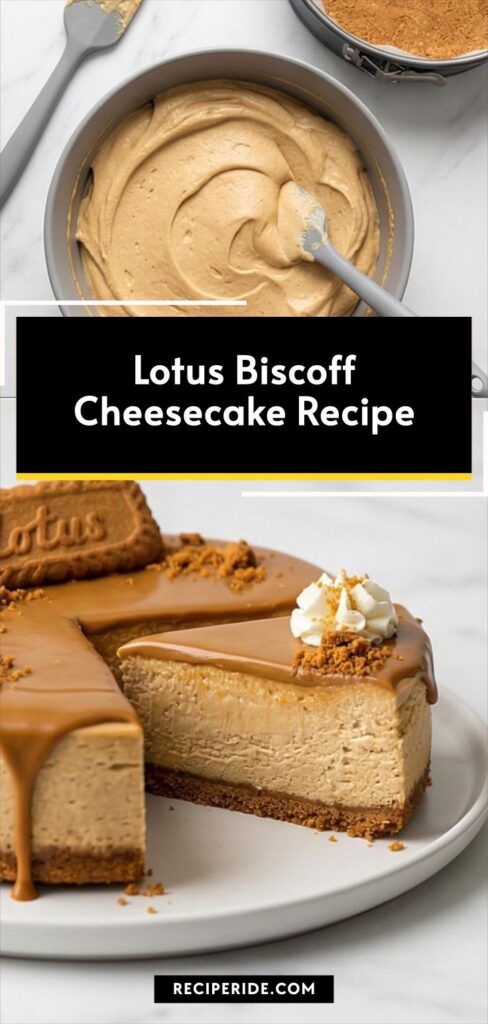
Make a silky Lotus Biscoff Cheesecake Recipe with a crunchy Biscoff crust and cookie butter filling. Chill and serve chilled.
Ingredients
- 12 ounces (340 grams) Lotus Biscoff cookies (about 32 standard cookies), crushed into fine crumbs
- 1/2 cup (8 tablespoons / 113 grams) unsalted butter, melted and slightly cooled
- 1/8 teaspoon fine sea salt (optional, to balance sweetness)
- 24 ounces (680 grams) full-fat brick-style cream cheese, at room temperature
- 2/3 cup (80 grams) powdered (confectioners’) sugar, sifted
- 1/4 teaspoon fine sea salt
- 1 cup (280 grams) smooth Lotus Biscoff spread (cookie butter), at room temperature
- 1 1/2 teaspoons pure vanilla extract
- 1 tablespoon (15 milliliters) freshly squeezed lemon juice, strained
- 1 cup (240 milliliters) cold heavy whipping cream (36–40% fat), straight from the refrigerator
- 2/3 cup (180 grams) smooth Lotus Biscoff spread (cookie butter)
- 3 tablespoons (45 milliliters) heavy whipping cream
- 6–8 Lotus Biscoff cookies, some left whole and some roughly crushed, for garnish
- Optional: 1/2 cup (120 milliliters) lightly sweetened whipped cream, for piping swirls on top
Instructions
Step 1: Prepare the pan and make the crumb base
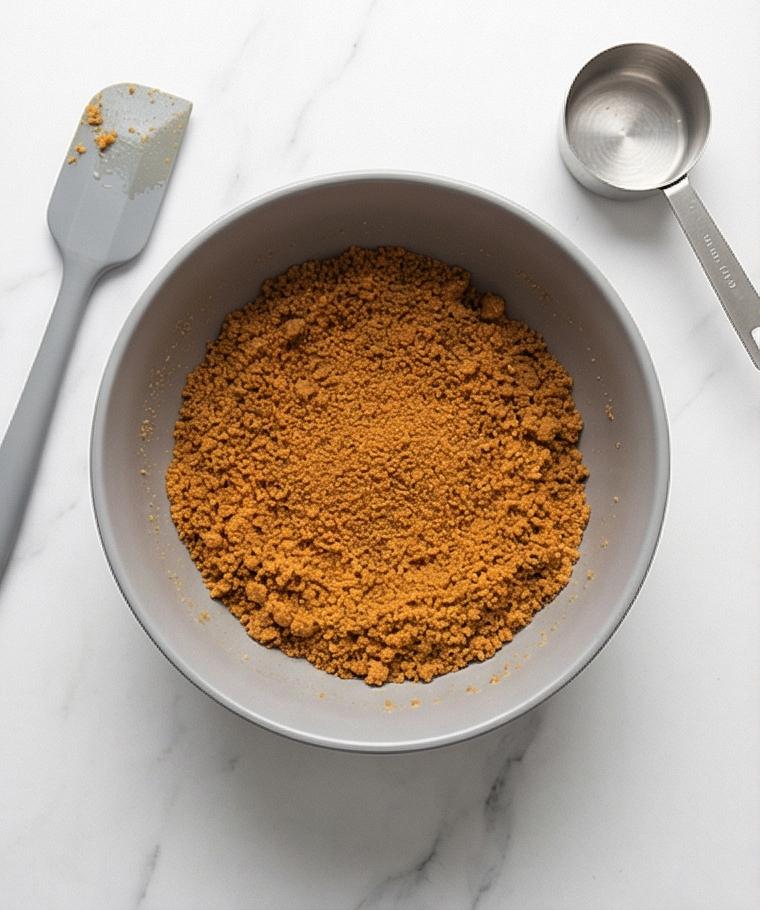
Lightly grease the bottom and sides of a 9-inch (23 cm) springform pan with a thin layer of butter or nonstick spray, then line the bottom with a round of parchment so slices release perfectly. Crush 12 ounces (340 g) of Lotus Biscoff cookies in a food processor until you have very fine, even crumbs; if you don’t have a processor, place cookies in a heavy-duty zip-top bag and crush with a rolling pin until they resemble fine sand. Transfer the crumbs to a medium mixing bowl, sprinkle in the optional 1/8 teaspoon fine sea salt, pour in 1/2 cup (113 g) melted, slightly cooled unsalted butter, and stir with a spatula until the mixture looks like moist, wet sand and holds when pressed between fingers. The texture should be dense, slightly glossy where the butter has coated the particles, and free of large shards.
Step 2: Form and chill the crust
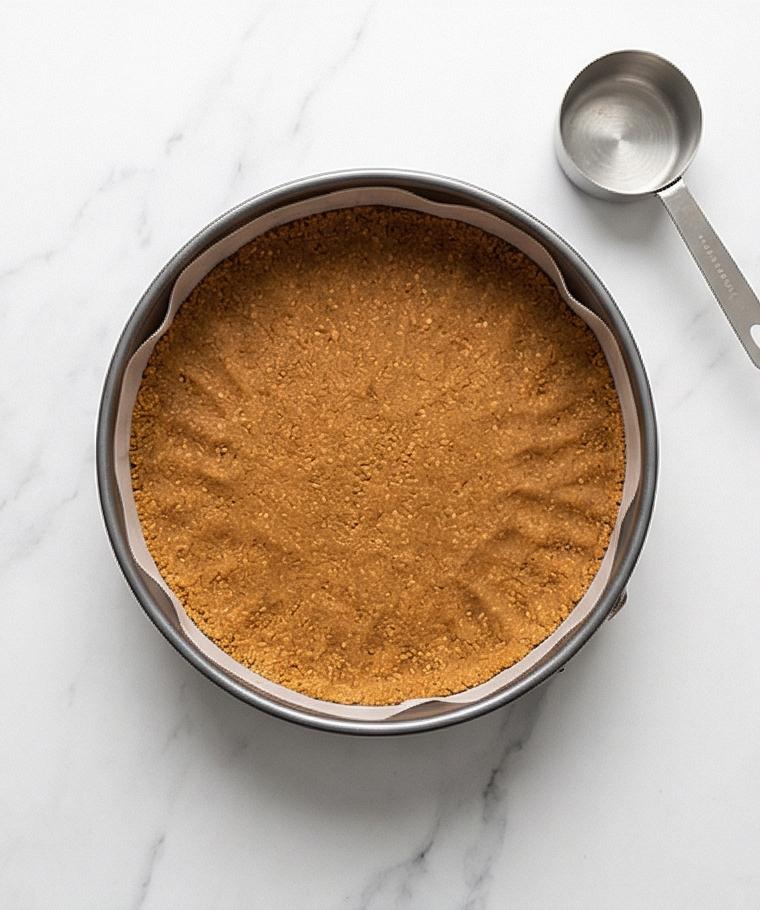
Pour the moistened crumb mixture into the prepared springform pan. Use your fingers to spread the crumbs evenly over the base, then use the flat bottom of a measuring cup or glass to press the crumbs firmly into a smooth, even layer, taking them slightly up the sides if you like a higher edge. The pressed crust should be compact, matte with tiny granular textures and beak-to-edge continuity where crumbs meet the pan wall. Place the pan in the refrigerator for at least 20–30 minutes to firm the crust so it slices cleanly later.
Step 3: Beat the cream cheese and sweeten
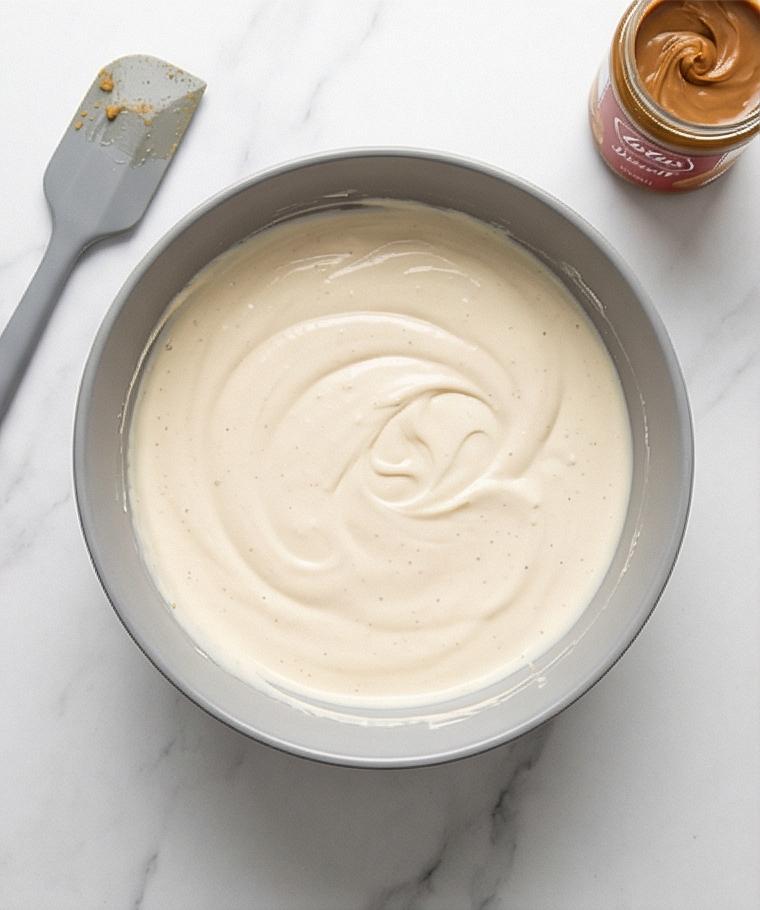
Make sure the 24 ounces (680 g) cream cheese are fully at room temperature; cube them and beat in a large mixer bowl on medium for 2–3 minutes until utterly smooth and velvety with no lumps. Add 2/3 cup (80 g) sifted powdered sugar and 1/4 teaspoon fine sea salt, beginning on low speed to avoid a sugar cloud, then increase to medium until the mixture is glossy, silk-like, and slightly aerated. Scrape the bowl down once or twice so the mass is homogenous and pale. The finished base should read as a creamy, dense canvas ready to accept Biscoff’s caramel color.
Step 4: Flavor with Biscoff and whip cream
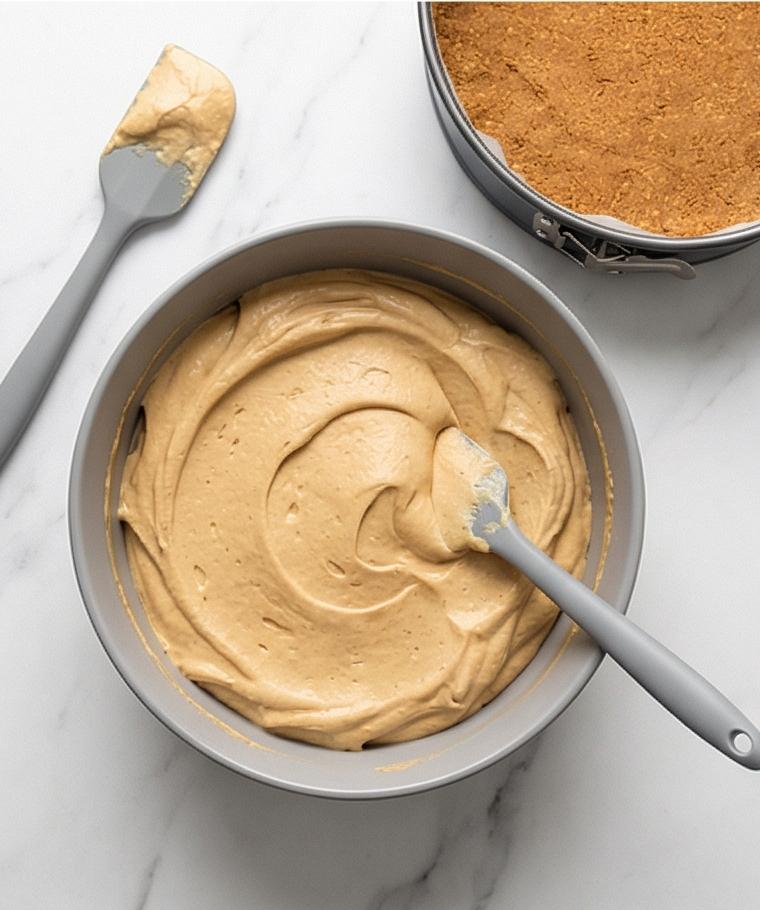
Add 1 cup (280 g) room-temperature Lotus Biscoff spread, 1 1/2 teaspoons pure vanilla extract, and 1 tablespoon freshly squeezed, strained lemon juice to the cream cheese. Beat on medium until completely smooth and uniform in warm tan color, with a glossy, slightly thick viscosity. Separately, in a clean chilled bowl, whip 1 cup (240 ml) very cold heavy cream to medium-firm peaks: the cream should be shiny, soft at the tips, and hold shape without graininess. These two components will marry to create a light yet custardy mousse.
Step 5: Fold, fill, and set
Gently lighten the Biscoff cream cheese by folding in about one-third of the whipped cream with a spatula, sweeping down the center and around the sides until streak-free. Fold in the remaining whipped cream very gently until the mixture is airy, uniformly caramel-tan, and smooth but still pillowy. Spoon or pour the filling into the chilled crust, use an offset spatula to level the surface until it is even and free of air pockets, then tap the pan twice on the counter to release large bubbles. Cover the pan (without touching the surface) and chill for at least 6 hours, preferably 8–12 hours or overnight, until the center is firm to the touch.
Step 6: Warm the topping, glaze, garnish, and serve
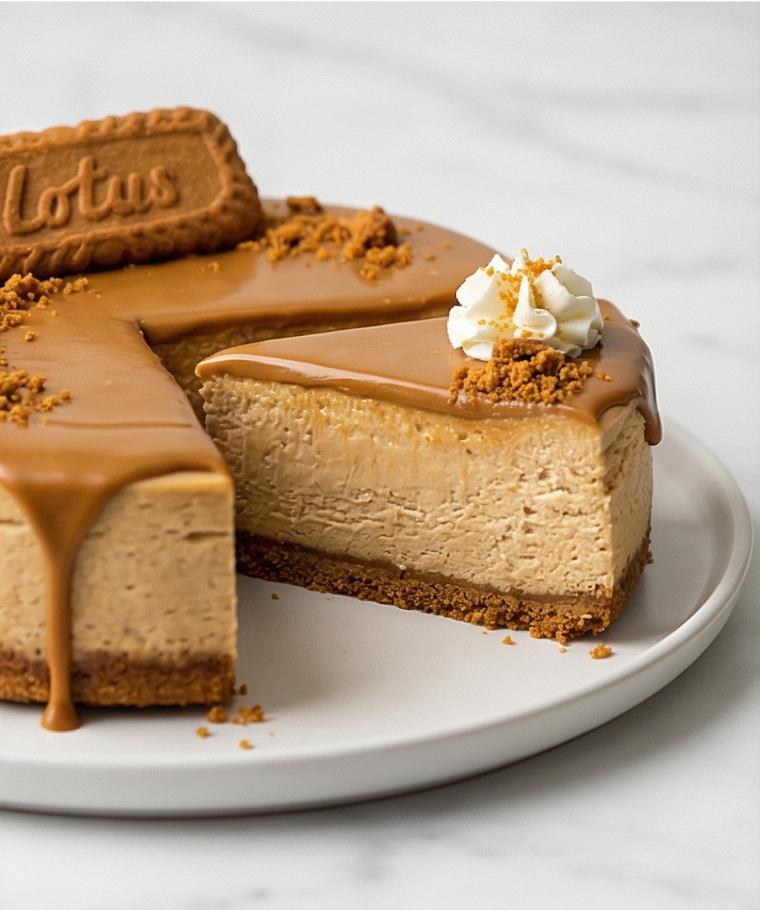
Warm 2/3 cup (180 g) Lotus Biscoff spread with 3 tablespoons (45 ml) heavy cream until pourable and silky — microwave in short bursts or gently heat the cream then stir in the spread. Let the mixture cool to lukewarm so it won’t melt the chilled cake. Run a thin knife around the pan, release the springform ring, slide the cheesecake onto a serving plate, and starting from the center slowly pour the lukewarm Biscoff topping, spreading gently to within about 1/4 inch of the edge or letting a few drips fall for character. Press 6–8 whole Lotus cookies around the edge and scatter roughly crushed pieces in the center; pipe optional small whipped rosettes and tuck cookie fragments into each. Chill 30–45 minutes more, then slice with a warmed dry knife into 10–12 portions. Serve very chilled with extra drizzle and a sprinkle of crumbs.
Notes
- Chill the cheesecake at least 6 hours, preferably overnight, for best texture.
- Use full-fat brick-style cream cheese and room temperature for lump-free filling.
- Chill bowls and beaters before whipping cream to help it reach firm peaks.
- Warm the Biscoff topping to pourable temperature but let it cool slightly so it does not melt the filling.
- For cleaner slices, warm a knife under hot water, dry it, and wipe between cuts.