Jalapeno Cheddar Bread Recipe
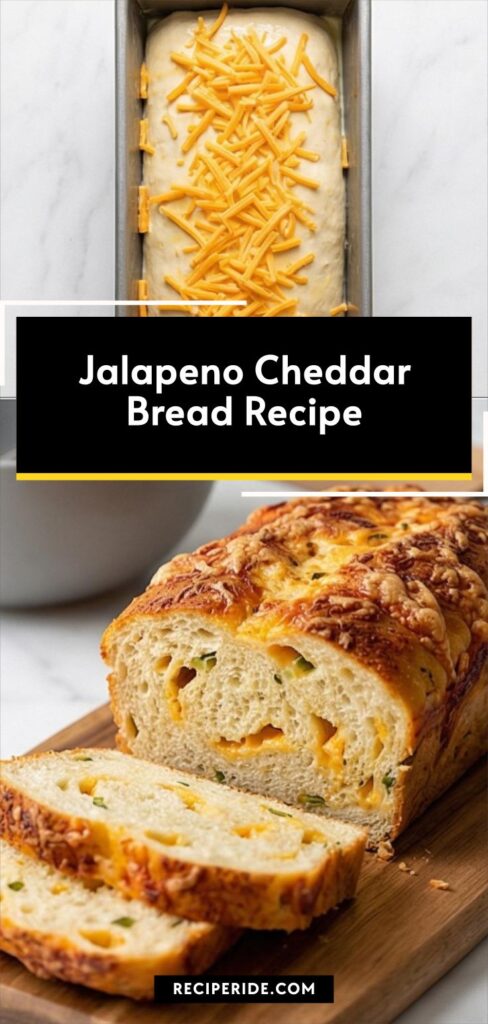
Bake the Jalapeno Cheddar Bread Recipe for a cheesy, spicy loaf perfect for sandwiches and toast.
Ingredients
- 1 cup (240 ml / 240 g) warm water, 105–110°F (40–43°C)
- 1 tablespoon (12 g) granulated sugar
- 2 1/4 teaspoons (7 g) active dry yeast
- 3 cups (360 g) bread flour, plus 2–3 tablespoons (15–25 g) extra for kneading and dusting
- 1 1/2 teaspoons (9 g) fine sea salt
- 1 teaspoon (3 g) garlic powder (optional, for extra savory flavor)
- 3 tablespoons (42 g) unsalted butter, melted and cooled to just warm
- 1 large egg (about 50 g without shell), at room temperature
- 3 medium fresh jalapeños (about 1/2 cup / 60 g), seeded and finely chopped, patted very dry
- 2 cups (200 g) sharp cheddar cheese, coarsely shredded, divided (1 1/2 cups / 150 g for the dough, 1/2 cup / 50 g for topping)
- 1 tablespoon (15 ml) whole milk or heavy cream, for brushing the top (or 1 beaten egg for an egg wash)
- 1/2 teaspoon (1 g) smoked paprika (optional, for sprinkling on top)
- 1 teaspoon (5 ml) neutral oil or soft butter, for greasing the bowl and pan
Instructions
Step 1: Proof the yeast
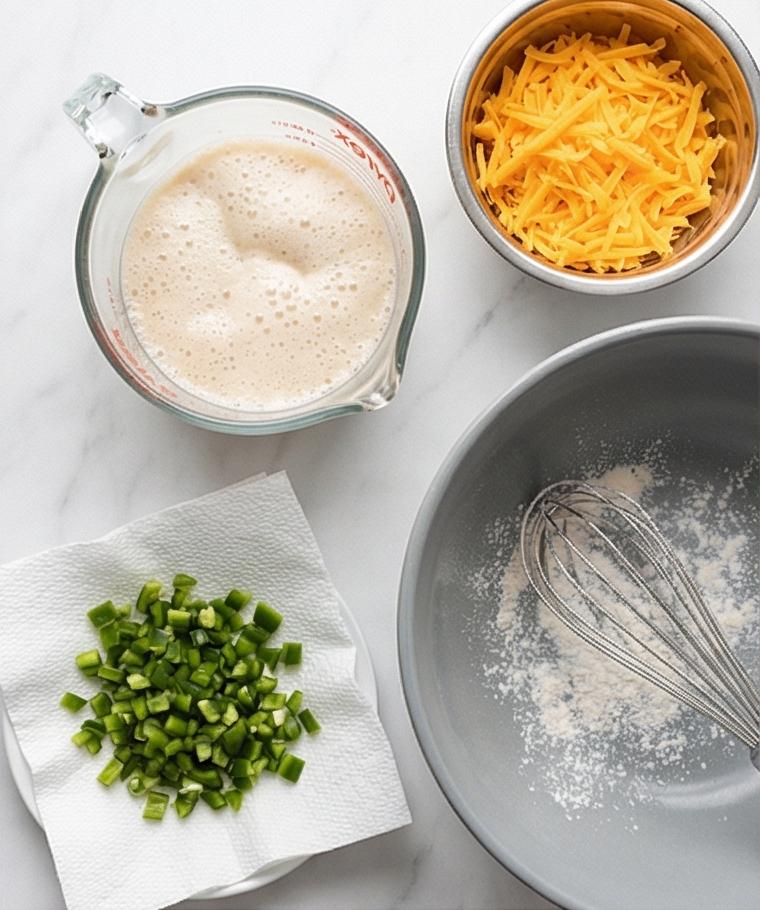
In a medium glass measuring cup combine warm water (105–110°F) with the granulated sugar, stirring until dissolved. Sprinkle the active dry yeast across the surface and let it sit undisturbed until the top becomes visibly foamy and aromatic—this bloom is the first sign the dough will rise. If the mixture does not develop a fluffy foam and a yeasty smell, discard and start over with fresh yeast.
Step 2: Prep the jalapeños and cheddar
Seed and finely dice the jalapeños, then spread them on a paper towel and press gently to remove as much surface moisture as possible so they won’t make the dough gummy. Coarsely shred the sharp cheddar and divide it into the portion for the dough and a chilled portion reserved for topping. Keep the topping cheese cold until ready to use for better melting control.
Step 3: Mix the dry ingredients
In a large matte-grey ceramic mixing bowl whisk together the bread flour, fine sea salt, and garlic powder (if using) until evenly distributed. You should see a fine, powdery surface with faint ripples where the whisk passed through—this is the dry canvas the wet ingredients will hydrate.
Step 4: Combine wet ingredients
To the foamy yeast, whisk in the melted, slightly cooled unsalted butter and the room-temperature egg until the liquid is smooth, pale, and slightly glossy. The mixture should be homogenous, with the butter fully incorporated and no streaks of yolk.
Step 5: Form a rough dough
Make a well in the center of the flour mixture and pour in the wet ingredients. Fold with a sturdy spatula or, on low speed, the dough hook until a rough, shaggy dough forms and most of the flour is moist—expect an irregular, clumped surface with dry flour pockets at the edges.
Step 6: Knead to a smooth, elastic dough
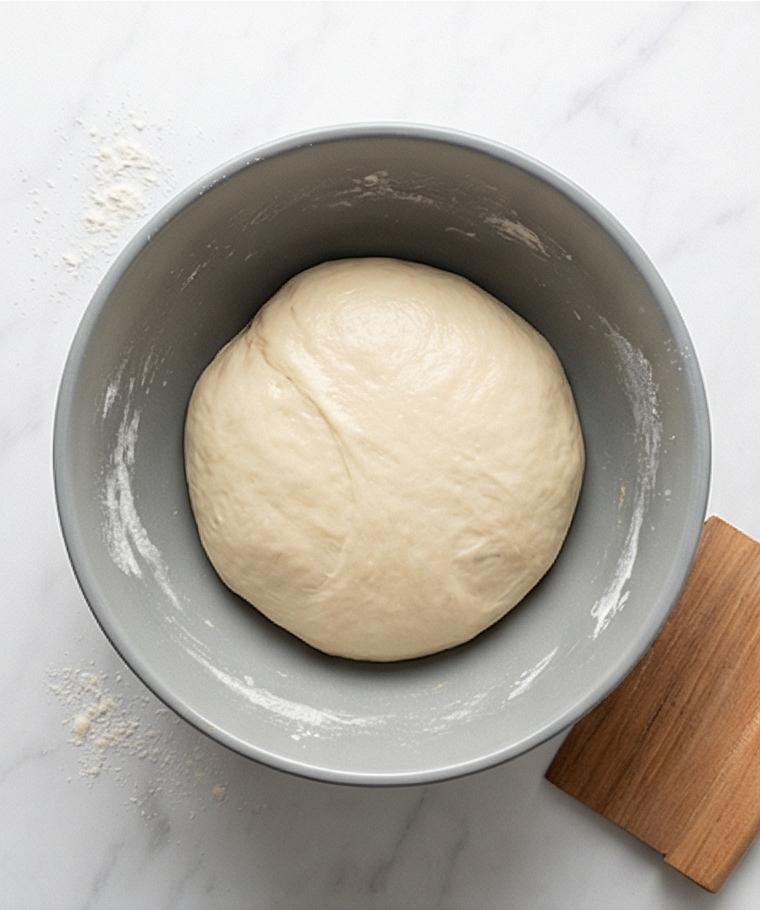
Turn the shaggy mass onto a lightly floured surface (or continue in the mixer) and knead until the dough becomes smooth, elastic, and slightly tacky but not sticky; this usually takes 6–10 minutes depending on method. The dough should pass from ragged clumps to a satin-like surface that springs back when gently pressed.
Step 7: Add the jalapeños and cheddar into the dough
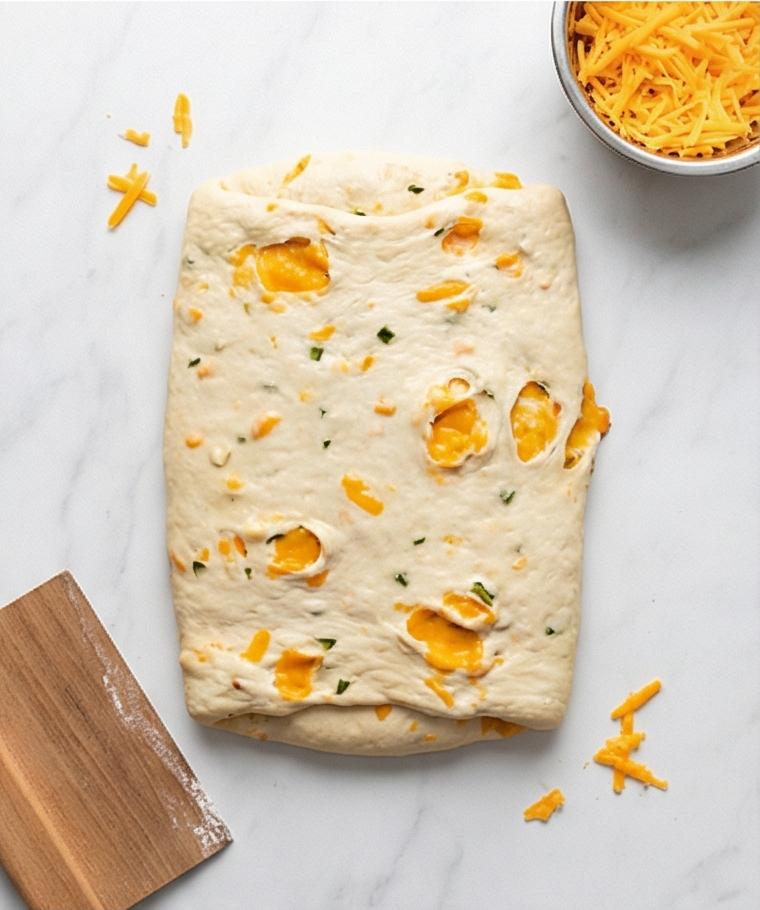
Flatten the kneaded dough into a rectangle and scatter the measured cheddar and the very dry chopped jalapeños evenly across the surface. Fold the dough over like a letter and knead gently just until the add-ins are well distributed—patches of orange cheese and green jalapeño flecks should be visible through the dough’s slightly glossy skin.
Step 8: Shape and rest in an oiled bowl
Lightly oil a clean large bowl with neutral oil or soft butter and shape the dough into a smooth ball by tucking the edges under. Place the dough seam-side down in the bowl, cover tightly with plastic wrap or a damp towel, and set it somewhere warm and draft-free.
Step 9: First rise until doubled
Allow the dough to rise at roughly 75–80°F until doubled in size, about 60–75 minutes. The surface should look puffed and smooth; a gentle poke will leave an indentation that slowly springs back.
Step 10: Prep pan and preheat
Near the end of the rise, lightly grease a 9 x 5–inch loaf pan and preheat the oven to 375°F with the oven rack in the center position so the loaf bakes evenly.
Step 11: Deflate gently and shape
Turn the risen dough out onto a lightly floured surface, pressing gently to expel large air pockets while keeping the interior light. Press the dough into an 8 x 10–inch rectangle, taking care not to over-deflate the crumb.
Step 12: Roll into a tight log
From the short side, roll the dough up tightly into a log and pinch the seam closed to create surface tension. Tuck the ends under so the loaf is neat and uniform, then transfer it seam-side down into the prepared 9 x 5–inch loaf pan.
Step 13: Second rise in the pan
Cover the pan loosely and let the loaf rise again in a warm spot for 30–45 minutes, until it has risen about 1 inch above the rim and looks puffy—when you press the side the indentation should slowly spring back but remain faintly visible.
Step 14: Egg wash (or milk) and top with cheese
Just before baking, brush the top of the risen loaf lightly with milk, cream, or a thin egg wash, then sprinkle the reserved shredded cheddar evenly over the surface. If you like, finish with a light dusting of smoked paprika for color and aroma.
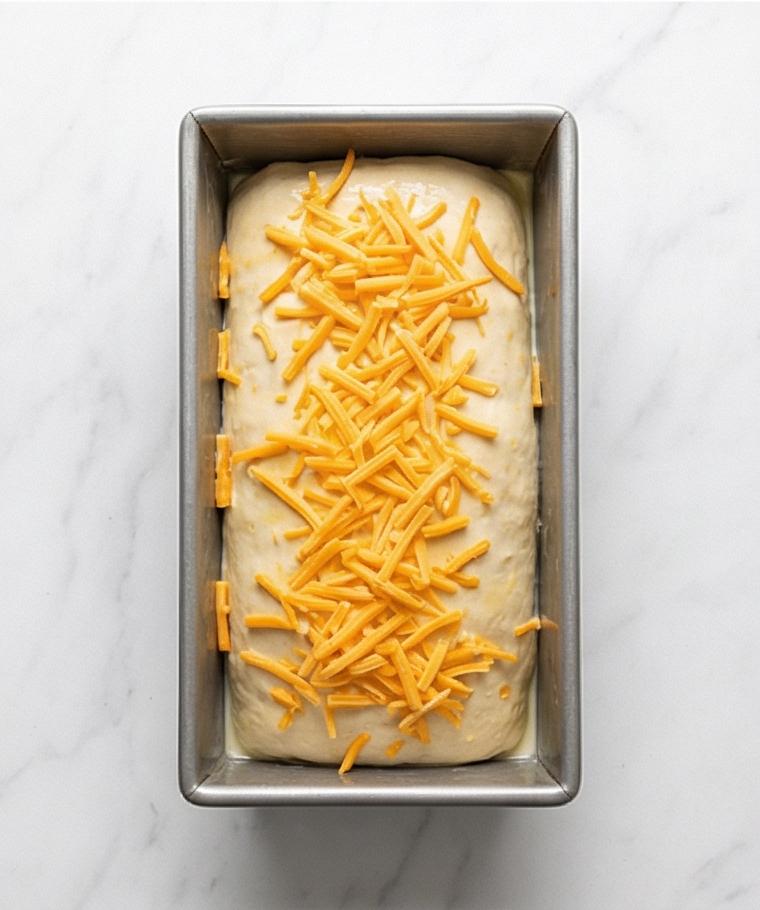
Step 15: Bake until deep golden
Place the loaf (still in the pan) on the center rack and bake at 375°F for 25–30 minutes, looking for a deep golden-brown top with melted, bubbling cheese. The crust should sound hollow when tapped and an instant-read thermometer inserted into the center will read 195–200°F when done.
Step 16: Tent if browning too quickly
If the top browns before the center reaches the target temperature, tent the loaf loosely with foil to prevent overbrowning while the interior finishes baking.
Step 17: Cool in the pan briefly, then on a rack
Remove the pan from the oven and let the loaf rest in the pan on a cooling rack for 10 minutes to set the crumb. Carefully turn the loaf out onto the rack and let it cool at least another 30 minutes so the interior finishes its final set and the cheese stops pooling.
Step 18: Slice and serve
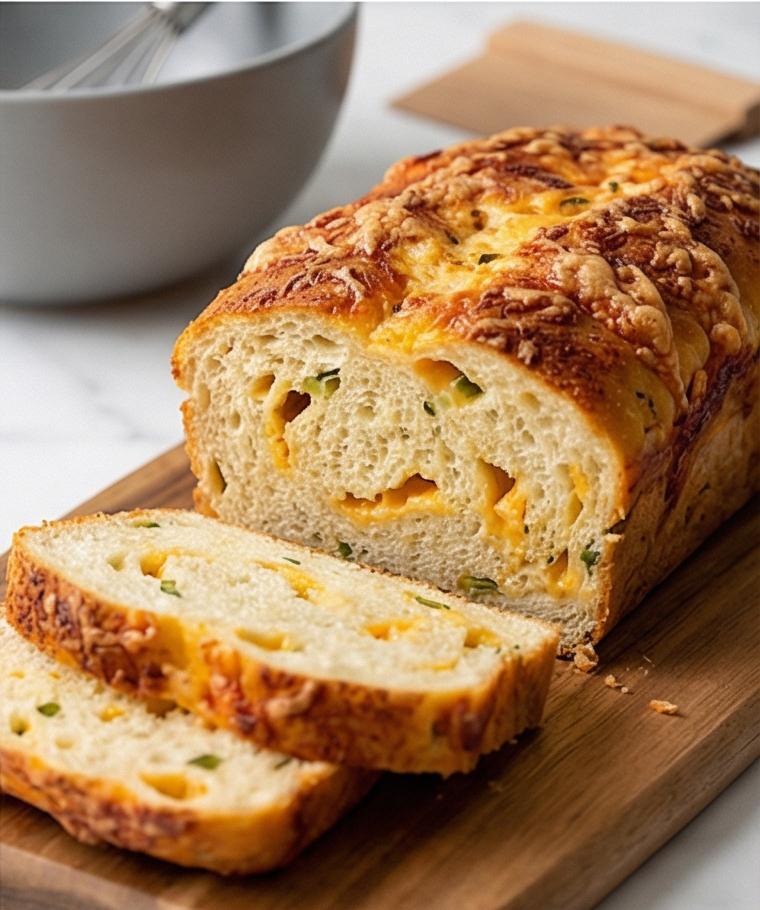
Using a sharp serrated knife, slice the loaf into uniform pieces. Serve slightly warm or at room temperature—this bread shines plain, with butter, or as the foundation for grilled cheese or savory French toast.
Step 19: Store or freeze leftovers
After the loaf cools completely, wrap tightly in plastic wrap or place in an airtight container for up to two days at room temperature. For longer storage, slice and freeze well-wrapped for up to two months; reheat slices in a toaster or a 350°F oven until warmed through.
Notes
- Pat jalapeños very dry to prevent a gummy dough.
- Use a digital thermometer to check water and internal loaf temperature.
- Keep topping cheese cold for better melt control.
- Freeze slices for longer storage and reheat in a toaster or 350°F oven.
- For a milder loaf, substitute poblano or roasted red pepper for jalapeños.