Strawberry Rhubarb Bread
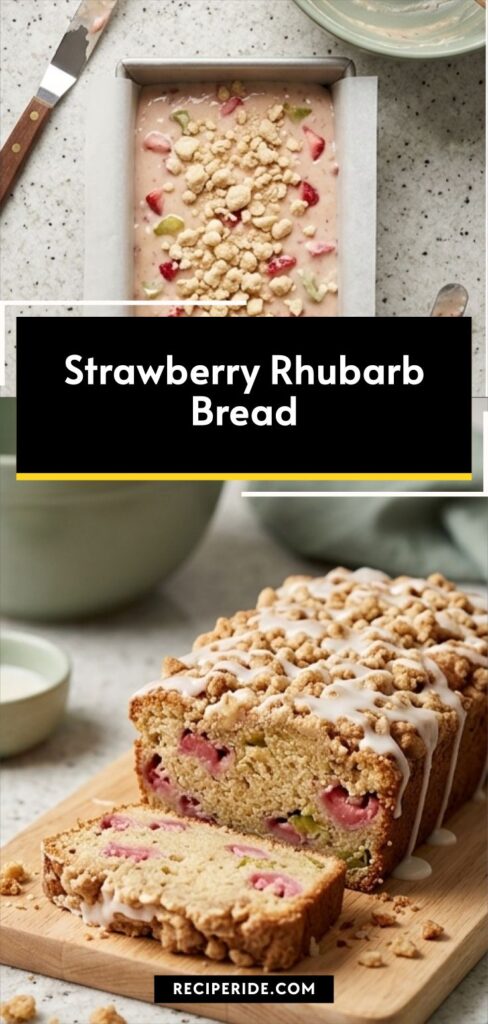
Bake Strawberry Rhubarb Bread: tender, fruity loaf with a buttery crumble and sweet glaze.
Ingredients
- ¾ cup granulated sugar
- ¼ cup brown sugar
- ½ cup buttermilk
- 2 teaspoons lemon juice
- ½ cup canola or vegetable oil (unsalted melted butter may be subsituted)
- 2 large eggs
- 2 teaspoons vanilla extract
- 2 cups all-purpose flour
- 1 ½ teaspoon baking powder
- ½ teaspoon baking soda
- 1 teaspoon ground cinnamon
- ½ teaspoon kosher salt
- 1 cup strawberries (diced* (See Notes))
- 1 cup rhubarb (sliced thinly* (See Notes))
- ½ cup all purpose flour
- ¼ cup granulated sugar
- ¼ cup light brown sugar (packed)
- 3 tablespoons unsalted butter (very well-softened to room temp)
- 1/8 teaspoon salt (or to taste)
- 1 cup confectioners' sugar
- ½ teaspoon vanilla extract
- 3-5 tablespoons heavy cream (half-and-half or milk may be substituted)
Instructions
Step 1: Preheat & prep the loaf pan
Preheat the oven to 350°F and prepare a 9x5-inch loaf pan by spraying it with cooking spray or greasing and flouring it; for an easy, foolproof removal, make a parchment sling that drapes over the long sides and spray that as well. This small extra step keeps the crumble intact when you lift the loaf out later, and it’s a gentle, practical start to the bake.
Step 2: Whisk the wet ingredients
In a large mixing bowl combine the granulated and brown sugars with the buttermilk, lemon juice, oil (or melted unsalted butter), eggs, and vanilla; whisk until the sugars have mostly dissolved and the mixture looks homogenous and glossy. The batter will be slightly fluid and pale, with a faint sheen from the oil and eggs—this is the tender base for the loaf.
Step 3: Whisk the dry ingredients
In a separate bowl whisk together the all-purpose flour with the baking powder, baking soda, ground cinnamon, and kosher salt until evenly distributed. The dry mixture should be light and airy, with no visible streaks of leavening agents, so it blends smoothly into the wet mix without overworking.
Step 4: Combine wet and dry
Add the dry ingredients to the wet mixture and stir gently just until the flour streaks disappear; you want a slightly thick, ribboning batter without overmixing. Stop as soon as the batter comes together—this preserves tenderness and avoids a tougher crumb.
Step 5: Fold in the fruit
Fold in the diced strawberries and thinly sliced rhubarb with a wide spatula, folding just until the fruit is evenly dispersed in the batter. Look for bright pink and green flecks suspended through the pale batter—this is the delightful visual promise of the finished loaf.
Step 6: Transfer and level
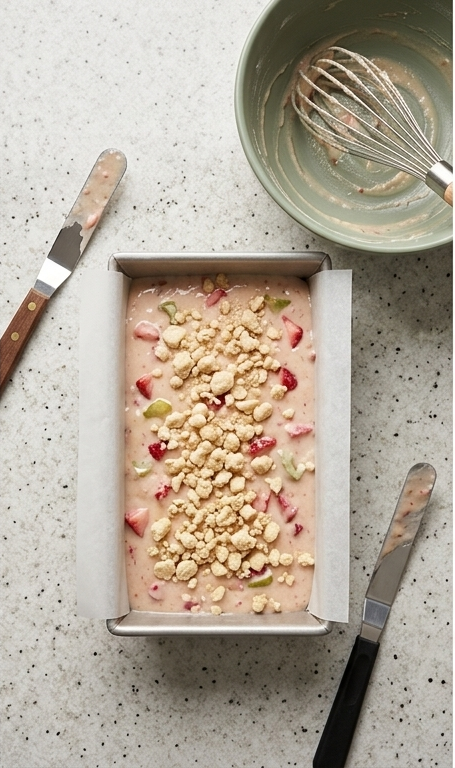
Pour the batter into the prepared parchment-lined loaf pan and gently smooth the top with an offset spatula so it’s even but not compressed; you should still see fruit pieces peeking at the surface. This is the final, unbaked silhouette of your loaf—soft, pillowy batter contained in a neat rectangular form.
Step 7: Make the crumble topping
In a medium bowl add the flour, granulated and light brown sugars, the well-softened butter, and a pinch of salt; use a pastry cutter or your fingertips to cut and fluff the butter into the dry ingredients until small pebbles and loose crumbles form. The texture should be pebble-like and friable—loose bits that will bake into a crisp, rustic topping rather than a paste.
Step 8: Top, ready to bake
Evenly sprinkle the crumble over the smoothed batter so the small pebbles sit atop the loaf in a single, distributed layer. This pre-bake appearance—pale pink-speckled batter under a scatter of raw, buttery crumbles—is the exact moment the loaf is poised to go into the oven and transform.
Step 9: Bake until golden and set
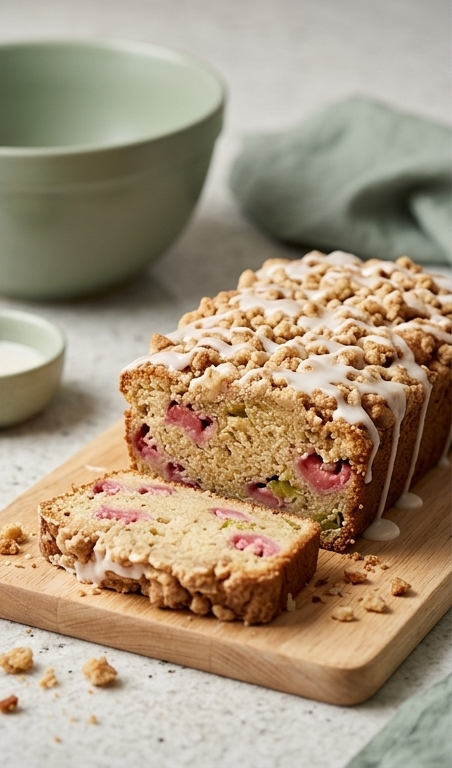
Bake the topped loaf at 350°F for about 55 minutes, until the crumble is lightly golden, the top springs back to a gentle touch, and a toothpick inserted in the center comes out clean (or the internal temperature reads about 200°F). The finished crust should be warm golden-brown with crisp crumble islands and a tender, fruit-speckled interior.
Step 10: Cool and unmold
Allow the loaf to cool in the pan on a wire rack for about 30 minutes so the crumb sets, then carefully lift it out on the parchment sling and transfer to the rack to cool completely before glazing. Cooling fully keeps the glaze from sliding and helps the loaf slice cleanly.
Step 11: Whisk the glaze
In a medium bowl whisk together confectioners’ sugar and vanilla while slowly drizzling in the cream until you reach a smooth, pourable glaze that still holds a faint ribbon when it falls from the whisk. Adjust sugar or dairy for a thicker or thinner drape—this glaze will settle into the crumble crevices and add a glossy, sweet finish.
Step 12: Glaze, slice, and store
Evenly drizzle the glaze across the cooled loaf so it pools slightly between crumble peaks, then slice and serve—each cut should reveal a tender, moist crumb mottled with pink strawberry and green rhubarb. Store airtight at room temperature up to 48 hours (or refrigerate up to one week or freeze up to three months); expect a slight loss of crumble crispness over time but the loaf will remain flavorful.
Notes
- Use frozen strawberries if fresh are out of season; drain excess liquid first.
- Thin plain yogurt with milk to substitute for buttermilk.
- Make a parchment sling to lift the loaf without damaging the crumble.
- Store airtight at room temperature up to 48 hours or freeze slices up to three months.
- Check leaveners for freshness if loaf seems flat.