I remember the first time I made the Croissant French Toast Recipe: the kitchen smelled like warm butter and orange zest, and the flaky croissant edges browned into crunchy, crackly goodness. I’ve fallen for this version because it balances rich custardy centers with crisp, almost caramelized exteriors, so you get both textures in every bite. It’s the kind of recipe I bring out when friends linger over coffee and ask for something a little special. If you want a brunch that feels elevated but is still comfortingly simple, this Croissant French Toast Recipe is your new go-to.
How This Recipe Became My Rainy-Day Favorite
There was a gray Saturday when I had six slightly stale bakery croissants and nothing else planned. I whisked eggs with cream and milk, tossed in a pinch of cinnamon, and watched the custard turn glossy; the smell alone felt like a warm blanket. As I seared the soaked croissant halves, the kitchen filled with a toasty caramel scent that made me think of cozy cafes and slow mornings. Serving a stack with berries and a warm ribbon of maple syrup, I realized comfort can arrive on a plate in under an hour. The first bite—crisp exterior yielding to a lush, custardy interior—was the kind of small joy worth repeating. Since then, this Croissant French Toast Recipe has been the centerpiece of quiet weekends and celebratory brunches alike.
The Ingredients That Make This Shine
- 6 large bakery-style croissants: The foundation. Slightly stale croissants soak without collapsing. Substitute with brioche if needed.
- 4 large eggs: Bind the custard and add richness; pasture-raised eggs deepen flavor.
- Whole milk and heavy cream: Create the custardy texture; use half-and-half for a lighter option.
- Granulated sugar, cinnamon, and sea salt: Balance sweetness and spice; adjust cinnamon to taste.
- Vanilla and orange zest: Bright aromatics; swap orange for lemon for a different note.
- Butter, maple syrup, fresh berries, powdered sugar, whipped cream: For cooking and finishing; use good-quality maple syrup and seasonal fruit.

Essential Kitchen Tools and Why They Matter
A few simple tools make this Croissant French Toast Recipe easy and reliable. A sturdy skillet gives even browning; cast iron or stainless steel works best for consistent heat. A whisk helps emulsify the custard so it coats evenly, and a shallow dish lets croissant halves soak without overcrowding. A wire rack over a rimmed baking sheet keeps finished pieces crisp while you finish the rest. A fine-mesh sieve is handy for dusting powdered sugar and keeping presentation clean. If you don’t have a wire rack, use a plate and paper towels briefly, but expect slightly softer bottoms.
- Skillet (cast iron or heavy stainless): For even browning and control.
- Whisk: To make a smooth, glossy custard.
- Shallow dish: To soak croissant halves in a single layer.
- Wire rack and rimmed baking sheet: To keep pieces crisp while cooking.
- Fine-mesh sieve: For a delicate dusting of powdered sugar.
Step-by-Step Preparation Guide
Step 1: Warm the oven and prepare the resting rack
Preheat the oven to 200°F (95°C) and place a wire rack over a rimmed baking sheet; set this warming station inside the oven so finished croissant halves can stay crisp while you finish the rest. This gentle low heat is only to hold the cooked pieces — it’s a small but important step to keep textures contrasty: crisp exterior, custardy interior. Treat the wire rack and sheet like a staging area for finished pieces rather than the cooking surface.
Step 2: Slice each croissant and arrange in a single layer
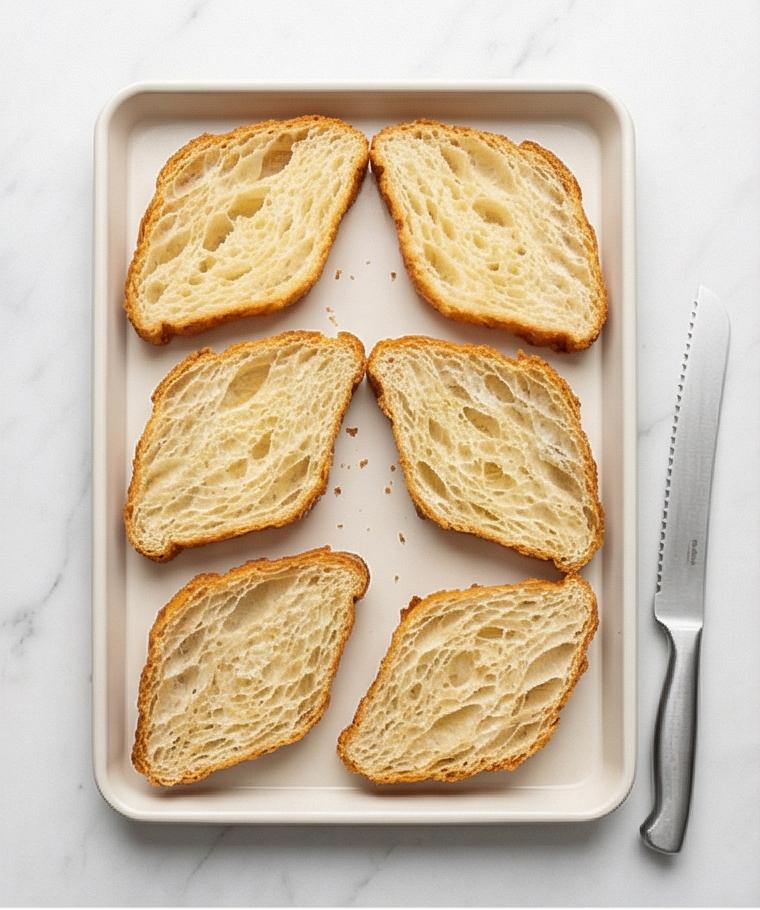
With a serrated knife, slice each bakery-style croissant horizontally so you have a top and bottom. Arrange the split croissants, cut-side up, in a single layer on a tray or sheet—slightly stale croissants are ideal because they soak without collapsing. Keep the tray uncluttered so every half has room to absorb and breathe; this is the staging that determines how evenly each piece will drink the custard.
Step 3: Whisk the custard until smooth and speckled
Crack the eggs into a mixing bowl and whisk vigorously until homogenous and slightly frothy. Add the whole milk and heavy cream and whisk again until silky. Stir in the granulated sugar, ground cinnamon and fine sea salt, whisking until the sugar mostly dissolves and the cinnamon is evenly distributed. Finish by whisking in vanilla extract and the finely grated orange zest (if using) until the custard is smooth, slightly thickened, and dotted with tiny cinnamon and zest specks. The final custard should be glossy, pourable, and uniform in color and texture.
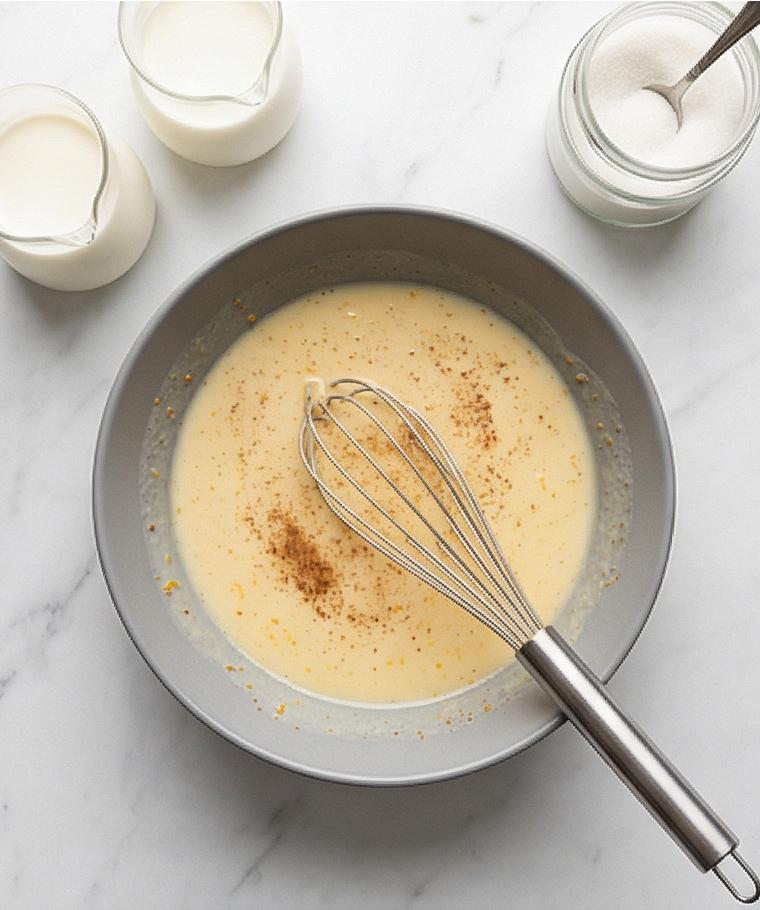
Step 4: Transfer custard to a shallow dish and soak the croissant halves
Pour the finished custard into a shallow, wide dish that will hold several croissant halves in a single layer. Place 3–4 cut croissant halves, cut side down, into the custard and let them soak 20–30 seconds per side—just long enough to saturate the layers while the pieces still keep their shape. Lift each half allowing excess custard to drip back into the dish, then set them aside in a single layer ready for quick cooking. The soaked croissant surfaces should feel saturated and glossy but not falling apart.
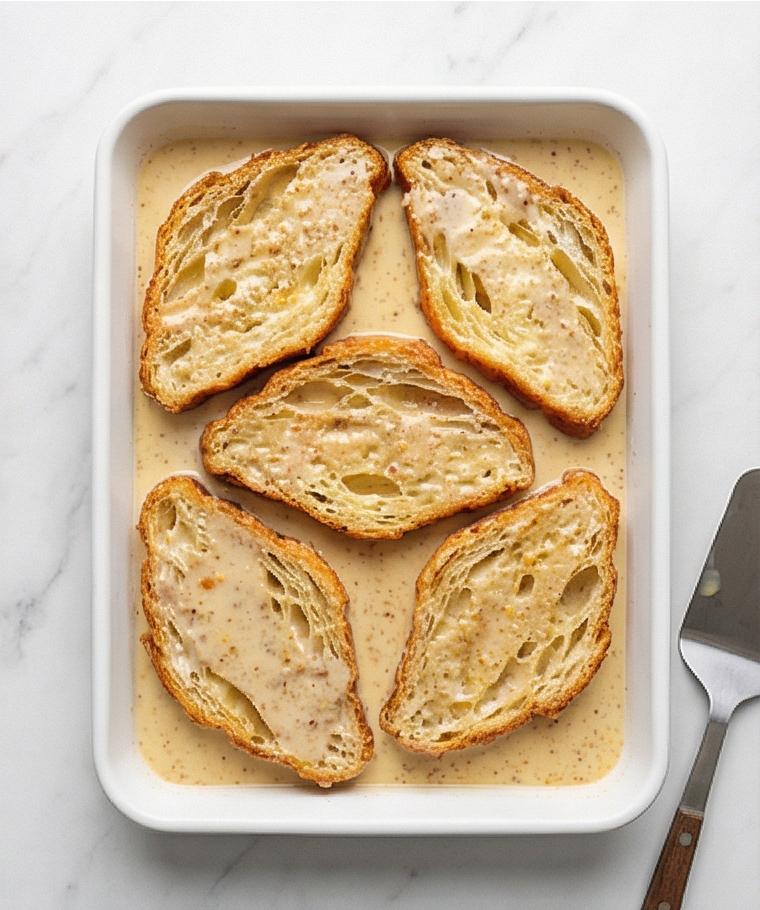
Step 5: Brown each soaked croissant until crisp, then rest on the rack
Lightly butter a skillet and cook the soaked croissant halves in a single layer until the first side is deep golden brown and crisp in spots (2–3 minutes), then flip and cook the second side until centers feel set and springs back when pressed. Adjust heat as needed so the butter gently sizzles without burning. Transfer each finished half to the wire rack on the rimmed baking sheet to allow steam to escape and to preserve the crisp exterior. Wipe out the pan and add fresh butter between batches if the fond darkens.
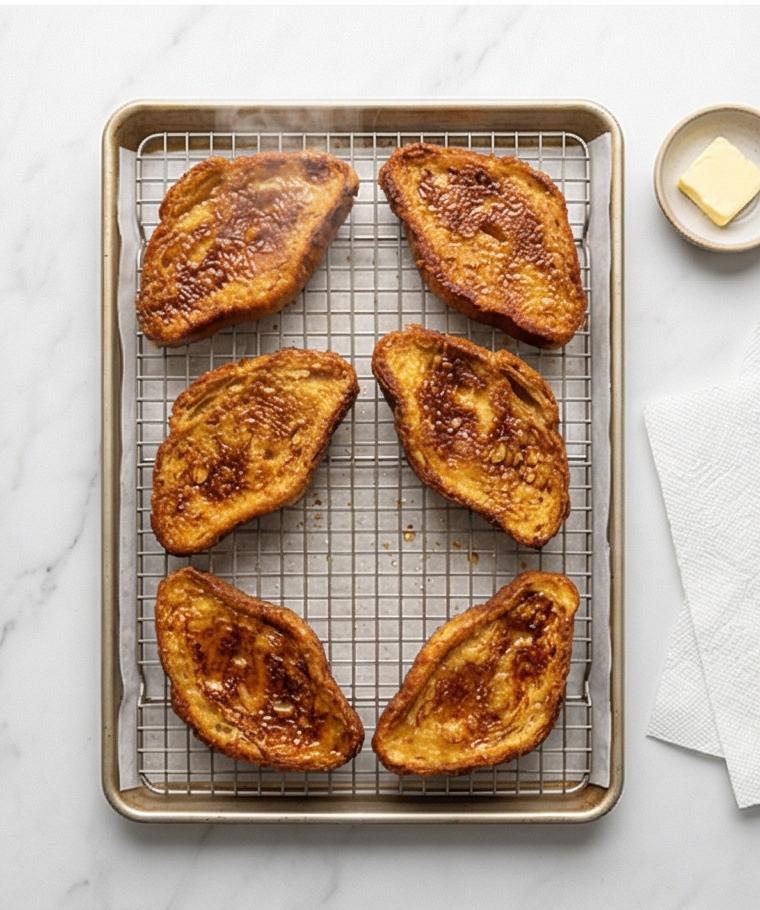
Step 6: Stack, dress, and serve immediately while hot
Stack two to three croissant halves per plate, cut sides facing up to showcase the custardy interior. Generously drizzle warmed maple syrup over the stack, add a handful of fresh mixed berries, and dust lightly with powdered sugar through a fine-mesh sieve. Place a small dollop of lightly sweetened whipped cream on the side if desired. Serve immediately while the outside is hot and crisp and the interior remains soft and custardy.
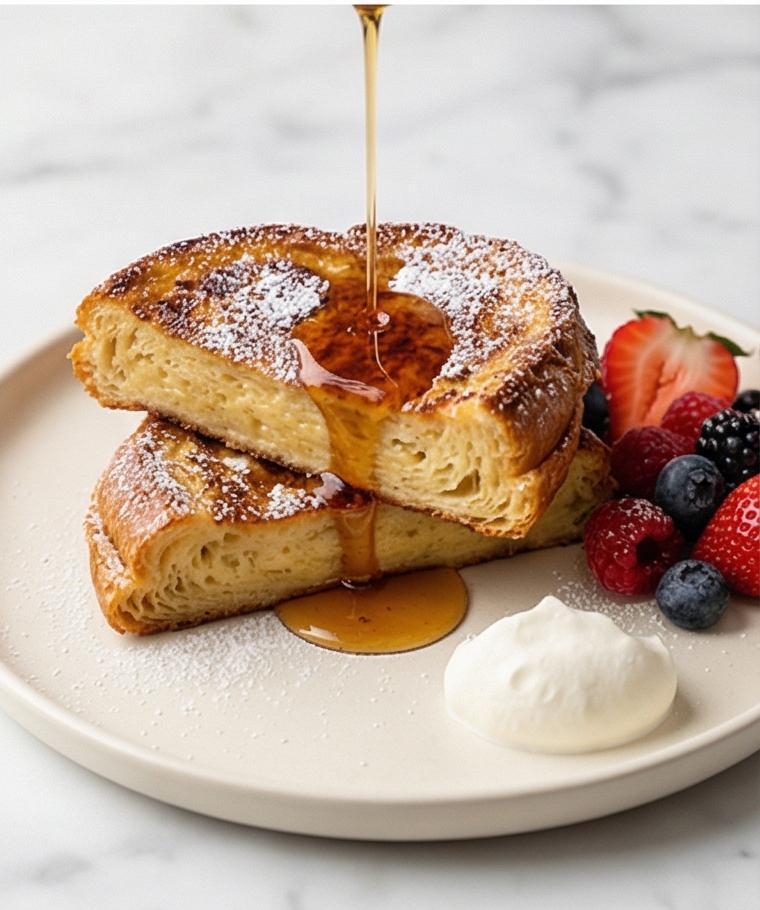
Making It Your Own
Try a few simple experiments to make this Croissant French Toast Recipe feel personal. For a citrus twist, add lemon zest instead of orange and finish with a sprinkle of toasted almonds.
If you want dairy-free, swap the whole milk and cream for full-fat coconut milk and use vegan butter for frying; expect a slightly different but delicious texture. For a seasonal spin, fold warm roasted stone fruit into the topping or use poached pears in autumn.
For a brunch-worthy upgrade, add a smear of mascarpone between stacked halves and top with macerated berries and a drizzle of aged maple syrup.
How to Serve
If you are hosting, stack two to three croissant halves per guest and garnish each plate with a small spoonful of warmed maple syrup and a scattering of berries. For larger crowds, keep cooked halves warm on the wire rack in a 200°F (95°C) oven while you finish the rest so everyone eats warm and crisp.
Serve on warmed plates to extend the hot-and-crisp experience. Offer small ramekins of extra maple syrup, whipped cream, and a bowl of mixed berries so guests can personalize. For a sweet-brunch spread, add croissants, fruit salad, and a light green salad for balance.
Storage and Reheating Tips
Leftovers keep best if you separate cooked croissant halves in a single layer in an airtight container and refrigerate for up to 2 days. The crisp exterior will soften in storage, so reheat strategically.
To reheat, place pieces on a wire rack over a rimmed baking sheet in a 350°F (175°C) oven for 8–10 minutes until warmed through and the exterior regains some crispness. Avoid microwaving if you want to keep texture; microwaves make the custard gummy.
Oops-Proofing: Common Mistakes and How to Avoid Them
Too much soaking will make croissants collapse. Keep soak times brief and test one piece first. Slightly stale croissants absorb custard best.
Cooking at too-high heat burns outsides before centers set. Aim for a steady medium heat and adjust as batches cook. Wipe the pan and add fresh butter between batches to prevent bitter fond.
Final Thoughts and Invitation
Give this Croissant French Toast Recipe a try this weekend and notice how a few simple ingredients turn bakery croissants into something celebratory. Whether you make it for a slow morning or a small gathering, it’s a recipe that rewards attention and tastes like a treat.
Frequently Asked Questions.
- Can I make the custard ahead of time and refrigerate it? Yes. Mix the custard up to a day ahead and keep it chilled; whisk briefly before using.
- What if my croissants are fresh from the bakery? Fresh croissants can be too soft. Toast them briefly or let them sit out a few hours to dry slightly so they soak without falling apart.
- Can I freeze cooked Croissant French Toast Recipe pieces? You can freeze cooked pieces on a tray, then transfer to a bag for up to 1 month; reheat in the oven to restore texture.
- Are there good substitutes for heavy cream? Yes. Use full-fat coconut milk for dairy-free or half-and-half for a lighter custard.
- How do I get a crispy exterior without overcooking the interior? Cook over medium heat and use enough butter so the croissant surfaces brown gently. Finish on the wire rack in a warm oven to keep crispness.

Croissant French Toast Recipe
Make Croissant French Toast Recipe for crisp, custardy weekend brunch; serve hot with maple syrup and berries.
Ingredients
Instructions
Step 1: Warm the oven and prepare the resting rack
Preheat the oven to 200°F (95°C) and place a wire rack over a rimmed baking sheet; set this warming station inside the oven so finished croissant halves can stay crisp while you finish the rest. This gentle low heat is only to hold the cooked pieces — it’s a small but important step to keep textures contrasty: crisp exterior, custardy interior. Treat the wire rack and sheet like a staging area for finished pieces rather than the cooking surface.
Step 2: Slice each croissant and arrange in a single layer
With a serrated knife, slice each bakery-style croissant horizontally so you have a top and bottom. Arrange the split croissants, cut-side up, in a single layer on a tray or sheet—slightly stale croissants are ideal because they soak without collapsing. Keep the tray uncluttered so every half has room to absorb and breathe; this is the staging that determines how evenly each piece will drink the custard.
Step 3: Whisk the custard until smooth and speckled
Crack the eggs into a mixing bowl and whisk vigorously until homogenous and slightly frothy. Add the whole milk and heavy cream and whisk again until silky. Stir in the granulated sugar, ground cinnamon and fine sea salt, whisking until the sugar mostly dissolves and the cinnamon is evenly distributed. Finish by whisking in vanilla extract and the finely grated orange zest (if using) until the custard is smooth, slightly thickened, and dotted with tiny cinnamon and zest specks. The final custard should be glossy, pourable, and uniform in color and texture.
Step 4: Transfer custard to a shallow dish and soak the croissant halves
Pour the finished custard into a shallow, wide dish that will hold several croissant halves in a single layer. Place 3–4 cut croissant halves, cut side down, into the custard and let them soak 20–30 seconds per side—just long enough to saturate the layers while the pieces still keep their shape. Lift each half allowing excess custard to drip back into the dish, then set them aside in a single layer ready for quick cooking. The soaked croissant surfaces should feel saturated and glossy but not falling apart.
Step 5: Brown each soaked croissant until crisp, then rest on the rack
Lightly butter a skillet and cook the soaked croissant halves in a single layer until the first side is deep golden brown and crisp in spots (2–3 minutes), then flip and cook the second side until centers feel set and springs back when pressed. Adjust heat as needed so the butter gently sizzles without burning. Transfer each finished half to the wire rack on the rimmed baking sheet to allow steam to escape and to preserve the crisp exterior. Wipe out the pan and add fresh butter between batches if the fond darkens.
Step 6: Stack, dress, and serve immediately while hot
Stack two to three croissant halves per plate, cut sides facing up to showcase the custardy interior. Generously drizzle warmed maple syrup over the stack, add a handful of fresh mixed berries, and dust lightly with powdered sugar through a fine-mesh sieve. Place a small dollop of lightly sweetened whipped cream on the side if desired. Serve immediately while the outside is hot and crisp and the interior remains soft and custardy.
Notes
- Slightly stale croissants soak better than fresh ones; let fresh croissants rest a few hours.
- Whisk custard until glossy to ensure even soaking.
- Keep finished pieces on a wire rack in a 200°F (95°C) oven to stay crisp while you finish cooking.
- Reheat in a 350°F (175°C) oven on a wire rack to restore texture, avoid microwaving.
- Swap dairy for full-fat coconut milk and vegan butter for a dairy-free version.