I fell for this Tuscan White Bean Soup Recipe the first time I spooned its warm, herb-rich broth and felt that little, quiet comfort you only get from food made slowly. I make this Tuscan White Bean Soup Recipe on chilly evenings when I want something hearty but bright. The recipe is simple but layered, and the balance of lemon, Parmesan, and kale keeps it lively rather than heavy. Cooking it has become my go-to way to turn pantry staples into something that feels like a hug in a bowl.
How This Soup Found a Way Into My Weeknight Rotation
The memory of the first time I cooked this Tuscan White Bean Soup Recipe is vivid: rain on the windows, the scent of garlic softening in olive oil, and the kitchen feeling suddenly like the center of the world. I remember stirring the tomato paste until it turned a deep mahogany and feeling oddly triumphant at such a small, sensory victory. The first spoonful surprised me with its silkiness from mashed beans and the bright pop of lemon at the finish. That night I stayed at the counter, bowl cupped in both hands, and made a mental note that this recipe would live on my short list of reliable dinners. It is the sort of recipe that grows familiar and becomes many things over time: a quick supper, a pot to share with friends, or a quiet, restorative meal when you need one.
The Ingredients That Make It Sing
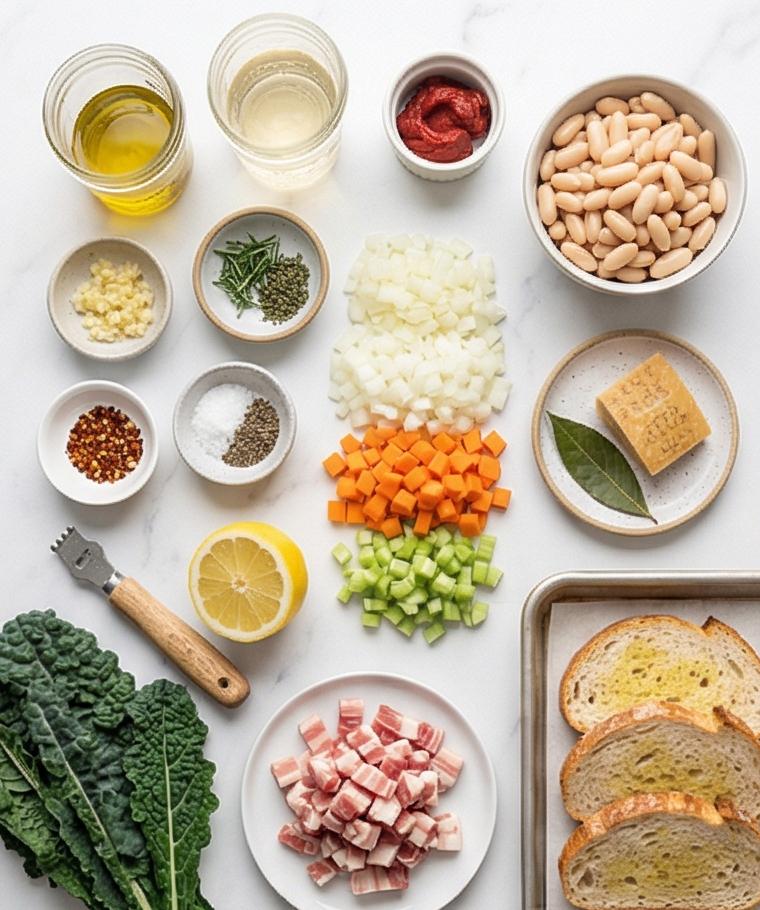
- Extra-virgin olive oil: The flavor base and finishing drizzle. Use a fruity oil for brightness or a milder one if you prefer. Choose cold-pressed and fresh.
- Pancetta or unsmoked bacon: Adds savory fat and crisp garnish; omit for vegetarian versions and add toasted mushrooms instead.
- Yellow onion, carrots, celery: The classic mirepoix for sweetness and depth; dice uniformly to cook evenly.
- Garlic, rosemary, thyme: Aromatics that lift the broth; dried herbs work in a pinch but reduce quantity.
- Tomato paste and white wine: Tomato paste adds umami concentration; wine brightens the base, or use extra broth.
- Cannellini beans: The creamy backbone; canned are convenient, dried work if soaked and cooked.
- Broth, Parmesan rind, kale, lemon: Broth builds the soup, the rind enriches, kale adds texture, and lemon brightens.
Essential Tools I Rely On
Start with a quick note: the right tools make this soup easy and enjoyable without needing fancy gear. A sturdy pot and a good wooden spoon go a long way.
- Large heavy-bottomed pot or Dutch oven: Holds heat well and prevents scorching. A 5 to 6 quart size is ideal but a smaller pot works for two.
- Sharp chef’s knife and cutting board: Even dice helps vegetables cook evenly. A bench scraper speeds cleanup.
- Ladle and wooden spoon: For stirring and serving; wooden spoons are gentler on enamel or nonstick surfaces.
- Potato masher or back of a ladle: To mash some beans for body. A stick blender can be used briefly for a silkier texture.
- Box grater and microplane: For fresh Parmesan and lemon zest. If you do not have one, pre-grated cheese and bottled lemon juice will suffice.
Step-by-Step Preparation Guide
Step 1: Prepare the vegetables and mise en place
Begin by finely dicing the yellow onion, carrots, and celery into uniform small cubes so they will soften evenly; mince the garlic, strip and chop the rosemary and thyme if using fresh, and remove the thick kale stems before cutting the leaves into roughly 1‑inch pieces. Drain and rinse the cannellini beans thoroughly and grate the Parmesan, zest and juice the lemon, and set aside a small bowl of reserved grated cheese and a tiny dish for the crisped pancetta. If you plan to serve bread, arrange slices on a baking sheet and set aside to toast later. This step is bright and methodical—everything organized into small glass jars and ceramic bowls so the cook can move quickly.
Step 2: Render the pancetta and sweat the mirepoix
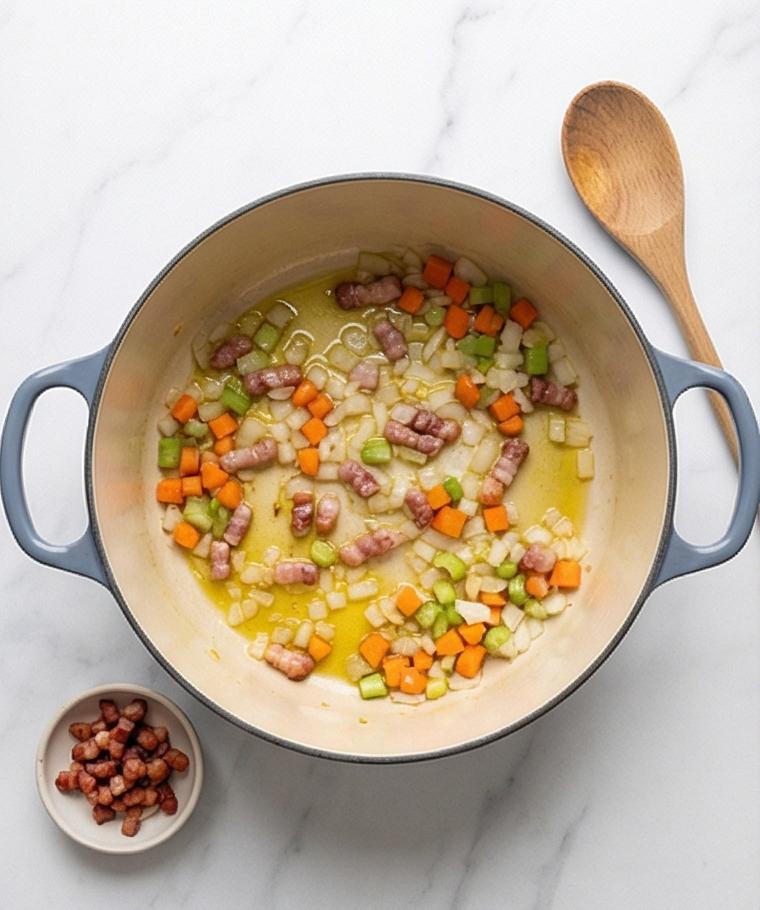
Heat the olive oil until it shimmers, then render the finely diced pancetta until the fat has released and the pieces are lightly golden and starting to crisp; remove and reserve a tablespoon of the crispiest pieces for garnish. Add the diced onion, carrots and celery with a pinch of fine sea salt and cook gently until the vegetables are softened and the onion becomes translucent but not browned—soft, glossy, slightly sweetened vegetable pieces suspended in shimmering oil. Keep a wooden spoon resting on the vessel rim to show continuity between phases.
Step 3: Build aromatics and deepen with tomato paste and wine
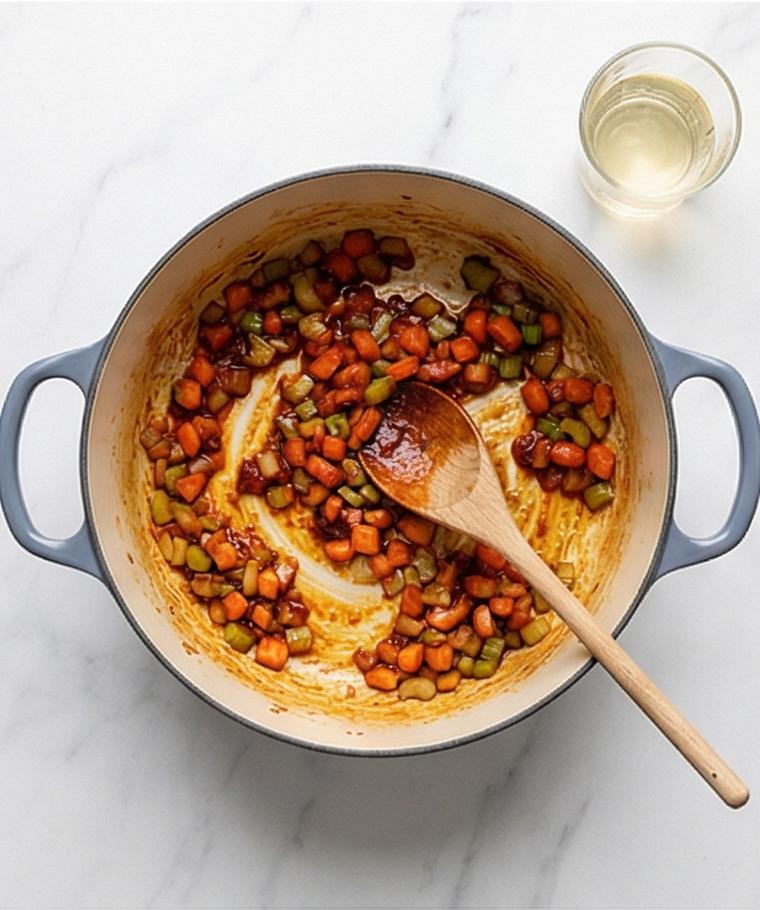
Stir in minced garlic, chopped rosemary and thyme, and a small pinch of crushed red pepper; cook just until fragrant. Add the tomato paste and cook it down until it darkens and caramelizes slightly, coating the vegetables with a concentrated, glossy mahogany glaze. If using white wine, pour it in now and scrape the bottom, letting it reduce until the raw alcohol scent is gone and the mixture smells bright and savory—this is the concentrated flavor core that will lift the broth.
Step 4: Add broth, beans, bay leaf and simmer to meld flavors
Pour in the chicken or vegetable broth and water, stir to combine with the tomato-coated vegetables, then add the drained cannellini beans, a bay leaf and the Parmesan rind. Bring the whole pot just to a gentle boil and then lower to a slow simmer so the liquid becomes translucent and the beans begin to release starch, slightly thickening the broth. Let this gentle simmer marry the ingredients for twenty‑five minutes so the vegetables are deeply tender and the broth gains body and rounded depth.
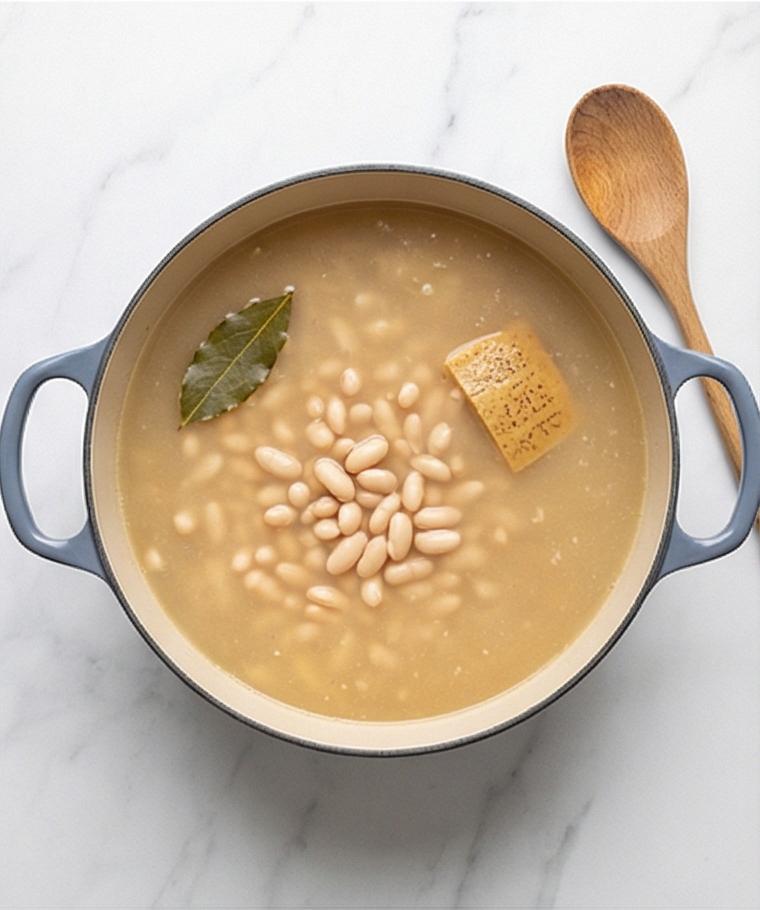
Step 5: Thicken, add kale and finish the gentle simmer; toast the bread
Use the back of a ladle or a potato masher to press about 1 to 1½ cups of beans against the side of the vessel, creating a creamy, naturally thickened base while still leaving many whole beans for texture. Stir the mashed beans back in, then add the chopped kale and simmer just until the leaves turn a rich deep green and are tender but not mushy. Meanwhile, toast the prepared bread until lightly golden, brush each slice with olive oil and gently rub with the whole garlic clove while warm for a subtle, toasty rub.
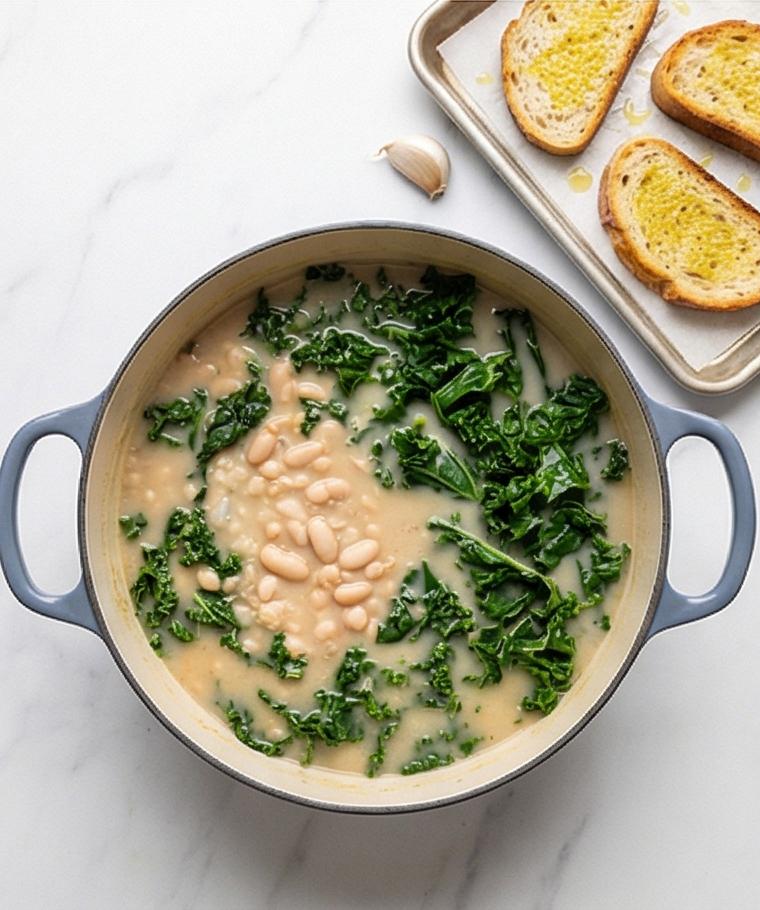
Step 6: Brighten, season, plate and garnish for serving
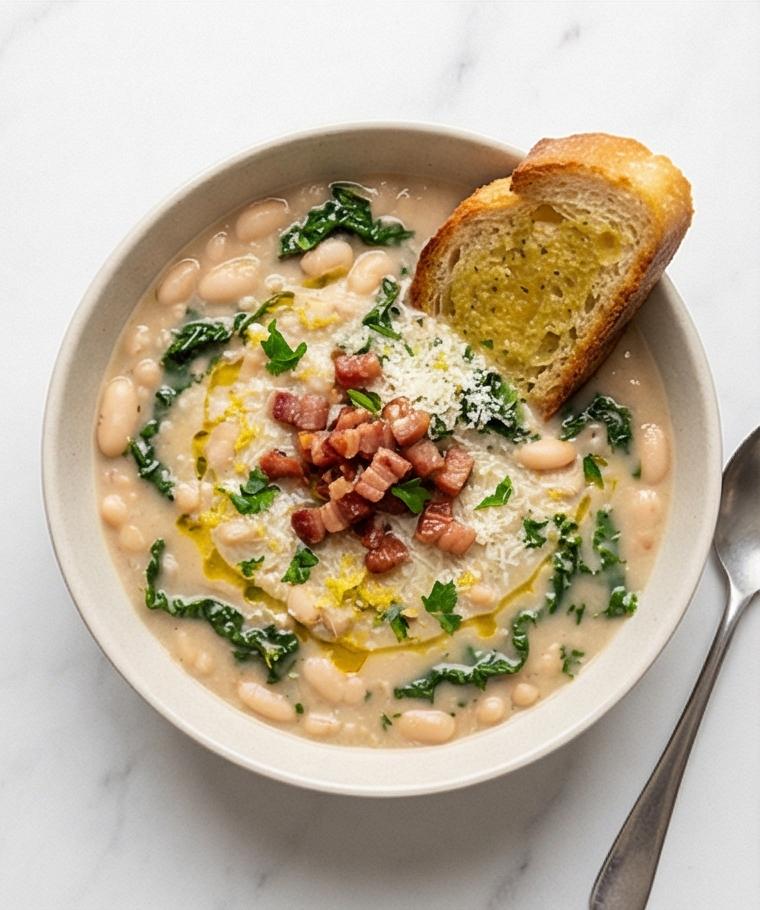
Remove and discard the bay leaf and Parmesan rind, then stir in fresh lemon zest and a splash of lemon juice to brighten the soup; taste and adjust salt and freshly ground black pepper as needed. Ladle the steaming Tuscan white bean soup into warmed shallow matte bowls, finish each bowl with a scatter of the reserved crispy pancetta, a generous pinch of freshly grated Parmesan, a few flecks of chopped parsley, and a gentle drizzle of extra‑virgin olive oil. Serve immediately with the toasted garlic bread on the side or nestling in the bowl to soak up the broth—creamy, herb‑bright, and texturally layered.
Tuscan White Bean Soup Recipe
Make Tuscan White Bean Soup Recipe for a bright, creamy skillet-to-bowl dinner that uses pantry staples and fresh lemon.
Ingredients
Instructions
Step 1: Prepare the vegetables and mise en place
Begin by finely dicing the yellow onion, carrots, and celery into uniform small cubes so they will soften evenly; mince the garlic, strip and chop the rosemary and thyme if using fresh, and remove the thick kale stems before cutting the leaves into roughly 1‑inch pieces. Drain and rinse the cannellini beans thoroughly and grate the Parmesan, zest and juice the lemon, and set aside a small bowl of reserved grated cheese and a tiny dish for the crisped pancetta. If you plan to serve bread, arrange slices on a baking sheet and set aside to toast later. This step is bright and methodical—everything organized into small glass jars and ceramic bowls so the cook can move quickly.
Step 2: Render the pancetta and sweat the mirepoix
Heat the olive oil until it shimmers, then render the finely diced pancetta until the fat has released and the pieces are lightly golden and starting to crisp; remove and reserve a tablespoon of the crispiest pieces for garnish. Add the diced onion, carrots and celery with a pinch of fine sea salt and cook gently until the vegetables are softened and the onion becomes translucent but not browned—soft, glossy, slightly sweetened vegetable pieces suspended in shimmering oil. Keep a wooden spoon resting on the vessel rim to show continuity between phases.
Step 3: Build aromatics and deepen with tomato paste and wine
Stir in minced garlic, chopped rosemary and thyme, and a small pinch of crushed red pepper; cook just until fragrant. Add the tomato paste and cook it down until it darkens and caramelizes slightly, coating the vegetables with a concentrated, glossy mahogany glaze. If using white wine, pour it in now and scrape the bottom, letting it reduce until the raw alcohol scent is gone and the mixture smells bright and savory—this is the concentrated flavor core that will lift the broth.
Step 4: Add broth, beans, bay leaf and simmer to meld flavors
Pour in the chicken or vegetable broth and water, stir to combine with the tomato-coated vegetables, then add the drained cannellini beans, a bay leaf and the Parmesan rind. Bring the whole pot just to a gentle boil and then lower to a slow simmer so the liquid becomes translucent and the beans begin to release starch, slightly thickening the broth. Let this gentle simmer marry the ingredients for twenty‑five minutes so the vegetables are deeply tender and the broth gains body and rounded depth.
Step 5: Thicken, add kale and finish the gentle simmer; toast the bread
Use the back of a ladle or a potato masher to press about 1 to 1½ cups of beans against the side of the vessel, creating a creamy, naturally thickened base while still leaving many whole beans for texture. Stir the mashed beans back in, then add the chopped kale and simmer just until the leaves turn a rich deep green and are tender but not mushy. Meanwhile, toast the prepared bread until lightly golden, brush each slice with olive oil and gently rub with the whole garlic clove while warm for a subtle, toasty rub.
Step 6: Brighten, season, plate and garnish for serving
Remove and discard the bay leaf and Parmesan rind, then stir in fresh lemon zest and a splash of lemon juice to brighten the soup; taste and adjust salt and freshly ground black pepper as needed. Ladle the steaming Tuscan white bean soup into warmed shallow matte bowls, finish each bowl with a scatter of the reserved crispy pancetta, a generous pinch of freshly grated Parmesan, a few flecks of chopped parsley, and a gentle drizzle of extra‑virgin olive oil. Serve immediately with the toasted garlic bread on the side or nestling in the bowl to soak up the broth—creamy, herb‑bright, and texturally layered.
Notes
- Reserve a spoonful of crisped pancetta for garnish to add texture
- Mash 1 to 1 1/2 cups of beans against the pot to thicken naturally
- Add lemon and finish seasoning at the end to preserve brightness
- Freeze in portions for up to 3 months and thaw overnight before reheating
- Omit pancetta and Parmesan rind for a vegetarian version; add toast mushrooms or miso for umami
Making It Your Own
I like to experiment by swapping one or two elements and seeing how the whole dish changes. For a vegetarian version, skip the pancetta and use smoked paprika or toasted mushrooms for umami. Try swapping kale for spinach late in the cook for a softer, quicker finish. In spring, stir in tender pea shoots at the end for a pop of freshness. For a heartier, winter version, add chopped potatoes with the broth and increase simmer time until tender. To lean into regional flavors, fold in chopped Spanish chorizo for a smoky, spicy variant or use cannellini and chickpeas together for a nuttier texture.
How to Serve
When I host, I ladle the Tuscan White Bean Soup Recipe into warm bowls and set a small station for garnishes so guests can customize. Offer extra grated Parmesan, a bowl of crisped pancetta or toasted seeds, and a dish of olive oil infused with crushed red pepper. To stretch the pot for a crowd, serve with a crisp salad and a thick slice of toasted country bread; the soup pairs beautifully with a simple green like arugula or a fennel salad. For an intimate dinner, garnish each bowl with a lemon zest flourish and a small drizzle of high-quality olive oil to elevate the flavors.
Storage and Reheating Tips
In my experience, this Tuscan White Bean Soup Recipe stores very well. Cool the soup to room temperature, then transfer to airtight containers and refrigerate for up to 4 days. For longer storage, freeze in portioned containers for up to 3 months; thaw overnight in the fridge before reheating.
Reheat on the stovetop over low to medium heat, stirring occasionally and adding a splash of broth or water if the soup has thickened. If frozen, defrost gently and finish with a squeeze of lemon and a few fresh herbs to revive brightness. Avoid boiling after adding delicate greens to preserve their color and texture.
Common Slipups and How to Dodge Them
Undercooking the mirepoix is one frequent mistake. Take the time to gently soften the onion, carrot, and celery so they release sweetness and build a rounded base for the soup. Rushing this step leads to a raw-onion edge that the rest of the ingredients cannot fix.
Another small trap is over-salting early. Because of the Parmesan rind and optional pancetta, taste late and adjust seasoning at the end. Also, do not skip mashing a portion of the beans; it is the simple trick that yields a naturally creamy texture without cream.
Final Thoughts
Give this Tuscan White Bean Soup Recipe a try on a night you want something comforting but not heavy. It rewards small moments of attention and will repay you with bowls of warming, layered flavor. Once you make it a few times, you will find the easy adjustments that make it uniquely yours.
Frequently Asked Questions
- Q: Can I use dried cannellini beans instead of canned? A: Yes. Soak dried beans overnight and simmer until tender before adding to the soup; you may need extra cooking time and liquid.
- Q: How can I make this vegan? A: Omit the pancetta and Parmesan rind, use vegetable broth, and add a splash of soy sauce or miso for extra umami.
- Q: Can I make this in a slow cooker? A: You can, but add kale near the end to prevent overcooking and mash some beans before serving for creaminess.
- Q: Is the wine necessary? A: No. The wine adds brightness but you can substitute with more broth and a splash of vinegar for acidity.
- Q: How do I keep the kale from getting mushy? A: Add chopped kale during the final minutes of simmering and cook just until it turns deep green and is tender.
Tuscan White Bean Soup Recipe
Make Tuscan White Bean Soup Recipe for a bright, creamy skillet-to-bowl dinner that uses pantry staples and fresh lemon.
Ingredients
Instructions
Step 1: Prepare the vegetables and mise en place
Begin by finely dicing the yellow onion, carrots, and celery into uniform small cubes so they will soften evenly; mince the garlic, strip and chop the rosemary and thyme if using fresh, and remove the thick kale stems before cutting the leaves into roughly 1‑inch pieces. Drain and rinse the cannellini beans thoroughly and grate the Parmesan, zest and juice the lemon, and set aside a small bowl of reserved grated cheese and a tiny dish for the crisped pancetta. If you plan to serve bread, arrange slices on a baking sheet and set aside to toast later. This step is bright and methodical—everything organized into small glass jars and ceramic bowls so the cook can move quickly.
Step 2: Render the pancetta and sweat the mirepoix
Heat the olive oil until it shimmers, then render the finely diced pancetta until the fat has released and the pieces are lightly golden and starting to crisp; remove and reserve a tablespoon of the crispiest pieces for garnish. Add the diced onion, carrots and celery with a pinch of fine sea salt and cook gently until the vegetables are softened and the onion becomes translucent but not browned—soft, glossy, slightly sweetened vegetable pieces suspended in shimmering oil. Keep a wooden spoon resting on the vessel rim to show continuity between phases.
Step 3: Build aromatics and deepen with tomato paste and wine
Stir in minced garlic, chopped rosemary and thyme, and a small pinch of crushed red pepper; cook just until fragrant. Add the tomato paste and cook it down until it darkens and caramelizes slightly, coating the vegetables with a concentrated, glossy mahogany glaze. If using white wine, pour it in now and scrape the bottom, letting it reduce until the raw alcohol scent is gone and the mixture smells bright and savory—this is the concentrated flavor core that will lift the broth.
Step 4: Add broth, beans, bay leaf and simmer to meld flavors
Pour in the chicken or vegetable broth and water, stir to combine with the tomato-coated vegetables, then add the drained cannellini beans, a bay leaf and the Parmesan rind. Bring the whole pot just to a gentle boil and then lower to a slow simmer so the liquid becomes translucent and the beans begin to release starch, slightly thickening the broth. Let this gentle simmer marry the ingredients for twenty‑five minutes so the vegetables are deeply tender and the broth gains body and rounded depth.
Step 5: Thicken, add kale and finish the gentle simmer; toast the bread
Use the back of a ladle or a potato masher to press about 1 to 1½ cups of beans against the side of the vessel, creating a creamy, naturally thickened base while still leaving many whole beans for texture. Stir the mashed beans back in, then add the chopped kale and simmer just until the leaves turn a rich deep green and are tender but not mushy. Meanwhile, toast the prepared bread until lightly golden, brush each slice with olive oil and gently rub with the whole garlic clove while warm for a subtle, toasty rub.
Step 6: Brighten, season, plate and garnish for serving
Remove and discard the bay leaf and Parmesan rind, then stir in fresh lemon zest and a splash of lemon juice to brighten the soup; taste and adjust salt and freshly ground black pepper as needed. Ladle the steaming Tuscan white bean soup into warmed shallow matte bowls, finish each bowl with a scatter of the reserved crispy pancetta, a generous pinch of freshly grated Parmesan, a few flecks of chopped parsley, and a gentle drizzle of extra‑virgin olive oil. Serve immediately with the toasted garlic bread on the side or nestling in the bowl to soak up the broth—creamy, herb‑bright, and texturally layered.
Notes
- Reserve a spoonful of crisped pancetta for garnish to add texture
- Mash 1 to 1 1/2 cups of beans against the pot to thicken naturally
- Add lemon and finish seasoning at the end to preserve brightness
- Freeze in portions for up to 3 months and thaw overnight before reheating
- Omit pancetta and Parmesan rind for a vegetarian version; add toast mushrooms or miso for umami