Lotus Biscoff Cheesecake Recipe has become my go-to showstopper when I want something creamy, nostalgic, and a little bit indulgent. I first made this Lotus Biscoff Cheesecake Recipe for a family gathering and watched it disappear faster than I expected. The cookie butter gives it that caramelized warmth that feels like a hug in dessert form, and the crunchy Biscoff crust keeps every bite interesting. If you love bold, spiced cookie flavor paired with silky cream, this recipe will be worth a spot in your rotation.
How This Recipe Became My Cozy-Weekend Staple
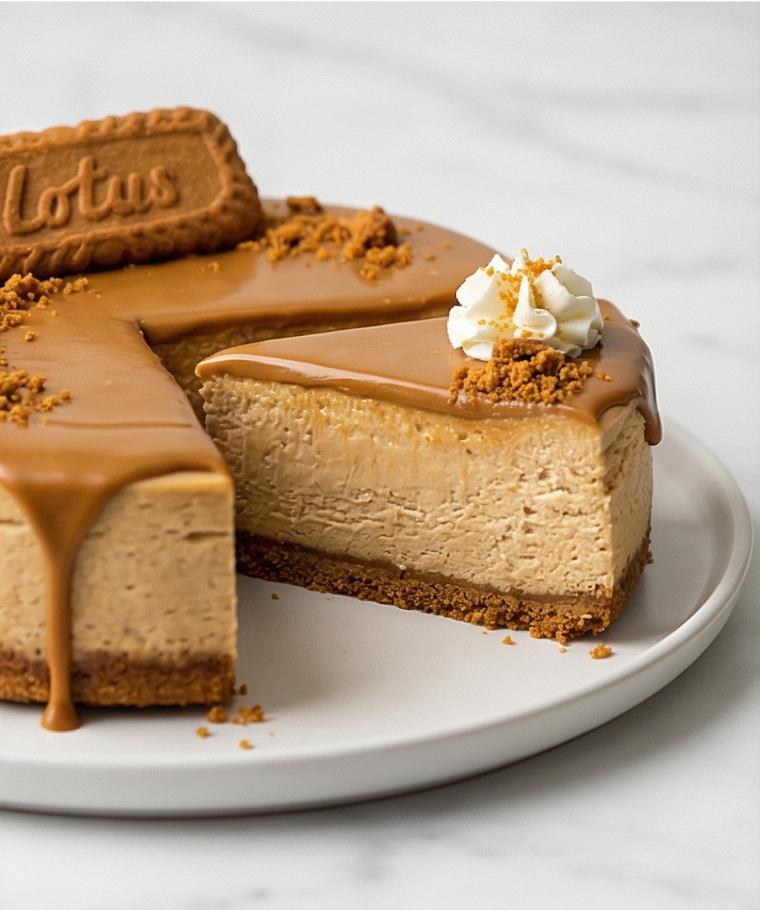
I remember the afternoon I first tested this Lotus Biscoff Cheesecake Recipe. The kitchen smelled like toasted sugar and warm butter as I pulsed cookies into dust, and I kept sneaking crumbs from the bowl. My neighbor popped by, drawn by the smell, and we sipped tea while the cake chilled. When we finally sliced into it, the filling was smooth and glossy, tasting of caramel and a whisper of citrus from the lemon. Seeing everyone’s faces light up when they tried it is why I keep making it. The texture, the contrast between silky filling and crunchy crust, and the way the Biscoff spread ties everything together made me fall in love with this cheesecake. It feels like a small celebration every time I bring it out.
The Main Ingredients and Why They Matter
- Lotus Biscoff cookies: The backbone of the crust; select fresh, crisp cookies or substitute graham crackers or gingersnaps for a similar spice note.
- Unsalted butter: Binds the crumbs and adds richness; use browned butter for a deeper flavor or a vegan butter for a dairy-free crust.
- Cream cheese: Provides structure and silk; choose full-fat brick-style cream cheese for best texture and avoid low-fat versions.
- Powdered sugar: Sweetens without grittiness; confectioners’ sugar dissolves smoothly into the cream cheese.
- Lotus Biscoff spread: The primary flavor; swap for another cookie butter or speculoos spread if needed.
- Heavy cream: Whipped to lighten the filling; chill the bowl and cream so it whips easily and holds.

Essential Kitchen Tools You’ll Want
This cheesecake is forgiving, but a few tools will make the process smoother and the results cleaner. The right equipment helps with texture, ease of assembly, and presentation.
- 9-inch springform pan: Makes removing the cake effortless; line with parchment for neat slices.
- Food processor or zip-top bag and rolling pin: For fine, even cookie crumbs; a processor is faster but the bag method works fine.
- Stand mixer or hand mixer: Ensures cream cheese is silky and whipped cream reaches medium-firm peaks; beat gently to avoid overmixing.
- Offset spatula and measuring cup: For leveling the filling and pressing the crust uniformly; a warm knife gives cleaner slices.
- Chilled bowls and spatulas: Keep whipped cream stable and help with folding without deflating the mousse.
Step-by-Step Preparation Guide
Step 1: Prepare the pan and make the crumb base
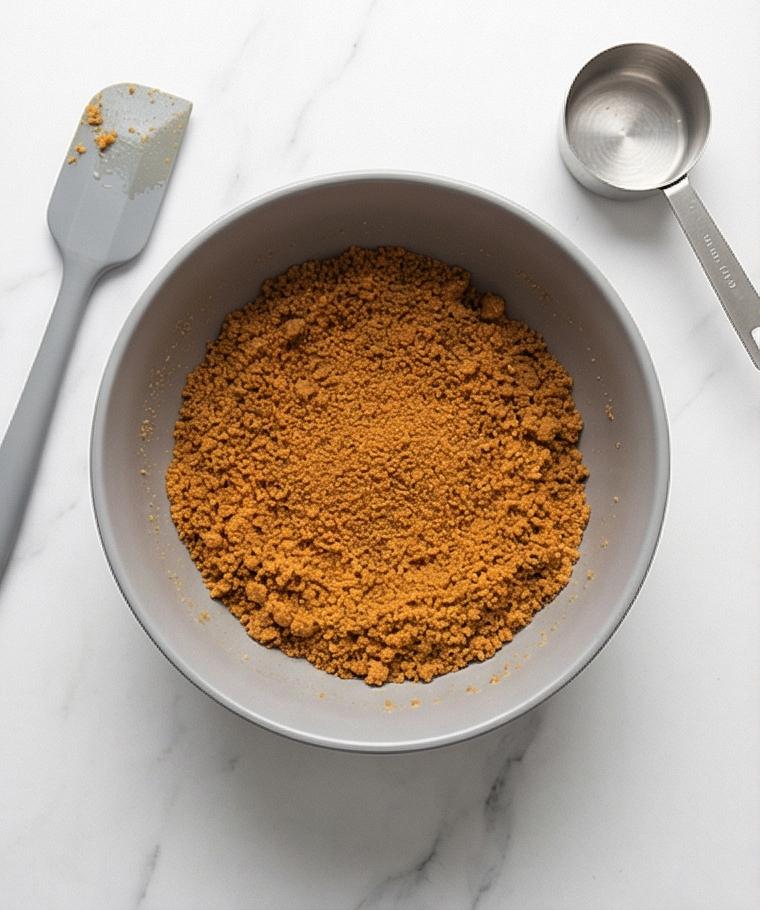
Lightly grease the bottom and sides of a 9-inch (23 cm) springform pan with a thin layer of butter or nonstick spray, then line the bottom with a round of parchment so slices release perfectly. Crush 12 ounces (340 g) of Lotus Biscoff cookies in a food processor until you have very fine, even crumbs; if you don’t have a processor, place cookies in a heavy-duty zip-top bag and crush with a rolling pin until they resemble fine sand. Transfer the crumbs to a medium mixing bowl, sprinkle in the optional 1/8 teaspoon fine sea salt, pour in 1/2 cup (113 g) melted, slightly cooled unsalted butter, and stir with a spatula until the mixture looks like moist, wet sand and holds when pressed between fingers. The texture should be dense, slightly glossy where the butter has coated the particles, and free of large shards.
Step 2: Form and chill the crust
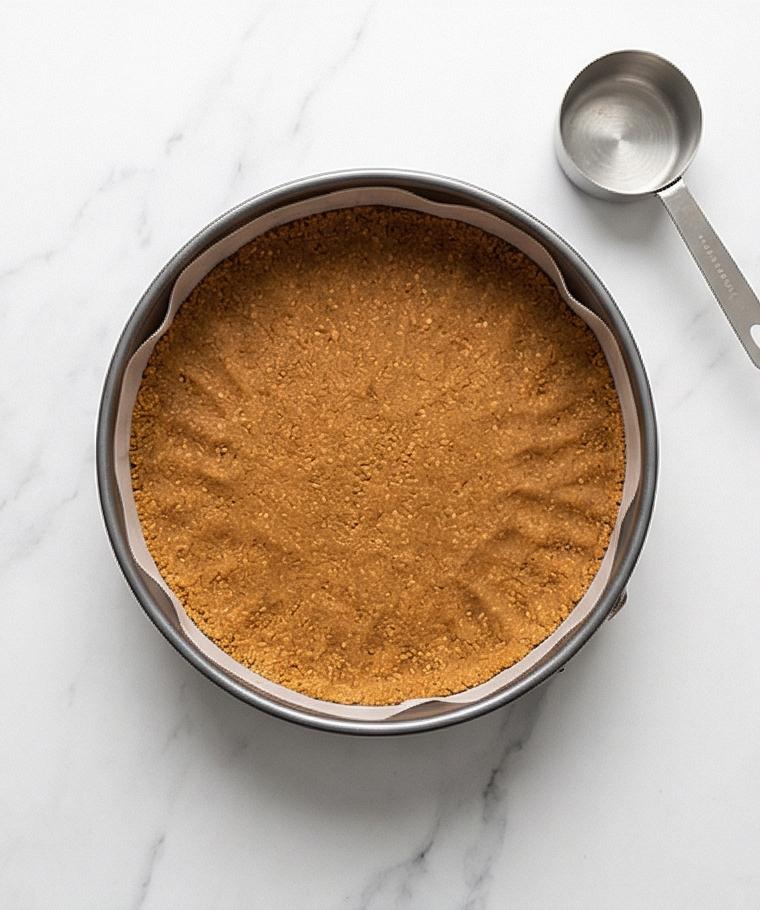
Pour the moistened crumb mixture into the prepared springform pan. Use your fingers to spread the crumbs evenly over the base, then use the flat bottom of a measuring cup or glass to press the crumbs firmly into a smooth, even layer, taking them slightly up the sides if you like a higher edge. The pressed crust should be compact, matte with tiny granular textures and beak-to-edge continuity where crumbs meet the pan wall. Place the pan in the refrigerator for at least 20–30 minutes to firm the crust so it slices cleanly later.
Step 3: Beat the cream cheese and sweeten
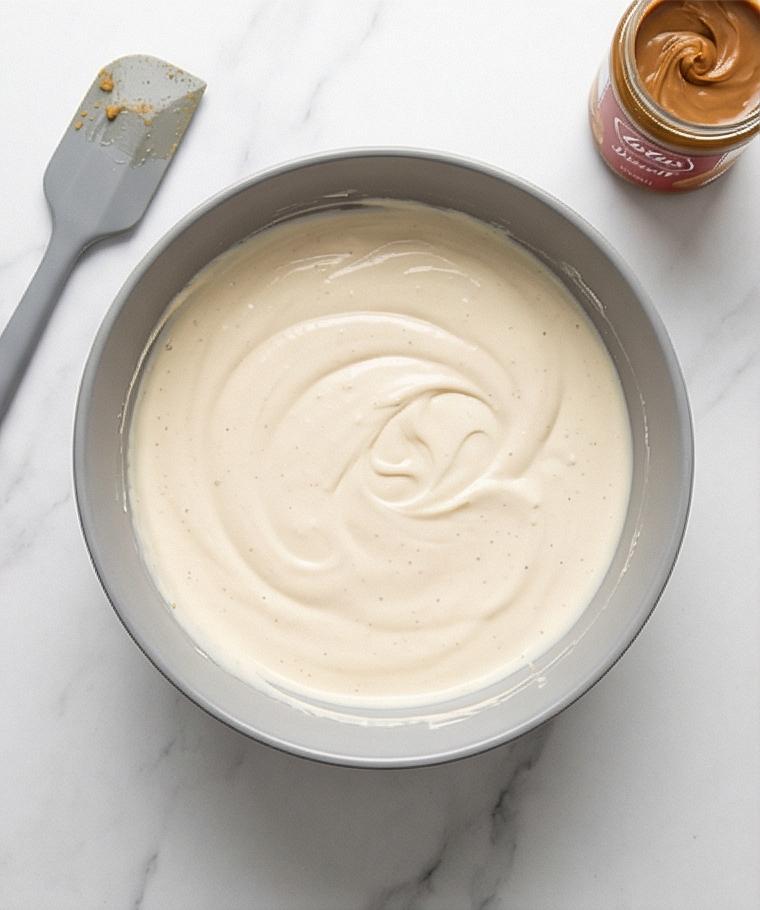
Make sure the 24 ounces (680 g) cream cheese are fully at room temperature; cube them and beat in a large mixer bowl on medium for 2–3 minutes until utterly smooth and velvety with no lumps. Add 2/3 cup (80 g) sifted powdered sugar and 1/4 teaspoon fine sea salt, beginning on low speed to avoid a sugar cloud, then increase to medium until the mixture is glossy, silk-like, and slightly aerated. Scrape the bowl down once or twice so the mass is homogenous and pale. The finished base should read as a creamy, dense canvas ready to accept Biscoff’s caramel color.
Step 4: Flavor with Biscoff and whip cream
Add 1 cup (280 g) room-temperature Lotus Biscoff spread, 1 1/2 teaspoons pure vanilla extract, and 1 tablespoon freshly squeezed, strained lemon juice to the cream cheese. Beat on medium until completely smooth and uniform in warm tan color, with a glossy, slightly thick viscosity. Separately, in a clean chilled bowl, whip 1 cup (240 ml) very cold heavy cream to medium-firm peaks: the cream should be shiny, soft at the tips, and hold shape without graininess. These two components will marry to create a light yet custardy mousse.
Step 5: Fold, fill, and set
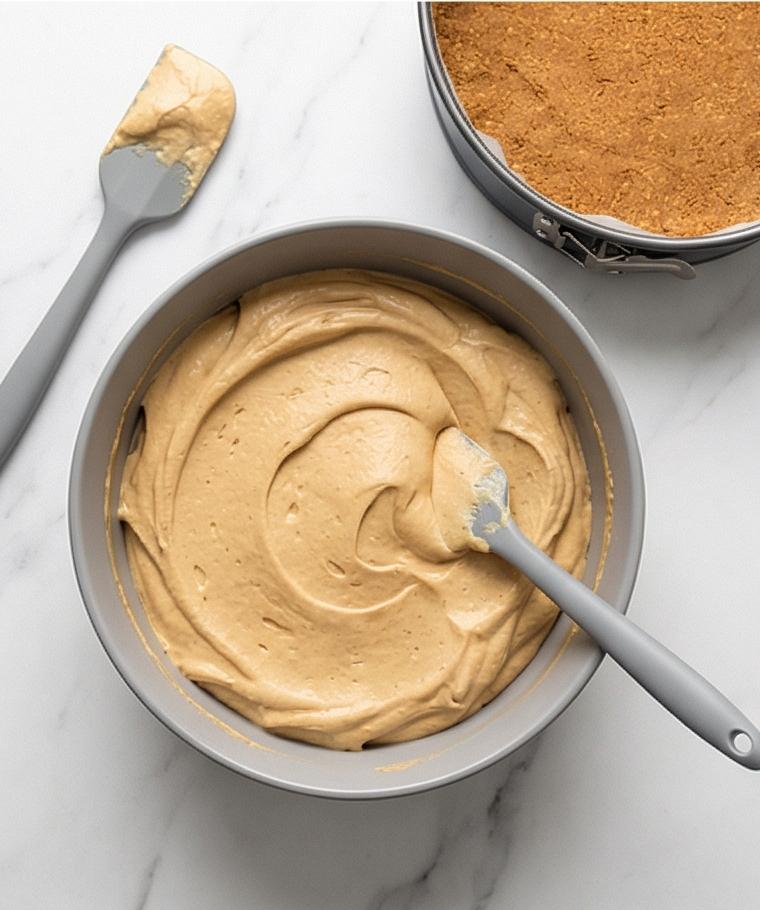
Gently lighten the Biscoff cream cheese by folding in about one-third of the whipped cream with a spatula, sweeping down the center and around the sides until streak-free. Fold in the remaining whipped cream very gently until the mixture is airy, uniformly caramel-tan, and smooth but still pillowy. Spoon or pour the filling into the chilled crust, use an offset spatula to level the surface until it is even and free of air pockets, then tap the pan twice on the counter to release large bubbles. Cover the pan (without touching the surface) and chill for at least 6 hours, preferably 8–12 hours or overnight, until the center is firm to the touch.
Step 6: Warm the topping, glaze, garnish, and serve
Warm 2/3 cup (180 g) Lotus Biscoff spread with 3 tablespoons (45 ml) heavy cream until pourable and silky — microwave in short bursts or gently heat the cream then stir in the spread. Let the mixture cool to lukewarm so it won’t melt the chilled cake. Run a thin knife around the pan, release the springform ring, slide the cheesecake onto a serving plate, and starting from the center slowly pour the lukewarm Biscoff topping, spreading gently to within about 1/4 inch of the edge or letting a few drips fall for character. Press 6–8 whole Lotus cookies around the edge and scatter roughly crushed pieces in the center; pipe optional small whipped rosettes and tuck cookie fragments into each. Chill 30–45 minutes more, then slice with a warmed dry knife into 10–12 portions. Serve very chilled with extra drizzle and a sprinkle of crumbs.
Making It Your Own
I like to tinker. For a lighter take, I swapped half the cream cheese for mascarpone once and loved the slightly softer mouthfeel; the filling was silkier and the Biscoff flavor still sang. For a gluten-free crowd, I pulse gluten-free spiced cookies into the crust and it holds up beautifully. When I wanted a chocolate contrast, I folded a few tablespoons of melted dark chocolate into the cooled topping and it added depth without overpowering the cookie butter. In summer I add a scatter of chopped toasted hazelnuts for crunch; in fall I sprinkle a pinch of ground cinnamon into the crumb mix.
How to Serve
If I’m hosting, I slice this Lotus Biscoff Cheesecake Recipe into 10 to 12 pieces and serve on chilled plates so each slice stays tidy. For a casual gathering, I let guests add extra Biscoff drizzle or a dollop of lightly sweetened whipped cream. For larger parties, cut thinner slices and set out extra cookies and a sauce pitcher so people can personalize their portions. To turn this into individual bites, press crust into a muffin tin, fill, chill, and top with a piped rosette and cookie crumb for pretty mini cheesecakes.
Storage and Reheating Tips
Store the cheesecake, covered, in the refrigerator for up to 4 days. I like to place a loose tent of plastic wrap over the cake so the topping stays intact and the Biscoff drizzle does not spread into condensation.
If you need to freeze, wrap the entire chilled cheesecake tightly in plastic wrap and foil and freeze for up to one month. Thaw overnight in the refrigerator before serving and add a fresh drizzle or piped cream to refresh the finish.
Common Mistakes and How to Avoid Them
Don’t try to speed up chilling by putting the cheesecake in a freezer. Fast freezing can crack textures and cause condensation that makes slices weep. Be patient and chill slowly in the refrigerator for best texture.
Avoid overbeating the whipped cream into the filling. Fold gently so the mousse stays light and pillowy. Also, make sure cream cheese is fully at room temperature so you don’t end up with lumps.
Final Thoughts
Give this Lotus Biscoff Cheesecake Recipe a try the next time you want a dessert that feels both special and comforting. It’s one of those recipes that rewards patience and simple ingredients, and it’s always a crowd-pleaser.
Frequently Asked Questions.
-
Q: Can I make this cheesecake ahead for a party?
A: Yes, make it a day ahead and keep it chilled; add fresh toppings just before serving. -
Q: Can I use reduced-fat cream cheese?
A: You can, but full-fat brick-style cream cheese gives the best texture and flavor. -
Q: Is there a no-bake option?
A: This version is already no-bake for the filling; just chill thoroughly so it sets. -
Q: How do I get clean slices?
A: Warm and dry your knife between cuts and wipe it clean for smooth edges. -
Q: Can I use another cookie for the crust?
A: Yes, graham crackers, gingersnaps, or gluten-free spiced cookies all work well.
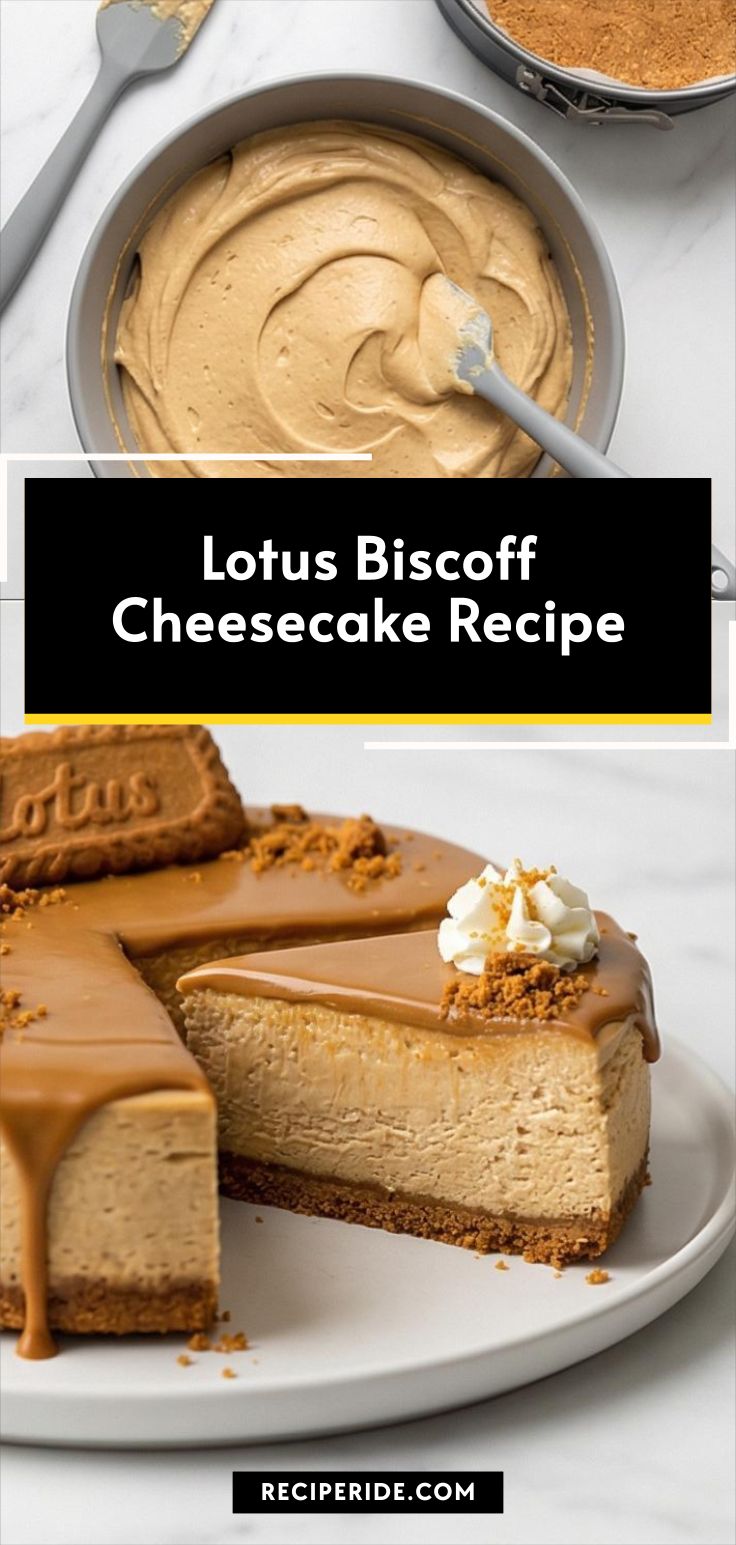
Lotus Biscoff Cheesecake Recipe
Make a silky Lotus Biscoff Cheesecake Recipe with a crunchy Biscoff crust and cookie butter filling. Chill and serve chilled.
Ingredients
Instructions
Step 1: Prepare the pan and make the crumb base
Lightly grease the bottom and sides of a 9-inch (23 cm) springform pan with a thin layer of butter or nonstick spray, then line the bottom with a round of parchment so slices release perfectly. Crush 12 ounces (340 g) of Lotus Biscoff cookies in a food processor until you have very fine, even crumbs; if you don’t have a processor, place cookies in a heavy-duty zip-top bag and crush with a rolling pin until they resemble fine sand. Transfer the crumbs to a medium mixing bowl, sprinkle in the optional 1/8 teaspoon fine sea salt, pour in 1/2 cup (113 g) melted, slightly cooled unsalted butter, and stir with a spatula until the mixture looks like moist, wet sand and holds when pressed between fingers. The texture should be dense, slightly glossy where the butter has coated the particles, and free of large shards.
Step 2: Form and chill the crust
Pour the moistened crumb mixture into the prepared springform pan. Use your fingers to spread the crumbs evenly over the base, then use the flat bottom of a measuring cup or glass to press the crumbs firmly into a smooth, even layer, taking them slightly up the sides if you like a higher edge. The pressed crust should be compact, matte with tiny granular textures and beak-to-edge continuity where crumbs meet the pan wall. Place the pan in the refrigerator for at least 20–30 minutes to firm the crust so it slices cleanly later.
Step 3: Beat the cream cheese and sweeten
Make sure the 24 ounces (680 g) cream cheese are fully at room temperature; cube them and beat in a large mixer bowl on medium for 2–3 minutes until utterly smooth and velvety with no lumps. Add 2/3 cup (80 g) sifted powdered sugar and 1/4 teaspoon fine sea salt, beginning on low speed to avoid a sugar cloud, then increase to medium until the mixture is glossy, silk-like, and slightly aerated. Scrape the bowl down once or twice so the mass is homogenous and pale. The finished base should read as a creamy, dense canvas ready to accept Biscoff’s caramel color.
Step 4: Flavor with Biscoff and whip cream
Add 1 cup (280 g) room-temperature Lotus Biscoff spread, 1 1/2 teaspoons pure vanilla extract, and 1 tablespoon freshly squeezed, strained lemon juice to the cream cheese. Beat on medium until completely smooth and uniform in warm tan color, with a glossy, slightly thick viscosity. Separately, in a clean chilled bowl, whip 1 cup (240 ml) very cold heavy cream to medium-firm peaks: the cream should be shiny, soft at the tips, and hold shape without graininess. These two components will marry to create a light yet custardy mousse.
Step 5: Fold, fill, and set
Gently lighten the Biscoff cream cheese by folding in about one-third of the whipped cream with a spatula, sweeping down the center and around the sides until streak-free. Fold in the remaining whipped cream very gently until the mixture is airy, uniformly caramel-tan, and smooth but still pillowy. Spoon or pour the filling into the chilled crust, use an offset spatula to level the surface until it is even and free of air pockets, then tap the pan twice on the counter to release large bubbles. Cover the pan (without touching the surface) and chill for at least 6 hours, preferably 8–12 hours or overnight, until the center is firm to the touch.
Step 6: Warm the topping, glaze, garnish, and serve
Warm 2/3 cup (180 g) Lotus Biscoff spread with 3 tablespoons (45 ml) heavy cream until pourable and silky — microwave in short bursts or gently heat the cream then stir in the spread. Let the mixture cool to lukewarm so it won’t melt the chilled cake. Run a thin knife around the pan, release the springform ring, slide the cheesecake onto a serving plate, and starting from the center slowly pour the lukewarm Biscoff topping, spreading gently to within about 1/4 inch of the edge or letting a few drips fall for character. Press 6–8 whole Lotus cookies around the edge and scatter roughly crushed pieces in the center; pipe optional small whipped rosettes and tuck cookie fragments into each. Chill 30–45 minutes more, then slice with a warmed dry knife into 10–12 portions. Serve very chilled with extra drizzle and a sprinkle of crumbs.
Notes
- Chill the cheesecake at least 6 hours, preferably overnight, for best texture.
- Use full-fat brick-style cream cheese and room temperature for lump-free filling.
- Chill bowls and beaters before whipping cream to help it reach firm peaks.
- Warm the Biscoff topping to pourable temperature but let it cool slightly so it does not melt the filling.
- For cleaner slices, warm a knife under hot water, dry it, and wipe between cuts.