Soufflé Pancake Cake Recipe has become my weekend ritual, and I still thrill at how light and cloud-like each slice feels. I first tried this Soufflé Pancake Cake Recipe on a rainy morning when I needed something gentle and celebratory at once, and it hasn’t left my rotation since. I love the slow, meditative rhythm of whipping egg whites and folding them into a satin batter, and I often find the fragrance of warm butter and vanilla drifting through the house as it bakes. If you like desserts that feel like a hug, this one delivers every time.
How This Recipe Became My Rainy-Day Favorite
The first time I made the Soufflé Pancake Cake Recipe I remember the kitchen fogged with steam and a soft golden crust forming while the center stayed tender and slightly jiggly. I was nervous about folding the meringue just right, but as I nudged the spatula through the bowl I felt a quiet confidence grow. When I sliced into it, the crumbs were so delicate they almost floated, and the berries I’d scattered on top popped against the snowy cream. Eating it warmed me from the inside out and made me think of slow weekends, low chatter, and music in the background. That memory is why I come back to this recipe whenever I want something gentle yet impressive; it’s a dessert that rewards patience and feels like sharing a secret with friends.
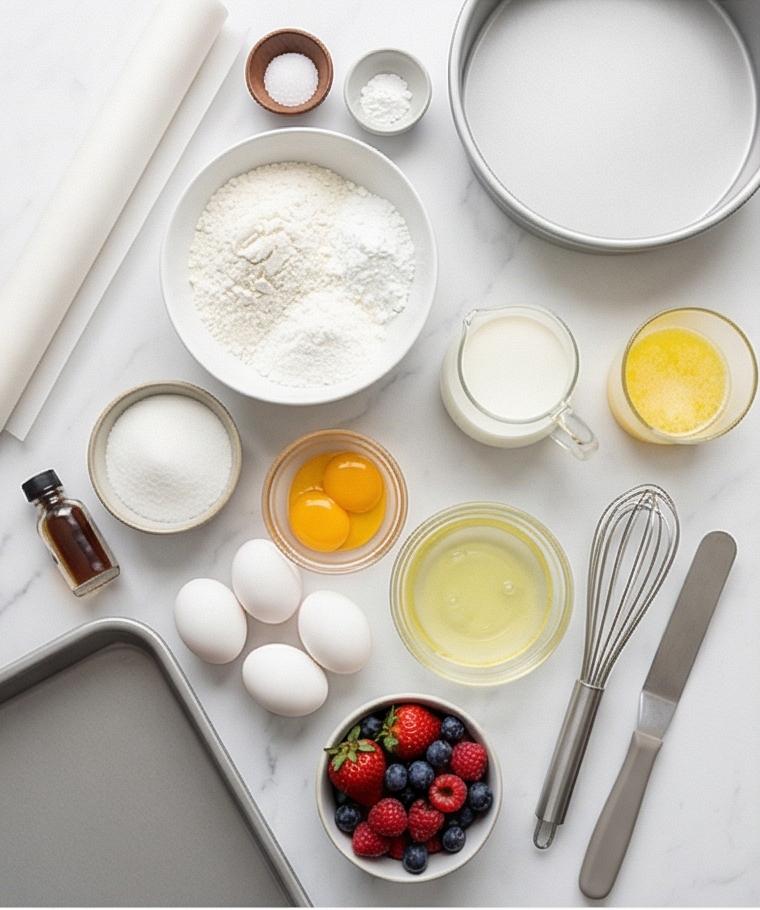
Primary Ingredients and What They Do
- Eggs (yolks and whites): The yolks bring richness and body while the whipped whites provide lift and air. Use fresh, room-temperature eggs for best volume. If you need an egg-free option, aquafaba can mimic meringue though texture will differ.
- Cake flour: Gives a tender, fine crumb; substitute with all-purpose flour plus 2 tablespoons cornstarch per cup for a lighter result.
- Cornstarch: Keeps the crumb delicate and stabilizes the structure; potato starch can substitute.
- Whole milk and butter: Milk adds moisture and butter adds flavor and richness; use high-fat alternatives like half-and-half for a richer bite.
- Granulated sugar and powdered sugar: Granulated sugar sweetens and stabilizes meringue; powdered sugar is for dusting and whipped cream. Choose fine sugars for smoother textures.
Essential Kitchen Tools and Why They Matter
Making this soufflé-style cake asks for a few reliable tools. A 7-inch round pan or springform is central for that tall, tender rise, and a larger roasting pan to create a water bath gives even, gentle heat that protects the cake from drying out. A stand or hand mixer will speed up making a glossy meringue, though a strong whisk and a bit of elbow grease work too. Use an offset spatula to smooth batter and a fine sieve to aerate dry ingredients. Alternatives: if you don’t have a roasting pan, use a deep baking tray; if you lack cake flour use all-purpose with cornstarch as noted above.
- 7-inch round cake pan or springform: For shape and even rise.
- Large deep roasting pan: To hold the water bath.
- Stand or hand mixer: For stable meringue.
- Fine sieve and offset spatula: For texture and smoothing.
Step-by-Step Preparation Guide
Step 1: Prepare the pan, oven and water bath
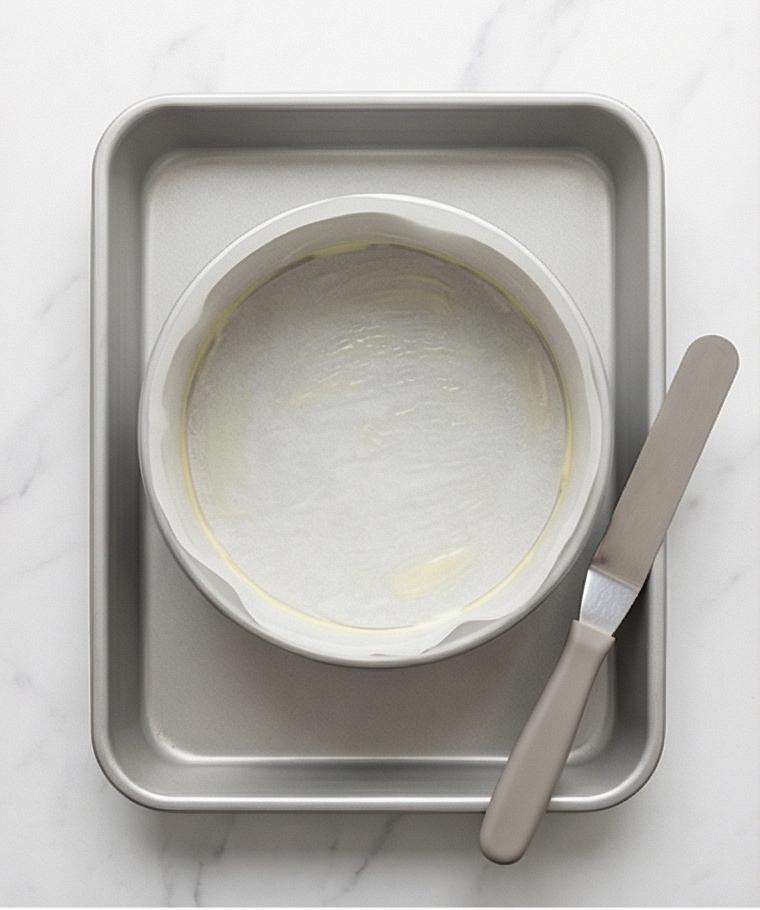
Preheat the oven to 300°F (150°C) and position a rack in the lower-middle so the cake can rise without touching the oven top. Grease the bottom and sides of a 7-inch (18 cm) round cake pan (or springform) with a thin layer of butter, line the bottom with a round of parchment, and fit a tall parchment collar that extends 1–2 inches above the rim; lightly grease the parchment as well. Place that prepared cake pan inside a larger deep roasting pan with at least 1 inch (2.5 cm) of clearance all around so water can circulate later. Keep a clean offset spatula nearby for smoothing.
Step 2: Sift and combine the dry ingredients
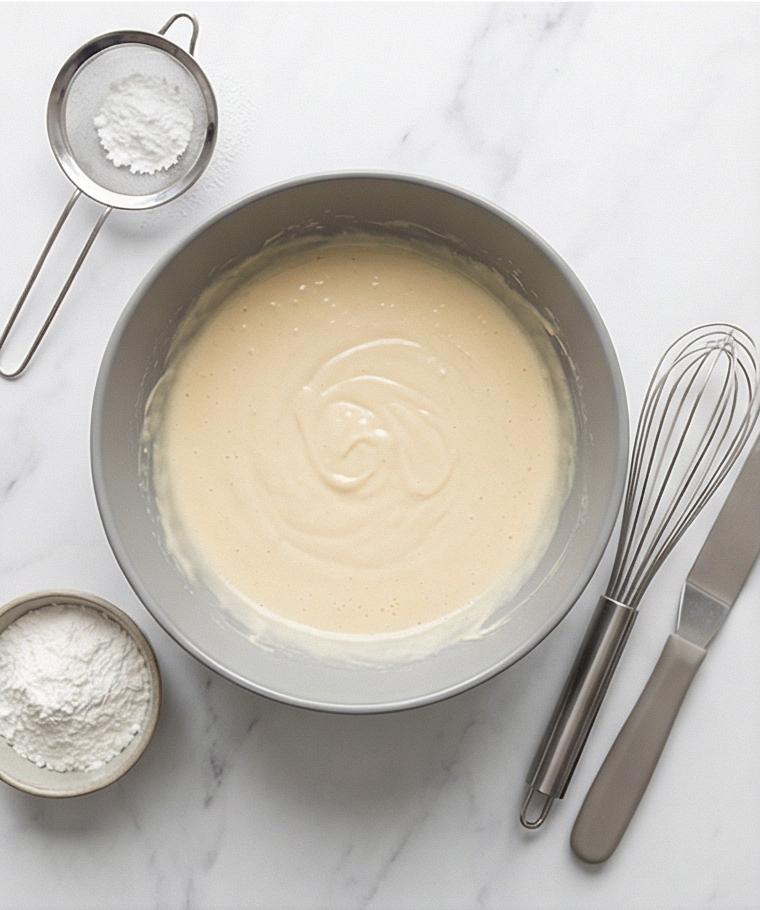
Whisk together the cake flour, cornstarch and fine sea salt in a small bowl, then pass them through a fine sieve so the mixture is airy and lump-free; set this sifted dry mix within reach. This is a light, powdery, snow-like pile with a faint, matte texture that will give the final cake its delicate crumb.
Step 3: Whisk the egg yolks into a smooth batter
In a modern matte grey mixing bowl, whisk the 4 egg yolks together with the 20 g sugar until the color lightens and the texture becomes creamy and slightly thickened. Add the whole milk, vanilla and the warm, slightly cooled melted butter and whisk until fully combined into a pale, satin-smooth batter with a few faint whisk ribbons and no lumps. The batter should be thick but still pourable.
Step 4: Whip the egg whites into glossy soft–medium peaks
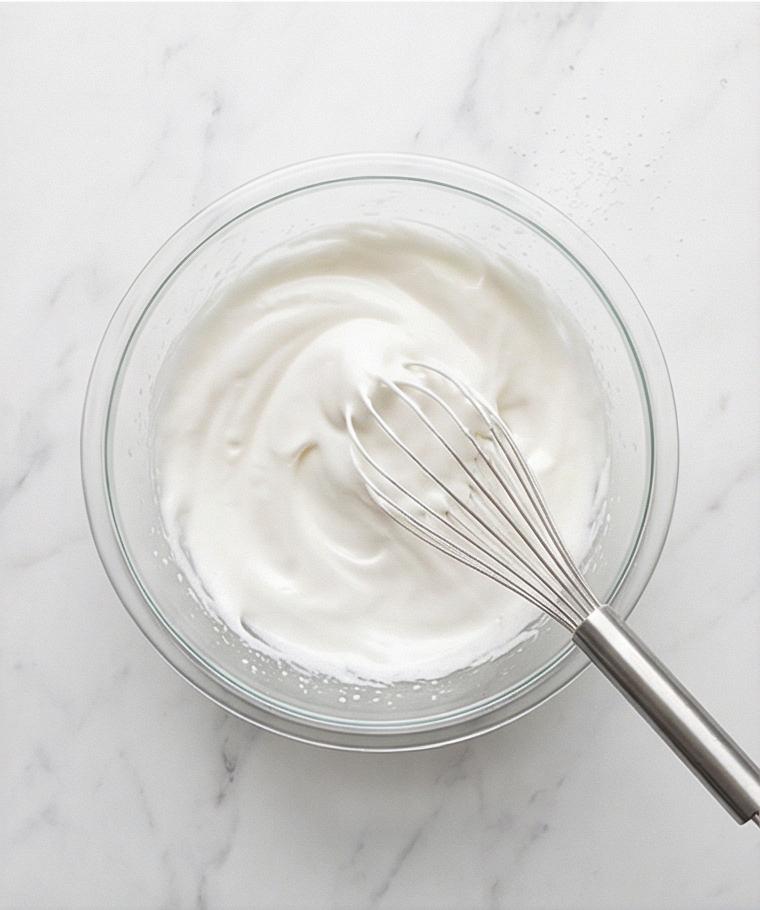
Using a clean glass mixing bowl, begin beating the egg whites with the cream of tartar until foamy, then gradually add the 60 g sugar while increasing speed. Stop when the meringue is glossy with soft–to–medium peaks—peaks that stand but gently bend at the tip—showing a mirror-like sheen and a tender, marshmallow-like texture. Rest the whisk on the rim so its wires catch a few silky folds.
Step 5: Fold meringue into the yolk batter until airy and uniform
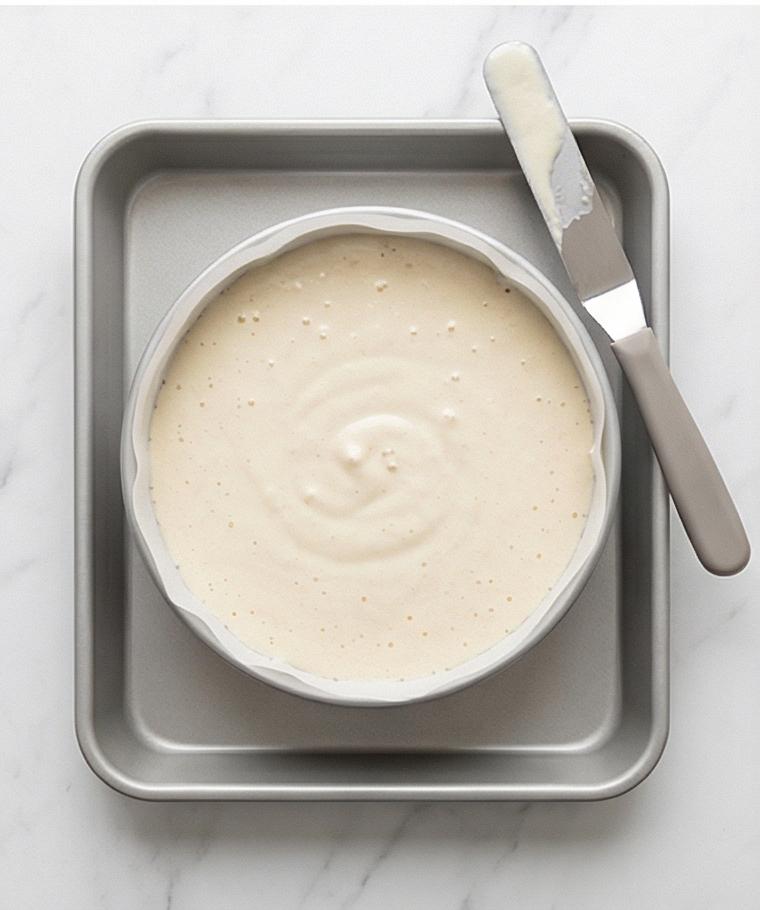
Transfer about one-third of the meringue to the matte grey bowl of yolk batter to lighten it, then fold the remaining meringue in two gentle additions. Use broad, sweeping folds that cut through the center and lift from the bottom, turning the bowl as you go. The result is an airy, pale batter that holds soft peaks, thick and cloud-like with tiny suspended air pockets—light enough to barely wobble on the spatula. Carefully pour and scrape this aerated batter into the prepared parchment-lined round pan, smooth the top, tap gently to release major bubbles and run a skewer in a soft spiral if needed. A neutral matte spatula rests on the rim.
Step 6: Assemble the water bath and bake, then cool gently
Place the filled cake pan into the larger roasting pan, bring very hot water to a near simmer, and carefully pour the hot water around the cake pan until it reaches about halfway up the sides (no splashes into the batter). Slide the roasting pan into the preheated oven and bake at 300°F (150°C) for 45–55 minutes until the top is a very light golden color, edges look set, and the center springs back gently. After baking, turn off the oven and crack the door to let the cake rest 10–15 minutes, then remove the cake pan from the water bath and cool on a wire rack, running a thin knife around the parchment so it peels away cleanly.
Step 7: Make the whipped cream while the cake cools
Chill a medium bowl and combine the heavy cream, powdered sugar and vanilla, then whip to soft–to–medium peaks—smooth, billowy cream that holds shape but still looks pillowy and moist. Keep the cream airy and not overbeaten so it remains glossy and spreadable for a light finish.
Step 8: Finish, garnish and serve
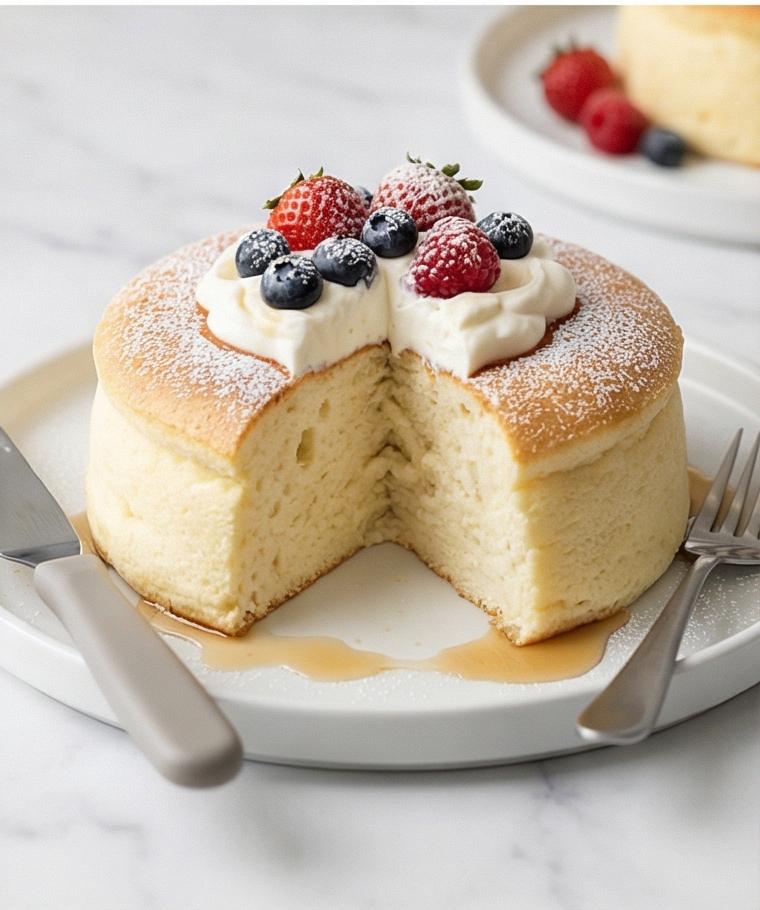
Remove the outer ring if using a springform or invert carefully to keep the top side up; peel away the parchment. Dust the warm or room-temperature soufflé pancake cake lightly with powdered sugar, spread or pipe the whipped cream in billowy mounds, arrange a mix of fresh berries on top (sliced strawberries, blueberries, raspberries), and optionally drizzle a little pure maple syrup at the edge of each slice. Serve immediately while the interior is tender, slightly jiggly and cloud-like.
Making It Your Own
I like to experiment with this Soufflé Pancake Cake Recipe by switching small elements to suit the season. In spring I fold lemon zest into the yolk batter and scatter macerated strawberries on top for a bright finish. In autumn I stir a teaspoon of cinnamon and a tablespoon of brown sugar into the yolks and top with warm poached pears. For a dairy-free version, try coconut cream for topping and replace butter with a neutral oil plus a touch of nondairy milk; the texture changes but the whimsy remains. These tiny experiments let me keep the core technique while playing with flavor notes.
How to Serve
When I host, I slice this soufflé-style cake into gentle wedges and plate each with a dollop of whipped cream and a scattering of berries. For larger groups, make two cakes or serve thinner slices alongside coffee and small fruit tarts to stretch servings. If you want an elegant brunch, place each slice on a small dessert plate, dust with powdered sugar, and add a sprig of fresh mint. For a child-friendly version, serve with a warm drizzle of maple syrup and extra berries on the side so everyone can customize their slice.
Storage and Reheating Tips
Store the Soufflé Pancake Cake Recipe in an airtight container in the refrigerator for up to 2 days; the cake is best eaten the same day but keeps nicely if you want to prep ahead. If it softens and loses a little lift, gently revive it by bringing slices to room temperature before serving.
To reheat, use a low oven (250°F / 120°C) for about 5-8 minutes wrapped loosely in foil to warm without drying. Avoid the microwave if you can, as it flattens the delicate crumb quickly.
Common Mistakes and How to Avoid Them
One frequent slip is overbeating the meringue until it looks grainy; stop at glossy soft-to-medium peaks and fold gently. Another is pouring hot water carelessly into the roasting pan and splashing the batter; pour slowly and keep the pan centered.
If the cake sinks, it often means underbaked center or overmixing after folding; follow the suggested bake time and fold with broad, airy motions. Small errors are fixable and part of learning this tender technique.
Final Thoughts
Give the Soufflé Pancake Cake Recipe a try when you want a dessert that feels special without being fussy. It rewards gentle attention, and the payoff is a featherlight, crowd-pleasing cake that looks as thoughtful as it tastes. Share it with people you care about and enjoy the soft smiles it brings.
Frequently Asked Questions
- How long does the soufflé pancake cake stay fresh? It keeps best in the fridge for up to 2 days; serve at room temperature for best texture.
- Can I make the cake ahead of time? Yes, you can bake a day ahead and add whipped cream and berries just before serving.
- What if my meringue won’t whip? Make sure the bowl and whisk are grease-free, eggs are room temperature, and you add sugar gradually; cream of tartar helps stabilization.
- Can I freeze slices? Freezing is not ideal because the texture changes, but you can freeze tightly wrapped slices for up to a month and thaw slowly.
- Is there a gluten-free option? Try a 1-to-1 gluten-free flour blend and keep the cornstarch; results vary but it can work with careful folding.
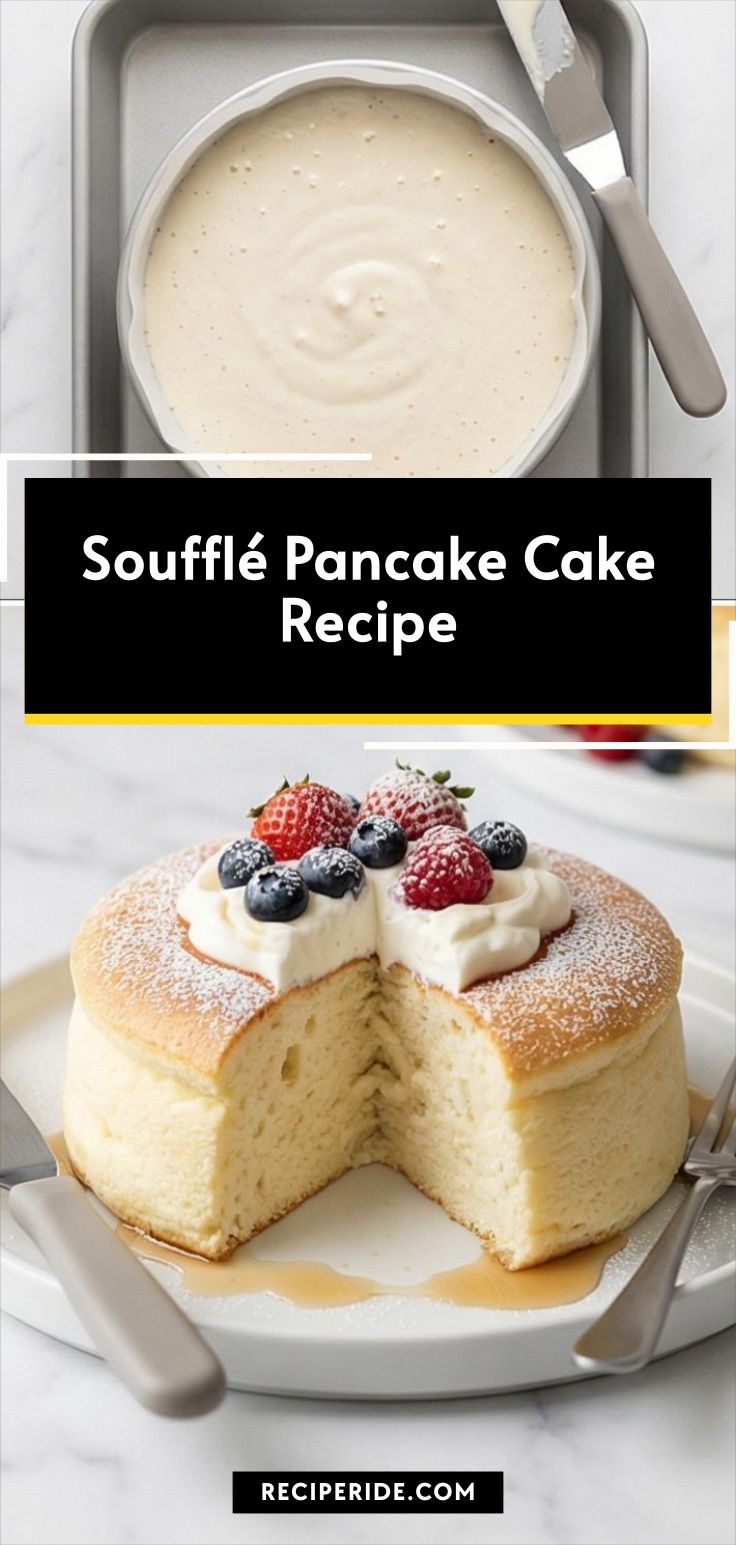
Soufflé Pancake Cake Recipe
Make the Soufflé Pancake Cake Recipe for a cloud-like dessert; bake gently, top with whipped cream and fresh berries.
Ingredients
Instructions
Step 1: Prepare the pan, oven and water bath
Preheat the oven to 300°F (150°C) and position a rack in the lower-middle so the cake can rise without touching the oven top. Grease the bottom and sides of a 7-inch (18 cm) round cake pan (or springform) with a thin layer of butter, line the bottom with a round of parchment, and fit a tall parchment collar that extends 1–2 inches above the rim; lightly grease the parchment as well. Place that prepared cake pan inside a larger deep roasting pan with at least 1 inch (2.5 cm) of clearance all around so water can circulate later. Keep a clean offset spatula nearby for smoothing.
Step 2: Sift and combine the dry ingredients
Whisk together the cake flour, cornstarch and fine sea salt in a small bowl, then pass them through a fine sieve so the mixture is airy and lump-free; set this sifted dry mix within reach. This is a light, powdery, snow-like pile with a faint, matte texture that will give the final cake its delicate crumb.
Step 3: Whisk the egg yolks into a smooth batter
In a modern matte grey mixing bowl, whisk the 4 egg yolks together with the 20 g sugar until the color lightens and the texture becomes creamy and slightly thickened. Add the whole milk, vanilla and the warm, slightly cooled melted butter and whisk until fully combined into a pale, satin-smooth batter with a few faint whisk ribbons and no lumps. The batter should be thick but still pourable.
Step 4: Whip the egg whites into glossy soft–medium peaks
Using a clean glass mixing bowl, begin beating the egg whites with the cream of tartar until foamy, then gradually add the 60 g sugar while increasing speed. Stop when the meringue is glossy with soft–to–medium peaks—peaks that stand but gently bend at the tip—showing a mirror-like sheen and a tender, marshmallow-like texture. Rest the whisk on the rim so its wires catch a few silky folds.
Step 5: Fold meringue into the yolk batter until airy and uniform
Transfer about one-third of the meringue to the matte grey bowl of yolk batter to lighten it, then fold the remaining meringue in two gentle additions. Use broad, sweeping folds that cut through the center and lift from the bottom, turning the bowl as you go. The result is an airy, pale batter that holds soft peaks, thick and cloud-like with tiny suspended air pockets—light enough to barely wobble on the spatula. Carefully pour and scrape this aerated batter into the prepared parchment-lined round pan, smooth the top, tap gently to release major bubbles and run a skewer in a soft spiral if needed. A neutral matte spatula rests on the rim.
Step 6: Assemble the water bath and bake, then cool gently
Place the filled cake pan into the larger roasting pan, bring very hot water to a near simmer, and carefully pour the hot water around the cake pan until it reaches about halfway up the sides (no splashes into the batter). Slide the roasting pan into the preheated oven and bake at 300°F (150°C) for 45–55 minutes until the top is a very light golden color, edges look set, and the center springs back gently. After baking, turn off the oven and crack the door to let the cake rest 10–15 minutes, then remove the cake pan from the water bath and cool on a wire rack, running a thin knife around the parchment so it peels away cleanly.
Step 7: Make the whipped cream while the cake cools
Chill a medium bowl and combine the heavy cream, powdered sugar and vanilla, then whip to soft–to–medium peaks—smooth, billowy cream that holds shape but still looks pillowy and moist. Keep the cream airy and not overbeaten so it remains glossy and spreadable for a light finish.
Step 8: Finish, garnish and serve
Remove the outer ring if using a springform or invert carefully to keep the top side up; peel away the parchment. Dust the warm or room-temperature soufflé pancake cake lightly with powdered sugar, spread or pipe the whipped cream in billowy mounds, arrange a mix of fresh berries on top (sliced strawberries, blueberries, raspberries), and optionally drizzle a little pure maple syrup at the edge of each slice. Serve immediately while the interior is tender, slightly jiggly and cloud-like.
Notes
- Use room-temperature eggs for maximum meringue volume.
- Be gentle when folding to keep the batter airy and avoid deflating it.
- Pour hot water slowly into the roasting pan to prevent splashes into the batter.
- Serve same day for best texture; lightly warm slices if needed before serving.