Greek Yogurt Bark Recipe has been one of my favorite easy treats for years. I make this Greek Yogurt Bark Recipe when I want something bright, fruity, and just a little bit indulgent without the fuss. It feels like a dessert and a snack at the same time, and it travels well to picnics or late-night fridge raids. Every time I dish it up, friends ask for the recipe, so I finally sat down to write it out so you can make it too.
How This Recipe Became My Rainy-Day Favorite
One rainy afternoon years ago, I was craving something cool and simple after a long walk. I had a bowl of plain Greek yogurt, a jar of honey, and a handful of berries in the fridge. I spread the yogurt on a baking sheet, sprinkled pistachios and chocolate over the top, and forgot it in the freezer while I made tea. When I broke it into shards, the crunchy pistachios, juicy strawberries, and that little snap of dark chocolate felt exactly like a tiny celebration. The texture hit me first: creamy, cold, and slightly chewy from the fruit. Since then, this Greek Yogurt Bark Recipe has been my go-to for quick hostess gifts, easy dessert trays, and a reliable, showy snack when I want something that looks like effort but really is effortless.
The Ingredients That Make It Sing
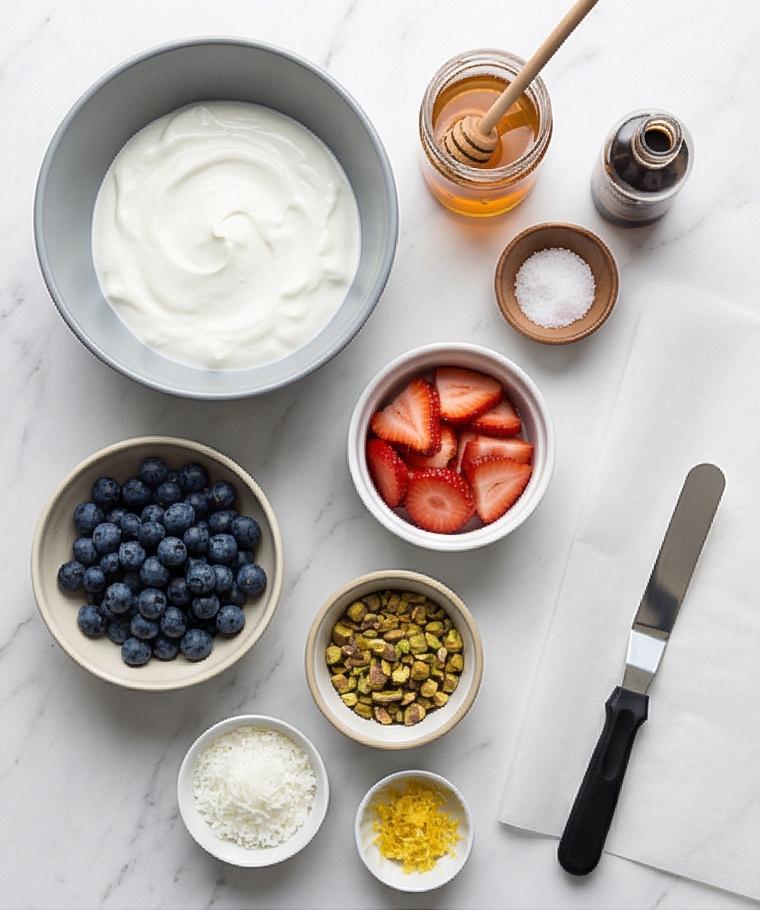
- Plain Greek Yogurt: The creamy foundation; full-fat or 2% gives the best texture. For a lighter version, try low-fat Greek yogurt but expect a slightly icier bite.
- Honey: Sweetener and binder; swap for maple syrup if vegan, but flavor will shift.
- Vanilla Extract: Adds warmth and depth; use pure vanilla for the best aroma.
- Fine Sea Salt: Balances sweetness; a pinch is enough.
- Strawberries and Blueberries: Fresh fruit gives brightness and color; frozen will add extra ice crystals so avoid if possible.
- Pistachios and Dark Chocolate: Texture and bitter-sweet contrast; almonds or walnuts work as substitutes.
- Coconut and Lemon Zest (optional): Finishers that add complexity and lift.
Essential Kitchen Tools
A few simple tools make this Greek Yogurt Bark Recipe effortless and reliable. You do not need fancy equipment, but the right basics speed things up and give a prettier result.
- Rimmed baking sheet and parchment: For easy lifting and neat edges; if you do not have a rimmed sheet, use a shallow baking dish lined with parchment.
- Offset spatula or large spoon: Helps spread the yogurt smoothly and evenly; a butter knife can work in a pinch.
- Mixing bowl and whisk: To get a glossy, homogeneous yogurt base; an electric whisk is optional but handy.
- Sharp knife or your hands: For breaking the frozen bark into shards; a bench scraper gives clean edges if you prefer squares.
- Freezer with a flat shelf: Stability ensures even freezing; avoid stacking while it sets.
Step-by-Step Preparation Guide
Step 1: Prepare the pan
Line a rimmed rectangular baking sheet (about 9×13 inches / 23×33 cm) with a sheet of parchment paper so it lies flat with a bit of overhang on the long sides for easy lifting. Lightly grease the exposed metal rim with a whisper of neutral oil or nonstick spray if your pan tends to stick; otherwise keep the parchment neat and flat. Treat the lined pan like your framing tool — it’s the exact rectangular geometry the bark will keep through every stage.
Step 2: Dry and prep the toppings
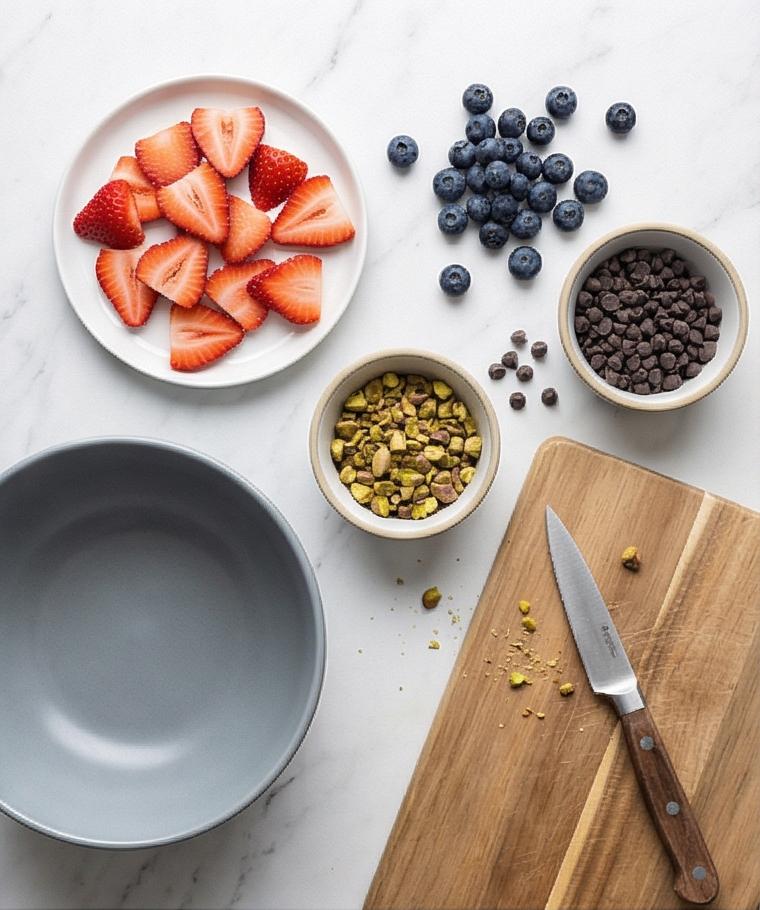
Rinse strawberries and blueberries, then pat them very thoroughly dry on paper towels — moisture equals ice crystals, so be meticulous. Hull and thinly slice the strawberries to about 1/8–1/4 inch (3–6 mm) thickness so they sit flush on the yogurt surface. Roughly chop roasted pistachios into small, even pieces, and either measure mini dark chocolate chips or finely chop your bar chocolate into similar small bits. If using lemon zest or shredded coconut, grate and measure them now. Arrange each topping in its own small vessel so they’re ready to scatter precisely across the yogurt.
Step 3: Whisk the yogurt base until glossy and silky
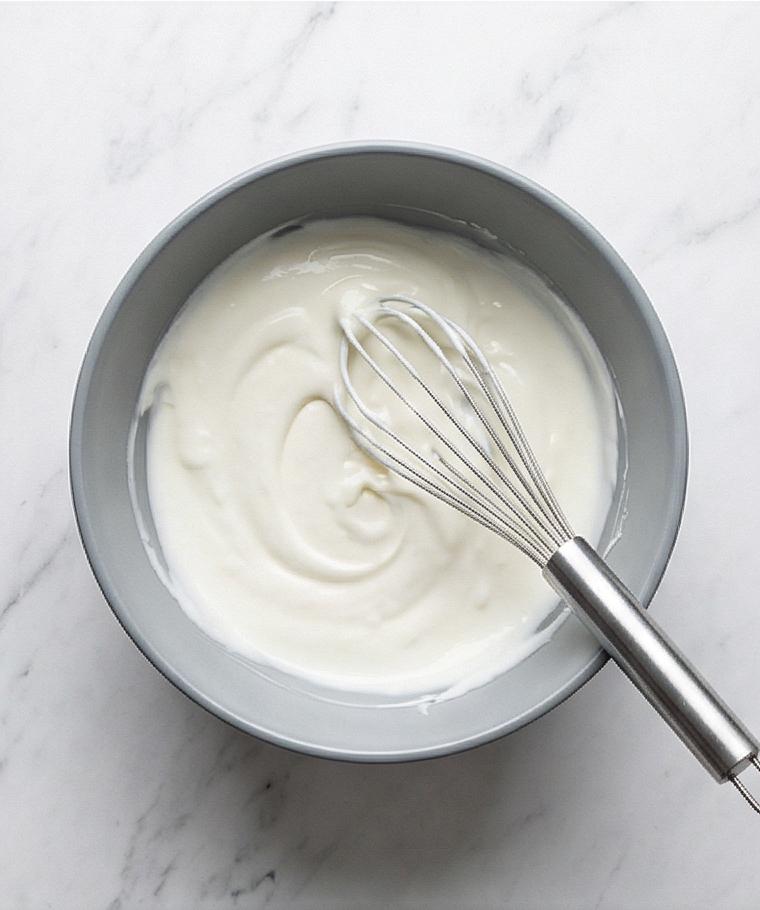
In a medium matte-grey ceramic mixing bowl, combine 2 cups (480 g) plain Greek yogurt (well-stirred and chilled), 3 tablespoons (63 g) honey at room temperature, 1 teaspoon pure vanilla extract, and 1/8 teaspoon fine sea salt. Whisk vigorously for 30–60 seconds until the mixture is completely smooth and glossy with no streaks of honey — thick, spreadable, and holding soft peaks. Taste, and if you prefer slightly sweeter bark, whisk in up to 1 additional tablespoon (21 g) honey. If using lemon zest, fold in 1 teaspoon finely grated lemon zest until evenly distributed; the mixture should look dense, bright white-cream, and spreadable.
Step 4: Spread the yogurt and arrange the fruit
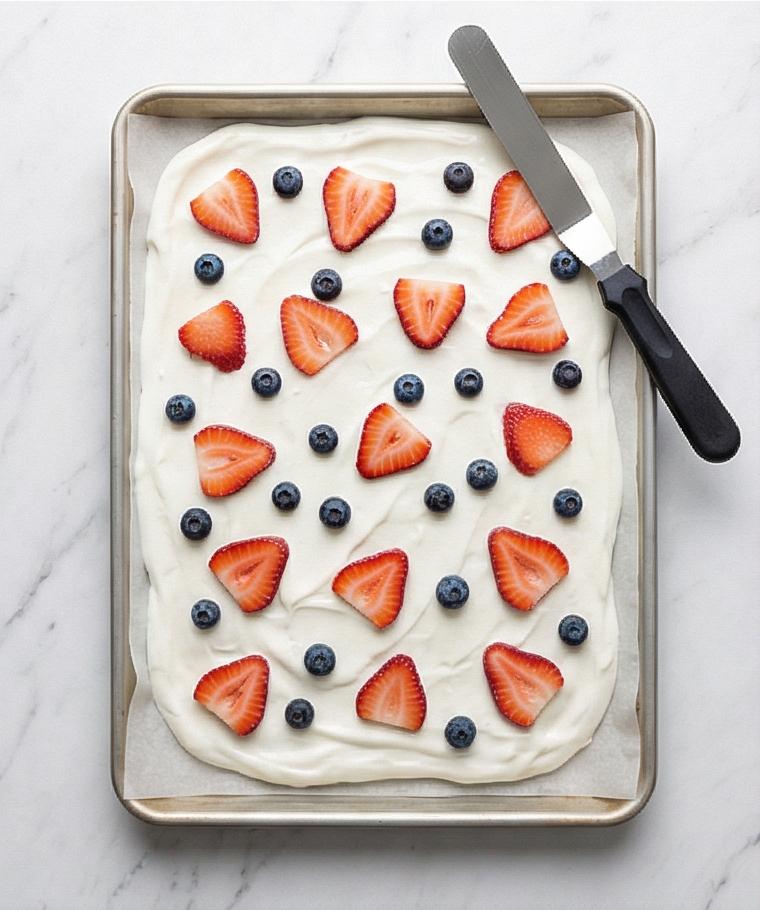
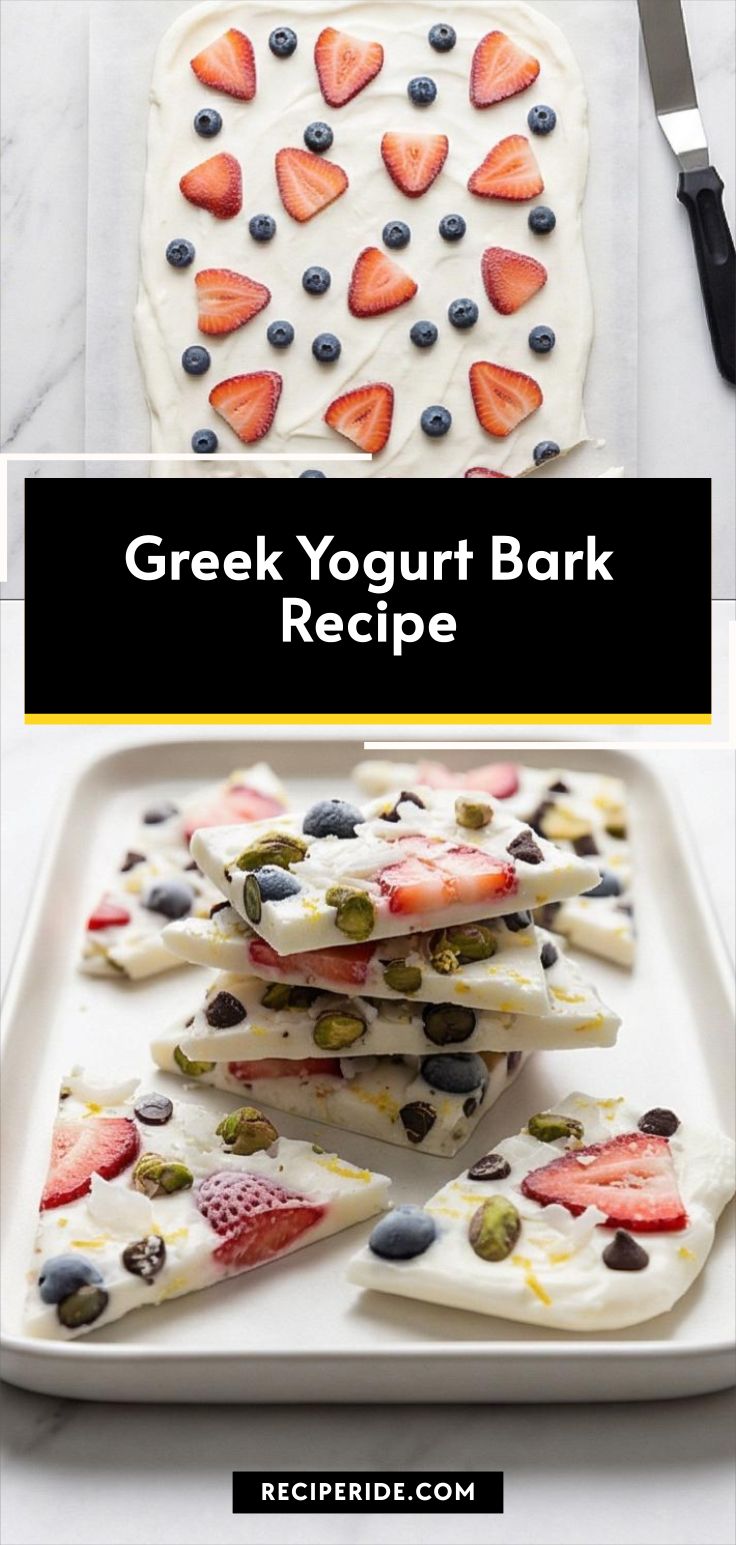
Pour the glossy yogurt mixture onto the prepared parchment-lined rectangular pan. Using an offset spatula or the back of a large spoon, spread it into an even layer about 1/4 inch (6 mm) thick, keeping the thickness consistent from corner to corner so freezing and breaking are uniform. Evenly scatter the sliced strawberries and dried, thoroughly patted blueberries over the surface, gently pressing each piece into the yogurt so it adheres but does not sink. Aim for a mosaic-like distribution so every eventual shard contains a balance of fruit.
Step 5: Add the finishing textures, freeze, and check firmness
Sprinkle chopped pistachios, mini dark chocolate chips (or finely chopped dark chocolate), and, if using, 1 tablespoon (8 g) unsweetened shredded/flaked coconut evenly across the top. Lightly press the nuts and chocolate into the yogurt with clean fingertips so they anchor when frozen. Transfer the pan flat to the coldest part of the freezer (ideally at or below 0°F / −18°C) and freeze uncovered for 2–3 hours. After at least 2 hours, press the center lightly — it should feel hard and icy with no indentation; if it still yields, continue freezing in 30–60 minute increments until fully solid.
Step 6: Break, serve, and store for best texture
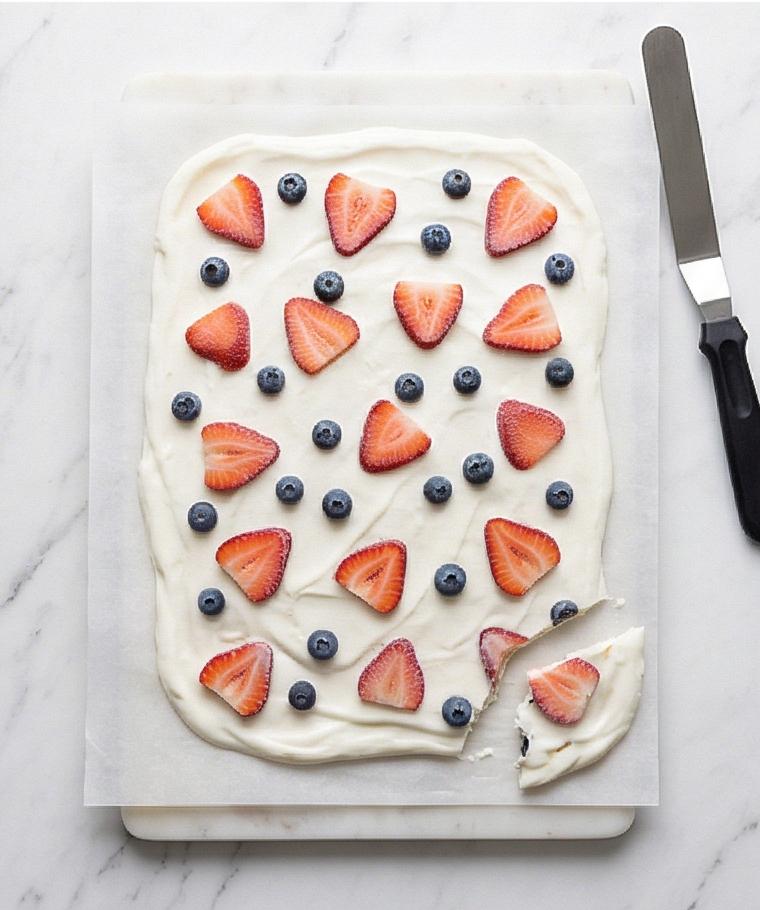
Lift the fully frozen rectangular bark from the pan using the parchment overhang and place it on a cutting board. Let it sit 2–3 minutes at room temperature to soften just enough to avoid shattering, then break into irregular pieces by hand or carefully cut into squares or shards with a sharp chef’s knife. Serve straight from the freezer — allow individual pieces to rest 1–2 minutes at room temperature for the creamiest bite. Store leftovers in an airtight freezer-safe container separated with parchment layers at or below 0°F (−18°C) for up to 2 weeks; do not refrigerate, as the bark will become soft and lose its frozen textural contrast.
Seasonal Twists and Variations
I like to experiment with whatever is in the market. In summer, swap strawberries and blueberries for raspberries and sliced stone fruit for punchy color. Use kiwi and mango for a tropical turn.
For a nut-free version, omit pistachios and sprinkle toasted oats or sunflower seeds instead. If you need dairy-free, try a thick, coconut-based yogurt and swap honey for maple syrup to keep the sweet balance.
Add spices like cinnamon or a touch of cardamom for a Middle Eastern vibe. For a more indulgent dessert, drizzle melted white chocolate after freezing and let it set for a two-tier texture.
How to Serve
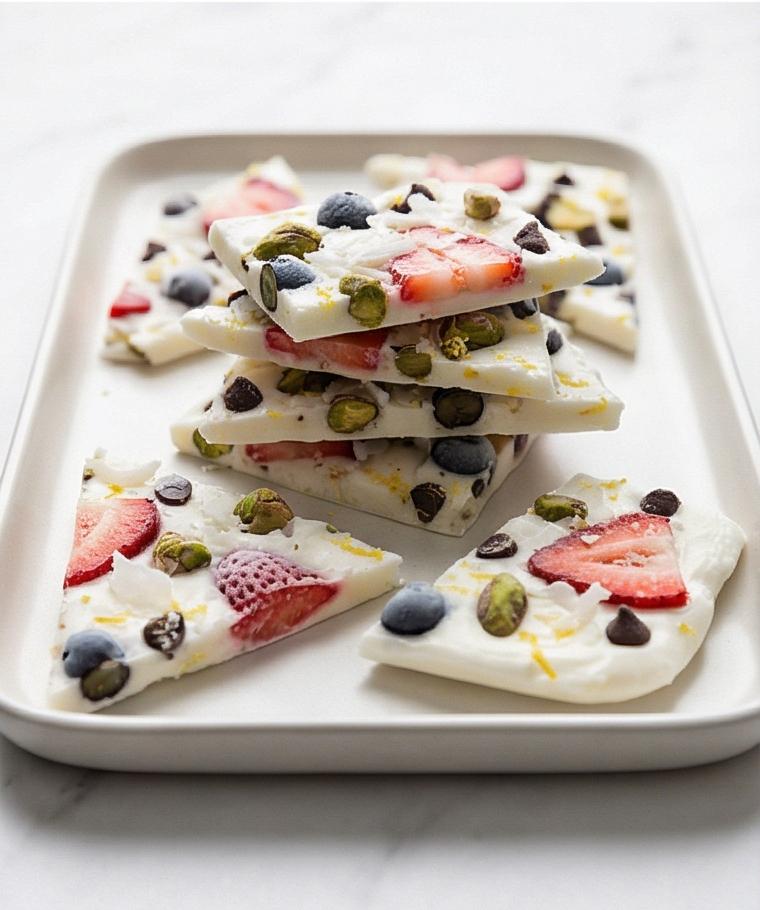
When I host, I break the Greek Yogurt Bark Recipe into a variety of shard sizes and arrange them on a long platter so guests can help themselves. For a brunch, place smaller pieces beside granola and fresh fruit so people can build a parfait-style plate.
If serving at a party, make two pans and stagger the flavors: one citrus-forward with lemon zest and coconut, another richer with extra chocolate and pistachios. To portion for kids, cut neat squares and place them in paper cupcake liners for easy grab-and-go.
Presentation tip: garnish with a few whole berries and a sprinkle of chopped pistachios right before serving so colors pop against the white yogurt.
Storage and Reheating Tips
Store Greek Yogurt Bark Recipe shards in an airtight, freezer-safe container separated by parchment so they do not fuse together. Keep them at or below 0°F (−18°C) and eat within two weeks for best texture and flavor.
Do not refrigerate, since thawing changes that pleasant frozen-creamy contrast to a soggier texture. To serve, transfer pieces to a platter and let sit 1–2 minutes at room temperature so they soften slightly and the flavors open up.
Common Mistakes and How to Avoid Them
A common mistake is using wet fruit; moisture creates ice crystals and a grainy bite. Always pat fruit completely dry and, if needed, briefly air-dry sliced berries on paper towels.
Another slip is spreading the yogurt unevenly. If sections are thicker, those areas freeze harder and break awkwardly. Take a minute to smooth the layer for consistent shards.
Final Thoughts
This Greek Yogurt Bark Recipe is one of those simple, repeatable recipes I come back to again and again. It looks impressive, is easy to make, and is endlessly adaptable. Give it a try this week and tweak the toppings until you find your perfect combination.
Frequently Asked Questions
- What yogurt is best for Greek Yogurt Bark Recipe? Use full-fat or 2% Greek yogurt for the creamiest texture; low-fat works but can be icier.
- Can I use frozen fruit? You can, but frozen fruit adds extra moisture and ice crystals; fresh is best.
- How long does it keep? Store in the freezer up to 2 weeks in an airtight container with parchment between layers.
- Is there a vegan version? Yes, swap in a thick coconut or almond-based yogurt and use maple syrup instead of honey.
- Can I make this ahead for a party? Absolutely. Freeze up to two days ahead and keep covered until serving.
Greek Yogurt Bark Recipe
Make Greek Yogurt Bark Recipe today: creamy frozen yogurt bark with berries, pistachios, and dark chocolate.
Ingredients
Instructions
Step 1: Prepare the pan
Line a rimmed rectangular baking sheet (about 9×13 inches / 23×33 cm) with a sheet of parchment paper so it lies flat with a bit of overhang on the long sides for easy lifting. Lightly grease the exposed metal rim with a whisper of neutral oil or nonstick spray if your pan tends to stick; otherwise keep the parchment neat and flat. Treat the lined pan like your framing tool — it's the exact rectangular geometry the bark will keep through every stage.
Step 2: Dry and prep the toppings
Rinse strawberries and blueberries, then pat them very thoroughly dry on paper towels — moisture equals ice crystals, so be meticulous. Hull and thinly slice the strawberries to about 1/8–1/4 inch (3–6 mm) thickness so they sit flush on the yogurt surface. Roughly chop roasted pistachios into small, even pieces, and either measure mini dark chocolate chips or finely chop your bar chocolate into similar small bits. If using lemon zest or shredded coconut, grate and measure them now. Arrange each topping in its own small vessel so they’re ready to scatter precisely across the yogurt.
Step 3: Whisk the yogurt base until glossy and silky
In a medium matte-grey ceramic mixing bowl, combine 2 cups (480 g) plain Greek yogurt (well-stirred and chilled), 3 tablespoons (63 g) honey at room temperature, 1 teaspoon pure vanilla extract, and 1/8 teaspoon fine sea salt. Whisk vigorously for 30–60 seconds until the mixture is completely smooth and glossy with no streaks of honey — thick, spreadable, and holding soft peaks. Taste, and if you prefer slightly sweeter bark, whisk in up to 1 additional tablespoon (21 g) honey. If using lemon zest, fold in 1 teaspoon finely grated lemon zest until evenly distributed; the mixture should look dense, bright white-cream, and spreadable.
Step 4: Spread the yogurt and arrange the fruit
Pour the glossy yogurt mixture onto the prepared parchment-lined rectangular pan. Using an offset spatula or the back of a large spoon, spread it into an even layer about 1/4 inch (6 mm) thick, keeping the thickness consistent from corner to corner so freezing and breaking are uniform. Evenly scatter the sliced strawberries and dried, thoroughly patted blueberries over the surface, gently pressing each piece into the yogurt so it adheres but does not sink. Aim for a mosaic-like distribution so every eventual shard contains a balance of fruit.
Step 5: Add the finishing textures, freeze, and check firmness
Sprinkle chopped pistachios, mini dark chocolate chips (or finely chopped dark chocolate), and, if using, 1 tablespoon (8 g) unsweetened shredded/flaked coconut evenly across the top. Lightly press the nuts and chocolate into the yogurt with clean fingertips so they anchor when frozen. Transfer the pan flat to the coldest part of the freezer (ideally at or below 0°F / −18°C) and freeze uncovered for 2–3 hours. After at least 2 hours, press the center lightly — it should feel hard and icy with no indentation; if it still yields, continue freezing in 30–60 minute increments until fully solid.
Step 6: Break, serve, and store for best texture
Lift the fully frozen rectangular bark from the pan using the parchment overhang and place it on a cutting board. Let it sit 2–3 minutes at room temperature to soften just enough to avoid shattering, then break into irregular pieces by hand or carefully cut into squares or shards with a sharp chef’s knife. Serve straight from the freezer — allow individual pieces to rest 1–2 minutes at room temperature for the creamiest bite. Store leftovers in an airtight freezer-safe container separated with parchment layers at or below 0°F (−18°C) for up to 2 weeks; do not refrigerate, as the bark will become soft and lose its frozen textural contrast.
Notes
- Pat fruit completely dry to avoid ice crystals
- Use full-fat or 2% Greek yogurt for the creamiest texture
- Freeze on a flat shelf and do not stack pans while setting
- Store in an airtight freezer-safe container with parchment layers
- Let pieces sit 1–2 minutes at room temperature before serving for optimal creaminess