Shakshuka Eggs Recipe has been a kitchen staple for me for years, and it still makes my week brighter whenever I cook it. This Shakshuka Eggs Recipe balances sweet bell pepper, bright tomatoes, warming spices and gently poached eggs in a skillet that feels like a hug. I first learned to make this in a cramped apartment with no oven, and the skillet method quickly became my favorite for feeding friends. If you love bold, comforting flavors that come together fast, this Shakshuka Eggs Recipe is worth a spot on your regular dinner rotation.
How This Recipe Became My Rainy-Day Favorite
One rainy Sunday I needed something that smelled like home and came together without fuss. I remember the sound of rain against the window, the bright pop of paprika as it hit the hot oil, and the first spoonful of tomato and pepper that warmed my fingertips and my mood. I invited a friend who was having a tough week, and sharing steaming bowls of shakshuka turned the afternoon into a small celebration. The eggs broke open like little sunbursts, the herbs tasted like spring, and the bread soaked up every last drop. That day I learned how food can change the tone of an afternoon, and this dish became a small ritual whenever I want to slow down and savor the moment.
The Ingredients that Make the Dish Sing
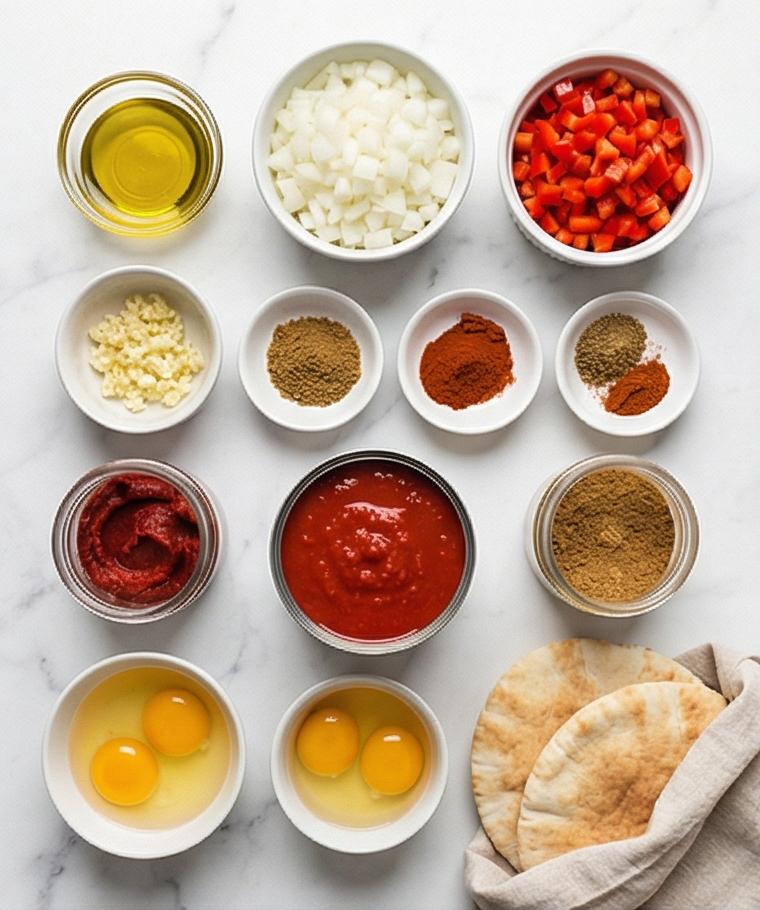
- Extra-virgin olive oil: The flavor carrier. Use good quality oil for depth; substitute avocado oil if needed.
- Yellow onion: Adds sweetness and body; shallots work in a pinch.
- Red bell pepper: Gives brightness and texture; roasted peppers are a smoky alternative.
- Garlic: Provides punch; use 3 cloves or garlic paste as a shortcut.
- Spices (cumin, paprika, coriander, cayenne): The aromatic backbone; smoked paprika adds depth, reduce cayenne for milder heat.
- Tomato paste and crushed tomatoes: Tomato paste concentrates flavor; whole peeled tomatoes crushed by hand give texture.
- Eggs: The finishing touch; room temperature eggs poach more gently.
- Feta, parsley, cilantro: Garnishes that add salt, tang and freshness; omit or swap for mint.
Essential Kitchen Tools and Why They Matter
A few simple tools make the Shakshuka Eggs Recipe effortless and reliable. A roomy, heavy skillet lets the sauce reduce evenly and gives you enough space to nest the eggs without crowding. A sturdy spatula or spoon helps you scrape up fond and create wells for eggs. A small bowl or ramekin for cracking eggs keeps shells out of the pan. Finally, a lid is essential for gentle steaming so the whites set while yolks stay soft.
- Heavy 10–12 inch skillet: Even heat distribution; a cast iron or stainless steel pan works best.
- Sturdy wooden spoon or spatula: For stirring and scraping fond.
- Small bowl or ramekin: Crack eggs into it to avoid shells.
- Lid: Traps steam to cook eggs gently. Use a baking sheet as a fallback.
Step-by-Step Preparation Guide
Step 1: Heat oil and soften the aromatics
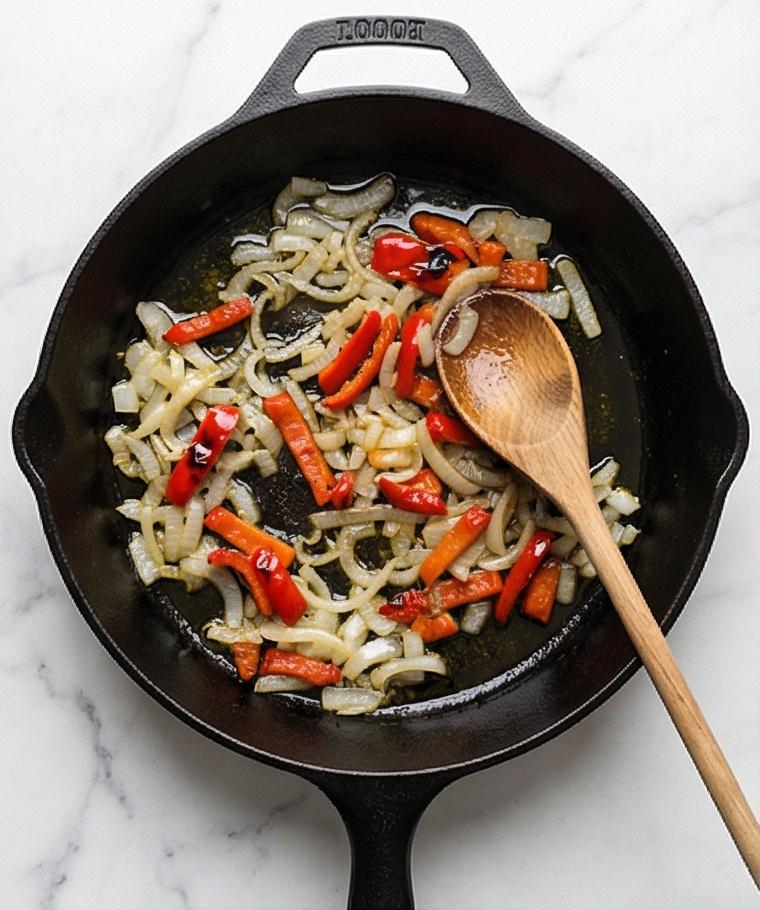
Warm a large, heavy 10–12 inch skillet with 2 tablespoons of extra-virgin olive oil until it shimmers; add the finely diced yellow onion and cook until soft, translucent and just beginning to caramelize at the edges, then add the diced red bell pepper and continue to cook until the pepper softens and its edges blur and blister lightly. Stir occasionally so the vegetables remain tender and glossy rather than deeply browned; this is the foundation of the sauce and should smell sweet and bright.
Step 2: Introduce garlic, spices, and tomato paste
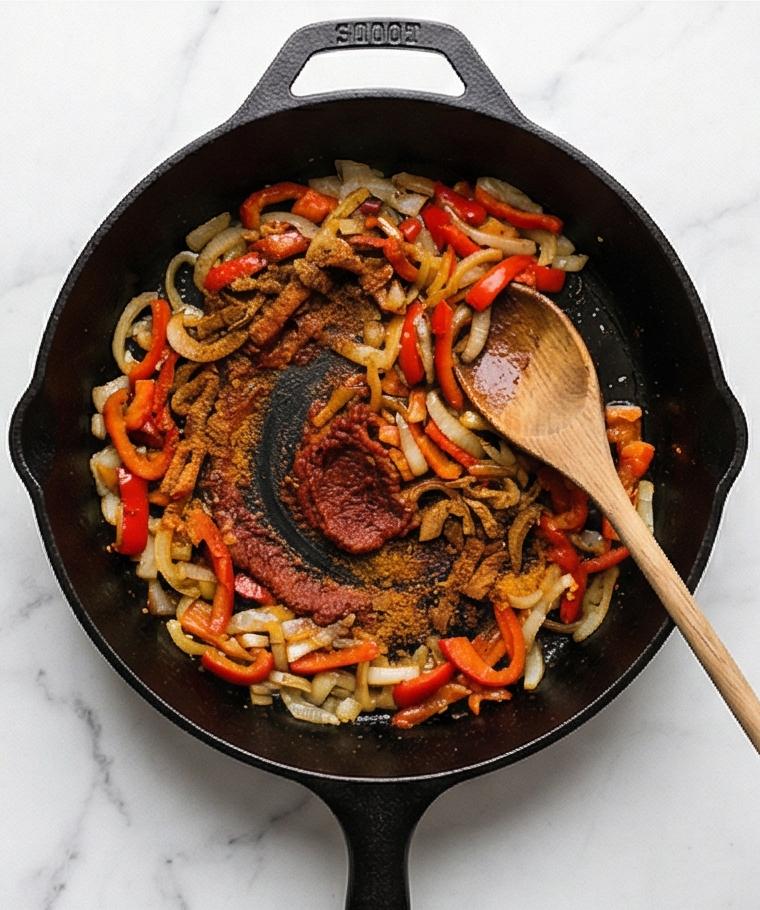
Stir in the minced garlic just until fragrant, then immediately sprinkle the ground cumin, sweet paprika, ground coriander and cayenne (if using) so the heat of the pan gently toasts the powders. Fold in the tablespoon of tomato paste and cook while stirring until the paste deepens in color and becomes richly aromatic — a slightly darker, glossy rust that clings to the softened vegetables, signaling the Maillard-forward base for the tomato sauce.
Step 3: Build and simmer the tomato sauce
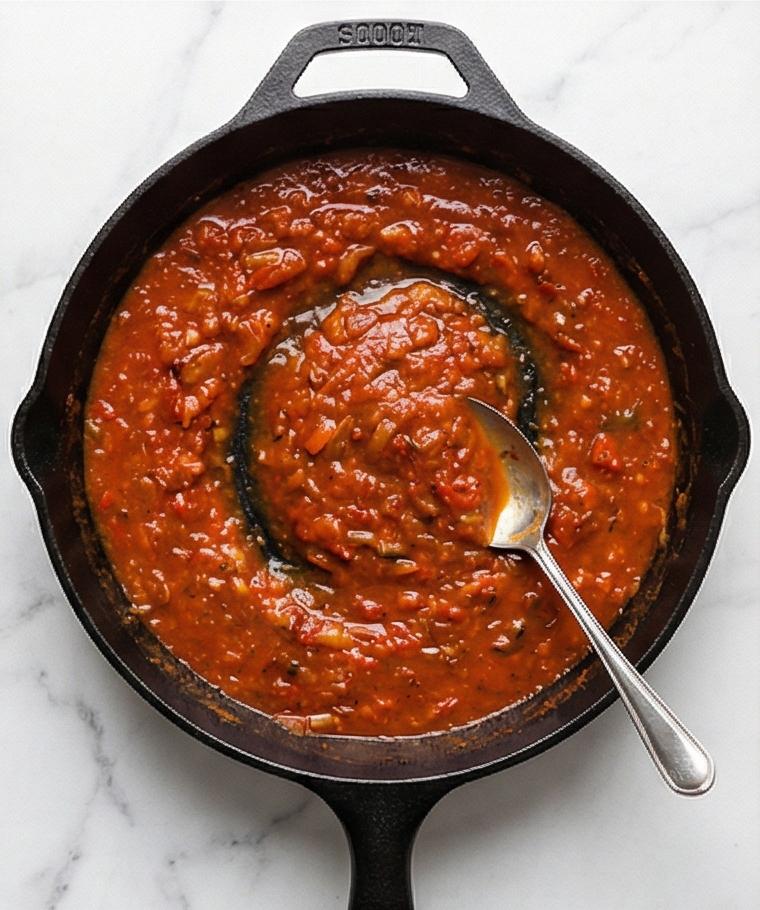
Pour in the crushed tomatoes with the 1/3 cup water, scrape any fond from the pan, and stir in the sugar (if using), kosher salt and black pepper. Bring the mixture briefly to a gentle bubble and then lower to a steady simmer; cook uncovered until the sauce thickens just enough that a spoon leaves a brief trail. The sauce should read as bright, broken red with softened vegetable flecks and a concentrated, slightly glossy mouthfeel. Taste and adjust for salt and balance.
Step 4: Nest the eggs and finish gently
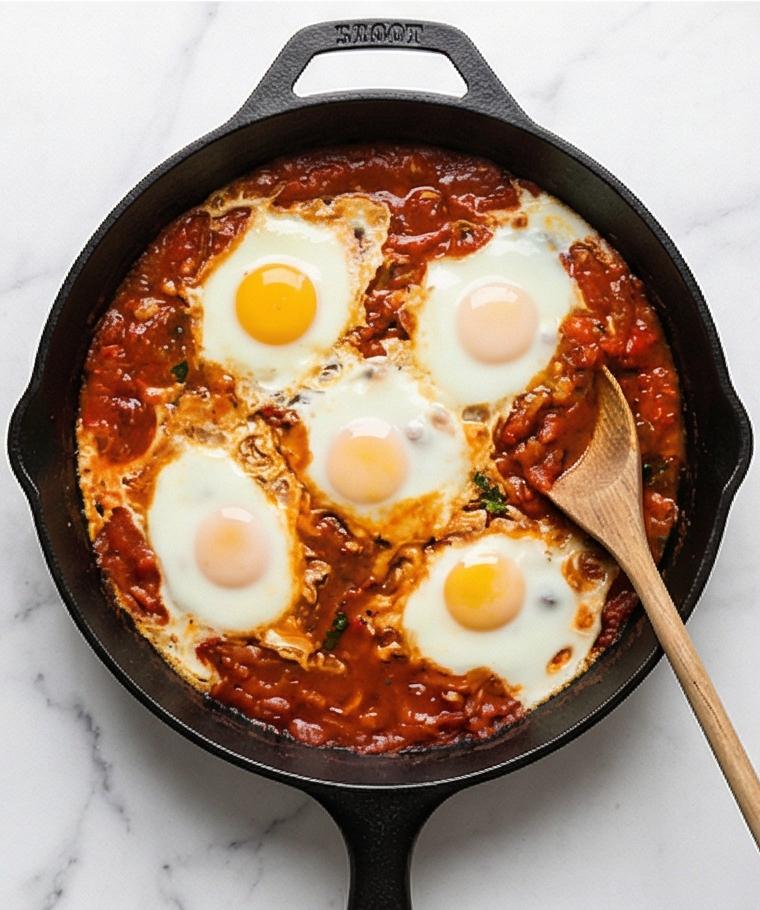
Using the back of a spoon, make evenly spaced wells in the thickened sauce and, working one at a time, slide each room‑temperature cracked egg into its well. Keep the pan at a low gentle simmer, cover, and cook until the whites are opaque and set while the yolks remain soft and jiggly to your preference — check at about 6 minutes for runny yolks. Remove from heat and do a final seasoning check so every spoonful will be well seasoned.
Step 5: Garnish and serve straight from the skillet
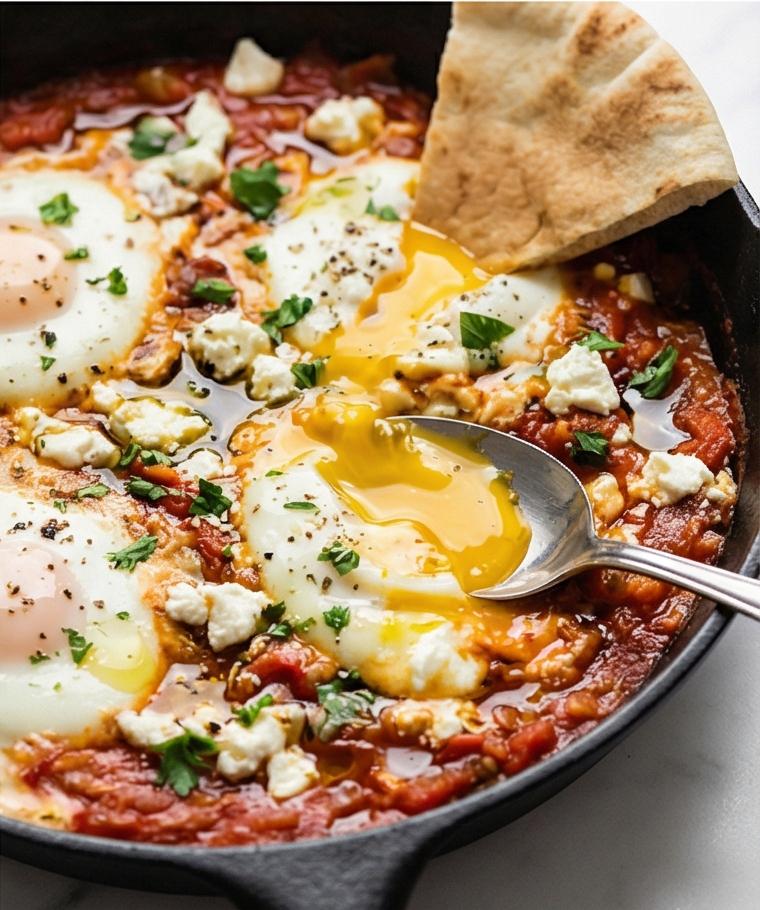
Scatter crumbled feta, chopped flat‑leaf parsley and cilantro, and a small pinch of red pepper flakes over the hot shakshuka; finish with a light drizzle of extra‑virgin olive oil. Serve immediately from the skillet, scooping eggs with plenty of saucy tomato into shallow bowls alongside warmed pita or crusty bread for dipping; the final image should celebrate runny yolks, bright herbs, flaky feta and glossy olive oil pooling at the skillet rim.
Making It Your Own
I treat the Shakshuka Eggs Recipe like a canvas for experimentation. For a dairy-free version, skip the feta and finish with a squeeze of lemon and extra herbs. To make it heartier, add spicy merguez or crumbled sausage during the onion stage so the fat flavors the sauce. In cooler months I sometimes stir in a handful of spinach or chopped kale toward the end for color and nutrients. If tomatoes are at their peak, use fresh plum tomatoes, peeled, seeded and crushed; in winter, good canned tomatoes are a reliable shortcut. When I want a smoky finish I swap sweet paprika for smoked paprika and roast the peppers first.
How to Serve
If I am hosting, I serve the Shakshuka Eggs Recipe straight from the skillet so everyone can dunk bread and scoop yolks. For a casual brunch of four, use four eggs for generous portions and place the skillet on a trivet in the center of the table with warmed pita and small bowls of chopped herbs and crumbled feta. For a larger crowd, double the sauce in two skillets so everyone gets warm servings. For an elegant dinner, plate individual shallow bowls and garnish each with a micro-planed lemon zest and a small drizzle of olive oil. Offer olives or a simple cucumber salad on the side to cut through the richness.
Storage and Reheating Tips
Leftover sauce stores beautifully in the fridge for up to four days. Spoon cooled sauce into an airtight container, leaving room if you plan to nestle in fresh eggs when reheating.
To reheat, warm the sauce gently in a skillet over low heat until bubbling at the edges, then create wells and crack in fresh eggs. Cover and steam until the whites set. Avoid microwaving eggs directly in the sauce or they may overcook and become rubbery.
Common Mistakes and How to Avoid Them
Crowding the pan with too many eggs can lead to uneven cooking. Use an appropriately sized skillet and leave space between wells so eggs cook consistently.
Overcooking the sauce until it is too dry removes the bright tomato flavor. Keep the sauce slightly loose; it will thicken a bit as it cools.
Final Thoughts and Encouragement
Give this Shakshuka Eggs Recipe a try this week and let the simple rhythm of chopping, simmering and nesting eggs slow you down in the best way. It is forgiving, quick, and endlessly adaptable, and it rewards small adjustments with big flavor.
Frequently Asked Questions.
- Can I make Shakshuka ahead of time? Yes, make the tomato base ahead and reheat before adding eggs; nest fresh eggs and finish cooking just before serving.
- How do I get runny yolks every time? Use room temperature eggs, low heat, and cover the pan; check at about 6 minutes for runny yolks.
- Can I use fresh tomatoes? Yes, ripe plum tomatoes work well when peeled and crushed; adjust simmer time for extra moisture.
- What can I serve with shakshuka? Warm pita, crusty bread, olives, or a light cucumber salad pair nicely.
- Is shakshuka spicy? It can be. Adjust the cayenne to your taste or omit it for a milder dish.
Shakshuka Eggs Recipe
Make Shakshuka Eggs Recipe: a skillet of spiced tomato sauce and runny eggs, ready in about 40 minutes. Try it tonight.
Ingredients
Instructions
Step 1: Heat oil and soften the aromatics
Warm a large, heavy 10–12 inch skillet with 2 tablespoons of extra-virgin olive oil until it shimmers; add the finely diced yellow onion and cook until soft, translucent and just beginning to caramelize at the edges, then add the diced red bell pepper and continue to cook until the pepper softens and its edges blur and blister lightly. Stir occasionally so the vegetables remain tender and glossy rather than deeply browned; this is the foundation of the sauce and should smell sweet and bright.
Step 2: Introduce garlic, spices, and tomato paste
Stir in the minced garlic just until fragrant, then immediately sprinkle the ground cumin, sweet paprika, ground coriander and cayenne (if using) so the heat of the pan gently toasts the powders. Fold in the tablespoon of tomato paste and cook while stirring until the paste deepens in color and becomes richly aromatic — a slightly darker, glossy rust that clings to the softened vegetables, signaling the Maillard-forward base for the tomato sauce.
Step 3: Build and simmer the tomato sauce
Pour in the crushed tomatoes with the 1/3 cup water, scrape any fond from the pan, and stir in the sugar (if using), kosher salt and black pepper. Bring the mixture briefly to a gentle bubble and then lower to a steady simmer; cook uncovered until the sauce thickens just enough that a spoon leaves a brief trail. The sauce should read as bright, broken red with softened vegetable flecks and a concentrated, slightly glossy mouthfeel. Taste and adjust for salt and balance.
Step 4: Nest the eggs and finish gently
Using the back of a spoon, make evenly spaced wells in the thickened sauce and, working one at a time, slide each room‑temperature cracked egg into its well. Keep the pan at a low gentle simmer, cover, and cook until the whites are opaque and set while the yolks remain soft and jiggly to your preference — check at about 6 minutes for runny yolks. Remove from heat and do a final seasoning check so every spoonful will be well seasoned.
Step 5: Garnish and serve straight from the skillet
Scatter crumbled feta, chopped flat‑leaf parsley and cilantro, and a small pinch of red pepper flakes over the hot shakshuka; finish with a light drizzle of extra‑virgin olive oil. Serve immediately from the skillet, scooping eggs with plenty of saucy tomato into shallow bowls alongside warmed pita or crusty bread for dipping; the final image should celebrate runny yolks, bright herbs, flaky feta and glossy olive oil pooling at the skillet rim.
Notes
- Use room temperature eggs for gentler cooking and a better set.
- Taste and adjust salt near the end; tomatoes concentrate as they reduce.
- For a smoky twist, swap sweet paprika for smoked paprika.
- Reheat sauce slowly in a skillet and add fresh eggs when warming for best texture.
- Freeze sauce without eggs for up to 3 months; thaw in the fridge before reheating.