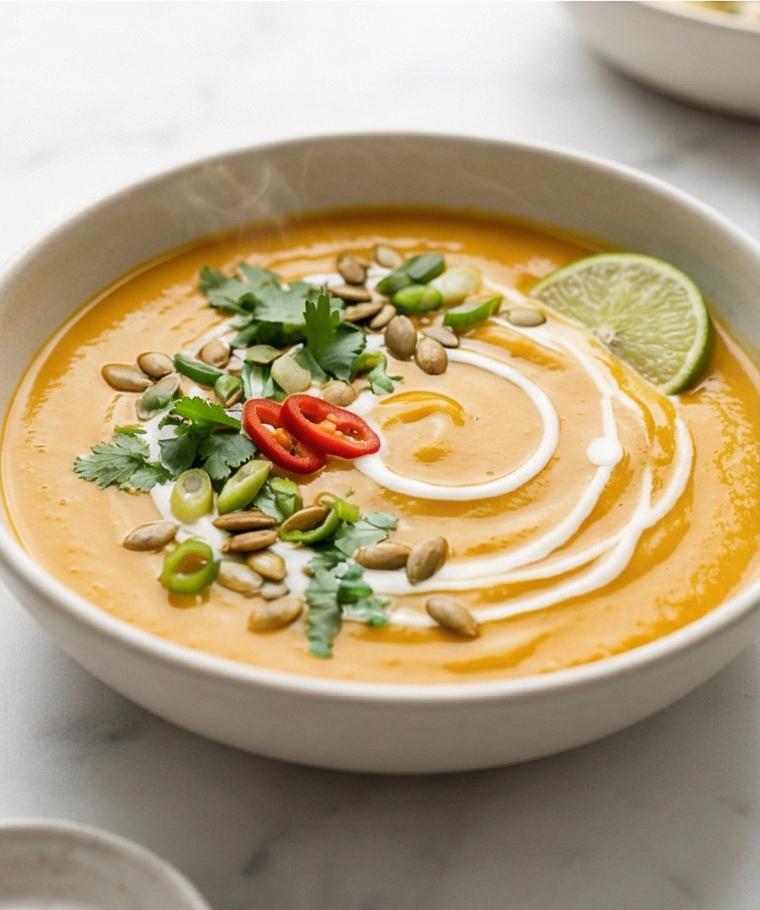
Spicy Thai Coconut Soup Recipe is one of those bowls I make when I want a hug that tastes like sunshine. I first learned this Spicy Thai Coconut Soup Recipe from a friend who taught me how lime and coconut can sing together. The soup is quick, bright, and forgiving, which makes it perfect for weeknights or when you want to impress without fuss. I keep the ingredients simple and let the aromatics do the heavy lifting, so you’ll get a restaurant feel at home.
How This Recipe Became My Rainy-Day Favorite
I remember the evening I first made this soup for a small gathering: rain tapping on the windows, a single lamp casting a warm pool of light over the table. The kitchen filled with lemony lemongrass steam and the sharp perfume of galangal, and the guests leaned in as the aroma lifted from the pot. The first spoonful was the kind of small revelation that makes you close your eyes and take another bite: the coconut softened the chile heat, lime brightened the whole bowl, and the chicken felt tender and comforting. That night I scribbled little adjustments on a napkin, testing how much curry paste would color the broth without masking the citrus. Ever since, this Spicy Thai Coconut Soup Recipe has been my go-to for chilly evenings and unexpected company, because it comforts and wakes you up at the same time.
Pantry and Fresh Stars
- Chicken Stock: The savory base that carries the aromatics; use low-sodium stock to control salt levels or substitute vegetable stock for a lighter, vegetarian twist.
- Lemongrass: Citrus backbone that brightens the broth; choose firm, pale stalks and bruise them to release oils.
- Galangal or Ginger: Adds warm, peppery depth; galangal is authentic, ginger works fine if galangal is unavailable.
- Coconut Milk: Provides creaminess and balance; full-fat yields the richest texture, light coconut milk thins the soup.
- Fish Sauce and Lime: Salt and acid pair that finish the bowl; adjust lime and fish sauce to taste for balance.
Essential Kitchen Tools
A few simple tools make this recipe easy and reliable. A medium saucepan or small stockpot gives the broth room to bloom and keeps heat even. A sharp knife and a sturdy cutting board are essential for thinly slicing chicken and aromatics; a bench scraper helps move ingredients cleanly. A long-handled slotted spoon or ladle is useful for skimming and serving, while tongs make removing lemongrass and galangal quick and tidy. If you don’t have a mortar and pestle for crushing chiles, the back of a knife works fine. Alternatives like an immersion blender are not needed here; the soup shines best when the ingredients remain distinct.
Step-by-Step Preparation Guide
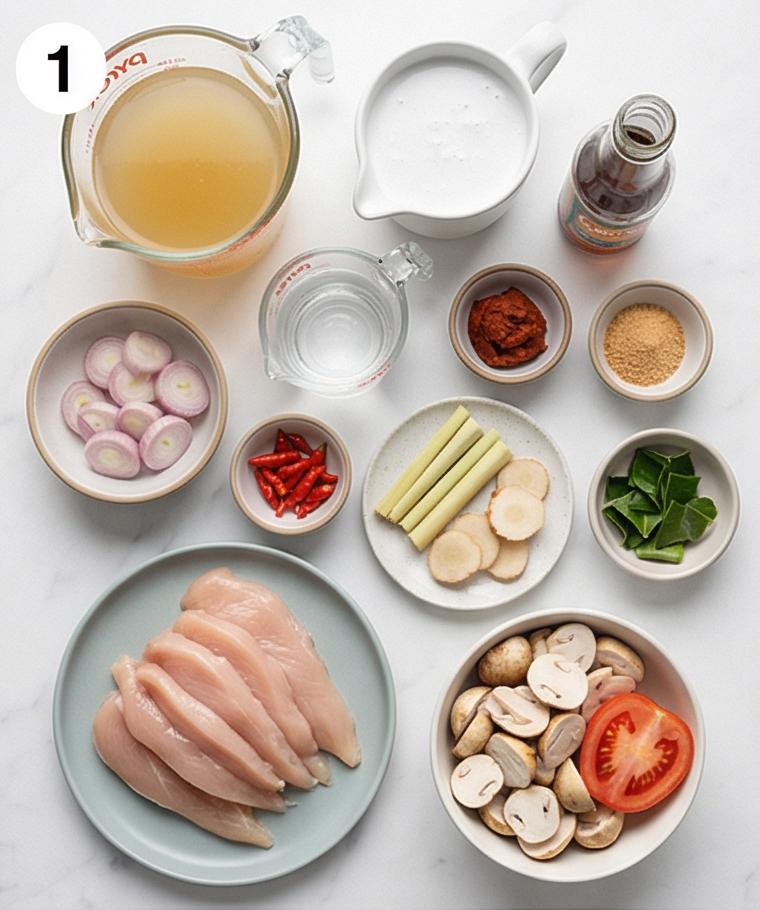
Step 1: Prepare the aromatics and chicken
Lightly bruise the lemongrass stalks with the back of a knife to release the pungent citrus oils, trim and cut them into 2-inch pieces, and lay them out neatly. Slice the galangal (or ginger) into thin coins, tear the kaffir lime leaves in half so their bright citrus oils can bloom, and lightly crush the bird’s eye chiles just enough to crack their skins. Peel and thinly slice the shallots and arrange them in a small ceramic bowl. Finally, thinly slice the boneless chicken thighs against the grain so the meat will remain tender when cooked. Keep each element separated in small glass jars or ramekins on the marble so the colors and textures read clearly.
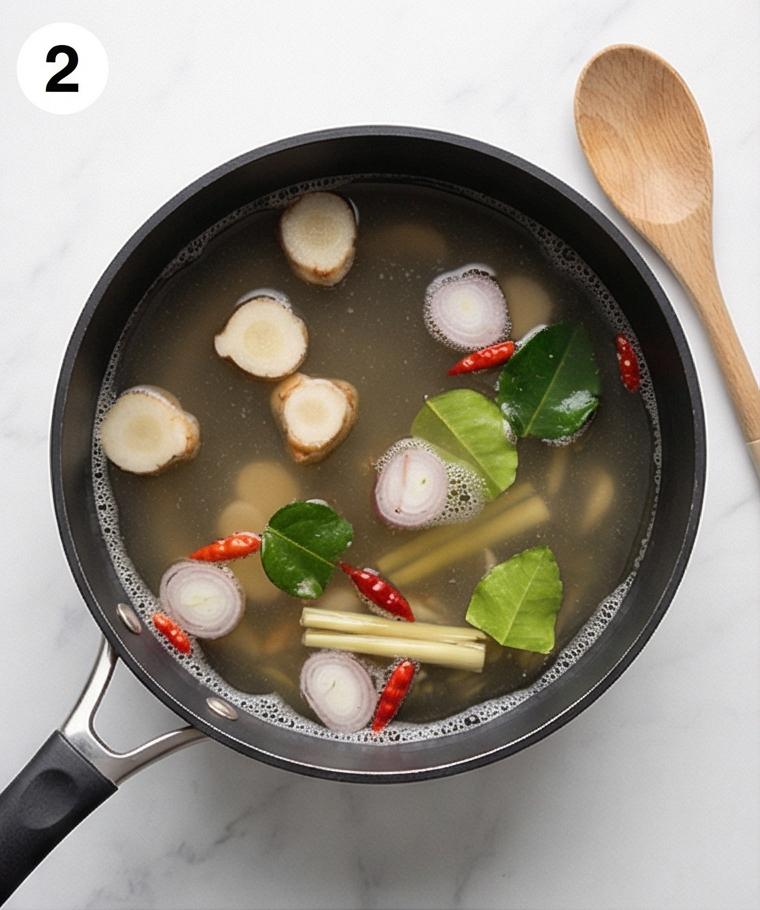
Step 2: Build the aromatic broth
Place a modern matte charcoal saucepan (used as the consistent cooking vessel through the next panels) on the marble surface and nestle in the bruised lemongrass, galangal coins, torn kaffir leaves, crushed chiles, and sliced shallots, then pour in the chicken stock and water from small glass measuring jugs so the liquids remain contained and photoreal. This frame is about the moment the raw aromatics meet the clear stock: you should see the floating layers of shallot, pale galangal discs, and the ragged edges of kaffir leaves submerged in translucent broth.
Step 3: Bring the broth to an active boil
Heat (off-scene) until the broth reaches a full boil; capture the broth at the instant steady bubbling creates a lively, slightly agitated surface with tiny suspended droplets and a skim of foam beginning to gather at the edges. Show the saucepan top-down so the motion is readable: small energetic bubbles, steam hints rising (soft and diffused rather than harsh), and the aromatics churning in clarified liquid—this is the transition from raw to actively cooking.
Step 4: Simmer to infuse and clarify
Reduce to a gentle simmer and partially cover (lid resting beside the pot) so the broth looks glossy and aromatic but calm: fewer bubbles, fragrant oils sheening the surface, and a few skimmed foam bits removed with a spoon placed quietly on the rim. The broth should appear translucent but scented—this is the clarified, infused stage where citrus-and-ginger aromatics have visibly changed the liquid’s tone.
Step 5: Poach the chicken until just opaque
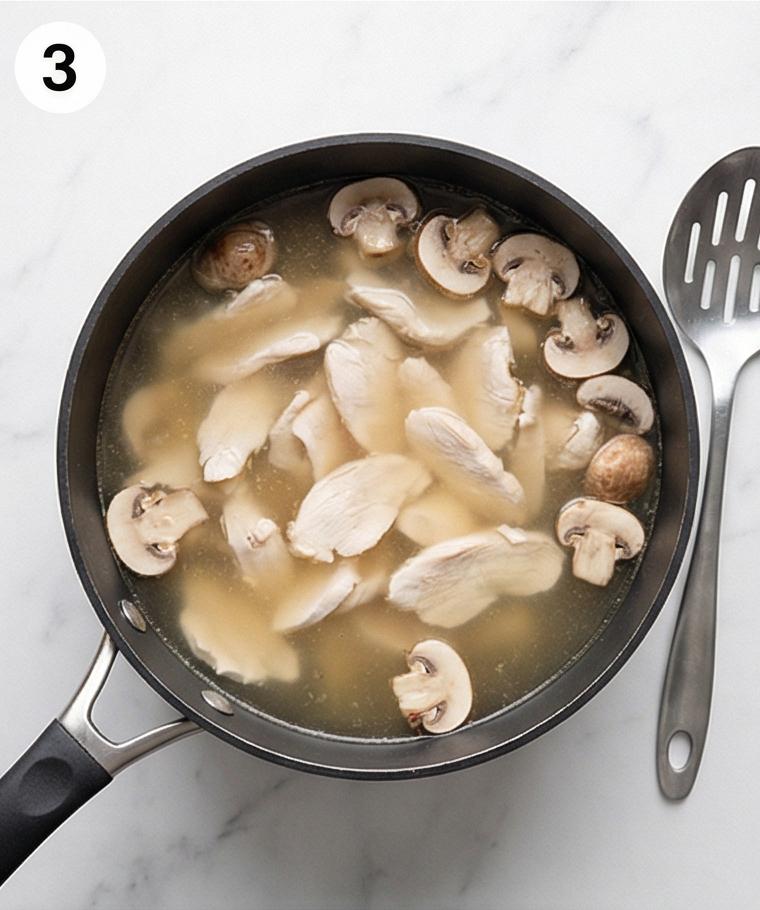
Add the thin chicken slices fanned into the simmering broth so each piece is separated and cooking evenly. In a top-down view show the chicken pieces now opaque, slightly plumped, and suspended in the fragrant broth; the texture is tender, the edges gentle, not ragged or overcooked. A long-handled slotted spoon or wooden spoon (the active tool) rests on the rim, carried across subsequent panels to maintain utensil persistence.
Step 6: Enrich with coconut milk and mushrooms
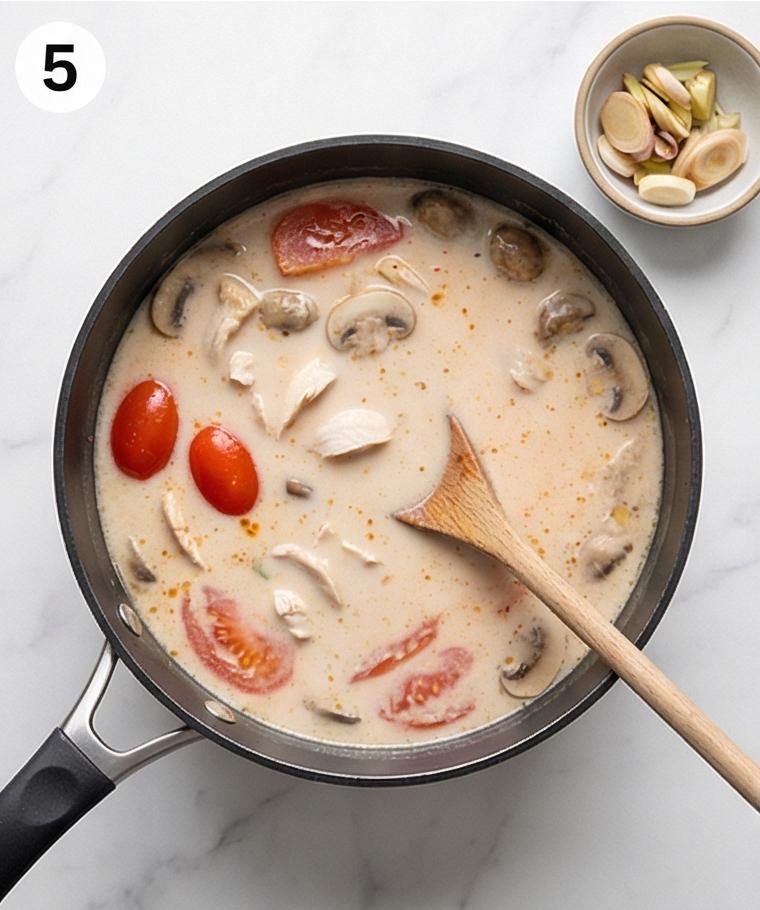
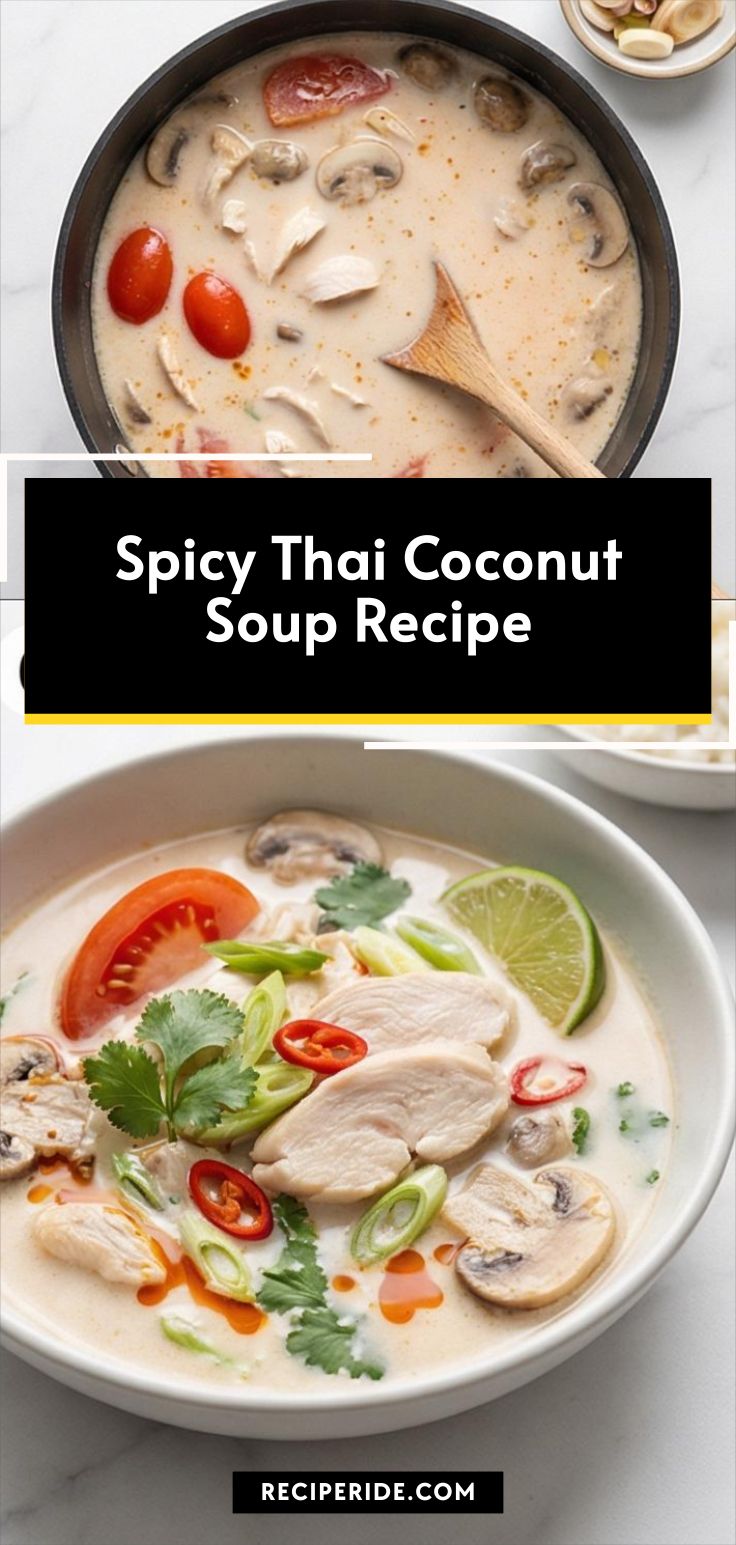
Turn the heat lower and slowly stir in full-fat coconut milk from a small white pouring jug, bringing in a creamy, opaque layer that softens the broth’s translucence. Add the thinly sliced mushrooms so their porous gill texture swells slightly with liquid; the surface should show small, lazy bubbles, a silky viscosity, and delicate marbling where coconut meets stock.
Step 7: Gently warm the tomato wedges
Slip the tomato wedges into the gentle soup to warm through for a minute or two—capture the tomato skins softening yet holding shape, their bright red wedges floating against the pale creamy broth, providing a pop of color and a soft, yielding texture.
Step 8: (Optional) Integrate curry paste for color and heat
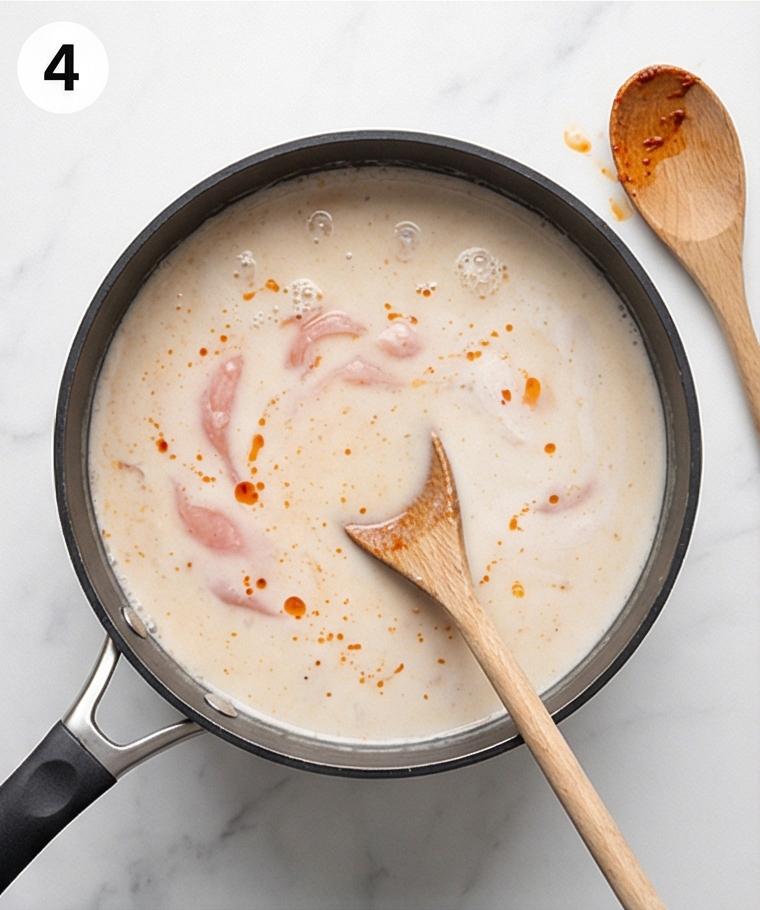
If using Thai red curry paste, ladle a portion of the hot liquid into a small mixing bowl and whisk the paste until smooth, then pour the emulsified streak back into the pot. Show the moment the warm red streaks ribbon into the pale coconut broth, creating a gentle rosé tint and subtle oil droplets—an instant visual cue of increased heat and depth.
Step 9: Season the broth
Fold in fish sauce, sugar, and sea salt to bring the broth to a savory equilibrium. This step is about the subtle change in mouthfeel and clarity: watch for the glossy sheen deepen, aromatics soften, and flavors knit together. The spoon used earlier rests lightly on the pot rim as the seasoning dissolves.
Step 10: Brighten with lime and rest
Turn off the heat and stir in freshly squeezed lime juice, letting the soup sit for a minute so the citrus lifts and brightens the creamy base without breaking it. The surface should show tiny scattered oil beads and an enlivened, slightly more translucent sheen where the lime has brightened the coconut.
Step 11: Remove the large aromatics for eating comfort
Using tongs or a slotted spoon, extract and discard the lemongrass sections, galangal coins, kaffir halves, and whole chiles so the finished soup is clean to eat. The removed pieces can be arranged aside in a small discard ramekin—this frame emphasizes clarity and refinement, transforming the broth from infusing vessel to ready-to-serve liquid.
Step 12: Final taste adjustments and balance
Taste and make final micro-adjustments—more fish sauce for saltiness, an extra squeeze of lime for brightness, or a pinch of sugar to round the edges—so the broth reads as a cohesive whole: creamy-white with either a slight reddish hue (if curry was added) and aromatic citrus notes. The pot now contains a finished, balanced broth studded with chicken and mushrooms, qualities visible in surface texture and suspended ingredients.
Step 13: Ladle into warmed serving bowls
Carefully ladle steaming soup into matching shallow matte white soup bowls (the presentation vessel chosen for a comforting yet refined soup), making sure each bowl receives an even scattering of tender chicken, mushrooms, and a wedge or two of tomato. The ladle and wooden spoon remain nearby to preserve tool continuity and a lived-in, tasteful scene.
Step 14: Garnish, present, and serve immediately
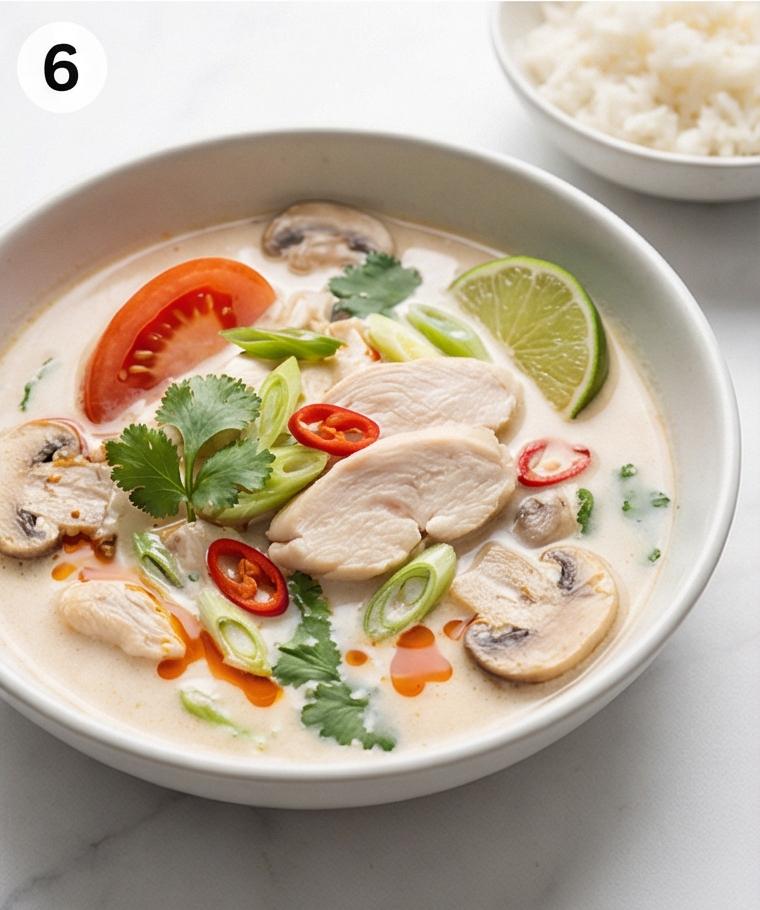
Finish each bowl with a generous sprinkle of chopped cilantro, thinly sliced green onions, and a few rings of fresh red chili for a glossy, crisp garnish; place lime wedges at the rim and a small mound of jasmine rice in a companion bowl if desired. The final image is an eye-level very close-up of the plated soup showing creamy coconut broth, plump tender chicken, tender mushrooms, fragrant herbs, and a slight sheen of chili oil—ready to be eaten.
Making It Your Own
I like to experiment by swapping mushrooms for thinly sliced oyster or shiitake when they are in season. For a vegetarian take, swap chicken stock for rich vegetable stock and replace fish sauce with soy sauce or tamari plus a little extra lime. If you love a bigger hit of aromatics, double the lemongrass and halve the coconut milk for a lighter, more citrus-forward broth.
Try adding a small spoon of Thai red curry paste for color and an extra layer of heat. For a heartier bowl, serve with a scoop of cooked rice or add vegetables like baby bok choy or sugar snap peas in the last two minutes of cooking. Each variation nudges the Spicy Thai Coconut Soup Recipe into a new mood.
How to Serve
When I serve this soup to friends I set out bowls of garnishes so everyone can tune their bowl: extra lime wedges, chopped cilantro, sliced scallions, and thin red-chili rings. For a casual dinner, ladle the soup into warmed wide bowls so the aroma spreads across the table. If you are hosting a larger group, keep the pot on a low burner and offer rice in a separate bowl so guests can spoon as much as they like.
For a two-person meal double the garnish and keep lime wedges plentiful. For a crowd, multiply ingredients and simmer gently so the chicken stays tender. Pair the soup with light sides like a crisp cucumber salad or simple steamed greens to keep the dinner balanced.
Storage and Reheating Tips
Let the soup cool to warm room temperature before refrigerating in an airtight container. Stored properly, it will keep well for 3 to 4 days; the aromatics will continue to deepen the flavor, so taste before serving and adjust lime and fish sauce as needed.
When reheating, warm gently over low heat so the coconut milk does not separate; brief simmering is fine, but avoid rapid boiling. If the broth seems thicker from sitting, stir in a splash of water or stock and rebrighten with a squeeze of lime.
Oops-Proofing: Common Mistakes and Fixes
Overcooking the chicken will make it stringy and dry. To avoid this, slice the thighs thinly and poach them just until opaque, then remove from heat quickly. Keep slices uniform so they cook at the same rate.
Underseasoning is another trap. Taste toward the end and add fish sauce, salt, lime, or a pinch of sugar in small increments until the flavors sing together. If the soup tastes flat after chilling, a fresh squeeze of lime often revives it.
Final Invitation
Give this Spicy Thai Coconut Soup Recipe a try this week; it rewards small tweaks and is forgiving enough for improvisation. Start with the basic balance of coconut, lime, and fish sauce, and then make it your own. I can’t wait to hear which twist becomes your favorite.
Frequently Asked Questions
- Can I make this soup vegetarian? Yes. Substitute vegetable stock for chicken stock and swap fish sauce for soy sauce, tamari, or a vegan fish sauce alternative. Add mushrooms and tofu for body.
- How spicy is this soup? The heat depends on the number of bird’s eye chiles and whether you add red curry paste. Start with 2 chiles and add more to taste.
- Can I use chicken breast instead of thighs? You can, but thighs stay juicier and are more forgiving. If you use breast, slice thin and poach briefly to avoid drying.
- Will the coconut milk separate when reheating? It can if boiled rapidly. Reheat gently over low heat and stir; adding a splash of stock helps restore texture.
- Can I prepare this ahead of time for a party? Yes. Make the broth and aromatics ahead, refrigerate, and add coconut milk and chicken shortly before serving so the proteins stay tender.
Spicy Thai Coconut Soup Recipe
Make Spicy Thai Coconut Soup Recipe for a bright, creamy weeknight soup that balances heat, citrus, and coconut.
Ingredients
Instructions
Step 1: Prepare the aromatics and chicken
Lightly bruise the lemongrass stalks with the back of a knife to release the pungent citrus oils, trim and cut them into 2-inch pieces, and lay them out neatly. Slice the galangal (or ginger) into thin coins, tear the kaffir lime leaves in half so their bright citrus oils can bloom, and lightly crush the bird’s eye chiles just enough to crack their skins. Peel and thinly slice the shallots and arrange them in a small ceramic bowl. Finally, thinly slice the boneless chicken thighs against the grain so the meat will remain tender when cooked. Keep each element separated in small glass jars or ramekins on the marble so the colors and textures read clearly.
Step 2: Build the aromatic broth
Place a modern matte charcoal saucepan (used as the consistent cooking vessel through the next panels) on the marble surface and nestle in the bruised lemongrass, galangal coins, torn kaffir leaves, crushed chiles, and sliced shallots, then pour in the chicken stock and water from small glass measuring jugs so the liquids remain contained and photoreal. This frame is about the moment the raw aromatics meet the clear stock: you should see the floating layers of shallot, pale galangal discs, and the ragged edges of kaffir leaves submerged in translucent broth.
Step 3: Bring the broth to an active boil
Heat (off-scene) until the broth reaches a full boil; capture the broth at the instant steady bubbling creates a lively, slightly agitated surface with tiny suspended droplets and a skim of foam beginning to gather at the edges. Show the saucepan top-down so the motion is readable: small energetic bubbles, steam hints rising (soft and diffused rather than harsh), and the aromatics churning in clarified liquid—this is the transition from raw to actively cooking.
Step 4: Simmer to infuse and clarify
Reduce to a gentle simmer and partially cover (lid resting beside the pot) so the broth looks glossy and aromatic but calm: fewer bubbles, fragrant oils sheening the surface, and a few skimmed foam bits removed with a spoon placed quietly on the rim. The broth should appear translucent but scented—this is the clarified, infused stage where citrus-and-ginger aromatics have visibly changed the liquid’s tone.
Step 5: Poach the chicken until just opaque
Add the thin chicken slices fanned into the simmering broth so each piece is separated and cooking evenly. In a top-down view show the chicken pieces now opaque, slightly plumped, and suspended in the fragrant broth; the texture is tender, the edges gentle, not ragged or overcooked. A long-handled slotted spoon or wooden spoon (the active tool) rests on the rim, carried across subsequent panels to maintain utensil persistence.
Step 6: Enrich with coconut milk and mushrooms
Turn the heat lower and slowly stir in full-fat coconut milk from a small white pouring jug, bringing in a creamy, opaque layer that softens the broth’s translucence. Add the thinly sliced mushrooms so their porous gill texture swells slightly with liquid; the surface should show small, lazy bubbles, a silky viscosity, and delicate marbling where coconut meets stock.
Step 7: Gently warm the tomato wedges
Slip the tomato wedges into the gentle soup to warm through for a minute or two—capture the tomato skins softening yet holding shape, their bright red wedges floating against the pale creamy broth, providing a pop of color and a soft, yielding texture.
Step 8: (Optional) Integrate curry paste for color and heat
If using Thai red curry paste, ladle a portion of the hot liquid into a small mixing bowl and whisk the paste until smooth, then pour the emulsified streak back into the pot. Show the moment the warm red streaks ribbon into the pale coconut broth, creating a gentle rosé tint and subtle oil droplets—an instant visual cue of increased heat and depth.
Step 9: Season the broth
Fold in fish sauce, sugar, and sea salt to bring the broth to a savory equilibrium. This step is about the subtle change in mouthfeel and clarity: watch for the glossy sheen deepen, aromatics soften, and flavors knit together. The spoon used earlier rests lightly on the pot rim as the seasoning dissolves.
Step 10: Brighten with lime and rest
Turn off the heat and stir in freshly squeezed lime juice, letting the soup sit for a minute so the citrus lifts and brightens the creamy base without breaking it. The surface should show tiny scattered oil beads and an enlivened, slightly more translucent sheen where the lime has brightened the coconut.
Step 11: Remove the large aromatics for eating comfort
Using tongs or a slotted spoon, extract and discard the lemongrass sections, galangal coins, kaffir halves, and whole chiles so the finished soup is clean to eat. The removed pieces can be arranged aside in a small discard ramekin—this frame emphasizes clarity and refinement, transforming the broth from infusing vessel to ready-to-serve liquid.
Step 12: Final taste adjustments and balance
Taste and make final micro-adjustments—more fish sauce for saltiness, an extra squeeze of lime for brightness, or a pinch of sugar to round the edges—so the broth reads as a cohesive whole: creamy-white with either a slight reddish hue (if curry was added) and aromatic citrus notes. The pot now contains a finished, balanced broth studded with chicken and mushrooms, qualities visible in surface texture and suspended ingredients.
Step 13: Ladle into warmed serving bowls
Carefully ladle steaming soup into matching shallow matte white soup bowls (the presentation vessel chosen for a comforting yet refined soup), making sure each bowl receives an even scattering of tender chicken, mushrooms, and a wedge or two of tomato. The ladle and wooden spoon remain nearby to preserve tool continuity and a lived-in, tasteful scene.
Step 14: Garnish, present, and serve immediately
Finish each bowl with a generous sprinkle of chopped cilantro, thinly sliced green onions, and a few rings of fresh red chili for a glossy, crisp garnish; place lime wedges at the rim and a small mound of jasmine rice in a companion bowl if desired. The final image is an eye-level very close-up of the plated soup showing creamy coconut broth, plump tender chicken, tender mushrooms, fragrant herbs, and a slight sheen of chili oil—ready to be eaten.
Notes
- Slice the chicken thinly against the grain for the most tender texture.
- Use low-sodium stock so you can control seasoning with fish sauce.
- Reheat gently to prevent coconut milk from separating.