Creamy Polenta Recipe has been my go-to comfort dish on chilly nights and busy weeknights alike. I love how simple ingredients transform into something silky and satisfying, and this Creamy Polenta Recipe does that every time. It’s forgiving, elegant, and pairs with so many toppings that you can make it fancy or cozy in seconds. Every time I stir the pot I remember why I keep coming back to this recipe.
There is something comforting in the slow, steady rhythm of stirring polenta – that gentle coaxing that turns grit into cream. The first time I made this Creamy Polenta Recipe, I was nervous about timing and texture, but the warm, nutty smell of Parmesan melting into butter put me at ease. The kitchen filled with steam and the sound of the spoon scraping the pot became almost meditative. When I topped a spoonful with sautéed mushrooms and a drizzle of olive oil, the bowl felt like a warm hug. It’s a recipe that’s both humble and celebratory, and I reach for it when I want something truly comforting.
How This Recipe Became My Rainy-Day Favorite
I remember the first time a heavy rainstorm trapped me at home with nothing but pantry staples and a stubborn craving for something warm. I pulled out a bag of cornmeal and improvised a simple polenta using what I had on hand. The kitchen filled with a toasty, slightly sweet aroma as the cornmeal cooked, and the creamy texture that emerged felt almost luxurious compared with the humble ingredients. I served it with browned butter and a scattering of herbs, and the whole thing brightened the gray afternoon. That day taught me that small rituals, like stirring a pot of polenta, can turn an ordinary day into something gentle and grounding. Now, whenever the sky darkens, I make this Creamy Polenta Recipe and let the slow cooking do the soothing.
The Ingredients That Make It Sing
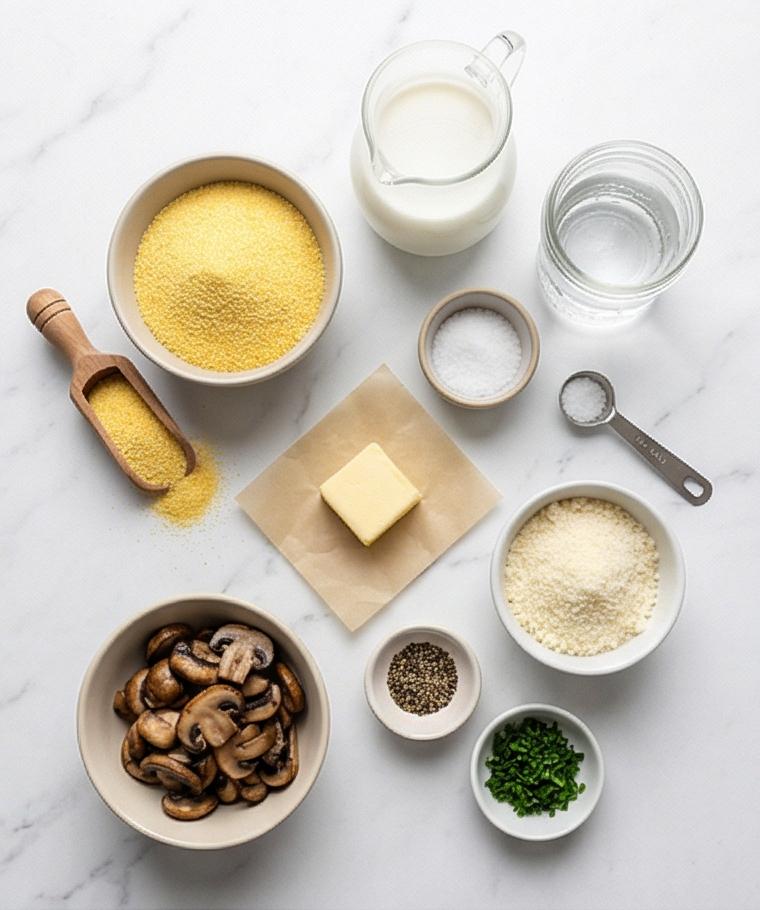
- Water: The base that steams the cornmeal into tenderness. Use filtered water for the cleanest flavor.
- Whole Milk: Adds richness and creaminess. Substitute half-and-half or a non-dairy milk for a lighter or dairy-free option.
- Fine Sea Salt: Brings out flavor. Adjust to taste and add gradually.
- Medium-grind Yellow Cornmeal: The star grain – not instant. Choose a medium grind for the ideal bite.
- Unsalted Butter: Adds silk and mouthfeel. Use cultured butter for a tangy note.
- Freshly Grated Parmesan: Provides savory depth and umami. Pecorino Romano is a good substitute.
- Black Pepper: Finishes with a gentle heat. Freshly ground is best.
- Extra Hot Water or Milk: For adjusting texture while cooking.
- Extra-virgin Olive Oil and Herbs: Optional for finishing and brightness.
Essential Kitchen Tools
Start with a short intro: a few simple tools make this Creamy Polenta Recipe effortless. A heavy-bottomed pot keeps heat even so the cornmeal doesn’t scorch. A whisk helps incorporate the cornmeal without lumps at first, then a wooden spoon is kinder to the grainy texture during long stirring. A cheese grater for fresh Parmesan is worth it – pre-grated cheese won’t melt as smoothly. If you plan to hold the polenta, an oven-safe dish and foil help keep it warm.
- Heavy-bottomed saucepan: Prevents hot spots and sticking.
- Whisk: For smooth initial incorporation of the cornmeal.
- Wooden spoon or silicone spatula: For long, rhythmic stirring.
- Box grater: For freshly grated Parmesan.
- Oven-safe dish and foil: For holding in a warm oven if needed.
Step-by-Step Preparation Guide
Step 1: Preheat if holding
If you plan to hold the polenta before serving, preheat the oven to a low 200°F (95°C) so the final pot can rest warm without drying; butter an oven-safe dish and set it aside. This is optional but helpful for timing if you’re preparing other components.
Step 2: Bring liquids to a bare simmer
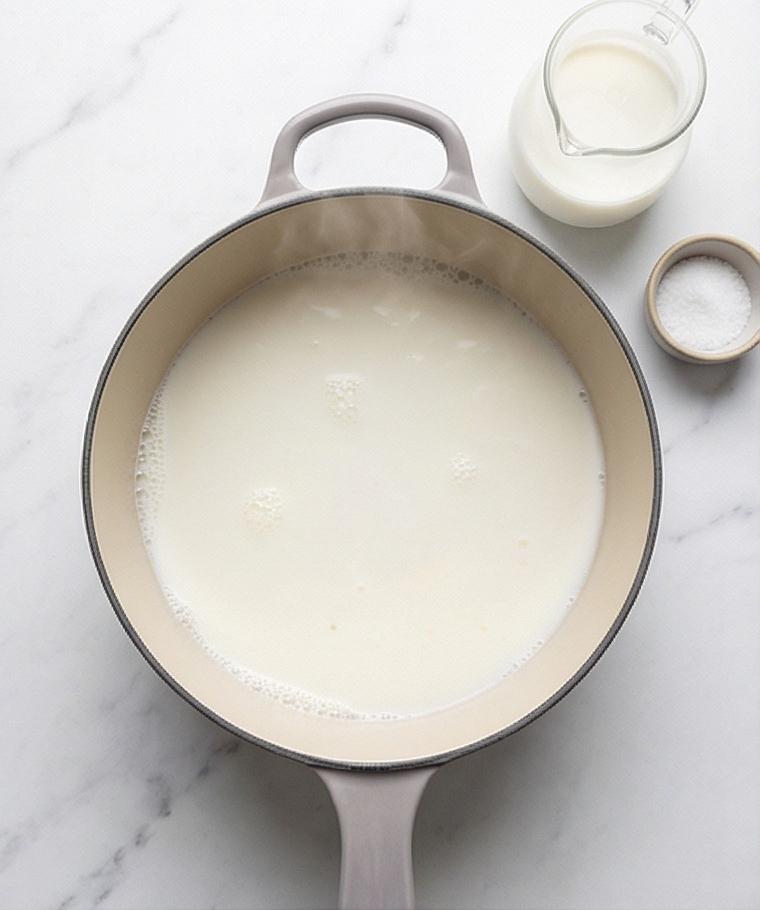
Combine 3 1/2 cups water, 1 cup room-temperature whole milk and 1 1/2 teaspoons fine sea salt in the medium heavy-bottomed saucepan; stir to dissolve the salt and gently heat until you see only small bubbles around the edges – a bare simmer. Keep the liquid shimmering but not rolling; you want a hot, glossy bath ready to receive the cornmeal.
Step 3: Gradually whisk in the cornmeal
With the heat reduced to low, sprinkle 1 cup medium-grind yellow cornmeal into the saucepan very slowly while whisking in a steady circular motion. Take a couple of minutes to add the cornmeal so the grains disperse evenly and no dry pockets remain. After the initial incorporation the mixture will thicken and look uniformly grainy and wet – still loose but noticeably thicker.
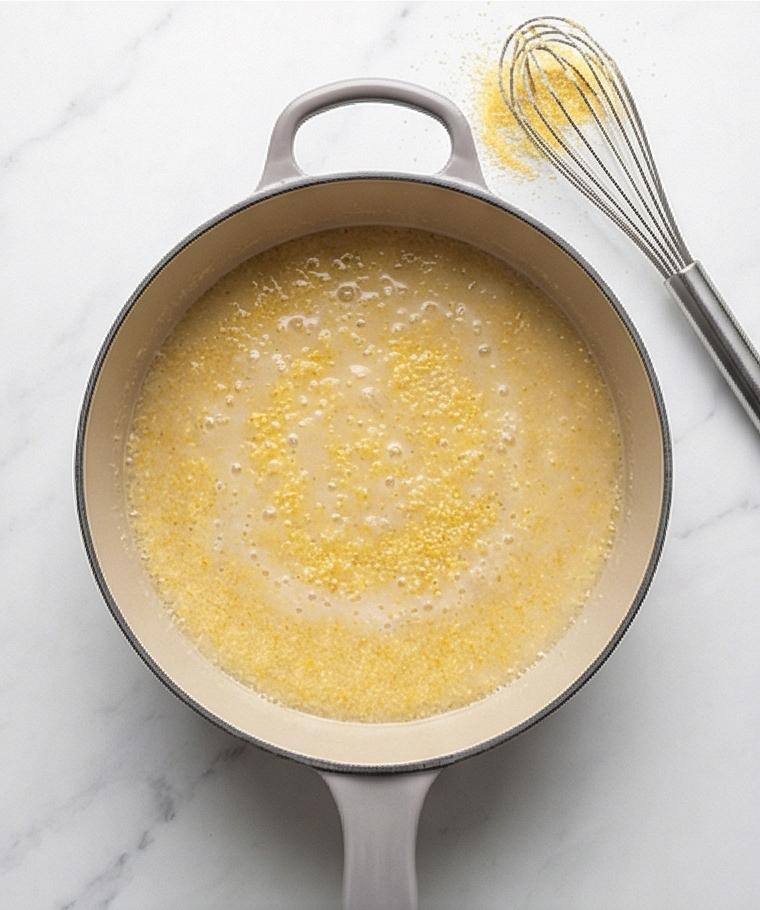
Step 4: Switch to a spoon and coax the texture
Once the cornmeal is integrated, switch from whisk to a wooden spoon or heatproof silicone spatula. Maintain the gentle simmer and begin firm, rhythmic stirring—scraping the bottom and sides—to prevent sticking. The polenta will start to pull slightly away from the pan and form a soft mass on the spoon while still flowing when tilted.
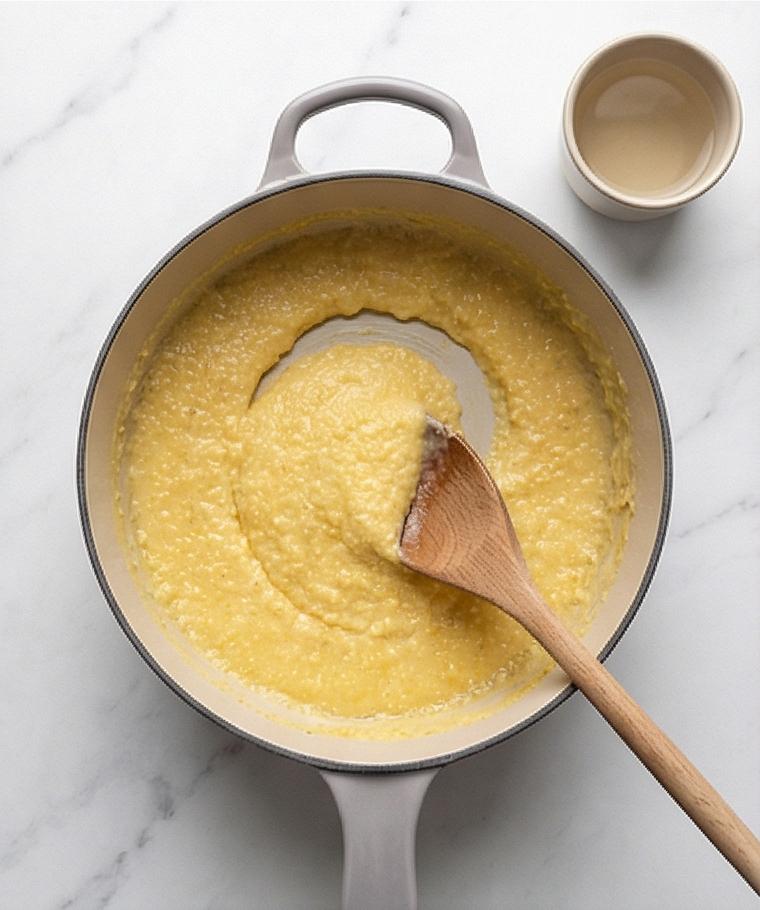
Step 5: Long, low cooking and adjustments
Continue cooking on low for 25–35 minutes, stirring every 1–2 minutes. The texture should evolve from torrent graininess into a creamy, tender porridge with just a trace bite to the grains. If it gets too thick or sputters, stir in small amounts of hot water or hot milk (2–4 tablespoons at a time, up to 1/2 cup total) to keep the mixture luxuriously loose and velvety. Keep the saucepan and wooden spoon as your working set while you coax the texture.
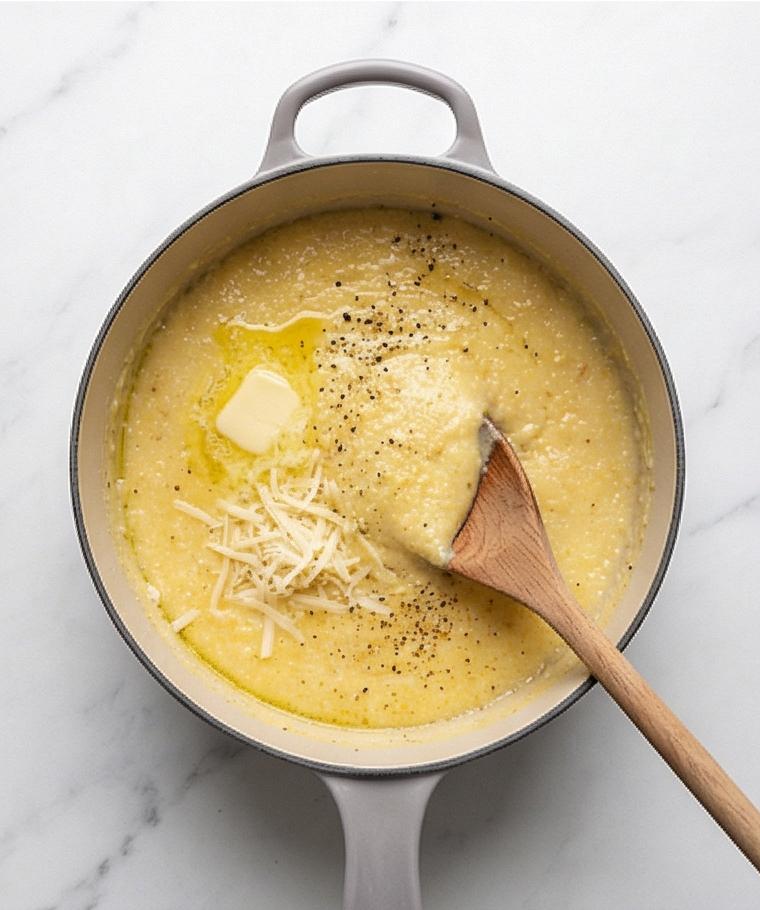
Step 6: Enrich with butter and Parmesan
When the polenta is softly tender and creamy, remove the pan from heat and immediately add 2 tablespoons room-temperature unsalted butter and 1 cup freshly grated Parmesan. Stir vigorously until the butter and cheese melt completely and the surface becomes glossy and silky; the polenta should feel smooth, decadent, and slightly ribbon when stirred.
Step 7: Season and finish the consistency
Season with 1/4 teaspoon freshly ground black pepper and taste carefully for salt. If you prefer it looser, stir in an extra tablespoon or two of hot water or hot milk until it slowly pools on a plate rather than holding a stiff mound. Add a drizzle of extra-virgin olive oil if desired.
Step 8: Plate and garnish
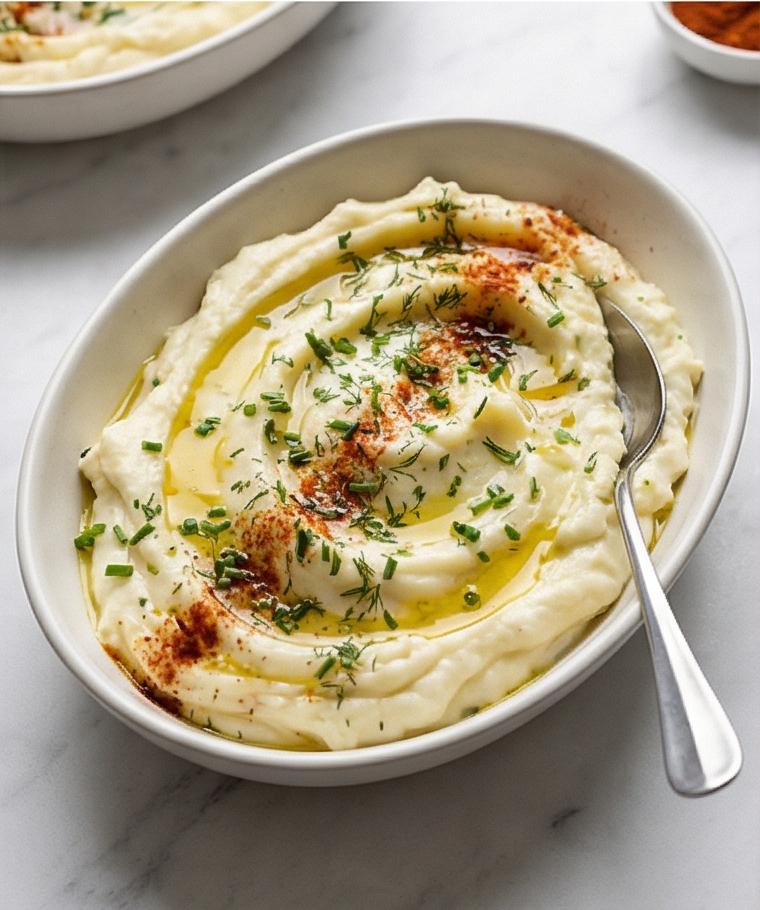
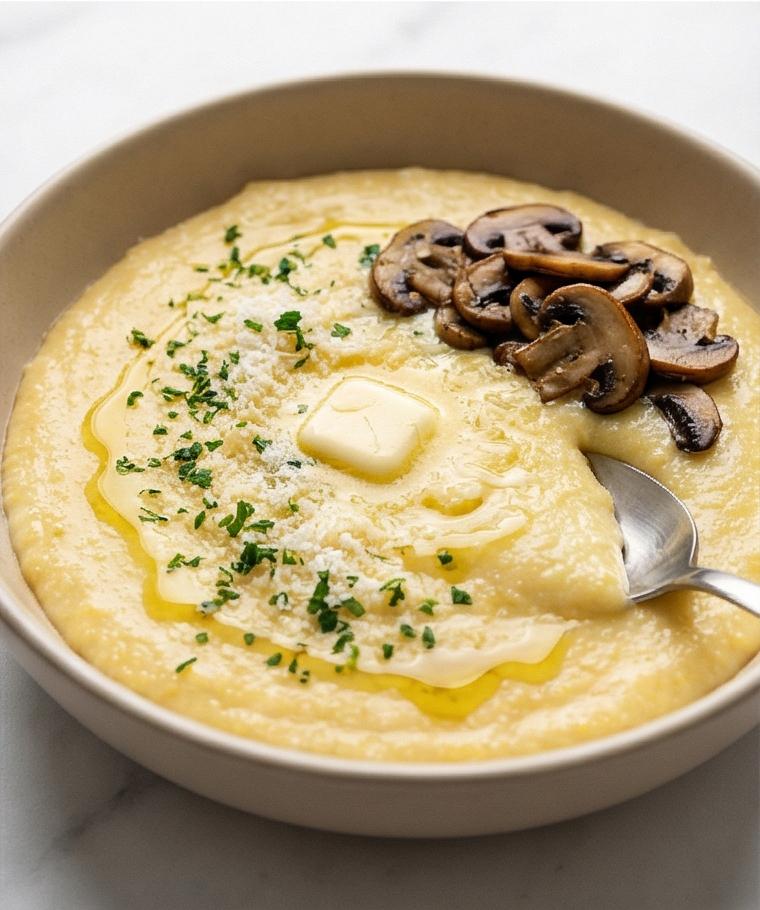
Spoon the hot creamy polenta into warmed shallow bowls or plates, top with a small knob of butter, a light sprinkling of freshly grated Parmesan, and a scattering of finely chopped parsley or chives. Arrange any warm sautéed mushrooms, braised meats, or roasted vegetables on or beside the polenta for a composed serving.
Step 9: Holding and reheating notes
To hold before serving, transfer the polenta to the buttered oven-safe dish, cover tightly with foil, and keep in the 200°F (95°C) oven for 30–40 minutes. Stir in a few tablespoons of hot water or milk just before serving to restore the silky, loose texture.
Making It Your Own
I like to experiment with small swaps. For a richer finish, try stirring in a splash of cream or a spoonful of mascarpone at the end. For a brighter, herb-forward version, fold in chopped tarragon or basil and a squeeze of lemon.
For a dairy-free turn, use full-fat coconut milk and a plant-based butter, and finish with nutritional yeast in place of Parmesan. In colder months, top the polenta with braised short ribs or slow-roasted mushrooms; in summer, keep it light with grilled vegetables and a spoonful of pesto. Regional twists are fun too – try smoky paprika and grated manchego for a Spanish vibe, or stir in a dollop of goat cheese and thyme for a rustic French feel.
How to Serve
When hosting, warm the serving bowls in the oven so the polenta stays glossy when you plate. For a casual family meal, spoon generous mounds into a large shallow dish and let guests help themselves to toppings.
If you want to serve it as a side for four, portion about 1 cup polenta per person and add a protein like roasted chicken or mushrooms. For a smaller, elegant starter, make smaller portions and finish with microgreens and a drizzle of olive oil. If serving a crowd buffet-style, keep the polenta in the oven dish covered and offer a tray of toppings so everyone customizes their bowl.
Storage and Reheating
Polenta will thicken as it cools; store leftovers in an airtight container in the refrigerator for up to 3 days. If it firms up, reheat gently with a splash of hot water or milk while stirring to coax back the silky texture.
For slices, chill the polenta in a lined pan until firm, slice into rounds, and pan-fry or grill until crisp on the outside. Reheat gently from cold to avoid an overly gummy texture.
Common Mistakes and How to Avoid Them
One common mistake is rushing the cooking – undercooked polenta feels gritty. Keep a low simmer and stir regularly for the best creaminess. Another is adding cold liquid at the end; always use hot water or milk to loosen the texture so the temperature stays consistent.
Also, avoid using instant cornmeal if you want that satisfying bite and depth of flavor. Finally, don’t skimp on fresh Parmesan – pre-grated cheese can make the final texture grainy.
Final Thoughts
Give this Creamy Polenta Recipe a try next time you want something warm, comforting, and a little bit special. It’s forgiving, adaptable, and rewards a little attention with big flavor. I hope it becomes one of your simple favorites too.
Frequently Asked Questions
- Can I use instant polenta instead of medium-grind cornmeal? – Instant polenta will cook faster but the texture and depth are different; for the classic result use medium-grind yellow cornmeal.
- How do I fix lumpy polenta? – Whisk in hot liquid gradually and stir briskly at the start; if lumps form, a short blitz with an immersion blender smooths them.
- Can I make this dairy-free? – Yes, use full-fat non-dairy milk and plant-based butter, and swap Parmesan for nutritional yeast or a vegan cheese.
- How long will leftovers keep? – Stored in the refrigerator in an airtight container, leftovers last up to 3 days.
- Can I freeze polenta? – You can freeze firm polenta pieces for up to 1 month; thaw and reheat by pan-frying or gently warming with liquid.
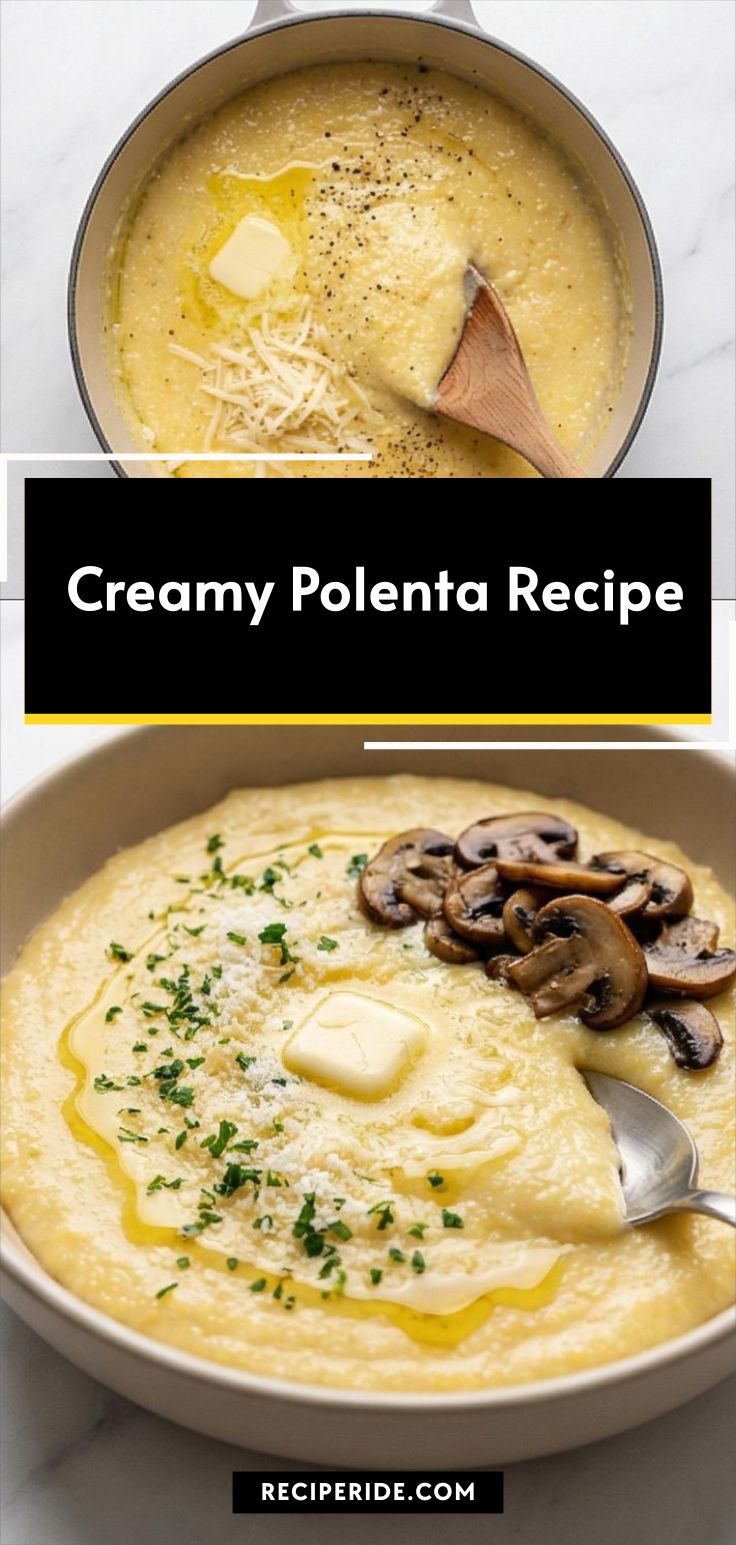
Creamy Polenta Recipe
Make Creamy Polenta Recipe now: silky, cheesy polenta in about 45 minutes. Try this Creamy Polenta Recipe tonight.
Ingredients
Instructions
Step 1: Preheat if holding
If you plan to hold the polenta before serving, preheat the oven to a low 200°F (95°C) so the final pot can rest warm without drying; butter an oven-safe dish and set it aside. This is optional but helpful for timing if you’re preparing other components.
Step 2: Bring liquids to a bare simmer
Combine 3 1/2 cups water, 1 cup room-temperature whole milk and 1 1/2 teaspoons fine sea salt in the medium heavy-bottomed saucepan; stir to dissolve the salt and gently heat until you see only small bubbles around the edges — a bare simmer. Keep the liquid shimmering but not rolling; you want a hot, glossy bath ready to receive the cornmeal.
Step 3: Gradually whisk in the cornmeal
With the heat reduced to low, sprinkle 1 cup medium-grind yellow cornmeal into the saucepan very slowly while whisking in a steady circular motion. Take a couple of minutes to add the cornmeal so the grains disperse evenly and no dry pockets remain. After the initial incorporation the mixture will thicken and look uniformly grainy and wet — still loose but noticeably thicker.
Step 4: Switch to a spoon and coax the texture
Once the cornmeal is integrated, switch from whisk to a wooden spoon or heatproof silicone spatula. Maintain the gentle simmer and begin firm, rhythmic stirring—scraping the bottom and sides—to prevent sticking. The polenta will start to pull slightly away from the pan and form a soft mass on the spoon while still flowing when tilted.
Step 5: Long, low cooking and adjustments
Continue cooking on low for 25–35 minutes, stirring every 1–2 minutes. The texture should evolve from torrent graininess into a creamy, tender porridge with just a trace bite to the grains. If it gets too thick or sputters, stir in small amounts of hot water or hot milk (2–4 tablespoons at a time, up to 1/2 cup total) to keep the mixture luxuriously loose and velvety. Keep the saucepan and wooden spoon as your working set while you coax the texture.
Step 6: Enrich with butter and Parmesan
When the polenta is softly tender and creamy, remove the pan from heat and immediately add 2 tablespoons room-temperature unsalted butter and 1 cup freshly grated Parmesan. Stir vigorously until the butter and cheese melt completely and the surface becomes glossy and silky; the polenta should feel smooth, decadent, and slightly ribbon when stirred.
Step 7: Season and finish the consistency
Season with 1/4 teaspoon freshly ground black pepper and taste carefully for salt. If you prefer it looser, stir in an extra tablespoon or two of hot water or hot milk until it slowly pools on a plate rather than holding a stiff mound. Add a drizzle of extra-virgin olive oil if desired.
Step 8: Plate and garnish
Spoon the hot creamy polenta into warmed shallow bowls or plates, top with a small knob of butter, a light sprinkling of freshly grated Parmesan, and a scattering of finely chopped parsley or chives. Arrange any warm sautéed mushrooms, braised meats, or roasted vegetables on or beside the polenta for a composed serving.
Step 9: Holding and reheating notes
To hold before serving, transfer the polenta to the buttered oven-safe dish, cover tightly with foil, and keep in the 200°F (95°C) oven for 30–40 minutes. Stir in a few tablespoons of hot water or milk just before serving to restore the silky, loose texture.
Notes
- Use medium-grind yellow cornmeal, not instant, for the best texture.
- Stir regularly and keep a gentle simmer to avoid scorching.
- Use freshly grated Parmesan for the creamiest finish.
- Reheat with hot water or milk to revive the silky texture.