Za’atar Roasted Vegetables Recipe has been one of those weeknight heroes in my kitchen for years. I fell for this simple mix of lemon, olive oil, and za’atar the first time I roasted a whole tray of seasonal vegetables and tasted the bright, herbal crunch. I still make Za’atar Roasted Vegetables Recipe whenever I want something that feels special without a lot of fuss, and friends always ask for the recipe. It delivers caramelized edges, tender centers, and that pleasing tang that keeps you going back for more.
How This Recipe Became My Cozy, Make-Ahead Staple
The first time I roasted these vegetables I was trying to use up a half-empty jar of za’atar and a lonely sweet potato. The kitchen smelled like lemon rind and warm cumin as the tray browned; I remember watching the cauliflower get those little charred pockets that smell like campfire but taste bright with herb. I served it straight from the pan to guests standing around the counter, and the casual presentation made everyone dig in without fuss. The textures were the best part – crisped edges giving way to soft, almost sweet interiors. It became my go-to for potlucks because you can roast a tray early, reheat gently, and nothing loses its charm. That combination of ease, aroma, and a little bit of crunch always takes me back to that first cozy evening.
Main Ingredients and Why They Matter
- Carrots: Add natural sweetness and firm texture; substitute with parsnips if you want a nuttier flavor. Choose fresh, brightly colored carrots that feel heavy for their size.
- Sweet potato: Gives caramelized richness and a creamy bite; butternut squash works well too. Pick one that feels dense and unblemished.
- Cauliflower: The backbone for crisp, charred florets; broccoli florets make an easy swap. Look for tight, white heads without brown spots.
- Red bell pepper: Brings color and a subtle sweetness; use orange or yellow peppers if red are unavailable. Choose glossy skins and firm flesh.
- Zucchini: Offers a tender counterpoint that roasts quickly; eggplant cubes could stand in. Select firm, medium-sized zucchini for the best texture.
- Red onion: Adds savory-sweet layers and caramelization; white or sweet onions can be used. Avoid onions with soft spots or sprouting.
- Za’atar and aromatics: Za’atar is the signature flavor; lemon, olive oil, garlic, and cumin round it out. If za’atar is hard to find, mix dried thyme, sesame, sumac, and salt.
Essential Kitchen Tools Youll Be Glad You Own
A few reliable tools make this recipe effortless, and each has a backup if you do not own the exact item. A roomy rimmed baking sheet keeps vegetables spread out so they roast rather than steam. If you do not have a rimmed sheet, use two smaller pans.
- Large rimmed baking sheet: Ensures even browning; alternatives are two half-sheet pans or a shallow roasting pan.
- Parchment paper: Makes cleanup simple and prevents sticking; a light coating of oil works if you do not have it.
- Sharp chef’s knife and cutting board: Even cuts ensure uniform roasting; a mandoline can speed prep but be careful.
- Mixing bowl and spatula: For tossing the za’atar oil and veggies; use a large plastic or stainless bowl if ceramic is not available.
- Tongs or spatula for turning: Helps get those golden edges without tearing the vegetables. These simple tools save time and produce consistently great results.
Step-by-Step Preparation Guide
Step 1: Preheat and prep the vegetables
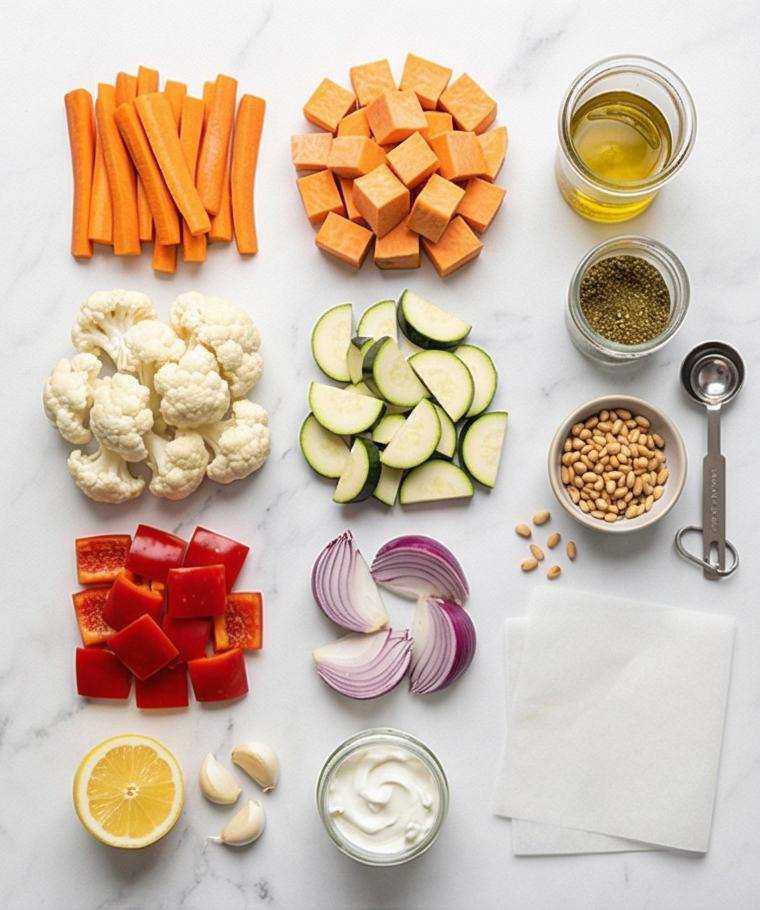
Preheat your oven to 425°F (220°C) with a rack in the center and line a large rimmed rectangular baking sheet (about 13 x 18 in / 33 x 46 cm) with parchment for easy cleanup. While the oven warms, peel and cut the vegetables: carrots into 1/2-inch sticks, sweet potato into 3/4-inch cubes, cauliflower into 1 1/2-inch florets, red bell pepper into 1-inch pieces, zucchini into 1/2-inch half-moons, and red onion into 1-inch wedges with the layers gently separated so they roast evenly. Lay the prepped vegetables in small piles on the marble so everything is ready to combine.
Step 2: Whisk the za’atar seasoning until glossy and aromatic
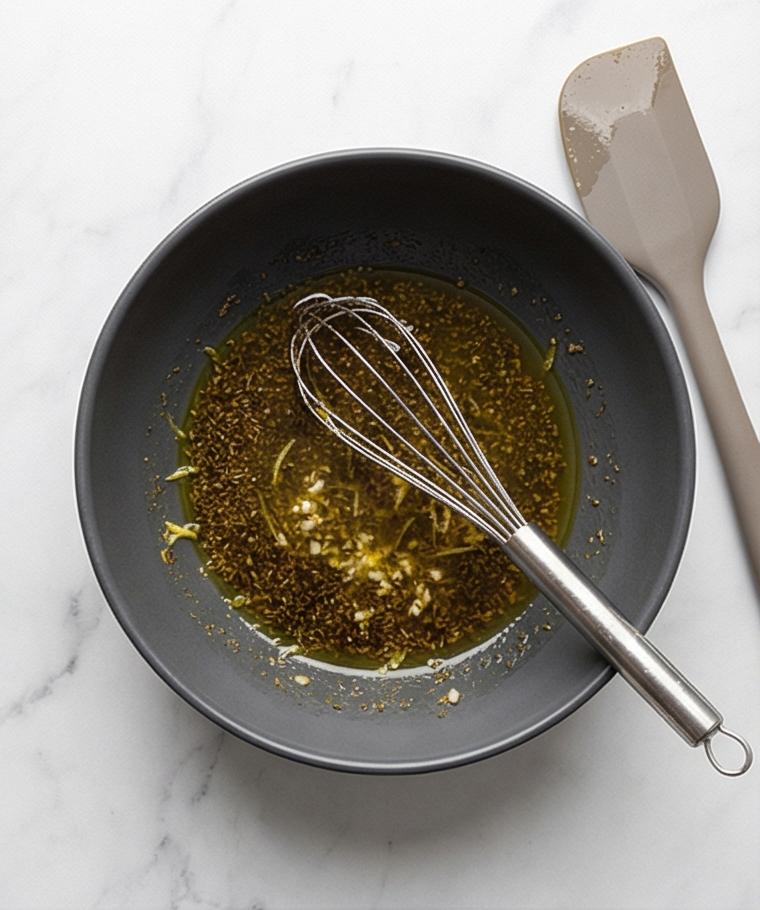
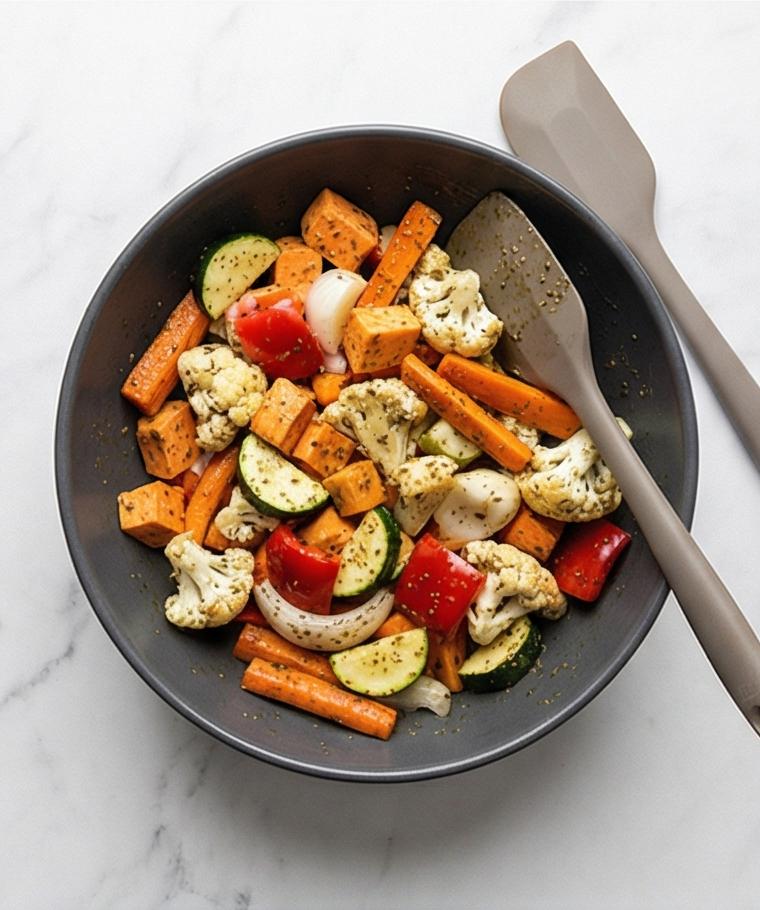
In a single matte charcoal ceramic mixing bowl combine 3 tablespoons extra-virgin olive oil, 1 tablespoon fresh lemon juice, 2 teaspoons finely grated lemon zest, 3 tablespoons za’atar, 1 teaspoon ground cumin, 3/4 teaspoon fine sea salt, 1/2 teaspoon freshly ground black pepper, and 2 finely minced garlic cloves. Whisk until the oil takes on a speckled, slightly glossy paste—bright flecks of lemon zest and za’atar suspended in the oil. The mixture should cling to the whisk and the bowl rim, ready to coat the vegetables.
Step 3: Toss raw vegetables in the za’atar mixture until every piece is evenly coated
Add all the cut vegetables to the same matte charcoal mixing bowl and toss thoroughly with a spatula until each piece is evenly speckled and slick with the za’atar-laced oil — carrots and sweet potato show an instant sheen, cauliflower florets hold pockets of spice, and onion layers capture little pools of dressing. Scrape the bottom of the bowl so no concentrated spice paste is left behind, then fold and toss again until uniform. The texture here is raw but glossy and fully seasoned, ready for the sheet.
Step 4: Arrange in a single layer on the parchment-lined rimmed sheet and start roasting
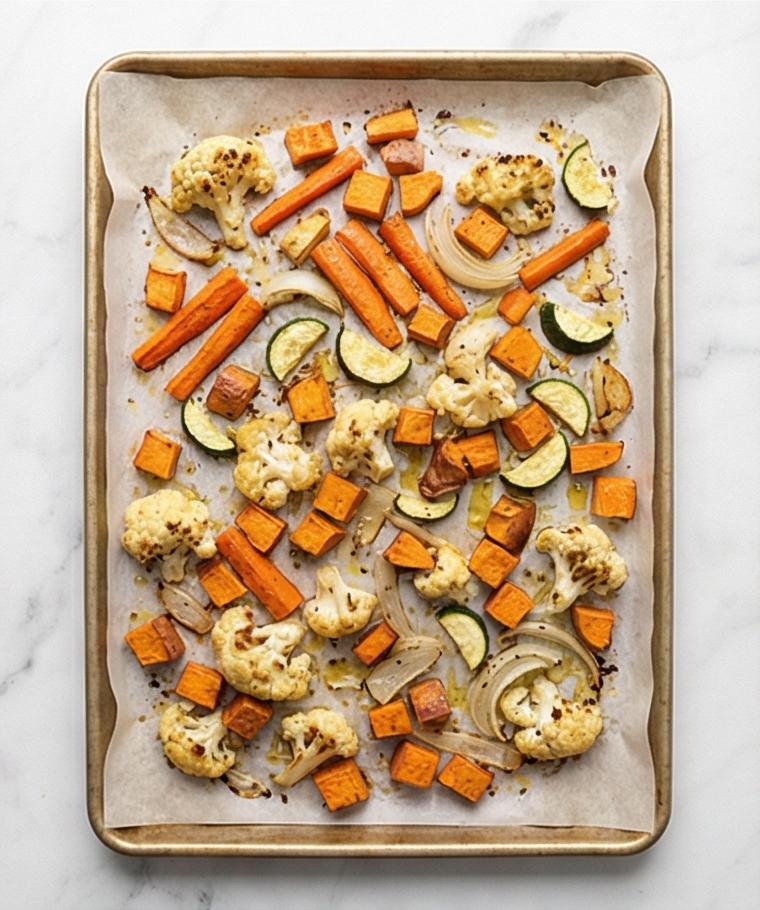
Transfer and spread the coated vegetables in a single, even layer on the parchment-lined rectangular rimmed baking sheet; pieces have a little breathing room to brown, not steam. Roast at 425°F (220°C) for 15 minutes, then remove and gently turn as many pieces as possible so the exposed edges begin to caramelize. The sheet at this stage shows the first signs of golden edges and concentrated brown spots along the cauliflower and sweet potato corners — a clear mid-roast milestone.
Step 5: Continue roasting to deep golden brown, finish with an optional quick broil, and season to taste
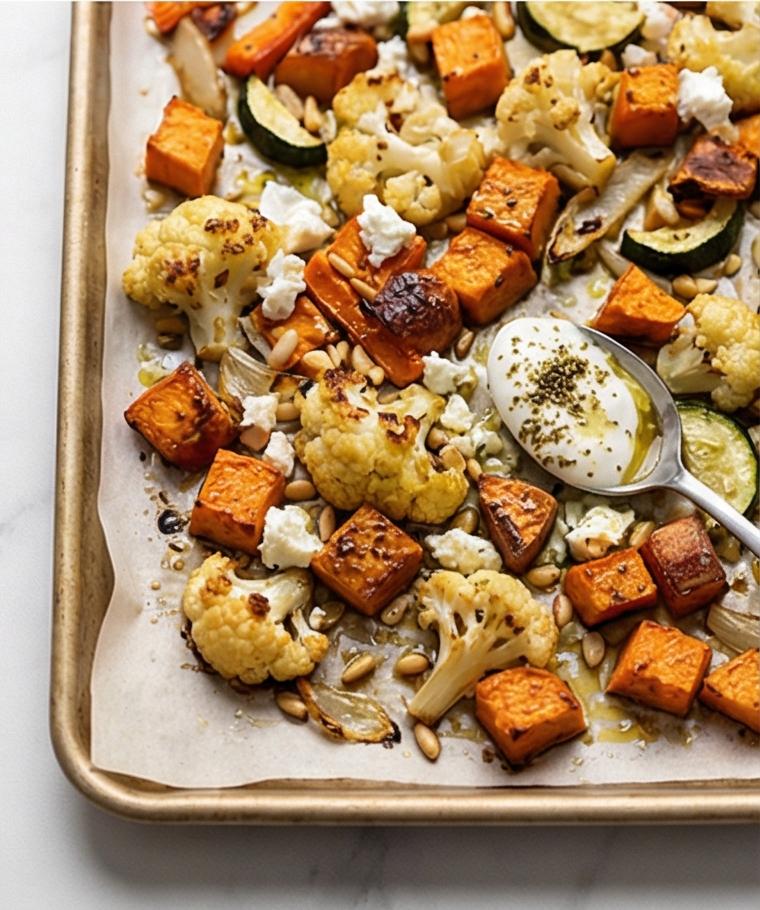
Return the sheet to the oven and roast another 12–18 minutes until all vegetables are tender and edges are deeply golden and crisp; for extra color you may broil 2–3 minutes, watching closely for small charred tips. While still hot on the sheet, taste and adjust with a pinch more salt or a light sprinkle of additional za’atar; gently toss the sheet so the seasoning distributes. The final roasted texture is a mix of crisped edges, soft caramel interiors, and concentrated browned pockets that glint with oil.
Step 6: Garnish and serve on the rectangular platter or sheet with optional za’atar yogurt
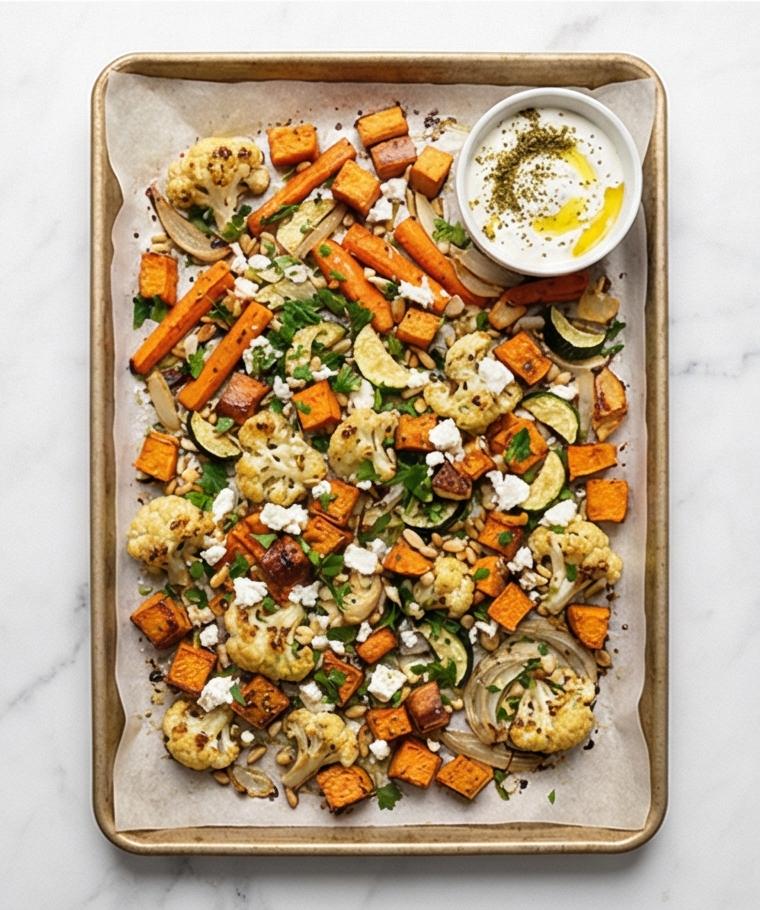
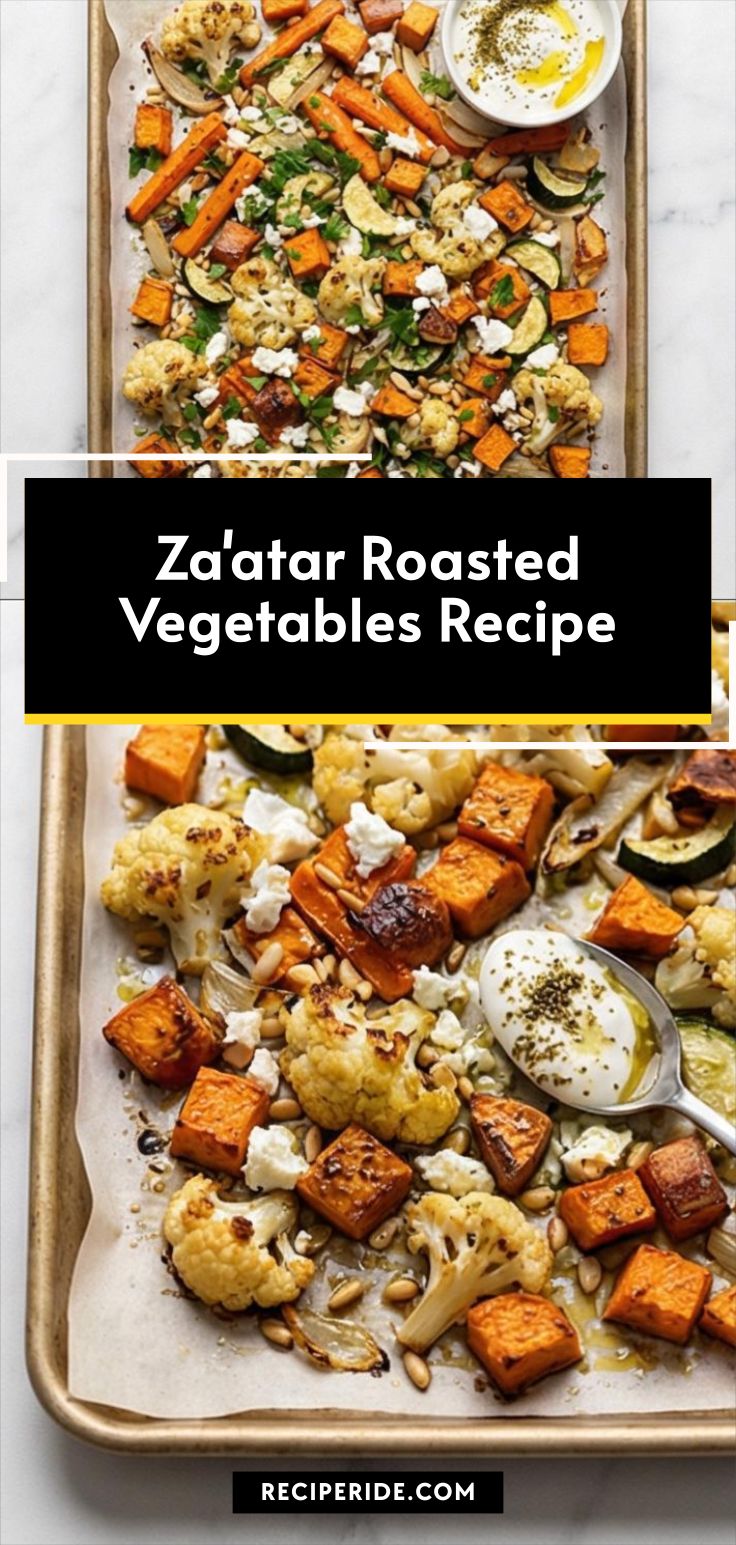
Spoon the hot roasted vegetables directly onto the warm rectangular serving rimmed sheet or present them on the very same parchment-lined rimmed baking sheet to keep that rectangular geometry. Scatter 2 tablespoons chopped fresh flat-leaf parsley, 2 tablespoons crumbled feta, and 2 tablespoons toasted pine nuts or slivered almonds over the hot vegetables. If serving with yogurt, spoon 1/2 cup chilled whole-milk Greek yogurt into a small bowl, drizzle with 1 tablespoon olive oil and sprinkle 1 teaspoon za’atar; serve the yogurt alongside for dolloping. Serve immediately while hot.
Making It Your Own
I like to experiment with texture and seasoning. Try swapping in sweet potatoes for butternut squash when fall arrives; it gives a deeper sweetness and a creamier bite. For a lighter summer version use more zucchini and fewer root vegetables so the tray finishes faster and the veggies keep some snap.
If you want a vegan version, skip the feta and yogurt and sprinkle toasted sesame seeds for nuttiness. For a Middle Eastern twist, add whole roasted garlic cloves and a drizzle of tahini blended with lemon. Each small change makes Za’atar Roasted Vegetables Recipe feel like a new dish while keeping that herb-forward signature.
How to Serve
When I host, I roast two trays and serve straight from the pans for a rustic look. For 4 people one tray is usually enough as a side; for a buffet or vegetarian main plan on two to three trays so guests can take seconds. Add a grain like herbed couscous or warm pita to make it a full meal.
Garnish matters: scatter fresh parsley, crumbled feta, and toasted nuts right before serving so textures stay distinct. If you want plated elegance, spoon the vegetables onto warmed rectangular platters and add a dollop of za’atar yogurt on the side. This keeps the flavors balanced and makes the dish feel finished.
Storage and Reheating Tips
Store cooled roasted vegetables in an airtight container in the fridge for up to 4 days. Lay them flat so they reheat evenly and avoid stacking while warm to preserve crisp edges.
To reheat, spread on a rimmed baking sheet and warm at 400°F (200°C) for 8 to 10 minutes until edges crisp again. You can also reheat single portions in a skillet over medium heat with a tiny splash of oil for 5 to 7 minutes. Avoid microwaving if you want to keep the roasted texture.
Oops Moments and How to Dodge Them
Overcrowding the pan causes steaming, not roasting, so give vegetables breathing room. If you skip this step youll end up with softer, less caramelized pieces.
Under-seasoning before roasting is easy to fix by tasting and adding a pinch more salt or za’atar while warm. But avoid adding too much lemon before roasting or the acid can slow browning.
Final Thoughts
Give the Za’atar Roasted Vegetables Recipe a try this week. Its one of those dishes that rewards small tweaks and comes together quickly, and youll be surprised how often it becomes the star of the plate. Serve it hot, add fresh herbs, and enjoy the little joys of caramelized edges and bright za’atar flavor.
Frequently Asked Questions.
- What is the best way to store leftover Za’atar Roasted Vegetables Recipe? Store cooled leftovers in an airtight container in the fridge for up to 4 days; reheat on a baking sheet for best texture.
- Can I make Za’atar Roasted Vegetables Recipe ahead for a party? Yes, roast earlier in the day and reheat in the oven at 400°F (200°C) to refresh the crisp edges.
- Is za’atar essential or is there a substitute? Za’atar defines the flavor but you can mix thyme, sesame, sumac, and salt as a quick substitute.
- How do I adapt the recipe for fewer people? Scale down the vegetables proportionally and use a smaller baking sheet to keep the pieces in a single layer.
- Can I add other vegetables to Za’atar Roasted Vegetables Recipe? Absolutely, root vegetables like parsnips or winter squash and cruciferous veg like broccoli work well; adjust cut sizes for even roasting.
Za'atar Roasted Vegetables Recipe
Make Za'atar Roasted Vegetables Recipe: roast mixed veggies in lemony za'atar oil for bright, caramelized flavor in under an hour.
Ingredients
Instructions
Step 1: Preheat and prep the vegetables
Preheat your oven to 425°F (220°C) with a rack in the center and line a large rimmed rectangular baking sheet (about 13 x 18 in / 33 x 46 cm) with parchment for easy cleanup. While the oven warms, peel and cut the vegetables: carrots into 1/2-inch sticks, sweet potato into 3/4-inch cubes, cauliflower into 1 1/2-inch florets, red bell pepper into 1-inch pieces, zucchini into 1/2-inch half-moons, and red onion into 1-inch wedges with the layers gently separated so they roast evenly. Lay the prepped vegetables in small piles on the marble so everything is ready to combine.
Step 2: Whisk the za'atar seasoning until glossy and aromatic
In a single matte charcoal ceramic mixing bowl combine 3 tablespoons extra-virgin olive oil, 1 tablespoon fresh lemon juice, 2 teaspoons finely grated lemon zest, 3 tablespoons za'atar, 1 teaspoon ground cumin, 3/4 teaspoon fine sea salt, 1/2 teaspoon freshly ground black pepper, and 2 finely minced garlic cloves. Whisk until the oil takes on a speckled, slightly glossy paste—bright flecks of lemon zest and za'atar suspended in the oil. The mixture should cling to the whisk and the bowl rim, ready to coat the vegetables.
Step 3: Toss raw vegetables in the za'atar mixture until every piece is evenly coated
Add all the cut vegetables to the same matte charcoal mixing bowl and toss thoroughly with a spatula until each piece is evenly speckled and slick with the za'atar-laced oil — carrots and sweet potato show an instant sheen, cauliflower florets hold pockets of spice, and onion layers capture little pools of dressing. Scrape the bottom of the bowl so no concentrated spice paste is left behind, then fold and toss again until uniform. The texture here is raw but glossy and fully seasoned, ready for the sheet.
Step 4: Arrange in a single layer on the parchment-lined rimmed sheet and start roasting
Transfer and spread the coated vegetables in a single, even layer on the parchment-lined rectangular rimmed baking sheet; pieces have a little breathing room to brown, not steam. Roast at 425°F (220°C) for 15 minutes, then remove and gently turn as many pieces as possible so the exposed edges begin to caramelize. The sheet at this stage shows the first signs of golden edges and concentrated brown spots along the cauliflower and sweet potato corners — a clear mid-roast milestone.
Step 5: Continue roasting to deep golden brown, finish with an optional quick broil, and season to taste
Return the sheet to the oven and roast another 12–18 minutes until all vegetables are tender and edges are deeply golden and crisp; for extra color you may broil 2–3 minutes, watching closely for small charred tips. While still hot on the sheet, taste and adjust with a pinch more salt or a light sprinkle of additional za'atar; gently toss the sheet so the seasoning distributes. The final roasted texture is a mix of crisped edges, soft caramel interiors, and concentrated browned pockets that glint with oil.
Step 6: Garnish and serve on the rectangular platter or sheet with optional za'atar yogurt
Spoon the hot roasted vegetables directly onto the warm rectangular serving rimmed sheet or present them on the very same parchment-lined rimmed baking sheet to keep that rectangular geometry. Scatter 2 tablespoons chopped fresh flat-leaf parsley, 2 tablespoons crumbled feta, and 2 tablespoons toasted pine nuts or slivered almonds over the hot vegetables. If serving with yogurt, spoon 1/2 cup chilled whole-milk Greek yogurt into a small bowl, drizzle with 1 tablespoon olive oil and sprinkle 1 teaspoon za'atar; serve the yogurt alongside for dolloping. Serve immediately while hot.
Notes
- Give vegetables even cuts so they roast uniformly.
- Do not overcrowd the pan; use two sheets if needed to allow browning.
- Taste and adjust salt after roasting for best control.
- For extra color, broil 2 to 3 minutes but watch closely.
- Store leftovers in an airtight container and reheat on a baking sheet to restore crispness.