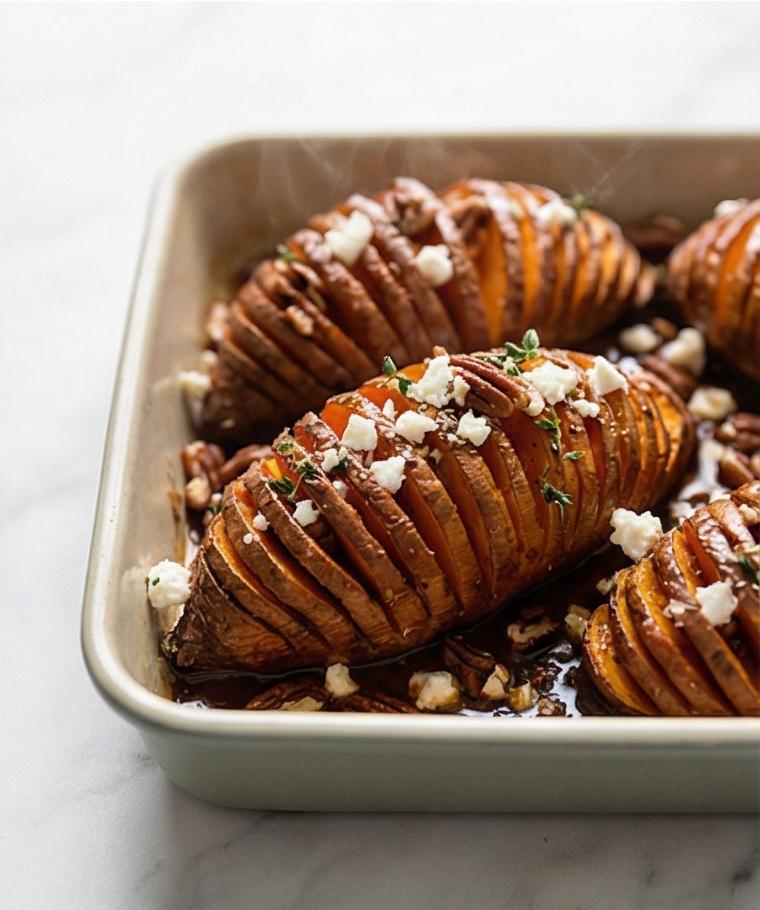
Korean Glass Noodles Recipe has been one of those dishes I return to when I want something a little nostalgic, slightly fancy, and wildly comforting. I learned to make this Korean Glass Noodles Recipe while cooking with a friend who taught me to watch texture more than time. The glossy, springy dangmyeon, the toasted sesame perfume, and the quick sear of beef together make it feel like a small celebration any night of the week. It’s forgiving, bright, and the kind of dish that looks restaurant-level with almost no extra fuss.
How This Recipe Became My Weeknight Comfort
I first made the Korean Glass Noodles Recipe on a rainy night when I had nothing planned and a small bag of sweet potato glass noodles in the pantry. I remember the steam fogging the window, the sound of the pan when the beef hit the oil, and the smell of toasted sesame oil warming the room. I felt oddly calm as I watched the noodles soften in warm water, their translucent bodies slowly taking on a glossy personality. When the assembled plate came together—browned beef, bright pepper strips, delicate egg ribbons—I felt proud and cozy. That memory stuck, and now whenever I want to slow down and treat myself, I make this dish. The textures and contrasts always make it feel special.
The Ingredients That Make the Magic
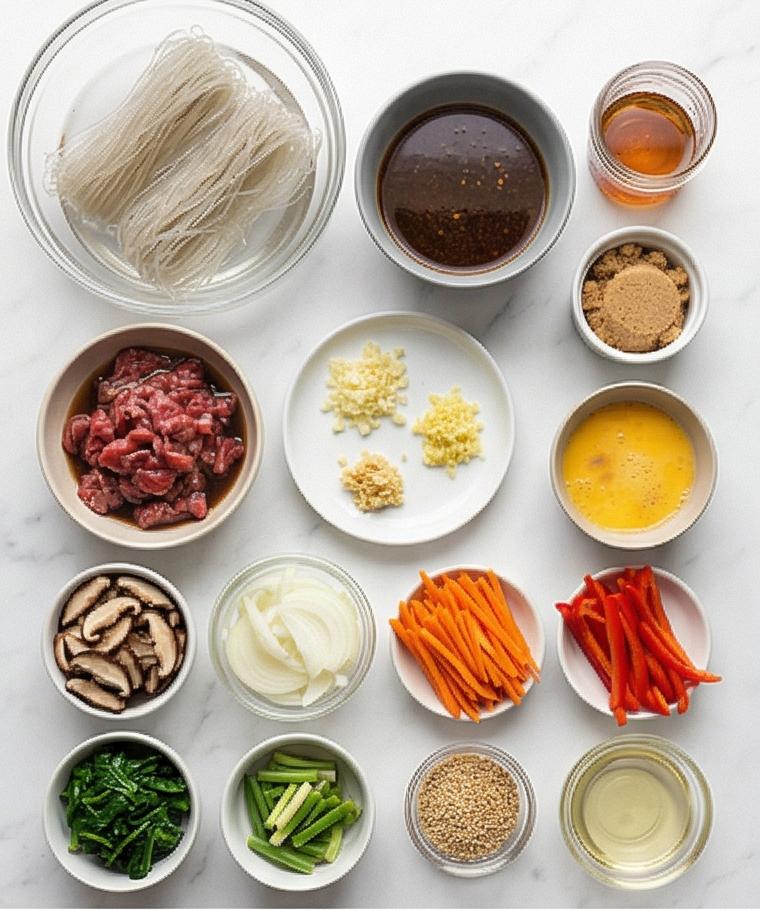
- Dangmyeon (sweet potato glass noodles): The star texture; choose fresh-looking, unbroken strands. Substitute with other clear glass noodles if needed, but the chew will differ.
- Soy sauce: Provides salt and umami; low-sodium works if you watch salt.
- Light brown sugar: Balances soy saltiness; use honey or maple syrup sparingly as a swap.
- Toasted sesame oil: Aroma powerhouse; don’t cook too long or it will lose fragrance.
- Beef: Adds savory richness; thin sirloin or ribeye work best, or use tofu for a vegetarian twist.
- Vegetables (onion, carrot, red pepper, shiitake, spinach): For color and crunch; pick firm produce and slice thinly.
Essential Kitchen Tools
A few simple tools make this Korean Glass Noodles Recipe come together much more smoothly. A large heatproof bowl is essential for soaking the noodles; glass or stainless will hold heat well. A wide skillet or cast-iron pan gives even searing for the beef and enough space to toss noodles. Sharp kitchen scissors save you time when you cut long dangmyeon strands. A small nonstick pan for the egg ribbon and a fine whisk for the sauce mean clean, consistent results. If you lack a skillet, a heavy-bottomed sauté pan works; if you do not have scissors, a long chef’s knife will do the job with care.
Step-by-Step Preparation Guide
Step 1: Soak the dangmyeon until translucent and pliable
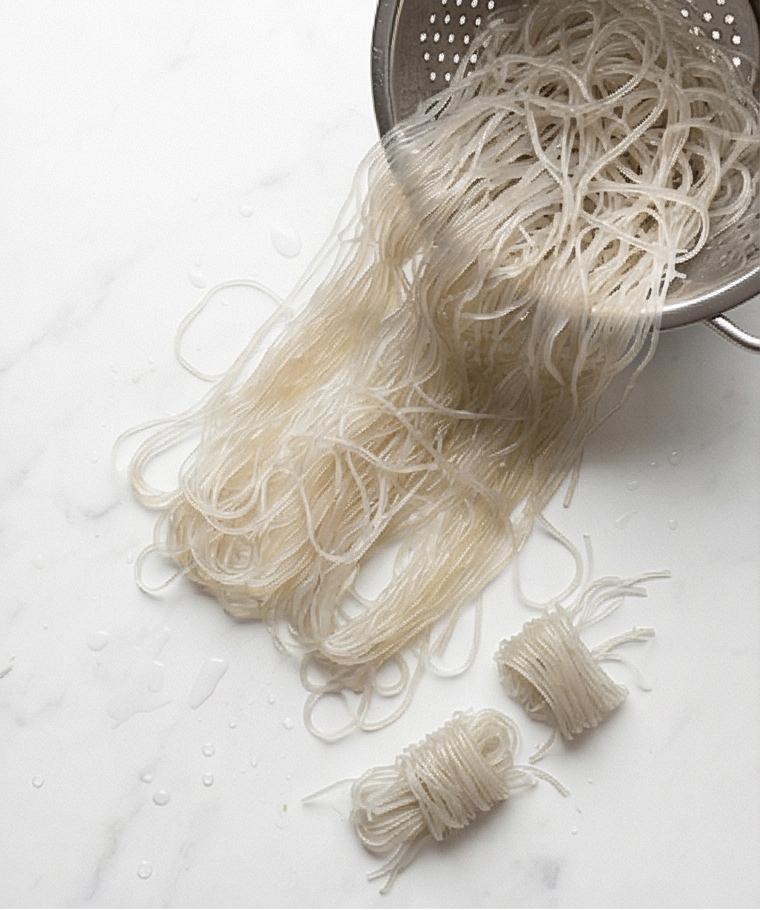
Place the dried Korean sweet potato glass noodles in a large heatproof bowl and cover with very warm water, stirring once or twice as they soften. Describe the noodles as they swell and turn translucent but still retain a slightly chewy core; when they’re pliable and glossy, drain and let them rest so excess water can run off. This step emphasizes the springy, slippery texture of the noodles and the clear gelatinous sheen that signals readiness.
Step 2: Whisk the savory-sweet sauce and prep the egg ribbon
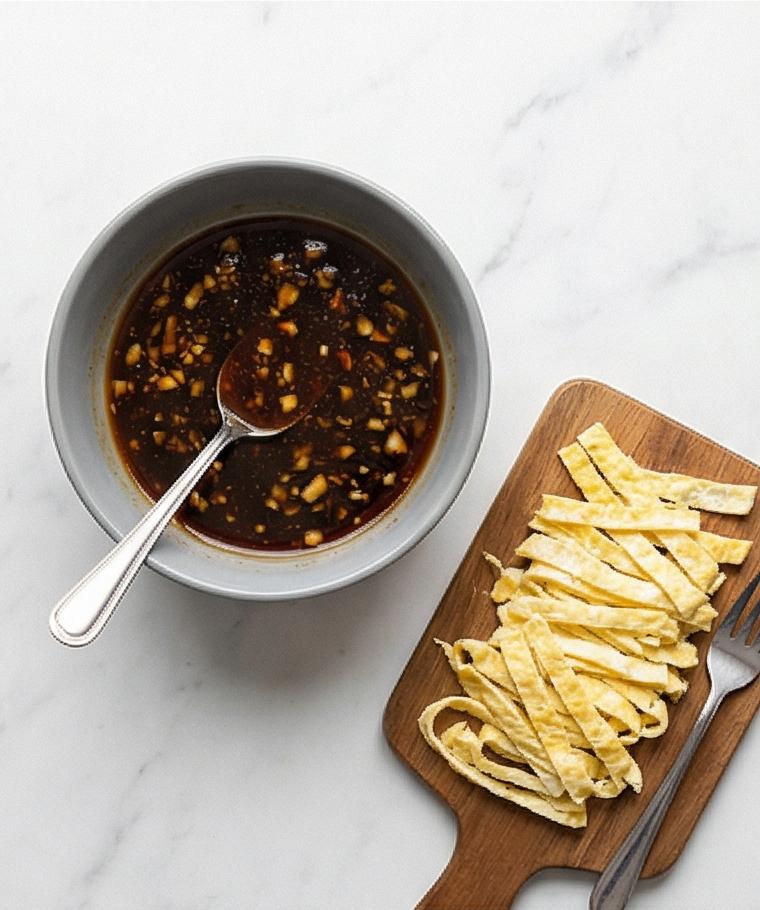
In a medium bowl, whisk soy sauce, packed light brown sugar, toasted sesame oil, minced garlic, grated ginger, and black pepper until the sugar mostly dissolves and the mixture becomes deeply glossy and homogeneous. Crack and beat an egg in a small bowl until completely smooth, then cook into a very thin pale-yellow sheet, cool briefly, roll, and slice into feather-light ribbons to reserve as a delicate garnish. Keep the sauce in the same bowl you used to whisk it so its glossy surface and tiny suspended garlic bits remain a visual anchor for the next steps.
Step 3: Marinate the beef briefly
Toss the very thinly sliced beef with a portion of the prepared sauce in the same medium bowl so the meat is lightly glossed and slightly darker along every edge. Let it rest at room temperature long enough to absorb aroma and color—this creates thin, semi-translucent shadings where the sauce penetrates and the beef fibers relax before cooking.
Step 4: Prep and organize the vegetables
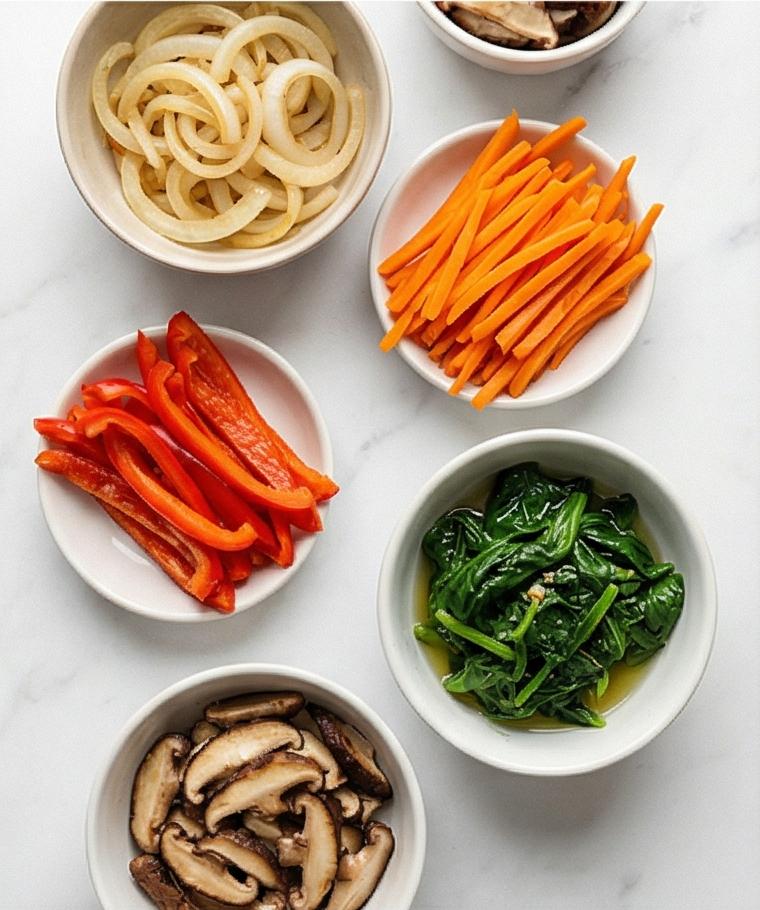
Thinly slice onion, cut carrots into crisp matchsticks, slice red pepper into glossy strips, thin-slice shiitake caps, rinse and drain spinach, and trim green onions. Keep each vegetable in its own small pile or shallow ceramic bowl: the onion’s soft rings, carrot’s matte-orange sticks, pepper’s shiny crimson ribbons, mushroom’s velvety brown slices, and spinach’s damp, deep-green wilt. Season the blanched spinach lightly so it appears slightly glossy and compact in a small bowl.
Step 5: Cut and drain the noodles for easy tossing
After draining the soaked noodles well, use scissors to shorten them to manageable 8–10 inch lengths and let them rest in the colander until no excess water beads on their surface. The strands should lie semi-separated, glossy but not sticky, individual translucent ropes awaiting final seasoning.
Step 6: Showcase the cooked components off-stove
Present the results of high-heat cooking as finished elements laid out on the marble: seared beef pieces with browned edges and glossy juices, softened translucent onions and crisp-tender carrot sticks, browned shiitake slices with shiny caps, and pepper strips that remain bright and glossy. Arrange each component in small piles or low bowls to control visual rhythm and keep the pan absent from the scene.
Step 7: Toss the noodles with the sauce until glossy and deeply seasoned
Combine the well-drained noodles with half the sauce and toss until every strand is coated and turning a deeper caramel-brown sheen; then add the remainder of the sauce so the noodles become uniformly glossy and elastic. The surface should read as warmly glistening strands with tiny flecks of garlic and sesame oil pooling lightly between them.
Step 8: Gently fold in beef, vegetables, spinach, and finish with sesame oil
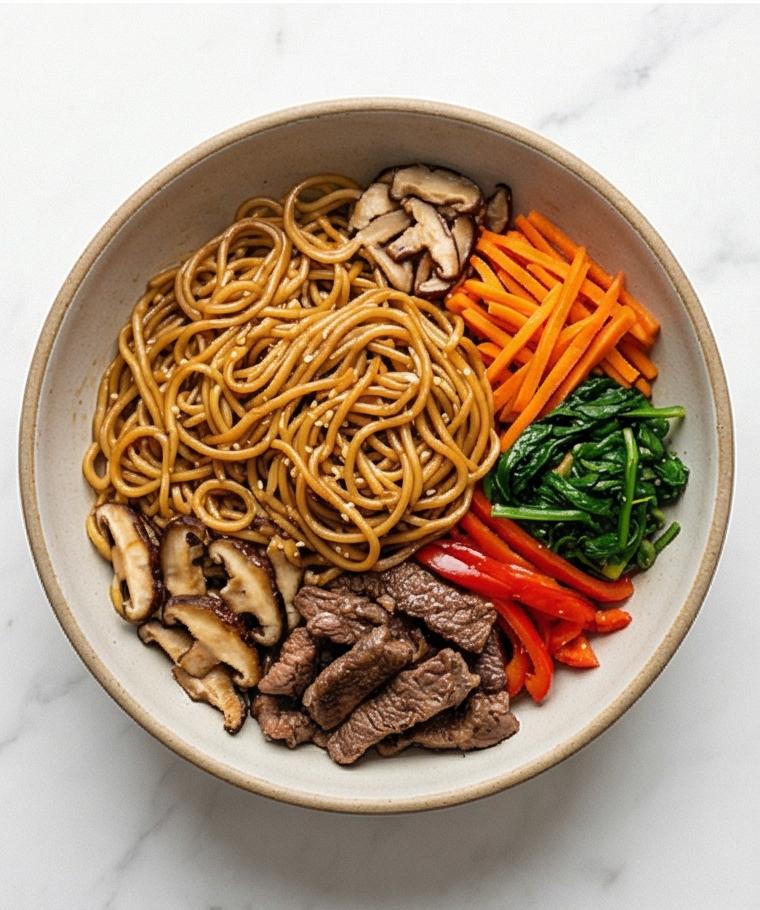
Lower the heat (conceptually), return the cooked beef, all vegetables, seasoned spinach, and green onions to the glossy noodles and toss gently until everything is evenly distributed and steamed-warmed. Finish with a delicate drizzle of toasted sesame oil and a final toss so the aroma perfumes the surface and a thin sheen clings to every ingredient.
Step 9: Plate and garnish for serving
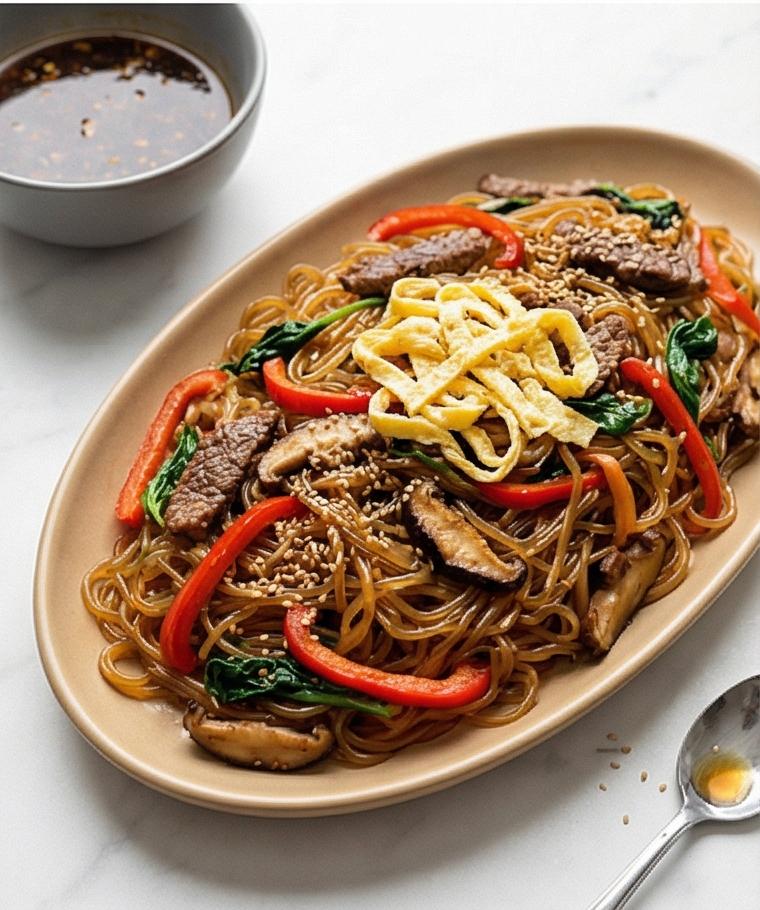
Transfer the mixed glass noodles to a warm shallow serving platter chosen to hold elongated strands without burying them; top with thin egg ribbons and a scatter of toasted sesame seeds, presenting a mosaic of glossy brown noodles, bright vegetables, and delicate yellow ribbons. Serve warm or at room temperature.
Making It Your Own
Try small experiments to make this Korean Glass Noodles Recipe truly yours. Swap the beef for thinly sliced chicken thighs and add a splash of rice vinegar for brightness. For a vegetarian version, press and sear extra-firm tofu until crisp, and increase the mushrooms for umami.
If you want seasonal flair, stir in blanched broccolini in spring or roasted sweet potato cubes in autumn; they pair nicely with the sweet-salty sauce. For a spicier regional twist, add gochujang or a spoon of chili paste to half the sauce and toss it through for a warming heat that still keeps the glossy finish.
How to Serve
When I host, I pick a wide, shallow platter so the glossy strands spread out like a ribboned centerpiece. For 4 guests, serve the Korean Glass Noodles Recipe family-style with small bowls of kimchi and pickled cucumbers on the side. Offer chopsticks and small forks so people can choose how they like to twirl their noodles.
If you need to scale up, double the noodles and sauce but keep the toasted sesame oil and garlic proportions close so the flavor stays balanced. For a buffet, keep components warm separately and toss briefly on a hot pan just before serving so nothing becomes limp.
Storage and Reheating
Leftovers keep well for 2 to 3 days in an airtight container in the fridge. The noodles will absorb sauce as they rest, so store any extra sauce separately if you plan to reheat for best texture.
To reheat, warm a skillet over medium heat with a teaspoon of neutral oil, add the noodles and a splash of water or reserved sauce, and toss quickly until heated through. This revives the gloss and prevents drying; avoid microwaving for long stretches because the noodles can turn gummy.
Common Mistakes and How to Avoid Them
Oversoaking the dangmyeon can make them too soft and limp. Keep an eye on the noodles while they soak; they should be translucent and still slightly chewy in the center when you drain them.
Crowding the pan when searing beef or stir-frying vegetables often leads to steaming rather than browning. Work in batches if necessary so each element gets a bit of color and texture.
Final Thoughts
Give this Korean Glass Noodles Recipe a try on a calm evening and notice how the simple steps add up to something deeply satisfying. You’ll be amazed at how a few minutes of focused prep gives you a glossy, layered dish perfect for sharing.
Frequently Asked Questions.
- Q: Can I use other glass noodles instead of sweet potato dangmyeon? A: Yes, you can swap in other glass noodles, but the chew and flavor will vary; sweet potato noodles have a distinctive spring.
- Q: Can I make this vegetarian? A: Absolutely. Use firm tofu or extra mushrooms and keep the sauce; add a splash of vegetarian oyster sauce if you like.
- Q: How long should I soak the noodles? A: Soak in very warm water until they are translucent and pliable; timing varies by brand but usually 10 to 20 minutes.
- Q: Can I prepare elements ahead? A: Yes. You can slice vegetables, marinate the beef briefly, and make the sauce a day ahead to speed assembly.
- Q: What is the best way to reheat leftovers? A: Toss in a hot skillet with a little oil and a splash of water or reserved sauce to revive texture and gloss.
Korean Glass Noodles Recipe
Make Korean Glass Noodles Recipe: soak dangmyeon, toss with savory sauce, and serve glossy noodles with beef and veggies.
Ingredients
Instructions
Step 1: Soak the dangmyeon until translucent and pliable
Place the dried Korean sweet potato glass noodles in a large heatproof bowl and cover with very warm water, stirring once or twice as they soften. Describe the noodles as they swell and turn translucent but still retain a slightly chewy core; when they’re pliable and glossy, drain and let them rest so excess water can run off. This step emphasizes the springy, slippery texture of the noodles and the clear gelatinous sheen that signals readiness.
Step 2: Whisk the savory-sweet sauce and prep the egg ribbon
In a medium bowl, whisk soy sauce, packed light brown sugar, toasted sesame oil, minced garlic, grated ginger, and black pepper until the sugar mostly dissolves and the mixture becomes deeply glossy and homogeneous. Crack and beat an egg in a small bowl until completely smooth, then cook into a very thin pale-yellow sheet, cool briefly, roll, and slice into feather-light ribbons to reserve as a delicate garnish. Keep the sauce in the same bowl you used to whisk it so its glossy surface and tiny suspended garlic bits remain a visual anchor for the next steps.
Step 3: Marinate the beef briefly
Toss the very thinly sliced beef with a portion of the prepared sauce in the same medium bowl so the meat is lightly glossed and slightly darker along every edge. Let it rest at room temperature long enough to absorb aroma and color—this creates thin, semi-translucent shadings where the sauce penetrates and the beef fibers relax before cooking.
Step 4: Prep and organize the vegetables
Thinly slice onion, cut carrots into crisp matchsticks, slice red pepper into glossy strips, thin-slice shiitake caps, rinse and drain spinach, and trim green onions. Keep each vegetable in its own small pile or shallow ceramic bowl: the onion’s soft rings, carrot’s matte-orange sticks, pepper’s shiny crimson ribbons, mushroom’s velvety brown slices, and spinach’s damp, deep-green wilt. Season the blanched spinach lightly so it appears slightly glossy and compact in a small bowl.
Step 5: Cut and drain the noodles for easy tossing
After draining the soaked noodles well, use scissors to shorten them to manageable 8–10 inch lengths and let them rest in the colander until no excess water beads on their surface. The strands should lie semi-separated, glossy but not sticky, individual translucent ropes awaiting final seasoning.
Step 6: Showcase the cooked components off-stove
Present the results of high-heat cooking as finished elements laid out on the marble: seared beef pieces with browned edges and glossy juices, softened translucent onions and crisp-tender carrot sticks, browned shiitake slices with shiny caps, and pepper strips that remain bright and glossy. Arrange each component in small piles or low bowls to control visual rhythm and keep the pan absent from the scene.
Step 7: Toss the noodles with the sauce until glossy and deeply seasoned
Combine the well-drained noodles with half the sauce and toss until every strand is coated and turning a deeper caramel-brown sheen; then add the remainder of the sauce so the noodles become uniformly glossy and elastic. The surface should read as warmly glistening strands with tiny flecks of garlic and sesame oil pooling lightly between them.
Step 8: Gently fold in beef, vegetables, spinach, and finish with sesame oil
Lower the heat (conceptually), return the cooked beef, all vegetables, seasoned spinach, and green onions to the glossy noodles and toss gently until everything is evenly distributed and steamed-warmed. Finish with a delicate drizzle of toasted sesame oil and a final toss so the aroma perfumes the surface and a thin sheen clings to every ingredient.
Step 9: Plate and garnish for serving
Transfer the mixed glass noodles to a warm shallow serving platter chosen to hold elongated strands without burying them; top with thin egg ribbons and a scatter of toasted sesame seeds, presenting a mosaic of glossy brown noodles, bright vegetables, and delicate yellow ribbons. Serve warm or at room temperature.
Notes
- Soak noodles in very warm water until translucent but still slightly chewy to avoid mushy texture.
- Reserve a spoonful of sauce before tossing to adjust seasoning after mixing.
- Store sauce separately if you expect leftovers to keep noodles from soaking up too much flavor.
- Reheat quickly in a hot skillet with a splash of water or reserved sauce to revive gloss and texture.
- Thinly slice beef across the grain for the most tender bite.