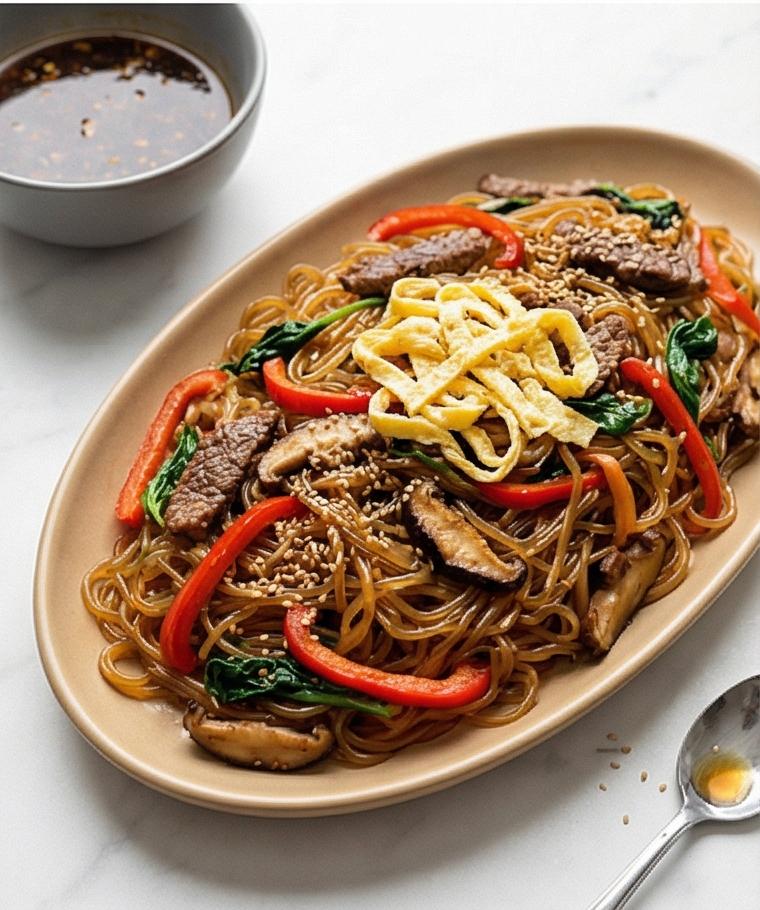
Creamy Tuscan Orzo Recipe is one of those weeknight heroes I keep coming back to whenever I want comfort without fuss. I first made this version on a rainy evening, and the way the sun-dried tomatoes and bright lemon cut through the cream convinced me it belonged in regular rotation. It cooks up quickly, uses pantry-friendly staples, and always feels a touch special. If you like silky, risotto-like pasta with a burst of herb and tomato, the Creamy Tuscan Orzo Recipe will become a favorite fast.
How This Recipe Became My Cozy, Midweek Fix
The first time I made the Creamy Tuscan Orzo Recipe I remember the house smelling like a small trattoria. The onion softened and turned translucent, garlic filled the kitchen with warm perfume, and the orzo toasted toffee-brown at the edges. I was tired after a long day and craving something that felt indulgent without being complicated, so I stirred in the sun-dried tomatoes, a splash of lemon, and handfuls of bright basil. Sitting down with a deep bowl felt like a gentle celebration of ordinary things: good bread, steady heat, and a simple creamy dish that reminded me of a seaside lunch in a small Italian town. The textures were my favorite part: glossy, spoonable orzo studded with chewy tomato ribbons and flecks of vivid green. It felt like comfort and a little adventure, all at once.
Main Ingredients and Why They Matter
- Orzo: The tiny pasta takes on a risotto-like creaminess when cooked slowly in warm broth; substitute with acini di pepe or small pearl couscous for similar texture. Choose good-quality orzo for even cooking.
- Sun-dried Tomatoes: Provide concentrated sweetness and chew; rehydrate slightly in warm broth if extra dry or swap for cherry tomatoes roasted until sweet.
- Parmesan: Melts into a glossy sauce and adds savory depth; use Pecorino Romano for a sharper edge.
- Heavy Cream: Gives silk and body; for a lighter version use half-and-half but expect a thinner finish.
- Broth: The flavor base—low-sodium chicken or vegetable broth lets you control salt; homemade is best.
Essential Kitchen Tools You Want on Hand
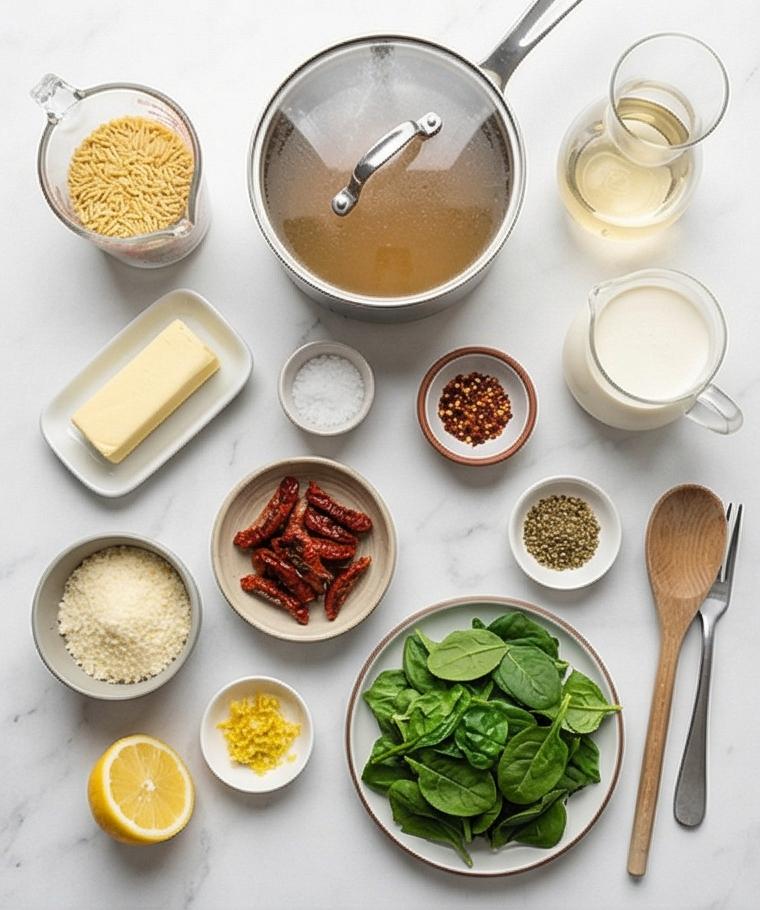
This recipe is forgiving, but the right tools make it shine. A medium skillet with a heavy bottom spreads heat evenly so the orzo toasts without scorching. A small covered saucepan to keep the broth hot is crucial; cold broth stops the cooking process and you lose that silky finish. A good microplane zester frees aromatic oils from the lemon, and a sturdy wooden spoon helps you scrape and stir without breaking the pasta grains. If you don’t have a heavy skillet, a wide saucepan works; no microplane means a fine grater will do.
- Heavy-bottomed skillet: Prevents hot spots and provides even toasting.
- Covered saucepan for broth: Keeps liquid at the right temperature so cooking is steady.
- Microplane or fine grater: For bright lemon zest.
- Wooden spoon or heatproof spatula: For gentle, constant stirring when needed.
Step-by-Step Preparation Guide
Step 1: Warm the broth and gather mise-en-place
Place a small covered saucepan of broth on low heat and keep it just below a gentle simmer; this stored heat is how you’ll coax the orzo to a silky finish later. As the broth warms, quickly prep: finely dice the yellow onion, mince the garlic, drain and thinly slice the oil-packed sun-dried tomatoes, grate the Parmesan, and zest the lemon. Tuck the cream and wine (if using) at room temperature nearby in small glass vessels so everything moves smoothly when you start cooking.
Step 2: Soften the onion and bloom the garlic
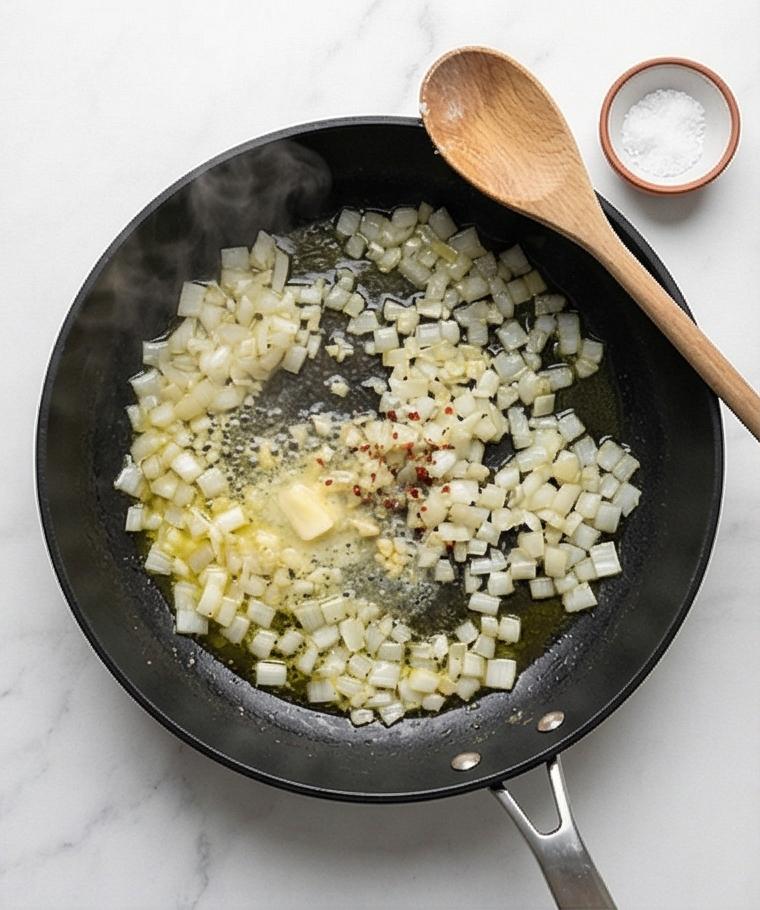
Heat the skillet with olive oil and a knob of butter until the fat is shimmering, then add the diced onion with a small pinch of salt. Sauté gently until the onion is soft and translucent, then add the minced garlic with a whisper of crushed red pepper and cook only until fragrant. The visual milestone here is glossy, translucent onion ribbons and tiny pale garlic flecks just warmed through—soft, slightly slick, and never browned.
Step 3: Toast the orzo and deglaze
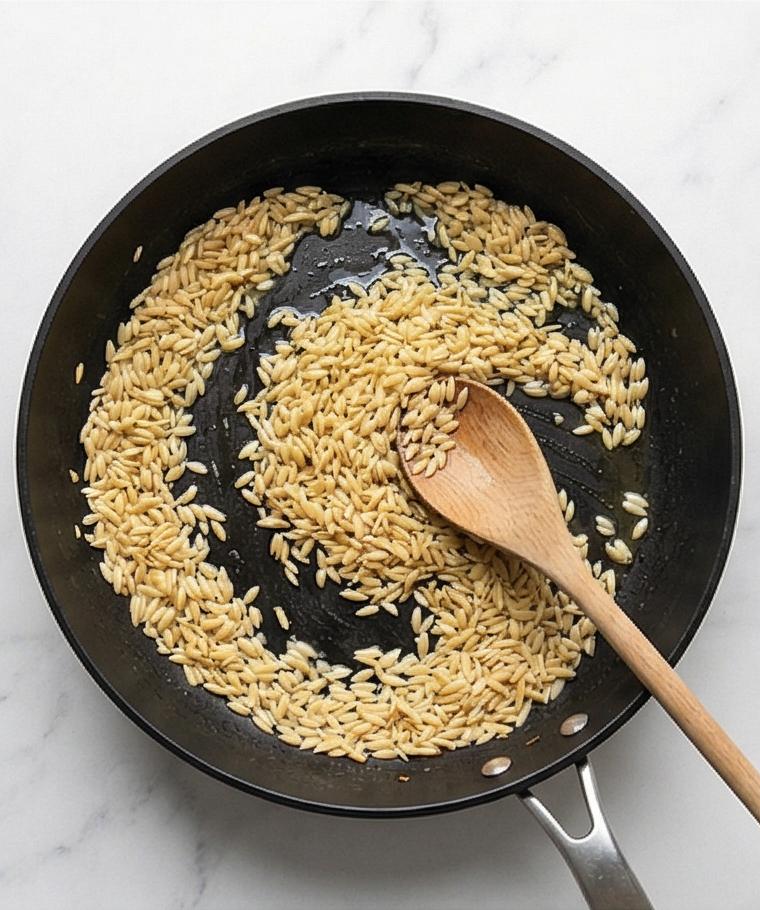
Tip the dry orzo into the warmed fat and stir constantly so each tiny grain becomes coated and picks up a faint, nutty toasting—look for very light golden edges on some pieces. If you’re using white wine, pour it in now so it sizzles and evaporates, concentrating the toasty aroma; the pan should look nearly dry and the orzo should glint with fat. This stage reads as dry-to-just-moist, fragrant, with separated glossy grains.
Step 4: Add hot broth and simmer to just al dente
Ladle most of the hot broth into the pan, stir in the salt, pepper, Italian seasoning and smoked paprika if using, and bring to a gentle simmer. Maintain a low steady simmer and stir every minute or two as the orzo absorbs liquid. The goal is a loose, risotto-like texture with the grains plump but with a slight bite and the surface looking saucy rather than claggy—an even, al dente creaminess rather than dry pasta.
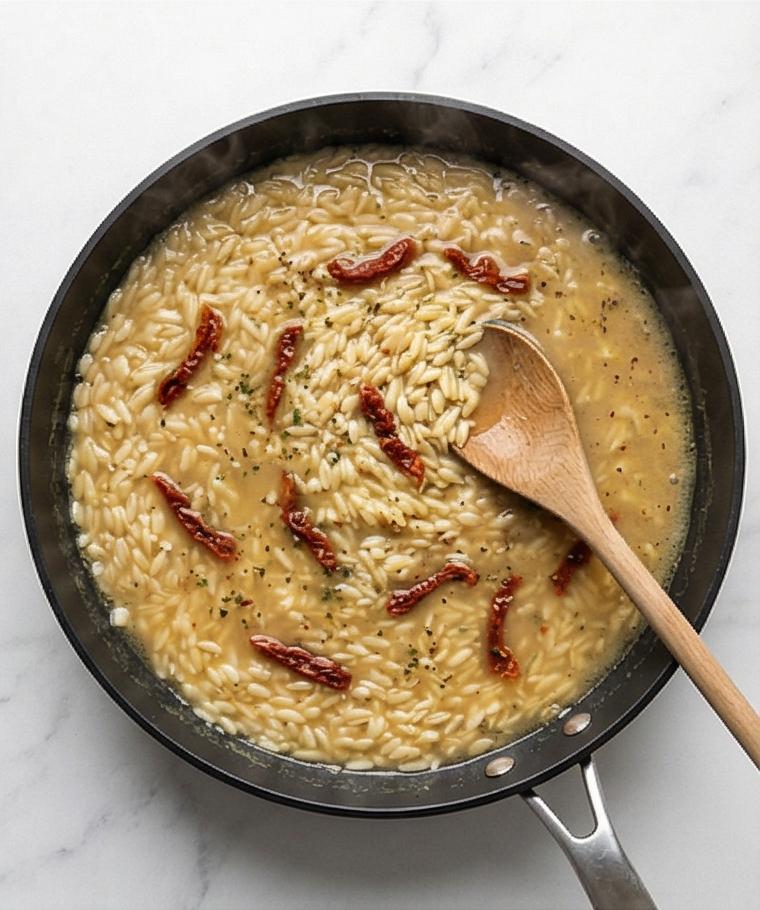
Step 5: Fold in sun-dried tomatoes and adjust consistency
Stir in the thinly sliced sun-dried tomatoes and, if the mixture feels too thick, add a splash of the reserved hot broth so the orzo remains glossy and slightly saucy. Simmer just until the tomatoes soften and integrate, leaving visible ribbons of deep red amid the pale golden grains; this is a tactile, juicy contrast—tender, chewy tomato pieces suspended in a loose, creamy matrix.
Step 6: Enrich with cream and gently thicken
Lower the heat and slowly stir in the room-temperature heavy cream, keeping the pan below a bare simmer so the cream heats through and the sauce begins to thicken. The visual change is immediate: the surface becomes silkier, the orzo acquires a creamy veil and a reflective sheen. Keep everything gentle so the cream remains emulsified and satiny rather than split.
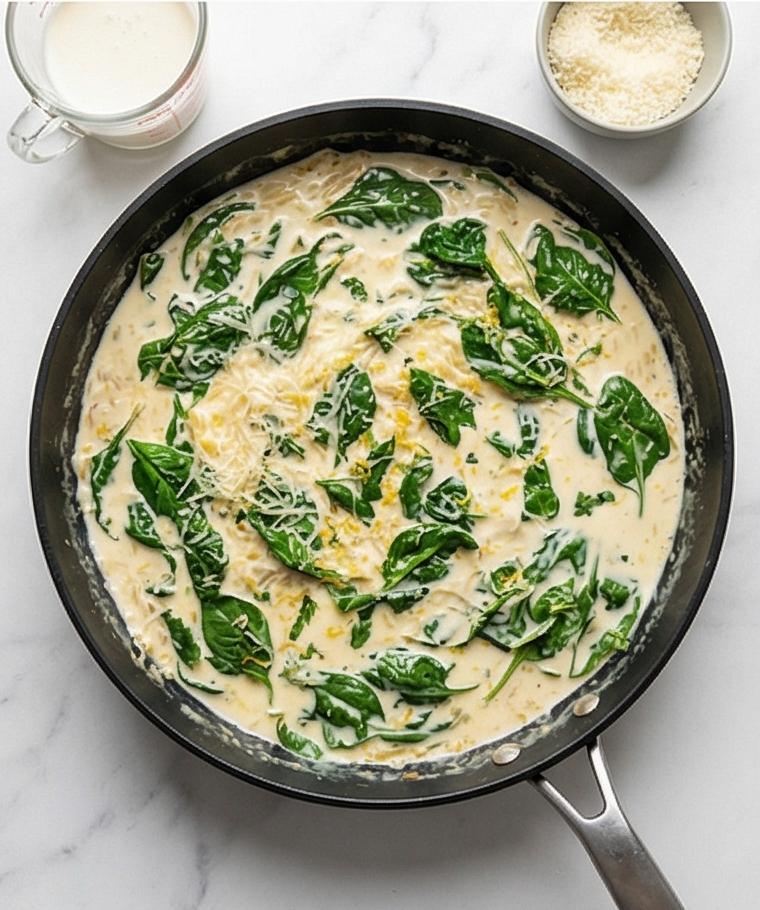
Step 7: Finish with Parmesan, spinach, lemon and herbs
Turn off the heat and add the grated Parmesan in batches, stirring until it melts into the grain, producing a glossy, cohesive sauce. Fold in the baby spinach just until wilted but still vivid green, then stir in lemon zest, lemon juice and chopped basil or parsley, finishing with a drizzle of extra-virgin olive oil if desired. The mixture should be spoonable and luminous—cheesy ribbons, bright herb flecks, and glossy green pockets of spinach.
Step 8: Rest briefly and serve warm
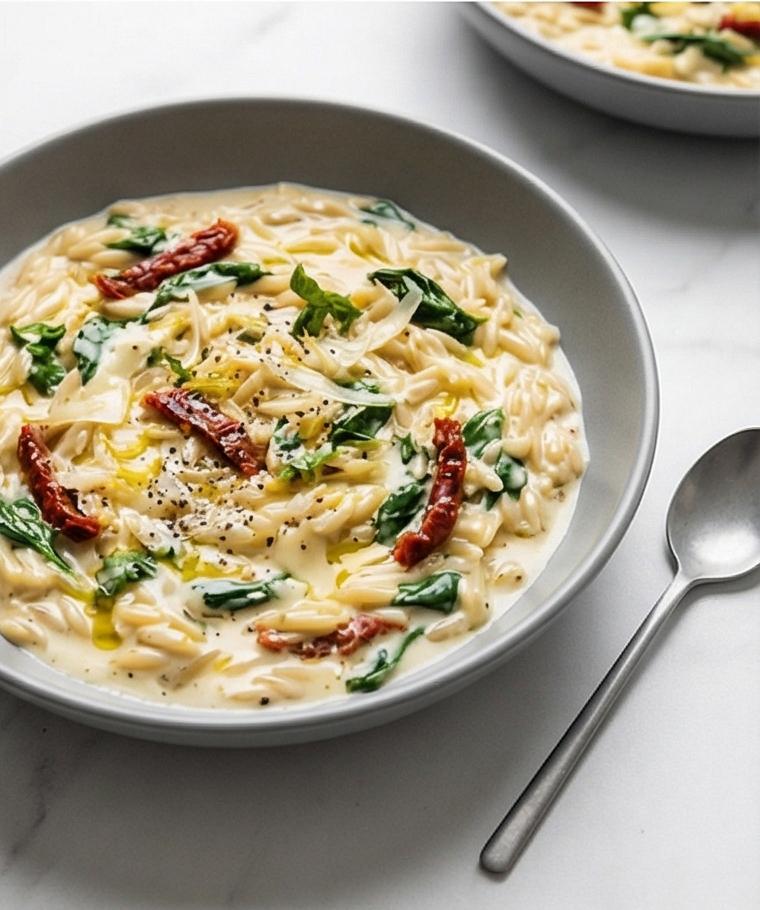
Let the orzo rest off the heat for a couple of minutes so it settles to a silky, spoonable consistency; loosen with a splash of hot broth if it tightens up. Spoon into warm shallow bowls and finish with extra grated Parmesan, torn basil or parsley, a sprinkle of flaky sea salt and a few fresh grinds of black pepper. Serve immediately to preserve the creamy texture and the contrast of glossy sauce, tender grains, sun-dried tomato specks, and bright herb highlights.
Making It Your Own
Try adding grilled chicken or sautéed shrimp for a protein boost; I often toss in lemon-garlic shrimp when I want a quicker dinner. For a vegetarian twist, stir in white beans and swap chicken broth for vegetable broth—both changes keep the dish hearty and satisfying. In summer I replace sun-dried tomatoes with blistered cherry tomatoes for a fresher note. For a dairy-free version, stir in a splash of full-fat coconut milk and nutritional yeast for savory umami, but omit or reduce the lemon to keep balance.
How to Serve
Serve the Creamy Tuscan Orzo Recipe in shallow bowls so the glossy sauce spreads across each spoonful. For a casual family meal, portion into a large warmed serving dish and let guests help themselves; finish with extra Parmesan and torn basil at the table. Hosting a dinner? Pair the orzo with a crisp green salad and a simple roasted vegetable like asparagus or broccolini. To scale up for a crowd, double the recipe and keep the finished orzo warm in a low oven (200°F/95°C) for short periods, stirring occasionally and loosening with a splash of warm broth.
Storage and Reheating Tips
Store leftovers in an airtight container in the refrigerator for up to 3 days. Because the sauce thickens as it cools, expect the orzo to firm up; add a splash of warm broth or a little extra cream when reheating to restore silkiness.
Reheat gently over low heat on the stovetop, stirring frequently, or microwave in short bursts, stirring between intervals to ensure even warming. If the dish tightens too much, mix in hot broth until the desired spoonable texture returns.
Common Mistakes and How to Avoid Them
Overcooking the orzo is the most frequent slip-up; aim for a tender-but-slight-bite texture and remove from heat when just al dente because it will relax as it rests. Stir regularly but gently to prevent sticking and to encourage even absorption of the broth.
Another misstep is adding cold cream or cheese to a hot pan too quickly; temper ingredients by bringing them to room temperature and fold them in off the highest heat to keep the sauce glossy and smooth.
Final Thoughts
If you try the Creamy Tuscan Orzo Recipe, give yourself permission to tweak a little—it’s meant to be comforting, forgiving, and delicious. Share a bowl with someone you like or save it for a quiet, cozy night; either way, it’s a recipe that rewards simple care and good ingredients.
Frequently Asked Questions.
-
What makes the orzo creamy without using a lot of butter?
The technique of toasting the orzo and then slowly adding warm broth lets the grains release starch and create a risotto-like creaminess; finishing with Parmesan and cream adds silk without excess butter. -
Can I make this recipe vegetarian?
Yes, use low-sodium vegetable broth and keep the Parmesan or swap for a vegetarian hard cheese; add white beans or sautéed mushrooms for more heft. -
Will the dish hold up if I make it ahead?
It holds for up to 3 days refrigerated, but the texture firms. Reheat gently with warm broth to loosen the sauce and revive the creaminess. -
Can I use a different pasta instead of orzo?
Small pastas like acini di pepe or small pearl couscous work best; larger shapes won’t achieve the same saucy, risotto-like result. -
How can I brighten the flavor if it tastes too rich?
A little extra lemon juice or a few more teaspoons of lemon zest will cut through richness and lift the flavors.
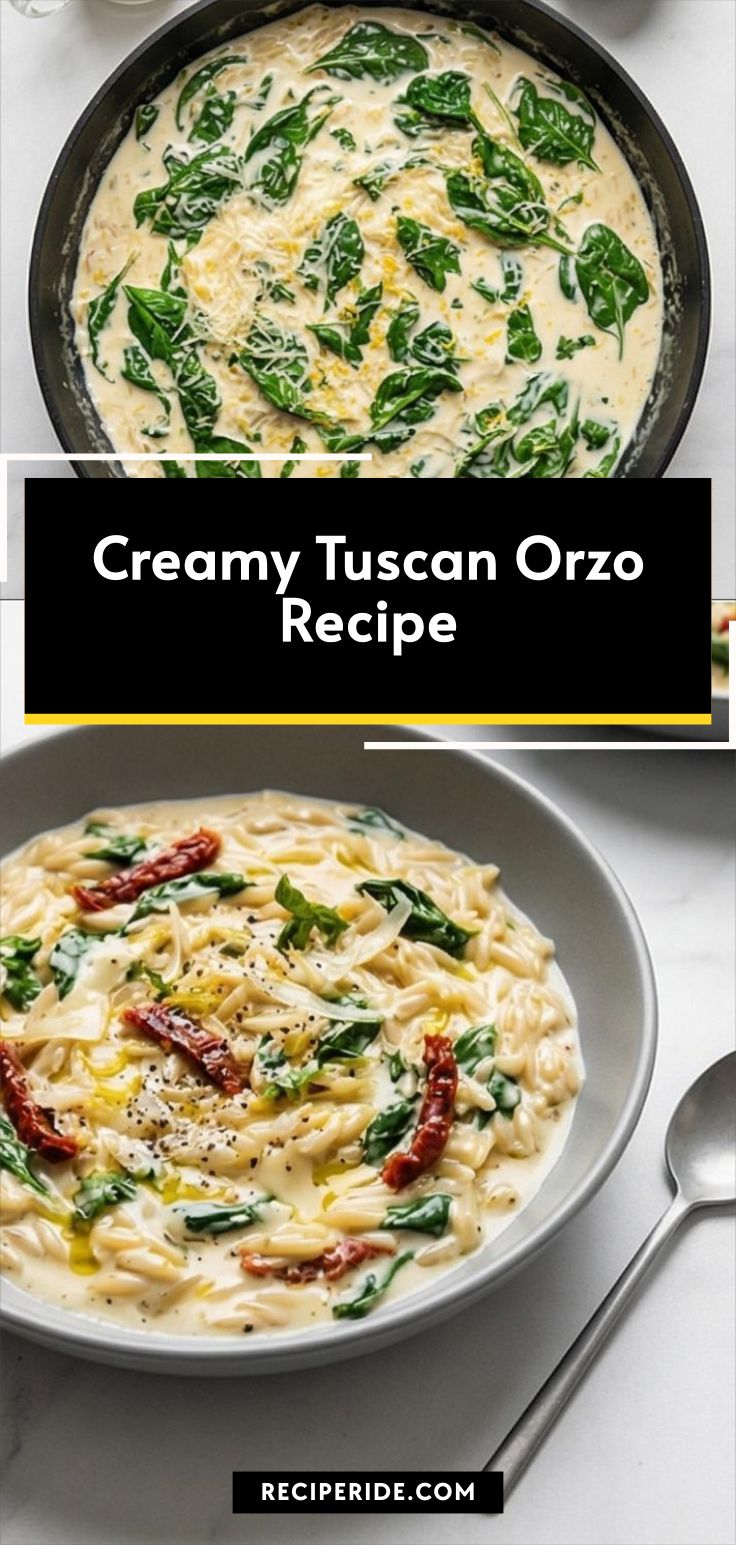
Creamy Tuscan Orzo Recipe
Make Creamy Tuscan Orzo Recipe: silky orzo with sun-dried tomatoes, spinach, and Parmesan ready in 35 minutes.
Ingredients
Instructions
Step 1: Warm the broth and gather mise-en-place
Place a small covered saucepan of broth on low heat and keep it just below a gentle simmer; this stored heat is how you'll coax the orzo to a silky finish later. As the broth warms, quickly prep: finely dice the yellow onion, mince the garlic, drain and thinly slice the oil-packed sun-dried tomatoes, grate the Parmesan, and zest the lemon. Tuck the cream and wine (if using) at room temperature nearby in small glass vessels so everything moves smoothly when you start cooking.
Step 2: Soften the onion and bloom the garlic
Heat the skillet with olive oil and a knob of butter until the fat is shimmering, then add the diced onion with a small pinch of salt. Sauté gently until the onion is soft and translucent, then add the minced garlic with a whisper of crushed red pepper and cook only until fragrant. The visual milestone here is glossy, translucent onion ribbons and tiny pale garlic flecks just warmed through—soft, slightly slick, and never browned.
Step 3: Toast the orzo and deglaze
Tip the dry orzo into the warmed fat and stir constantly so each tiny grain becomes coated and picks up a faint, nutty toasting—look for very light golden edges on some pieces. If you’re using white wine, pour it in now so it sizzles and evaporates, concentrating the toasty aroma; the pan should look nearly dry and the orzo should glint with fat. This stage reads as dry-to-just-moist, fragrant, with separated glossy grains.
Step 4: Add hot broth and simmer to just al dente
Ladle most of the hot broth into the pan, stir in the salt, pepper, Italian seasoning and smoked paprika if using, and bring to a gentle simmer. Maintain a low steady simmer and stir every minute or two as the orzo absorbs liquid. The goal is a loose, risotto-like texture with the grains plump but with a slight bite and the surface looking saucy rather than claggy—an even, al dente creaminess rather than dry pasta.
Step 5: Fold in sun-dried tomatoes and adjust consistency
Stir in the thinly sliced sun-dried tomatoes and, if the mixture feels too thick, add a splash of the reserved hot broth so the orzo remains glossy and slightly saucy. Simmer just until the tomatoes soften and integrate, leaving visible ribbons of deep red amid the pale golden grains; this is a tactile, juicy contrast—tender, chewy tomato pieces suspended in a loose, creamy matrix.
Step 6: Enrich with cream and gently thicken
Lower the heat and slowly stir in the room-temperature heavy cream, keeping the pan below a bare simmer so the cream heats through and the sauce begins to thicken. The visual change is immediate: the surface becomes silkier, the orzo acquires a creamy veil and a reflective sheen. Keep everything gentle so the cream remains emulsified and satiny rather than split.
Step 7: Finish with Parmesan, spinach, lemon and herbs
Turn off the heat and add the grated Parmesan in batches, stirring until it melts into the grain, producing a glossy, cohesive sauce. Fold in the baby spinach just until wilted but still vivid green, then stir in lemon zest, lemon juice and chopped basil or parsley, finishing with a drizzle of extra-virgin olive oil if desired. The mixture should be spoonable and luminous—cheesy ribbons, bright herb flecks, and glossy green pockets of spinach.
Step 8: Rest briefly and serve warm
Let the orzo rest off the heat for a couple of minutes so it settles to a silky, spoonable consistency; loosen with a splash of hot broth if it tightens up. Spoon into warm shallow bowls and finish with extra grated Parmesan, torn basil or parsley, a sprinkle of flaky sea salt and a few fresh grinds of black pepper. Serve immediately to preserve the creamy texture and the contrast of glossy sauce, tender grains, sun-dried tomato specks, and bright herb highlights.
Notes
- Keep broth warm so the orzo cooks evenly and finishes silky.
- Toast the orzo briefly for a nuttier flavor and better texture.
- Bring cream and wine to room temperature before adding to prevent splitting.
- Adjust consistency with reserved hot broth rather than cold water.
- Reheat gently with a splash of warm broth to restore creaminess.