Elote (mexican Street Corn) Recipe
I fell for this Elote (mexican Street Corn) Recipe the minute I tasted warm char and creamy cotija on a summer street corner. It feels like a tiny celebration on a stick every time I make it, and it’s become my go-to for backyard gatherings and quick weeknight indulgences. The balance of tangy lime, smoky chili, and the salty pop of cotija makes this Elote (mexican Street Corn) Recipe impossible to resist. If you love bold, simple flavors and a little hands-on fun, you’re in the right place.
How This Recipe Became My Rainy-Day Favorite
There was one rainy evening when a power outage turned dinner plans sideways and I ended up grilling corn over a propane burner on my balcony. The first ear I bit into had a thin, charred skin that crunched just a little, releasing a burst of sweet, caramelized kernels that smelled faintly like campfire. I smeared the cotija-speckled crema on like a happy ritual, and the lime brightened everything into perfect balance. That night felt surprisingly cozy: the rain pattered, the house smelled of garlic and butter, and friends traded stories with sticky fingers. Making this Elote (mexican Street Corn) Recipe has kept that feeling for me ever since. It isn’t just a side; it’s a tiny comfort that lifts a moment.
The Ingredients That Make It Sing
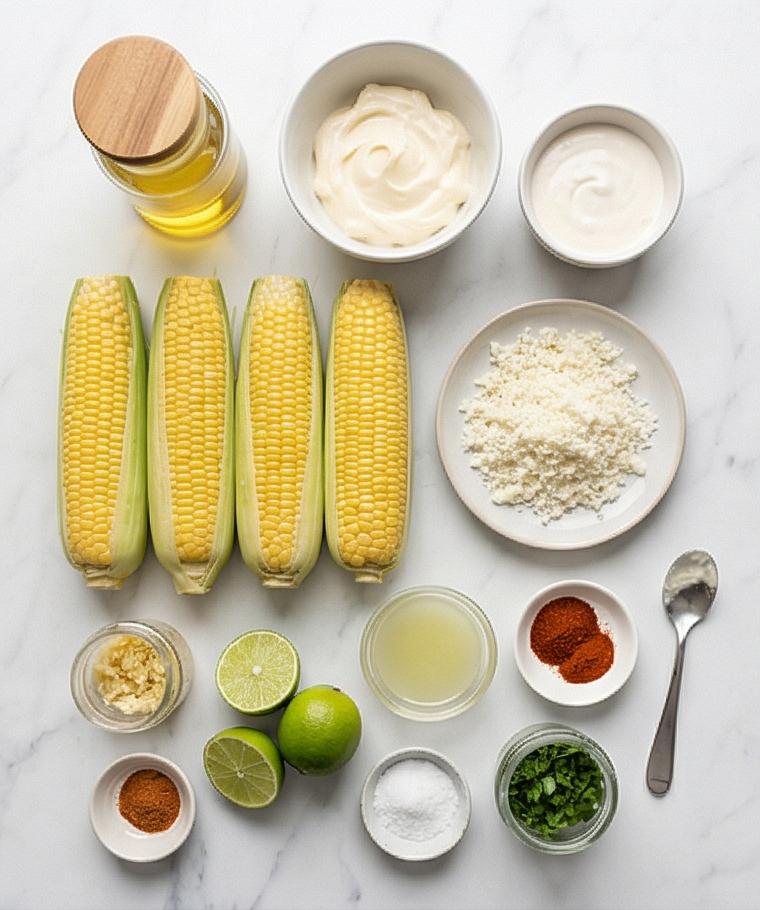
- Corn on the Cob: Fresh ears are the base; look for bright green husks and plump kernels when you press them gently. If fresh corn isn’t available, use high-quality frozen corn grilled in a skillet as a substitute.
- Mayonnaise and Mexican Crema (or sour cream): These provide the creamy coating that helps the cotija stick and balances heat. Greek yogurt can be used for a lighter option but expect a tangier result.
- Cotija Cheese: Salty and crumbly, it’s the classic finish. If you can’t find cotija, try feta or aged queso fresco in a pinch.
- Lime and Chili Powder: Lime cuts the richness while chili powder adds smoky depth; experiment with ancho for mild smokiness or cayenne for heat.
Essential Tools
A short intro: you don’t need a professional kitchen to make this, but a few handy tools make the process smoother and more fun. Here are the tools I reach for and why they matter.
- Grill or heavy grill pan: For char and blistered kernels; the grill gives the classic smoky notes. If you don’t have one, use the broiler or a cast-iron skillet.
- Pastry brush or spoon: To apply oil, butter, and the crema evenly; a spoon works well if you don’t own a brush.
- Small bowl and spoon: For mixing and tasting the sauce; using one bowl keeps things tidy and saves dishes.
- Sharp knife and cutting board: For chopping cilantro and prepping lime wedges; a serrated knife helps with stubborn silk.
- Tongs: Essential for turning corn without losing your grip; long-handled tongs keep hands safe from heat.
Step-by-Step Preparation Guide.
Step 1: Preheat the cooking surface
Warm the grill or grill pan until it’s a steady medium-high heat—about 400–450°F (205–230°C) on an outdoor grill, or hot and shimmering on a heavy grill pan on the stovetop. If you prefer the broiler alternative, slide an oven rack 6 inches below the broiler and preheat on high. Close the lid or let the broiler preheat for several minutes so the cooking surface is uniformly hot; this ensures rapid charring and caramelization rather than steaming.
Step 2: Prepare the corn for charring
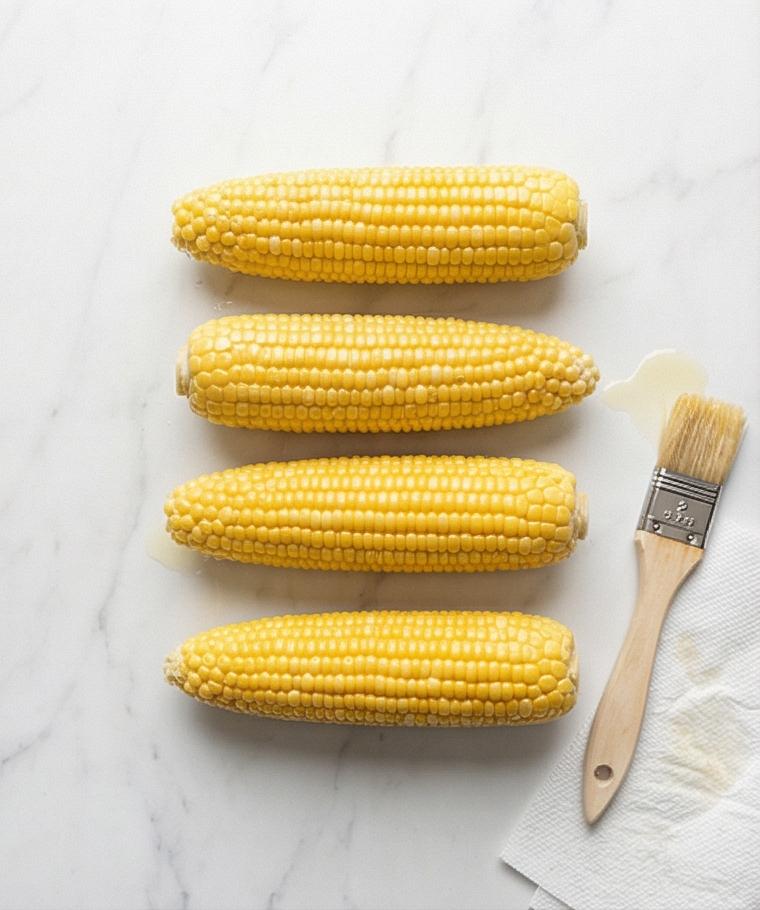
Husk and silk the ears, then pat each ear completely dry so surface moisture won’t steam the kernels. If your grates or pan tend to stick, brush each ear lightly with a thin film of neutral oil from a small glass jar—just enough to promote even browning. Lay the four ears in a neat row on the marble while you finish the sauce mise en place, with the small oil jar, a clean pastry brush, and a folded paper towel nearby for tidy handling.
Step 3: Make the creamy elote sauce base
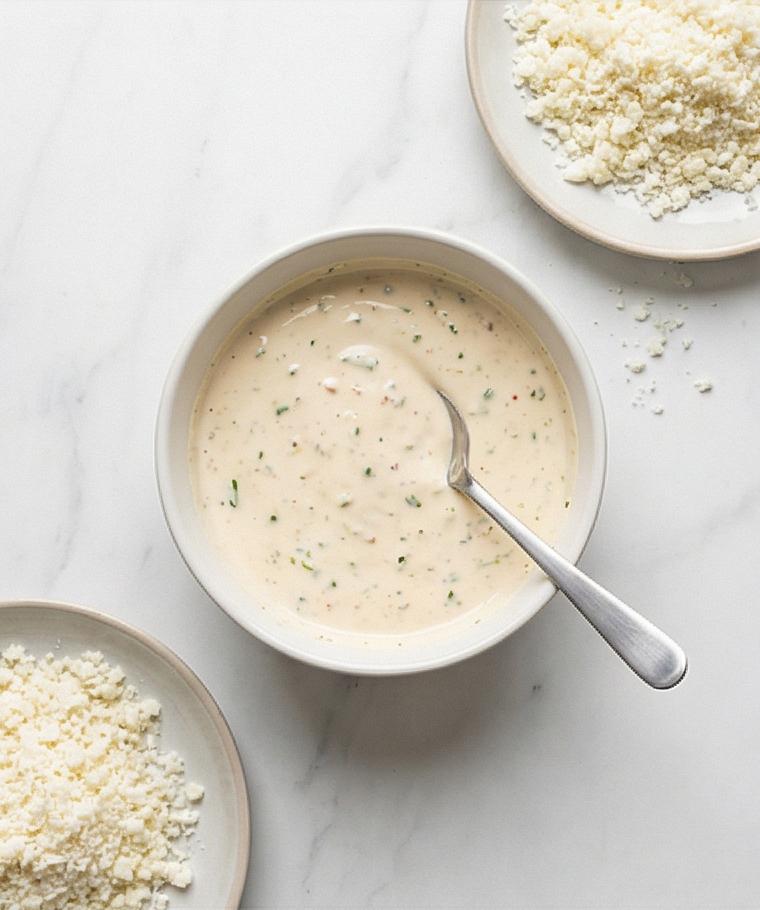
In a medium matte white ceramic bowl combine the room-temperature mayonnaise and Mexican crema (or sour cream) with the very finely minced garlic. Stir with a small stainless spoon until the mixture is homogeneous and glossy, the texture thick but spreadable. Keep the same bowl and spoon visible throughout the sauce work to maintain utensil persistence and visual continuity.
Step 4: Brighten and season the sauce
Add freshly squeezed lime juice, fine sea salt, freshly ground black pepper, chili powder, and a pinch of cayenne if using. Whisk until silky and slightly thick; the surface should hold gentle peaks and smell tangy, garlicky, and faintly smoky from the chili. Taste and tweak—another squeeze of lime or a pinch more salt will sharpen the flavors without thinning the emulsion.
Step 5: Fold in cilantro and cotija to finish the spread
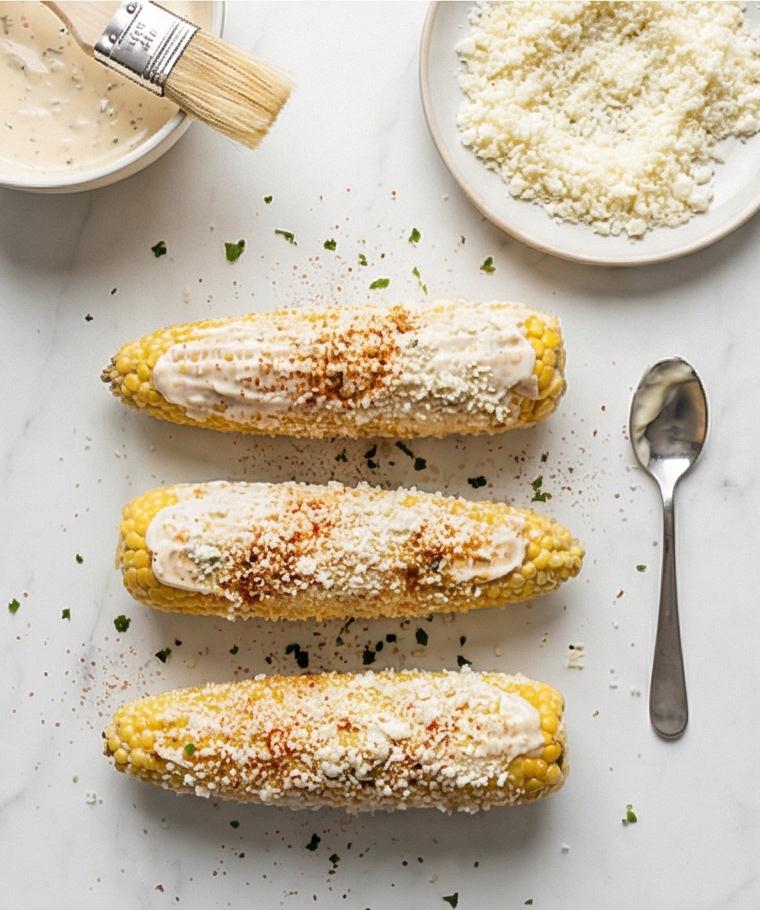
Fold 2 tablespoons finely chopped cilantro and about 1/4 cup crumbled cotija into the sauce until distributed but still speckled — the cotija will add gritty, granular texture against the smooth cream. Reserve the remaining cotija in a shallow ceramic plate for coating. Arrange the sauce bowl, the cotija plate, and a small spoon or offset spatula together on the marble so they read as a single sauce station.
Step 6: Grill the corn until charred and blistered
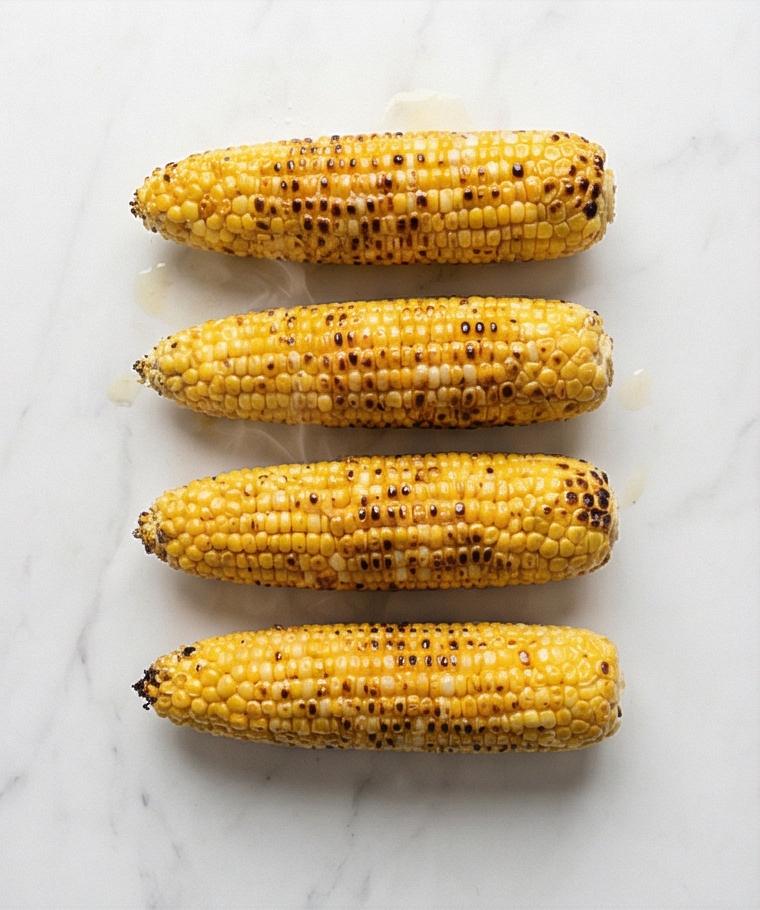
Place the oiled, dried ears on the hot grill or hot pan and turn every 2–3 minutes for 10–12 minutes total, until each side has pronounced char lines and some kernels are slightly blistered. The corn should appear glossy from the oil, with a mix of golden-yellow kernels and deep brown char freckles; remove when the ears smell toasty-sweet and the kernels are tender to a skewer.
Step 7: Season the hot ears and optionally brush with butter
Right off the grill, sprinkle a small pinch of fine sea salt over each hot ear while they’re still steaming slightly. If you like a richer finish, brush a thin coat of warm melted unsalted butter over the hot corn with the same pastry brush used earlier. Place the finished hot ears back on the marble in a single file ready for saucing.
Step 8: Coat each ear with the prepared sauce and press in cheese
Working one hot ear at a time, use a spoon or pastry brush to spread a generous, even layer of the cotija-speckled crema all around the corn; the sauce should cling as a thin visible coat without dripping. Immediately roll or press each sauced ear in the reserved crumbled cotija on the shallow plate so the cheese adheres and creates a rough, crumbly surface. Finish with a light dusting of chili powder for color and a faint heat.
Step 9: Garnish, arrange, and serve
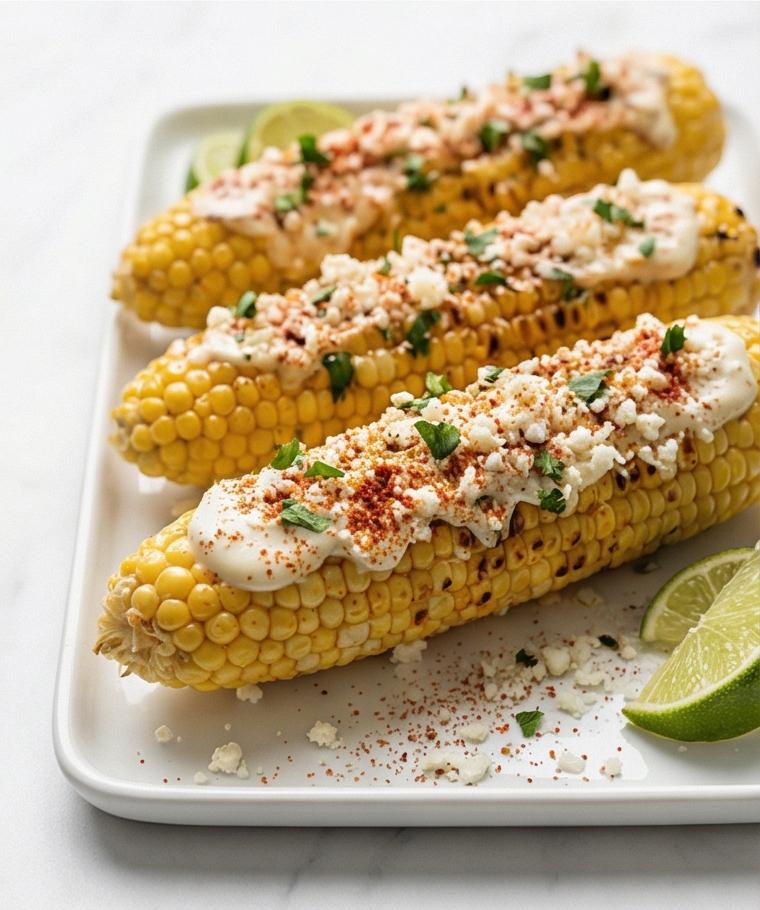
Transfer the coated elotes to a simple rectangular matte white ceramic platter that contrasts with the Carrara marble. Sprinkle the remaining crumbled cotija and the extra tablespoon of chopped cilantro over the ears, and tuck 8 lime wedges around them for squeezing. Serve immediately while hot—the cheese should remain distinct and the sauce should not have soaked into the kernels.
Step 10: Broiler alternative (if you don’t have a grill)
If you used the broiler, follow the same finishing sequence: salt and butter the hot ears, spread the crema mixture, roll in cotija, dust with chili, and garnish with cilantro and lime. The visual result and plating remain identical whether charred under coals or the broiler—only the source of the char differs.
Making It Your Own
I’ve played with this Elote (mexican Street Corn) Recipe in a lot of small ways. For a vegan version I swap the mayo and crema for a cashew cream and use crumbled firm tofu tossed with a pinch of smoked paprika as a cotija stand-in. In the fall I like to toss roasted poblano strips onto the plate for an earthy twist. For a fresher, lighter summer take I mix a little lime zest into the crema and top the corn with microgreens or thinly sliced radish. When hosting, I sometimes set up a small toppings bar so guests can add extra cotija, chili powder, or hot sauce to taste. These tweaks keep the core idea intact while letting you tailor the heat, texture, and tang.
How to Serve
If I’m hosting a casual dinner, I stack the finished elotes on a large platter and tuck lime wedges around them so guests can squeeze as much or as little as they like. For bigger groups, double the recipe and keep extra sauce in a bowl so people can recoat a second ear. If you want a composed plate, cut the corn off the cob and toss the kernels with the crema and cotija to make a warm salad that pairs beautifully with grilled meats.
For a kid-friendly option, omit the cayenne and dust lightly with mild chili powder; serve on small plates with napkins and a jar of toothpicks for little hands. Presentation tip: contrast the bright corn with a matte serving platter and sprinkle the extra cilantro just before serving to keep it fresh.
Storage and Reheating
Store leftover grilled corn wrapped tightly in plastic wrap or in an airtight container in the fridge for up to 2 days. Keep the crema and any extra cotija in a separate container so the coating does not make the kernels soggy.
To reheat, warm the ears gently on a hot grill or in a skillet for a few minutes to revive the char and melt any butter. If you only have a microwave, zap them briefly in 20 second bursts and then finish in a hot skillet for texture. Reapply the crema and cotija after reheating so the flavors stay bright.
Common Mistakes and How to Avoid Them
One common mistake is overcooking the corn until the kernels go dry; watch for blistering and remove when tender. Another is applying the crema too early; spreading sauce on corn that isn’t hot will cause it to slide off. Wait until the ears are steaming hot.
A final slip is skimping on salt and lime. Both lift the whole dish—taste as you go and adjust. If your cotija is mild, add a pinch more salt to balance the sweetness of the corn.
Final Thought
Give this Elote (mexican Street Corn) Recipe a try the next time you want something easy that feels special. It’s quick to pull together, delightfully tactile, and endlessly tweakable. Invite a few friends, serve it hot, and enjoy the tiny, smoky bites that always make a meal feel like a celebration.
Frequently Asked Questions.
-
Q: Can I make this Elote (mexican Street Corn) Recipe ahead of time?
A: You can prepare the crema and cotija ahead and keep them chilled, but finish the corn just before serving to preserve char and texture. -
Q: What can I use instead of cotija cheese?
A: Crumbled feta or aged queso fresco are good substitutes if cotija is unavailable; both deliver salty, crumbly texture. -
Q: Is there a dairy-free version of this Elote (mexican Street Corn) Recipe?
A: Yes, use a cashew or silken tofu based cream and a crumbled smoked tofu or toasted sesame seed mix for a savory finish. -
Q: How spicy is this recipe?
A: It’s mild by default; the 1/8 teaspoon of cayenne is optional and chili powder adds smoky warmth. Increase cayenne for more heat. -
Q: Can I make this on a stovetop if I don’t have a grill?
A: Absolutely. Use a heavy cast-iron skillet or the broiler and follow the same timing to achieve blistered, charred kernels.
Elote (mexican Street Corn) Recipe
Make Elote (mexican Street Corn) Recipe: char corn, slather with cotija-crema, and serve with lime for a smoky, tangy snack.
Ingredients
Instructions
Step 1: Preheat the cooking surface
Warm the grill or grill pan until it’s a steady medium-high heat—about 400–450°F (205–230°C) on an outdoor grill, or hot and shimmering on a heavy grill pan on the stovetop. If you prefer the broiler alternative, slide an oven rack 6 inches below the broiler and preheat on high. Close the lid or let the broiler preheat for several minutes so the cooking surface is uniformly hot; this ensures rapid charring and caramelization rather than steaming.
Step 2: Prepare the corn for charring
Husk and silk the ears, then pat each ear completely dry so surface moisture won’t steam the kernels. If your grates or pan tend to stick, brush each ear lightly with a thin film of neutral oil from a small glass jar—just enough to promote even browning. Lay the four ears in a neat row on the marble while you finish the sauce mise en place, with the small oil jar, a clean pastry brush, and a folded paper towel nearby for tidy handling.
Step 3: Make the creamy elote sauce base
In a medium matte white ceramic bowl combine the room-temperature mayonnaise and Mexican crema (or sour cream) with the very finely minced garlic. Stir with a small stainless spoon until the mixture is homogeneous and glossy, the texture thick but spreadable. Keep the same bowl and spoon visible throughout the sauce work to maintain utensil persistence and visual continuity.
Step 4: Brighten and season the sauce
Add freshly squeezed lime juice, fine sea salt, freshly ground black pepper, chili powder, and a pinch of cayenne if using. Whisk until silky and slightly thick; the surface should hold gentle peaks and smell tangy, garlicky, and faintly smoky from the chili. Taste and tweak—another squeeze of lime or a pinch more salt will sharpen the flavors without thinning the emulsion.
Step 5: Fold in cilantro and cotija to finish the spread
Fold 2 tablespoons finely chopped cilantro and about 1/4 cup crumbled cotija into the sauce until distributed but still speckled — the cotija will add gritty, granular texture against the smooth cream. Reserve the remaining cotija in a shallow ceramic plate for coating. Arrange the sauce bowl, the cotija plate, and a small spoon or offset spatula together on the marble so they read as a single sauce station.
Step 6: Grill the corn until charred and blistered
Place the oiled, dried ears on the hot grill or hot pan and turn every 2–3 minutes for 10–12 minutes total, until each side has pronounced char lines and some kernels are slightly blistered. The corn should appear glossy from the oil, with a mix of golden-yellow kernels and deep brown char freckles; remove when the ears smell toasty-sweet and the kernels are tender to a skewer.
Step 7: Season the hot ears and optionally brush with butter
Right off the grill, sprinkle a small pinch of fine sea salt over each hot ear while they’re still steaming slightly. If you like a richer finish, brush a thin coat of warm melted unsalted butter over the hot corn with the same pastry brush used earlier. Place the finished hot ears back on the marble in a single file ready for saucing.
Step 8: Coat each ear with the prepared sauce and press in cheese
Working one hot ear at a time, use a spoon or pastry brush to spread a generous, even layer of the cotija-speckled crema all around the corn; the sauce should cling as a thin visible coat without dripping. Immediately roll or press each sauced ear in the reserved crumbled cotija on the shallow plate so the cheese adheres and creates a rough, crumbly surface. Finish with a light dusting of chili powder for color and a faint heat.
Step 9: Garnish, arrange, and serve
Transfer the coated elotes to a simple rectangular matte white ceramic platter that contrasts with the Carrara marble. Sprinkle the remaining crumbled cotija and the extra tablespoon of chopped cilantro over the ears, and tuck 8 lime wedges around them for squeezing. Serve immediately while hot—the cheese should remain distinct and the sauce should not have soaked into the kernels.
Step 10: Broiler alternative (if you don’t have a grill)
If you used the broiler, follow the same finishing sequence: salt and butter the hot ears, spread the crema mixture, roll in cotija, dust with chili, and garnish with cilantro and lime. The visual result and plating remain identical whether charred under coals or the broiler—only the source of the char differs.
Notes
- Keep crema and cotija separate from corn if storing to prevent sogginess
- Use a brush of neutral oil to prevent sticking and promote even charring
- Taste and adjust lime and salt before coating the corn
- For vegan option, swap mayo and crema for cashew cream and use smoked tofu as cotija substitute