Sesame Soy Bok Choy Recipe is one of those simple, bright side dishes that I find myself making again and again. I first cooked this version on a cramped weeknight, and its friendly flavors felt like a tiny celebration. I love how the sesame and soy sing against the clean, slightly sweet crunch of bok choy. If you are looking for an easy vegetable that lifts any meal, this Sesame Soy Bok Choy Recipe is your new go-to.
How This Dish Stepped Into My Weeknight Rotation
The first time I made this Sesame Soy Bok Choy Recipe I was short on time and long on hungry friends. I remember the kitchen smelling of warm sesame and toasted garlic as steam curled from the pot where I had blanched the bok choy. The leaves turned a vivid green and the stems kept a pleasant snap, and I felt an immediate lift as I spooned the glossy sauce over the vegetables. There was laughter, a small spill of sauce on the counter, and a sense of relief that a healthy, elegant side could be ready in under 20 minutes. That meal taught me to trust quick techniques like blanching and high-heat searing to transform humble greens into something celebratory. Ever since, this recipe has been my fallback for when I want food that looks thoughtful but does not demand hours of fuss.
Primary Ingredients and Why They Matter
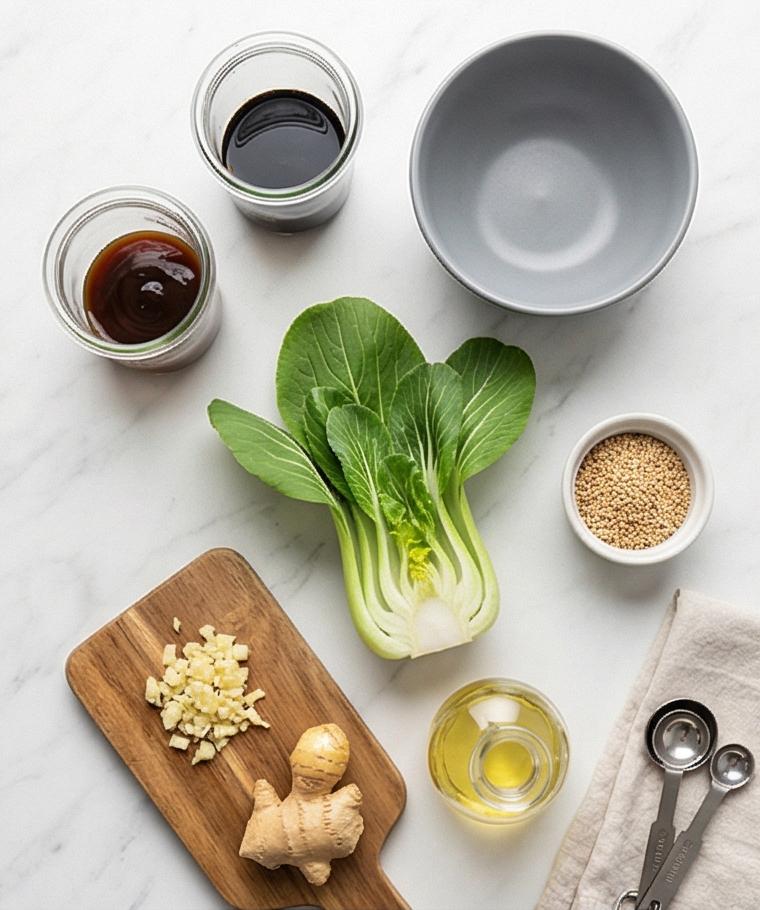
- Baby Bok Choy: The star vegetable, crisp in the stems and tender in the leaves. Choose firm heads with bright green leaves; quarter larger heads so pieces cook evenly. Substitute with baby mustard greens or Swiss chard in a pinch.
- Low-Sodium Soy Sauce: Adds savory umami without overpowering. Low-sodium lets you control salt; tamari is a good gluten-free swap.
- Oyster Sauce: Brings depth and a hint of sweetness; optional but recommended. For a vegan alternative, use mushroom-based stir-fry sauce.
- Toasted Sesame Oil: Finishing oil for aroma, not heating. Use sesame seed oil sparingly; neutral oil is used for searing.
- Garlic and Ginger: Provide bright aromatics. Use equal amounts of minced shallot or scallion white if needed.
Essential Kitchen Tools and Why They Help
To make this Sesame Soy Bok Choy Recipe well, the right tools speed things up and protect texture. A heavy skillet or cast-iron pan gives even heat and helps you get a quick sear on the bok choy stems. A pair of tongs makes flipping and moving the greens easy without tearing them. A small whisk or fork blends the sauce until it is smooth and glossy. A colander or spider strainer helps you drain blanched bok choy quickly so it stays vibrant. If you do not have a whisk, a fork is fine; a wok can replace a skillet, and a slotted spoon can stand in for tongs.
Step-by-Step Preparation Guide
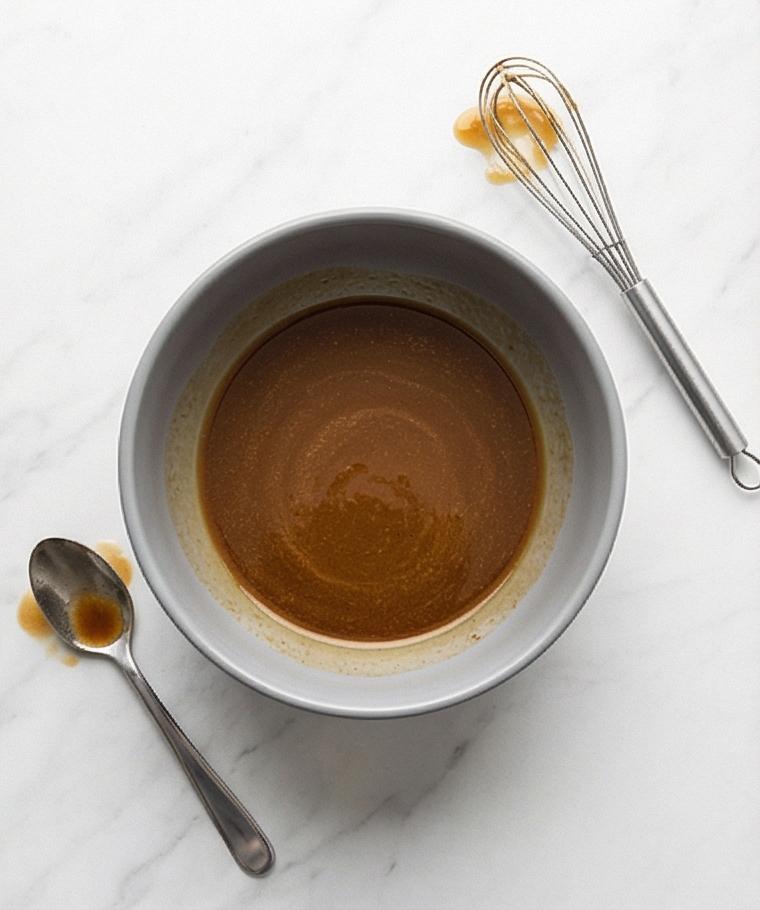
Step 1: Make the Sesame-Soy Sauce
Combine the soy, oyster sauce, rice vinegar, sugar, and water in a small matte grey ceramic bowl and whisk until the sugar is fully dissolved and the mixture reads as a smooth, glossy dark-brown dressing. Keep the bowl nearby with a tiny whisk resting on the rim and a clear glass jar of soy and a small porcelain ramekin of sesame seeds grouped neatly — everything contained in vessels so liquids never touch the marble surface. Set the sauce aside; it should look silky, slightly viscous, and homogenous, ready to hit hot bok choy.
Step 2: Trim, Halve, and Blanch the Bok Choy
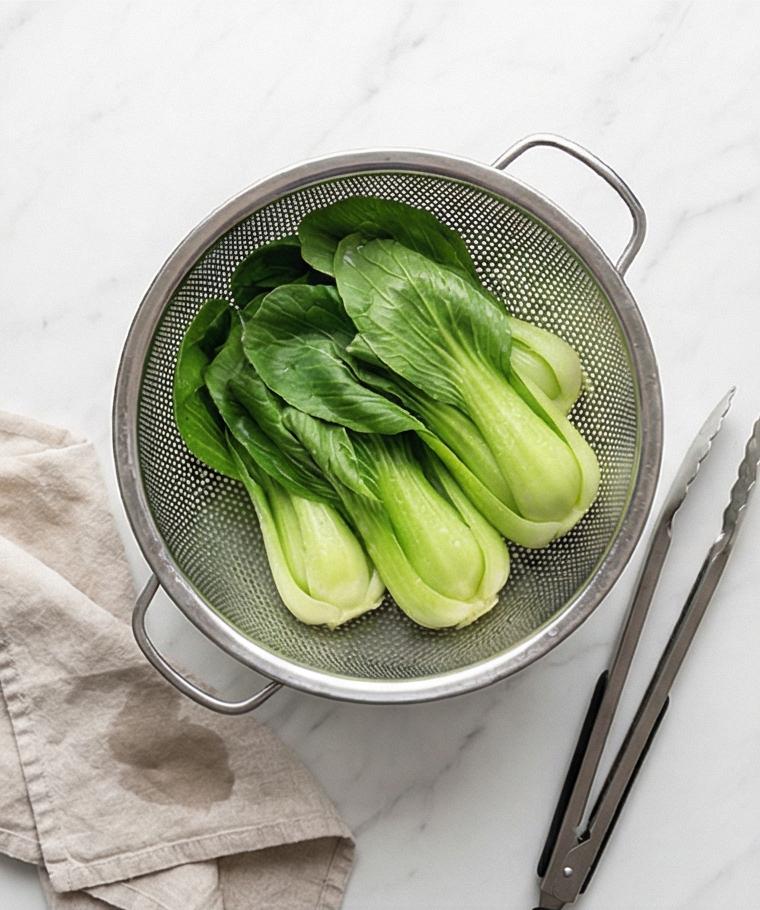
Trim the stem ends, halve or quarter the baby bok choy, and rinse thoroughly so each leaf appears pristine and bead-sprinkled. Briefly blanching produces vivid, translucent emerald-green leaves and crisp-tender white stems; display the drained bok choy in a stainless-steel colander on the marble with water droplets beading on the leaves, tongs resting nearby and a folded linen towel used for light patting. This panel celebrates the vegetal transformation — color intensified, structure intact, grit removed.
Step 3: Aromatics, Sear, and Glaze
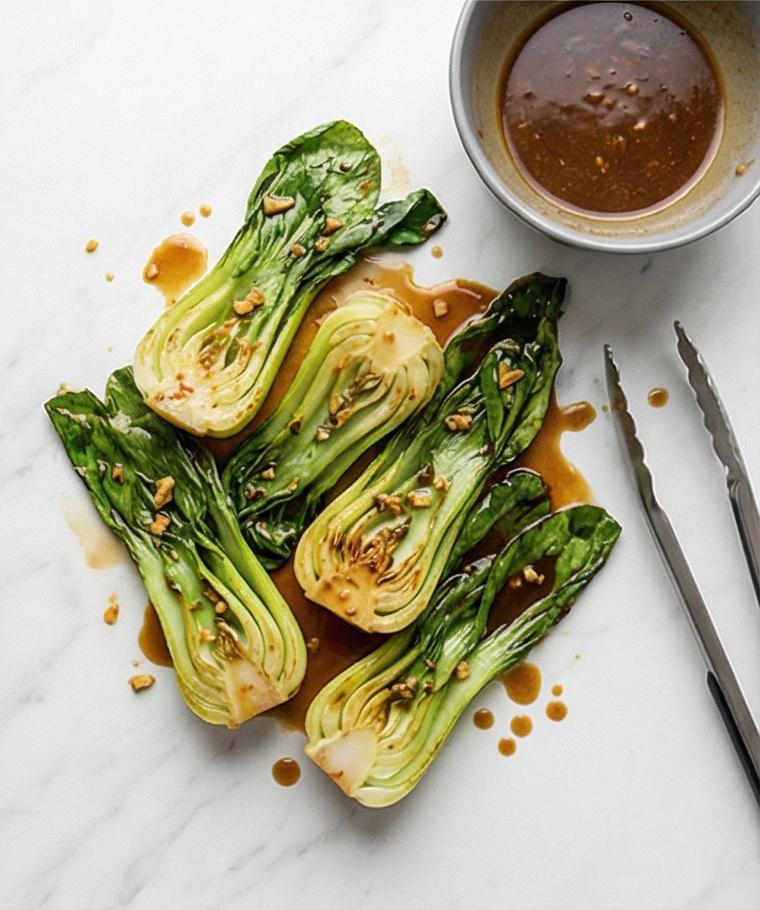
Show the result of aromatics sizzling into oil: a shallow puddle of shimmering neutral oil flecked with tiny golden garlic and ginger bits, and the bok choy arranged cut-side down so the pale stems reveal light, toasted golden sear spots. The sauce has been poured around the vegetables and is bubbling into a glossy coating; toss marks and a slight reduced syrupy edge are visible. Keep the same tongs nearby and the matte grey bowl with residual sauce traces to the side — this frame documents the exchange from raw crispness to glossy, slightly caramelized vegetal pieces.
Step 4: Finish, Toss, and Garnish for Serving
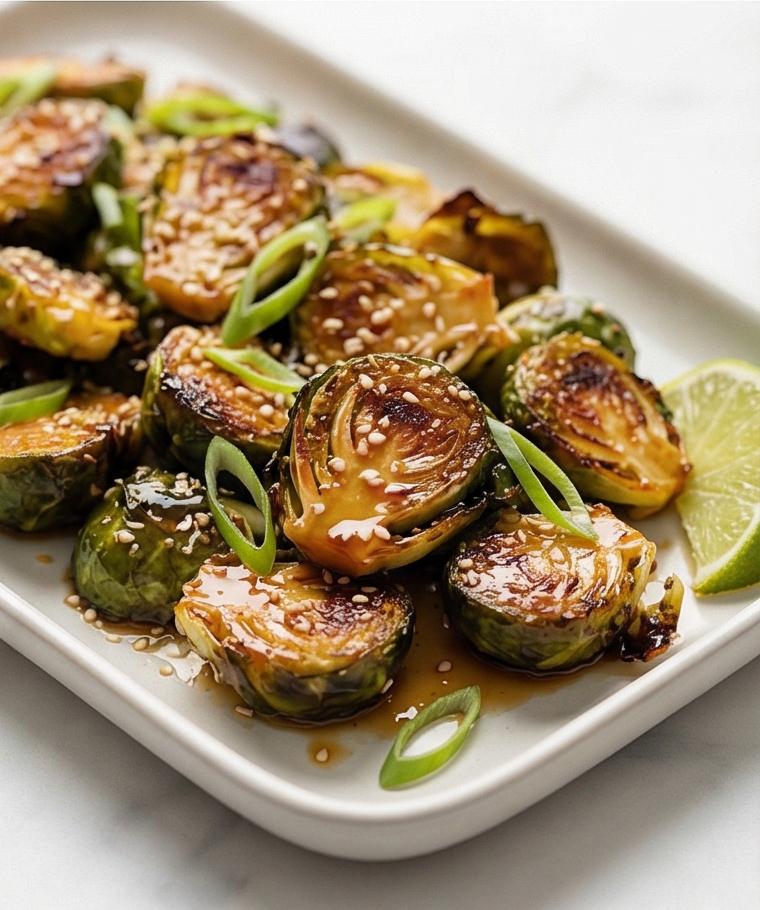
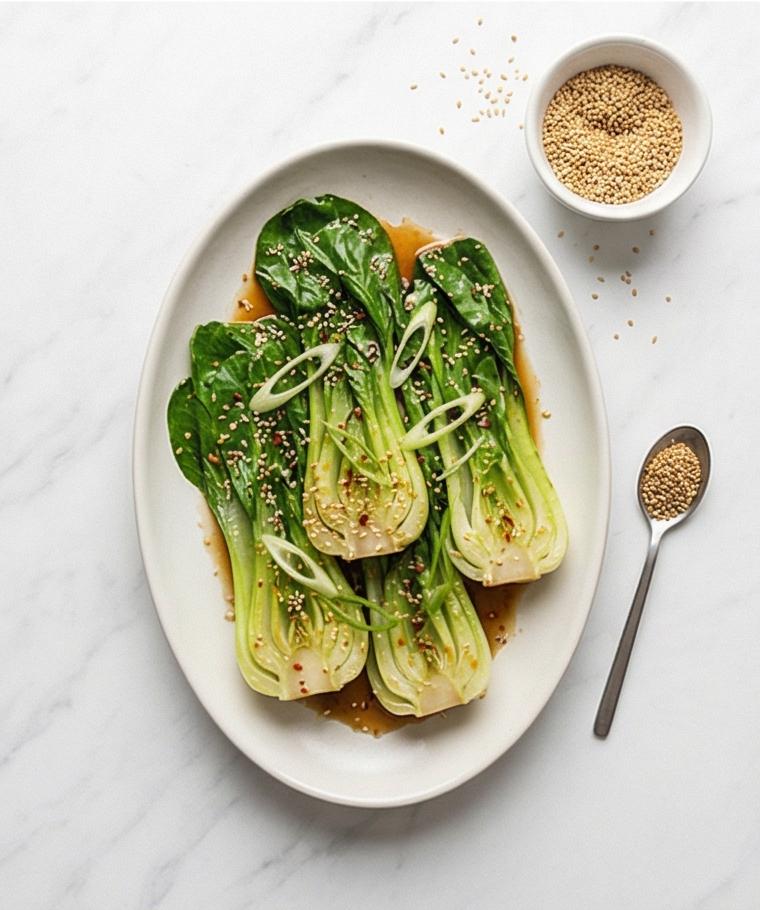
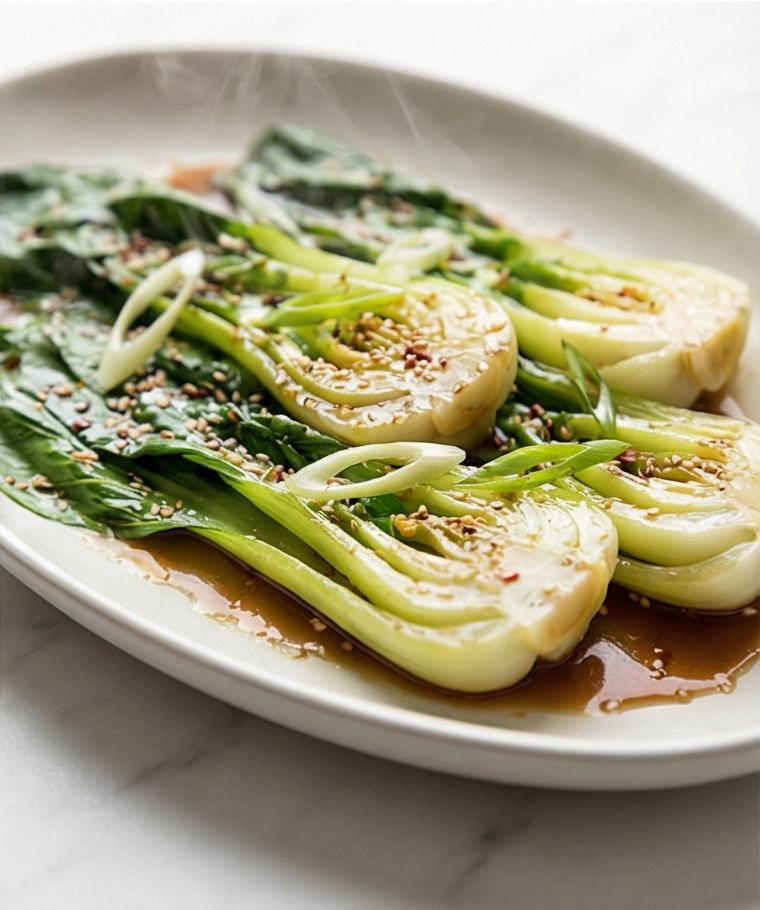
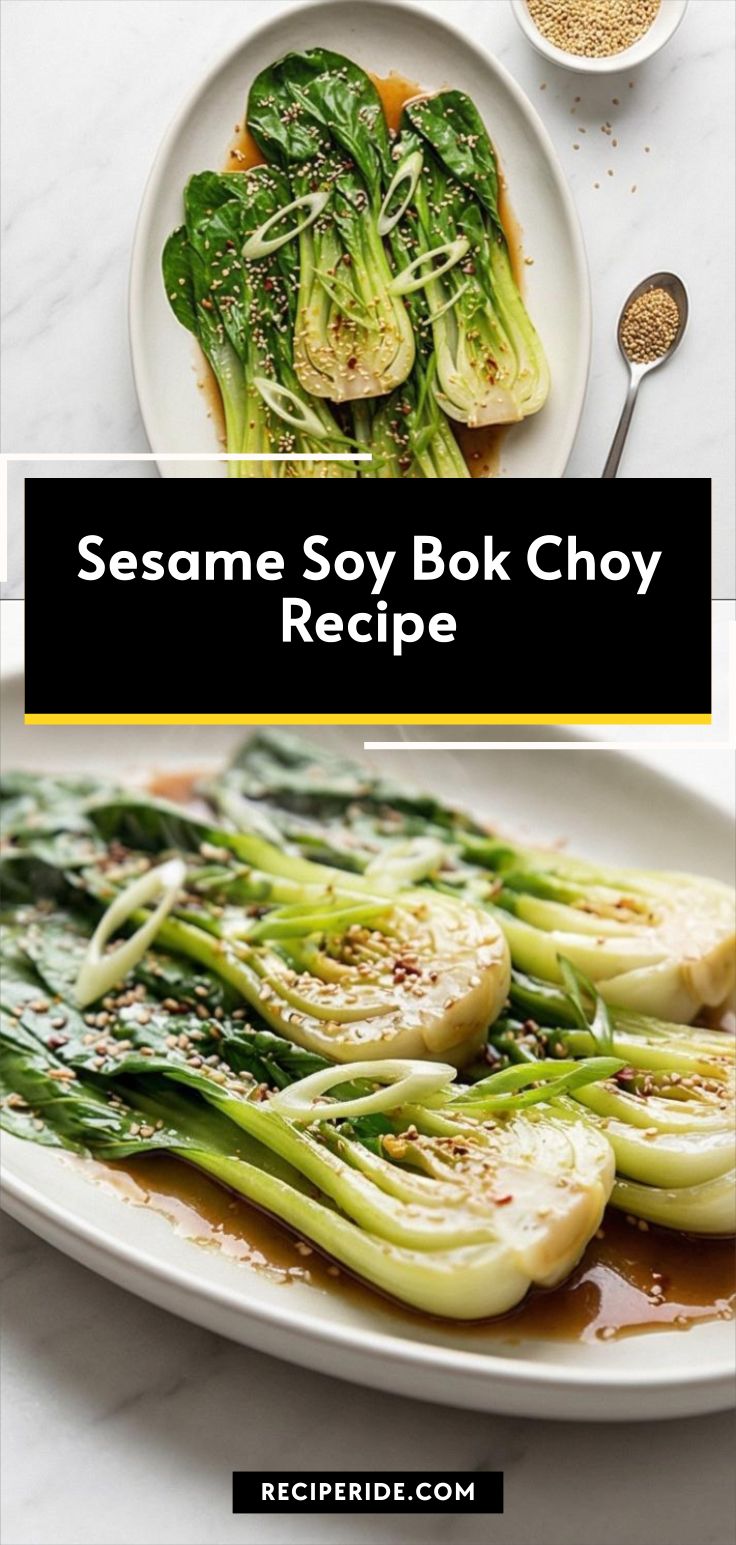
Turn off the heat and show the finished tossed bok choy transferred to a shallow serving vessel: stems crisp-tender, leaves wilted but vibrant, each piece kissed with a thin sheen of reduced soy glaze, finished with a single ribbon-like drizzle of toasted sesame oil. Scatter toasted sesame seeds, thinly sliced scallion bias cuts, and a faint dusting of red pepper flakes for contrast. A small porcelain bowl of extra sesame seeds and a slender spoon rest beside the platter — tidy, fragrant, and ready to serve immediately.
Making It Your Own
I like to treat this Sesame Soy Bok Choy Recipe as a template. For a vegan variation, swap oyster sauce for a mushroom-based stir-fry sauce and finish with a sprinkle of crushed toasted nori for oceanic umami. In colder months I add a handful of roasted chestnuts or sliced shiitake for earthiness. If I want more heat, I increase the red pepper flakes or add a drizzle of chili oil at the end. For a lighter touch, omit the sugar and use a splash more rice vinegar. Small tweaks like extra sesame seeds or a squeeze of lime change the mood of the dish without losing its quick, vibrant character.
How to Serve
When I serve this as part of a dinner party, I present the Sesame Soy Bok Choy Recipe on a shallow platter so guests can help themselves. Pair it with steamed jasmine rice or garlic noodles and a protein like miso-glazed salmon or simply pan-seared tofu. To scale up for more guests, double the bok choy and do the blanching in batches, then sear and sauce in a large skillet or wok. For an intimate meal, a single pound serves two to three as a side; for larger crowds, treat it as one of several vegetable sides and you will be fine.
Storage and Reheating Tips
Leftover bok choy keeps best in an airtight container in the fridge for up to 2 days. The stems may soften a bit, so store the sauce separately if you plan ahead; that preserves the texture better.
To reheat, warm a skillet over medium heat and gently toss the bok choy until just heated through, adding a splash of water or a tiny drizzle of neutral oil to refresh the texture. Avoid microwaving long enough to make the leaves soggy.
Whoops and How to Fix It
Too much salt or an overly reduced glaze is an easy mistake. If the sauce tastes too salty, add a squeeze of rice vinegar or a few drops of water to balance it. If the glaze becomes too thick, quickly stir in a tablespoon of water to loosen it.
Overcooking the greens will make them limp and dull. Cook quickly, blanch briefly, and sear just to warm and add color. A sharp knife and attention to timing are your best friends.
Final Thoughts
Give this Sesame Soy Bok Choy Recipe a try tonight. It is fast, forgiving, and bright. Once you try the combination of quick blanching, high-heat searing, and that glossy sesame-soy finish, it will likely become a weekly staple.
Frequently Asked Questions.
-
What is the best way to pick baby bok choy?
Choose heads with crisp, white stems and bright green leaves without brown spots. Avoid limp or slimy bunches. -
Can I make this Sesame Soy Bok Choy Recipe vegan?
Yes. Replace oyster sauce with a mushroom-based stir-fry sauce or more soy sauce and a pinch of sugar for depth. -
Should I use toasted sesame oil for cooking?
Use a neutral oil for searing and add toasted sesame oil at the end for aroma, not for high-heat cooking. -
Can I prepare this ahead of time?
You can blanch and store the bok choy and make the sauce ahead, then finish by searing and combining just before serving. -
How do I keep the bok choy from getting soggy?
Blanch briefly, drain well, and sear cut-side down on high heat so the stems get a quick caramelized edge while leaves stay vibrant.
Sesame Soy Bok Choy Recipe
Make Sesame Soy Bok Choy Recipe: quick-blanched bok choy finished with a glossy sesame soy glaze for a fast, flavorful side.
Ingredients
Instructions
Step 1: Make the Sesame-Soy Sauce
Combine the soy, oyster sauce, rice vinegar, sugar, and water in a small matte grey ceramic bowl and whisk until the sugar is fully dissolved and the mixture reads as a smooth, glossy dark-brown dressing. Keep the bowl nearby with a tiny whisk resting on the rim and a clear glass jar of soy and a small porcelain ramekin of sesame seeds grouped neatly — everything contained in vessels so liquids never touch the marble surface. Set the sauce aside; it should look silky, slightly viscous, and homogenous, ready to hit hot bok choy.
Step 2: Trim, Halve, and Blanch the Bok Choy
Trim the stem ends, halve or quarter the baby bok choy, and rinse thoroughly so each leaf appears pristine and bead-sprinkled. Briefly blanching produces vivid, translucent emerald-green leaves and crisp-tender white stems; display the drained bok choy in a stainless-steel colander on the marble with water droplets beading on the leaves, tongs resting nearby and a folded linen towel used for light patting. This panel celebrates the vegetal transformation — color intensified, structure intact, grit removed.
Step 3: Aromatics, Sear, and Glaze
Show the result of aromatics sizzling into oil: a shallow puddle of shimmering neutral oil flecked with tiny golden garlic and ginger bits, and the bok choy arranged cut-side down so the pale stems reveal light, toasted golden sear spots. The sauce has been poured around the vegetables and is bubbling into a glossy coating; toss marks and a slight reduced syrupy edge are visible. Keep the same tongs nearby and the matte grey bowl with residual sauce traces to the side — this frame documents the exchange from raw crispness to glossy, slightly caramelized vegetal pieces.
Step 4: Finish, Toss, and Garnish for Serving
Turn off the heat and show the finished tossed bok choy transferred to a shallow serving vessel: stems crisp-tender, leaves wilted but vibrant, each piece kissed with a thin sheen of reduced soy glaze, finished with a single ribbon-like drizzle of toasted sesame oil. Scatter toasted sesame seeds, thinly sliced scallion bias cuts, and a faint dusting of red pepper flakes for contrast. A small porcelain bowl of extra sesame seeds and a slender spoon rest beside the platter — tidy, fragrant, and ready to serve immediately.
Notes
- Blanch bok choy briefly to preserve color and crispness.
- Make the sauce ahead and finish the dish just before serving for best texture.
- Use low-sodium soy sauce to better control saltiness.
- Swap oyster sauce for a mushroom-based alternative to make the dish vegan.
- Finish with toasted sesame oil and seeds for aroma and crunch.