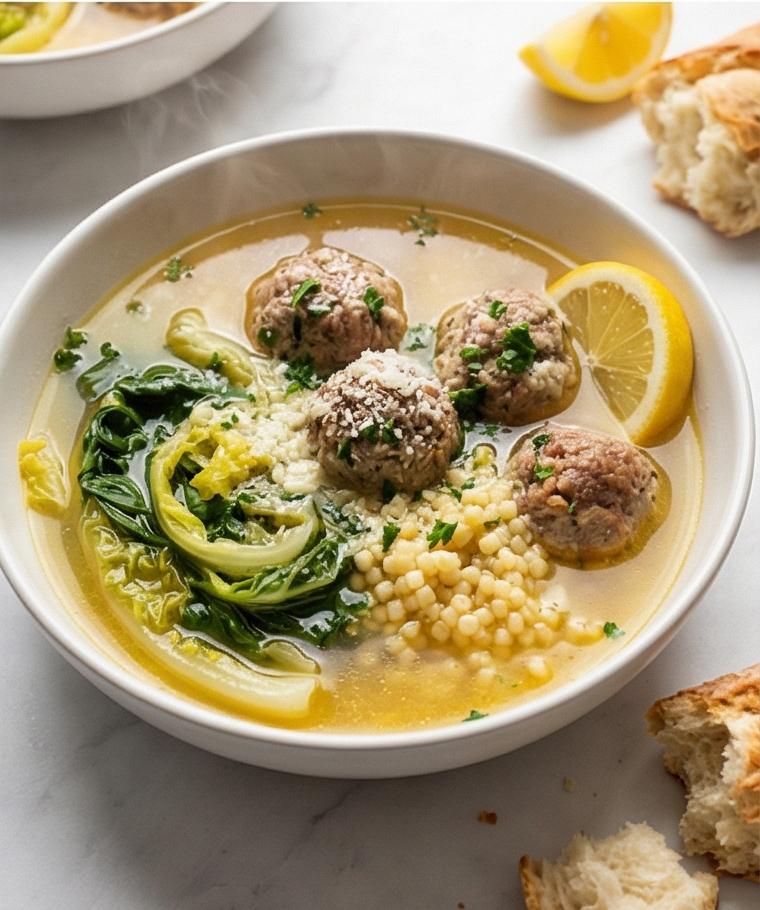
I still remember the first time I made the Detox Vegetable Soup Recipe on an overcast Sunday when I needed something light but deeply comforting. The aroma of turmeric, ginger and garlic filled my kitchen and made the whole apartment feel like a small, warm remedy. It is a simple recipe that reads like a pantry-friendly poem, and I turn to the Detox Vegetable Soup Recipe whenever I want to reset without sacrificing flavor. If you love bright citrus finishes and crisp greens, this soup will feel like a hug in a bowl.
How This Soup Became My Quiet-Weather Favorite
That rainy afternoon, I was restless and wanted food that felt honest and restorative. Chopping the onion and carrots slowed me down, and when the spices hit the hot oil I felt like I was doing something gentle and important. The first spoonful tasted like fresh air and memory: bright lemon, a touch of ginger warmth, and the snug texture of tender broccoli and cabbage. I remember watching the steam fog the window and thinking how this soup could be the antidote to heavy takeout nights. It became my ritual for clearing the mind and the palate, a bowl that invites slow conversation and a cozy blanket.
The Stars of This Detox Vegetable Soup Recipe
- Extra-virgin olive oil: The foundational fat that carries flavor; use light olive oil or avocado oil as substitutes for a slightly different aroma. Choose cold-pressed oils with a fresh smell.
- Yellow onion: Adds sweetness and depth; shallots work if you want a milder finish. Look for firm, dry skins.
- Carrots, celery, fennel/leek: The classic mirepoix plus an aromatic fennel note; parsnip or turnip can substitute. Pick crisp, brightly colored vegetables.
- Garlic and ginger: Provide warmth and bite; powdered garlic is a fallback but fresh is best.
- Turmeric and cumin: Ground spices that brighten and earth the broth; try smoked paprika for a different mood.
- Zucchini, broccoli, cauliflower, cabbage: The bulk and texture; swap seasonal veg like bell pepper or green beans.
- Diced tomatoes and low-sodium vegetable broth: Build body and umami; use canned tomatoes with juices and a good-quality broth.
- Kale, spinach, lemon, parsley: The finishing green notes; use chard or arugula if you like peppery leaves.

Essential Kitchen Tools and Why They Matter
A few simple tools make this soup fast and joyful. A heavy-bottomed pot keeps heat even so nothing scorches, and a good chef’s knife makes prep feel satisfying and safe. An immersion blender lets you gently puree part of the soup without extra dishes, while a ladle and fine mesh strainer help with portioning and finishing touches.
- Heavy-bottomed pot: For even cooking and easy stirring.
- Chef’s knife and cutting board: For quick, clean prep; a sharp knife is safer.
- Immersion blender or countertop blender: To make a partial puree for silkiness.
- Ladle, wooden spoon, measuring cups and spoons: For consistent results.
- Zester/grater: For bright lemon zest that lifts the broth.
If you do not have an immersion blender, use a regular blender in small batches, or skip the partial puree and enjoy a brothy, chunky texture.
Step-by-Step Preparation Guide
Step 1: Chop and Prep the Vegetables
Begin by preparing everything with calm precision: finely dice the yellow onion until almost translucent in size, peel and small-dice the carrots, small-dice the celery and fennel (or thinly slice and rinse the leek), mince the garlic and peel-and-mince or grate the ginger, small-dice the zucchini, separate broccoli and cauliflower into small bite-size florets, finely shred the green cabbage, remove the thick kale stems and chop the leaves, and loosely chop the baby spinach and flat-leaf parsley. Keep the citrus close at hand and zest the lemon if using. This step is all about clean edges and uniform bite-size pieces so the soup cooks evenly and looks beautiful on the plate.
Step 2: Sauté the Aromatics and Toast the Spices
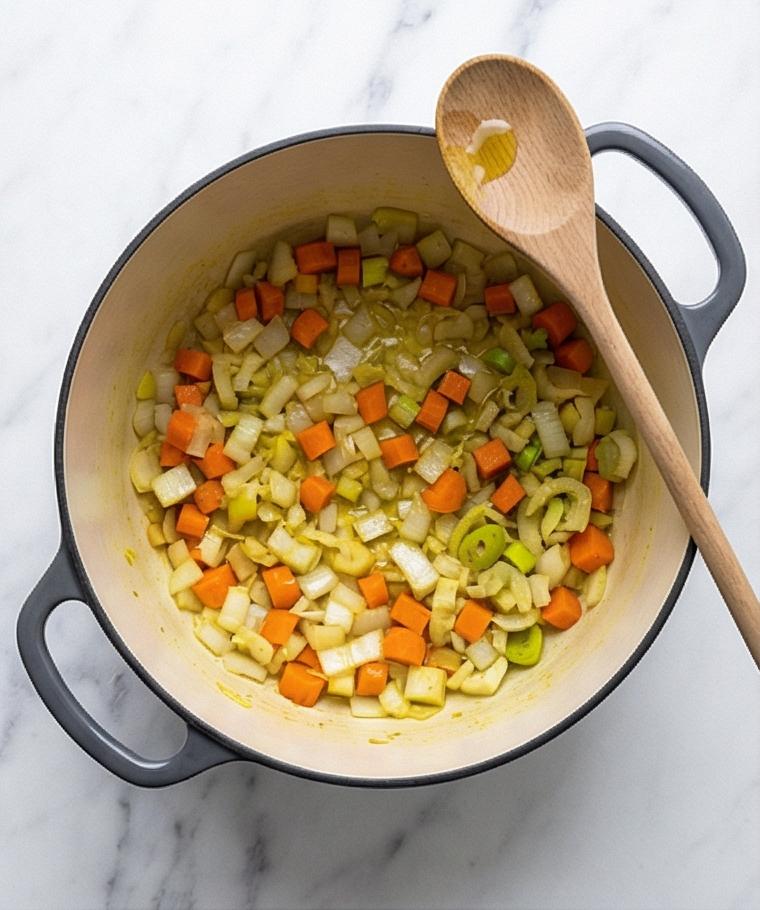
Place a heavy, enameled cooking vessel on the marble (we’re documenting the result, not the burner): warm a tablespoon of extra-virgin olive oil until it shimmers, then add the diced onion, carrots, celery and fennel or leek. Stir so every piece is lightly coated, and cook until the onion is translucent and the vegetables have softened without browning. Add the minced garlic and ginger and cook just until fragrant, then sprinkle in the ground turmeric, cumin and a touch of red pepper flakes — stir continuously so the spices bloom and cling to the softened vegetables, yielding a golden, aromatic base with glossy, slightly softened textures.
Step 3: Add the Bulk Vegetables, Tomatoes and Broth
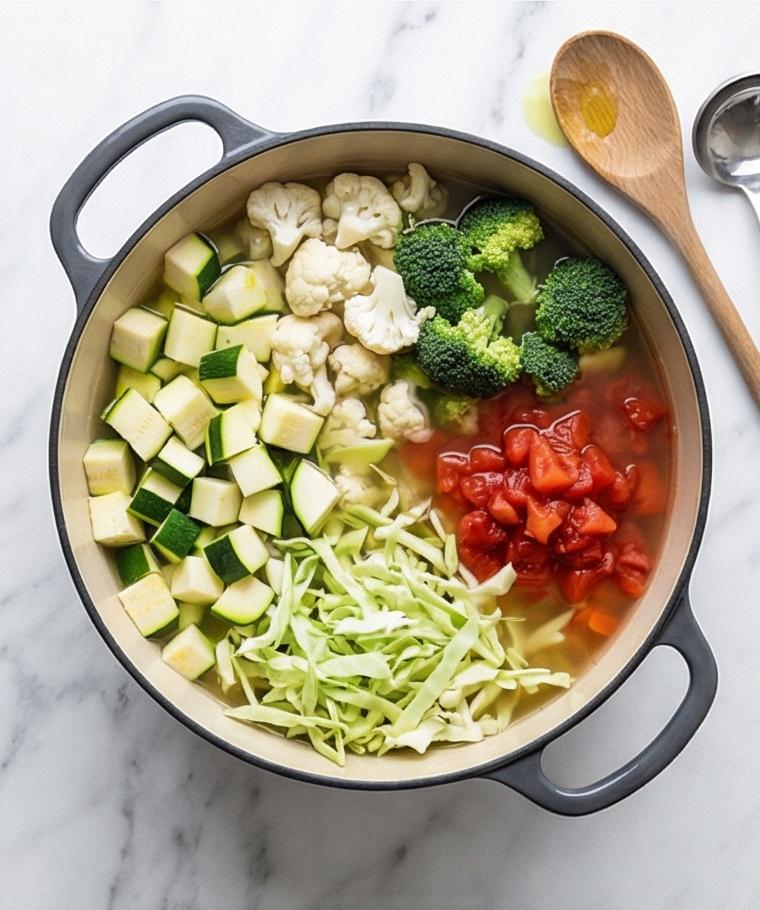
Fold in the small-diced zucchini, broccoli and cauliflower florets and the shredded cabbage; toss briefly so the colors pop and the vegetables look freshly brightened. Pour in the diced tomatoes with their juices and then the low-sodium vegetable broth plus a cup of water; nestle in the bay leaf and season with fine sea salt and freshly ground black pepper. The pot now reads as a layered mosaic of textures — jewel-red tomatoes, pale cauliflower crowns, deep green broccoli bits, and orange-speckled carrot — suspended in clear, glistening broth. Give it a good stir, scraping the bottom so any caramelized bits dissolve into the liquid and enrich the mouthfeel.
Step 4: Bring to a Gentle Simmer and Cook Until Tender
Increase heat just enough to coax the surface into a very gentle, steady bubbling, then immediately lower to maintain a delicate simmer. Cover partially to trap warmth while allowing steam to escape, and let the soup reduce into a cohesive, fragrant broth for about 18–22 minutes — the carrots should be tender through but the broccoli and cauliflower still hold their shape. The broth should look clear yet infused, with vegetable pieces suspended like tiny islands; the texture is soft but not broken. Stir once or twice so pieces remain distinct and the soup keeps a clean, light body.
Step 5: Wilt the Kale and Finish the Greens, Brighten with Lemon
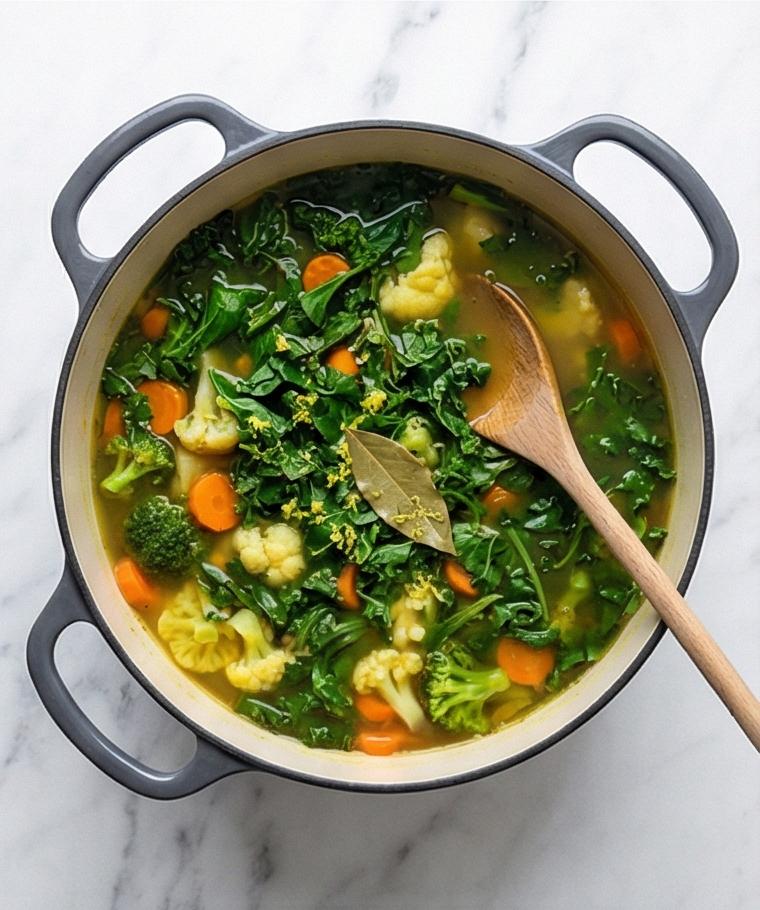
Remove the lid and add the chopped kale, stirring it into the hot liquid so the leaves submerge and quickly tenderize while staying bright green. After a few minutes, add the spinach, freshly squeezed lemon juice and optional lemon zest; the heat should be gentle so the greens merely wilt and retain their vivid color and slight crunch. Turn off the heat, remove the bay leaf, then stir in the chopped fresh parsley and taste — adjust salt, pepper, and lemon to achieve a clean, lively balance with a gentle warmth from ginger and spices. The pot now reads as intensely green-tinted broth flecked with herb, citrus and spice.
Step 6: Optional Partial Puree for a Creamier Mouthfeel
For a slightly thicker, velvety texture while keeping delightful chunks, ladle 1–2 cups of the soup (mostly broth and some vegetables) into a clear blender container and puree until smooth, or briefly pulse an immersion blender for just a few seconds. Return the silken puree to the pot and stir so the soup becomes creamier but still textured — you should see a glossy ribbon where the puree blended in and a contrast between the velvety broth and whole vegetable pieces. Gently warm if needed until steaming but not boiling.
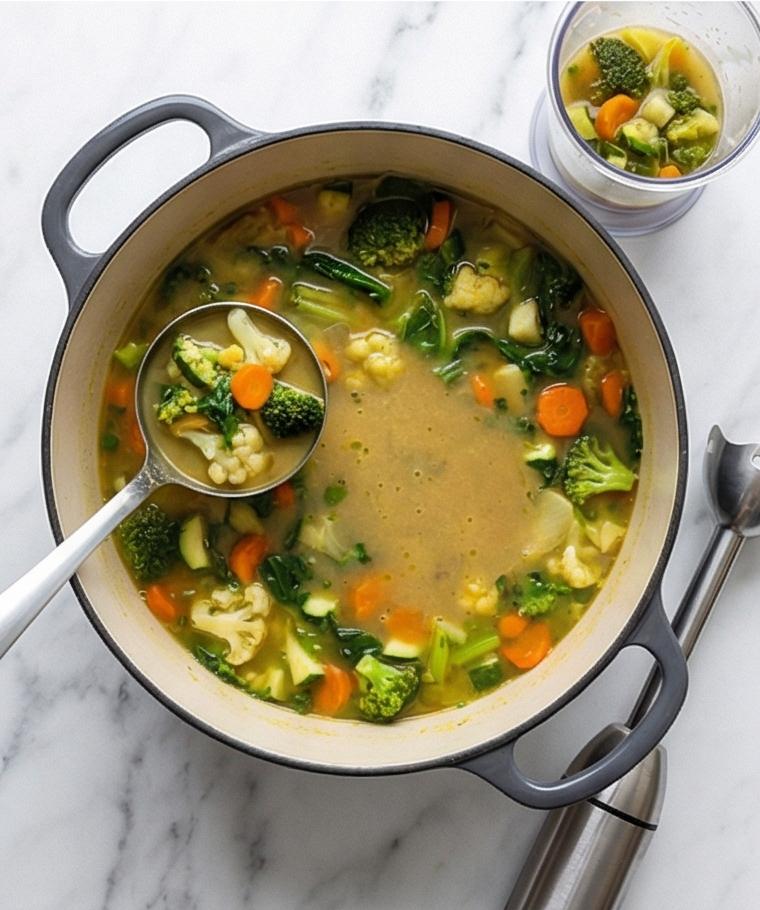
Step 7: Serve, Garnish, and Store
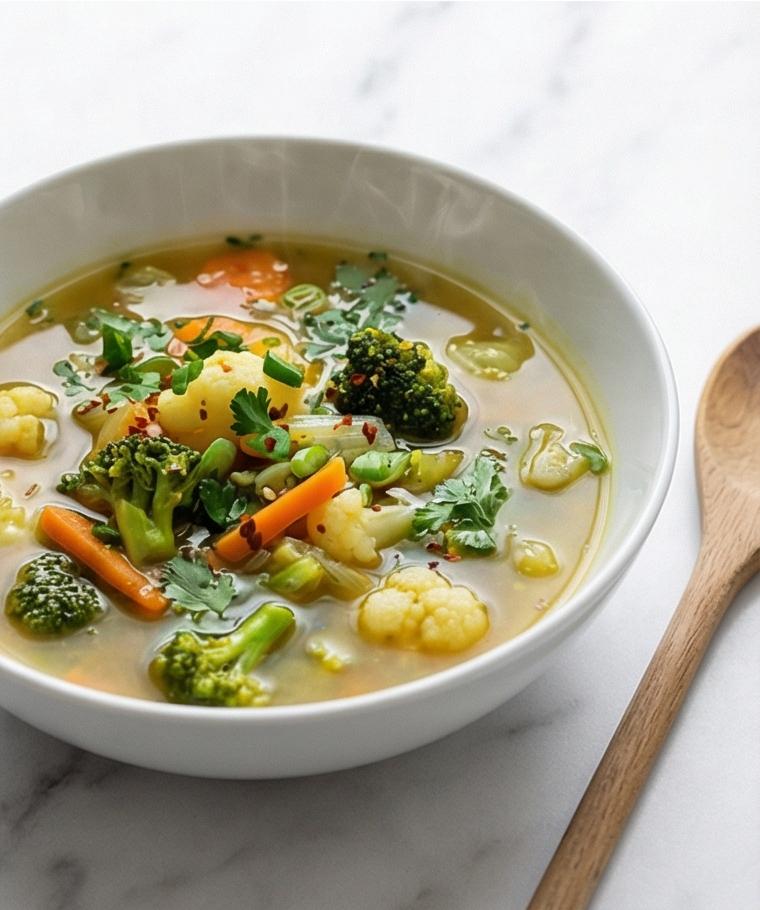
Ladle the hot detox vegetable soup into warmed, shallow soup bowls and finish each with a sprinkle of chopped parsley or cilantro, a few thin green onion slices, a light drizzle of extra-virgin olive oil and an optional pinch of crushed red pepper or freshly ground black pepper. The final bowl should present a balance of glossy broth, tender vegetable morsels and bright green herbs, with a faint sheen of oil and a citrus lift. Serve immediately as a light, cleansing meal or refrigerate for up to four days or freeze for longer storage.
Making It Your Own
I often experiment with regional touches. For a Middle Eastern twist, add a teaspoon of baharat or a pinch of ground coriander and finish with a swirl of plain yogurt. For an Italian slant, stir in a handful of chopped basil at the end and serve with crusty bread.
If you need lower-carb or heartier versions, add cooked lentils or white beans for protein, or swirl in a spoonful of tahini for richness. For a seasonal update, swap zucchini for summer squash or toss in roasted root vegetables in autumn.
Small swaps let you keep the core mechanics of the Detox Vegetable Soup Recipe while making each bowl feel new and personal.
How to Serve
When I host, I ladle the soup into warmed shallow bowls and set a small tray of garnishes so people can customize their own. Offer extra lemon wedges, chopped herbs, thinly sliced green onions, and a drizzle of olive oil. For a light lunch, serve with whole-grain toast or a simple arugula salad dressed in lemon and olive oil.
If you want to stretch this into a main course, add cooked quinoa or canned white beans to bowls before serving. For a multi-course dinner, start with small cups as an amuse-bouche, then bring out a bigger portion with a hearty grain salad.
Portioning is easy: pour 1 to 1 1/2 cups per person for a starter, or 2 cups per person for a main. This keeps the Detox Vegetable Soup Recipe feeling generous and balanced.
Storage and Reheating Tips
Cool the soup quickly by transferring it to shallow containers and refrigerate within two hours. Stored in an airtight container, it will keep well for up to four days in the fridge. Freeze portions in freezer-safe containers for up to three months; leave a little headspace for expansion.
To reheat, thaw overnight in the fridge if frozen, then warm gently on the stove over medium-low heat until steaming but not boiling. If the soup thickens after refrigeration, stir in a splash of water or broth and finish with fresh lemon juice and herbs to revive brightness.
Common Mistakes and How to Avoid Them
Overcooking the vegetables can make the soup mushy and dull; keep the simmer gentle and check textures at the 18-minute mark. Undersalting at the end flattens flavors, so taste and adjust salt and lemon before serving.
Skipping fresh lemon or parsley at the finish is an easy miss; those elements lift the soup and give it life. Treat finishing touches as non-negotiable.
Final Thoughts
Give this Detox Vegetable Soup Recipe a try this week. It is forgiving, wholesome, and easy to make ahead, and it invites small variations that keep it exciting. Spoon it into your favorite bowl, add a few bright garnishes, and enjoy a meal that cleanses the palate and soothes the soul.
Frequently Asked Questions.
- Can I freeze the Detox Vegetable Soup Recipe? Yes, freeze in airtight containers for up to three months. Thaw overnight and reheat gently.
- Is this soup suitable for meal prep? Absolutely, it keeps well for up to four days in the fridge and reheats beautifully with a splash of broth.
- Can I make this soup spicier? Yes, increase the red pepper flakes or add a diced jalapeno when sauteing the aromatics.
- How can I make the soup creamier without dairy? Pulse 1 to 2 cups in a blender and return to the pot, or stir in a spoonful of tahini for richness.
- Is this soup vegan and gluten-free? Yes, using low-sodium vegetable broth keeps it vegan and naturally gluten-free.

Detox Vegetable Soup Recipe
Make Detox Vegetable Soup Recipe for a bright, nourishing bowl of vegetables and citrus. Try it now.
Ingredients
Instructions
Step 1: Chop and Prep the Vegetables
Begin by preparing everything with calm precision: finely dice the yellow onion until almost translucent in size, peel and small-dice the carrots, small-dice the celery and fennel (or thinly slice and rinse the leek), mince the garlic and peel-and-mince or grate the ginger, small-dice the zucchini, separate broccoli and cauliflower into small bite-size florets, finely shred the green cabbage, remove the thick kale stems and chop the leaves, and loosely chop the baby spinach and flat-leaf parsley. Keep the citrus close at hand and zest the lemon if using. This step is all about clean edges and uniform bite-size pieces so the soup cooks evenly and looks beautiful on the plate.
Step 2: Sauté the Aromatics and Toast the Spices
Place a heavy, enameled cooking vessel on the marble (we're documenting the result, not the burner): warm a tablespoon of extra-virgin olive oil until it shimmers, then add the diced onion, carrots, celery and fennel or leek. Stir so every piece is lightly coated, and cook until the onion is translucent and the vegetables have softened without browning. Add the minced garlic and ginger and cook just until fragrant, then sprinkle in the ground turmeric, cumin and a touch of red pepper flakes — stir continuously so the spices bloom and cling to the softened vegetables, yielding a golden, aromatic base with glossy, slightly softened textures.
Step 3: Add the Bulk Vegetables, Tomatoes and Broth
Fold in the small-diced zucchini, broccoli and cauliflower florets and the shredded cabbage; toss briefly so the colors pop and the vegetables look freshly brightened. Pour in the diced tomatoes with their juices and then the low-sodium vegetable broth plus a cup of water; nestle in the bay leaf and season with fine sea salt and freshly ground black pepper. The pot now reads as a layered mosaic of textures — jewel-red tomatoes, pale cauliflower crowns, deep green broccoli bits, and orange-speckled carrot — suspended in clear, glistening broth. Give it a good stir, scraping the bottom so any caramelized bits dissolve into the liquid and enrich the mouthfeel.
Step 4: Bring to a Gentle Simmer and Cook Until Tender
Increase heat just enough to coax the surface into a very gentle, steady bubbling, then immediately lower to maintain a delicate simmer. Cover partially to trap warmth while allowing steam to escape, and let the soup reduce into a cohesive, fragrant broth for about 18–22 minutes — the carrots should be tender through but the broccoli and cauliflower still hold their shape. The broth should look clear yet infused, with vegetable pieces suspended like tiny islands; the texture is soft but not broken. Stir once or twice so pieces remain distinct and the soup keeps a clean, light body.
Step 5: Wilt the Kale and Finish the Greens, Brighten with Lemon
Remove the lid and add the chopped kale, stirring it into the hot liquid so the leaves submerge and quickly tenderize while staying bright green. After a few minutes, add the spinach, freshly squeezed lemon juice and optional lemon zest; the heat should be gentle so the greens merely wilt and retain their vivid color and slight crunch. Turn off the heat, remove the bay leaf, then stir in the chopped fresh parsley and taste — adjust salt, pepper, and lemon to achieve a clean, lively balance with a gentle warmth from ginger and spices. The pot now reads as intensely green-tinted broth flecked with herb, citrus and spice.
Step 6: Optional Partial Puree for a Creamier Mouthfeel
For a slightly thicker, velvety texture while keeping delightful chunks, ladle 1–2 cups of the soup (mostly broth and some vegetables) into a clear blender container and puree until smooth, or briefly pulse an immersion blender for just a few seconds. Return the silken puree to the pot and stir so the soup becomes creamier but still textured — you should see a glossy ribbon where the puree blended in and a contrast between the velvety broth and whole vegetable pieces. Gently warm if needed until steaming but not boiling.
Step 7: Serve, Garnish, and Store
Ladle the hot detox vegetable soup into warmed, shallow soup bowls and finish each with a sprinkle of chopped parsley or cilantro, a few thin green onion slices, a light drizzle of extra-virgin olive oil and an optional pinch of crushed red pepper or freshly ground black pepper. The final bowl should present a balance of glossy broth, tender vegetable morsels and bright green herbs, with a faint sheen of oil and a citrus lift. Serve immediately as a light, cleansing meal or refrigerate for up to four days or freeze for longer storage.
Notes
- Use fresh ginger and garlic for the best flavor.
- Taste and adjust salt and lemon at the end to brighten the soup.
- Freeze in single-serving portions for easy lunches.
- If you do not have an immersion blender, use a regular blender in small batches.
- Replace kale with chard or Swiss chard for a milder green.