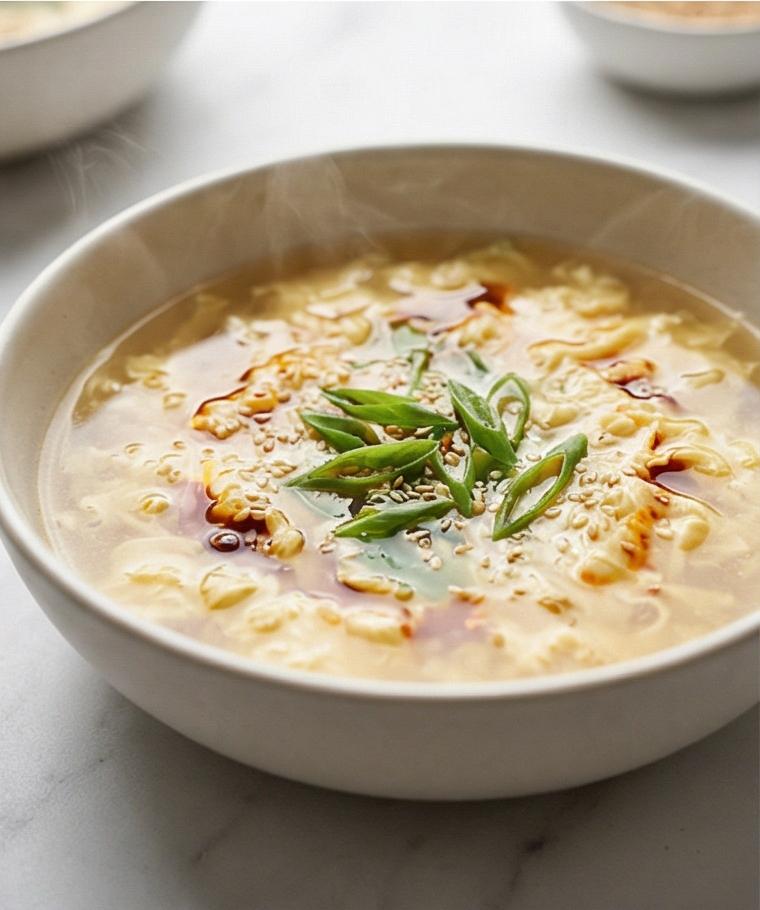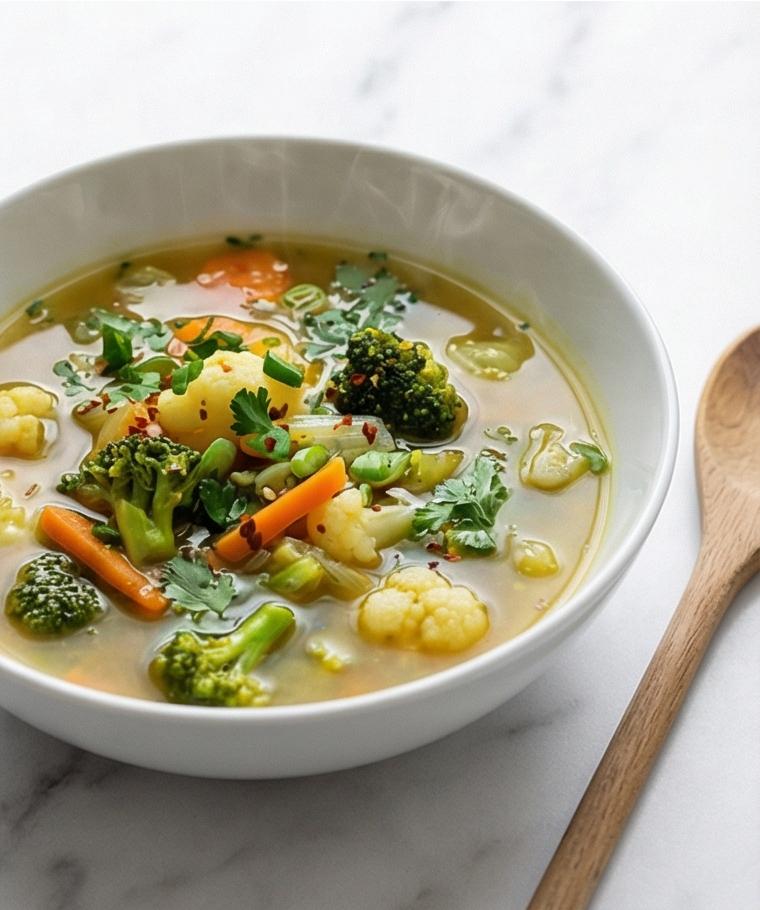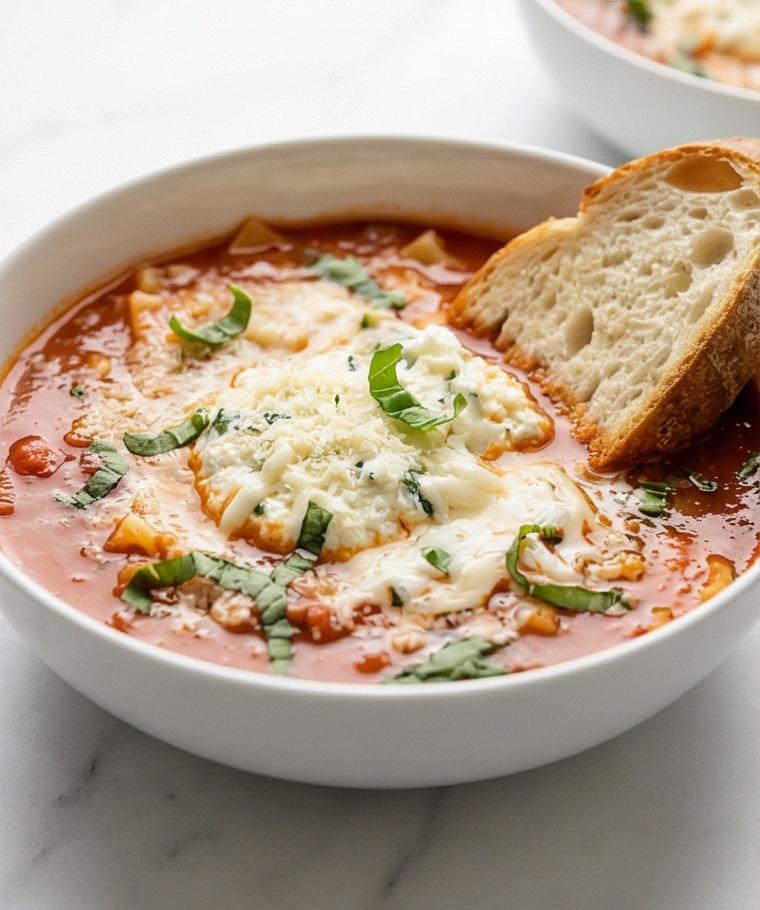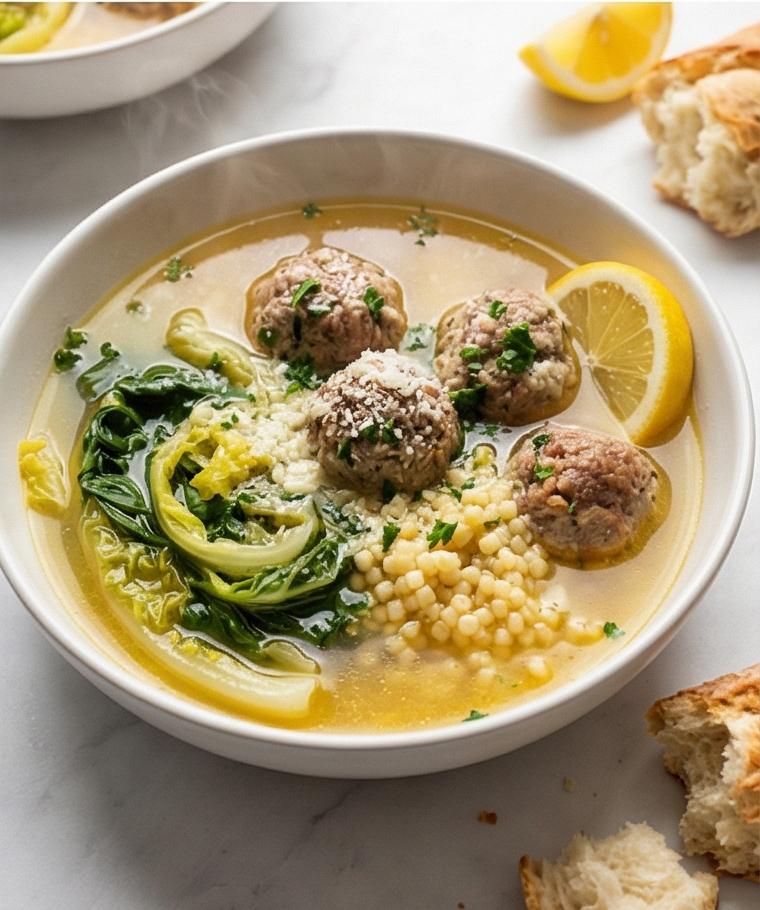
I fell for this Chicken Gnocchi Soup Recipe the first time I made it on a rain-soaked Sunday when the house smelled like browned butter and garlic. I was looking for something cozy and a little luxurious, and the pillowy gnocchi in a creamy broth delivered exactly that. Since then, this Chicken Gnocchi Soup Recipe has become my go-to for easy dinner parties and quiet weeknight comforts. It blends simple pantry ingredients into something that feels like a warm, generous hug.
How This Recipe Became My Rainy-Day Favorite
I remember opening the pot and that first puff of steam carrying a mix of thyme, rosemary, and simmered chicken that felt like a memory. The kitchen was humid from the storm outside and my fingers were still damp from washing the chopped carrots and celery. As I spooned a bowl, the gnocchi were tender and slightly chewy while the broth had a silky body from the cream and Parmesan. I felt proud and oddly comforted, like I had recreated a small, warm moment from childhood. That evening, everyone lingered at the table and the storm faded into the background; the soup stayed, steady and reassuring.
Why These Ingredients Matter
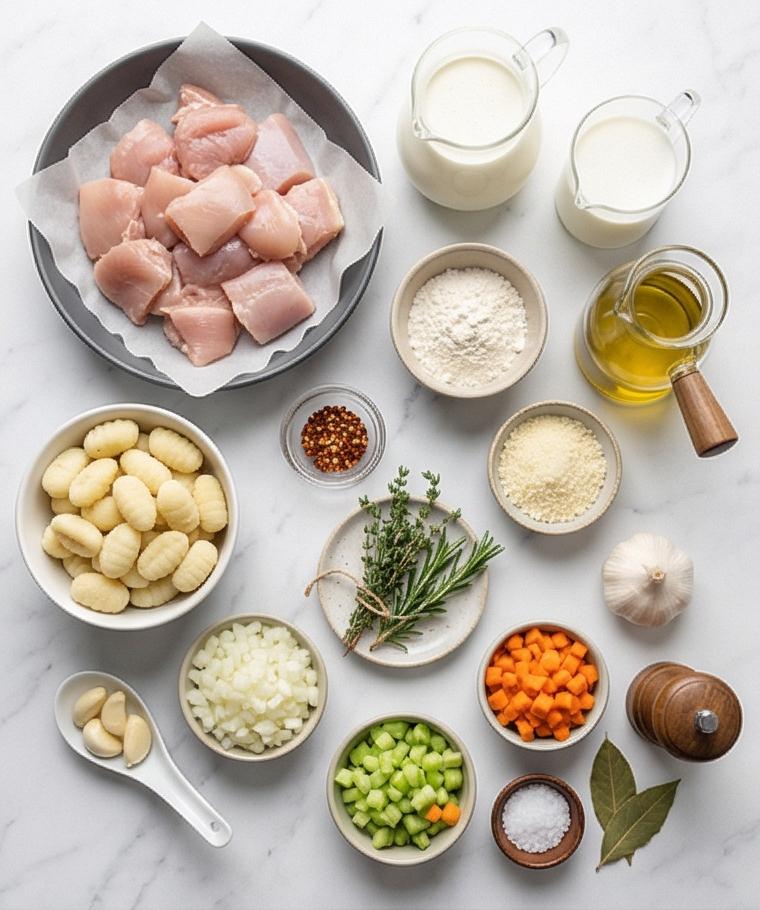
- Chicken: The main protein that gives the soup heart and structure; use boneless chicken breasts as written or swap half the breasts for thighs for richer flavor. Choose fresh, firm meat.
- Potato Gnocchi: Provides the comforting, pillowy texture; fresh refrigerated works best but quality shelf-stable gnocchi are fine. Avoid tiny gnocchi that overcook quickly.
- Heavy Cream and Whole Milk: Create the silky mouthfeel; you can use half-and-half for a lighter finish but reduce heat to avoid curdling.
- Chicken Broth: The flavorful base; low-sodium lets you control seasoning. Substitute good vegetable broth for a lighter palette.
- Aromatics and Parmesan: Onion, carrot, celery, garlic and Parmesan build savory depth; fresh grating of Parm gives best melting and flavor.
Essential Kitchen Tools
A few thoughtful tools make this Chicken Gnocchi Soup Recipe effortless and more fun to cook. A wide, heavy-bottomed pot helps distribute heat so the chicken browns evenly and the roux cooks consistently. A wooden spoon is gentle on enamel and perfect for stirring the roux without scratching. Use a slotted spoon to lift the seared chicken and a fine grater for fresh Parmesan so it melts evenly. A ladle keeps serving tidy and a small whisk helps deglaze and smooth the broth. If you don’t have a heavy pot, a large Dutch oven or a heavy-bottomed stainless pot works great.
- Heavy-bottomed pot or Dutch oven: Promotes even browning and steady simmering.
- Wooden spoon: For gentle stirring and scraping.
- Slotted spoon: To transfer seared chicken and skim foam.
- Fine grater: Freshly grated Parmesan melts best.
- Whisk and ladle: For deglazing and serving.
Step-by-Step Preparation Guide
Step 1: Bring the dairy to room temperature
Set the heavy cream and whole milk out on the counter for 20–30 minutes so they warm gently to room temperature; this simple pause keeps the dairy velvety when it later meets hot broth. While they rest, keep the cartons or a small glass measuring jug on the marble so they’re at hand and visually tidy.
Step 2: Season and sear the chicken until just golden
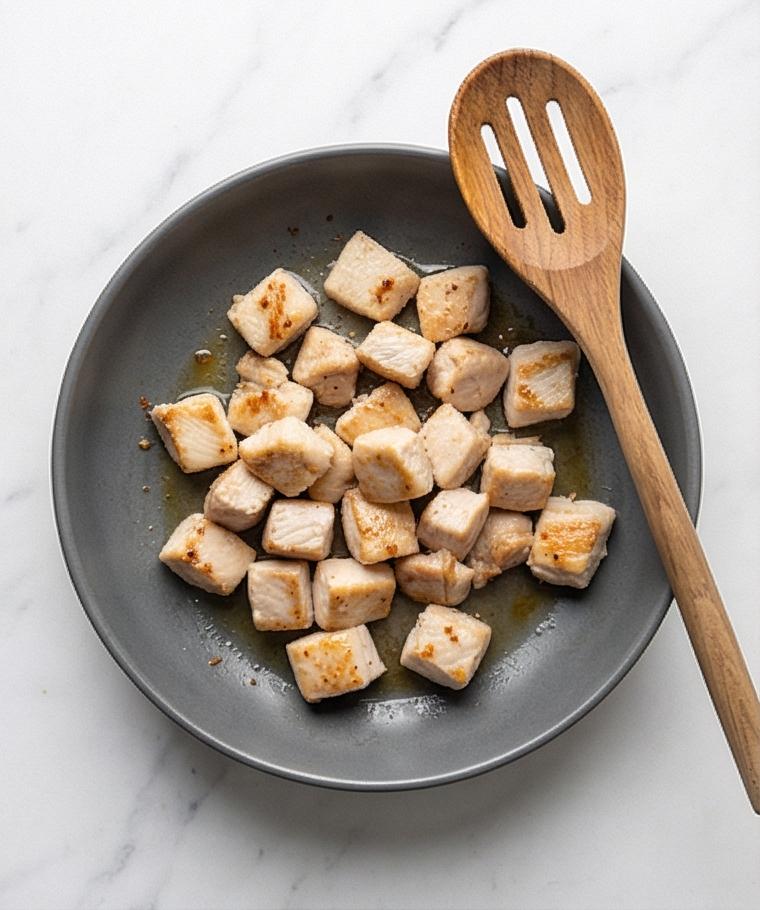
Pat the 1/2-inch chicken pieces dry with paper towels, then toss evenly with 1 teaspoon fine sea salt and 1/2 teaspoon freshly ground black pepper. Heat a wide, heavy-bottomed enamel or ceramic-lined pot on medium-high (preheating step mentally noted), add olive oil, and brown the chicken in an even layer until the edges are lightly golden and the center is just cooked through. Use a slotted spoon to transfer the pieces to a clean matte ceramic bowl, leaving the fond and juices in the pot; this bowl will hold the cooked chicken and any resting juices briefly.
Step 3: Sweat the aromatic vegetables until tender and translucent
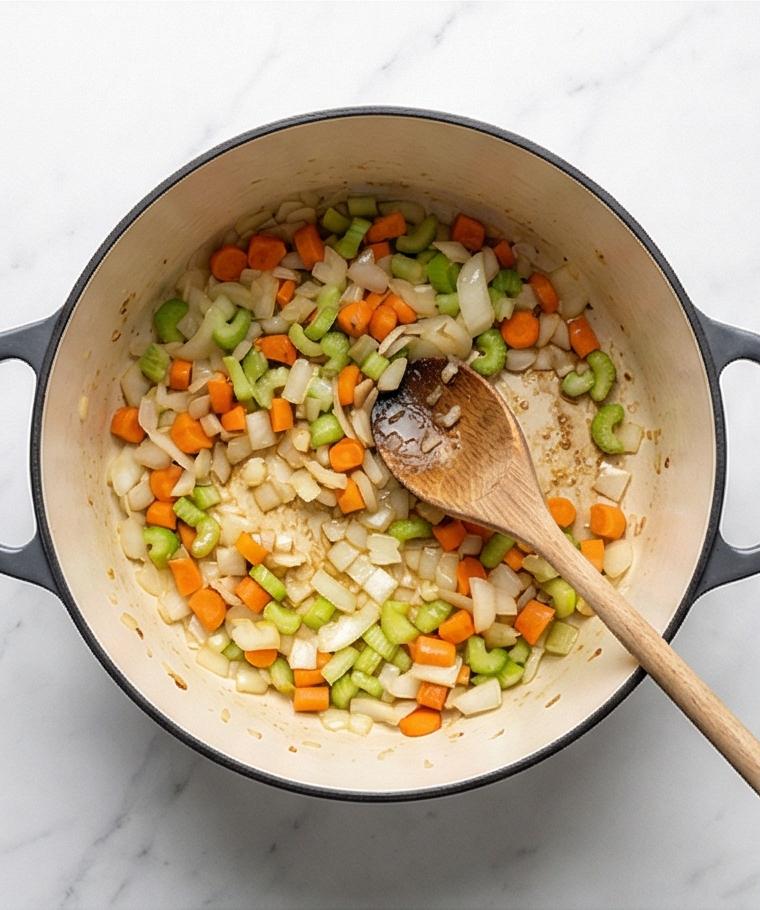
Reduce heat, melt butter in the same pot and scrape up the browned bits, then add finely diced onion, celery, and carrot. Cook over medium heat, stirring frequently, until the vegetables soften and the onion turns translucent without browning—soft, glossy, slightly jammy vegetables that smell sweet and fragrant. Keep a wooden spoon or a small ladle leaning on the pot rim for continuity of tools.
Step 4: Build the roux and infuse with garlic and herbs
Stir in the minced garlic, thyme, rosemary, and a whisper of red pepper flakes until fragrant, then sprinkle the flour evenly over the softened vegetables and stir continuously to form a pale, slightly foamy roux that lightly coats every piece. The texture should read as a thin, nutty paste clinging to softened veg—no deep browning—ready to accept liquid without lumps.
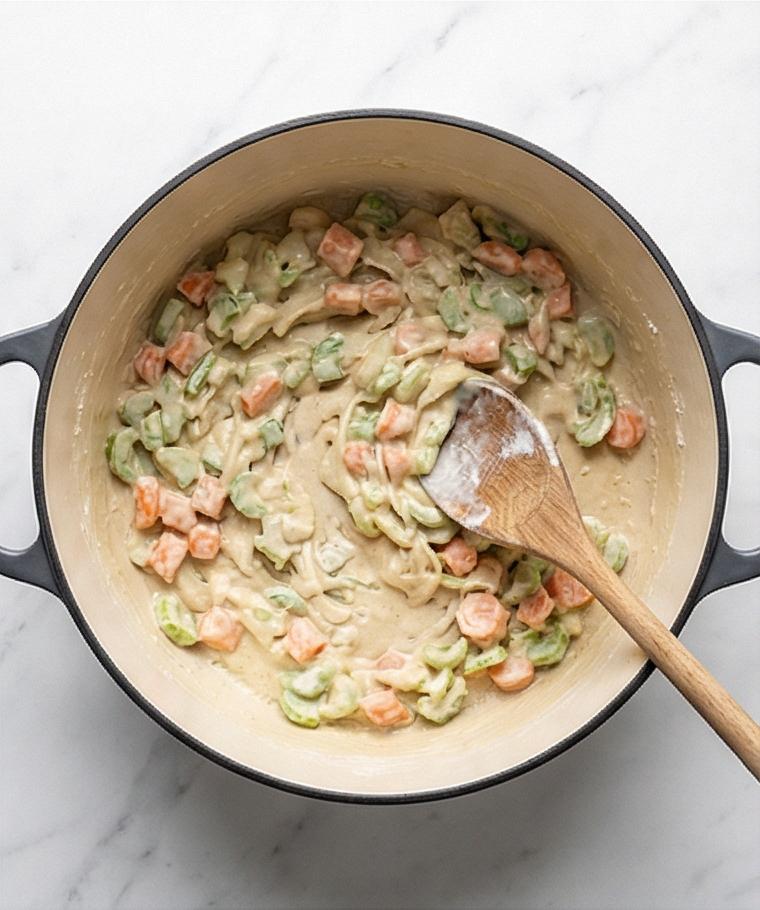
Step 5: Deglaze with broth, return the chicken, and bring to a gentle simmer
Slowly whisk in room-temperature chicken broth, scraping the bottom of the pot to lift all the fond, then add the remaining salt and pepper, a bay leaf, and return the seared chicken and any resting juices to the pot. Increase heat just enough to coax a gentle simmer—tiny bubbles around the edges—and cook uncovered until the broth is slightly thickened and flavors are cohesive, the base now a pale, savory veloutE9 studded with chicken and the bay leaf.
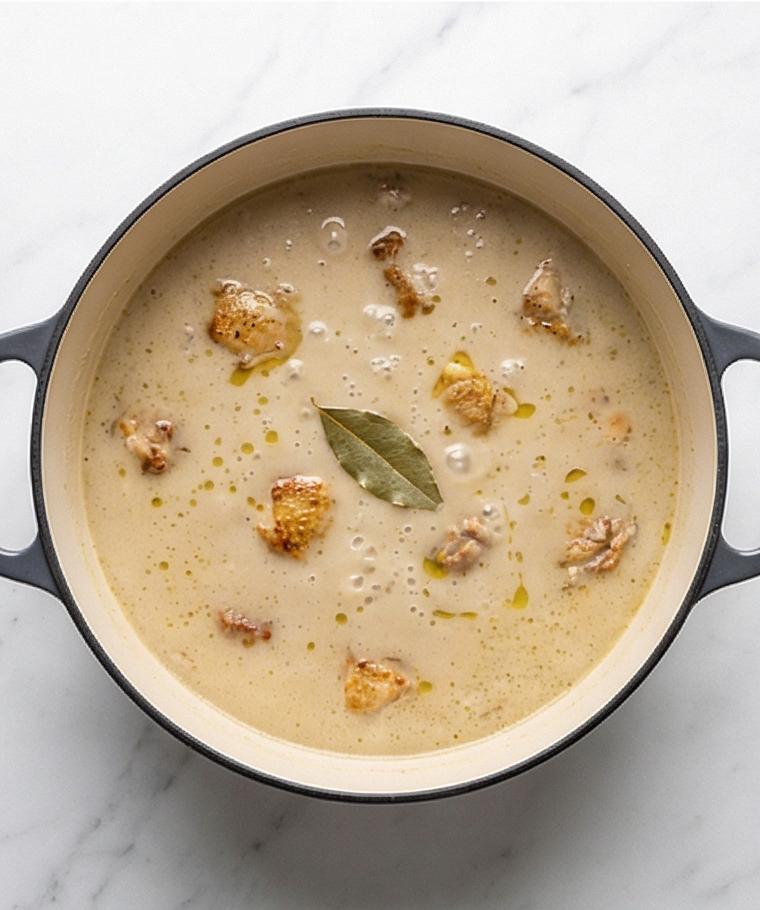
Step 6: Cook the gnocchi and adjust the soup’s spoonable consistency
Add the potato gnocchi to the simmering broth and stir gently so they don’t cling; cook until they float and are tender when bitten. If the soup is too thick, thin with up to 1 cup of water a little at a time until it lightly coats the back of a spoon. Remove the bay leaf, then reduce heat to low so the surface rests mostly still—this is the calm stage before finishing.
Step 7: Finish with cream, milk, spinach, parmesan, and bright herbs; rest before serving
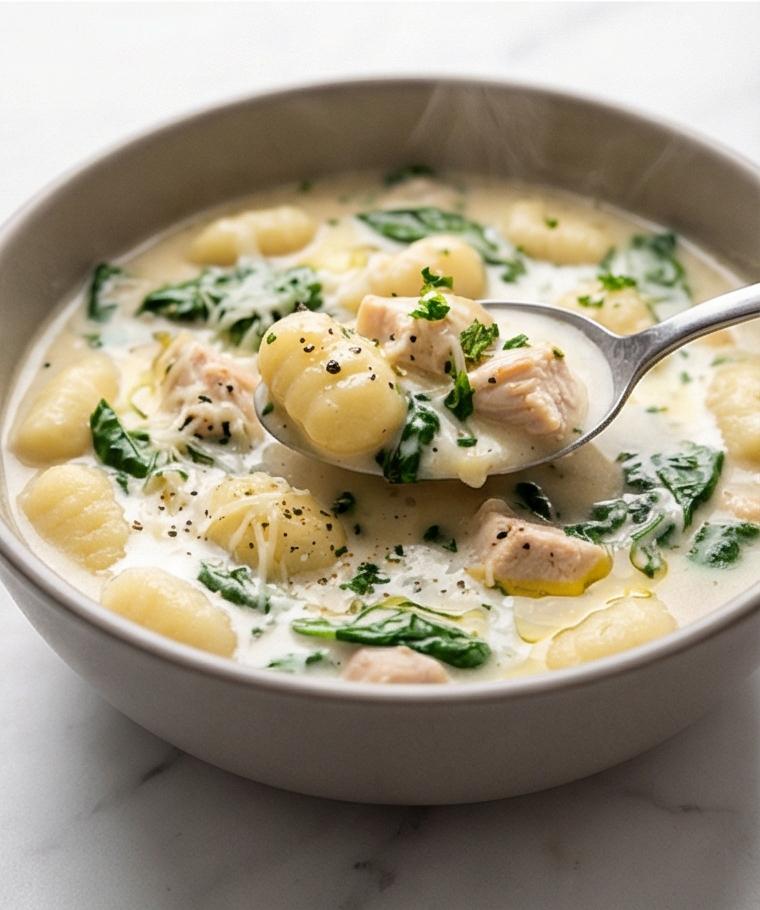
On the lowest heat, slowly stir in the room-temperature heavy cream and whole milk, gently warming the mixture below a simmer so it becomes creamy and steam-kissed without separating. Fold in chopped baby spinach until vivid green and just wilted, then stir in finely grated Parmesan and a tiny pinch of nutmeg if using. Taste and brighten with 1–2 teaspoons of lemon juice, adjust salt and pepper, fold in chopped parsley, then turn off the heat and let the soup rest 3–5 minutes to thicken and harmonize. Ladle into warm bowls, finish with extra grated Parmesan, a few grinds of black pepper and a light drizzle of extra-virgin olive oil when serving.
Making It Your Own
I like to experiment with small swaps when I want a slightly different profile. For a smoky version, try smoked paprika and a charred leek; the soup still feels familiar but gains a gentle warmth. For a lighter weeknight bowl, replace half the cream with plain Greek yogurt whisked in off-heat, and use grilled chicken instead of pan-seared. To make it vegetarian, use a rich mushroom and vegetable broth and add seared king trumpet mushrooms in place of chicken.
Seasonal twists work well too. In late summer, fold in fresh basil instead of parsley. In winter, add roasted squash cubes for extra body and sweetness. Each tiny experiment keeps the Chicken Gnocchi Soup Recipe feeling new.
How to Serve
When I host, I ladle the soup into warmed bowls so the heat lasts through conversation. For a casual dinner, serve family-style with a big bowl of grated Parmesan on the side and a basket of crusty bread for dipping. If you want a more polished presentation, finish each bowl with a small nest of baby spinach, a sprinkle of finely chopped parsley, and a few shavings of Parmesan.
To adjust serving sizes, double the broth and gnocchi if feeding a crowd, and simmer a touch longer to let flavors deepen. For a richer, smaller portion, keep the original quantities and offer a simple green salad alongside. The olive oil drizzle and extra black pepper make the soup look and taste restaurant-ready.
Storage and Reheating Tips
Store cooled soup in airtight containers in the refrigerator for up to 3 days. Because gnocchi absorb liquid over time, store the soup base separately from cooked gnocchi if you know you will reheat it later; this preserves texture.
To reheat, warm the broth gently in a pot until steaming but not boiling, then add chilled cream and milk slowly and finish with fresh grated Parmesan. If the soup has thickened, add a splash of water or broth and stir over low heat until it returns to the right spoonable consistency.
Common Mistakes and How to Avoid Them
Overcooking the gnocchi is easy to do; they should float and be tender with a little bite. Add them near the end and test a piece to make sure they are not soggy. If you rush the cream addition with the heat too high, it can separate. Always temper the dairy and add it on low heat.
Undersalting the broth will leave the soup flat. Use low-sodium broth but taste and finish with salt and lemon juice to brighten. A quick grate of fresh Parmesan at the end adds savor and gloss.
Final Thoughts and an Invitation
If you love warm, creamy comfort with a little culinary polish, give this Chicken Gnocchi Soup Recipe a try; it’s forgiving, crowd-pleasing, and perfect for slow afternoons. Make it your own with the small variations I suggested and then invite someone over to share the first bowl.
Frequently Asked Questions.
- What kind of gnocchi should I use?
Use potato gnocchi, either refrigerated fresh gnocchi or high-quality shelf-stable varieties. Fresh gnocchi will be slightly pillowy and tender.
- Can I make the soup ahead of time?
Yes, you can make the base and refrigerate it for up to 3 days. Keep the cooked gnocchi separate to avoid them getting soggy and add them when reheating.
- Can I use leftover rotisserie chicken?
Absolutely. Shred or chop the rotisserie chicken and fold it in when you return the seared chicken to the pot or add at the end when warming the broth.
- How do I prevent the cream from splitting?
Warm the cream and milk to room temperature and add them over the lowest heat. Don’t boil the soup after adding dairy; just warm gently.
- Is there a dairy-free version?
Yes, substitute canned coconut milk or a creamy plant-based milk and use a vegetable broth base. Add nutritional yeast for a cheesy note.
Chicken Gnocchi Soup Recipe
Make Chicken Gnocchi Soup Recipe for cozy, creamy comfort in under an hour.
Ingredients
Instructions
Step 1: Bring the dairy to room temperature
Set the heavy cream and whole milk out on the counter for 20–30 minutes so they warm gently to room temperature; this simple pause keeps the dairy velvety when it later meets hot broth. While they rest, keep the cartons or a small glass measuring jug on the marble so they’re at hand and visually tidy.
Step 2: Season and sear the chicken until just golden
Pat the 1/2-inch chicken pieces dry with paper towels, then toss evenly with 1 teaspoon fine sea salt and 1/2 teaspoon freshly ground black pepper. Heat a wide, heavy-bottomed enamel or ceramic-lined pot on medium-high (preheating step mentally noted), add olive oil, and brown the chicken in an even layer until the edges are lightly golden and the center is just cooked through. Use a slotted spoon to transfer the pieces to a clean matte ceramic bowl, leaving the fond and juices in the pot; this bowl will hold the cooked chicken and any resting juices briefly.
Step 3: Sweat the aromatic vegetables until tender and translucent
Reduce heat, melt butter in the same pot and scrape up the browned bits, then add finely diced onion, celery, and carrot. Cook over medium heat, stirring frequently, until the vegetables soften and the onion turns translucent without browning—soft, glossy, slightly jammy vegetables that smell sweet and fragrant. Keep a wooden spoon or a small ladle leaning on the pot rim for continuity of tools.
Step 4: Build the roux and infuse with garlic and herbs
Stir in the minced garlic, thyme, rosemary, and a whisper of red pepper flakes until fragrant, then sprinkle the flour evenly over the softened vegetables and stir continuously to form a pale, slightly foamy roux that lightly coats every piece. The texture should read as a thin, nutty paste clinging to softened veg—no deep browning—ready to accept liquid without lumps.
Step 5: Deglaze with broth, return the chicken, and bring to a gentle simmer
Slowly whisk in room-temperature chicken broth, scraping the bottom of the pot to lift all the fond, then add the remaining salt and pepper, a bay leaf, and return the seared chicken and any resting juices to the pot. Increase heat just enough to coax a gentle simmer—tiny bubbles around the edges—and cook uncovered until the broth is slightly thickened and flavors are cohesive, the base now a pale, savory velouté studded with chicken and the bay leaf.
Step 6: Cook the gnocchi and adjust the soup’s spoonable consistency
Add the potato gnocchi to the simmering broth and stir gently so they don’t cling; cook until they float and are tender when bitten. If the soup is too thick, thin with up to 1 cup of water a little at a time until it lightly coats the back of a spoon. Remove the bay leaf, then reduce heat to low so the surface rests mostly still—this is the calm stage before finishing.
Step 7: Finish with cream, milk, spinach, parmesan, and bright herbs; rest before serving
On the lowest heat, slowly stir in the room-temperature heavy cream and whole milk, gently warming the mixture below a simmer so it becomes creamy and steam-kissed without separating. Fold in chopped baby spinach until vivid green and just wilted, then stir in finely grated Parmesan and a tiny pinch of nutmeg if using. Taste and brighten with 1–2 teaspoons of lemon juice, adjust salt and pepper, fold in chopped parsley, then turn off the heat and let the soup rest 3–5 minutes to thicken and harmonize. Ladle into warm bowls, finish with extra grated Parmesan, a few grinds of black pepper and a light drizzle of extra-virgin olive oil when serving.
Notes
- Bring cream and milk to room temperature before adding to the hot soup to prevent curdling.
- Store soup base separately from cooked gnocchi if you plan to refrigerate leftovers to preserve texture.
- Use low-sodium broth and adjust salt at the end with lemon juice and grated Parmesan for best flavor.