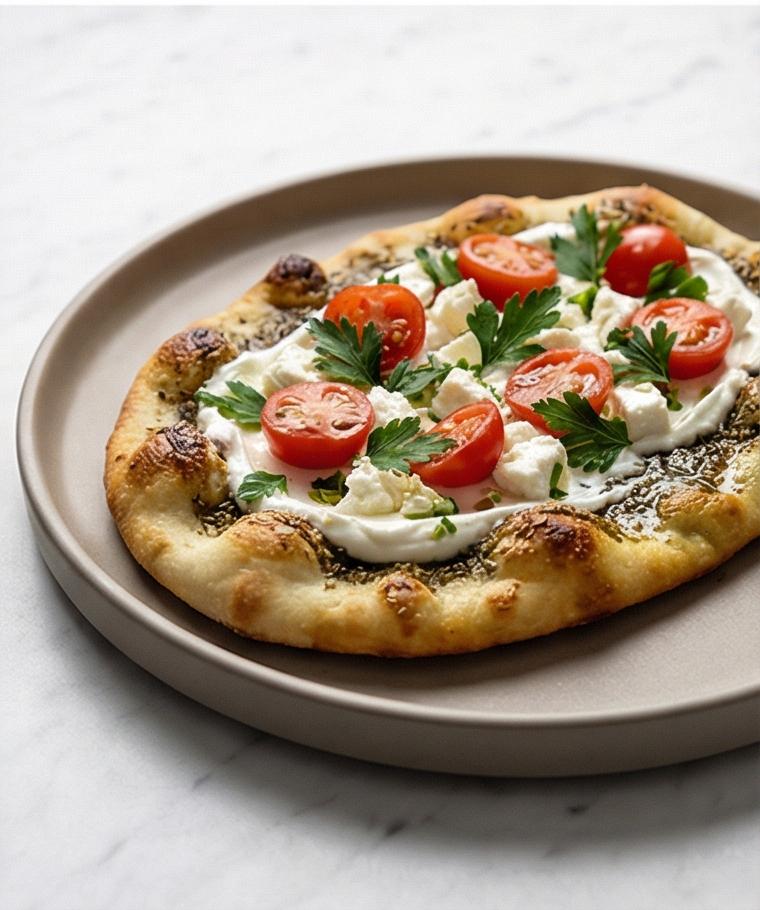
I still remember the first time I pulled a warm loaf of Spinach Feta Swirl Bread Recipe from the oven and watched the green-and-white spiral peek through the crust. Baking this loaf became my shorthand for cozy weekend mornings and impromptu dinner parties. The Spinach Feta Swirl Bread Recipe balances salty feta and tender spinach with a soft, buttery crumb that somehow feels both rustic and elegant. It’s a recipe I keep coming back to because it is forgiving, flavorful, and an excellent vehicle for leftovers or a bright salad on the side.
Where This Loaf Lives in My Kitchen
One rainy afternoon I decided to turn a bag of thawed spinach and a block of feta into something worth inviting friends over for. The kitchen filled with the warm smell of baking bread and the sharp, tangy scent of feta mingled with fresh dill and garlic. I was nervous rolling the dough for the first time, but the act of spreading the filling and discovering that perfect spiral felt like composing a small edible painting. When the loaf cooled and I sliced into that glossy crust, the surprise on my friends’ faces made me promise to bake it again and again. Each slice carried the memory of that evening: steaming cups of tea, a scatter of crumbs on the table, and conversation that lingered long after the plates were cleared.
Primary Ingredients and Why They Matter
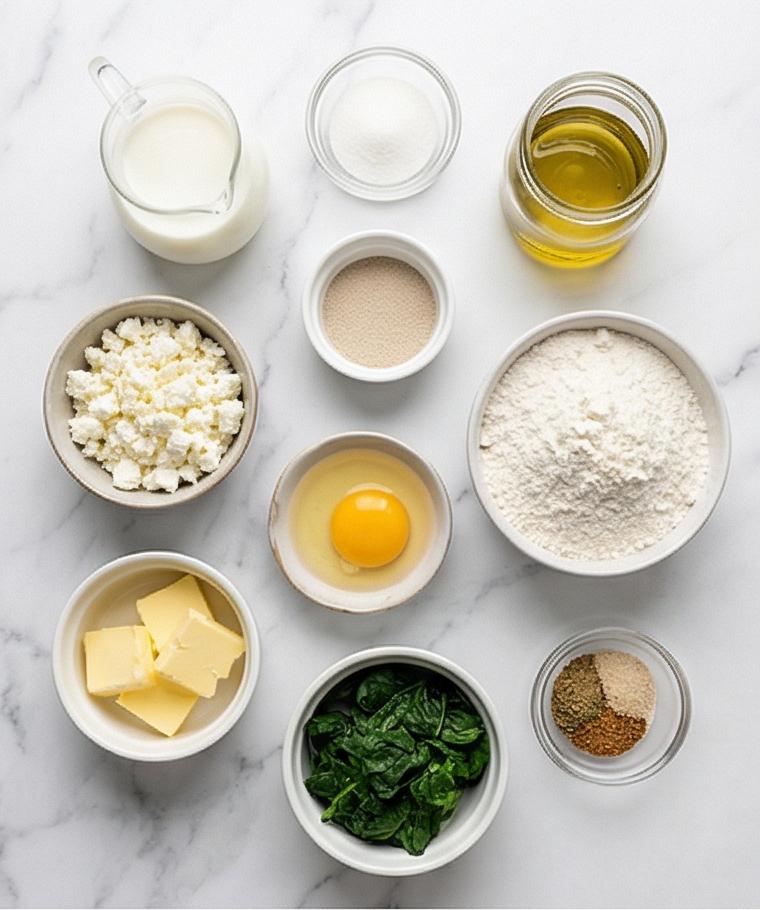
- Whole Milk: Adds richness and helps activate the yeast; use buttermilk for tang or oat milk for dairy free.
- Granulated Sugar: Feeds the yeast and balances flavors; honey works but adjust liquid slightly.
- Instant Yeast: The rising engine; active dry yeast is an easy swap if you proof it first.
- All-Purpose Flour: Structure and crumb; bread flour gives more chew, 00 flour gives a silkier crumb.
- Eggs & Butter: Enrich the dough and add tenderness; swap the butter for olive oil for a lighter crumb.
- Spinach & Feta: The filling duo that defines the loaf; use ricotta for a milder swirl or kale for a heartier leaf.
Essential Kitchen Tools and What to Use Instead
A few reliable tools make this bake smooth and satisfying. A good thermometer helps with milk temperature and final loaf doneness, keeping you confident during the process. A stand mixer with a dough hook speeds kneading, but a simple wooden spoon and your hands create a tactile connection to the dough that many bakers love.
- Instant-read thermometer: Ensures milk and loaf temps are right; guesswork leads to underproofed or overbaked bread.
- Stand mixer or sturdy wooden spoon: Use the mixer for convenience; hand-knead if you enjoy the rhythm.
- 9 x 5-inch loaf pan: Gives shape; you can use a ceramic loaf pan but watch bake time.
- Kitchen towel or plastic wrap: Keeps the dough humid during rises; damp towel is gentler than cling film.
Step-by-Step Preparation Guide.
Step 1: Activate the yeast
Warm the milk to a comfortably warm 105–110°F (40–43°C), then whisk in the sugar and sprinkle the instant yeast on top. Give it a quick stir and let it sit for about 5 minutes until the surface looks slightly foamy and alive – that gentle foam is your green light that the yeast is active and warm. Keep the small clear glass milk jug and a tiny glass bowl of sugar nearby to echo the raw-ingredients layout in the photos.
Step 2: Form a shaggy dough
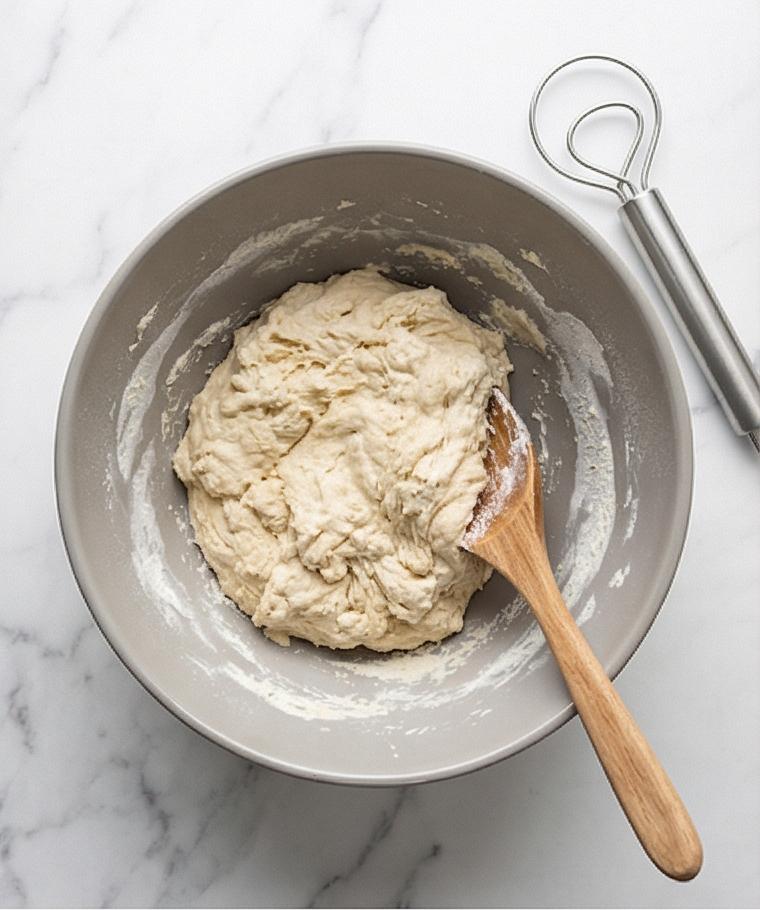
Add the all-purpose flour and fine sea salt to a roomy matte grey ceramic mixing bowl, crack in the room-temperature egg, and scatter the soft butter in small pieces over the flour. Pour the foamy milk-yeast mixture into the bowl and mix with a wooden spoon or dough whisk just until a rough, shaggy dough forms and nearly all the flour is moistened. If it’s overly sticky, dust a tablespoon or two more flour until the dough is soft and slightly tacky but still cohesive.
Step 3: Knead and bulk-ferment
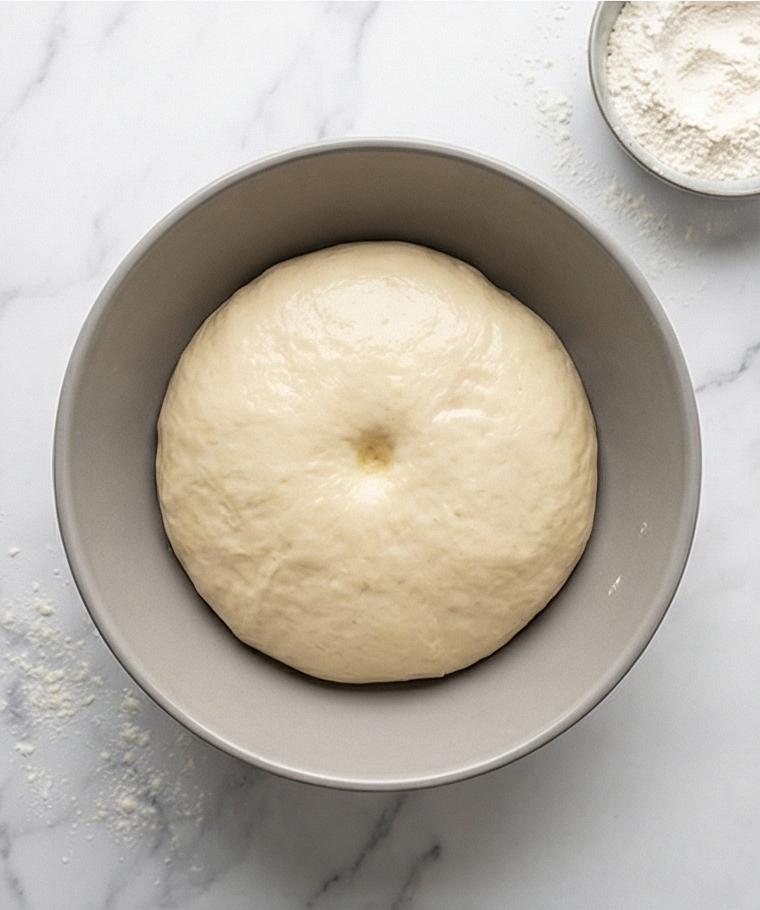
Turn the dough onto a lightly floured work surface and knead by hand for 8–10 minutes (or use a stand mixer with a dough hook for 6–8 minutes) until the dough becomes smooth, elastic, and slightly tacky – you want a faint sheen, resilience, and a passing windowpane if you stretch a bit. Lightly oil a clean bowl with olive oil, shape the dough into a tight ball, place it in the bowl, cover with plastic or a damp towel, and let it rise in a warm spot until it has doubled and gently springs back when pressed.
Step 4: Squeeze and assemble the filling
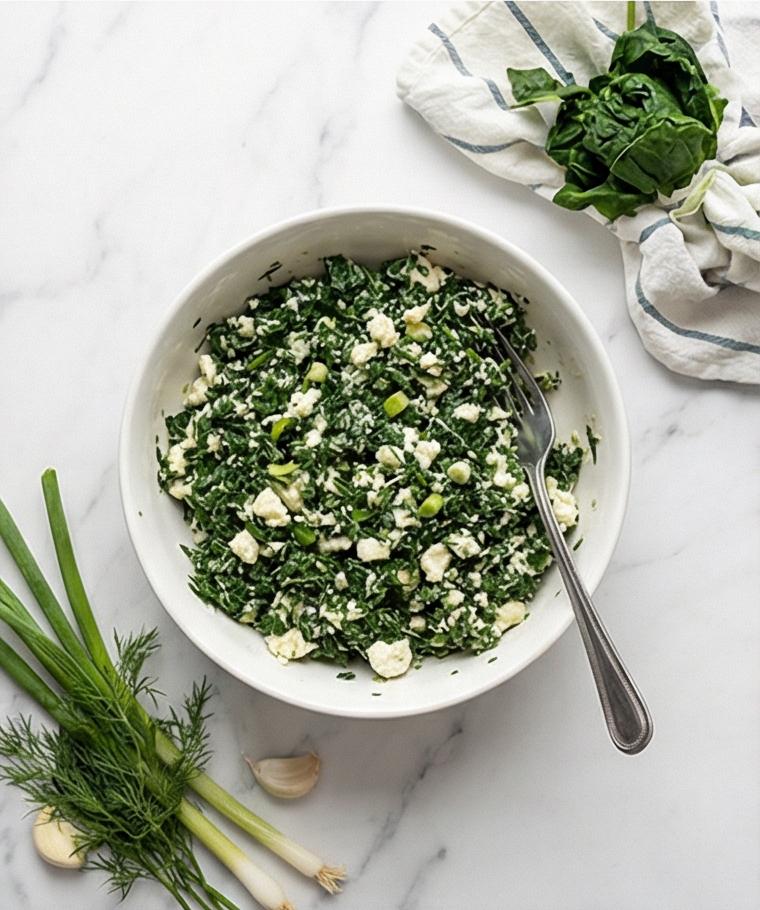
While the dough rises, squeeze every drop of moisture from the thawed chopped spinach using a clean kitchen towel or layers of paper towel – the spinach should feel firm and only slightly cool, not wet or dripping. In a single medium ceramic bowl combine the very well-squeezed spinach with crumbled feta, finely minced garlic, thinly sliced green onions, chopped fresh dill, black pepper, and a whisper of nutmeg if you like. Fork-mix until the mixture is uniformly speckled with white feta and vivid green flecks; taste and only add salt if necessary. Display the drained spinach in the towel and the finished filling in the same ceramic bowl for continuity.
Step 5: Roll, fill, and shape the log
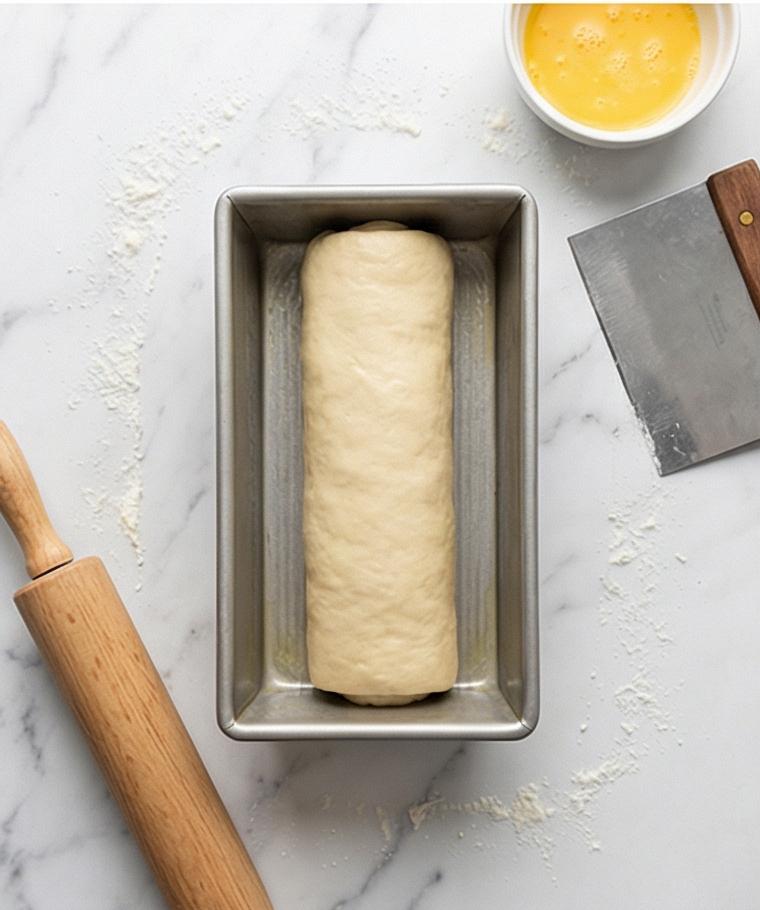
Deflate the risen dough gently on a lightly floured surface and let it rest for 5 minutes to relax the gluten. Roll the dough into a roughly 16 x 12-inch rectangle, keeping it about 1/4 inch thick and dusting flour sparingly to prevent sticking. Evenly spread the spinach-feta filling across the dough, leaving a 3/4-inch border, and lightly press the filling so it adheres. Starting at the long edge closest to you, roll the dough tightly into a firm log and pinch the seam and ends closed so the filling is sealed. Gently place the log seam-side down into a lightly oiled 9 x 5-inch metal loaf pan, shaped to fit from end to end.
Step 6: Final rise and egg wash
Cover the pan loosely and allow the loaf to rise again until it looks puffy and reaches about an inch above the rim – it should spring back slowly when touched. Meanwhile preheat the oven to 350°F (175°C), and whisk together the egg and a tablespoon of milk in a small clear bowl to make a glossy egg wash. When the loaf has finished its second rise, gently brush a thin, even layer of egg wash over the top and sides, sprinkle sesame or nigella seeds if using, and prepare to bake.
Step 7: Bake, cool briefly, and unmold
Bake the loaf in the preheated oven (center rack) until deep golden brown and an instant-read thermometer reads about 190°F (88°C). If the top browns too quickly, tent with foil. Remove the pan and set it on a wire rack to cool for 10–15 minutes so the loaf firms slightly in the pan. Run a thin knife around the edges, then lift or invert the loaf out of the pan and place it right-side up on the wire rack; allow it to cool until the crumb sets.
Step 8: Slice and serve
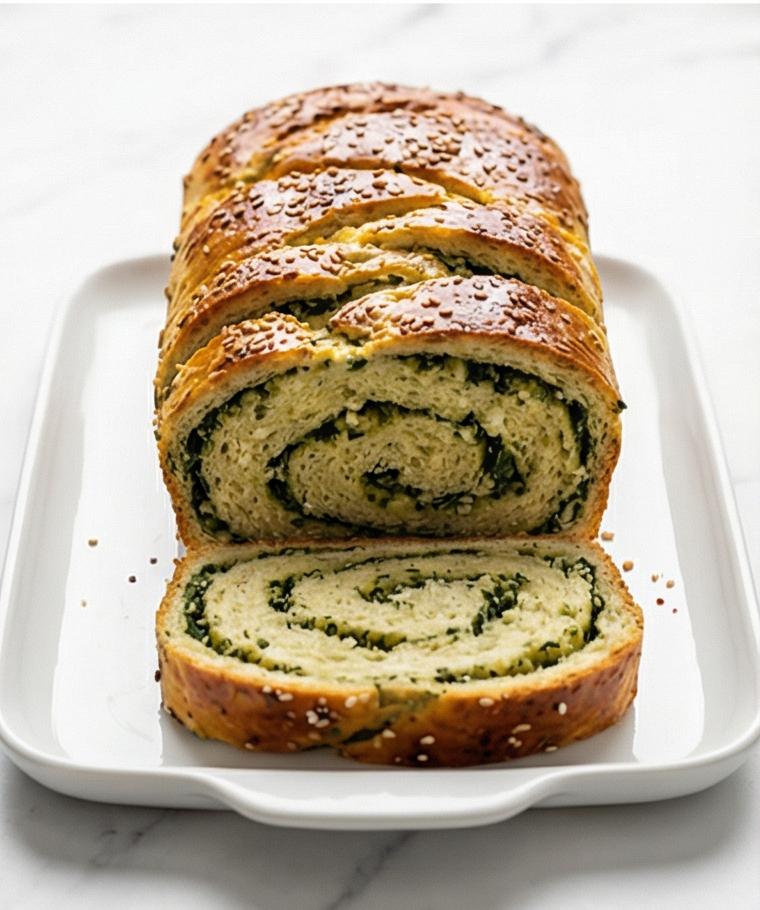
Using a sharp serrated knife, slice the loaf into 3/4-inch thick slices to reveal the defined green-and-white spinach-feta swirl. Serve slightly warm or at room temperature on a rectangular serving tray or platter that echoes the loaf’s rectangular geometry; the crumb should be soft with a moist spiral and a lightly crisp, golden crust.
Making It Your Own
I like to treat this Spinach Feta Swirl Bread Recipe as a starting point, then experiment depending on the season. In spring I fold in lemon zest and use extra dill for brightness. For a winter version swap in roasted, chopped beets for a dramatic pink swirl and mild goat cheese instead of feta.
If you need a dairy-free option, use plant-based butter and a firm tofu blended with lemon and salt to mimic feta. For a heartier loaf, mix in wilted kale and toasted pine nuts. Each small change alters texture or tang, so taste as you go and adapt the salt accordingly.
How to Serve
When I host, I slice this Spinach Feta Swirl Bread Recipe into 3/4-inch pieces and arrange them on a long wooden board with bowls of olives, sliced tomatoes, and a bright herb oil for drizzling. For a brunch, pair warm slices with soft scrambled eggs, smoked salmon, or a citrusy arugula salad.
To scale up, bake two loaves and stagger their oven times. If serving a crowd, cut thinner slices and offer small skewers or toothpicks so guests can sample without committing to a full slice. Leftover slices make gorgeous sandwiches or a savory bread pudding.
Storage and Reheating Tips
Store any cooled slices in an airtight container or wrapped tightly in plastic wrap at room temperature for up to two days. For longer storage, freeze individual slices separated by parchment in a freezer bag for up to two months.
To reheat, pop a slice directly from frozen into a 350°F oven for 8-10 minutes or warm from room temperature for 4-6 minutes. For a crisp crust, finish briefly under the broiler while watching closely.
Common Mistakes and How to Avoid Them
Overproofing is the most common slip – the dough can collapse and lose its spiral. Watch the dough more than the clock and do a gentle press test to judge readiness. If it deflates easily, it rose too far.
Too-wet filling makes the dough soggy. Squeeze the spinach until it barely feels damp and avoid adding extra liquid. Also don’t skimp on the pinch at the seam when rolling – a loose seam can leak filling during the bake.
A Warm Invitation
If you try this Spinach Feta Swirl Bread Recipe, I hope it becomes one of those recipes you return to when you want something comforting yet a little impressive. Bake it for friends, tuck it into lunchboxes, or enjoy it at home with a simple bowl of soup. Let me know how you swirl it your way.
Frequently Asked Questions.
- Q: Can I use fresh spinach instead of frozen? A: Yes, but briefly wilt fresh spinach and squeeze out all moisture before using so the filling does not become watery.
- Q: How do I know when the loaf is fully baked? A: An instant-read thermometer should register about 190°F (88°C) in the center, and the crust will be deep golden brown.
- Q: Can I make the dough the night before? A: Absolutely. Refrigerate the dough after the first rise for a slow overnight fermentation and shape and bake the next day.
- Q: What can I use instead of feta? A: Crumbled ricotta salata, aged goat cheese, or a salty farmer’s cheese all work well and change the flavor profile slightly.
- Q: Will this recipe work in a fan-forced oven? A: Yes, reduce the oven temperature by about 20°F (10°C) and monitor color, since convection ovens brown faster.
Spinach Feta Swirl Bread Recipe
Make Spinach Feta Swirl Bread Recipe for savory brunch or sandwiches—warm, tender bread with a tangy spinach-feta spiral.
Ingredients
Instructions
Step 1: Activate the yeast
Warm the milk to a comfortably warm 105–110°F (40–43°C), then whisk in the sugar and sprinkle the instant yeast on top. Give it a quick stir and let it sit for about 5 minutes until the surface looks slightly foamy and alive — that gentle foam is your green light that the yeast is active and warm. Keep the small clear glass milk jug and a tiny glass bowl of sugar nearby to echo the raw-ingredients layout in the photos.
Step 2: Form a shaggy dough
Add the all-purpose flour and fine sea salt to a roomy matte grey ceramic mixing bowl, crack in the room-temperature egg, and scatter the soft butter in small pieces over the flour. Pour the foamy milk-yeast mixture into the bowl and mix with a wooden spoon or dough whisk just until a rough, shaggy dough forms and nearly all the flour is moistened. If it’s overly sticky, dust a tablespoon or two more flour until the dough is soft and slightly tacky but still cohesive.
Step 3: Knead and bulk-ferment
Turn the dough onto a lightly floured work surface and knead by hand for 8–10 minutes (or use a stand mixer with a dough hook for 6–8 minutes) until the dough becomes smooth, elastic, and slightly tacky — you want a faint sheen, resilience, and a passing windowpane if you stretch a bit. Lightly oil a clean bowl with olive oil, shape the dough into a tight ball, place it in the bowl, cover with plastic or a damp towel, and let it rise in a warm spot until it has doubled and gently springs back when pressed.
Step 4: Squeeze and assemble the filling
While the dough rises, squeeze every drop of moisture from the thawed chopped spinach using a clean kitchen towel or layers of paper towel — the spinach should feel firm and only slightly cool, not wet or dripping. In a single medium ceramic bowl combine the very well-squeezed spinach with crumbled feta, finely minced garlic, thinly sliced green onions, chopped fresh dill, black pepper, and a whisper of nutmeg if you like. Fork-mix until the mixture is uniformly speckled with white feta and vivid green flecks; taste and only add salt if necessary. Display the drained spinach in the towel and the finished filling in the same ceramic bowl for continuity.
Step 5: Roll, fill, and shape the log
Deflate the risen dough gently on a lightly floured surface and let it rest for 5 minutes to relax the gluten. Roll the dough into a roughly 16 x 12-inch rectangle, keeping it about 1/4 inch thick and dusting flour sparingly to prevent sticking. Evenly spread the spinach-feta filling across the dough, leaving a 3/4-inch border, and lightly press the filling so it adheres. Starting at the long edge closest to you, roll the dough tightly into a firm log and pinch the seam and ends closed so the filling is sealed. Gently place the log seam-side down into a lightly oiled 9 x 5-inch metal loaf pan, shaped to fit from end to end.
Step 6: Final rise and egg wash
Cover the pan loosely and allow the loaf to rise again until it looks puffy and reaches about an inch above the rim — it should spring back slowly when touched. Meanwhile preheat the oven to 350°F (175°C), and whisk together the egg and a tablespoon of milk in a small clear bowl to make a glossy egg wash. When the loaf has finished its second rise, gently brush a thin, even layer of egg wash over the top and sides, sprinkle sesame or nigella seeds if using, and prepare to bake.
Step 7: Bake, cool briefly, and unmold
Bake the loaf in the preheated oven (center rack) until deep golden brown and an instant-read thermometer reads about 190°F (88°C). If the top browns too quickly, tent with foil. Remove the pan and set it on a wire rack to cool for 10–15 minutes so the loaf firms slightly in the pan. Run a thin knife around the edges, then lift or invert the loaf out of the pan and place it right-side up on the wire rack; allow it to cool until the crumb sets.
Step 8: Slice and serve
Using a sharp serrated knife, slice the loaf into 3/4-inch thick slices to reveal the defined green-and-white spinach-feta swirl. Serve slightly warm or at room temperature on a rectangular serving tray or platter that echoes the loaf’s rectangular geometry; the crumb should be soft with a moist spiral and a lightly crisp, golden crust.
Notes
- Squeeze spinach very well to avoid soggy filling
- Use an instant-read thermometer for accurate bake temp
- You can refrigerate dough after first rise and bake next day
- Freeze sliced loaf for quick reheating
- Reduce oven temp by 20°F for convection ovens