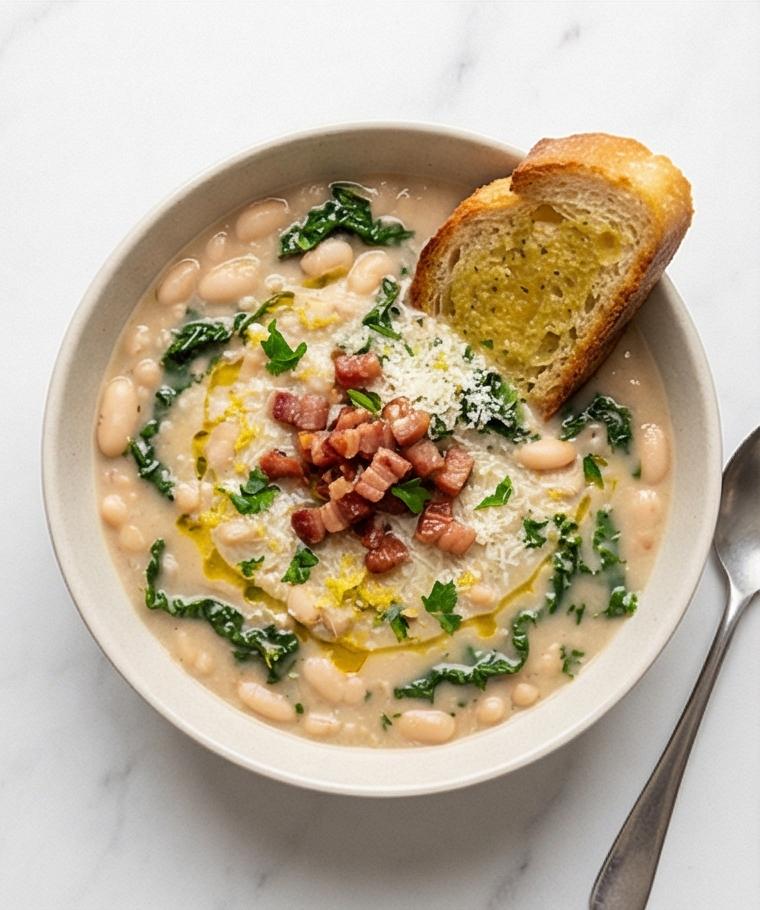
Lasagna Soup Recipe has been one of my go-to comfort meals for chilly nights and noisy weeknights. I first fell for this Lasagna Soup Recipe because it captures all the cozy, melty joy of lasagna but comes together in a single pot. I love how the simmering tomato broth fills the kitchen with warm, savory scents while the cheeses knit into creamy ribbons. It feels like cooking and hugging at the same time, and you get generous bowls in far less time than an oven-baked lasagna.
How This Lasagna Soup Recipe Became My Rainy-Day Favorite
I remember the first night I made this soup during a downpour. The house smelled like warm tomatoes and garlic, and steam fogged the kitchen window while rain drummed on the roof. My partner and I spooned the soup into shallow bowls and dipped crusty bread until the cheese strings and steam made everything blur into a perfect, cozy moment. It was one of those meals that felt made for two people and for comfort itself: simple to make, dramatic to serve, and ridiculous in the way it soothes. Every bite carried sausage spice, sweet tomato, and the soft, calming texture of ricotta that reminded me of Sunday dinners when I was a kid.
The Building Blocks of This Lasagna Soup Recipe
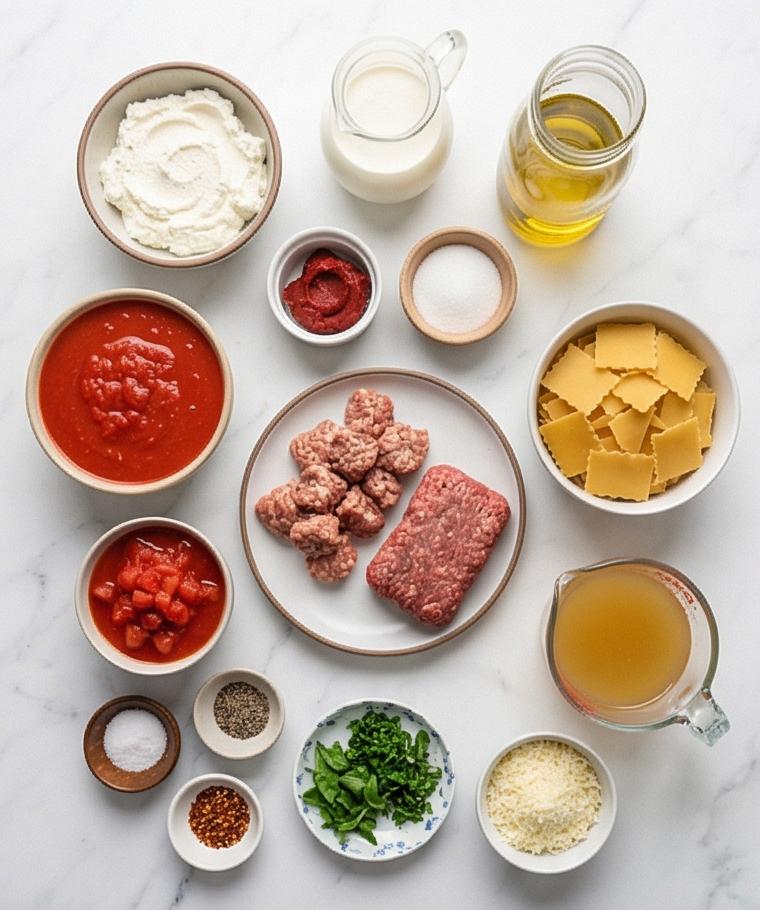
- Italian Sausage and Ground Beef: They provide savory depth and richness; swap ground turkey or plant-based crumbles for a lighter or vegetarian option and pick mild or hot sausage to control heat.
- Aromatic Vegetables (onion, carrot, celery, garlic): They form the flavor base; finely dice for even cooking and substitute shallot for a sweeter note.
- Tomato Paste and Canned Tomatoes: They give concentrated tomato flavor; use fire-roasted for a smoky twist or low-acid tomatoes if sensitive.
- Broth and Herbs: Broth adds body while basil, oregano, and thyme lift the profile; use low-sodium broth to control salt.
- Pasta and Dairy (lasagna noodles, ricotta, mozzarella, Parmesan, cream): They create the lasagna character; gluten-free or oat noodles work for diets and whole-milk cheeses melt best.
Essential Tools That Make This Easier
A few good tools cut stress and improve results. A sturdy, heavy-bottomed pot helps brown meat evenly and keeps the soup from scorching. A wide pot gives the broken noodles room to swim without clumping.
- Heavy-bottomed Dutch oven or large pot: Important for even browning and simmering; a deep skillet plus a large stockpot works in a pinch.
- Wooden spoon or spatula: For scraping the fond and stirring the tomato paste; a heatproof silicone spatula is a fine alternative.
- Chef’s knife and cutting board: Sharp knife speeds prep; a bench scraper helps transfer chopped vegetables.
- Box grater and mixing bowls: Freshly grated cheese and a bowl for the ricotta mix make finishing easier.
- Ladle and slotted spoon: For serving and fishing out noodles; tongs are useful for garnishing.
Step-by-Step Preparation Guide
Step 1: Bring dairy to room temperature and begin
Set the ricotta and the heavy cream out to come to room temperature so they blend smoothly later; while they warm, gather the small bowls and jars you’ll use—a small glass jug for cream, a shallow ceramic bowl for ricotta, tiny ramekins for tomato paste and spices—so everything is tidy and ready. This small thermal step ensures the cheeses and cream will emulsify into the hot soup without seizing and lets you move quickly once the pot is full and simmering.
Step 2: Brown the meats until a fond forms
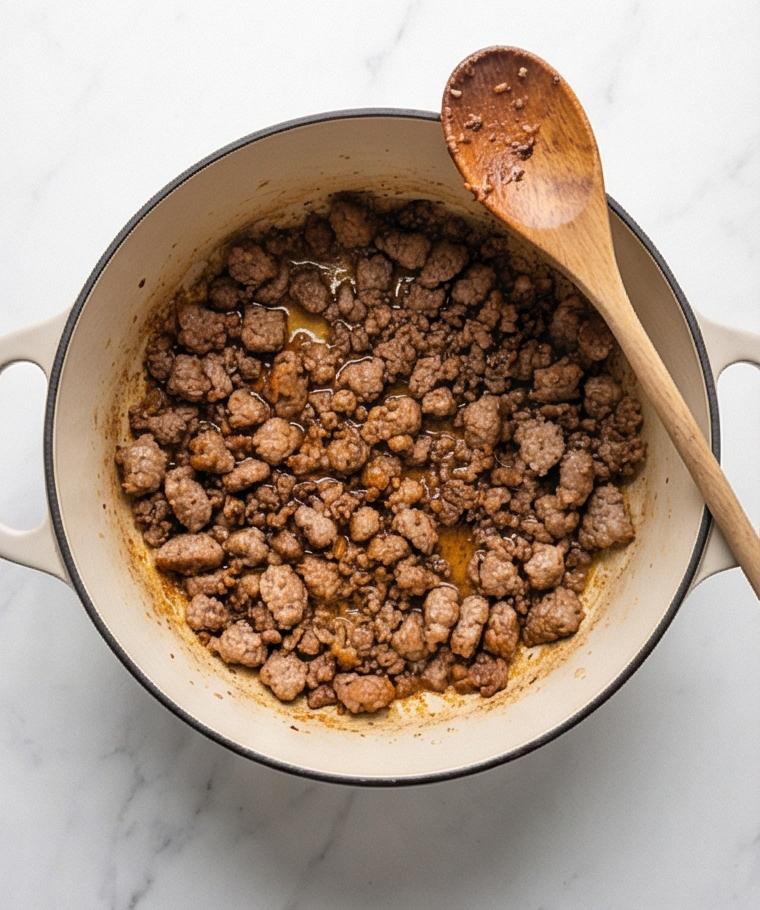
In a heavy enameled pot set aside on the marble surface, add olive oil and the Italian sausage and ground beef, breaking them into small crumbles and seasoning with salt, pepper, and red pepper flakes. Work until the meat is deeply browned with no visible pink and a rich brown fond clinging to the base; the surface will be dotted with rendered fat and tiny caramelized bits that carry intense savory flavor.
Step 3: Build the soffritto and caramelize the tomato paste
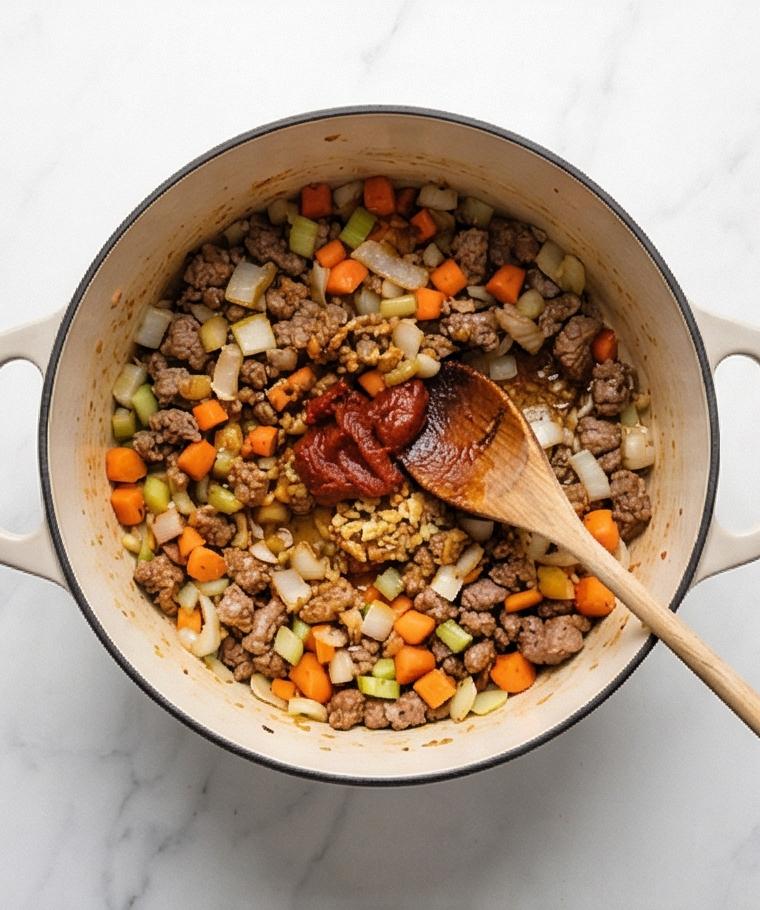
Add the finely chopped onion, diced carrot, and celery to the browned meat and stir to soften the vegetables until the onion is translucent and the carrots and celery have softened. Stir in minced garlic briefly, then add tomato paste and cook until the paste darkens and becomes sweet and glossy—an intensely aromatic, rust-colored layer that clings to the meat and wooden spoon, the foundation for the soup’s deep tomato flavor.
Step 4: Add tomatoes, broth, and aromatics, then simmer
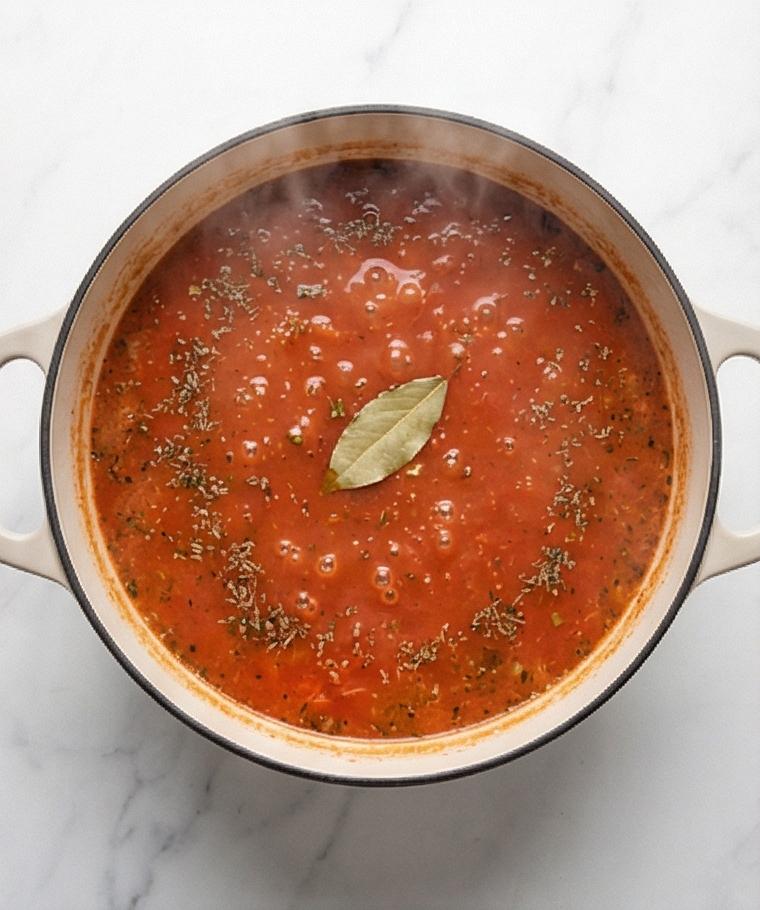
Stir in crushed tomatoes, diced tomatoes with their juices, and the low-sodium broth, scraping the pot bottom to lift the fond; then add dried basil, oregano, thyme, bay leaf, sugar, and the remaining salt. Bring briefly to a lively boil, then reduce to a gentle simmer and cook uncovered until the vegetables are very tender and the tomato-base has rounded and melded—your soup base will look glossy, slightly thickened, and speckled with herbs.
Step 5: Cook the broken lasagna and finish the cheese mixture
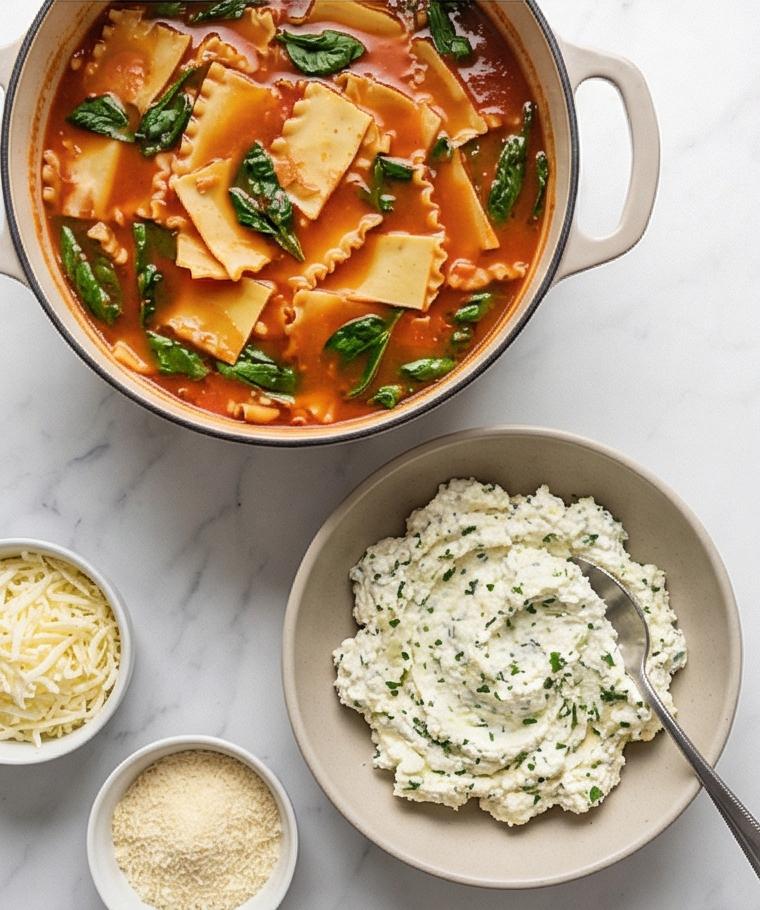
Break the lasagna noodles into uniform 1–2 inch pieces and stir them into the gently simmering soup, cooking until al dente so the pasta remains tender but slightly firm. While the noodles cook, combine ricotta, shredded mozzarella, grated Parmesan, chopped parsley, chopped basil, salt, and pepper in a medium bowl and mix until smooth and scoopable—a dense, creamy, pale mound with flecks of green. When noodles are done, remove the bay leaf, stir in chopped baby spinach until bright and wilted, then lower the heat and slowly stir in room-temperature cream until the broth becomes a rich, creamy tomato hue.
Step 6: Rest, assemble, and garnish for serving
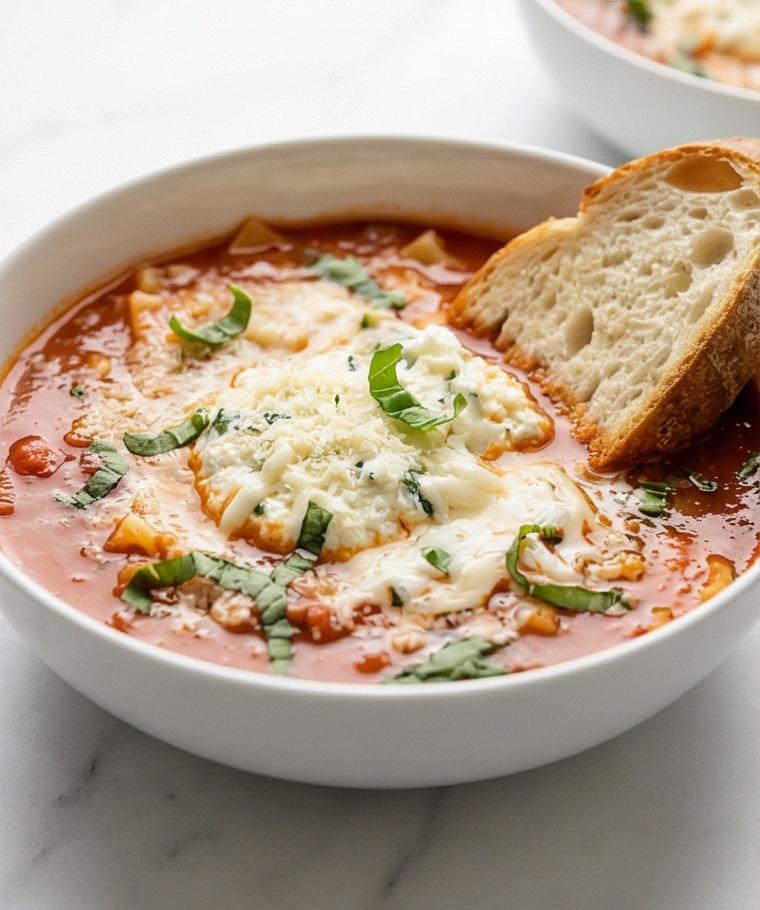
Turn off the heat and let the soup rest briefly so it thickens slightly; ladle into warmed shallow bowls, add a generous dollop of the ricotta-cheese mixture to the center of each bowl allowing it to slowly melt, then scatter additional shredded mozzarella and grated Parmesan so the cheeses soften and stretch. Finish each bowl with a light sprinkle of chopped fresh basil or parsley and serve immediately with crusty bread for dipping—steaming, glossy broth, flecks of herbs, silky ribbons of melted cheese, and a soft, billowy ricotta crown.
Making It Your Own
I often test small swaps to see how the soup responds. Try turkey sausage and a splash more cream for a lighter weeknight version. For a vegetarian twist, brown mushrooms and lentils in place of meat and use vegetable broth; the umami-rich mushrooms give depth without meatiness.
If you want a seasonal shift, add roasted winter squash in fall or summer cherry tomatoes and a handful of basil when tomatoes are at their peak. To make it gluten-free, use broken gluten-free lasagna or short pasta; cook the pasta separately and add at the end if you are worried about texture.
How to Serve
When I host, I ladle this Lasagna Soup Recipe into shallow bowls so the ricotta mound looks dramatic and guests can tear off pieces of crusty bread for dipping. For a casual dinner, serve family-style from the pot with a big bowl of grated Parmesan and chopped basil on the side so everyone plates their ideal bowl.
To scale, double the pot size and use a larger Dutch oven for crowds. For a dinner party, finish each bowl with the ricotta dollop and broil briefly for a minute to get golden edges on the cheese, or keep it rustic and let the cheese slowly melt into the broth at the table.
Storage and Reheating Tips
Cool leftover soup quickly and store in airtight containers in the refrigerator for up to 3 days. Because the pasta will absorb liquid as it sits, keep a little extra broth or water on hand when reheating to refresh the texture.
Reheat gently over low heat on the stove, stirring in a splash of broth or cream as needed. For longer storage, freeze without the ricotta dollops in freezer-safe containers for up to 3 months; thaw overnight in the refrigerator and reheat slowly.
Oops-Proofing Your Soup
If your soup becomes too salty or too concentrated, add unsalted broth or a peeled potato simmered briefly to absorb excess salt, then remove the potato. If the pasta overcooks and gets mushy, cook pasta separately next time and add it at the end to preserve al dente texture.
Watch the tomato paste while it caramelizes; it goes from sweet to bitter quickly if it burns, so lower the heat and stir frequently. A lighthearted taste test during cooking will save a lot of worry.
Ready to Try It?
This Lasagna Soup Recipe is forgiving, fast, and wildly satisfying. Scoop a bowl, add a big piece of crusty bread, and enjoy a meal that feels like a hug in a bowl. I hope you make it, tweak it, and share it with people you love.
Frequently Asked Questions.
- What is the best sausage to use for Lasagna Soup Recipe? I prefer sweet or a mix of sweet and hot Italian sausage; swap turkey or plant-based sausage for lighter versions.
- Can I make Lasagna Soup Recipe vegetarian? Yes, brown mushrooms and add lentils or a plant-based crumble and use vegetable broth for depth.
- How do I keep the pasta from getting mushy? Cook noodles separately and add at the end, or undercook the pasta slightly so it finishes cooking in the hot broth.
- Can I freeze Lasagna Soup Recipe? Freeze the soup without the ricotta dollops for up to 3 months; add fresh ricotta when reheating.
- How do I make it less rich? Use half the cream or replace heavy cream with half-and-half and choose leaner ground meat or a turkey sausage.
Lasagna Soup Recipe
Make Lasagna Soup Recipe now: a one-pot, cozy lasagna-in-a-bowl with melty cheeses and savory sausage.
Ingredients
Instructions
Step 1: Bring dairy to room temperature and begin
Set the ricotta and the heavy cream out to come to room temperature so they blend smoothly later; while they warm, gather the small bowls and jars you'll use—a small glass jug for cream, a shallow ceramic bowl for ricotta, tiny ramekins for tomato paste and spices—so everything is tidy and ready. This small thermal step ensures the cheeses and cream will emulsify into the hot soup without seizing and lets you move quickly once the pot is full and simmering.
Step 2: Brown the meats until a fond forms
In a heavy enameled pot set aside on the marble surface, add olive oil and the Italian sausage and ground beef, breaking them into small crumbles and seasoning with salt, pepper, and red pepper flakes. Work until the meat is deeply browned with no visible pink and a rich brown fond clinging to the base; the surface will be dotted with rendered fat and tiny caramelized bits that carry intense savory flavor.
Step 3: Build the soffritto and caramelize the tomato paste
Add the finely chopped onion, diced carrot, and celery to the browned meat and stir to soften the vegetables until the onion is translucent and the carrots and celery have softened. Stir in minced garlic briefly, then add tomato paste and cook until the paste darkens and becomes sweet and glossy—an intensely aromatic, rust-colored layer that clings to the meat and wooden spoon, the foundation for the soup’s deep tomato flavor.
Step 4: Add tomatoes, broth, and aromatics, then simmer
Stir in crushed tomatoes, diced tomatoes with their juices, and the low-sodium broth, scraping the pot bottom to lift the fond; then add dried basil, oregano, thyme, bay leaf, sugar, and the remaining salt. Bring briefly to a lively boil, then reduce to a gentle simmer and cook uncovered until the vegetables are very tender and the tomato-base has rounded and melded—your soup base will look glossy, slightly thickened, and speckled with herbs.
Step 5: Cook the broken lasagna and finish the cheese mixture
Break the lasagna noodles into uniform 1–2 inch pieces and stir them into the gently simmering soup, cooking until al dente so the pasta remains tender but slightly firm. While the noodles cook, combine ricotta, shredded mozzarella, grated Parmesan, chopped parsley, chopped basil, salt, and pepper in a medium bowl and mix until smooth and scoopable—a dense, creamy, pale mound with flecks of green. When noodles are done, remove the bay leaf, stir in chopped baby spinach until bright and wilted, then lower the heat and slowly stir in room-temperature cream until the broth becomes a rich, creamy tomato hue.
Step 6: Rest, assemble, and garnish for serving
Turn off the heat and let the soup rest briefly so it thickens slightly; ladle into warmed shallow bowls, add a generous dollop of the ricotta-cheese mixture to the center of each bowl allowing it to slowly melt, then scatter additional shredded mozzarella and grated Parmesan so the cheeses soften and stretch. Finish each bowl with a light sprinkle of chopped fresh basil or parsley and serve immediately with crusty bread for dipping—steaming, glossy broth, flecks of herbs, silky ribbons of melted cheese, and a soft, billowy ricotta crown.
Notes
- Let ricotta and cream come to room temperature so they incorporate smoothly.
- Use low-sodium broth to better control the final salt level.
- To keep pasta al dente, cook separately and add at the end if needed.
- Freeze without ricotta dollops and add fresh ricotta when reheating.
- Taste as you go and adjust herbs and salt at the end.