Sesame Ginger Edamame Salad Recipe has become one of my go-to sides for weeknight dinners and casual gatherings. I love how bright flavors and crunchy textures come together in a single bowl, and it comes together fast when the week gets busy. I first balanced the dressing to be sweet, tart, and savory, and that careful balance is what makes this salad sing. If you enjoy bold, Asian-inspired flavors, you are going to reach for this Sesame Ginger Edamame Salad Recipe again and again.
How This Salad Found Its Way Into My Rotation
The first time I made the Sesame Ginger Edamame Salad Recipe I was rushing to bring something to a friend’s potluck. I remember the kitchen light slipping into the bowl as I shredded purple cabbage and julienned carrots, and how the toasted sesame seeds filled the air with a warm, nutty perfume. The dressing came together in a minute, and when I tossed everything the colors looked like a little modern painting. Friends kept coming back for seconds, and someone asked for the recipe before the night was over. It felt satisfying and a little surprising that such a simple mix of edamame, crisp vegetables, and a bright sesame-ginger dressing could land such a big reaction. I still remember the crunch, the ginger’s bright heat, and the tiny pricks of lime zest that lifted every bite.
Discussing the Primary Ingredients
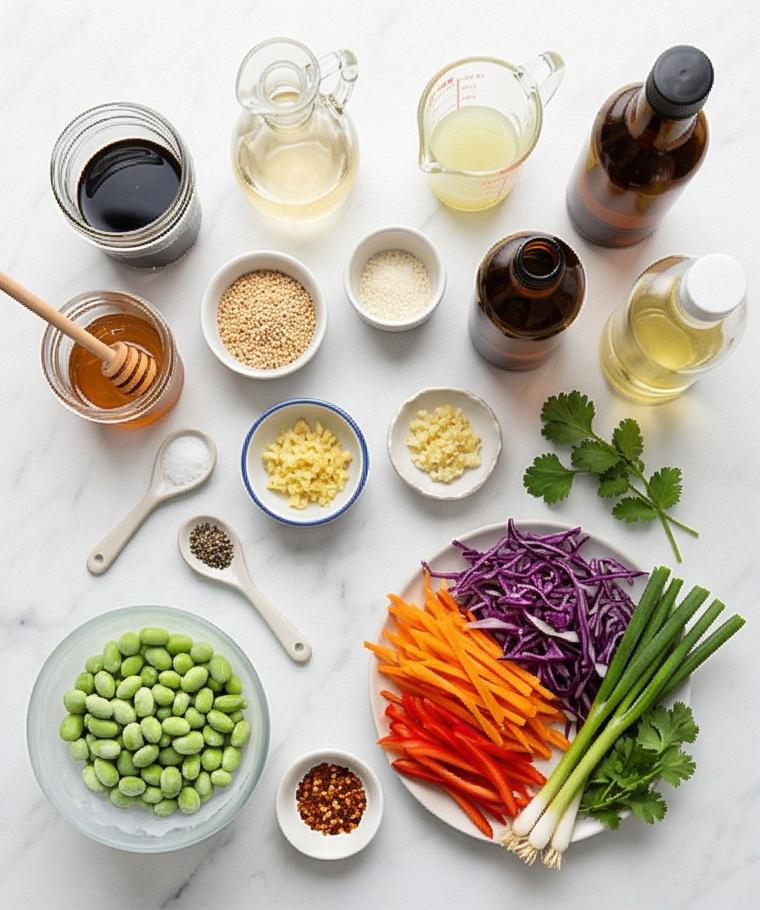
- Sesame Seeds: Toasted seeds add crunch and a warm, nutty finish. Substitute with toasted pumpkin seeds for a different crunch. Choose glossy, pale seeds and toast until fragrant, watching closely.
- Low-Sodium Soy Sauce: Brings umami and salt. Tamari works for gluten-free diners and coconut aminos for a lower-sodium swap.
- Rice Vinegar: Provides gentle acidity. Apple cider vinegar is a workable substitute but choose milder vinegars.
- Lime Juice: Brightens and lifts the dressing. Lemon can substitute but gives a different citrus note.
- Honey: Balances the acid and salt. Use maple syrup or agave for a vegan option.
- Toasted Sesame Oil: Delivers toasted sesame aroma. Use sparingly or swap with additional neutral oil for a milder profile.
- Edamame and Vegetables: The trio of edamame, cabbage, carrot, and bell pepper provides texture and color; frozen shelled edamame is convenient and storable.
Essential Kitchen Tools and Why They Matter
A few small tools make this recipe easier and faster, and they help you get better results. A sharp chef’s knife speeds through cabbage and peppers with clean cuts, which keeps textures bright. A fine grater or microplane brings the ginger and lime zest into the dressing without woody bits. A sturdy whisk helps emulsify the dressing so oils and vinegar cling to the vegetables. Salad tongs let you toss gently so delicate cabbage strands don’t bruise.
- Chef’s knife: For quick, precise shredding.
- Microplane or fine grater: For ginger and lime zest.
- Small dry skillet: To toast sesame seeds evenly.
- Whisk and mixing bowl: To emulsify the dressing.
- Salad tongs or large spoon: For gentle tossing.
Step-by-Step Preparation Guide
Step 1: Toast the sesame seeds
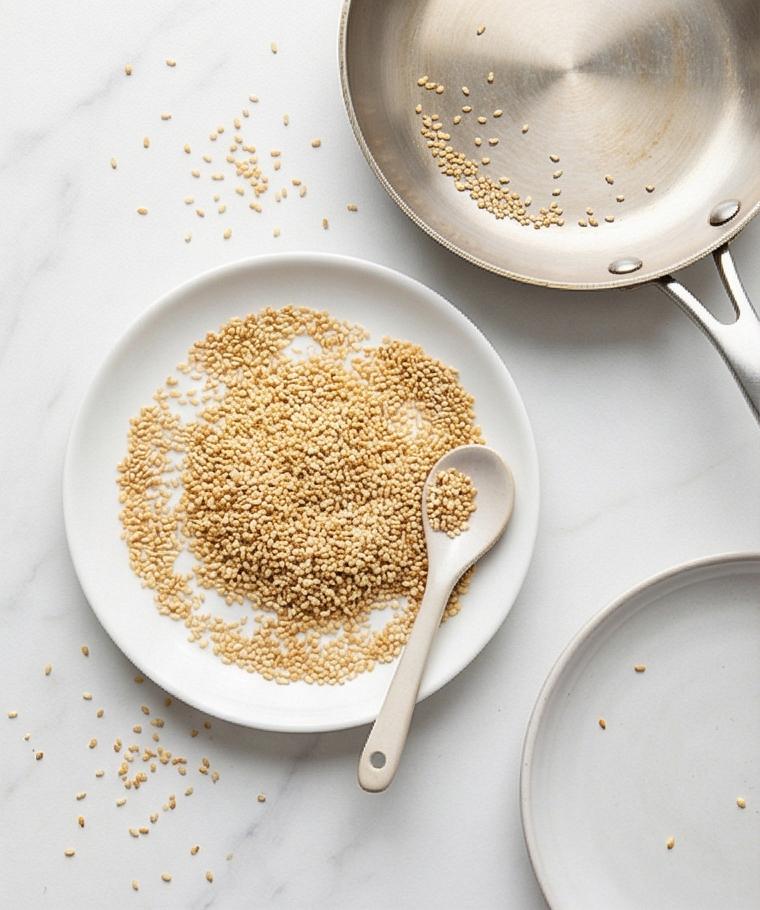
Warm a small dry skillet over medium heat (off-frame) and gently toast the sesame seeds until they are pale golden and fragrant. Transfer them immediately to a small white ceramic plate to cool so they retain a dry, crisp texture and a warm nutty aroma; the seeds should look evenly browned with a few deeper flecks but not burned. Let them rest at room temperature while you make the dressing.
Step 2: Whisk and emulsify the sesame-ginger dressing
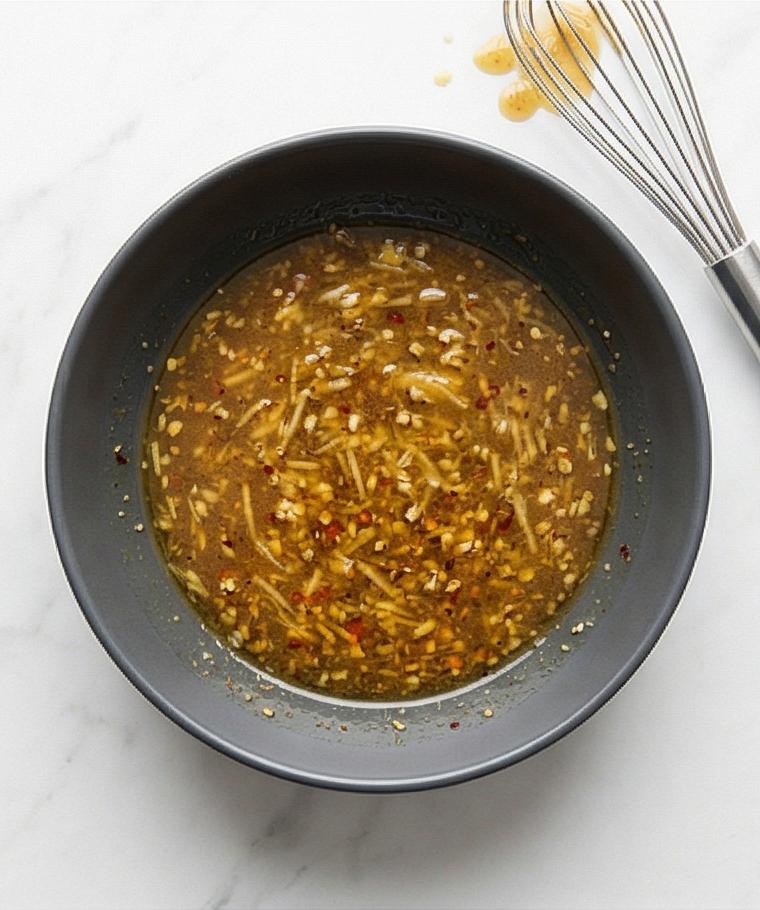
In a medium matte charcoal ceramic mixing bowl, whisk together the soy sauce, rice vinegar, lime juice and honey until the honey is fully dissolved and the surface looks smooth. Slowly stream in the toasted sesame oil and neutral oil while whisking until the dressing attains a slightly thickened, glossy emulsion studded with finely grated ginger and tiny minced garlic bits; you should see suspended flecks of red pepper and black pepper speckles. Rest the whisk on the rim so the bowl shows the dressing’s viscous sheen and the ginger threads distributed throughout.
Step 3: Cook, cool, and thoroughly dry the edamame
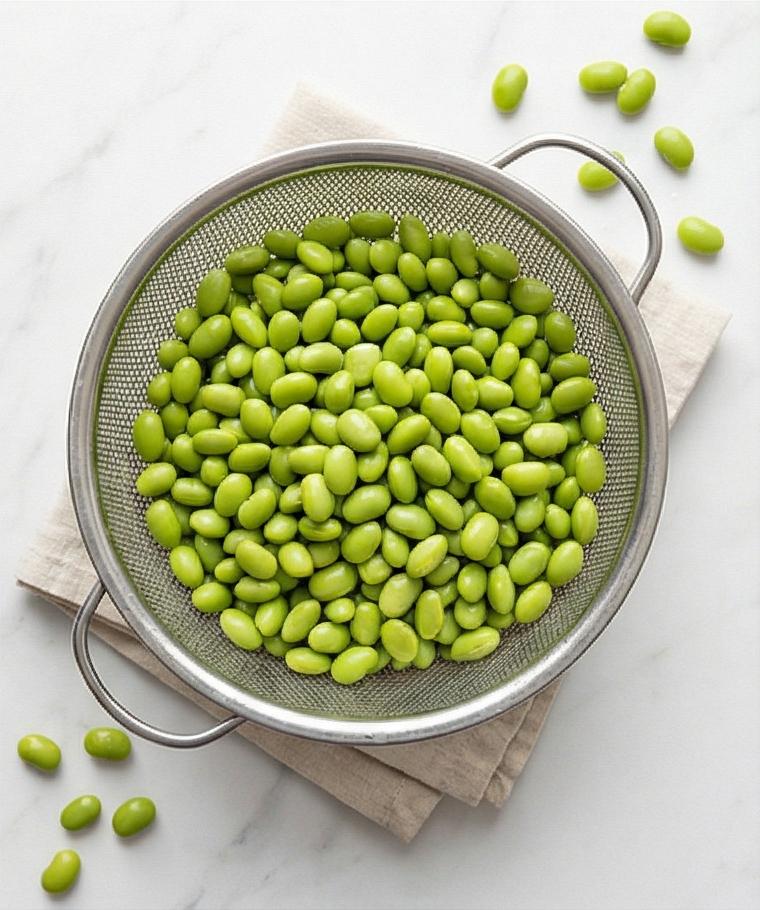
Bring frozen shelled edamame to a full boil (stove off-frame) until bright green and tender-firm, then plunge them into very cold water until completely cooled. Drain thoroughly and shake out the excess moisture so the beans are matte and dry to the touch—this dry, slightly tacky surface helps the dressing cling rather than pool. Pile the cooled, glossy-but-dry edamame into a shallow metal colander or small bowl so they read as plump, intact, and vibrantly chartreuse.
Step 4: Shred, julienne, and assemble the raw vegetables and aromatics
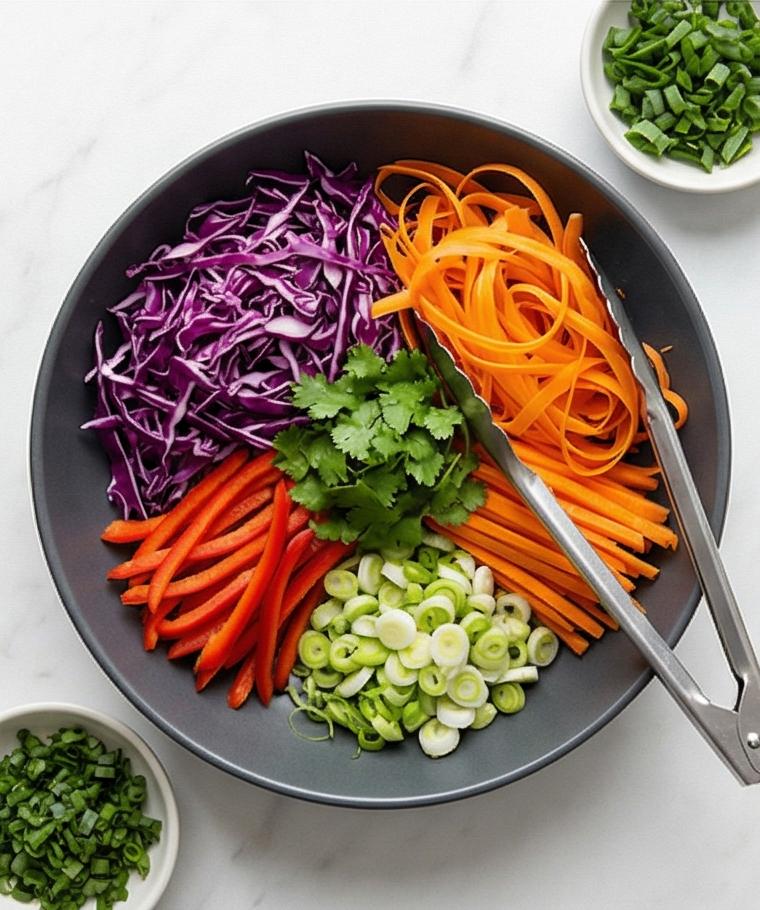
Finely shred the red cabbage, julienne the carrots, thinly slice the red bell pepper, separate and slice the scallion whites and light greens, and roughly chop most of the cilantro while reserving a small pinch of leaves and the darker scallion tops for garnish. Arrange each vegetable in sections inside the large matte charcoal salad bowl so the colors sit in clean swaths—deep purple cabbage, bright orange carrot ribbons, vivid red pepper strips, and neat pale-green scallion rounds—creating visual contrast and texture. Keep the prepared edamame and dressing nearby, ready to combine; the bowl should look crisp, dry, and full of raw crunch.
Step 5: Toss the salad with the dressing and toasted sesame seeds
Add the well-drained cooled edamame to the large salad bowl of vegetables, pour the emulsified sesame-ginger dressing over everything, and sprinkle most of the toasted sesame seeds in, saving a teaspoon for final garnish. Using salad tongs, gently toss for one to two minutes until every strand of cabbage and each plump edamame bean is evenly coated and glossy, with tiny ginger and garlic flecks visible on the vegetables. Taste and adjust with a pinch more fine sea salt or a touch more honey for balance; the finished tossed salad should read as glossy, crunchy, and evenly seasoned.
Step 6: Rest, chill briefly if preferred
Let the tossed salad sit at room temperature for at least ten minutes so the flavors meld and the dressing softens the vegetables slightly; for a crisper, cooler salad cover and refrigerate for 20–30 minutes. The visual state here is a relaxed, slightly glossed salad with vegetables that have softened just enough to integrate flavors but still retain snap and bright color.
Step 7: Garnish and serve
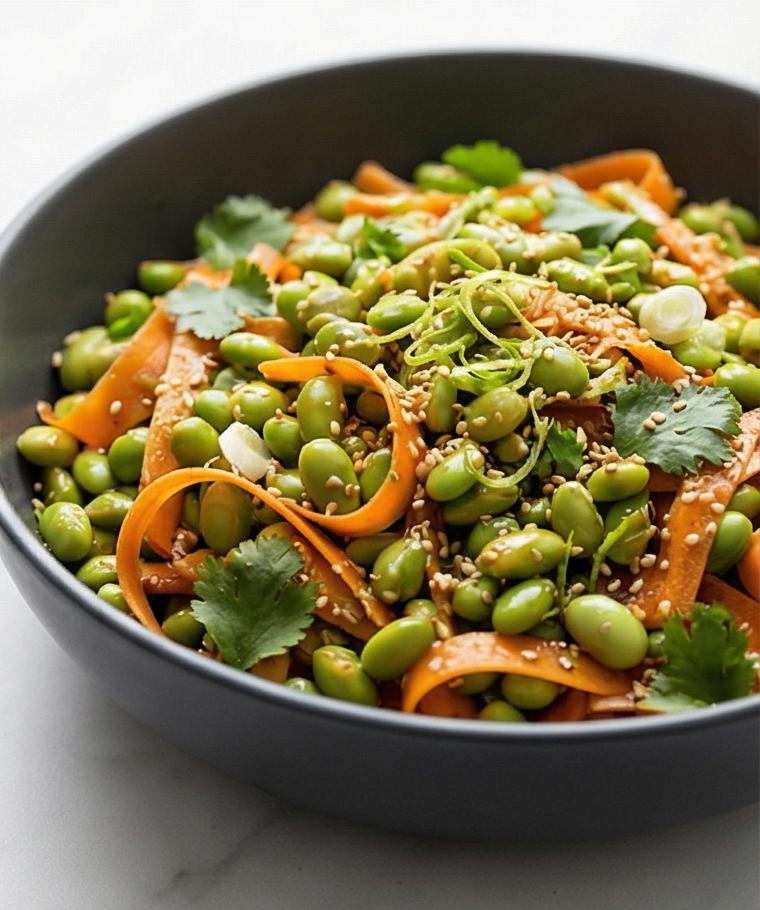
Just before serving, give the salad a final toss, transfer it to the same large matte charcoal ceramic salad bowl for presentation, and finish with the reserved toasted sesame seeds, the dark green scallion tops, the reserved pinch of chopped cilantro and a light dusting of finely grated lime zest for lift. The plated salad should be a luscious close-up of plump green edamame, shredded purple cabbage, crisp orange carrot ribbons and glossy red pepper threads, punctuated by crunchy toasted sesame and citrusy lime zest.
Making It Your Own
I like to swap ingredients depending on the season and who I am feeding. In spring I add thinly sliced radishes and a handful of tender pea shoots for a peppery lift. For a vegan party I swap honey for maple syrup and use tamari to keep it gluten-free. When I want more heft I toss in a few handfuls of cooked soba noodles or warm quinoa so it becomes a substantial lunch. Try toasted almonds or crushed cashews instead of extra sesame seeds for a different crunch. Each small change shifts the salad from a side into something that can headline a meal.
How to Serve
This salad is great at room temperature or lightly chilled, and it dresses beautifully for a party bowl. For a small dinner, divide into individual bowls and garnish with extra cilantro and lime zest so each plate looks intentional. For a buffet, serve in a large shallow bowl with a small dish of extra dressing on the side so guests can add more if they like. To scale up, multiply the dressing by 1.5 for every double batch so everything remains glossy and well coated. Pair with grilled fish or a simple sesame tofu to make it a full meal.
Storage and Reheating Tips
Store leftover Sesame Ginger Edamame Salad Recipe in an airtight container in the fridge for up to 2 days. Keep the dressing separate if you want the vegetables to stay as crisp as possible, or toss everything together if you prefer the dressed flavors to deepen in the fridge.
If you like the salad slightly warm, bring it to room temperature and serve; avoid reheating in the microwave because the raw vegetables will soften and lose crunch. Instead, add a splash of fresh lime juice and a pinch of salt before serving to revive brightness.
Common Mistakes and How to Avoid Them
One frequent mistake is overdressing the salad. Start with most of the dressing and add more as needed so the vegetables stay crisp. Drain the edamame well so the dressing does not get diluted.
Another misstep is skipping the toast on the sesame seeds. Toasting adds a real depth of flavor, so don’t rush that two minutes. Also, taste and adjust the salt and honey balance at the end.
Final Thoughts and Invitation
I hope you’ll give the Sesame Ginger Edamame Salad Recipe a try this week. It is a dependable, bright salad that travels well from weeknight dinner to weekend potluck, and I think you will be surprised by how often you reach for it. Let me know what variations you try and which crunchy swap becomes your favorite.
Frequently Asked Questions.
- Q: Can I make the dressing ahead of time? A: Yes, store it in a sealed jar in the fridge for up to 3 days and bring it to room temperature before using.
- Q: Can I use frozen edamame without boiling? A: It is best to cook frozen shelled edamame according to package instructions so they are tender-firm and bright green.
- Q: Is there a substitute for sesame oil? A: Use less toasted oil or replace it with extra neutral oil and a touch more toasted sesame seeds for aroma.
- Q: How long will leftovers keep? A: Leftovers last about 2 days refrigerated; keep the dressing separate if you want more crunch.
- Q: Can I add protein to make it a main? A: Yes, grilled shrimp, tofu, or cooked soba make it a complete meal.
Sesame Ginger Edamame Salad Recipe
Make Sesame Ginger Edamame Salad Recipe for a crunchy, tangy side that’s bright, fast, and crowd-pleasing.
Ingredients
Instructions
Step 1: Toast the sesame seeds
Warm a small dry skillet over medium heat (off-frame) and gently toast the sesame seeds until they are pale golden and fragrant. Transfer them immediately to a small white ceramic plate to cool so they retain a dry, crisp texture and a warm nutty aroma; the seeds should look evenly browned with a few deeper flecks but not burned. Let them rest at room temperature while you make the dressing.
Step 2: Whisk and emulsify the sesame-ginger dressing
In a medium matte charcoal ceramic mixing bowl, whisk together the soy sauce, rice vinegar, lime juice and honey until the honey is fully dissolved and the surface looks smooth. Slowly stream in the toasted sesame oil and neutral oil while whisking until the dressing attains a slightly thickened, glossy emulsion studded with finely grated ginger and tiny minced garlic bits; you should see suspended flecks of red pepper and black pepper speckles. Rest the whisk on the rim so the bowl shows the dressing’s viscous sheen and the ginger threads distributed throughout.
Step 3: Cook, cool, and thoroughly dry the edamame
Bring frozen shelled edamame to a full boil (stove off-frame) until bright green and tender-firm, then plunge them into very cold water until completely cooled. Drain thoroughly and shake out the excess moisture so the beans are matte and dry to the touch—this dry, slightly tacky surface helps the dressing cling rather than pool. Pile the cooled, glossy-but-dry edamame into a shallow metal colander or small bowl so they read as plump, intact, and vibrantly chartreuse.
Step 4: Shred, julienne, and assemble the raw vegetables and aromatics
Finely shred the red cabbage, julienne the carrots, thinly slice the red bell pepper, separate and slice the scallion whites and light greens, and roughly chop most of the cilantro while reserving a small pinch of leaves and the darker scallion tops for garnish. Arrange each vegetable in sections inside the large matte charcoal salad bowl so the colors sit in clean swaths—deep purple cabbage, bright orange carrot ribbons, vivid red pepper strips, and neat pale-green scallion rounds—creating visual contrast and texture. Keep the prepared edamame and dressing nearby, ready to combine; the bowl should look crisp, dry, and full of raw crunch.
Step 5: Toss the salad with the dressing and toasted sesame seeds
Add the well-drained cooled edamame to the large salad bowl of vegetables, pour the emulsified sesame-ginger dressing over everything, and sprinkle most of the toasted sesame seeds in, saving a teaspoon for final garnish. Using salad tongs, gently toss for one to two minutes until every strand of cabbage and each plump edamame bean is evenly coated and glossy, with tiny ginger and garlic flecks visible on the vegetables. Taste and adjust with a pinch more fine sea salt or a touch more honey for balance; the finished tossed salad should read as glossy, crunchy, and evenly seasoned.
Step 6: Rest, chill briefly if preferred
Let the tossed salad sit at room temperature for at least ten minutes so the flavors meld and the dressing softens the vegetables slightly; for a crisper, cooler salad cover and refrigerate for 20–30 minutes. The visual state here is a relaxed, slightly glossed salad with vegetables that have softened just enough to integrate flavors but still retain snap and bright color.
Step 7: Garnish and serve
Just before serving, give the salad a final toss, transfer it to the same large matte charcoal ceramic salad bowl for presentation, and finish with the reserved toasted sesame seeds, the dark green scallion tops, the reserved pinch of chopped cilantro and a light dusting of finely grated lime zest for lift. The plated salad should be a luscious close-up of plump green edamame, shredded purple cabbage, crisp orange carrot ribbons and glossy red pepper threads, punctuated by crunchy toasted sesame and citrusy lime zest.
Notes
- Toast sesame seeds carefully until just fragrant to avoid bitterness.
- Drain edamame thoroughly so the dressing clings, not pools.
- Taste and adjust salt and honey at the end for perfect balance.
- Keep dressing separate for maximum crunch if planning leftovers.
- Use fresh ginger for brightness; powdered ginger will taste flat.