Gochujang-Honey Glazed Shrimp Skewers greeted me on a humid weeknight when I wanted something quick, sticky, and a little bit daring. I love the balance of heat and sweetness in this recipe and how the glaze clings to the shrimp like candy for the grill. It’s one of those dishes I reach for when I want bold flavor without fuss, and it always makes the plate look like I spent more time than I did. Try Gochujang-Honey Glazed Shrimp Skewers when you want a fast, celebratory dinner that still feels special.
How This Recipe Became My Rainy-Day Favorite
I remember the first time I made Gochujang-Honey Glazed Shrimp Skewers: rain drummed against the kitchen window and the apartment smelled like toasted sesame and caramelizing sugar. I was nervous about the heat of gochujang, but the honey smoothed it into something warm and familiar. Threading plump shrimp on doubled wooden skewers felt oddly meditative as I listened to the rain and sipped tea. When the grill marks appeared and the glaze blistered just enough, I felt a small, private victory. Sharing the skewers with a friend, we ate with our fingers and laughed at how quickly they disappeared. From that night on, this recipe became my go-to for comfort and company; it still brings a cozy, smoky-sweet joy whenever I make it.
Why These Flavors Matter
- Gochujang: The deep, fermented chili paste is the backbone of the glaze, giving savory heat and umami. Substitute with a milder chili paste plus a pinch of miso if needed.
- Honey: Adds sweetness and helps the glaze caramelize. Maple syrup or agave will work but alter the flavor slightly.
- Mirin: Brings brightness and a mellow acidity. Dry sherry or a splash of rice vinegar plus a touch of sugar are fine swaps.
- Soy Sauce: Provides salt and depth; low-sodium soy sauce keeps the glaze from overpowering the shrimp.
- Toasted Sesame Oil: A little goes a long way for nutty aroma; regular sesame oil can be used but use less.
- Jumbo Shrimp: The star protein. Choose firm, translucent shrimp and thaw gently if frozen to avoid a watery texture.
Essential Kitchen Tools You Need
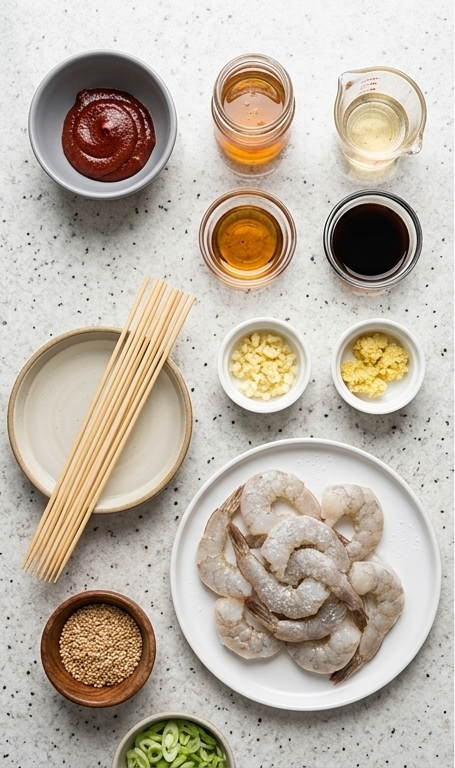
A few simple tools make this dish effortless and help the glaze behave itself. A hot grill or a well-seasoned grill pan creates the quick sear needed for caramelization, but a cast iron skillet works in a pinch. Doubling wooden skewers prevents shrimp from spinning and makes flipping easier. A small bowl and whisk let you make a glossy glaze, and a silicone basting brush helps you paint on the honey-gochujang without melting. Use tongs for safe turning and a thermometer if you like precision; shrimp cook fast so tools that let you move them quickly are best.
- Grill or grill pan: For those charred marks and smoky flavor.
- Wooden skewers (soaked): Prevents burning and stabilizes shrimp.
- Small bowl and whisk: To combine the glaze until smooth.
- Silicone basting brush: For even application without shedding.
- Tongs: For safe, confident flipping.
Step-by-Step Preparation Guide.
Step 1: Make the Gochujang‑Honey Glaze
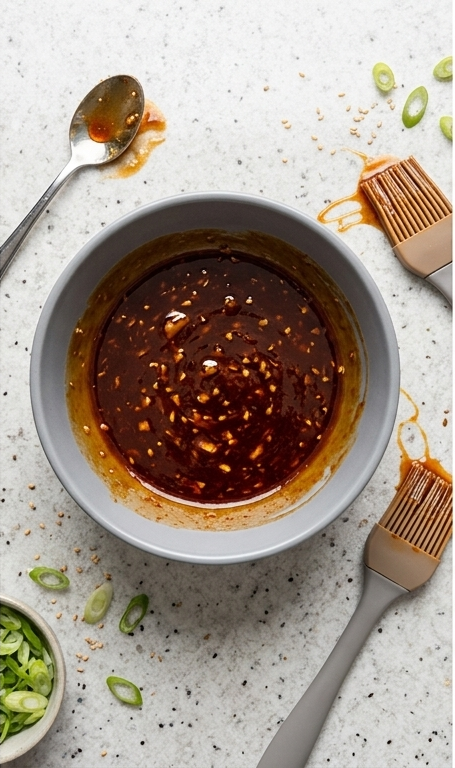
Whisk the gochujang, honey, mirin, soy sauce, toasted sesame oil, minced garlic and grated ginger together in a small bowl until smooth and glossy. Taste and adjust for balance—the glaze should be thick, syrupy, deep red with warm orange highlights and tiny flecks of garlic and ginger suspended throughout. Set the bowl aside; this viscous glaze will both caramelize on the grill and cling to the shrimp, so you want a spreadable yet sticky texture.
Step 2: Season and Thread the Shrimp
Lightly toss the peeled, deveined jumbo shrimp with Kosher salt so each shrimp is evenly seasoned. Double the long wooden skewers and thread three to four shrimp per doubled skewer so they sit snugly and won’t spin while grilling. Arrange the soaked skewers and the seasoned shrimp neatly on a plate so they’re ready to hit the heat; keep the remaining glaze and the basting brush close by for quick application after the initial cook.
Step 3: Grill, Caramelize, and Glaze
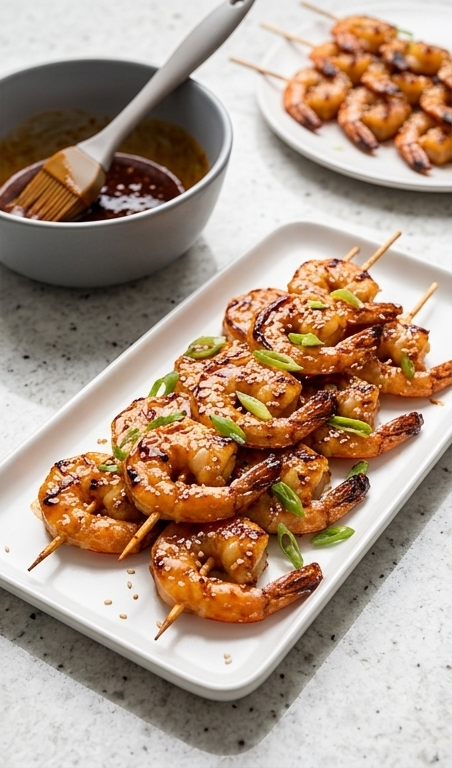
Place the shrimp over direct heat until the exterior shows bright grill marks and the flesh turns opaque: roughly a brief sear on the first side, a turn, then a shorter finish on the return side. Brush a generous coat of the gochujang‑honey glaze onto the shrimp near the end of cooking so the sugars caramelize without burning, then turn and glaze the reverse side once more so each shrimp becomes shiny and lacquered. The ideal texture is plump and just-cooked with a sticky, slightly charred surface and an evenly distributed sheen of glaze.
Step 4: Plate, Finish, and Garnish
Transfer the hot glazed skewers onto a serving platter, brush with any remaining glaze for an added glossy finish, and scatter toasted sesame seeds and thinly angled sliced scallions across the shrimp. Keep the glaze bowl and the basting brush nearby on the surface—little pools of glaze and a resting brush make the scene feel intentional and useful while the skewers remain the star.
Making It Your Own
Try swapping the shrimp for scallops or firm tofu if you want a different texture. I once tested a tofu version where I pressed and grilled thick slices; the glaze stuck beautifully and it fed a vegetarian friend at dinner with rave reviews.
For less heat, reduce gochujang by half and add an extra teaspoon of honey. Another time I used smoked paprika to add a little warmth without extra spice; it made the glaze taste almost barbecue-like.
Seasonal twists work well: top skewers with a squeeze of lime and chopped fresh herbs in summer, or add a scattering of pomegranate seeds in winter for a sweet-tart crunch. Each small experiment changes the mood of the dish.
How to Serve
When I host, I arrange skewers on a long platter over banana leaves or parchment for an easy, rustic presentation. Offer small bowls with extra glaze, lime wedges, and a tray of scallion strings so guests can customize each bite. For a light lunch, serve two skewers per person with a simple cucumber salad and steamed rice. For a heartier dinner, increase to three skewers and pair with sticky rice, grilled corn, or a cold noodle salad.
If you want to scale up for a party, keep prepped shrimp chilled on trays and grill in batches to maintain that perfect sear. Keep the glaze warm in a small pot and brush between rounds so every skewer leaves the grill lacquered and glossy.
Storage and Reheating Tips
Store leftover glazed shrimp in an airtight container in the refrigerator for up to 48 hours. Because the glaze contains sugar, it can make the shrimp stick together; separate layers with parchment paper to keep pieces intact.
Reheat gently under the broiler for a minute or two to revive the glaze, or warm in a skillet over medium-low heat, turning once so the glaze does not burn. Avoid microwaving if you want to keep the texture plump and slightly charred.
Common Mistakes and How to Avoid Them
One common mistake is overcooking the shrimp which makes them rubbery. Remove skewers from heat as soon as the flesh goes opaque and the tails curl just a bit.
Another slip is glazing too early. Wait until the final minute so the sugars caramelize rather than burn. If the grill is very hot, move shrimp to indirect heat while glazing to control charring.
Final Thoughts
I hope Gochujang-Honey Glazed Shrimp Skewers find a place on your weeknight rotation or your next dinner party menu. They are quick, bold, and oddly comforting, and once you master the glaze timing, they always look and taste like a celebration. Give them a try—you might be surprised how often you reach for this recipe.
Frequently Asked Questions.
- What type of shrimp is best for these skewers? I use jumbo peeled and deveined shrimp for the best texture; they hold up to grilling and carry the glaze well.
- Can I make the glaze ahead of time? Yes, you can make the glaze a day ahead and store it in the refrigerator; bring it to room temperature before using.
- How do I reduce the heat in the glaze? Cut the gochujang by half and add a bit more honey or mirin to balance the flavor.
- Can I use metal skewers? Yes, metal skewers are fine and do not need soaking; just be careful when handling as they conduct heat.
- Is there a vegetarian alternative? Try pressed, firm tofu or large king oyster mushroom slices; they grill nicely and soak up the glaze.
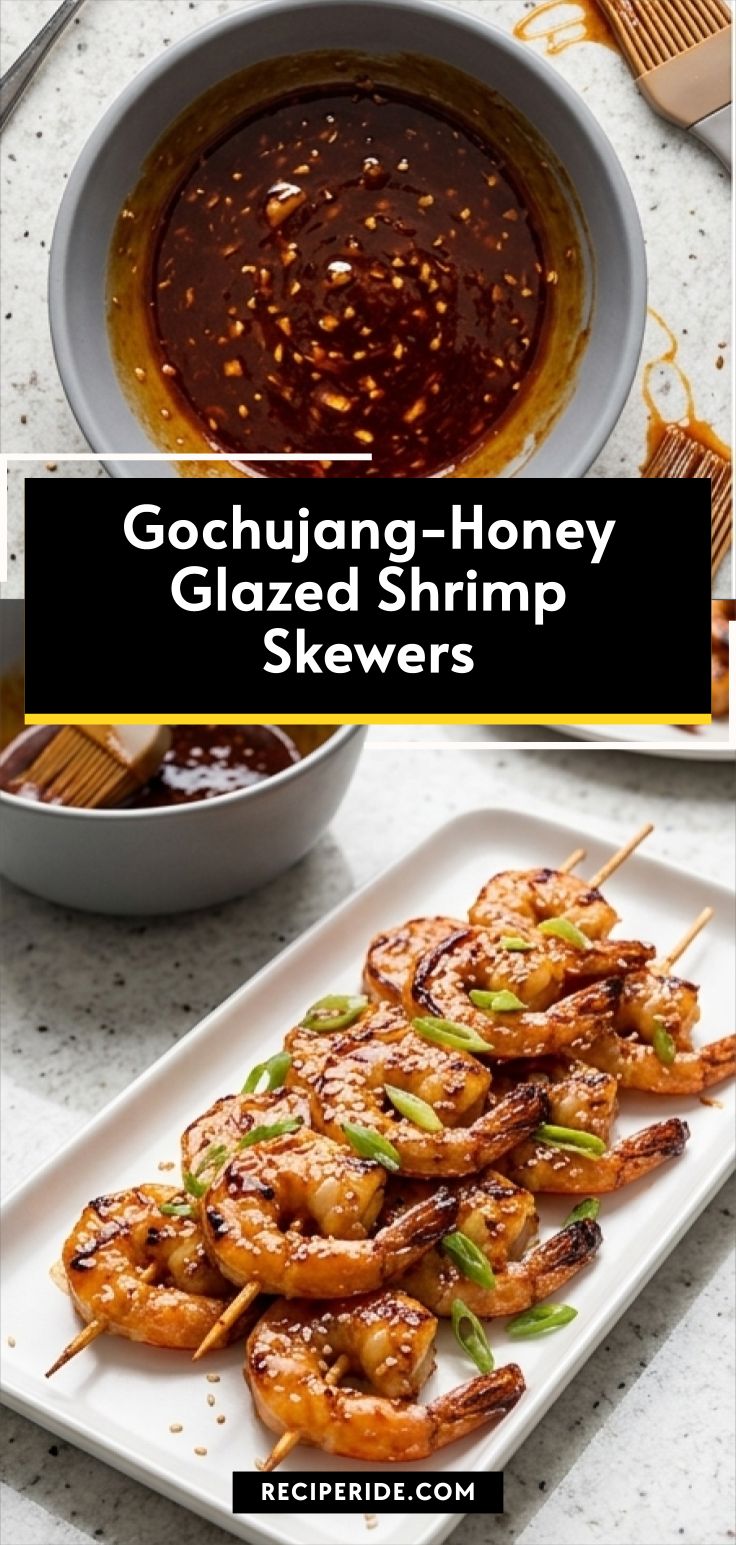
Gochujang-Honey Glazed Shrimp Skewers
Make Gochujang-Honey Glazed Shrimp Skewers for sticky, charred skewers in under 25 minutes.
Ingredients
Instructions
Step 1: Make the Gochujang‑Honey Glaze
Whisk the gochujang, honey, mirin, soy sauce, toasted sesame oil, minced garlic and grated ginger together in a small bowl until smooth and glossy. Taste and adjust for balance—the glaze should be thick, syrupy, deep red with warm orange highlights and tiny flecks of garlic and ginger suspended throughout. Set the bowl aside; this viscous glaze will both caramelize on the grill and cling to the shrimp, so you want a spreadable yet sticky texture.
Step 2: Season and Thread the Shrimp
Lightly toss the peeled, deveined jumbo shrimp with Kosher salt so each shrimp is evenly seasoned. Double the long wooden skewers and thread three to four shrimp per doubled skewer so they sit snugly and won’t spin while grilling. Arrange the soaked skewers and the seasoned shrimp neatly on a plate so they’re ready to hit the heat; keep the remaining glaze and the basting brush close by for quick application after the initial cook.
Step 3: Grill, Caramelize, and Glaze
Place the shrimp over direct heat until the exterior shows bright grill marks and the flesh turns opaque: roughly a brief sear on the first side, a turn, then a shorter finish on the return side. Brush a generous coat of the gochujang‑honey glaze onto the shrimp near the end of cooking so the sugars caramelize without burning, then turn and glaze the reverse side once more so each shrimp becomes shiny and lacquered. The ideal texture is plump and just-cooked with a sticky, slightly charred surface and an evenly distributed sheen of glaze.
Step 4: Plate, Finish, and Garnish
Transfer the hot glazed skewers onto a serving platter, brush with any remaining glaze for an added glossy finish, and scatter toasted sesame seeds and thinly angled sliced scallions across the shrimp. Keep the glaze bowl and the basting brush nearby on the surface—little pools of glaze and a resting brush make the scene feel intentional and useful while the skewers remain the star.
Notes
- Soak wooden skewers at least 20 minutes to prevent burning.
- Taste the glaze and adjust gochujang and honey to suit your heat preference.
- Brush glaze in the final minute to avoid burning the sugars.
- Separate leftover skewers with parchment before refrigerating to prevent sticking.
- Reheat briefly under the broiler or in a skillet to revive the glaze.