Pasta with Artichokes, Tomatoes and Feta is one of those weeknight winners I keep returning to. I first made this dish on a rainy evening when my pantry was half empty and my craving for something bright and comforting was very real. The combination of tender artichokes, burst cherry tomatoes, and salty feta gives every bite a Mediterranean feel that is easy to love. I usually toss it together in under 30 minutes, and it has become my go-to when friends drop by or when I want something simple that still feels special.
What makes Pasta with Artichokes, Tomatoes and Feta special is how quickly humble ingredients transform into a lively, layered plate. The feta melts slightly into the warm strands, tomatoes pop with sweet juice, and the artichokes add a silky, slightly nutty texture. If you like food that tastes like effort but hardly took any, this pasta delivers.
How This Recipe Became My Rainy-Day Favorite
I remember the first time I cooked Pasta with Artichokes, Tomatoes and Feta: rain tapping at the windows, a kettle that kept whistling on and off, and the comforting sound of a wooden spoon against a skillet. The kitchen smelled like sweet onions and garlic caramelizing, and the white wine steamed up, carrying memories of warmer dinners. When I added the quartered artichoke hearts, I felt a small thrill as edges began to brown, releasing a gentle, earthy aroma. Forkfuls tasted like sunshine in a bowl, even though it was gray outside. That contrast between weather and flavor is why this recipe stuck with me. It became my answer to gloomy nights, a dish that felt both nurturing and a little celebratory without fuss.
Ingredient Spotlight
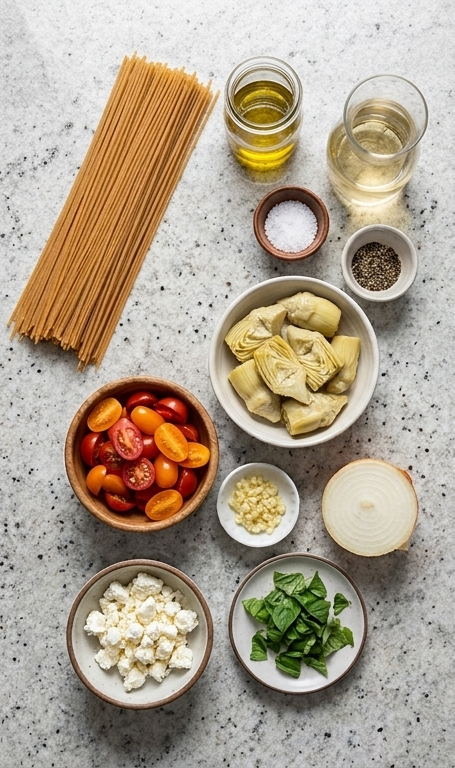
This pasta thrives on a handful of strong players, each pulling its weight in flavor and texture. Choose each ingredient with care for the best results.
- Whole-wheat spaghetti: Gives the dish a nutty backbone and firm bite. Substitute with regular spaghetti or a gluten-free pasta if needed; cook to al dente so the strands hold up when tossed.
- Artichoke hearts: Provide tender, slightly sweet complexity. Use jarred or canned artichokes and drain well; look for hearts that are tender, not overly fibrous.
- Cherry tomatoes: Add bright, juicy pops. If out of season, use halved grape tomatoes or a handful of sun-dried tomatoes rehydrated.
- Feta cheese: Brings salty creaminess. Swap for grated Parmesan for a drier finish, or use a sheep milk feta for extra richness.
Essential Kitchen Tools and Why They Matter
A few simple tools make this pasta feel effortless and help the flavors come together cleanly. You do not need anything fancy, but these items speed things along and keep the results consistent.
- Large pot: For boiling the pasta in plenty of salted water so it cooks evenly and does not stick.
- Skillet or sauté pan: A wide pan gives you surface area to brown onions, reduce wine, and toss the pasta so the sauce coats each strand.
- Tongs or pasta fork: For tossing spaghetti into the sauce and helping portion pasta onto plates.
- Measuring cups and spoons: Helpful for the wine, oil, and cheese so the balance stays right.
If you do not have a wide skillet, use a deep frying pan or a shallow Dutch oven. No tongs? Use two large forks to toss the pasta. These swaps keep the technique the same and the flavors intact.
Step-by-Step Preparation Guide
Step 1: Cook the spaghetti
Bring a large pot of generously salted water to a boil and cook the whole‑wheat spaghetti until just al dente following the package timing. Drain the pasta, reserving one cup of the starchy pasta water, then return the drained strands to the empty pot to rest while you build the sauce; the pasta should look glossy and pliable but still retain a firm bite.
Step 2: Brown the aromatics and reduce the wine
In a skillet, warm one tablespoon of extra‑virgin olive oil and add the thinly sliced onion and minced garlic, seasoning lightly with coarse salt and ground pepper. Stir occasionally until the onion and garlic take on a soft golden-brown edge and smell nutty. Pour in the dry white wine and continue cooking until the alcohol aroma has lifted and the wine has mostly evaporated, leaving a faint glossy pan fond that will cling to the pasta.
Step 3: Build the sauce and marry the pasta
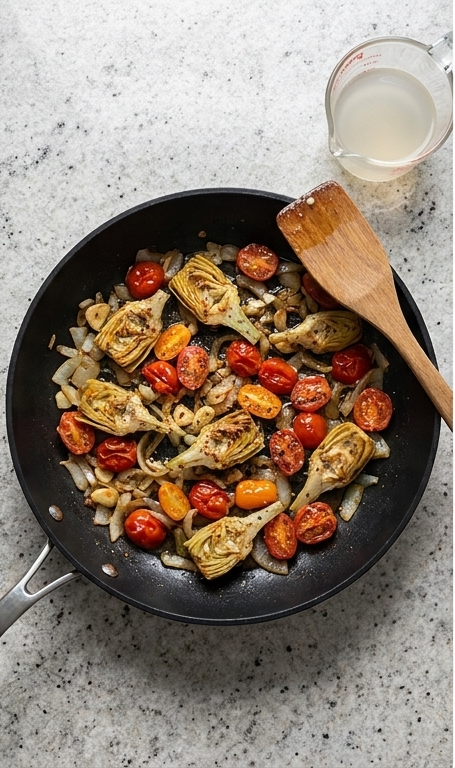
Stir in the quartered, drained artichoke hearts, letting them develop small caramelized edges, then add the olives and half of the halved cherry tomatoes so the fruit begins to blush and break down, releasing sweet juices. Toss the reserved spaghetti into this pan result with the remaining tomatoes and another tablespoon of oil, using a splash of reserved pasta water to loosen and create a silky coating that clings to each strand.
Step 4: Plate and finish with cheese and basil
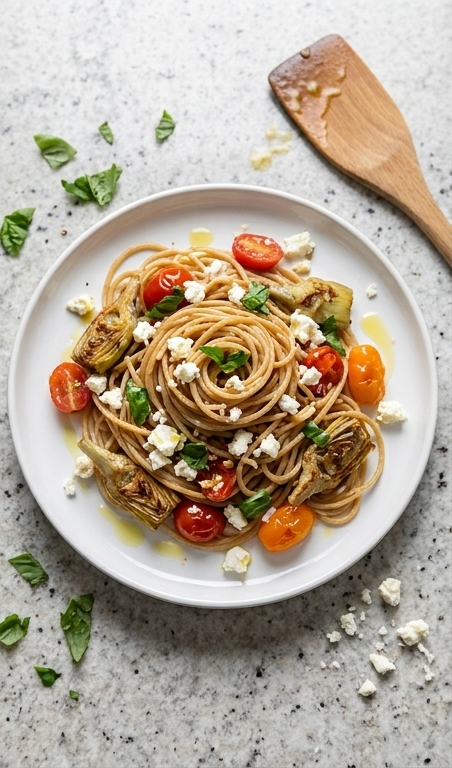
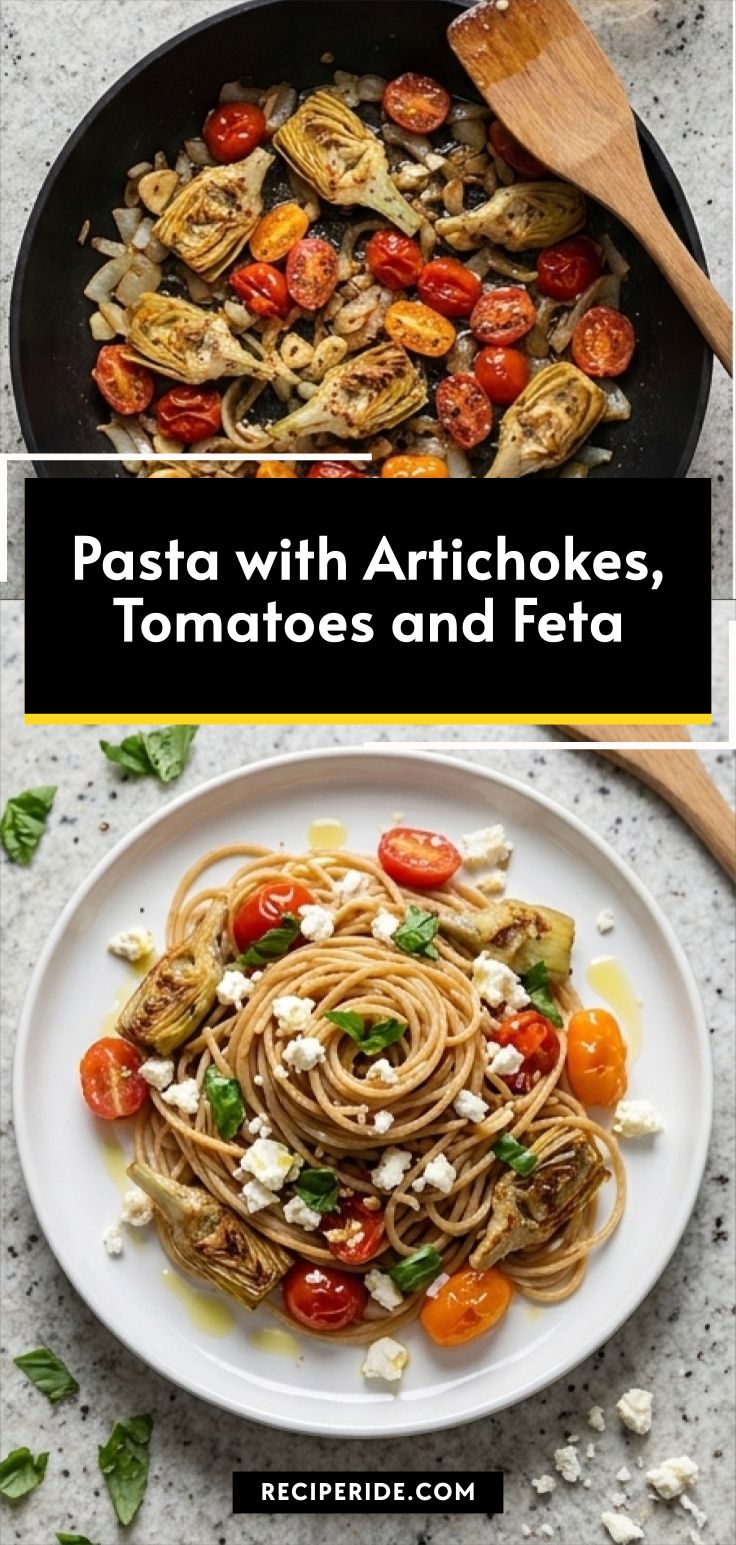
Transfer twirled portions to warm round white plates, generously crumble feta over each nest and scatter the julienned or torn fresh basil leaves on top. Finish with a gentle drizzle of extra‑virgin olive oil, an extra crack of black pepper and a few scattered tomato halves for color contrast – the final plate should be glossy, textured with crumbled cheese and torn basil, and ready to serve.
Making It Your Own
I like to tinker, so these tweaks are things I have tried after the original. For a heartier meal, stir in a cup of cooked cannellini beans at the end and give the dish an extra minute to warm through. For a vegan version, skip the feta and finish with a sprinkle of toasted pine nuts and a pinch of nutritional yeast for savory depth. In summer, add a handful of fresh baby spinach right at the end so it wilts into the warm pasta, or replace half the wine with a splash of lemon juice for extra brightness. For a regional twist, fold in chopped roasted peppers and smoked paprika to lean into Spanish flavors. Each change keeps the spirit of Pasta with Artichokes, Tomatoes and Feta alive while letting you match it to the season or your mood.
How to Serve
When I serve Pasta with Artichokes, Tomatoes and Feta for friends, I aim for relaxed elegance. Plate the pasta in shallow bowls so the feta and basil sit visibly on top; guests love the visual contrast. Offer extra crumbled feta and a small bottle of good olive oil at the table so people can finish their portion to taste. For larger gatherings, keep the pasta warm in the skillet over very low heat and add a splash of reserved pasta water if it tightens up.
Pair the dish with a simple green salad dressed in lemon and olive oil and a chilled bottle of dry white wine. To scale up, double the ingredients but cook pasta in batches so it stays al dente and tosses evenly with the sauce.
Storage and Reheating Tips
Cool leftovers quickly and store in an airtight container in the refrigerator for up to 3 days. The pasta will absorb some sauce over time, so keep a small jar of olive oil or a little reserved pasta water on hand to refresh it.
Reheat gently on the stovetop in a skillet over low heat, adding a splash of water and a drizzle of olive oil to bring everything back to life. Microwaving works in a pinch; cover loosely and stir halfway through to heat evenly.
Common Mistakes and How to Avoid Them
A frequent slip is overcooking the pasta. Aim for just al dente since the pasta finishes in the pan and will soften further when mixed with the sauce.
Another misstep is adding too much salt early. Taste as you go, especially because the feta and canned artichokes can carry brine. Hold back on seasoning until the end so you can balance flavors precisely.
Final Thoughts
If you are looking for a weeknight pasta that feels both effortless and a little special, give Pasta with Artichokes, Tomatoes and Feta a try. It is forgiving, quick, and full of bright, complementary flavors that are easy to love.
Frequently Asked Questions
- What can I use instead of feta? – You can swap feta for grated Parmesan or pecorino for a nuttier, drier finish, or use a plant-based crumble for a vegan option.
- Can I make this recipe gluten-free? – Yes, use your favorite gluten-free spaghetti and watch the cooking time so it reaches al dente without becoming mushy.
- How do I prevent the tomatoes from turning to mush? – Add half the tomatoes first to cook down and the remaining half toward the end so they keep some shape and burst gently.
- Is it okay to use frozen artichoke hearts? – Yes, defrost and pat them dry before adding; frozen artichokes can be slightly wetter, so drain well.
- Can I prepare elements ahead of time? – You can slice the onions, halve the tomatoes, and crumble the cheese a day ahead; keep them refrigerated separately.
Pasta with Artichokes, Tomatoes and Feta
Make Pasta with Artichokes, Tomatoes and Feta in 30 minutes for a bright, easy Mediterranean weeknight meal.
Ingredients
Instructions
Step 1: Cook the spaghetti
Bring a large pot of generously salted water to a boil and cook the whole‑wheat spaghetti until just al dente following the package timing. Drain the pasta, reserving one cup of the starchy pasta water, then return the drained strands to the empty pot to rest while you build the sauce; the pasta should look glossy and pliable but still retain a firm bite.
Step 2: Brown the aromatics and reduce the wine
In a skillet, warm one tablespoon of extra‑virgin olive oil and add the thinly sliced onion and minced garlic, seasoning lightly with coarse salt and ground pepper. Stir occasionally until the onion and garlic take on a soft golden-brown edge and smell nutty. Pour in the dry white wine and continue cooking until the alcohol aroma has lifted and the wine has mostly evaporated, leaving a faint glossy pan fond that will cling to the pasta.
Step 3: Build the sauce and marry the pasta
Stir in the quartered, drained artichoke hearts, letting them develop small caramelized edges, then add the olives and half of the halved cherry tomatoes so the fruit begins to blush and break down, releasing sweet juices. Toss the reserved spaghetti into this pan result with the remaining tomatoes and another tablespoon of oil, using a splash of reserved pasta water to loosen and create a silky coating that clings to each strand.
Step 4: Plate and finish with cheese and basil
Transfer twirled portions to warm round white plates, generously crumble feta over each nest and scatter the julienned or torn fresh basil leaves on top. Finish with a gentle drizzle of extra‑virgin olive oil, an extra crack of black pepper and a few scattered tomato halves for color contrast — the final plate should be glossy, textured with crumbled cheese and torn basil, and ready to serve.
Notes
- Reserve one cup of pasta water to adjust sauce consistency.
- Drain and pat artichoke hearts dry to prevent a watery sauce.
- Hold back on salt until the end because feta and canned artichokes may add brininess.
- Reheat gently on the stovetop with a splash of water or olive oil to revive texture.