Classic Mimosa Recipe: simple, bright, and endlessly cheerful, this is the cocktail I reach for when company drops by or when Sunday feels a little too lazy. The Classic Mimosa Recipe lives up to its name by being effortless yet festive, and I love how a single bottle and a pitcher of juice can change the mood of a room. I first learned to make this drink at a cramped kitchen counter, and since then it has become my go-to for easy celebrations. If you want something that looks elevated with almost no fuss, this Classic Mimosa Recipe is your friend.
How This Recipe Became My Sunny-Weekend Ritual
I remember the first time I made this on a bleary Sunday after a week of late nights. The sound of the bottle popping was like a punctuation mark to the week, and the first pour sent a stream of tiny bubbles racing to the surface. The citrus scent filled the small apartment and felt like a promise of lighter hours. I arranged three flutes on the counter, watched the juice mix into the sparkling wine, and something in the room shifted. It felt celebratory without pressure, intimate without ceremony. That memory is why I keep this recipe so close: it turns ordinary mornings into small, deliberate moments of joy. Every sip brings back that bright, effervescent relief.
Primary Ingredients and What They Do
- Champagne, prosecco, or cava: The effervescence and dry-to-off-dry backbone of the drink. Choose prosecco for fruitier notes, cava for crisp, savory bubbles, or Champagne for a refined, toasty depth; substitute a good-quality sparkling rosé for color variation.
- Orange juice: Provides sweetness, acidity, and texture. Use freshly squeezed for bright, aromatic oil notes; store-bought is fine for convenience. For less pulp, strain or use a smooth no-pulp variety.
Essential Kitchen Tools and Friendly Alternatives
A few simple tools make this Classic Mimosa Recipe feel intentional and keep the process smooth.
- Champagne flutes or tall glasses: They showcase bubbles and concentrate aroma; if you don’t have flutes, use wine glasses for better balance.
- Ice-free pitcher: For holding chilled orange juice; any clear pitcher works so you can see color and pulp.
- Citrus juicer or reamer: Fresh juice brightens the drink; hand-squeeze if you don’t have a juicer.
- Small jigger or measuring cup: Helpful for consistent pours when scaling for guests; improvise with a tablespoon measure if needed.
These tools are optional but elevate the experience, especially when hosting.
Step-by-Step Preparation Guide.
Step 1: Pour the sparkling wine into the flutes
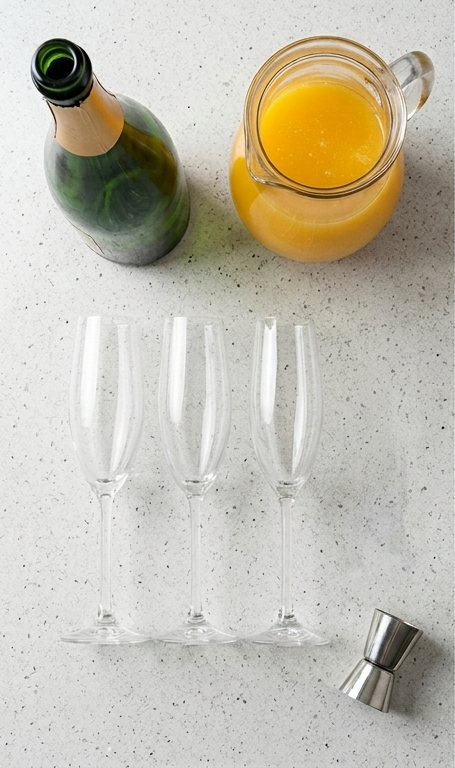
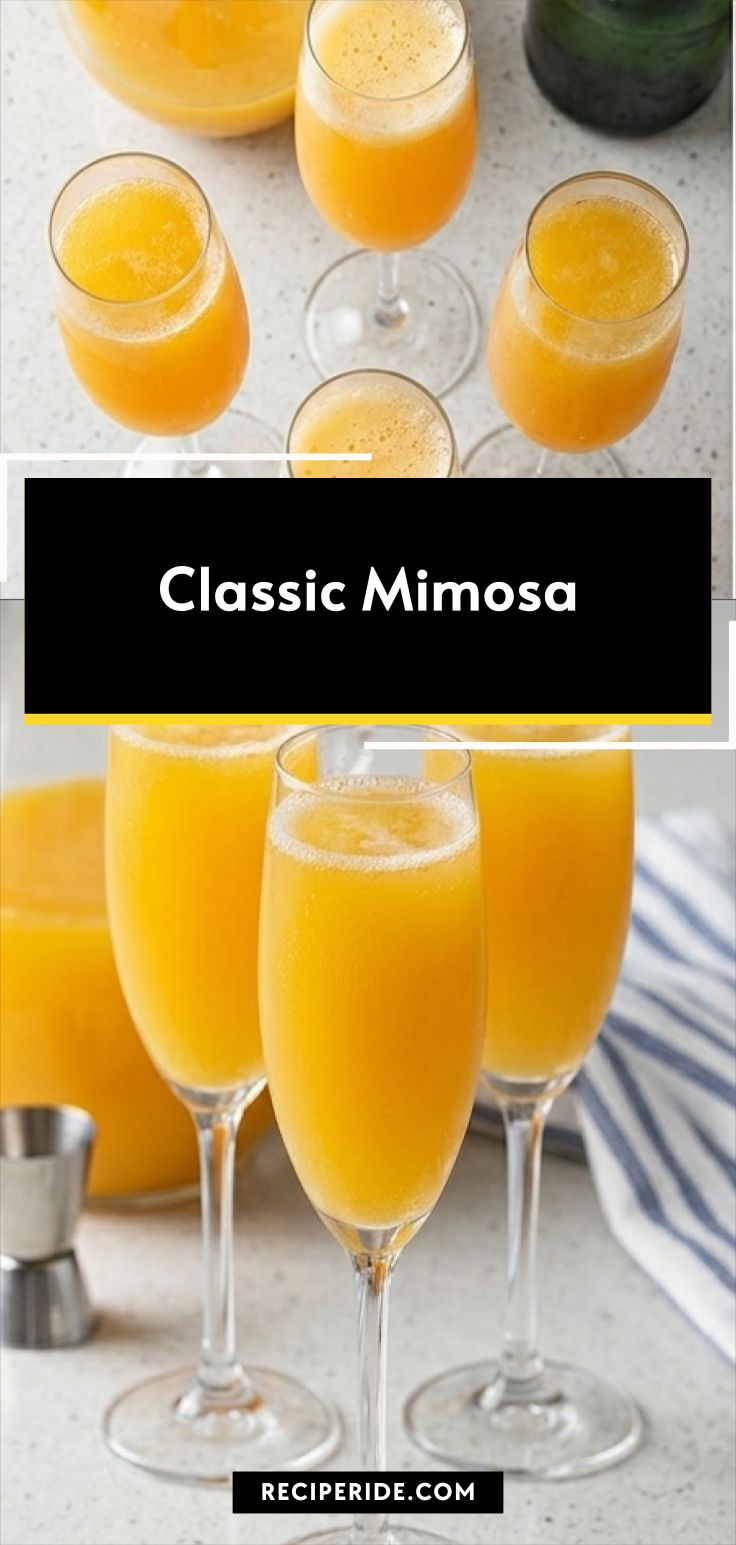
Place three elegant, slender Champagne flutes on the Luna Pearl granite and gently pour chilled sparkling wine into each glass until they are about half full. Describe the wine as pale straw-gold with a delicate, trembling column of tiny bubbles hugging the inner glass; place the green bottle (uncorked, no hands) slightly angled nearby on the surface and a clear glass pitcher of freshly squeezed orange juice to the side. Keep the scene tidy: the liquids remain only inside their glass vessels, the flutes show a faint ring of condensation, and the light top-down view highlights the fine-grain mica sparkle of the countertop.
Step 2: Top with orange juice to finish the mix
Slowly pour bright, sun-kissed orange juice into each flute so the citrus lifts the sparkling wine to a warm, vibrant hue; watch the effervescence bloom as citrus oils and bubbles interplay, creating a lively surface of tiny, pearly foam and rising micro-bubbles. Mention the resulting texture: glossy, slightly frothy crowns at the rim, translucent orange gradients from deeper pulp at the base to lighter effervescence near the surface. A small stainless jigger and the clear pitcher (filled with extra juice) remain in frame as quiet, consistent props.
Step 3: Serve the finished Mimosas
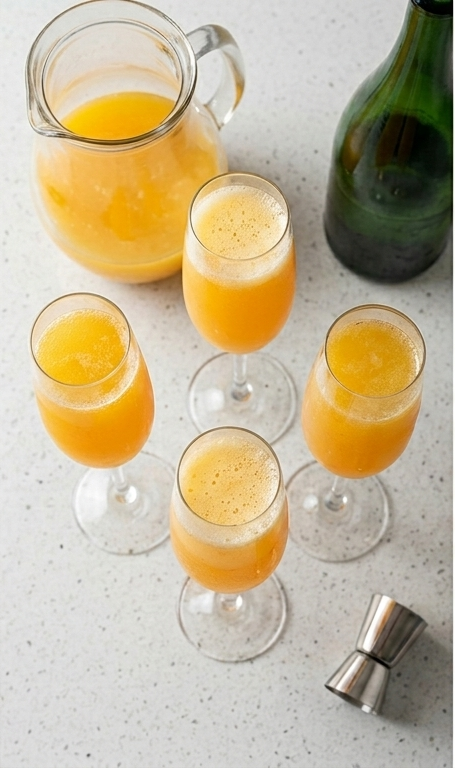
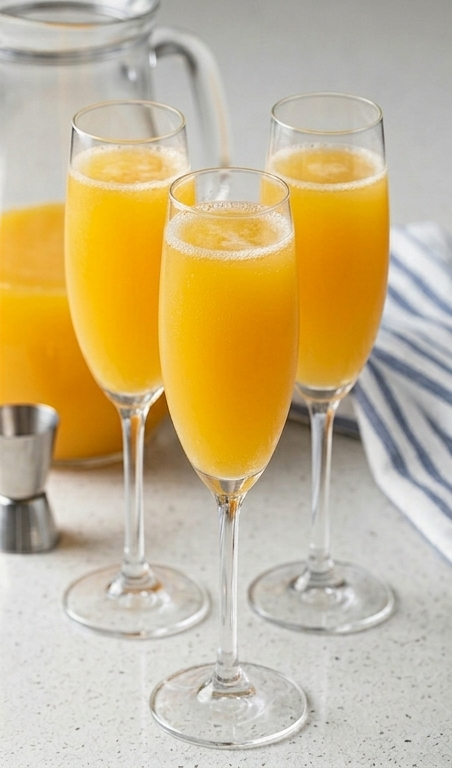
Present three finished Mimosas as a cohesive trio on the same Luna Pearl granite, each glass brimming with a luminous, effervescent orange cocktail; the eye-level close-up reveals crystal flute rims, fine rising bubbles, tiny reflective highlights on the liquid surface, and delicate condensation beads on glass. A blue-and-white striped cloth peeks into the composition and the clear glass pitcher sits just behind the flutes, echoing the same juice. This serving shot is intimate and celebratory, capturing the textural contrast of sparkling carbonation against smooth citrus juice before the drinks are enjoyed.
Making It Your Own
I like to experiment by adjusting the ratio, trying a 50/50 split for brunch and a splash more juice when I want a gentler fizz. For a seasonal twist, swap in blood orange in winter or a mix of orange and tangerine in late winter for extra sweetness. To make it lower alcohol, use half sparkling water and half sparkling wine, then top with juice. If I want a sweeter, fruitier profile, I try prosecco; for a drier, structured drink, cava is my choice. Little garnishes like a thin orange twist or a few pomegranate seeds make each glass feel custom.
How to Serve
When hosting, chill the bottle and pitcher well in advance so everything stays crisp as people arrive. For a party of six, open two bottles and set a self-serve station with flutes, a pitcher of fresh juice, and a small sign suggesting ratios. If you want to stretch the booze, offer a sparkling water carafe so guests can lighten their pours. For an elegant table, line the flutes in a row and set small plates with orange slices and paper napkins. For a casual brunch, place the pitcher on ice in a shallow bowl and let guests help themselves.
Storage and Reheating Tips
Leftover mixed mimosas lose fizz quickly, so I don’t recommend storing a poured glass. If you must, transfer to an airtight bottle and chill; drink within a few hours for best texture.
Unopened sparkling wine stores in a cool, dark place; once opened, reseal with a sparkling wine stopper and refrigerate for up to two days. Fresh orange juice keeps in the fridge for 2 to 3 days; stir gently before using.
Common Mistakes and How to Avoid Them
Topping the glass too quickly can create an overflow of foam. Pour slowly and tilt the glass slightly so bubbles settle gently.
Using warm wine or juice flattens the character. Keep both components well chilled and ready to serve to preserve the lift and aroma.
Enjoy Creating Small Celebrations
The Classic Mimosa Recipe is one of those simple pleasures that makes mornings feel special. Give it a try, play with the ratio, and invite someone over to toast small wins. You might be surprised how often this little ritual lifts the whole day.
Frequently Asked Questions.
- What sparkling wine should I use for the Classic Mimosa Recipe? Use prosecco for a fruit-forward mimosa, cava for crispness, or Champagne for depth; all work well depending on the mood.
- Can I make mimosas ahead of time? Mix bottles in a sealed container and chill briefly, but pour into flutes just before serving to keep bubbles lively.
- Is fresh orange juice necessary? Fresh juice is brighter and more aromatic, but good-quality store-bought orange juice is an acceptable shortcut.
- How do I make mimosas less alcoholic? Replace some sparkling wine with chilled sparkling water or use a lower-alcohol sparkling wine.
- How many servings does one bottle make? A 750 mL bottle generally pours about five to six standard flutes when mixed with juice, depending on your ratio.
Classic Mimosa Recipe
Make the Classic Mimosa Recipe: mix chilled sparkling wine with fresh orange juice for an effortless, celebratory brunch drink.
Ingredients
Instructions
Step 1: Pour the sparkling wine into the flutes
Place three elegant, slender Champagne flutes on the Luna Pearl granite and gently pour chilled sparkling wine into each glass until they are about half full. Describe the wine as pale straw-gold with a delicate, trembling column of tiny bubbles hugging the inner glass; place the green bottle (uncorked, no hands) slightly angled nearby on the surface and a clear glass pitcher of freshly squeezed orange juice to the side. Keep the scene tidy: the liquids remain only inside their glass vessels, the flutes show a faint ring of condensation, and the light top-down view highlights the fine-grain mica sparkle of the countertop.
Step 2: Top with orange juice to finish the mix
Slowly pour bright, sun-kissed orange juice into each flute so the citrus lifts the sparkling wine to a warm, vibrant hue; watch the effervescence bloom as citrus oils and bubbles interplay, creating a lively surface of tiny, pearly foam and rising micro-bubbles. Mention the resulting texture: glossy, slightly frothy crowns at the rim, translucent orange gradients from deeper pulp at the base to lighter effervescence near the surface. A small stainless jigger and the clear pitcher (filled with extra juice) remain in frame as quiet, consistent props.
Step 3: Serve the finished Mimosas
Present three finished Mimosas as a cohesive trio on the same Luna Pearl granite, each glass brimming with a luminous, effervescent orange cocktail; the eye-level close-up reveals crystal flute rims, fine rising bubbles, tiny reflective highlights on the liquid surface, and delicate condensation beads on glass. A blue-and-white striped cloth peeks into the composition and the clear glass pitcher sits just behind the flutes, echoing the same juice. This serving shot is intimate and celebratory, capturing the textural contrast of sparkling carbonation against smooth citrus juice before the drinks are enjoyed.
Notes
- Use freshly squeezed orange juice for brighter flavor.
- Chill sparkling wine and juice well before mixing.
- Pour slowly to preserve bubbles and avoid overflow.
- For a lower-alcohol option, add sparkling water.
- Reseal opened bottles with a sparkling wine stopper and refrigerate.