Tzatziki With Veggie Sticks Recipe is one of those simple, bright dishes I reach for on hot afternoons and last-minute gatherings. I first learned the rhythm of grating, salting, squeezing and folding while hosting a backyard potluck and it quickly became a signature I loved to share. The cool tang of yogurt, the crispness of cucumber, and the herbal lift from dill makes this Tzatziki With Veggie Sticks Recipe feel fresh every time. It pairs with crunchy vegetables and conversation, and I never tire of how easy it is to make ahead.
How This Tzatziki Became My Picnic Staple
The first summer I made this Tzatziki With Veggie Sticks Recipe, the sky was a clear, honest blue and my hands still smelled faintly of lemon long after the party. I remember the relief of watching a crowd gather around a single big platter of colorful sticks, the way children tapped at the bowl with tentative curiosity and then dove in with delighted surprise. The texture was the story: creamy yogurt that gave way to chilled cucumber threads, tiny bright bites of garlic and herb, and a finishing gloss of olive oil that smelled like summer. I felt proud but also quietly grateful that such a modest mix could create so many little exchanges at the table. Every time I make it now, that first afternoon hums in the back of my head, and the kitchen fills with the same steady, comforting rhythm of prep.
The Ingredients That Make It Sing
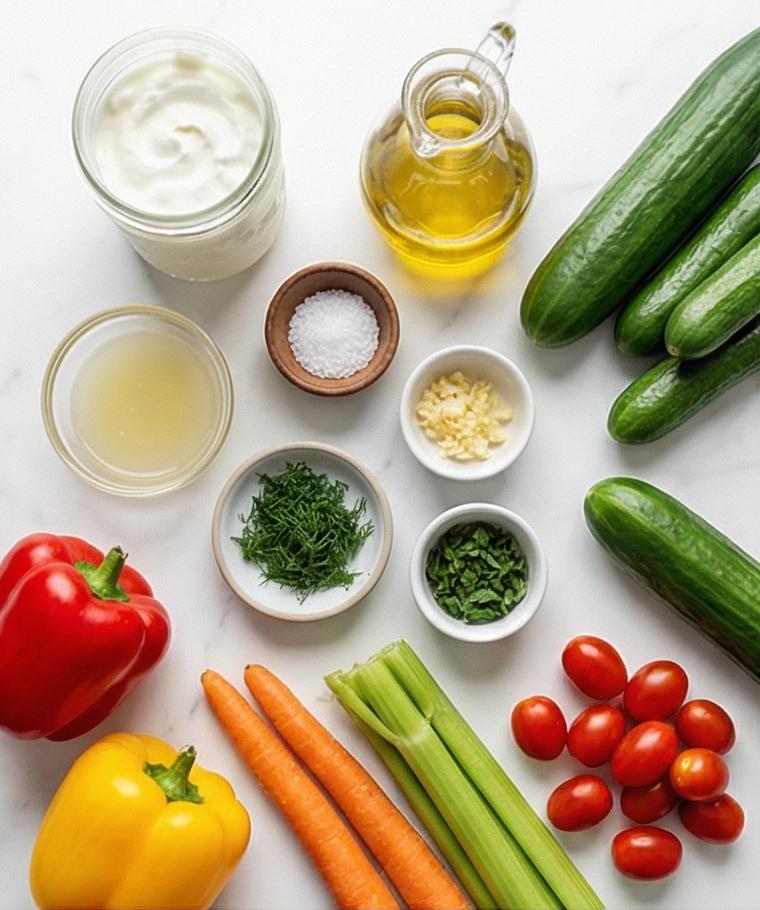
The success of this Tzatziki With Veggie Sticks Recipe rests on fresh, simple ingredients that each play a clear role. Choose a firm English cucumber and squeeze the moisture out so the dip stays thick. Full-fat Greek yogurt provides the creamy backbone and can be subbed with strained plain yogurt for a lighter version. Fresh garlic, lemon, dill and mint are small in quantity but big in impact – use good-quality olive oil to finish. The veggies should be crisp and colorful to contrast the silky dip.
- English Cucumber: Provides cool crunch and fresh flavor; seedless or English types work best. Substitute with seeded regular cucumber if needed, but salt and squeeze well.
- Full-Fat Greek Yogurt: The creamy base that gives body; swap for strained plain yogurt or a dairy-free coconut yogurt for a vegan twist.
- Garlic: Adds pungency; use less if you prefer a milder taste or roast garlic for sweetness.
- Lemon Juice: Brightens the dip; use fresh lemon for best flavor, lime in a pinch.
- Fresh Dill and Mint: Herbaceous lift; parsley can substitute but the flavor will change.
- Extra-Virgin Olive Oil: Finishing oil adds silkiness and aroma; a neutral oil will change the character.
- Vegetable Sticks: Choose carrots, celery, peppers, cucumber and cherry tomatoes or radishes for color and texture.
Essential Kitchen Tools
A few simple tools make this Tzatziki With Veggie Sticks Recipe effortless and keep the texture just right. You do not need anything fancy, just sturdy, reliable equipment that speeds the work and protects the delicate ingredients.
- Box Grater: For coarse grating the English cucumber so it absorbs salt and releases liquid.
- Clean Kitchen Towel or Paper Towels: Essential for squeezing out excess cucumber moisture to keep the dip thick.
- Mixing Bowl and Spoon: A medium bowl for combining yogurt, lemon, garlic and herbs; a wooden spatula or spoon works well.
- Sharp Knife and Cutting Board: For trimming and cutting crisp, even veggie sticks for dipping.
- Airtight Container: For chilling and storing the tzatziki so flavors marry and the dip stays fresh.
Step-by-Step Preparation Guide.
Step 1: Grate, Salt, Rest and Squeeze the Cucumber
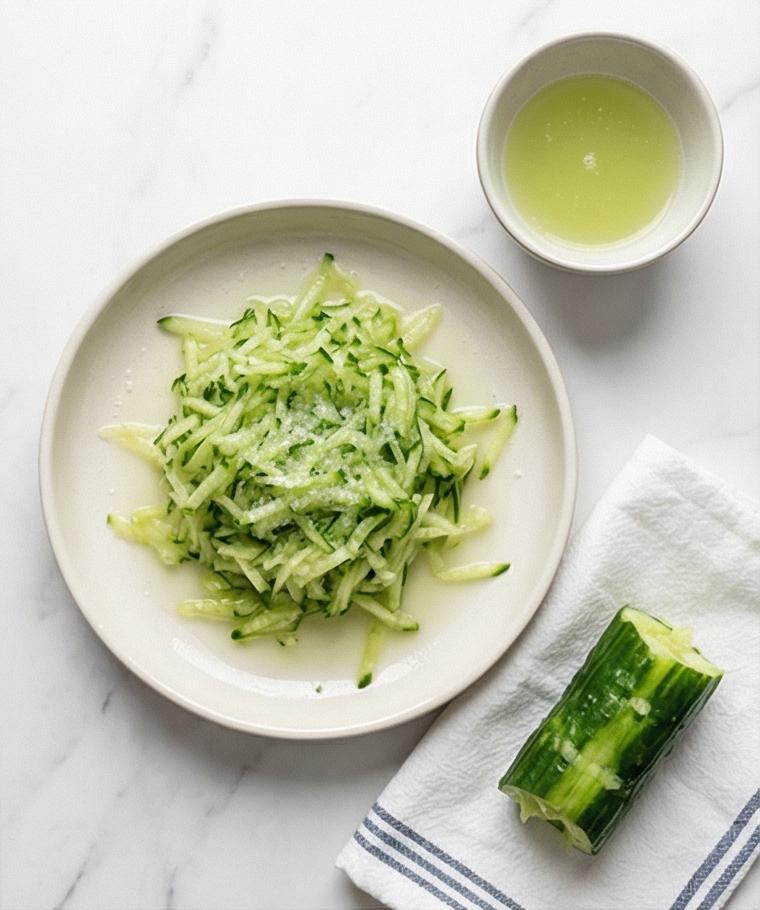
Use the large holes of a box grater to coarsely grate the medium English cucumber into a shallow bowl or onto a plate. Sprinkle the grated cucumber evenly with fine sea salt and let it sit at room temperature for 10-15 minutes so the salt draws out excess moisture – you’ll see glossy water pooling and the texture collapse from crisp shreds to damp, translucent ribbons. After resting, gather the cucumber in a clean kitchen towel or double layer of paper towels and squeeze very firmly over a bowl to extract liquid; the cucumber should feel damp but not wet, with visible squeezed-out green-tinted liquid collected separately. This yields a concentrated, tender grated cucumber ready to fold into the yogurt base.
Step 2: Combine the Yogurt Base
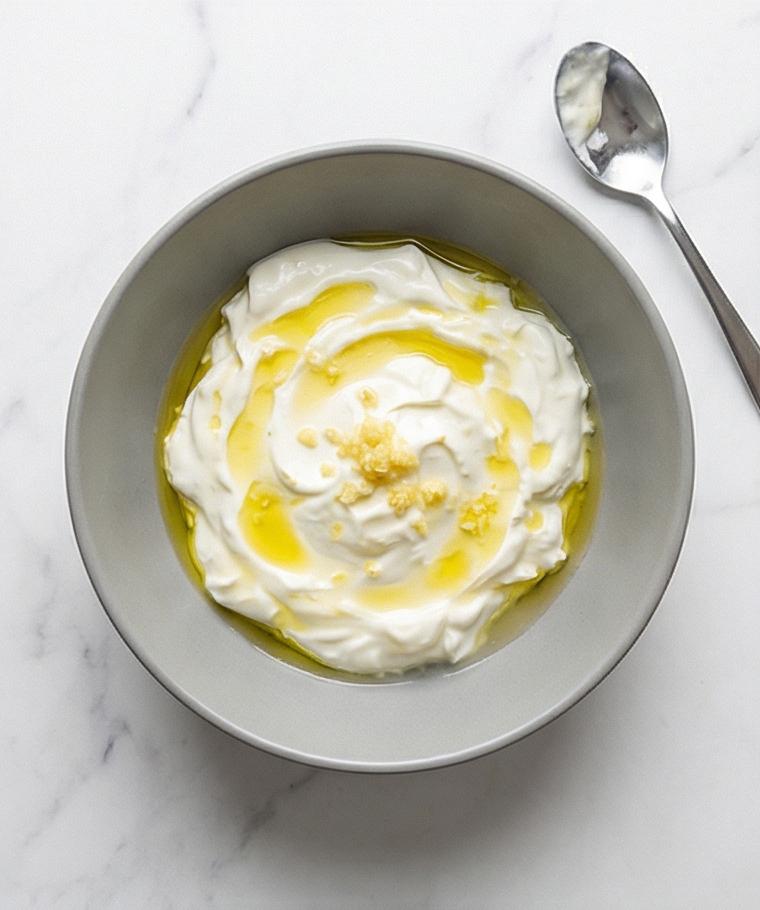
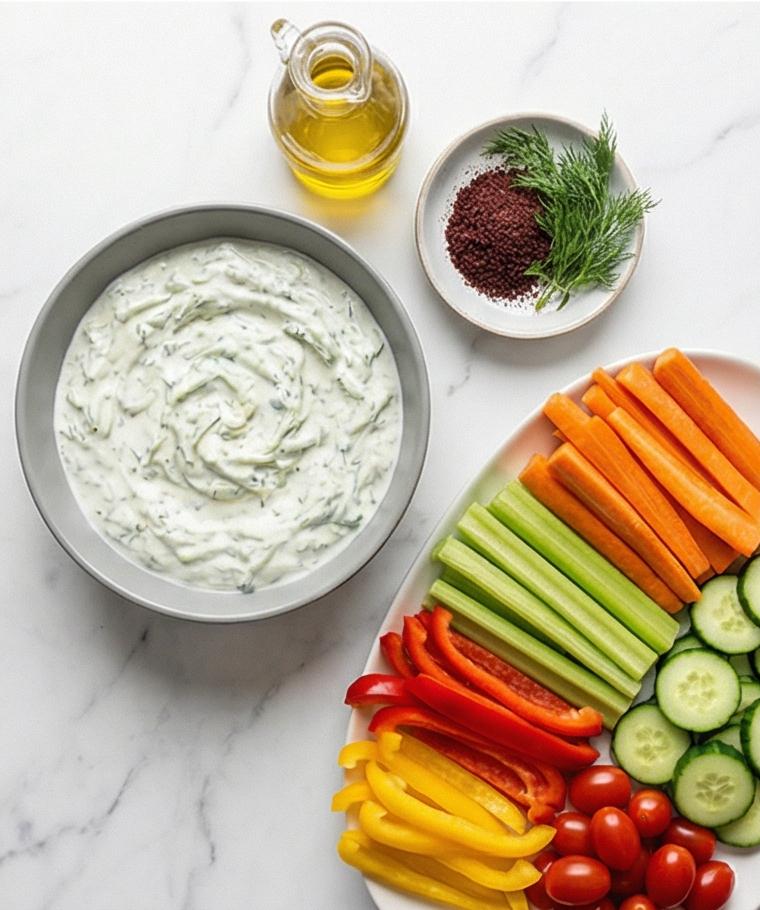
In a matte grey ceramic mixing bowl, add chilled full-fat Greek yogurt, a drizzle of extra-virgin olive oil, the freshly squeezed lemon juice and the finely minced or grated garlic. Stir gently with a small stainless spoon or wooden spatula until the mixture becomes smooth, silky and slightly glossy – the yogurt should sit thickly in the bowl with a soft peak when the spoon lifts. Taste briefly and adjust acidity or oil so the base feels bright but creamy; the garlic should be integrated as tiny translucent specks. Keep the same bowl and spoon on the marble surface; they are your persistent tools.
Step 3: Add Herbs, Fold in the Cucumber, and Chill
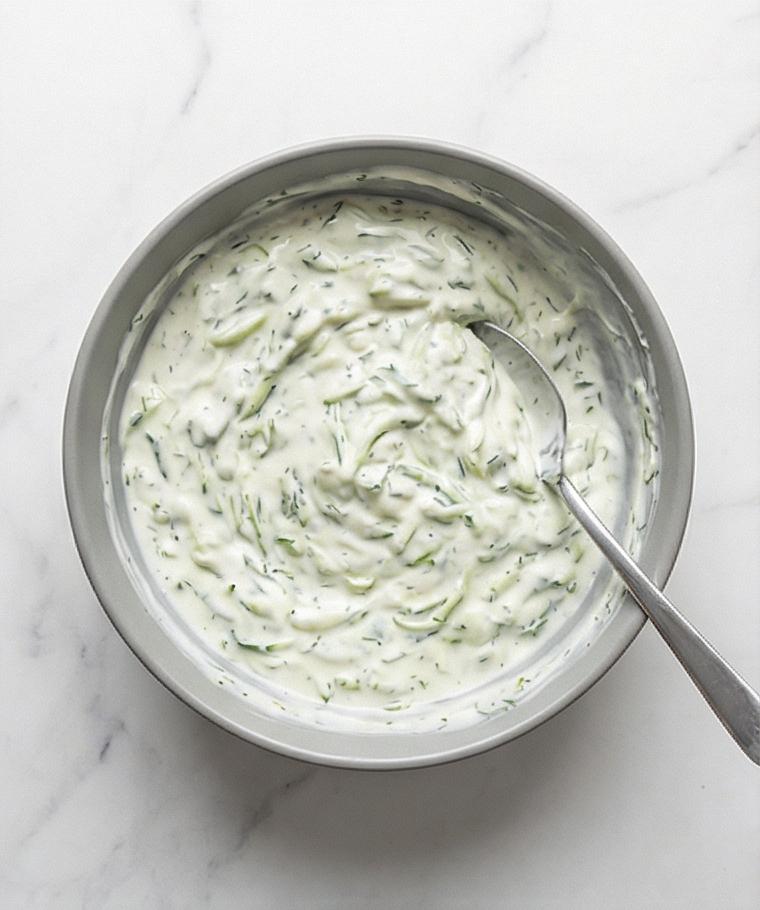
Add the finely chopped fresh dill and mint to the yogurt base, season with salt and freshly ground black pepper, then fold in the well-squeezed grated cucumber until the mixture looks uniformly flecked with green and scattered cucumber threads. The tzatziki should read as a thick, scoopable dip – creamy white with cool green ribbons, tiny herb fragments, and a faint sheen from olive oil. If it’s too dense, stir in a tablespoon or two of cold water to loosen the texture; taste and tweak lemon, salt, or pepper as needed. Transfer to the same matte grey bowl or an airtight serving container, cover, and chill for at least one hour so the flavors marry and the texture settles.
Step 4: Prepare and Keep the Veggie Sticks Crisp
While the tzatziki chills, prep the vegetable dippers: peel and cut carrots into even 3‑inch sticks, trim and cut celery stalks to match, seed and slice the red and yellow bell peppers into neat 1/2‑inch strips, slice the small cucumber into sticks or rounds, and rinse cherry tomatoes or radishes. Arrange the vegetables in a container or on a platter lined with a slightly damp paper towel to keep them crisp and cold in the fridge until service – the crisp, glossy vegetable textures (bright orange carrots, vivid red and yellow peppers, pale green celery) will contrast the creamy dip.
Step 5: Garnish, Arrange and Serve
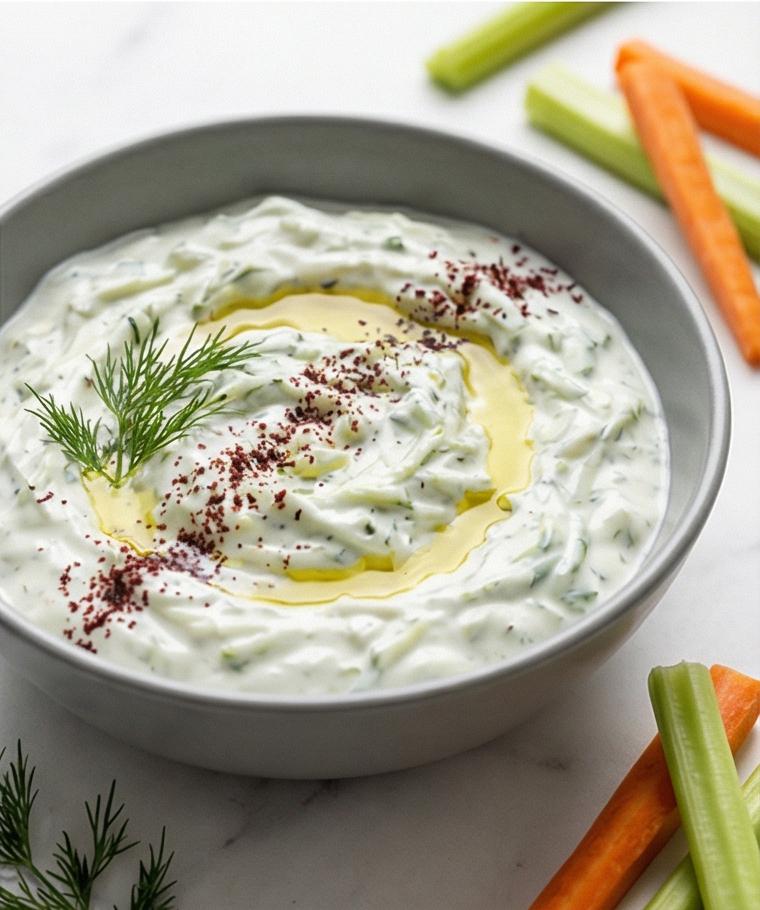
Remove the chilled tzatziki and give it a gentle, final stir; transfer to the serving bowl if you chilled it in a container and smooth the surface with the back of a spoon. Drizzle a tablespoon of extra-virgin olive oil across the center, sprinkle chopped fresh dill fronds and a pinch of ground sumac or sweet paprika for color and aroma. Arrange the crisp veggie sticks around the bowl on a large platter so they frame the dip, encouraging direct dipping. Serve immediately at cool, refreshing temperature and refrigerate leftovers promptly.
Making It Your Own
I often experiment with small swaps depending on the season and who I am feeding. For a dairy-free version, use thick, well-strained coconut or soy yogurt and add a touch more lemon so the tang reads clearly. For a milder garlic note, roast one clove and fold it in mashed; it brings a sweet, savory depth that kids tend to like.
When dill is sparse, I sometimes double the mint and add a little lemon zest for a brighter, herb-forward profile. In late summer, I toss in finely diced fresh tomatoes for a chunkier, salad-like tzatziki that doubles as a topping for grilled fish.
How to Serve
Think of this Tzatziki With Veggie Sticks Recipe as the centerpiece of a casual spread. For a small gathering of 4-6, serve the dip in a medium bowl with veggie sticks arranged upright on a platter. If you are hosting 10-12 people, double the recipe and use two bowls placed at opposite ends of the table so guests do not crowd one spot.
For a mezze-style party, add warm pita wedges, olives, sliced cured meats and marinated feta alongside the veggie sticks and tzatziki. If you want a plated starter, spoon a generous dollop on each plate and scatter microgreens or a lemon wedge for color and balance.
Storage and Reheating Tips
Store tzatziki in an airtight container in the refrigerator for up to 3 days; beyond that the cucumber will release more liquid and the fresh herbs will fade. If extra liquid accumulates, gently stir and drain a bit before serving to restore a scoopable texture.
This dip is not meant to be reheated. If you need to revive it after chilling, let it sit at cool room temperature for 10-15 minutes, then stir in a teaspoon of cold water or a little extra yogurt if it feels too tight.
Common Mistakes and How to Avoid Them
A common mistake is skipping the squeeze step after salting the cucumber – if you do, the tzatziki will become watery. Take the extra minute to compress and drain the cucumber thoroughly.
Another slip-up is overdoing the garlic. Start with less, taste after folding, and add more if needed. Fresh herbs lose brightness over time, so chop them just before assembling for the cleanest flavor.
Final Thoughts
If you try this Tzatziki With Veggie Sticks Recipe, let the simple ingredients shine and trust small adjustments by taste. It is forgiving, quick, and always a crowd-pleaser, whether you are laying out a picnic or adding a cool contrast to a warm meal.
Frequently Asked Questions.
- Q: Can I make tzatziki ahead of time? A: Yes, you can make it up to a day ahead; chill and stir before serving.
- Q: How do I keep tzatziki from getting watery? A: Salt and squeeze the cucumber well, and use thick, well-chilled Greek yogurt.
- Q: Can I use low-fat yogurt? A: You can, but full-fat Greek yogurt gives the creamiest texture and best mouthfeel.
- Q: Is mint necessary? A: No, mint is optional but recommended for brightness; dill is the traditional herb.
- Q: How long will it last in the fridge? A: Stored airtight, it will keep for about 3 days; give it a stir before serving.
Tzatziki With Veggie Sticks Recipe
Make Tzatziki With Veggie Sticks Recipe: creamy tzatziki with crisp veggie sticks—easy, fresh, and ready to serve.
Ingredients
Instructions
Step 1: Grate, Salt, Rest and Squeeze the Cucumber
Use the large holes of a box grater to coarsely grate the medium English cucumber into a shallow bowl or onto a plate. Sprinkle the grated cucumber evenly with fine sea salt and let it sit at room temperature for 10–15 minutes so the salt draws out excess moisture — you’ll see glossy water pooling and the texture collapse from crisp shreds to damp, translucent ribbons. After resting, gather the cucumber in a clean kitchen towel or double layer of paper towels and squeeze very firmly over a bowl to extract liquid; the cucumber should feel damp but not wet, with visible squeezed-out green-tinted liquid collected separately. This yields a concentrated, tender grated cucumber ready to fold into the yogurt base.
Step 2: Combine the Yogurt Base
In a matte grey ceramic mixing bowl, add chilled full-fat Greek yogurt, a drizzle of extra-virgin olive oil, the freshly squeezed lemon juice and the finely minced or grated garlic. Stir gently with a small stainless spoon or wooden spatula until the mixture becomes smooth, silky and slightly glossy — the yogurt should sit thickly in the bowl with a soft peak when the spoon lifts. Taste briefly and adjust acidity or oil so the base feels bright but creamy; the garlic should be integrated as tiny translucent specks. Keep the same bowl and spoon on the marble surface; they are your persistent tools.
Step 3: Add Herbs, Fold in the Cucumber, and Chill
Add the finely chopped fresh dill and mint to the yogurt base, season with salt and freshly ground black pepper, then fold in the well-squeezed grated cucumber until the mixture looks uniformly flecked with green and scattered cucumber threads. The tzatziki should read as a thick, scoopable dip — creamy white with cool green ribbons, tiny herb fragments, and a faint sheen from olive oil. If it’s too dense, stir in a tablespoon or two of cold water to loosen the texture; taste and tweak lemon, salt, or pepper as needed. Transfer to the same matte grey bowl or an airtight serving container, cover, and chill for at least one hour so the flavors marry and the texture settles.
Step 4: Prepare and Keep the Veggie Sticks Crisp
While the tzatziki chills, prep the vegetable dippers: peel and cut carrots into even 3‑inch sticks, trim and cut celery stalks to match, seed and slice the red and yellow bell peppers into neat 1/2‑inch strips, slice the small cucumber into sticks or rounds, and rinse cherry tomatoes or radishes. Arrange the vegetables in a container or on a platter lined with a slightly damp paper towel to keep them crisp and cold in the fridge until service — the crisp, glossy vegetable textures (bright orange carrots, vivid red and yellow peppers, pale green celery) will contrast the creamy dip.
Step 5: Garnish, Arrange and Serve
Remove the chilled tzatziki and give it a gentle, final stir; transfer to the serving bowl if you chilled it in a container and smooth the surface with the back of a spoon. Drizzle a tablespoon of extra-virgin olive oil across the center, sprinkle chopped fresh dill fronds and a pinch of ground sumac or sweet paprika for color and aroma. Arrange the crisp veggie sticks around the bowl on a large platter so they frame the dip, encouraging direct dipping. Serve immediately at cool, refreshing temperature and refrigerate leftovers promptly.
Notes
- Salt and squeeze the grated cucumber thoroughly to prevent a watery dip.
- Chill the tzatziki at least 1 hour for the flavors to meld.
- Taste and adjust lemon, salt and garlic gradually to avoid overpowering the dip.
- Store in an airtight container for up to 3 days and stir before serving if liquid forms.
- For a vegan version, use thick, strained plant-based yogurt and increase lemon for brightness.