I fell in love with Vegetable Stir Fry the first time a quick toss of bright vegetables and a glossy sauce turned an ordinary weeknight into something celebratory. It is the kind of dish I reach for when I want color, crunch and comfort without fuss. Over the years my Vegetable Stir Fry has become both a reliable weeknight champion and a canvas for whatever is in the fridge. The scent of sesame and garlic means dinner is ready in under half an hour and somehow everyone gathers around the stove.
How This Recipe Became My Rainy-Day Favorite
I remember the evening clearly: rain on the windows, a single bulb glowing over the kitchen, and a cold that made me want something warm and lively. I grabbed a handful of vegetables, a bottle of soy sauce and an old jar of sesame oil, and started chopping without thinking. The sizzle of the wok, the soft steam, the way the ginger and garlic smelled as they hit the hot oil felt like a small, exact pleasure. Each bite was bright and comforting at once, and that bowl felt like a little rescue. Since then I make this Vegetable Stir Fry whenever I need a quick, honest lift.
Primary Ingredients and What They Do
- Soy Sauce: The savory backbone that adds umami and salt; substitute low-sodium soy or tamari for gluten-free options.
- Chicken Broth: Adds depth and a bit of roundness; use vegetable stock or water with a pinch of miso if you want a vegetarian boost.
- Cornstarch: Thickens the sauce for a glossy cling; arrowroot works too but reduce heat slightly.
- Honey: Balances salt with gentle sweetness; swap maple syrup for a vegan touch.
- Sesame Oil: Finishing oil for aroma; toasted sesame oil is best but use sparingly.
- Ginger and Garlic: Fresh aromatics that brighten every bite; powdered forms can work in a pinch but are less vibrant.
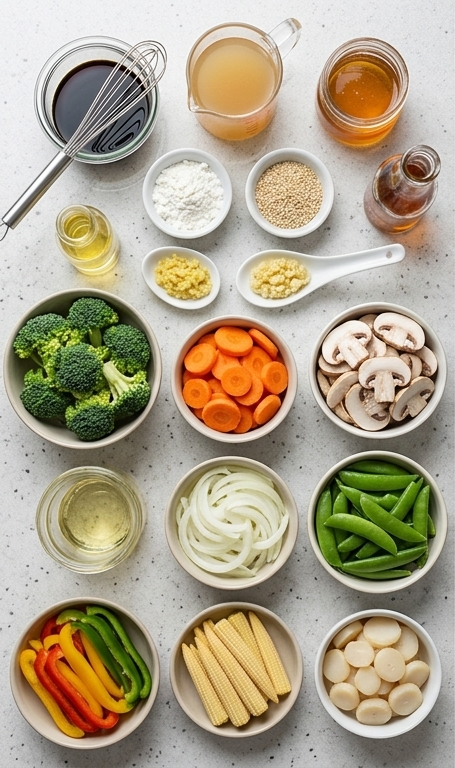
- Mixed Vegetables: Broccoli, carrots, mushrooms, peppers, snap peas, baby corn and water chestnuts provide texture and color; pick crisp, firm produce.
Essential Kitchen Tools and Why They Matter
A few good tools make the Vegetable Stir Fry easier and more fun. A hot wok or large skillet gives fast, even heat so vegetables stay crisp; if you do not have a wok, use a heavy skillet and work in batches. A sharp chef’s knife speeds prep and keeps slices even; a dull knife will bruise delicate pieces. A whisk helps emulsify the sauce so it is smooth, and a sturdy spatula makes tossing quick and safe. Measuring spoons and small ramekins help keep mise en place tidy, especially when cooking at high heat.
Step-by-Step Preparation Guide
Step 1: Whisk the Stir-Fry Sauce
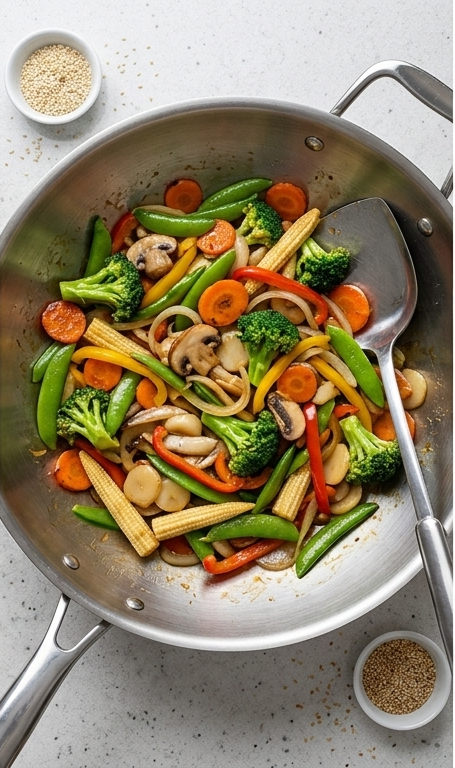
Whisk the soy sauce, chicken broth, cornstarch, honey, sesame oil, minced ginger and garlic together in a small ceramic bowl until perfectly smooth and slightly glossy; place each liquid in its own clear vessel (soy sauce in a small glass jar, chicken broth in a tiny measuring jug, honey in a little jar) and dry ingredients in small white ramekins so everything reads clean and intentional. Rest the whisk on the rim so the scene feels lived-in but tidy, then set the finished sauce aside while you move to the vegetables.
Step 2: Stir-fry the Vegetables and Bring in the Sauce
In a hot, lightly oiled gleaming metal wok, quickly toss the broccoli florets and carrot slices until the broccoli is bright and the carrot edges are just tender, then add the sliced mushrooms and translucent onion ribbons and cook until they release their soft, earthy juices. Stir in the sugar snap peas, vivid bell pepper slices, baby corn spears and water chestnuts and continue tossing until the snap peas turn intense green and everything is crisp-tender. Pour in the whisked sauce and bring it to a quick simmer, stirring constantly until the cornstarch thickens the sauce into a glossy coating that clings to each piece of vegetable – the entire pan should read saucy, shiny and perfectly glazed.
Step 3: Plate, Garnish and Serve
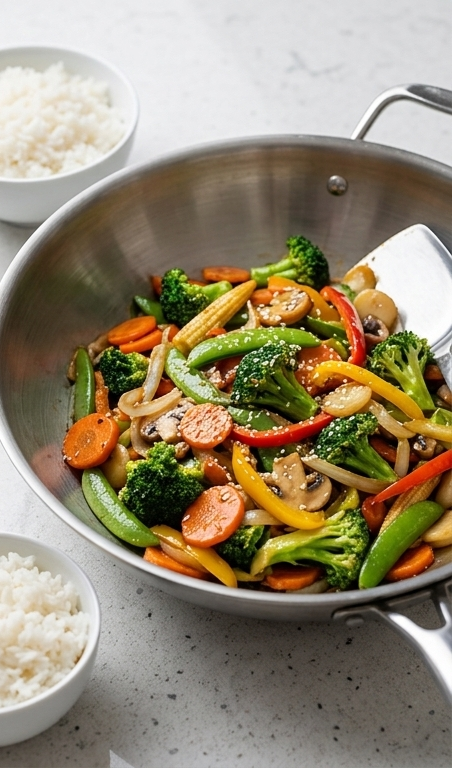
Spoon the hot, sauced vegetables back into the same gleaming metal wok placed on the counter, sprinkle generously with sesame seeds so they sit like tiny pale jewels on the glossy surface, and serve immediately alongside a small bowl of steaming white rice. The final presentation should feel vibrant and communal – vegetables piled with height, sauce beading on the florets and edges, sesame seeds scattered for texture and contrast.
Making It Your Own
I like to experiment with this Vegetable Stir Fry depending on season and mood. In spring I add sugar snap peas and thin asparagus tips for freshness. In autumn I swap bell pepper for roasted sweet potato cubes and finish with a squeeze of lime for brightness. For a protein boost, toss in cubed tofu, tempeh or thinly sliced chicken toward the end so it warms through and picks up the sauce. You can make it spicy by stirring in chili garlic sauce or go nutty with a spoonful of peanut butter warmed into the sauce.
How to Serve
When hosting, plate the Vegetable Stir Fry family style in a large shallow bowl so everyone can help themselves. For four people serve alongside steamed jasmine or short-grain rice; for a lighter option, serve over fluffy quinoa or soba noodles. To stretch the dish for a crowd, add more sturdy vegetables like cabbage or extra mushrooms and offer bowls of chopped scallions, cilantro and lime wedges so guests can customize. Garnish with sesame seeds and a drizzle of extra sesame oil right before serving to keep the aroma vivid.
Storage and Reheating Tips
Store leftover Vegetable Stir Fry in an airtight container in the refrigerator for up to 3 days. Keep rice separate for the best texture; the vegetables release a bit of water as they sit, so mixing with fresh rice just before serving keeps everything lively.
To reheat, warm gently in a skillet over medium heat with a splash of water or broth to loosen the sauce and revive the glaze. Avoid the microwave if you can; it heats unevenly and can make crisp vegetables limp. For a quick refresh, toss in a handful of fresh greens at the end of reheating so they wilt slightly and regain some snap.
Common Mistakes and How to Avoid Them
The biggest misstep is overcrowding the pan. If you pile in too many vegetables at once the pan cools and everything steams instead of stir-frying. Work in batches or use the largest pan you have so each piece gets hot and gets that quick sear.
Another common error is adding the sauce too early or not mixing the cornstarch well. Make sure the sauce is fully whisked and add it once the vegetables are nearly done so it thickens quickly and glazes the vegetables. Taste and adjust salt or sweet notes before serving.
Final Thoughts
Give this Vegetable Stir Fry a try the next time you want a fast, flavorful dinner that feels special but cooks in minutes. It is forgiving, adaptable and a great way to showcase seasonal vegetables. I hope it becomes a go-to in your weeknight rotation.
Frequently Asked Questions.
- What can I substitute for chicken broth in the Vegetable Stir Fry? Use vegetable stock or warm water with a teaspoon of miso for a vegetarian depth.
- Can I make this Vegetable Stir Fry gluten-free? Yes, swap soy sauce for tamari or a gluten-free soy substitute and double-check any packaged ingredients.
- How do I keep vegetables crisp in the Vegetable Stir Fry? Cook on high heat, avoid overcrowding the pan and add the most tender vegetables last.
- Can I prepare the components ahead of time? Absolutely. Chop vegetables and whisk the sauce in advance, then stir-fry everything quickly when ready.
- Is there a vegan version of this Vegetable Stir Fry? Yes, use vegetable broth and replace honey with maple syrup or agave for a fully vegan sauce.
Vegetable Stir Fry
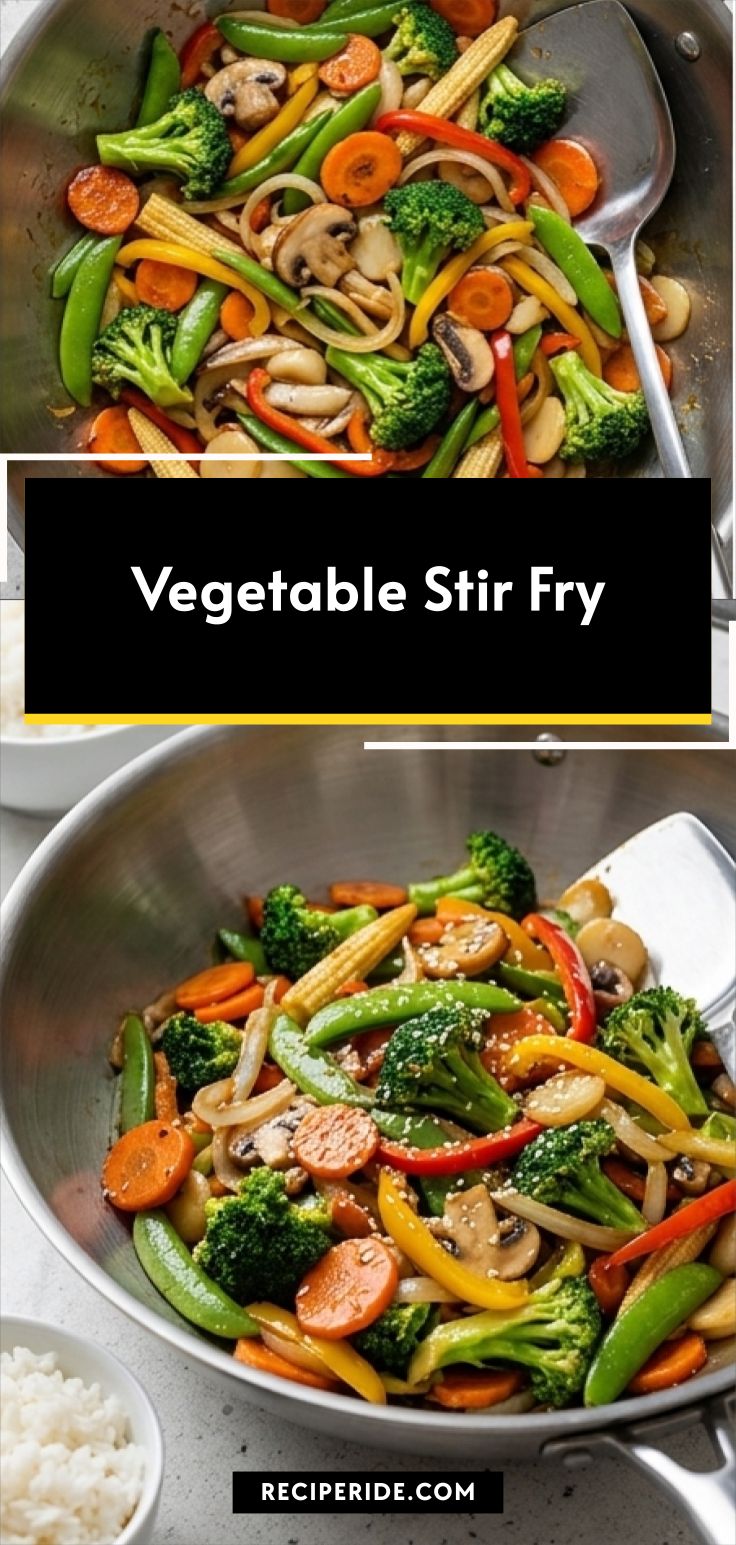
Make this Vegetable Stir Fry in 25 minutes for a vibrant, quick weeknight meal with a glossy, savory sauce.
Ingredients
Instructions
Step 1: Whisk the Stir-Fry Sauce
Whisk the soy sauce, chicken broth, cornstarch, honey, sesame oil, minced ginger and garlic together in a small ceramic bowl until perfectly smooth and slightly glossy; place each liquid in its own clear vessel (soy sauce in a small glass jar, chicken broth in a tiny measuring jug, honey in a little jar) and dry ingredients in small white ramekins so everything reads clean and intentional. Rest the whisk on the rim so the scene feels lived-in but tidy, then set the finished sauce aside while you move to the vegetables.
Step 2: Stir-fry the Vegetables and Bring in the Sauce
In a hot, lightly oiled gleaming metal wok, quickly toss the broccoli florets and carrot slices until the broccoli is bright and the carrot edges are just tender, then add the sliced mushrooms and translucent onion ribbons and cook until they release their soft, earthy juices. Stir in the sugar snap peas, vivid bell pepper slices, baby corn spears and water chestnuts and continue tossing until the snap peas turn intense green and everything is crisp-tender. Pour in the whisked sauce and bring it to a quick simmer, stirring constantly until the cornstarch thickens the sauce into a glossy coating that clings to each piece of vegetable — the entire pan should read saucy, shiny and perfectly glazed.
Step 3: Plate, Garnish and Serve
Spoon the hot, sauced vegetables back into the same gleaming metal wok placed on the counter, sprinkle generously with sesame seeds so they sit like tiny pale jewels on the glossy surface, and serve immediately alongside a small bowl of steaming white rice. The final presentation should feel vibrant and communal — vegetables piled with height, sauce beading on the florets and edges, sesame seeds scattered for texture and contrast.
Notes
- Do not overcrowd the wok; cook in batches for best texture.
- Prepare all ingredients ahead (mise en place) since stir-frying is fast.
- Taste the sauce before finishing and adjust sweetness or salt to preference.
- Store sauce separately from rice for best reheating results.
- Use toasted sesame oil sparingly as a finishing touch for aroma.