Egg Drop Soup Recipe has been a weeknight staple in my kitchen for years, and it still feels like a small miracle every time the silky ribbons of egg hit the warm broth. I love how simple ingredients turn into something comforting and elegant in under 30 minutes. This Egg Drop Soup Recipe is forgiving, fast, and endlessly tweakable, which is exactly my kind of recipe when life is busy. If you keep a few pantry staples on hand, you can have bowls steaming on the table in no time.
I first learned to make this Egg Drop Soup Recipe on a rainy evening when I needed something soothing but not heavy. The recipe took me back to the cozy noodle houses I used to duck into after long walks, warm light and the gentle clatter of chopsticks all around. I remember the way the ginger scent rose like a small promise and how the first spoonful felt like a warm hand. The simplicity lets small details shine: the whisper of sesame oil, the bright sting of scallions, and the soft, ribbon-like texture of the eggs that somehow make everything feel calm and cared for.
How This Soup Became My Rainy-Day Favorite
There was one night when the city was soaked and my umbrella had given up, and I remember walking in with cold hands and a persistent, low hunger that nothing heavy could answer. I pulled this Egg Drop Soup Recipe together without a plan: a pan, a couple of eggs, scraps of scallion, and a carton of broth. The steam wrapped around me like a small jacket and the first spoonful banished the dampness. The ginger warmed my chest, the sesame oil added a familiar nutty point, and the egg ribbons felt like a tiny comfort blanket. It became my go-to when I want something quick that still feels thoughtful and gently luxurious.
The Heart of the Bowl: Ingredients That Matter
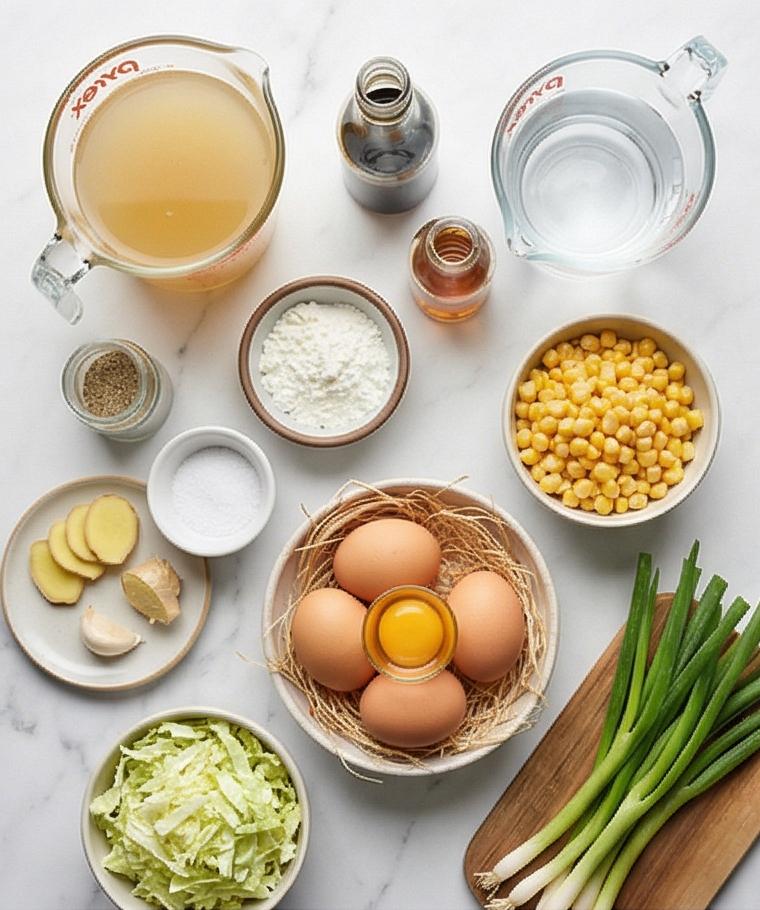
- Chicken stock: The foundation; choose low-sodium so you can control seasoning. Substitute with vegetable stock for a vegetarian friendly bowl.
- Soy sauce: Adds umami and color; use low-sodium or tamari to keep salt in check.
- Cornstarch: Thickens to a silky mouthfeel; arrowroot works as a substitute but needs gentler heat.
- Eggs: The star that creates ribbons; room temperature eggs produce smoother strands.
- Toasted sesame oil: Finishing oil for fragrance; olive oil is OK but lacks the nutty note.
- Scallions: Offer freshness and crunch; chives can substitute in a pinch.
Essential Kitchen Tools You Actually Need
A few basic tools make this recipe effortless and help the egg ribbons look like they belong in a restaurant. A medium pot gives you enough surface area for gentle simmering; a shallow pan can work but watch the heat. A ladle or wooden spoon is perfect for creating the whirlpool that shapes the eggs, and a spouted cup makes pouring controlled and steady. A small bowl for the cornstarch slurry and a fine whisk or fork to keep it lump free are musts. Alternatives: use a measuring cup if you lack a spouted cup, and a fork instead of a whisk. Good tongs or a slotted spoon help remove aromatics cleanly.
Step-by-Step Preparation Guide
Step 1: Prepare the broth base
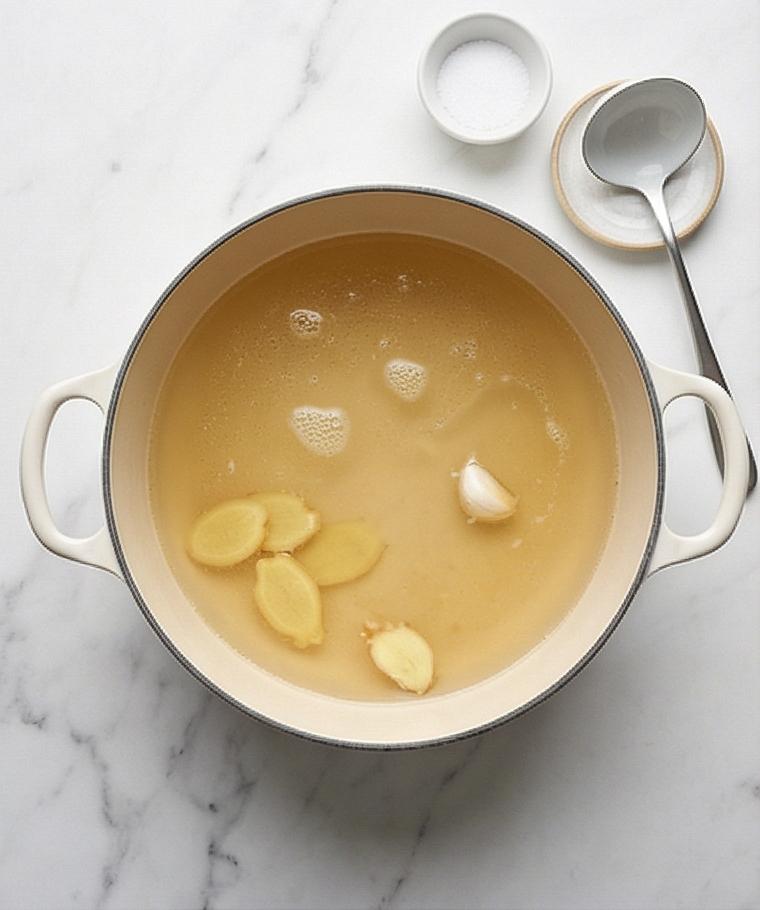
In a medium pot, combine the low-sodium chicken stock, room-temperature water, soy sauce, kosher salt, ground white pepper, the thinly sliced ginger piece, and the lightly crushed garlic clove. If you want a slightly deeper golden hue, stir in the tiny pinch of turmeric now. This step is about building a clear, fragrant backbone: the liquid should look pale-golden with floating thin ginger slices and faint specks of white pepper, the surface calm and glossy.
Step 2: Heat the broth
Place the pot on the marble surface (we’re documenting the result only) and bring the liquid to a gentle boil, then lower to a steady simmer so the surface shows soft, concentric bubbles. Stir occasionally until the broth feels aromatic and lightly reduced. At this stage the broth takes on a clearer, slightly concentrated color and the aromatics begin to perfume the liquid.
Step 3: Add vegetables (optional)
Stir in the finely shredded Napa cabbage or baby spinach and/or the drained corn kernels into the simmering broth. Simmer just long enough—3–4 minutes—until the vegetables are bright, tender, and suspended in the broth, adding flecks of green and yellow that lift the otherwise monochrome liquid.
Step 4: Make the cornstarch slurry
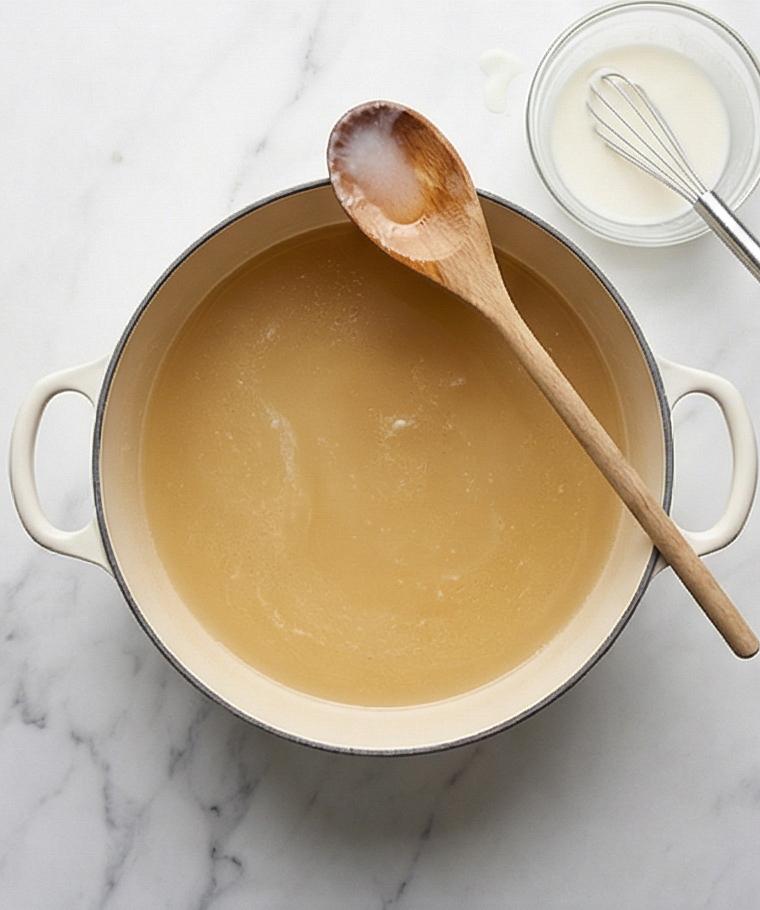
In a small bowl whisk together the cornstarch and cold water until completely smooth and milky, with no lumps. The slurry should be pourable, opaque, and viscous enough to thinly coat a spoon—this is the quiet alchemy that gives the soup a glossy body.
Step 5: Thicken the soup
Bring the simmer slightly higher and drizzle the cornstarch slurry in a thin stream while stirring the broth in one direction. Cook gently for 2–3 minutes until the soup looks slightly thicker, glossy, and viscous enough to lightly coat the back of a spoon; if it tightens too much, loosen with a splash of water. The broth’s surface will change from watery to a satin sheen as starch swells and suspends.
Step 6: Remove aromatics
Using tongs or a slotted spoon, fish out and discard the ginger slices and the garlic clove so they won’t interrupt the delicate egg ribbons. The broth should now be smooth and clear of bulky aromatics—ready for the egg.
Step 7: Beat the eggs
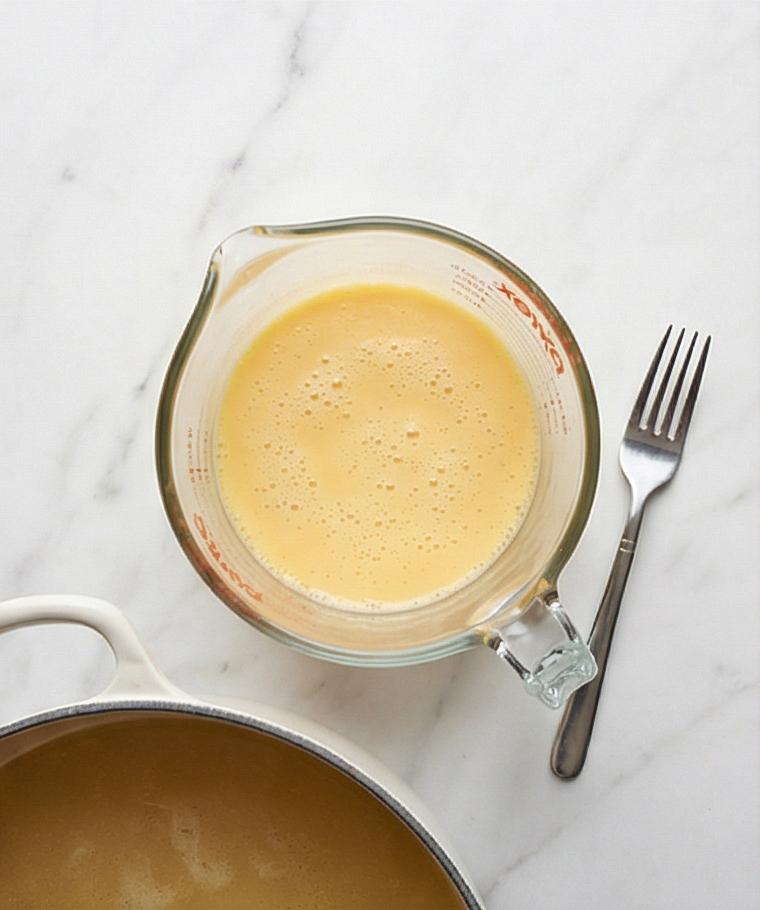
In a medium bowl or clear measuring cup with a spout, beat the 4 large eggs and optional extra yolk for 30–45 seconds until completely blended and slightly frothy with no visible streaks of white or yolk. The mixture should be silky, homogenous, and pourable in a thin, steady stream.
Step 8: Adjust heat before adding eggs
Lower the heat so the soup rests at a bare simmer with small, gentle bubbles—too hot and the eggs will shred. This precise, tranquil surface tension is crucial for the ribbons to form.
Step 9: Create a gentle whirlpool
Use a ladle or wooden spoon to stir the soup in a consistent circular motion, forming a soft whirlpool in the center. The motion should be steady and calm; visually you should see the spiral flow in the liquid that guides the egg ribbons.
Step 10: Add the eggs in a thin stream
Holding the beaten eggs in the spouted cup about 6–8 inches above the surface, pour in a very thin, continuous stream over 30–45 seconds into the center of the whirlpool. Slow pouring creates long, silky strands; the egg will coagulate immediately into ribbons as it meets the gently moving broth.
Step 11: Set the egg ribbons
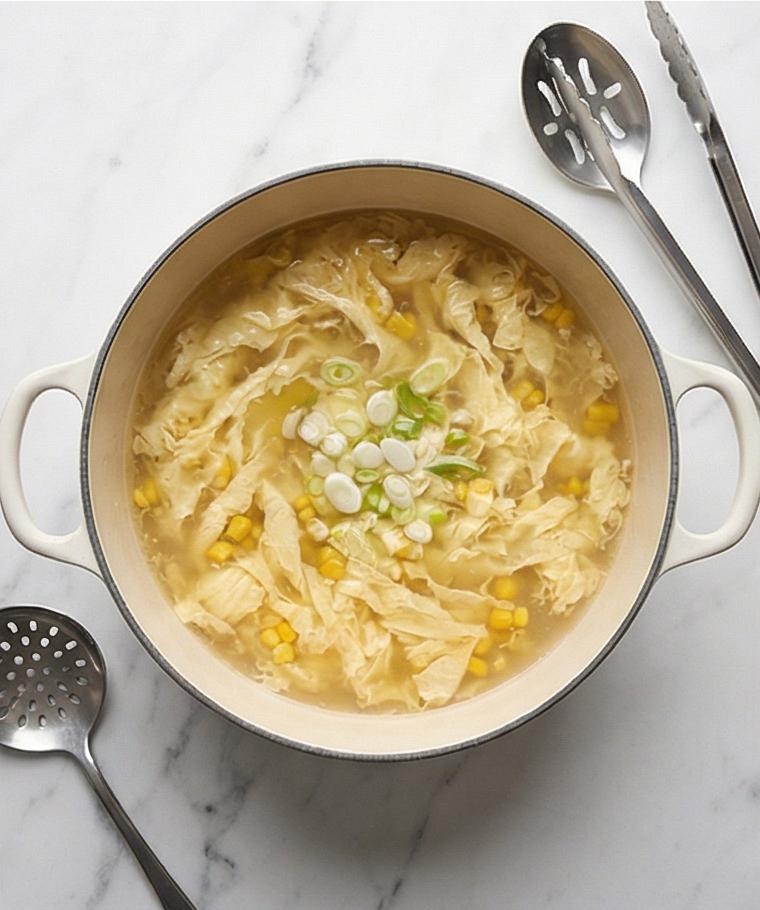
Stop stirring and let the soup sit undisturbed for 20–30 seconds so the ribbons fully set into tender, billowy folds, then give one or two gentle stirs to separate and distribute the ribbons through the bowl. The texture should be soft, ribbon-like, and floating in translucent, glossy broth.
Step 12: Season and finish
Turn off the heat and fold in the toasted sesame oil and the sliced white and pale-green scallion parts. If you prefer a faint tang, add the optional rice vinegar and taste; correct seasoning with fine sea salt or a small splash of soy sauce as needed. The final broth should be balanced, aromatic, and gently glossy.
Step 13: Serve the soup
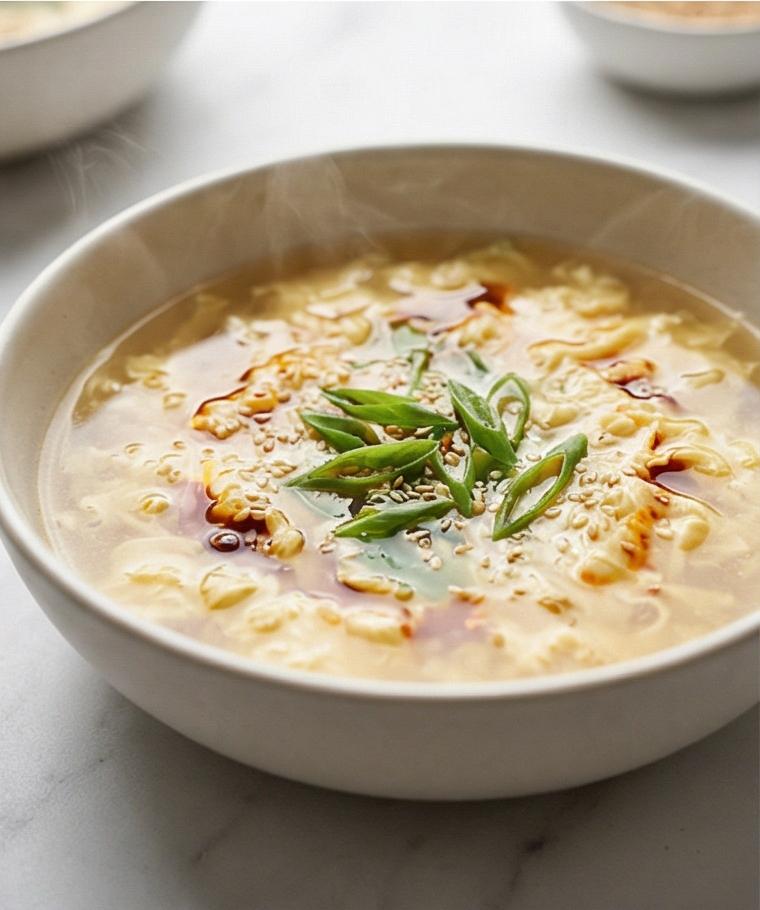
Ladle the hot egg drop soup into warm bowls. Garnish with extra sliced scallion greens, a delicate drizzle of chili oil or a small spoon of chili crisp for heat, and a light sprinkle of toasted sesame seeds. Serve immediately while the ribbons are still tender and the surface shows little pools of chili oil and bright green scallion.
Step 14: Serving suggestions and storage
Enjoy as a light starter or with steamed rice, dumplings, or a simple stir-fry. Cool leftovers to room temperature for 20–30 minutes, refrigerate in an airtight container for up to 2 days, and reheat gently over low heat without boiling to avoid over-coagulating the egg.
Making It Your Own
I like to experiment with minor swaps to keep this Egg Drop Soup Recipe interesting. For a vegetarian twist I use rich mushroom stock and add a splash of soy and a dash of sesame oil; the texture and comfort remain. In colder months I stir in finely grated carrot and extra ginger for warmth. For heat lovers I finish bowls with chili crisp and a squeeze of lime. Small changes like an extra yolk for silkiness or a sprinkle of toasted sesame seeds make the soup feel special without changing the quick, forgiving method.
How to Serve
If I am hosting, I ladle the soup into warmed bowls so it stays hot while guests gather. Offer small dishes of garnishes: sliced scallions, chili oil, toasted sesame seeds, and a shallow bowl with chili crisp. For larger groups multiply the recipe and keep it at a gentle simmer in a wide pot to preserve surface area and texture. Serve alongside steamed rice, simple dumplings, or a crisp vegetable stir-fry for a full meal. For a lighter course, portion into petite cups as a starter at a multi-course dinner.
Storage and Reheating Tips
Cool leftovers to room temperature before refrigerating in a sealed container. The soup keeps well for up to 2 days; after that the egg starts to firm and the texture changes. When storing, keep the garnishes separate to preserve brightness and crunch.
Reheat gently over low heat and stir slowly; avoid boiling or vigorous agitation, which makes the egg tough. If the soup has thickened too much, stir in a splash of water or stock to loosen it before serving. Re-season after reheating if needed.
Common Mistakes and How to Avoid Them
Too-hot broth will shred the eggs into small curds instead of long ribbons. Keep the soup at a bare simmer and pour slowly to create silky strands. If the eggs cook too quickly, lower the heat and give the broth a moment to calm.
Over-thickening with cornstarch makes the soup gluey. Add the slurry slowly and stop when the broth just takes on a glossy sheen; loosen with a little water if needed. Also remember to taste for salt near the end.
Final Thoughts
Give this Egg Drop Soup Recipe a try when you want comfort without fuss. It rewards careful but quick technique, and small personal touches make it yours. I hope it becomes one of your easy go-to soups for chilly nights and busy weeknights.
Frequently Asked Questions.
- Q: Can I make Egg Drop Soup Recipe vegetarian? A: Yes, swap the chicken stock for a rich vegetable or mushroom stock and skip the optional garlic; the eggs still give a silky texture.
- Q: How can I get long, silky egg ribbons every time? A: Keep the broth at a gentle simmer, stir to create a soft whirlpool, and pour the beaten eggs in a thin stream from a spouted cup.
- Q: Can I prepare the soup ahead of time? A: You can make the broth base and slurry ahead, but add and cook the eggs just before serving for best texture.
- Q: What if my soup gets too thick? A: Gently stir in a splash of warm water or stock until it loosens; avoid high heat which can change texture.
- Q: Can I freeze Egg Drop Soup Recipe? A: I do not recommend freezing because the egg ribbons change texture; refrigerated storage up to 2 days is better.
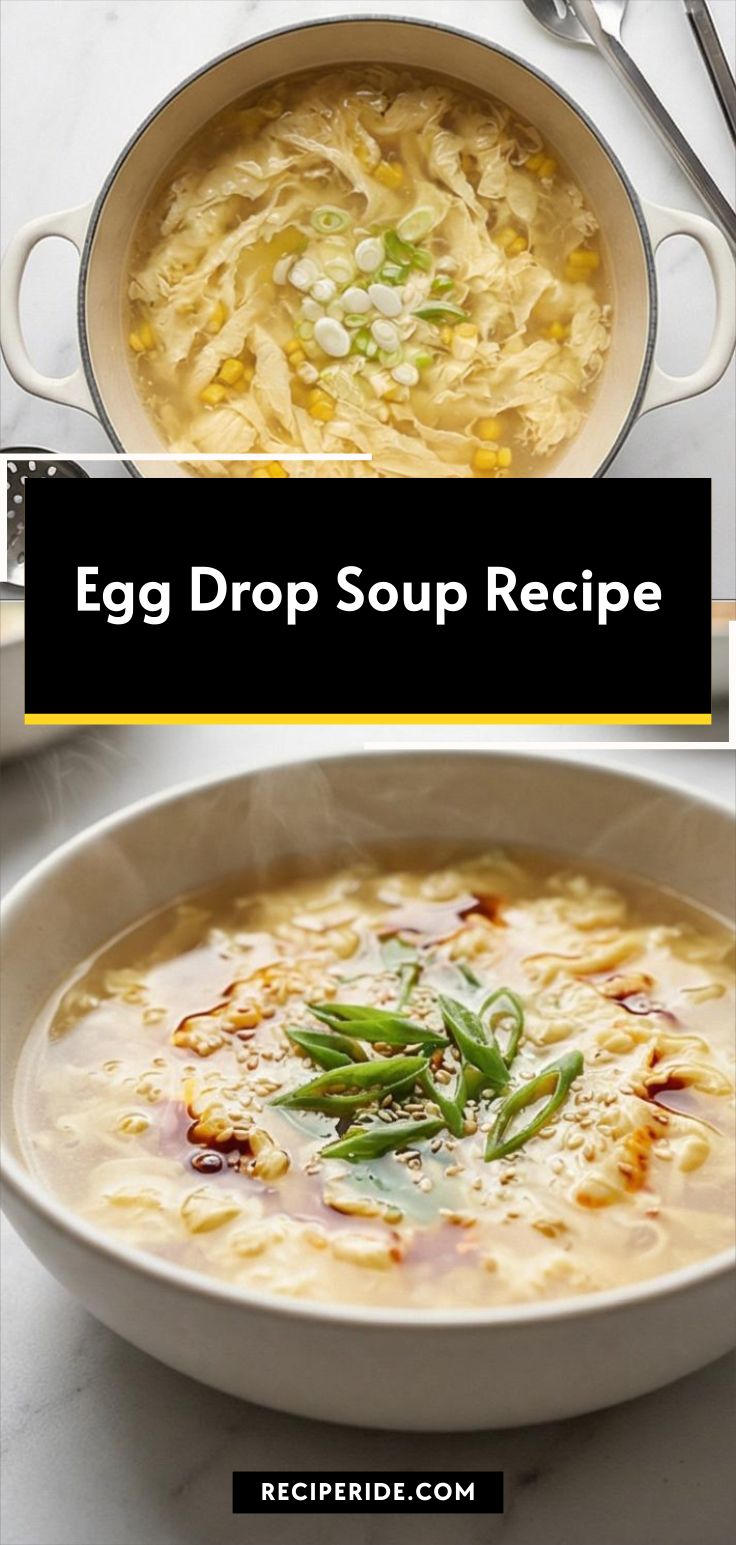
Egg Drop Soup Recipe
Make this Egg Drop Soup Recipe fast: silky egg ribbons in a savory, glossy broth ready in about 25 minutes.
Ingredients
Instructions
Step 1: Prepare the broth base
In a medium pot, combine the low-sodium chicken stock, room-temperature water, soy sauce, kosher salt, ground white pepper, the thinly sliced ginger piece, and the lightly crushed garlic clove. If you want a slightly deeper golden hue, stir in the tiny pinch of turmeric now. This step is about building a clear, fragrant backbone: the liquid should look pale-golden with floating thin ginger slices and faint specks of white pepper, the surface calm and glossy.
Step 2: Heat the broth
Place the pot on the marble surface (we're documenting the result only) and bring the liquid to a gentle boil, then lower to a steady simmer so the surface shows soft, concentric bubbles. Stir occasionally until the broth feels aromatic and lightly reduced. At this stage the broth takes on a clearer, slightly concentrated color and the aromatics begin to perfume the liquid.
Step 3: Add vegetables (optional)
Stir in the finely shredded Napa cabbage or baby spinach and/or the drained corn kernels into the simmering broth. Simmer just long enough—3–4 minutes—until the vegetables are bright, tender, and suspended in the broth, adding flecks of green and yellow that lift the otherwise monochrome liquid.
Step 4: Make the cornstarch slurry
In a small bowl whisk together the cornstarch and cold water until completely smooth and milky, with no lumps. The slurry should be pourable, opaque, and viscous enough to thinly coat a spoon—this is the quiet alchemy that gives the soup a glossy body.
Step 5: Thicken the soup
Bring the simmer slightly higher and drizzle the cornstarch slurry in a thin stream while stirring the broth in one direction. Cook gently for 2–3 minutes until the soup looks slightly thicker, glossy, and viscous enough to lightly coat the back of a spoon; if it tightens too much, loosen with a splash of water. The broth’s surface will change from watery to a satin sheen as starch swells and suspends.
Step 6: Remove aromatics
Using tongs or a slotted spoon, fish out and discard the ginger slices and the garlic clove so they won’t interrupt the delicate egg ribbons. The broth should now be smooth and clear of bulky aromatics—ready for the egg.
Step 7: Beat the eggs
In a medium bowl or clear measuring cup with a spout, beat the 4 large eggs and optional extra yolk for 30–45 seconds until completely blended and slightly frothy with no visible streaks of white or yolk. The mixture should be silky, homogenous, and pourable in a thin, steady stream.
Step 8: Adjust heat before adding eggs
Lower the heat so the soup rests at a bare simmer with small, gentle bubbles—too hot and the eggs will shred. This precise, tranquil surface tension is crucial for the ribbons to form.
Step 9: Create a gentle whirlpool
Use a ladle or wooden spoon to stir the soup in a consistent circular motion, forming a soft whirlpool in the center. The motion should be steady and calm; visually you should see the spiral flow in the liquid that guides the egg ribbons.
Step 10: Add the eggs in a thin stream
Holding the beaten eggs in the spouted cup about 6–8 inches above the surface, pour in a very thin, continuous stream over 30–45 seconds into the center of the whirlpool. Slow pouring creates long, silky strands; the egg will coagulate immediately into ribbons as it meets the gently moving broth.
Step 11: Set the egg ribbons
Stop stirring and let the soup sit undisturbed for 20–30 seconds so the ribbons fully set into tender, billowy folds, then give one or two gentle stirs to separate and distribute the ribbons through the bowl. The texture should be soft, ribbon-like, and floating in translucent, glossy broth.
Step 12: Season and finish
Turn off the heat and fold in the toasted sesame oil and the sliced white and pale-green scallion parts. If you prefer a faint tang, add the optional rice vinegar and taste; correct seasoning with fine sea salt or a small splash of soy sauce as needed. The final broth should be balanced, aromatic, and gently glossy.
Step 13: Serve the soup
Ladle the hot egg drop soup into warm bowls. Garnish with extra sliced scallion greens, a delicate drizzle of chili oil or a small spoon of chili crisp for heat, and a light sprinkle of toasted sesame seeds. Serve immediately while the ribbons are still tender and the surface shows little pools of chili oil and bright green scallion.
Step 14: Serving suggestions and storage
Enjoy as a light starter or with steamed rice, dumplings, or a simple stir-fry. Cool leftovers to room temperature for 20–30 minutes, refrigerate in an airtight container for up to 2 days, and reheat gently over low heat without boiling to avoid over-coagulating the egg.
Notes
- Use low-sodium stock so you can control final seasoning.
- Bring eggs to room temperature for silkier ribbons.
- Pour eggs slowly from a spouted container to make long strands.
- Reheat gently over low heat and avoid boiling to preserve texture.
- Store garnishes separately and refrigerate leftovers up to 2 days.