Burrata Caprese Salad Recipe
I make this Burrata Caprese Salad Recipe whenever summer tomatoes start arriving at the market. It feels like a small celebration: creamy burrata, sweet tomatoes, and that glossy balsamic reduction that ties everything together. I first learned the balance between acidity and creaminess the hard way, by over-salting and under-macerating the tomatoes. Now I know to let the tomatoes rest and the burrata warm up so each bite is soft, bright, and utterly scoopable. If you love simple plates that taste like sunlight, this Burrata Caprese Salad Recipe will be a quick favorite.
How This Recipe Became My Summer Staple
The first time I made this Burrata Caprese Salad Recipe I remember the kitchen smelling like roasted tomatoes and warm bread. I had invited two close friends over with no real plan beyond wanting to use the last of the garden basil. As the balsamic reduced, its syrupy scent curled through the apartment and everyone hovered, fork in hand. We tore into crostini, scooped warm burrata, and tasted the first real summer tomatoes of the season. The texture of the cheese, glossy reduction, and the soft pop of heirloom slices felt like a little revelation. It was the sort of meal that unfolded slowly, with laughter and tiny, appreciative noises. That evening turned a casual recipe into a ritual: the simple act of assembling this salad became a way to slow down and savor good company.
Meet the Main Players
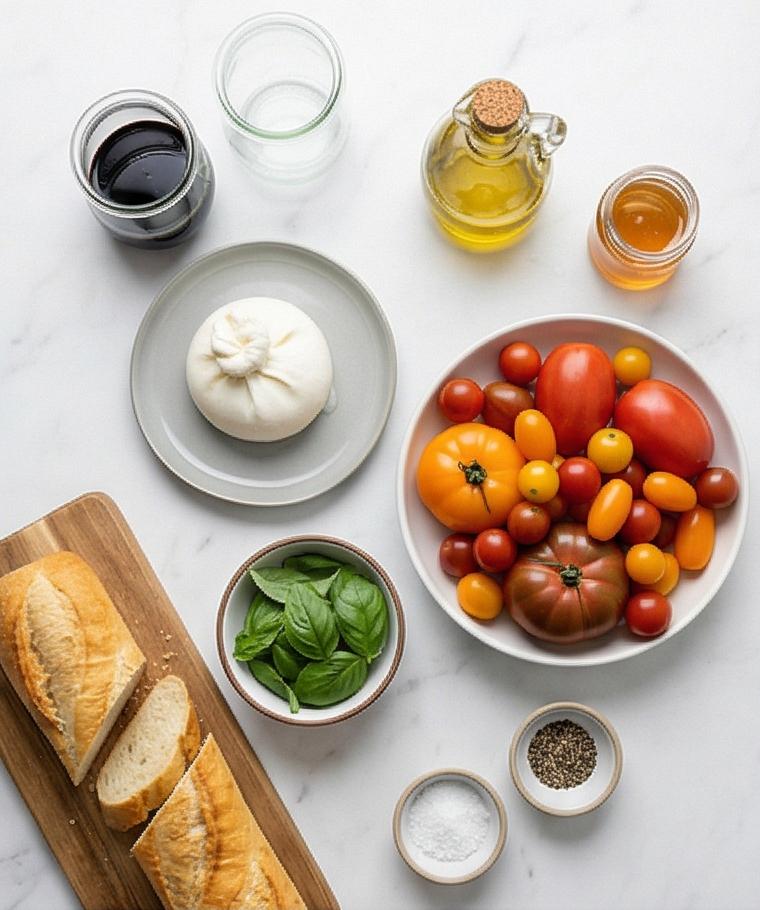
- Balsamic Vinegar: The source of the reduction’s sweet tang. Choose a good-quality balsamic that is balanced and not overly sharp. Substitutes: a reduced red wine vinegar with a touch of sugar. Tip: avoid flavored or watery supermarket balsamics.
- Tomatoes: They bring acidity, aroma, and color. Use ripe heirloom, Roma, and cherry for contrast. Substitute with vine-ripened tomatoes if needed. Tip: pick fragrant, slightly yielding tomatoes.
- Burrata: The creamy heart of the dish. Fresh is best; let it sit out for 20–30 minutes to soften. Substitute: fresh mozzarella with added cream for a closer texture.
- Baguette: Provides crunch and a vehicle for scooping. Any crusty bread works. Tip: slice on a slight diagonal for larger surfaces.
- Basil and Olive Oil: Fresh basil brightens and olive oil ties flavors. Substitute: young arugula for peppery notes.
Essential Kitchen Tools and Why They Matter
Start with a short intro: a few good tools make this Burrata Caprese Salad Recipe effortless. You do not need an arsenal, just reliable basics that respect the delicate ingredients.
- Heavy-bottomed saucepan: For an even, controlled reduction that will not scorch. Alternative: a small nonstick pan on low heat.
- Sharp serrated knife: For clean tomato and baguette slices that look appealing. Alternative: a chef’s knife with a careful sawing motion.
- Small jar or ramekin: Keeps the balsamic reduction ready to drizzle. Alternative: a squeeze bottle for precise lines.
- Baking sheet or skillet: To toast crostini evenly. Alternative: a toaster oven works fine.
- Tongs or small spoon: For arranging tomatoes and moving burrata without breaking it.
Good tools help you focus on timing and texture rather than improvising under pressure.
Step-by-Step Preparation Guide
Step 1: Make the balsamic reduction
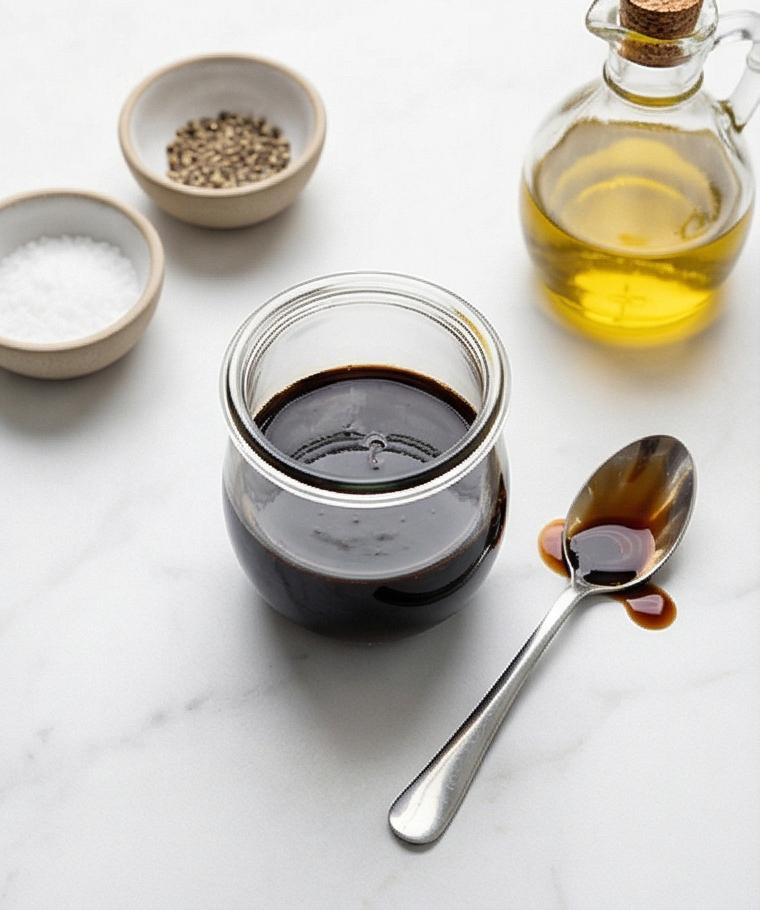
Warm a small, heavy-bottomed saucepan of balsamic with a bit of honey (or sugar) just until it comes to a gentle simmer, then lower the heat and let it slowly concentrate until syrupy and glossy, stirring occasionally. Remove from heat and let it cool to a thick but pourable glaze; if it tightens too much, whisk in a few drops of water to loosen. Keep the reduction in a small jar or ramekin so it’s ready to drizzle; this step sets the glossy, sticky counterpoint to the creamy burrata.
Step 2: Toast the crostini and finish with garlic
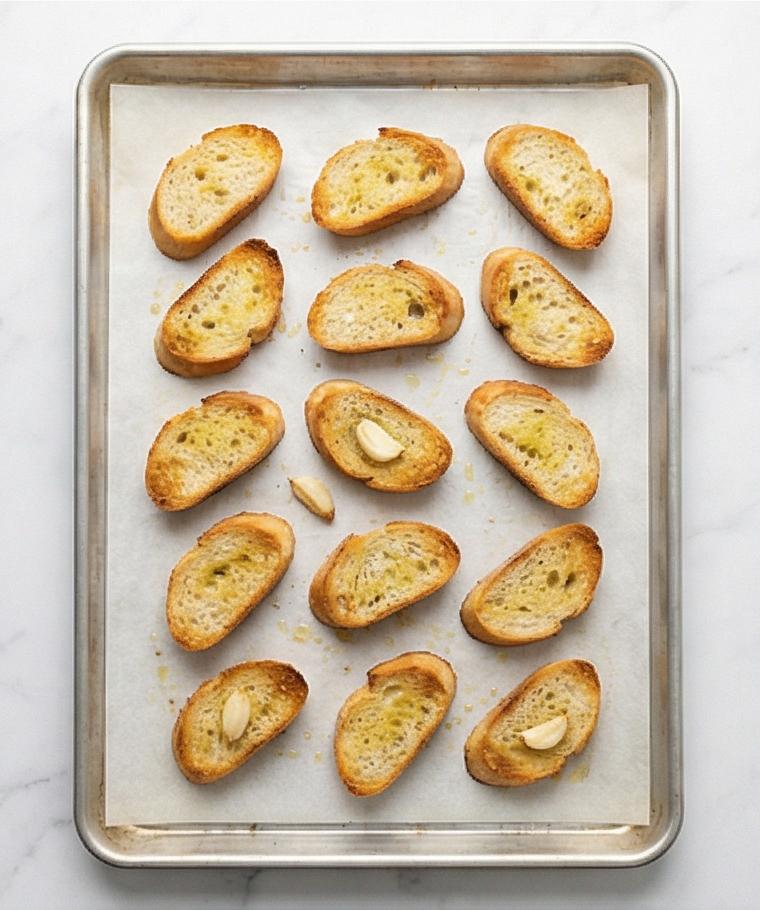
Brush the baguette slices lightly with olive oil and toast until edges are golden and centers feel dry and crisp. As soon as the crostini are warm, rub the cut side of a halved garlic clove over each slice so they pick up a whisper of raw garlic aroma without overpowering. Transfer the crostini to a cooling tray or the same rectangular tray used for toasting and set aside to come to warm room temperature; the bread will be crisp but tender enough to scoop up creamy burrata.
Step 3: Season and macerate the tomatoes
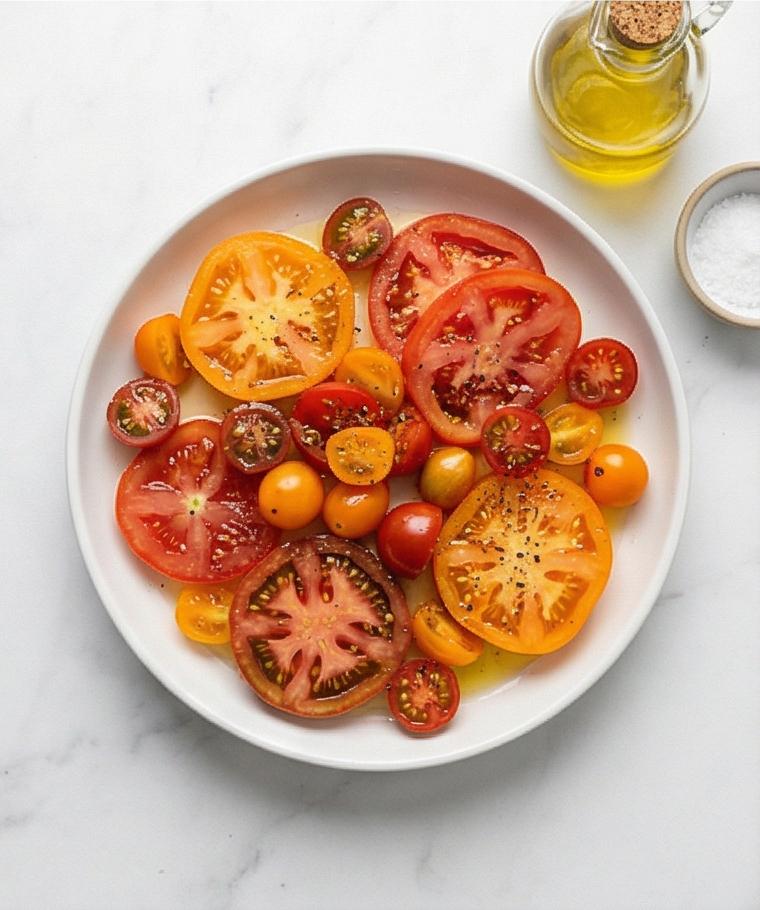
Arrange the sliced heirloom, Roma, and halved cherry tomatoes in a shallow serving plate, drizzle with extra-virgin olive oil, and sprinkle with fine sea salt and freshly ground pepper. Gently turn so each slice glistens; allow the tomatoes to rest at room temperature for 10–15 minutes so the salt draws out juices and forms a lightly seasoned, glossy dressing in the bottom of the plate—this concentrated tomato brine is key to an amplified, ripe tomato flavor.
Step 4: Prepare the burrata and basil
Bring the burrata to cool room temperature, pat away excess moisture without piercing the outer shell, and gently tear it into 4–6 large pieces so the creamy interior spills out in soft, pillowy folds. Stack the basil leaves, roll into a loose cigar, and slice into thin ribbons (chiffonade), reserving a few small whole leaves for garnish. Keep the torn cheese pieces on a small plate and the basil ribbons in a little bowl ready for scattering.
Step 5: Assemble, finish, and serve
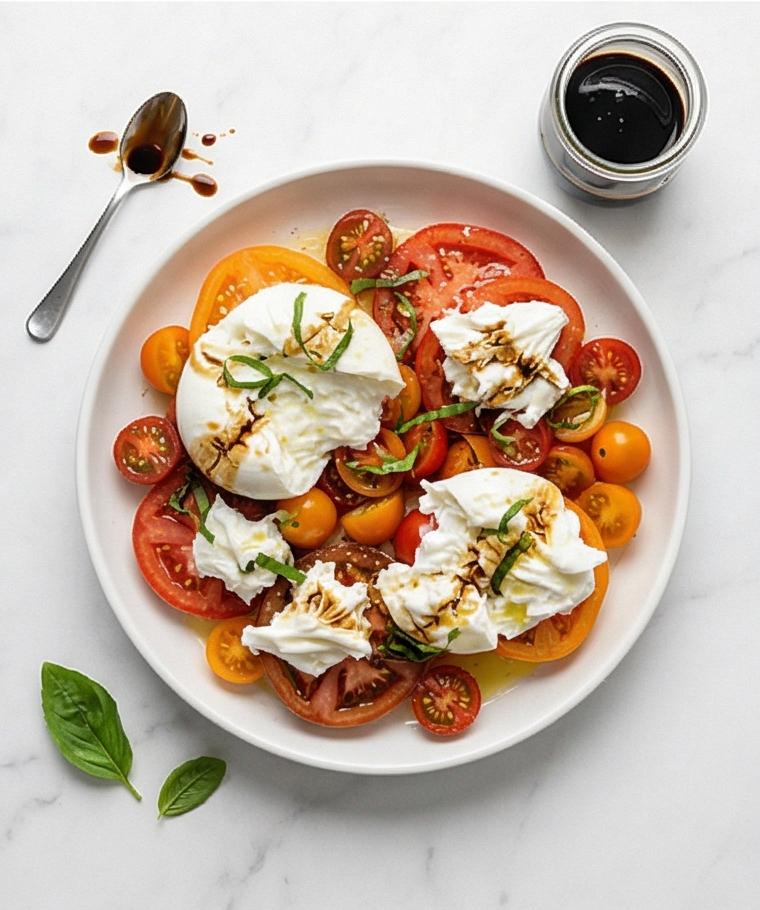
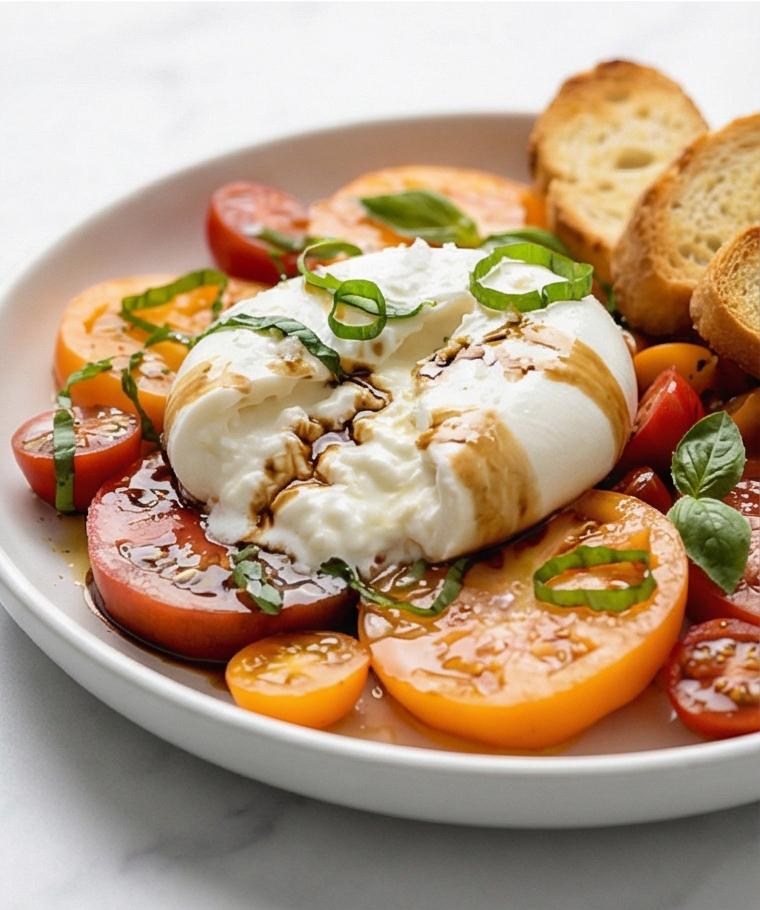
Nestle the torn burrata pieces over and around the marinated tomatoes, spooning a little of the tomato juices over the cheese so the flavors mingle. Drizzle a teaspoon or two of extra-virgin olive oil, season lightly with fine salt and a few grinds of pepper, then paint thin glossy ribbons of the cooled balsamic reduction around and over the salad. Scatter the basil ribbons and tuck in whole leaves for freshness; finish with a light scatter of flaky sea salt if you like. Serve immediately at cool room temperature with the garlic-rubbed crostini alongside—scoop and enjoy while the burrata is at its creamiest.
Making It Your Own
I like to treat the Burrata Caprese Salad Recipe as a foundation for small experiments. In cooler months I swap heirloom tomatoes for roasted cherry halves to add a gentle caramel note. To make it vegan, I have used a cultured almond burrata alternative and increased the olive oil for richness. For a regional twist, I once added a scatter of toasted pine nuts and a few slivers of prosciutto for an Italian-style spin that felt indulgent.
In another version I reduced the balsamic a little longer until nearly syrupy and used lemon zest to brighten the basil. Tiny changes like the bread choice or the type of salt will shift the final impression, so try one variation at a time to see what sings for you.
How to Serve
When I host, this Burrata Caprese Salad Recipe becomes a star on a shared platter. For a small dinner, arrange the salad in the center of the table with crostini fanned around so guests can build bites. For larger groups, multiply the tomatoes and burrata while keeping the reduction batch-sized; you can spoon the reduction over the salad at the last minute so it stays glossy.
If you want to make it a light meal, add a bowl of marinated olives and a crisp white wine. For a more substantial first course, offer seared scallops or grilled chicken on the side. Presentation tip: use a shallow white platter so the colors pop and serve at cool room temperature rather than straight from the fridge.
Storage and Reheating Tips
This salad is best enjoyed fresh, but you can store components separately. Keep the balsamic reduction in a sealed jar in the fridge for up to two weeks. Warm it briefly in a small bowl over hot water or at very low heat if it has thickened too much.
Store the tomatoes and burrata apart: refrigerated tomatoes will lose brightness, so bring them back to cool room temperature before serving. Burrata does not reheat well; instead, let it return to room temperature for the creamiest texture.
Common Mistakes and How to Avoid Them
One common mistake is over-salting early. Salt the tomatoes lightly and taste before adding more; the tomato juices concentrate as they macerate. Another misstep is serving the burrata straight from the fridge. Let it sit out so it softens and the interior becomes luscious.
Also, avoid reducing balsamic on too-high heat which can burn the vinegar and turn bitter. Patience and low, steady heat give that glossy glaze you want.
Final Thoughts
Give this Burrata Caprese Salad Recipe a try the next time tomatoes are at their peak. It is simple to assemble, forgiving to make, and endlessly adaptable. Once you get the hang of the reduction and the tomato maceration, you will find yourself making this dish whenever you want a quick, elegant plate to share.
Frequently Asked Questions.
-
Can I use regular mozzarella instead of burrata?
Yes, you can use fresh mozzarella, but it will lack burrata’s creamy center. To get closer, add a spoonful of mascarpone or a splash of cream beside the mozzarella. -
How long does the balsamic reduction keep?
Stored in a sealed jar in the refrigerator, it keeps for up to two weeks. Warm it gently if it becomes too thick before using. -
Can I prepare elements of this salad ahead of time?
Absolutely. Make the reduction and toast the crostini a day ahead. Keep tomatoes and burrata separate and assemble just before serving. -
What if my tomatoes are not very sweet?
Macerate them with a pinch of sugar or a drizzle of good olive oil and let them rest a little longer to draw out juices and concentrate flavor. -
Is there a vegan option for this recipe?
Yes, use a plant-based burrata alternative or creamy cashew cheese, and follow the same assembly steps for a satisfying vegan version.
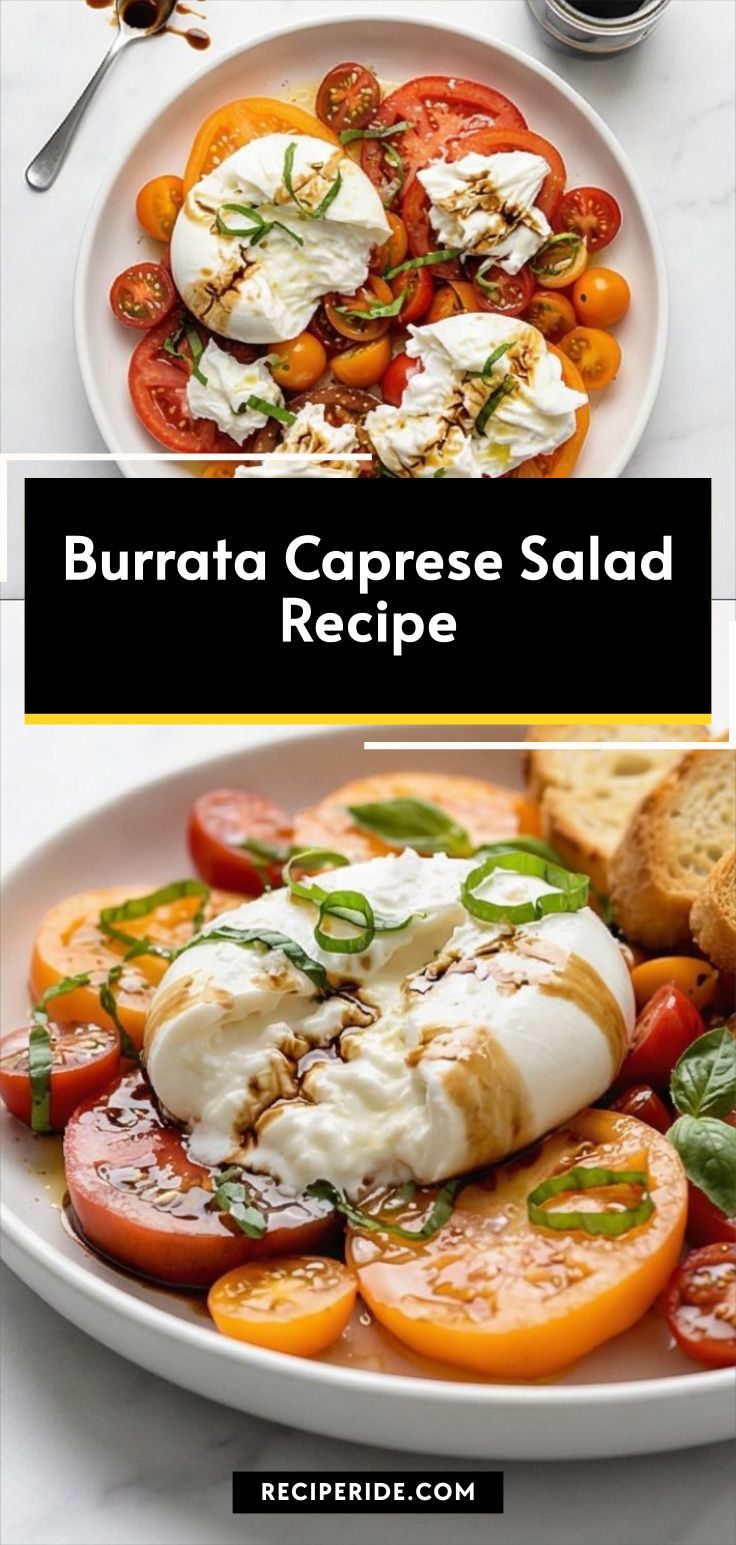
Burrata Caprese Salad Recipe
Make Burrata Caprese Salad Recipe now: creamy burrata, marinated tomatoes, garlic crostini, and a glossy balsamic reduction.
Ingredients
Instructions
Step 1: Make the balsamic reduction
Warm a small, heavy-bottomed saucepan of balsamic with a bit of honey (or sugar) just until it comes to a gentle simmer, then lower the heat and let it slowly concentrate until syrupy and glossy, stirring occasionally. Remove from heat and let it cool to a thick but pourable glaze; if it tightens too much, whisk in a few drops of water to loosen. Keep the reduction in a small jar or ramekin so it’s ready to drizzle; this step sets the glossy, sticky counterpoint to the creamy burrata.
Step 2: Toast the crostini and finish with garlic
Brush the baguette slices lightly with olive oil and toast until edges are golden and centers feel dry and crisp. As soon as the crostini are warm, rub the cut side of a halved garlic clove over each slice so they pick up a whisper of raw garlic aroma without overpowering. Transfer the crostini to a cooling tray or the same rectangular tray used for toasting and set aside to come to warm room temperature; the bread will be crisp but tender enough to scoop up creamy burrata.
Step 3: Season and macerate the tomatoes
Arrange the sliced heirloom, Roma, and halved cherry tomatoes in a shallow serving plate, drizzle with extra-virgin olive oil, and sprinkle with fine sea salt and freshly ground pepper. Gently turn so each slice glistens; allow the tomatoes to rest at room temperature for 10–15 minutes so the salt draws out juices and forms a lightly seasoned, glossy dressing in the bottom of the plate—this concentrated tomato brine is key to an amplified, ripe tomato flavor.
Step 4: Prepare the burrata and basil
Bring the burrata to cool room temperature, pat away excess moisture without piercing the outer shell, and gently tear it into 4–6 large pieces so the creamy interior spills out in soft, pillowy folds. Stack the basil leaves, roll into a loose cigar, and slice into thin ribbons (chiffonade), reserving a few small whole leaves for garnish. Keep the torn cheese pieces on a small plate and the basil ribbons in a little bowl ready for scattering.
Step 5: Assemble, finish, and serve
Nestle the torn burrata pieces over and around the marinated tomatoes, spooning a little of the tomato juices over the cheese so the flavors mingle. Drizzle a teaspoon or two of extra-virgin olive oil, season lightly with fine salt and a few grinds of pepper, then paint thin glossy ribbons of the cooled balsamic reduction around and over the salad. Scatter the basil ribbons and tuck in whole leaves for freshness; finish with a light scatter of flaky sea salt if you like. Serve immediately at cool room temperature with the garlic-rubbed crostini alongside—scoop and enjoy while the burrata is at its creamiest.
Notes
- Let the burrata sit at room temperature for 20–30 minutes before serving for the best texture.
- Macerate tomatoes for 10–15 minutes to draw out juices and concentrate flavor.
- Warm the balsamic reduction gently if it becomes too thick; add a few drops of water to loosen.
- Toast crostini just before serving and rub with garlic while warm for best aroma.
- Store components separately and assemble just before serving to keep textures bright.