I love the bright, nutty flavors of the Asian Sesame Noodle Salad Recipe and it shows up at my table more than I expected. I first learned this dressing trick years ago and it changed how I think about peanut-sesame combinations. At parties it disappears fast because the noodles, the tangy dressing, and crisp vegetables just click together. This Asian Sesame Noodle Salad Recipe is unfussy to make and scales easily, so it has become my go-to when I want something colorful and satisfying.
How This Recipe Became My Rainy-Day Favorite
One slow, rainy afternoon I was craving something that tasted like sunshine in a bowl, and I started experimenting with what became my signature Asian Sesame Noodle Salad Recipe. I remember the sound of rain on the window and the warm, toasty scent of sesame oil as I whisked the dressing until it looked glossy. The first bite was a surprise: salty, sweet, tangy, and a little spicy all at once. I fretted over the balance of peanut butter and soy until it felt just right, and when friends came over later that week they asked for the recipe. That moment made the dish feel like more than a meal – it became a memory maker. The textures are part of why I love it so much: slippery noodles, crunchy peppers, and the fresh brightness of cilantro and lime. Every time I make this Asian Sesame Noodle Salad Recipe, I think of that rainy day and the warm glow that followed.
The Main Ingredients and Why They Matter
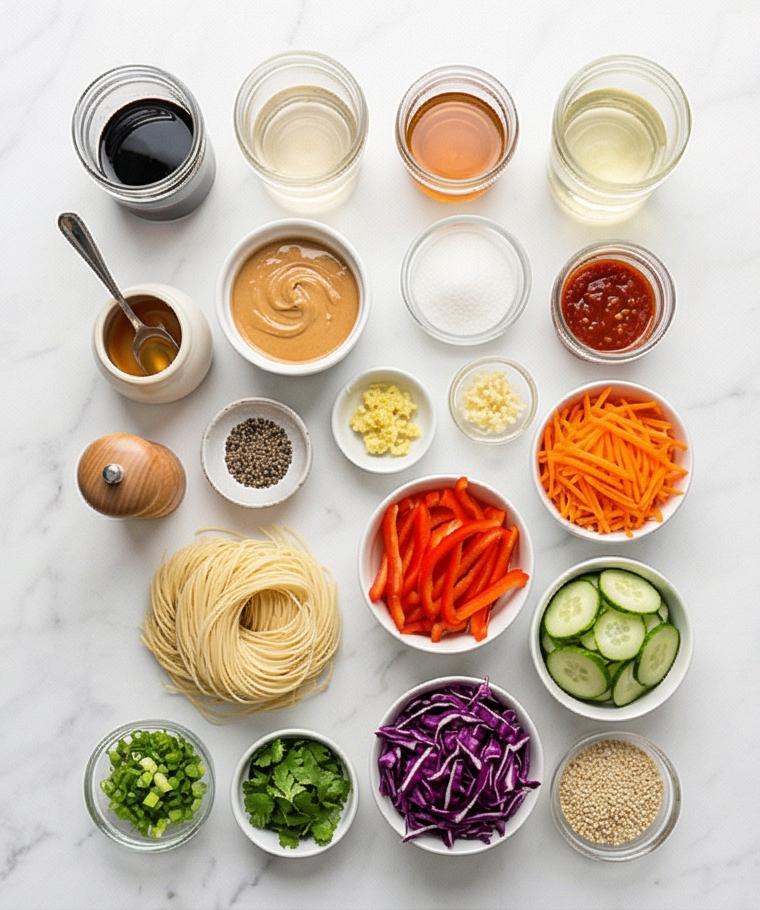
- Low-sodium soy sauce: Provides umami and salt; use tamari for gluten-free or light soy for lower sodium.
- Rice vinegar: Brightens the dressing; apple cider vinegar can substitute in a pinch but use less.
- Toasted sesame oil: Adds the nutty aroma that defines the salad; if unavailable, finish with extra toasted sesame seeds.
- Smooth peanut butter: Gives body and creaminess; swap for almond or sunflower seed butter for nut-free options.
- Dried thin spaghetti or Chinese wheat noodles: The backbone of the salad; use whole-wheat or rice noodles for different textures.
- Fresh vegetables (bell pepper, carrot, cucumber, cabbage, scallion, cilantro): Provide color, crunch, and freshness; substitute shredded napa cabbage or snap peas.
Essential Kitchen Tools and Why They Help
A few simple tools make this recipe faster and more enjoyable. A large pot gives the noodles room to cook without sticking; if you have only a medium pot, stir often and add noodles in batches. A roomy mixing bowl is crucial for whisking and tossing – a shallow bowl makes it easier to coat noodles evenly, but a large salad bowl or a wide mixing bowl works fine. A fine grater or microplane helps you get fragrant grated ginger with minimal fuss; if you do not have one, mince the ginger very finely. Tongs or two large forks let you toss without breaking the noodles. Finally, a colander and plenty of cold water finish the noodles quickly – an ice bath is optional but helpful.
Step-by-Step Preparation Guide
Step 1: Bring the cooking water to a vigorous boil
Fill a very large pot with 4 quarts (3.8 liters) of water, add 1 1/2 tablespoons kosher salt, cover, and heat until the water reaches a full rolling boil – the active, loud surface with continuous large bubbles. This step is all about achieving the right, lively boil so the noodles cook evenly and don’t clump; treat it like setting the stage and move on once the water is confidently bubbling.
Step 2: Whisk the sesame-peanut dressing until glossy and emulsified
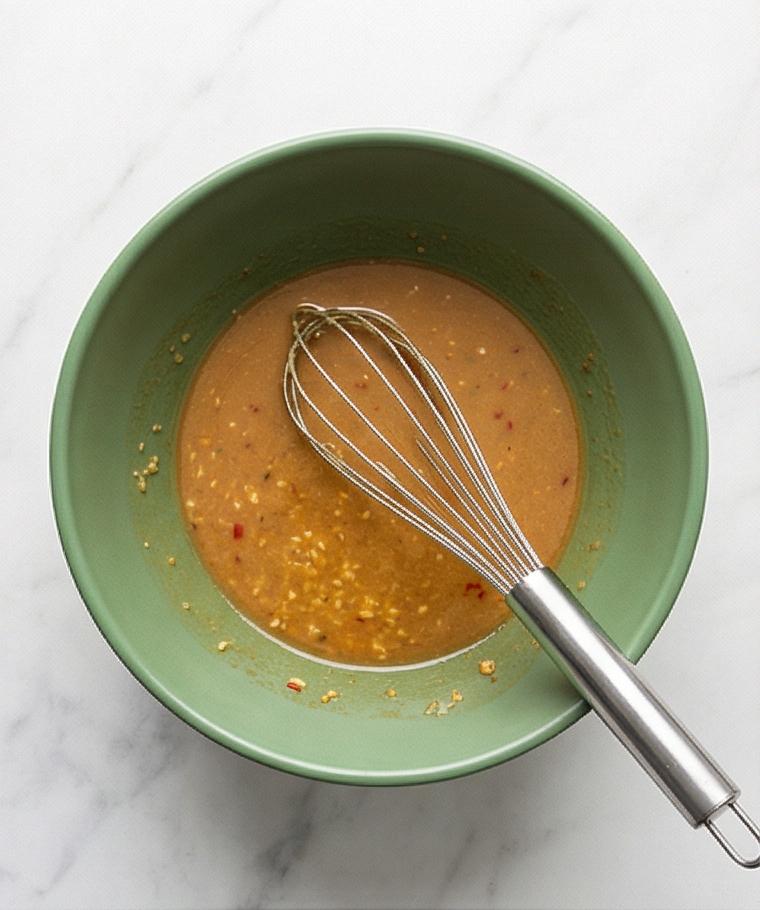
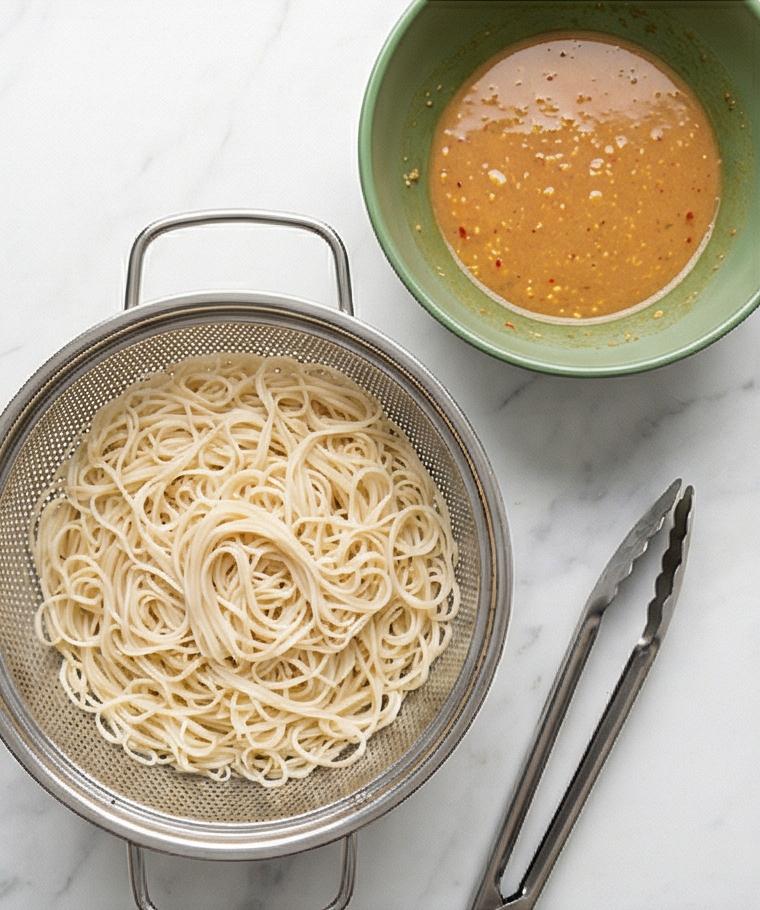
In a roomy matte green ceramic mixing bowl combine 3 tablespoons low-sodium soy sauce, 2 tablespoons rice vinegar, 1 1/2 tablespoons toasted sesame oil, 1 tablespoon neutral oil, 1 1/2 tablespoons smooth peanut butter (softened if needed), 1 tablespoon honey, 2 teaspoons granulated sugar, 1 tablespoon fresh lime juice, 1 tablespoon finely grated fresh ginger, 2 finely minced garlic cloves, 1–2 teaspoons chili-garlic sauce or Sriracha to taste, and 1/4 teaspoon freshly ground black pepper. Whisk vigorously until the dressing is completely smooth, glossy and emulsified – you should see a silky, slightly viscous consistency that clings to the whisk and beads when you lift it. Keep the same green bowl nearby; it will be the tossing vessel.
Step 3: Add the dried noodles to the rolling water and cook to just al dente
When the water is at a rolling boil, add 12 ounces (340 g) dried thin spaghetti or Chinese wheat noodles, stir immediately to separate strands, and maintain a steady boil until the noodles are tender but still slightly firm in the center (about 8–10 minutes depending on the noodle). The goal is springy, resilient strands that will cool quickly and hold dressing without becoming mushy.
Step 4: Prepare the vegetables and herbs while the noodles cook
While the noodles soften, thinly slice 1 1/2 cups red bell pepper, shred 1 1/2 cups carrot, thinly slice 1 1/2 cups seedless cucumber, thinly slice 1 cup purple cabbage, thinly slice 4 scallions (white and green parts) and chop 1/4 cup cilantro leaves and tender stems. Keep each vegetable crisp and evenly sliced so textures – crunchy, juicy, crisp – contrast with the soft noodles when tossed.
Step 5: Shock and chill the noodles, then drain them very well
When the noodles are just al dente, immediately drain them in a colander and rinse under cold running water for 1–2 minutes until they are completely cool to the touch and no longer steaming; toss gently with your hands while rinsing to release surface starch. Shake the colander several times and let the noodles drain thoroughly – the surface should be moist but not dripping, so the dressing won’t be diluted.
Step 6: Combine the cooled noodles with the dressing and toss until glossy
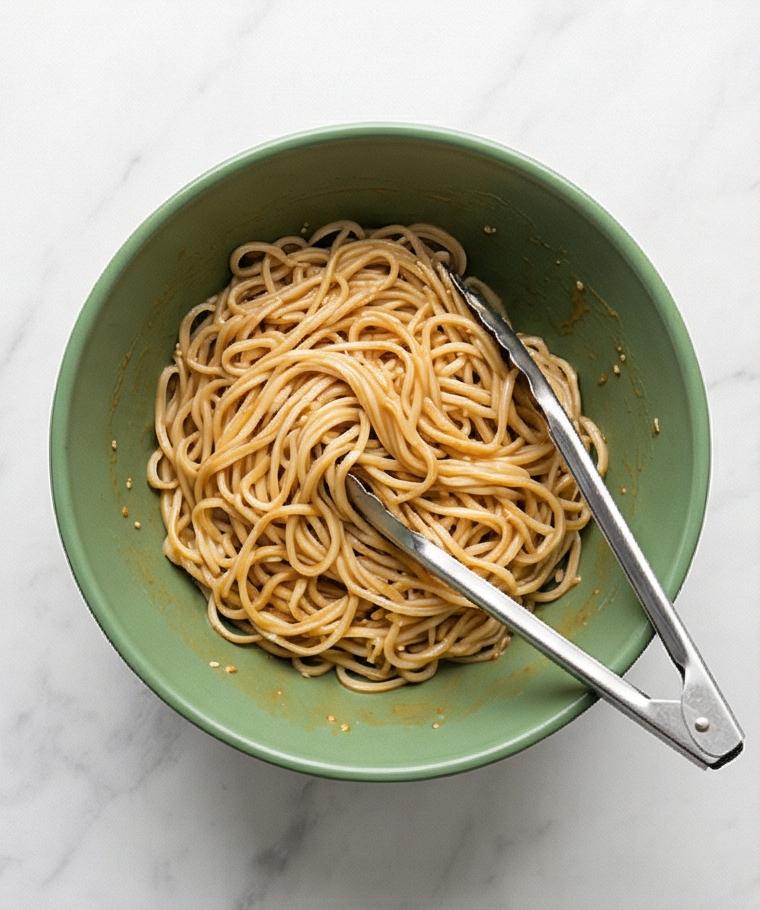
Add the well-drained, cooled noodles to the bowl of emulsified sesame dressing (the same matte green ceramic bowl) and toss vigorously with tongs or two large forks until each strand is evenly coated and the noodles appear glossy and lightly sticky, about 1–2 minutes; if they look dry, add 1–2 teaspoons of cool water and toss again to help the dressing distribute and cling. This is where the noodles transform visually – from plain strands to shiny, sauced ribbons.
Step 7: Fold in the prepared vegetables and herbs for bright contrast
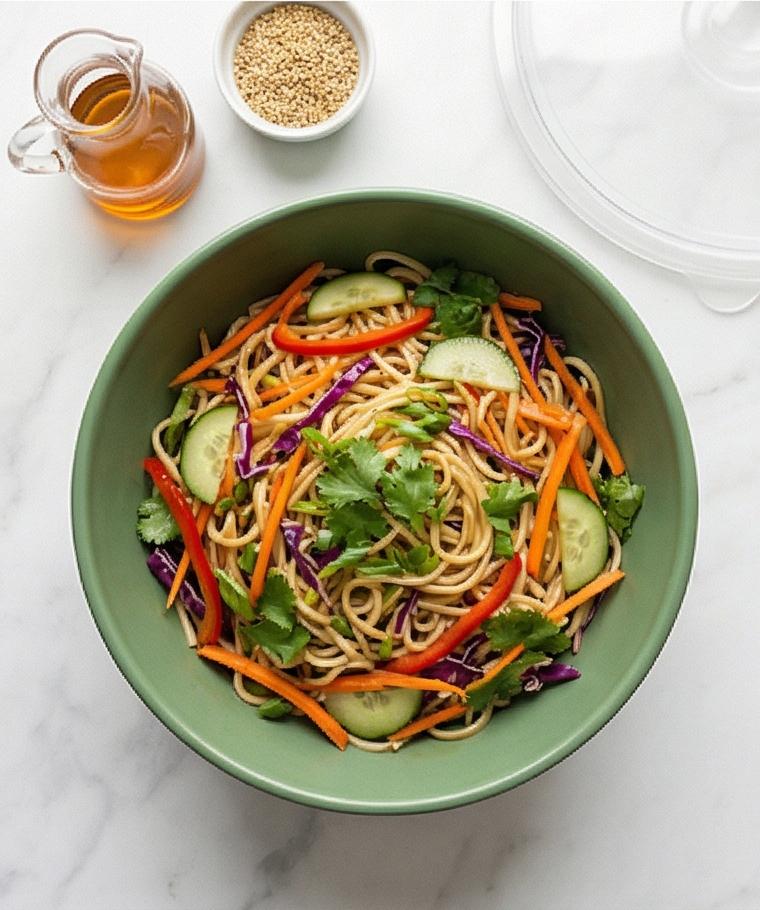
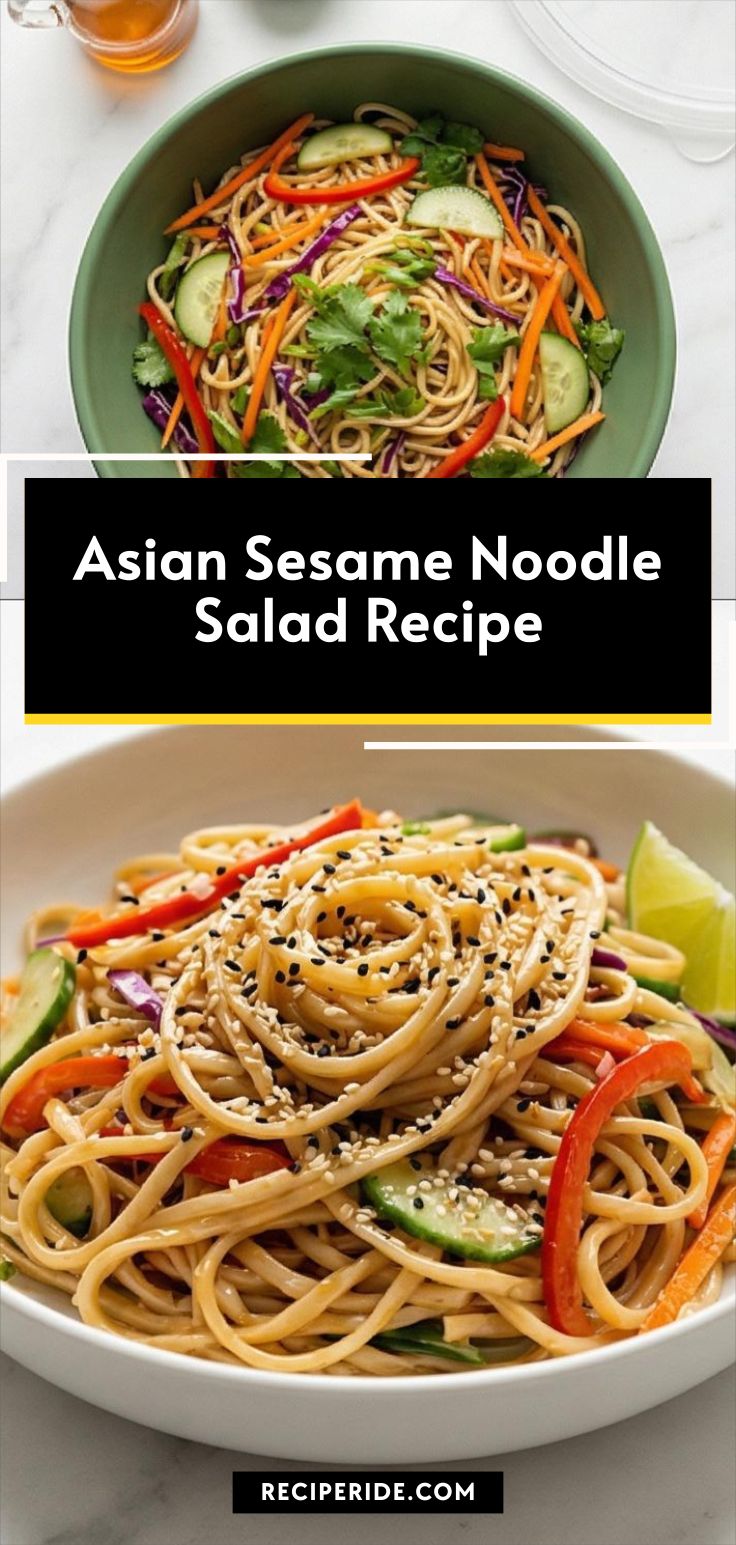
Add the sliced red pepper, shredded carrot, sliced cucumber, purple cabbage, scallions, and chopped cilantro to the dressed noodles and toss gently but thoroughly until the vegetables are evenly dispersed and everything is coated in a thin layer of dressing, taking care not to crush the noodles. The salad should show a mix of glossy noodles threaded through vivid ribbons and shreds of fresh produce.
Step 8: Taste and make small seasonal adjustments
Spoon a combined forkful of noodles and vegetables, tasting for balance; adjust with a splash more soy sauce for salt, a few drops of rice vinegar or lime juice for brightness, a drizzle of extra toasted sesame oil for deeper sesame aroma, or more chili-garlic sauce for heat. Toss briefly after any additions so the seasoning is evenly distributed – small tweaks at this stage refine the final harmony.
Step 9: Rest the salad so flavors meld and textures settle
Cover the bowl tightly and let the salad rest chilled in the refrigerator for 20–30 minutes or at cool room temperature for 15–20 minutes, allowing the noodles to absorb a bit of dressing and the flavors to marry. Before serving, give the salad one more gentle toss to redistribute any dressing that has settled and to re-fluff the vegetable pieces against the noodles.
Step 10: Finish with toasted sesame seeds, a final oil drizzle, and serve
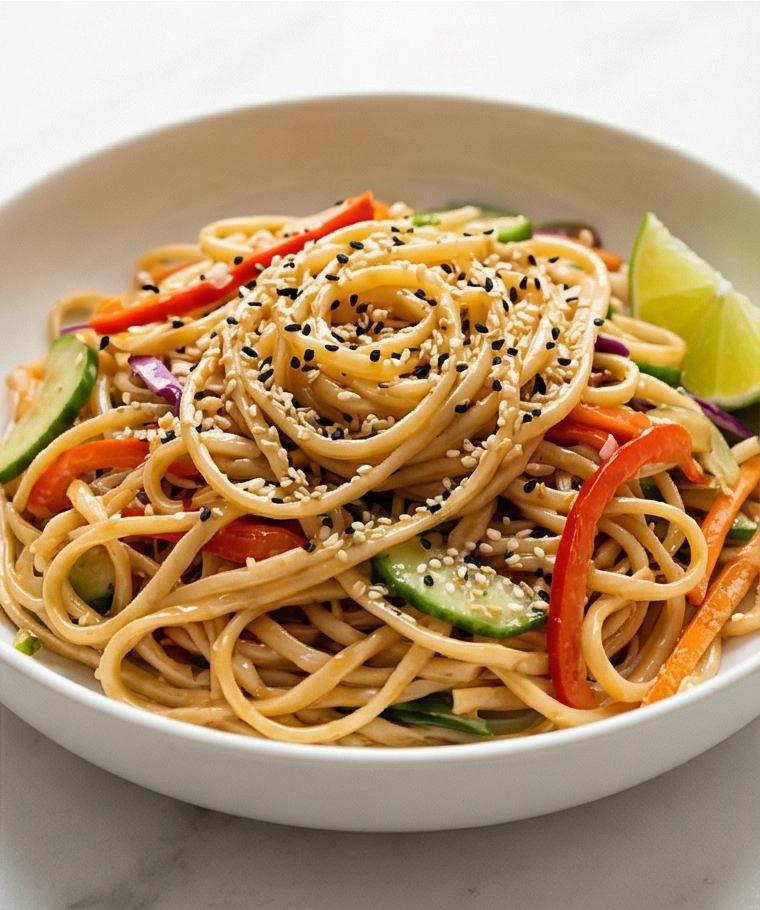
Just before serving sprinkle 3 tablespoons toasted sesame seeds evenly over the salad, optionally drizzle 1 tablespoon extra toasted sesame oil, toss very lightly to combine, and transfer to a shallow serving bowl or plate. Serve slightly chilled or at cool room temperature with lime wedges on the side for squeezing over individual portions; store leftovers airtight in the refrigerator for up to 3 days, tossing with a splash of water, soy, and sesame oil if the noodles have absorbed too much dressing.
Making It Your Own
I often tweak this Asian Sesame Noodle Salad Recipe according to what I have on hand. For a vegetarian protein boost I add cubed, grilled tofu or edamame; one experiment with marinated tempeh impressed everyone. When I wanted a lighter summer version, I used rice noodles and doubled the cucumber for extra crunch. For a gluten-free version, replace soy sauce with tamari and use rice noodles. In winter I fold in roasted sweet potato or thinly sliced roasted Brussels sprouts to add warmth. For heat lovers I mix in extra chili-garlic sauce or a scatter of thinly sliced fresh chiles. Each small change offers a new personality while keeping the core dressing intact.
How to Serve
If I am hosting a casual dinner, I like to serve the Asian Sesame Noodle Salad Recipe in a wide shallow bowl so guests can help themselves and see the vibrant colors. For a larger crowd, double the recipe and serve it from a platter with extra lime wedges and a small bowl of chili-garlic sauce on the side. Pair it with grilled chicken or salmon for a heartier meal, or set it out with an array of toppings – chopped peanuts, toasted sesame seeds, sliced scallions, and extra cilantro – so people can customize. For a picnic, pack dressing and noodles separately and toss just before serving to keep textures crisp.
Storage and Reheating Tips
Store leftovers in an airtight container in the refrigerator for up to 3 days. The noodles absorb dressing over time, so keep a small jar of extra soy sauce, toasted sesame oil, and a splash of water to refresh the salad before serving again.
If you plan to make this salad ahead for a party, prepare the dressing and chop the vegetables the day before. Keep the noodles and vegetables separate, then toss everything together about 30 minutes before guests arrive so the textures stay lively. Avoid reheating – this salad is best served chilled or at cool room temperature.
Common Mistakes and How to Avoid Them
One common mistake is overcooking the noodles until they are soft and mushy. Aim for al dente and rinse them under cold water to stop cooking right away. Another error is diluting the dressing by adding wet noodles or too much water; drain noodles well and add small amounts of water only if needed.
Also be careful with salt: low-sodium soy sauce helps control the salt level, and you can always add more at the tasting stage. Finally, don’t skip the rest time – a short chill helps flavors marry and gives the salad more depth.
Final Thoughts
Give this Asian Sesame Noodle Salad Recipe a try this week. It is forgiving, vibrant, and perfect for weeknight dinners, potlucks, or lunches. Once you nail the dressing, it will become one of your most reliable go-to meals.
Frequently Asked Questions
- Can I make this salad gluten-free? Yes, swap the soy sauce for tamari and use rice noodles instead of wheat noodles.
- How long will leftovers keep? Stored airtight in the fridge, the salad keeps well for up to 3 days; refresh with a splash of soy and sesame oil before serving.
- Can I make the dressing ahead? Absolutely – the dressing keeps in the fridge for up to a week and is handy for other salads.
- What can I use instead of peanut butter? Almond butter or sunflower seed butter both work well for different dietary needs.
- Is this salad good warm or cold? It is best slightly chilled or at cool room temperature; avoid reheating to preserve texture.
Asian Sesame Noodle Salad Recipe
Make Asian Sesame Noodle Salad Recipe now - tangy sesame-peanut dressing coats noodles and crisp vegetables for a bright, shareable dish.
Ingredients
Instructions
Step 1: Bring the cooking water to a vigorous boil
Fill a very large pot with 4 quarts (3.8 liters) of water, add 1 1/2 tablespoons kosher salt, cover, and heat until the water reaches a full rolling boil — the active, loud surface with continuous large bubbles. This step is all about achieving the right, lively boil so the noodles cook evenly and don’t clump; treat it like setting the stage and move on once the water is confidently bubbling.
Step 2: Whisk the sesame-peanut dressing until glossy and emulsified
In a roomy matte green ceramic mixing bowl combine 3 tablespoons low-sodium soy sauce, 2 tablespoons rice vinegar, 1 1/2 tablespoons toasted sesame oil, 1 tablespoon neutral oil, 1 1/2 tablespoons smooth peanut butter (softened if needed), 1 tablespoon honey, 2 teaspoons granulated sugar, 1 tablespoon fresh lime juice, 1 tablespoon finely grated fresh ginger, 2 finely minced garlic cloves, 1–2 teaspoons chili-garlic sauce or Sriracha to taste, and 1/4 teaspoon freshly ground black pepper. Whisk vigorously until the dressing is completely smooth, glossy and emulsified — you should see a silky, slightly viscous consistency that clings to the whisk and beads when you lift it. Keep the same green bowl nearby; it will be the tossing vessel.
Step 3: Add the dried noodles to the rolling water and cook to just al dente
When the water is at a rolling boil, add 12 ounces (340 g) dried thin spaghetti or Chinese wheat noodles, stir immediately to separate strands, and maintain a steady boil until the noodles are tender but still slightly firm in the center (about 8–10 minutes depending on the noodle). The goal is springy, resilient strands that will cool quickly and hold dressing without becoming mushy.
Step 4: Prepare the vegetables and herbs while the noodles cook
While the noodles soften, thinly slice 1 1/2 cups red bell pepper, shred 1 1/2 cups carrot, thinly slice 1 1/2 cups seedless cucumber, thinly slice 1 cup purple cabbage, thinly slice 4 scallions (white and green parts) and chop 1/4 cup cilantro leaves and tender stems. Keep each vegetable crisp and evenly sliced so textures — crunchy, juicy, crisp — contrast with the soft noodles when tossed.
Step 5: Shock and chill the noodles, then drain them very well
When the noodles are just al dente, immediately drain them in a colander and rinse under cold running water for 1–2 minutes until they are completely cool to the touch and no longer steaming; toss gently with your hands while rinsing to release surface starch. Shake the colander several times and let the noodles drain thoroughly — the surface should be moist but not dripping, so the dressing won’t be diluted.
Step 6: Combine the cooled noodles with the dressing and toss until glossy
Add the well-drained, cooled noodles to the bowl of emulsified sesame dressing (the same matte green ceramic bowl) and toss vigorously with tongs or two large forks until each strand is evenly coated and the noodles appear glossy and lightly sticky, about 1–2 minutes; if they look dry, add 1–2 teaspoons of cool water and toss again to help the dressing distribute and cling. This is where the noodles transform visually — from plain strands to shiny, sauced ribbons.
Step 7: Fold in the prepared vegetables and herbs for bright contrast
Add the sliced red pepper, shredded carrot, sliced cucumber, purple cabbage, scallions, and chopped cilantro to the dressed noodles and toss gently but thoroughly until the vegetables are evenly dispersed and everything is coated in a thin layer of dressing, taking care not to crush the noodles. The salad should show a mix of glossy noodles threaded through vivid ribbons and shreds of fresh produce.
Step 8: Taste and make small seasonal adjustments
Spoon a combined forkful of noodles and vegetables, tasting for balance; adjust with a splash more soy sauce for salt, a few drops of rice vinegar or lime juice for brightness, a drizzle of extra toasted sesame oil for deeper sesame aroma, or more chili-garlic sauce for heat. Toss briefly after any additions so the seasoning is evenly distributed — small tweaks at this stage refine the final harmony.
Step 9: Rest the salad so flavors meld and textures settle
Cover the bowl tightly and let the salad rest chilled in the refrigerator for 20–30 minutes or at cool room temperature for 15–20 minutes, allowing the noodles to absorb a bit of dressing and the flavors to marry. Before serving, give the salad one more gentle toss to redistribute any dressing that has settled and to re-fluff the vegetable pieces against the noodles.
Step 10: Finish with toasted sesame seeds, a final oil drizzle, and serve
Just before serving sprinkle 3 tablespoons toasted sesame seeds evenly over the salad, optionally drizzle 1 tablespoon extra toasted sesame oil, toss very lightly to combine, and transfer to a shallow serving bowl or plate. Serve slightly chilled or at cool room temperature with lime wedges on the side for squeezing over individual portions; store leftovers airtight in the refrigerator for up to 3 days, tossing with a splash of water, soy, and sesame oil if the noodles have absorbed too much dressing.
Notes
- Rinse and drain noodles very well so the dressing does not get diluted
- Taste and adjust seasoning at the end with soy, lime, or chili sauce
- Make the dressing ahead to save time and deepen flavor
- Substitute tamari and rice noodles for a gluten-free version
- Refresh leftovers with a splash of water, soy, and sesame oil before serving