Baked Feta Pasta Recipe has become my go-to for busy weeknights and small gatherings. I first made this dish the day I needed something comforting but fast, and it delivered: creamy, tangy feta melding with poppable tomatoes and fragrant basil. I keep coming back to the Baked Feta Pasta Recipe because it feels elevated yet impossibly simple. If you love one-pan meals that still look like you cared, this is for you.
How This Recipe Became My Rainy-Day Favorite
I remember the first time I roasted a block of feta with tomatoes on a gray afternoon and the kitchen filled with a warm, cozy smell that felt like a blanket. The tomatoes burst into syrupy pools, and the feta softened into a silky cloud that clung to each pasta twist. I was alone that night, stirring the steaming pasta into the glossy sauce, and I felt proud in a small, domestic way. The texture was everything: the faint crunch of tomato skins, the creamy, salty pull of feta, and a bright hit of basil that felt like sunlight. It became my rainy-day ritual, a recipe that wipes away the fuss and leaves you with comfort and a plate you want to linger over.
The Ingredients That Make It Sing
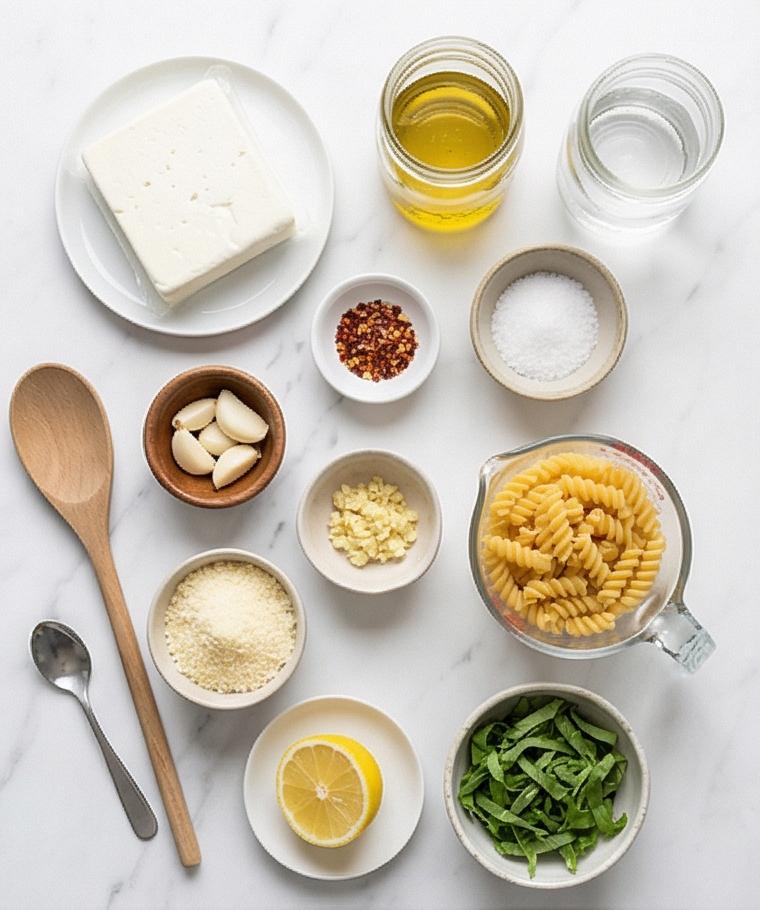
- Feta cheese block: The star that becomes a creamy sauce as it roasts; swap for ricotta salata or halloumi for a firmer finish. Choose full-fat for richness.
- Cherry or grape tomatoes: Provide juice, sweetness and acidity; use sun-ripened for best flavor or canned cherry tomatoes in a pinch.
- Extra-virgin olive oil: Emulsifies the sauce and adds silk; good-quality oil matters here.
- Garlic: Adds aromatic depth; roasted shallots work as a substitute.
- Short pasta: Carries the sauce; use penne, rotini or farfalle.
- Basil and Parmesan: Brightness and savory lift; try parsley or pecorino.
Essential Kitchen Tools
A few simple tools make this dish effortless and help you get the best texture and flavor. The oven-safe baking dish needs to hold the tomatoes and block of feta without crowding so everything roasts evenly. A large pot for boiling pasta and a sturdy spoon for mashing the feta and tomatoes are essential; a spatula helps scrape every bit of sauce. A heatproof measuring cup to reserve starchy water is a small trick that creates silky emulsification. If you don’t have a colander, carefully lift pasta with tongs and reserve water right from the pot.
- 9×13-inch baking dish: Even roasting surface.
- Large pot: For boiling pasta.
- Sturdy spoon or spatula: For mashing and tossing.
- Heatproof measuring cup: For reserved pasta water.
Step-by-Step Preparation Guide
Step 1: Preheat the oven and assemble the baking dish
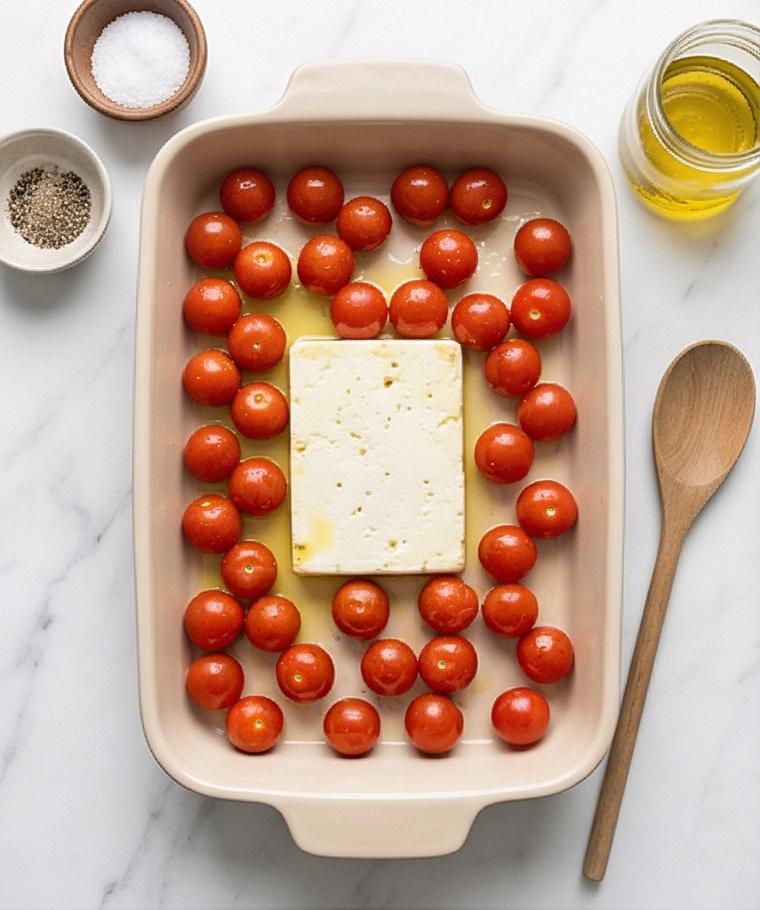
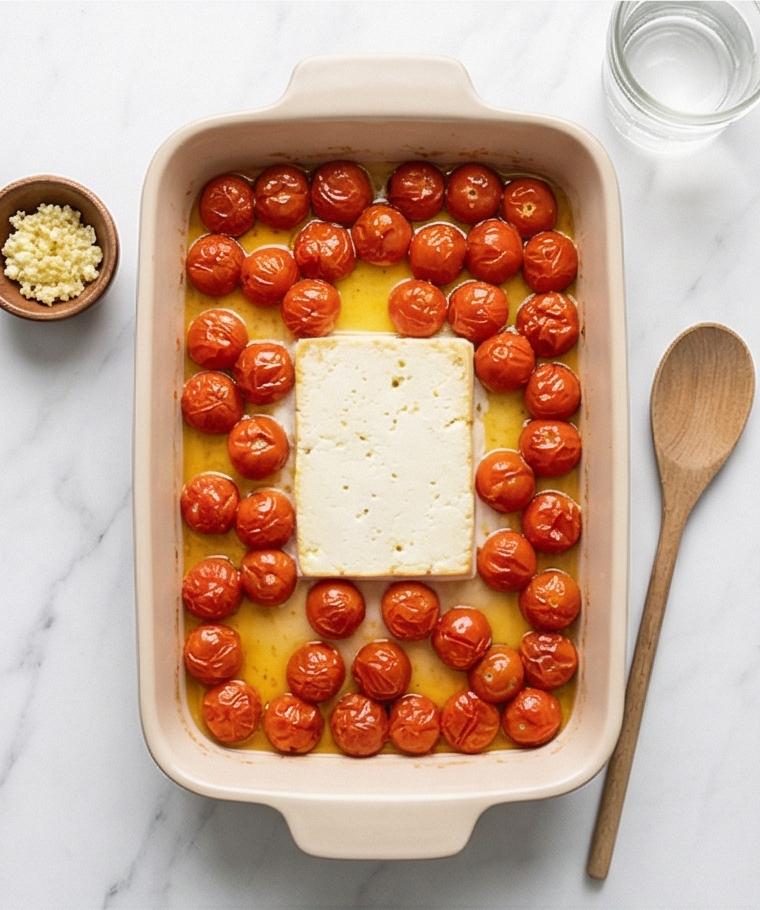
Preheat the oven to 400°F (200°C) and lightly oil a rectangular 9×13-inch baking dish so nothing will stick. Place the whole block of drained, patted-dry feta in the center of the oiled dish and scatter the rinsed, thoroughly dried cherry tomatoes around it in a single even layer. Keep a small glass jar of extra-virgin olive oil, a tiny ceramic bowl of kosher salt, a pepper mill, a ramekin of crushed red pepper flakes (if using), and a shallow bowl of peeled, finely minced garlic nearby — everything staged in vessels so no liquids sit directly on the marble. This is the quiet, calm setup before heat.
Step 2: Drizzle, season and roast until the tomatoes begin to soften
Drizzle 3 tablespoons of olive oil evenly over the block of feta and the tomatoes, then sprinkle kosher salt and freshly ground black pepper for a bright seasoning base. Gently toss the tomatoes with a spoon so they sit glossy from oil while the feta remains centered. Slide the prepared dish into the preheated oven and roast for about 25 minutes, just until the tomatoes release juices and their skins wrinkle — still holding shape but visibly softened. The scene to notice is the first burst of tomato juices pooling around the softening feta.
Step 3: Add the garlic and finish roasting until very soft and gently golden
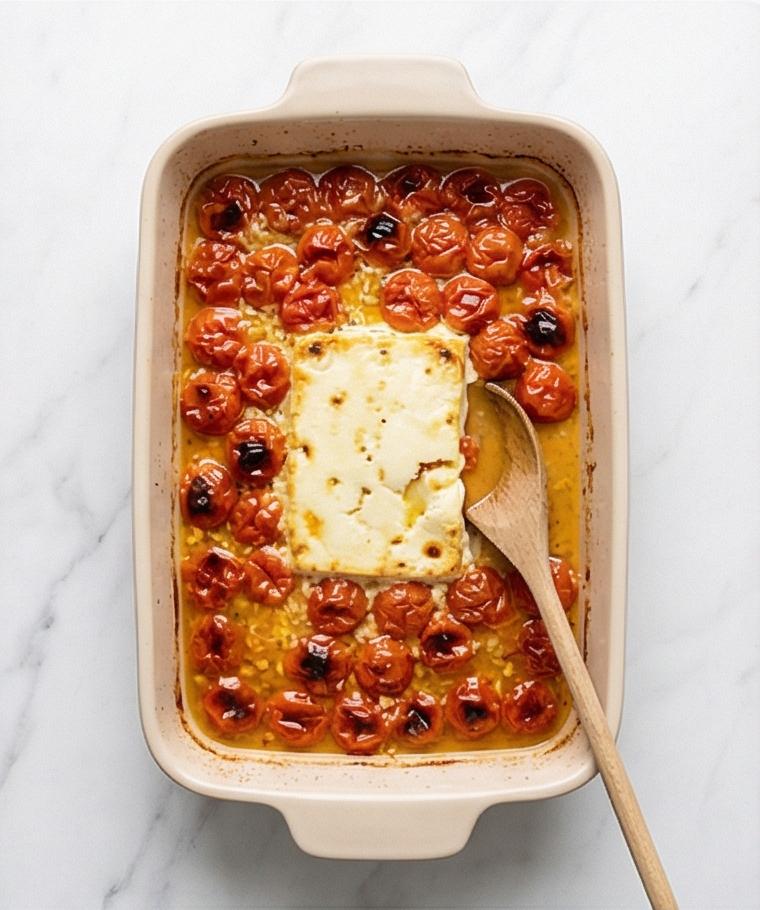
Remove the dish and quickly scatter the minced garlic in small even bits so it sinks into the hot tomato juices, then return the dish to the oven for another 5–8 minutes. The final roasted state should show deeply softened, blistered tomatoes, garlic that has become fragrant (but not browned), and a feta block that is melting at the edges with the faintest golden halos. The mixture should smell sweet and savory, and juices should be abundant and glossy.
Step 4: Cook the pasta to al dente and reserve starchy water
While the feta-tomato mixture finishes, cook your short pasta in vigorously boiling, well-salted water until firm-tender (al dente). Before draining, ladle off 1/4–1/2 cup of the hot starchy cooking water into a heatproof measuring cup and keep it warm — this liquid is the secret to loosening and emulsifying the sauce later. Drain the pasta briefly in a colander and keep it hot and ready to be combined with the roasted mixture on the marble surface.
Step 5: Mash, stir and toss pasta with the hot feta–tomato sauce
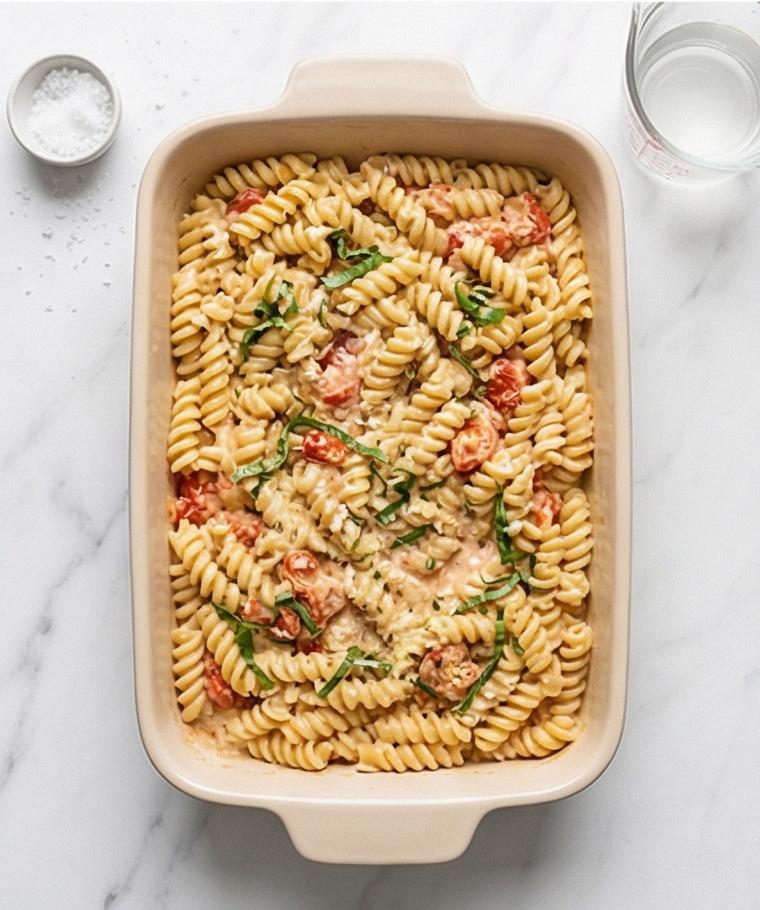
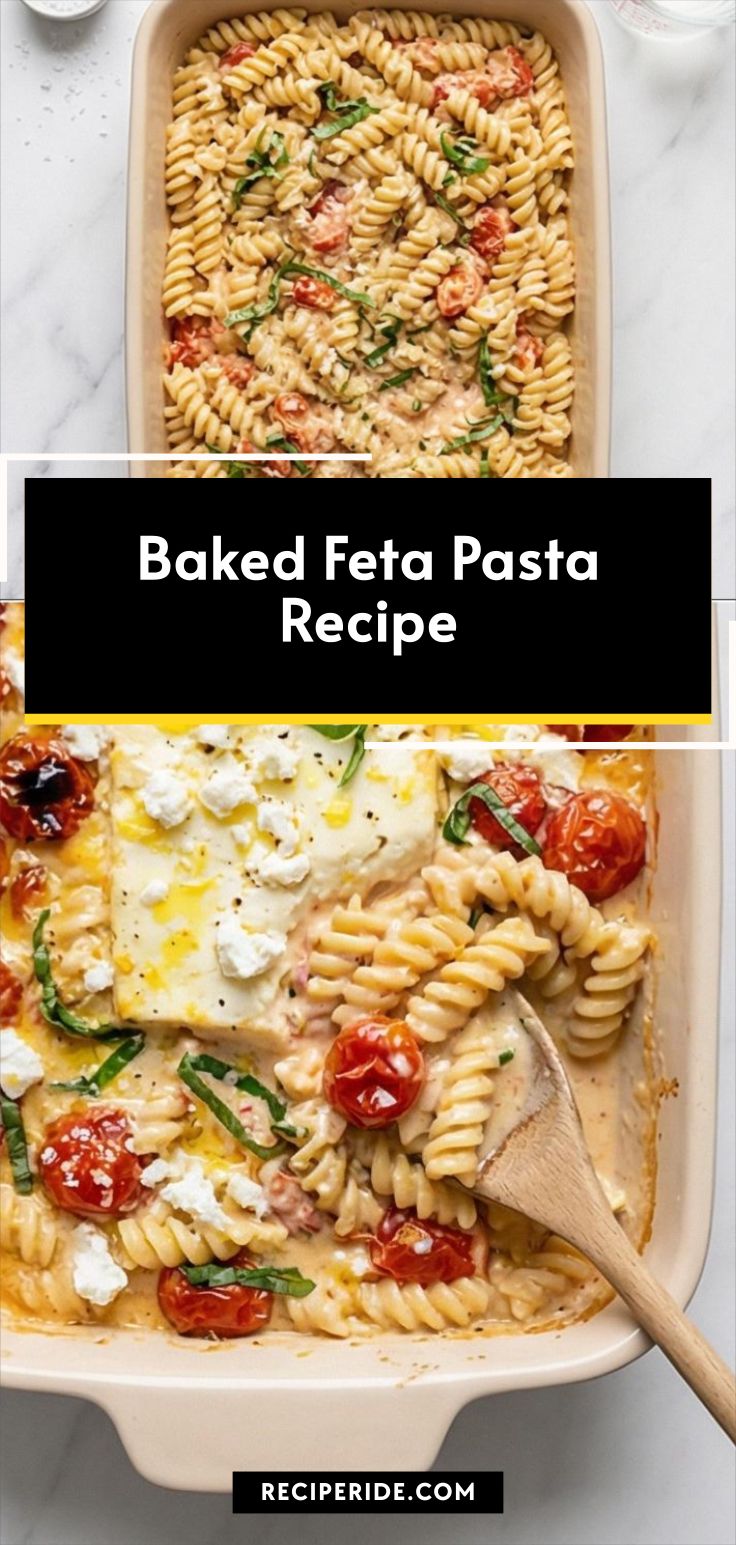
Take the hot baking dish straight to the marble surface and use a sturdy spoon to press and stir the soft feta and blistered tomatoes into a creamy, slightly chunky sauce: tomatoes burst and their skins fold into glossy red ribbons while the feta becomes pillowy and emulsified with olive oil. Add the hot drained pasta directly into the rectangular baking dish and toss thoroughly, pouring a little of the reserved pasta water at a time until the sauce smooths into a glossy coating that clings to each piece of pasta without being watery. Fold in bright chiffonade basil and freshly grated Parmesan if using, and taste, adjusting salt and pepper; a few teaspoons of lemon juice can lift the flavors if you like.
Step 6: Rest briefly, finish and serve warm from the baking dish
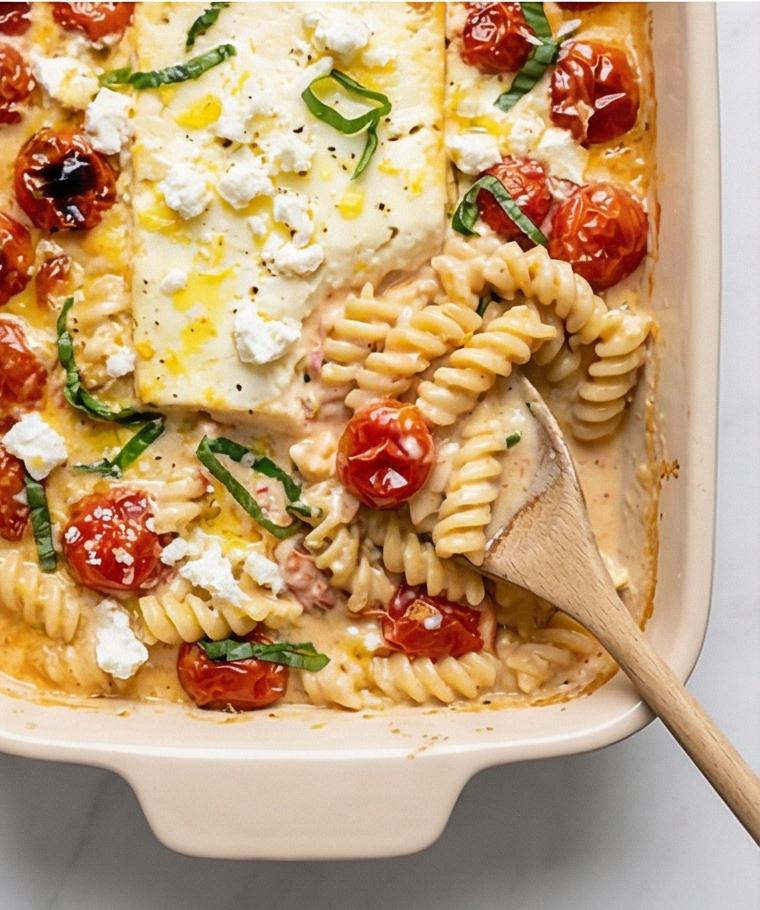
Let the assembled pasta rest in the warm dish for a couple of minutes so the sauce thickens and the flavors marry. Finish each serving with a light drizzle of extra-virgin olive oil, a sprinkle of flaky sea salt, a few extra basil leaves, a dusting of grated Parmesan and a hint of lemon zest if desired. Serve immediately while hot and creamy — the final presentation stays in the same rectangular baking dish you roasted in, rustic and irresistible.
Making It Your Own
I like to experiment by swapping in roasted peppers and olives for a Mediterranean spin. Try adding cooked spinach and a squeeze of lemon for a brighter, greener plate. For a vegan version, replace the feta with a plant-based creamy cheese and stir in nutritional yeast for savoriness.
If you want more heat, toss in extra crushed red pepper flakes or a pinch of smoked paprika. To make it heartier, mix in browned Italian sausage or roasted mushrooms. Seasonal tweaks are easy: use summer tomatoes at peak ripeness or roasted winter cherry tomatoes when they are sweeter.
How to Serve
When I’m hosting, I keep the pasta in the baking dish so guests can serve themselves family-style; it looks homey and keeps the sauce warm. For a small dinner party, portion onto warmed plates and finish with extra basil and grated Parmesan at the table. If you need to stretch the recipe, add a side of garlicky sautéed greens and a simple arugula salad with lemon vinaigrette.
For casual weeknight meals, plate with a crusty loaf and a glass of crisp white wine. For a more formal presentation, transfer to a shallow bowl, garnish with lemon zest and a final drizzle of extra-virgin olive oil.
Storage and Reheating Tips
Let leftovers cool to room temperature, then transfer to an airtight container and refrigerate for up to 3 days. The sauce will thicken in the fridge as the feta firms back up.
To reheat, warm gently in a skillet over low heat with a splash of water or reserved pasta water to loosen the sauce, or microwave in short bursts, stirring between intervals. Add a few fresh basil leaves or a drizzle of olive oil after reheating to revive the freshness.
Common Mistakes and How to Avoid Them
Overcrowding the baking dish can lead to steamed rather than roasted tomatoes, so give them room to blister and concentrate their flavor. Don’t skip draining the feta well; excess moisture can water down the sauce.
When tossing pasta, add reserved starchy water gradually so the sauce reaches a glossy, clingy texture without getting watery. Taste and adjust salt at the end, since feta and Parmesan add saltiness.
A Warm Invitation to Try It
If you’ve been curious, give this Baked Feta Pasta Recipe a try this week. It’s one of those recipes that makes you feel like you cooked something special with very little effort, and it’s forgiving enough to personalize. I can’t wait to hear which variation becomes your favorite.
Frequently Asked Questions.
-
Q: Can I make Baked Feta Pasta Recipe ahead of time?
A: You can roast the feta and tomatoes ahead, cool, and refrigerate for up to a day. Reheat gently and toss with freshly cooked pasta when ready to serve. -
Q: What pasta works best for Baked Feta Pasta Recipe?
A: Short, ridged pasta like penne, rotini, or farfalle holds the sauce well and is ideal for this dish. -
Q: Can I use regular feta crumbles instead of a block?
A: A block of feta melts more evenly. Crumbles can work but may not create the same creamy sauce. -
Q: How do I make it less salty?
A: Choose a lower-salt feta or rinse and pat dry to remove some brine, and hold back on added kosher salt until after tasting. -
Q: Is there a vegan alternative for Baked Feta Pasta Recipe?
A: Yes, use a plant-based feta or a creamy cashew-based cheese and add nutritional yeast for a savory boost.
Baked Feta Pasta Recipe
Make Baked Feta Pasta Recipe for a creamy, tomato-scented weeknight meal—ready in under an hour.
Ingredients
Instructions
Step 1: Preheat the oven and assemble the baking dish
Preheat the oven to 400°F (200°C) and lightly oil a rectangular 9x13-inch baking dish so nothing will stick. Place the whole block of drained, patted-dry feta in the center of the oiled dish and scatter the rinsed, thoroughly dried cherry tomatoes around it in a single even layer. Keep a small glass jar of extra-virgin olive oil, a tiny ceramic bowl of kosher salt, a pepper mill, a ramekin of crushed red pepper flakes (if using), and a shallow bowl of peeled, finely minced garlic nearby — everything staged in vessels so no liquids sit directly on the marble. This is the quiet, calm setup before heat.
Step 2: Drizzle, season and roast until the tomatoes begin to soften
Drizzle 3 tablespoons of olive oil evenly over the block of feta and the tomatoes, then sprinkle kosher salt and freshly ground black pepper for a bright seasoning base. Gently toss the tomatoes with a spoon so they sit glossy from oil while the feta remains centered. Slide the prepared dish into the preheated oven and roast for about 25 minutes, just until the tomatoes release juices and their skins wrinkle — still holding shape but visibly softened. The scene to notice is the first burst of tomato juices pooling around the softening feta.
Step 3: Add the garlic and finish roasting until very soft and gently golden
Remove the dish and quickly scatter the minced garlic in small even bits so it sinks into the hot tomato juices, then return the dish to the oven for another 5–8 minutes. The final roasted state should show deeply softened, blistered tomatoes, garlic that has become fragrant (but not browned), and a feta block that is melting at the edges with the faintest golden halos. The mixture should smell sweet and savory, and juices should be abundant and glossy.
Step 4: Cook the pasta to al dente and reserve starchy water
While the feta-tomato mixture finishes, cook your short pasta in vigorously boiling, well-salted water until firm-tender (al dente). Before draining, ladle off 1/4–1/2 cup of the hot starchy cooking water into a heatproof measuring cup and keep it warm — this liquid is the secret to loosening and emulsifying the sauce later. Drain the pasta briefly in a colander and keep it hot and ready to be combined with the roasted mixture on the marble surface.
Step 5: Mash, stir and toss pasta with the hot feta–tomato sauce
Take the hot baking dish straight to the marble surface and use a sturdy spoon to press and stir the soft feta and blistered tomatoes into a creamy, slightly chunky sauce: tomatoes burst and their skins fold into glossy red ribbons while the feta becomes pillowy and emulsified with olive oil. Add the hot drained pasta directly into the rectangular baking dish and toss thoroughly, pouring a little of the reserved pasta water at a time until the sauce smooths into a glossy coating that clings to each piece of pasta without being watery. Fold in bright chiffonade basil and freshly grated Parmesan if using, and taste, adjusting salt and pepper; a few teaspoons of lemon juice can lift the flavors if you like.
Step 6: Rest briefly, finish and serve warm from the baking dish
Let the assembled pasta rest in the warm dish for a couple of minutes so the sauce thickens and the flavors marry. Finish each serving with a light drizzle of extra-virgin olive oil, a sprinkle of flaky sea salt, a few extra basil leaves, a dusting of grated Parmesan and a hint of lemon zest if desired. Serve immediately while hot and creamy — the final presentation stays in the same rectangular baking dish you roasted in, rustic and irresistible.
Notes
- Use full-fat feta for the creamiest sauce.
- Reserve pasta water to loosen the sauce and create a glossy emulsion.
- Pat feta and tomatoes dry to avoid excess moisture.
- Taste before adding extra salt, since feta and Parmesan add saltiness.
- Warm leftover pasta gently with a splash of water and fresh basil.