I fell for this Greek Orzo Salad Recipe the first time I tasted it at a summer potluck and have been making my own version ever since. Bright lemon, briny olives, and creamy feta make it one of those dishes that feels both special and effortless. I usually double the dressing because the leftovers are the best part. This salad has become my go-to for easy weeknight dinners, picnic spreads, and those times when you want something that sings without standing over the stove.
What makes the Greek Orzo Salad Recipe worth trying is how quickly the flavors come together and how forgiving it is if you make small swaps. It travels well, holds up in the fridge, and looks beautiful on the table. Plus, the texture contrast between plump orzo and crisp cucumber keeps every bite interesting. I promise it will be a welcome addition to your recipe rotation.
How This Recipe Became My Picnic Staple
I remember the first time I brought this Greek Orzo Salad Recipe to a parkside picnic. The day was sunny but windy, and the salad felt like a little island of Mediterranean calm on the checkered blanket. I could smell lemon in the air as people gathered around, drawn by the bright colors. The first spoonful was crisp, tangy, and just salty enough from the olives and feta to make everyone pause and smile. It was the kind of recipe that invites conversation: “Who made this?” and “Can I have the recipe?” I scribbled it down for friends and then tweaked it at home, adding more herbs and a touch more lemon until it matched that perfect memory. Now, whenever I make it, I get a tiny thrill remembering that picnic and the way simple ingredients turned ordinary day into something memorable.
Key Ingredients and Why They Matter
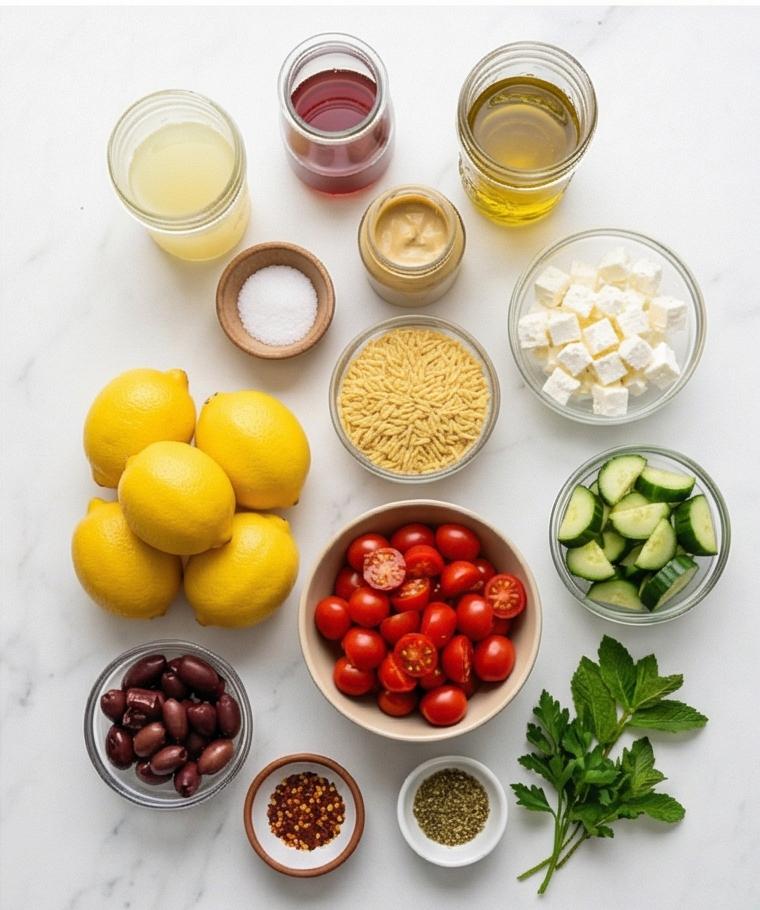
- Orzo: The base that soaks up dressing and holds other textures together; substitute with small pasta like acini di pepe or Israeli couscous if needed, and choose high-quality durum wheat for a firm bite.
- Extra-virgin olive oil: Provides richness and helps emulsify the dressing; use a fruity oil for brightness or a mellow one if you prefer a gentler taste.
- Lemon juice and red wine vinegar: The acid duo brightens everything; fresh lemon is best, but bottled juice can work in a pinch.
- Feta: Adds creaminess and salt; swap for goat cheese for a tangier note or use a dairy-free crumb for vegan options.
- Tomatoes, cucumber, Kalamata olives: Freshness and brine create balance; pick ripe tomatoes, firm cucumbers, and well-drained olives.
Essential Kitchen Tools and Why They Help
A few simple tools make assembling this salad much easier and more consistent. A heavy-bottomed pot gives even heat for perfectly cooked orzo, while a fine-mesh strainer helps cool and rinse the pasta without losing any grains. A whisk is key to emulsifying the lemon-oregano dressing so it clings to each piece of pasta. For chopping, a sharp chef’s knife saves time and keeps veggies neat; if you do not have one, a good paring knife will do in a pinch. Finally, a large mixing bowl gives room to toss the salad gently so the feta and herbs distribute without breaking down the ingredients. These small investments pay off in texture and presentation.
Step-by-Step Preparation Guide
Step 1: Bring water to a rolling boil and season it
Bring 3 quarts (2.8 liters) of water to a full rolling boil and stir in 1 1/2 tablespoons kosher salt so the pasta water is properly seasoned. This is the very first action — get the water aggressively boiling so the orzo will cook evenly when added.
Step 2: Cook the orzo until just al dente
Add 1 1/2 cups (270 g) dry orzo to the boiling, salted water, stir to prevent clumping, and keep it at a steady boil for 8–10 minutes until the grains are tender but still have a slight bite when tasted. Keep an eye on the texture; orzo should remain plump but not mushy.
Step 3: Drain and cool the orzo
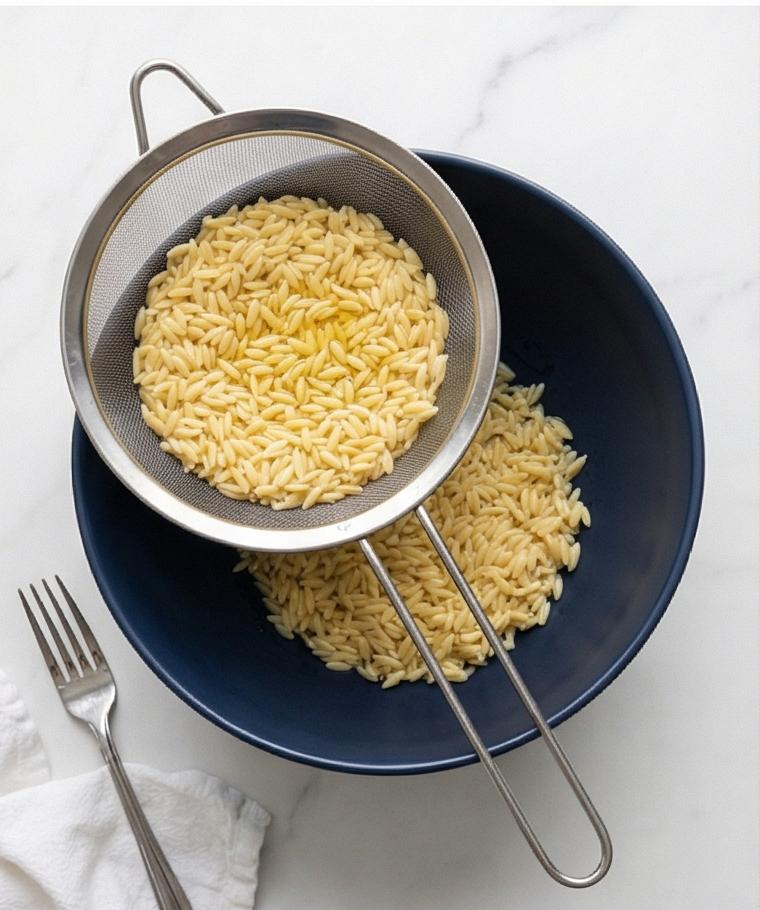
Drain the orzo in a fine-mesh strainer or colander, then rinse briefly under cold running water for 20–30 seconds, stirring gently until it’s no longer hot but slightly warm; drain thoroughly so there’s no excess water. Transfer to a bowl and let rest briefly off heat before tossing with oil.
Step 4: Toss the warm orzo with a touch of oil and let it cool
Move the drained orzo to a large mixing bowl, drizzle 1 teaspoon extra-virgin olive oil over the grains, and toss gently so the pieces stay separate as they cool; leave the bowl at room temperature for about 15–20 minutes while you prepare the dressing and vegetables.
Step 5: Combine the acid and aromatics for the dressing
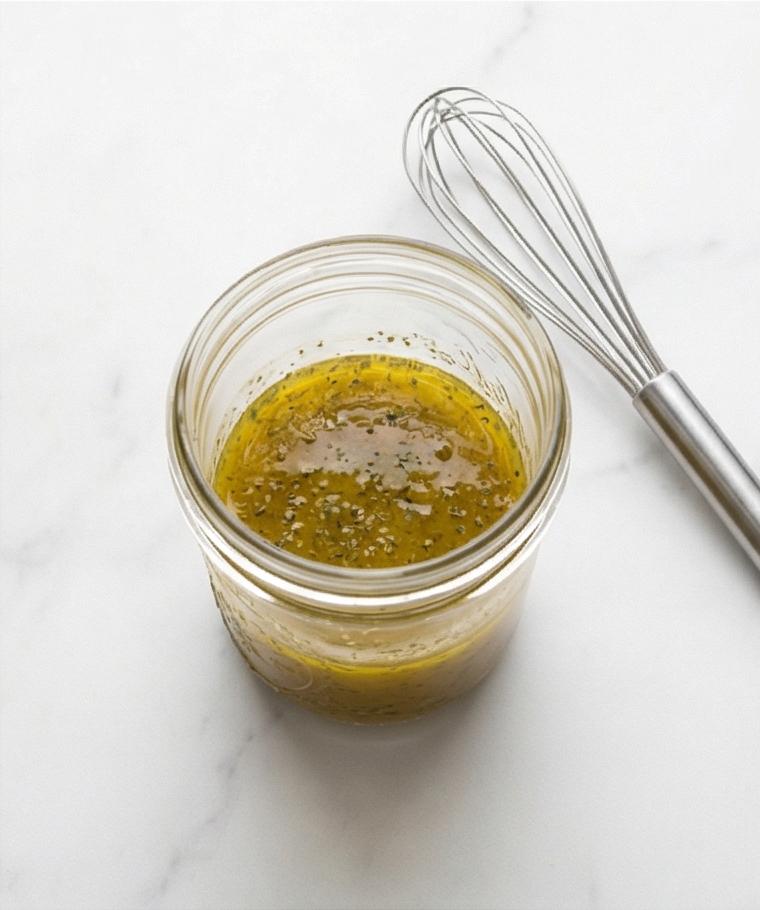
In a separate medium bowl, combine 1/4 cup freshly squeezed lemon juice, 2 tablespoons red wine vinegar, one finely minced garlic clove, and 1 teaspoon Dijon mustard; whisk until the mustard dissolves and the mixture looks smooth and uniform.
Step 6: Season the dressing base
Stir 1 1/2 teaspoons dried oregano, 3/4 teaspoon kosher salt, and 1/2 teaspoon freshly ground black pepper into the lemon-vinegar mixture, whisking so the dried herbs and salt are evenly distributed and the flavor base is balanced.
Step 7: Emulsify the dressing with olive oil
While whisking continuously, slowly drizzle in 1/2 cup extra-virgin olive oil in a thin, steady stream until the dressing emulsifies and becomes slightly thickened with a glossy sheen; taste and adjust with a pinch more salt or pepper if needed.
Step 8: Prepare the vegetables and mix-ins
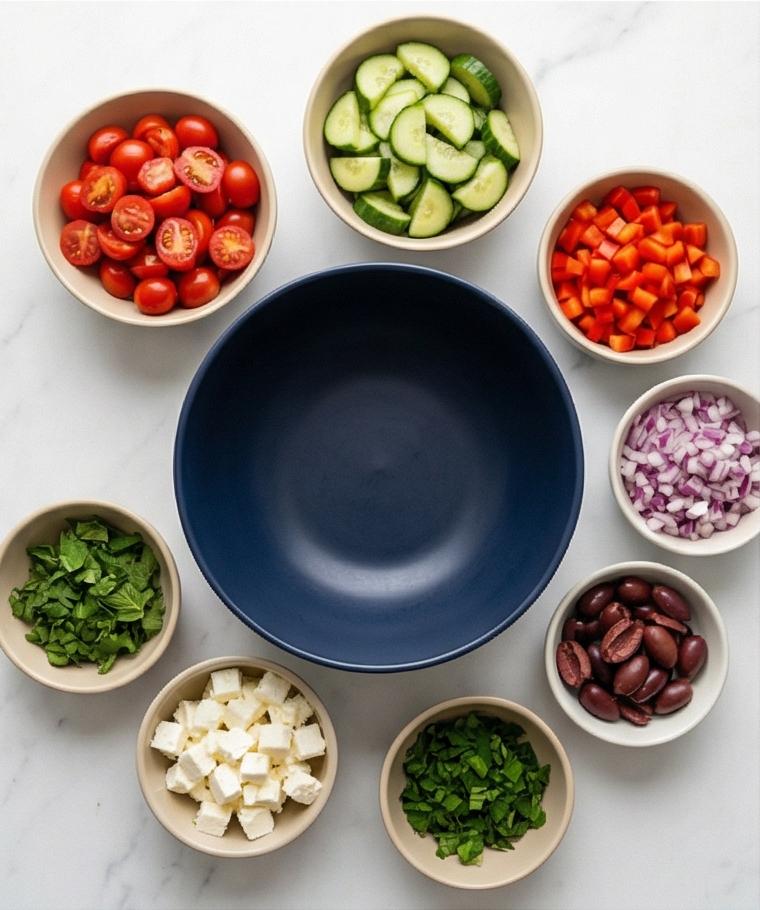
Halve 1 1/2 cups cherry tomatoes, quarter and slice 1 1/2 cups English cucumber, seed and dice a small red bell pepper, finely dice 1/3 cup red onion, halve 3/4 cup pitted Kalamata olives, cube or crumble 1 cup feta, and finely chop 1/4 cup parsley and 2 tablespoons mint. Arrange them neatly so each element keeps its texture and color.
Step 9: Add the cooled orzo to the vegetables
Once the orzo has cooled to slightly warm, add it to the prepared vegetables and mix-ins in the large bowl so the textures — plump pasta, crisp cucumber, juicy tomatoes, salty olives — start to sit together before dressing.
Step 10: Fold everything together gently
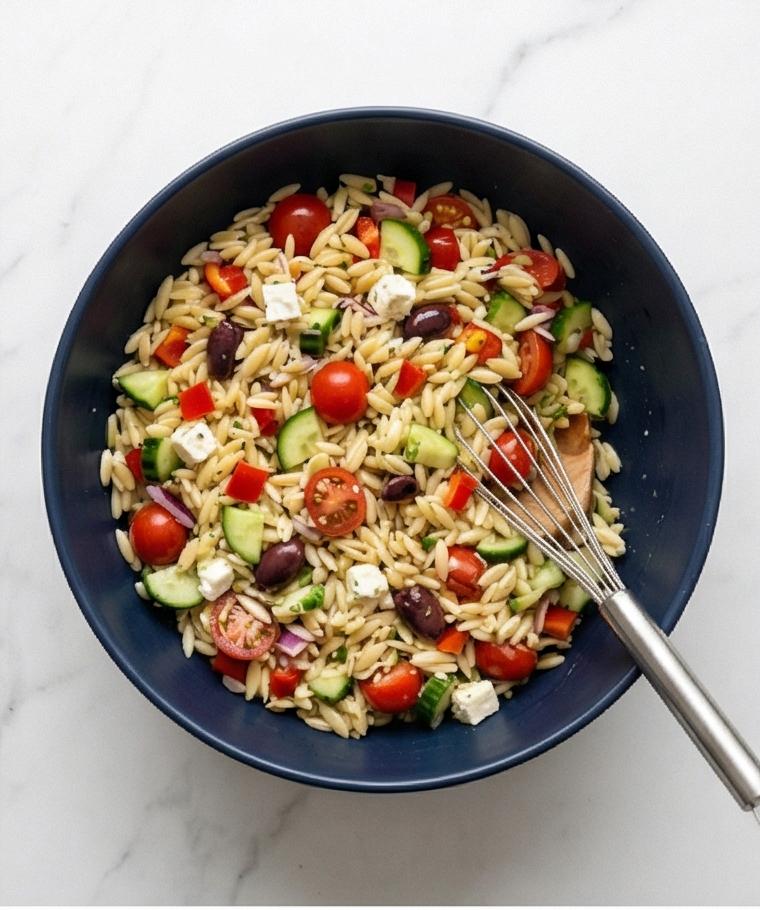
Gently fold in the halved tomatoes, sliced cucumber, diced red bell pepper, diced red onion, halved Kalamata olives, feta, chopped parsley, and chopped mint until everything is evenly distributed and the mixture looks balanced and colorful.
Step 11: Dress the salad evenly
Pour the lemon-oregano dressing over the assembled orzo and vegetables, scraping the bowl to capture every bit of seasoning, and toss gently but thoroughly for 1–2 minutes so every grain and piece of veg is lightly coated and glossy.
Step 12: Add optional heat and re-taste
If you like a hint of heat, sprinkle in 1/4 teaspoon crushed red pepper flakes and toss briefly to distribute. Taste the salad and adjust seasoning with a pinch more salt, a squeeze more lemon, or a small drizzle of olive oil as needed.
Step 13: Chill to let flavors meld
Cover the bowl tightly and refrigerate the salad for at least 30 minutes (up to 2 hours) so the lemon, oregano, and salt can soften and marry the vegetables and pasta; chilling rounds flavors and slightly firms the textures.
Step 14: Bring back to serving temperature
Before serving, remove the salad from the refrigerator and let it sit at room temperature for 10–15 minutes to take the chill off so the flavors are more pronounced and the texture is pleasing.
Step 15: Final toss and finish
Give the salad a gentle toss to redistribute any dressing settled at the bottom; if it looks dry, refresh with 1–2 teaspoons olive oil and a small squeeze of lemon juice, then toss again to combine.
Step 16: Plate and garnish for serving
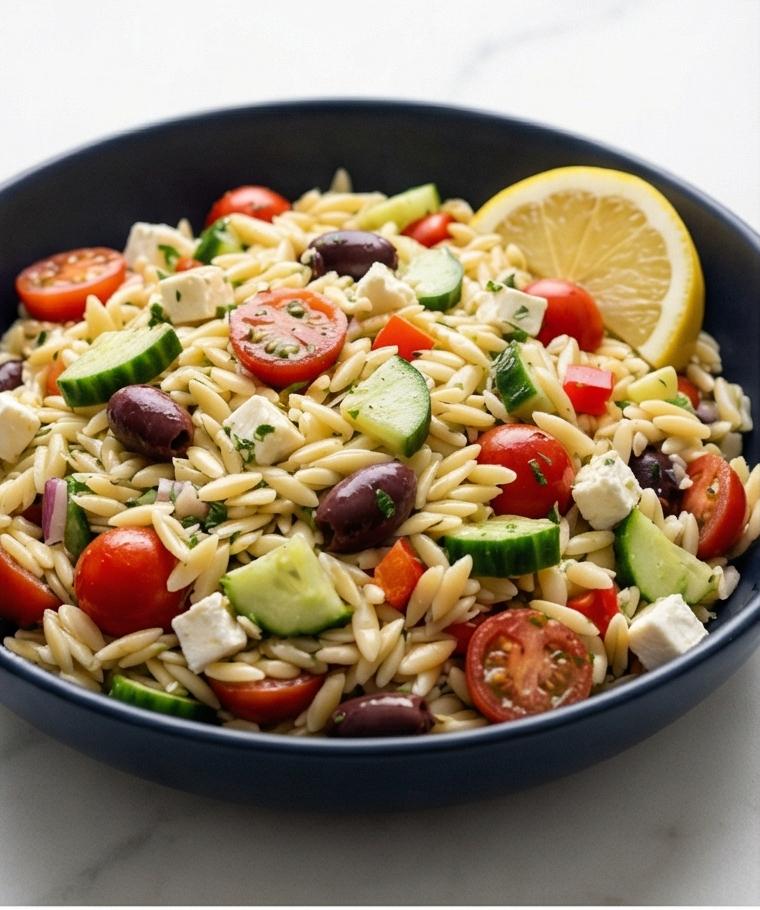
Transfer the Greek orzo salad to a serving bowl or platter, sprinkle with the optional crumbled feta and an extra 2 tablespoons chopped parsley or mint for garnish, and serve with lemon wedges on the side. The salad is best slightly chilled or at a cool room temperature, and leftovers keep well refrigerated for up to 3 days.
Making It Your Own
I like to experiment with this salad depending on the season. In the summer I toss in extra cherry tomatoes and basil for a sweeter, garden-forward version. In late fall I swap mint for dill and add roasted red peppers for a warmer flavor profile. For a protein boost, I’ve added grilled chicken or a can of chickpeas and both work beautifully. If you need a vegan option, leave out the feta and add toasted almonds or a spoonful of artichoke paste for richness. These small tests keep the salad exciting and let you tailor it to what you have on hand.
How to Serve
When I serve Greek Orzo Salad Recipe at a casual dinner, I spoon it onto a large platter, scatter extra chopped herbs on top, and tuck lemon wedges around the edge. For a picnic I pack it into individual jars with a wedge of lemon on the side. If you need to stretch it for a crowd, add more cucumbers and a can of rinsed chickpeas; for smaller portions, cut the recipe in half and keep dressing proportions similar. Pair it with grilled fish, roasted vegetables, or warm pita for a complete meal.
Storage and Reheating Tips
Store the salad in an airtight container in the refrigerator for up to 3 days. Keep any extra crumbled feta separate and add just before serving if you want the cheese to stay bright and intact. If the salad absorbs too much dressing in the fridge, refresh it with a splash of olive oil and a squeeze of lemon before serving.
If you want the salad slightly warm, let it come to room temperature and give it a quick toss; I do not recommend microwaving since that softens the vegetables. For the best texture, serve after a short rest at room temperature.
Common Mistakes and How to Avoid Them
Under-salting the pasta water is an easy misstep; the orzo needs seasoning as it cooks so the whole salad is flavorful. Be generous but tasteful with the kosher salt in the boiling water.
Another common error is overcooking the orzo. Watch the pot and test a grain early; the pasta should be tender with a slight bite. Finally, avoid overdressing at first; you can always add more, but you cannot take it away.
Final Thoughts
Give this Greek Orzo Salad Recipe a try and make it your own. It is bright, forgiving, and quick to pull together, and it has a way of becoming a favorite for gatherings and weeknights alike. I hope it brings a little Mediterranean sunshine to your table.
Frequently Asked Questions
- What is the best way to cook orzo for this salad? Cook orzo in generously salted boiling water until just al dente, then drain and rinse under cold water to stop cooking.
- Can I make the Greek Orzo Salad Recipe ahead of time? Yes, you can make it up to 2 days ahead; chill and let it sit at room temperature 10-15 minutes before serving.
- How do I keep the salad from getting soggy? Drain the orzo thoroughly and avoid overdressing; add extra dressing only if needed before serving.
- Can I substitute the feta cheese? Yes, try goat cheese, ricotta salata, or a dairy-free alternative for a vegan version.
- Is this recipe suitable for meal prep lunches? Absolutely; it keeps well refrigerated and makes a satisfying, portable meal.
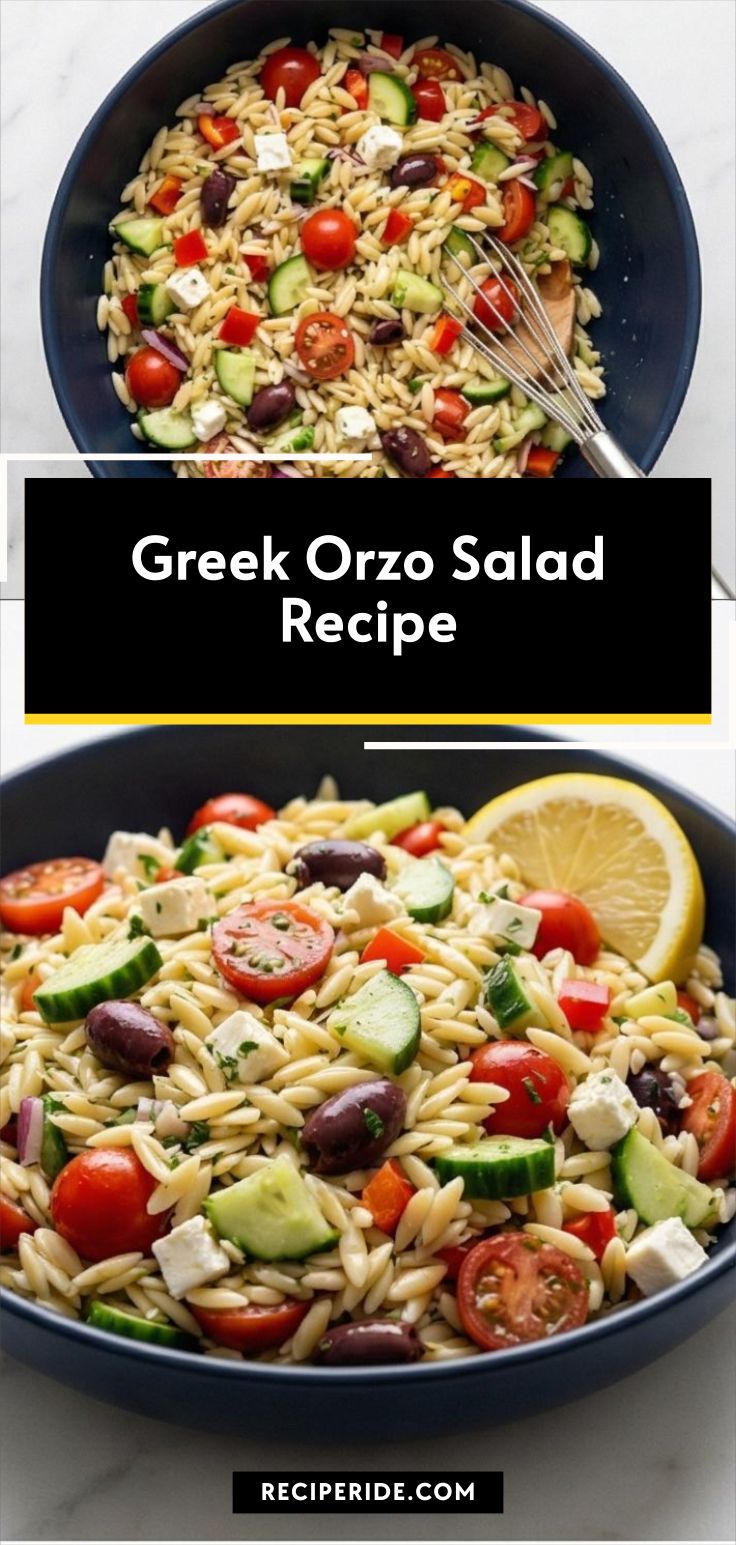
Greek Orzo Salad Recipe
Make the Greek Orzo Salad Recipe now: bright lemon, olives, and feta come together for a quick, flavorful dish.
Ingredients
Instructions
Step 1: Bring water to a rolling boil and season it
Bring 3 quarts (2.8 liters) of water to a full rolling boil and stir in 1 1/2 tablespoons kosher salt so the pasta water is properly seasoned. This is the very first action — get the water aggressively boiling so the orzo will cook evenly when added.
Step 2: Cook the orzo until just al dente
Add 1 1/2 cups (270 g) dry orzo to the boiling, salted water, stir to prevent clumping, and keep it at a steady boil for 8–10 minutes until the grains are tender but still have a slight bite when tasted. Keep an eye on the texture; orzo should remain plump but not mushy.
Step 3: Drain and cool the orzo
Drain the orzo in a fine-mesh strainer or colander, then rinse briefly under cold running water for 20–30 seconds, stirring gently until it’s no longer hot but slightly warm; drain thoroughly so there’s no excess water. Transfer to a bowl and let rest briefly off heat before tossing with oil.
Step 4: Toss the warm orzo with a touch of oil and let it cool
Move the drained orzo to a large mixing bowl, drizzle 1 teaspoon extra-virgin olive oil over the grains, and toss gently so the pieces stay separate as they cool; leave the bowl at room temperature for about 15–20 minutes while you prepare the dressing and vegetables.
Step 5: Combine the acid and aromatics for the dressing
In a separate medium bowl, combine 1/4 cup freshly squeezed lemon juice, 2 tablespoons red wine vinegar, one finely minced garlic clove, and 1 teaspoon Dijon mustard; whisk until the mustard dissolves and the mixture looks smooth and uniform.
Step 6: Season the dressing base
Stir 1 1/2 teaspoons dried oregano, 3/4 teaspoon kosher salt, and 1/2 teaspoon freshly ground black pepper into the lemon-vinegar mixture, whisking so the dried herbs and salt are evenly distributed and the flavor base is balanced.
Step 7: Emulsify the dressing with olive oil
While whisking continuously, slowly drizzle in 1/2 cup extra-virgin olive oil in a thin, steady stream until the dressing emulsifies and becomes slightly thickened with a glossy sheen; taste and adjust with a pinch more salt or pepper if needed.
Step 8: Prepare the vegetables and mix-ins
Halve 1 1/2 cups cherry tomatoes, quarter and slice 1 1/2 cups English cucumber, seed and dice a small red bell pepper, finely dice 1/3 cup red onion, halve 3/4 cup pitted Kalamata olives, cube or crumble 1 cup feta, and finely chop 1/4 cup parsley and 2 tablespoons mint. Arrange them neatly so each element keeps its texture and color.
Step 9: Add the cooled orzo to the vegetables
Once the orzo has cooled to slightly warm, add it to the prepared vegetables and mix-ins in the large bowl so the textures — plump pasta, crisp cucumber, juicy tomatoes, salty olives — start to sit together before dressing.
Step 10: Fold everything together gently
Gently fold in the halved tomatoes, sliced cucumber, diced red bell pepper, diced red onion, halved Kalamata olives, feta, chopped parsley, and chopped mint until everything is evenly distributed and the mixture looks balanced and colorful.
Step 11: Dress the salad evenly
Pour the lemon-oregano dressing over the assembled orzo and vegetables, scraping the bowl to capture every bit of seasoning, and toss gently but thoroughly for 1–2 minutes so every grain and piece of veg is lightly coated and glossy.
Step 12: Add optional heat and re-taste
If you like a hint of heat, sprinkle in 1/4 teaspoon crushed red pepper flakes and toss briefly to distribute. Taste the salad and adjust seasoning with a pinch more salt, a squeeze more lemon, or a small drizzle of olive oil as needed.
Step 13: Chill to let flavors meld
Cover the bowl tightly and refrigerate the salad for at least 30 minutes (up to 2 hours) so the lemon, oregano, and salt can soften and marry the vegetables and pasta; chilling rounds flavors and slightly firms the textures.
Step 14: Bring back to serving temperature
Before serving, remove the salad from the refrigerator and let it sit at room temperature for 10–15 minutes to take the chill off so the flavors are more pronounced and the texture is pleasing.
Step 15: Final toss and finish
Give the salad a gentle toss to redistribute any dressing settled at the bottom; if it looks dry, refresh with 1–2 teaspoons olive oil and a small squeeze of lemon juice, then toss again to combine.
Step 16: Plate and garnish for serving
Transfer the Greek orzo salad to a serving bowl or platter, sprinkle with the optional crumbled feta and an extra 2 tablespoons chopped parsley or mint for garnish, and serve with lemon wedges on the side. The salad is best slightly chilled or at a cool room temperature, and leftovers keep well refrigerated for up to 3 days.
Notes
- Rinse and drain the orzo thoroughly to prevent a watery salad
- Keep extra dressing on hand to refresh flavors before serving
- Store the salad in an airtight container for up to 3 days
- Add protein like grilled chicken or chickpeas to stretch servings
- Reserve garnish feta and herbs to add just before serving