I first fell for the Boursin Scrambled Eggs Recipe on a slow weekend morning when I had nothing to do but savor breakfast. The creaminess of the cheese folding into warm, custardy eggs felt like a tiny, indulgent celebration. Over the years I kept nudging the technique—lower heat, gentle folds, better butter—and it paid off every time. This rendition keeps things unfussy but precise, and it always makes guests ask how I pulled off such silky results.
There is something special about the Boursin Scrambled Eggs Recipe that makes it worth trying: quick, elegant, and just a bit decadent. It elevates ordinary scrambled eggs into a brunch-worthy dish with minimal fuss, and the garlic-herb tang of Boursin gives a restaurant-quality finish at home. You’ll want to make this when you want comfort that feels thoughtful.
How This Recipe Became My Rainy-Day Favorite
On a rainy afternoon a few years back I stood at my kitchen window with a cup of tea and a fridge that held only a block of Boursin and a handful of eggs. I decided to make something cozy, and as the rain tapped the panes I whisked the eggs until they were airy and pale. The aroma of melting butter and warm herbs unfolded slowly, and when I folded the chilled Boursin into the soft curds it felt like the room exhaled. Each bite was warm, a little garlicky, and oddly celebratory—as if a simple breakfast could be both comforting and refined. That afternoon turned into a habit: anytime the weather is grey or I need a small lift, I reach for the Boursin Scrambled Eggs Recipe. The texture, the herb notes, and the memory of slow rain make it an instant mood-lifter.
The Players Behind the Flavor
- Eggs: The backbone of the dish. Use fresh, large eggs at room temperature for silkier curds; older eggs can still work but may yield slightly different texture.
- Heavy cream or whole milk: Adds richness and loosens the curds. Substitute with half-and-half or a non-dairy cream for a lighter or dairy-free option.
- Boursin Garlic & Fine Herbs: The star that brings herb and garlic brightness. If unavailable, try a soft herbed goat cheese or whipped cream cheese with minced herbs.
- Unsalted butter: Controls browning and adds gloss. Use cold cubes for better temperature control; ghee is an option for a nuttier flavor.
- Chives and Parmesan: Optional finishing touches for freshness and umami; scallions or parsley stand in well.

Essential Kitchen Tools
This recipe rewards low-tech precision. A small nonstick skillet keeps the eggs from sticking and lets you cook gently. A soft silicone spatula helps you fold and scrape without damaging the pan. A medium bowl for whisking gives you room to aerate the eggs properly.
- Nonstick skillet (8 to 10 inches): Keeps eggs tender and makes cleanup easy; cast iron works if you use very low heat.
- Silicone spatula: Gentle on the eggs and ideal for slow, controlled folding; use a wooden spoon in a pinch.
- Whisk or fork: A whisk aerates the eggs faster; a fork is fine if you’re on the go.
- Small ramekin for Boursin: Keeps the chilled cheese ready to fold in without melting too soon.
Step-by-Step Preparation Guide
Step 1: Prep and whisk the eggs
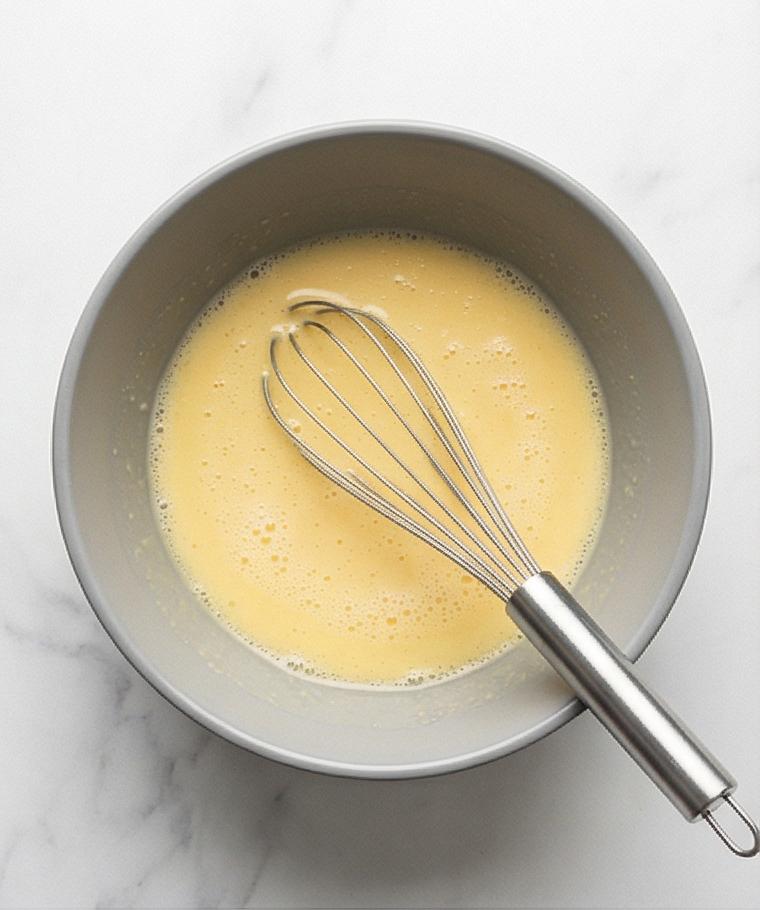
Gather and prepare the chilled elements and the fresh aromatics: crumble the well-chilled Boursin Garlic & Fine Herbs into small pebbly pieces in a small ceramic ramekin, cut the cold unsalted butter into neat small cubes and nestle them in another dish, snip the chives into fine, feathery threads and set them aside, and toast the brioche or crusty bread until golden. Crack the room-temperature eggs into a medium matte grey mixing bowl, add the heavy cream (or whole milk), a pinch of fine sea salt and a grind of black pepper, then whisk vigorously until the mixture is completely uniform, slightly frothy and pale, with tiny aerated bubbles across the surface — the look of a custardy, well-aerated base ready for gentle cooking.
Step 2: Prepare the fat and coat the skillet
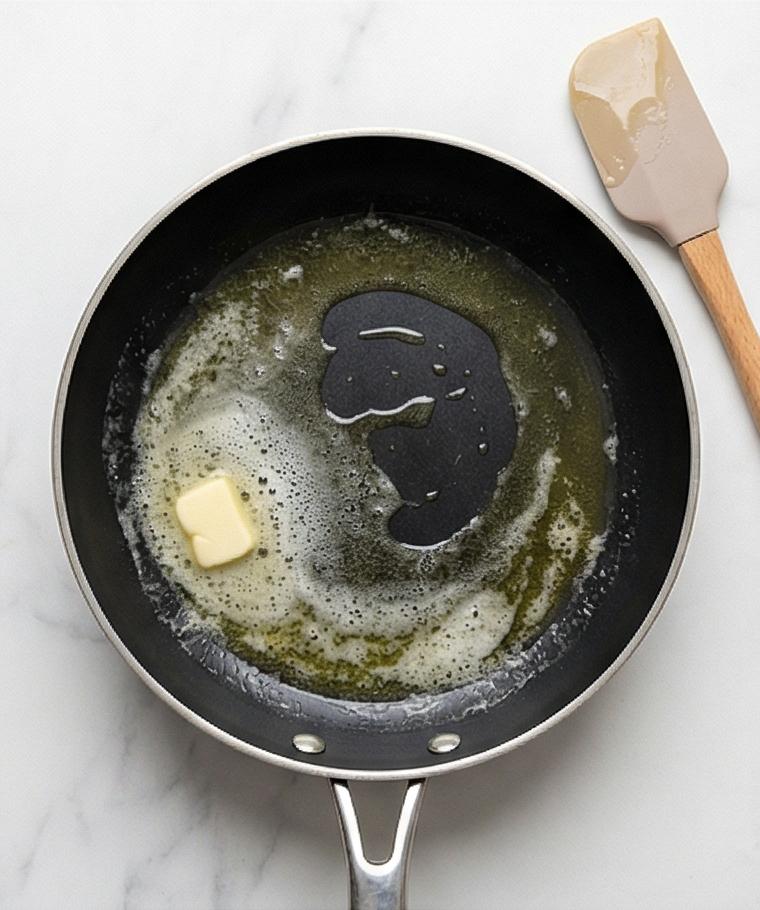
Show the cooking fat in its finished state: a small nonstick skillet placed flat on the marble, its interior glossed with slowly melted butter and a whisper of olive oil, the butter just foaming and shimmering without any color. A soft silicone spatula with a wooden handle rests nearby, warm with a trace of butter, ready for soft, slow movement. This panel emphasizes sheen, thin pooling, and the gentle viscosity of melted butter coating smooth metal — the calm, low-heat starting point that prevents browning and keeps the eggs tender.
Step 3: Eggs beginning to set into delicate curds
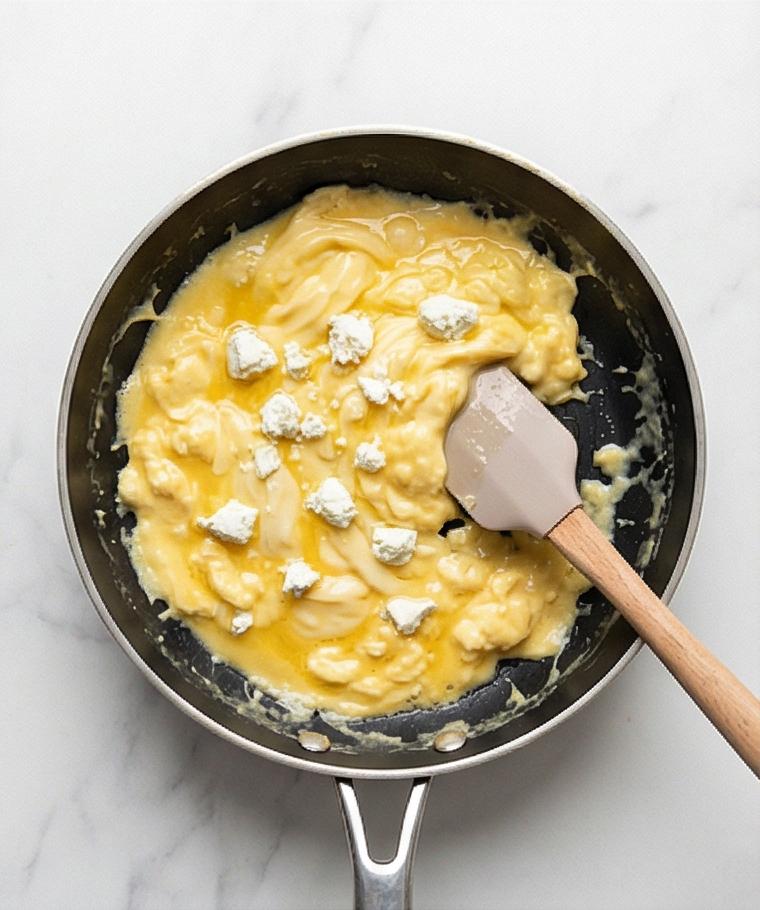
Pouring has already happened — this panel shows the eggs mid-transformation: the pale whisked mixture has begun to coagulate into tiny, pillowy curds around the pan edges while glossy, slightly wetter ribbons remain in the middle. The top-down view highlights small, soft curds, the satin-like, custardy sheen, and the spatula gently scraping concentric arcs toward the center; steam is minimal, no browning, no separation. Texture is paramount here: visible contrast between wet, gel-like folds and discrete curd pieces, signaling about seventy percent doneness.
Step 4: Boursin folded in and moved to plating
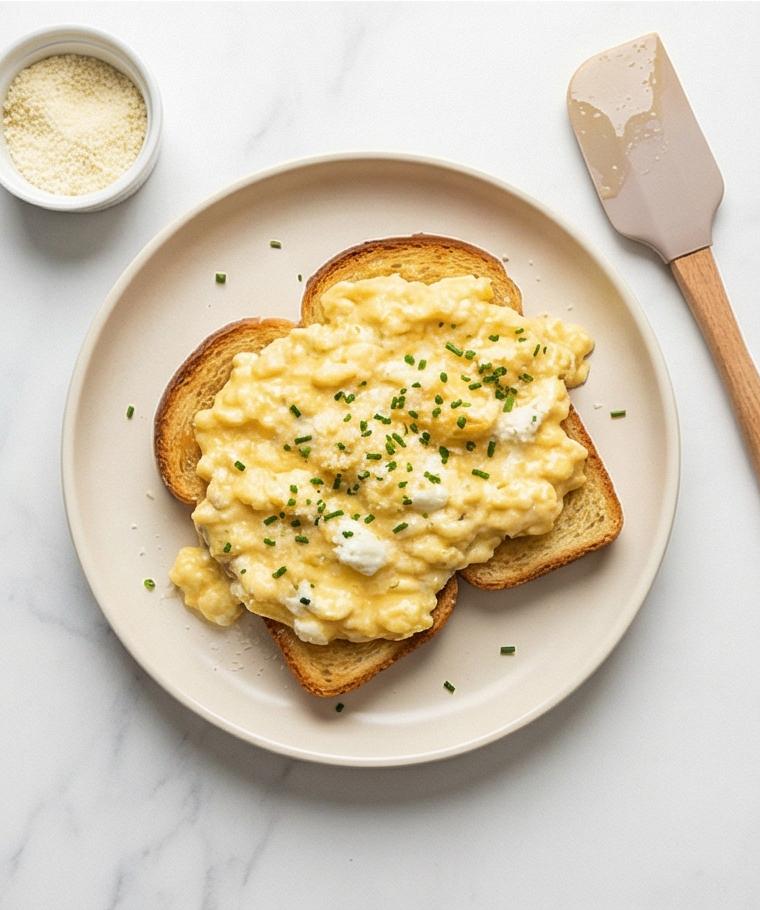
At the point where the eggs are luscious and about seventy percent set, the crumbled Boursin has been scattered over the surface and gently folded in for only a few sweeps — pockets and streaks of creamy white cheese remain distinct against the warm yellow curds. The pan-to-plate result is shown: a generous mound of still-silky scrambled eggs is being transferred onto the toasted brioche, spread into a thick, even layer so the residual heat gently finishes the custard. Tiny flecks of chive and a few visible creamy Boursin nuggets promise bursts of herb-garlic flavor; a small ramekin with grated Parmesan sits quietly nearby for optional folding.
Step 5: Final plating and garnish
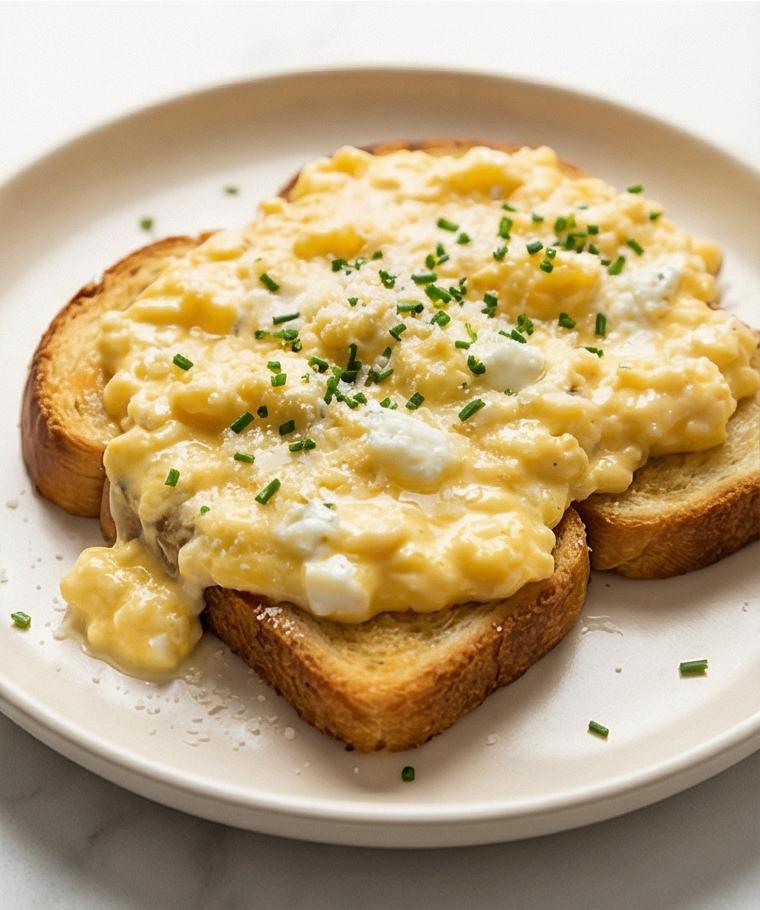
The finished service: the eggs are plated on warm toasted brioche, a glossy, custard-like surface with distinct pockets of melted Boursin, faint ribbons of butter, a light dusting of finely grated Parmesan if used, and a scattering of bright green snipped chives and a final fresh grind of black pepper. Serve immediately while the texture is soft and slightly yielding — silky curds that still move when nudged.
Making It Your Own
Try a smoky variation by stirring in a tablespoon of finely diced smoked salmon at the end for a Nordic twist. For a vegetarian-friendly boost, fold in sautéed mushrooms and a pinch of thyme.
If you want a dairy-free version, swap the Boursin for a herbed dairy-free spread and use a plant-based cream; expect a slightly different texture but similar herby brightness.
For a brunch crowd, double everything and finish the cooked eggs in a warm, buttered ceramic dish so guests can serve themselves. Small experiments—more herbs, different bread, or a sprinkle of hot paprika—reveal how forgiving the Boursin Scrambled Eggs Recipe is.
How to Serve
When hosting, toast an assortment of breads: brioche for richness, sourdough for tang, and a seeded baguette for crunch. Plate the eggs on thick slices so they carry weight, or offer small crostini for a cocktail-style bite.
For larger groups, keep the eggs just shy of done and finish them in a warm oven-safe dish covered with foil; this prevents overcooking while you tend to other dishes. Offer bowls of extra chives, grated Parmesan, lemon wedges, and a light green salad so guests can customize each plate.
Storage and Reheating Tips
Scrambled eggs are best eaten immediately, but you can store leftovers in an airtight container in the fridge for up to 48 hours. Cool them quickly before sealing to keep texture as pleasant as possible.
Reheat gently over low heat with a splash of cream or milk, stirring frequently until just warmed through. Avoid microwaving at full power, which can make the curds rubbery; short bursts at medium power work if you must.
Common Mistakes and How to Avoid Them
Overcooking is the usual culprit. Cook low and slow and take the eggs off the heat when they still look slightly underdone; residual heat finishes them.
Adding the cheese too early makes it melt away rather than create creamy pockets. Fold chilled Boursin in near the end for delightful bursts of flavor.
A Warm Send-Off
If you try this at home, remember to relax and enjoy the process—scrambled eggs reward patience. The Boursin Scrambled Eggs Recipe is forgiving, quick, and truly a small luxury for any morning.
Frequently Asked Questions.
- What makes Boursin Scrambled Eggs Recipe different from regular scrambled eggs? The addition of Boursin provides an herby, garlicky creaminess that creates pockets of flavor and richer texture.
- Can I use a substitute for Boursin? Yes, use a soft herbed goat cheese or whipped cream cheese with minced herbs for a similar effect.
- How do I avoid dry or rubbery eggs? Cook on low heat, stir gently, and remove the pan when eggs look slightly underdone; residual heat will finish them.
- Can I make this recipe for a crowd? Yes, double or triple the ingredients and finish the eggs in a warm, buttered casserole so they stay soft for serving.
- Is there a dairy-free option? Substitute a dairy-free herbed spread and plant-based cream; expect minor textural differences.

Boursin Scrambled Eggs Recipe
Make Boursin Scrambled Eggs Recipe: silky, herby scrambled eggs with creamy Boursin—perfect for a quick, elegant breakfast.
Ingredients
Instructions
Step 1: Prep and whisk the eggs
Gather and prepare the chilled elements and the fresh aromatics: crumble the well-chilled Boursin Garlic & Fine Herbs into small pebbly pieces in a small ceramic ramekin, cut the cold unsalted butter into neat small cubes and nestle them in another dish, snip the chives into fine, feathery threads and set them aside, and toast the brioche or crusty bread until golden. Crack the room-temperature eggs into a medium matte grey mixing bowl, add the heavy cream (or whole milk), a pinch of fine sea salt and a grind of black pepper, then whisk vigorously until the mixture is completely uniform, slightly frothy and pale, with tiny aerated bubbles across the surface — the look of a custardy, well-aerated base ready for gentle cooking.
Step 2: Prepare the fat and coat the skillet
Show the cooking fat in its finished state: a small nonstick skillet placed flat on the marble, its interior glossed with slowly melted butter and a whisper of olive oil, the butter just foaming and shimmering without any color. A soft silicone spatula with a wooden handle rests nearby, warm with a trace of butter, ready for soft, slow movement. This panel emphasizes sheen, thin pooling, and the gentle viscosity of melted butter coating smooth metal — the calm, low-heat starting point that prevents browning and keeps the eggs tender.
Step 3: Eggs beginning to set into delicate curds
Pouring has already happened — this panel shows the eggs mid-transformation: the pale whisked mixture has begun to coagulate into tiny, pillowy curds around the pan edges while glossy, slightly wetter ribbons remain in the middle. The top-down view highlights small, soft curds, the satin-like, custardy sheen, and the spatula gently scraping concentric arcs toward the center; steam is minimal, no browning, no separation. Texture is paramount here: visible contrast between wet, gel-like folds and discrete curd pieces, signaling about seventy percent doneness.
Step 4: Boursin folded in and moved to plating
At the point where the eggs are luscious and about seventy percent set, the crumbled Boursin has been scattered over the surface and gently folded in for only a few sweeps — pockets and streaks of creamy white cheese remain distinct against the warm yellow curds. The pan-to-plate result is shown: a generous mound of still-silky scrambled eggs is being transferred onto the toasted brioche, spread into a thick, even layer so the residual heat gently finishes the custard. Tiny flecks of chive and a few visible creamy Boursin nuggets promise bursts of herb-garlic flavor; a small ramekin with grated Parmesan sits quietly nearby for optional folding.
Step 5: Final plating and garnish
The finished service: the eggs are plated on warm toasted brioche, a glossy, custard-like surface with distinct pockets of melted Boursin, faint ribbons of butter, a light dusting of finely grated Parmesan if used, and a scattering of bright green snipped chives and a final fresh grind of black pepper. Serve immediately while the texture is soft and slightly yielding — silky curds that still move when nudged.
Notes
- Use room-temperature eggs for creamier curds.
- Keep Boursin well chilled and fold in at the end for distinct pockets of flavor.
- Cook on low heat and remove eggs slightly underdone; residual heat will finish them.
- Reheat gently with a splash of cream over low heat to avoid rubbery texture.
- Toast sturdy bread like brioche or sourdough to support the creamy eggs.