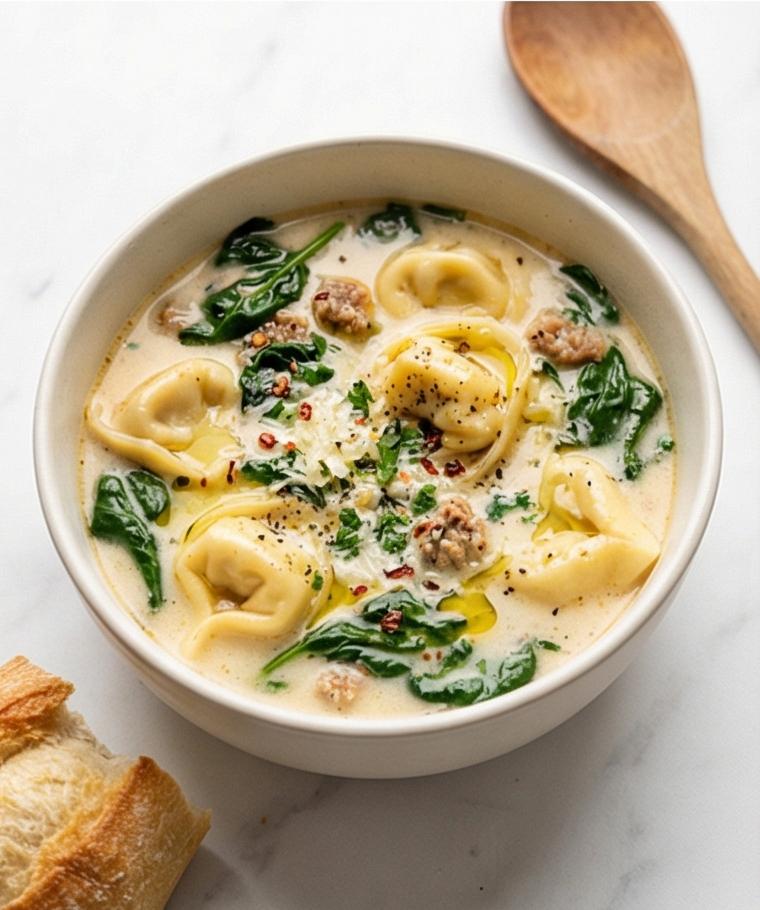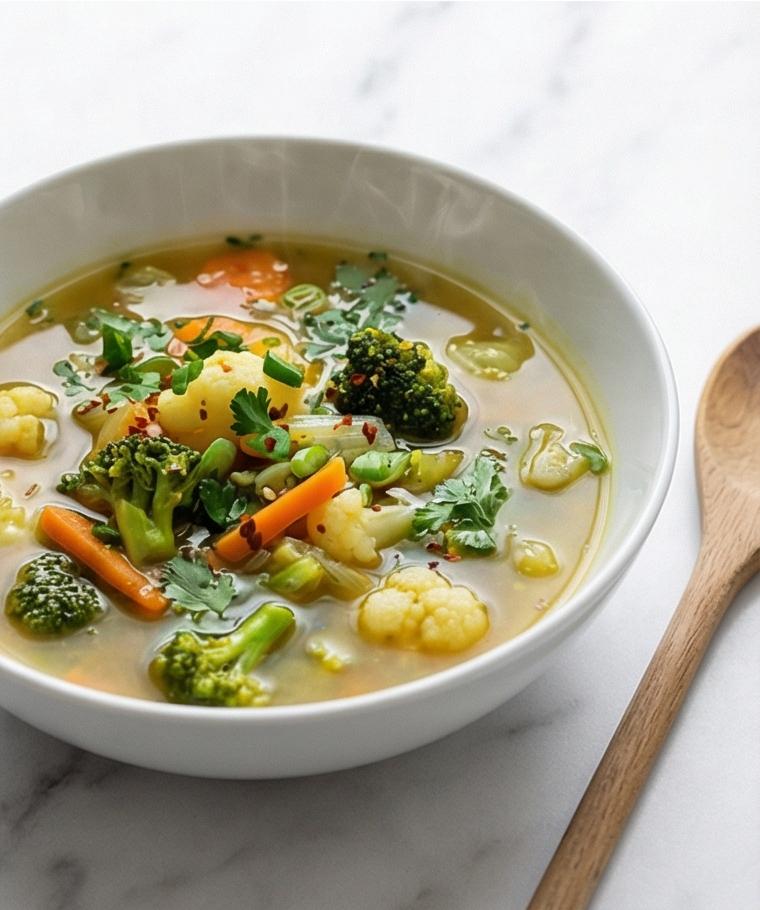
I still remember the first time I made the Thai Pumpkin Soup Recipe for a chilly weeknight; the kitchen filled with warm, spicy aromas that felt like an instant hug. It quickly became a go-to when I wanted something comforting but a little exotic. I love how the pumpkin’s natural sweetness pairs with the tang of lime and the savory depth of fish sauce, and this Thai Pumpkin Soup Recipe is forgiving enough to riff on. It’s one of those recipes that rewards small tweaks and always comes out tasting like you put in more effort than you did.
How This Recipe Became My Rainy-Day Favorite
The first time I made the Thai Pumpkin Soup Recipe I was nursing a cold and craving something bright but soothing. As the curry paste hit the shimmering oil, the whole apartment seemed to breathe in a warm, fragrant fog. Stirring in the pumpkin purée felt almost meditative as the soup thickened and deepened; the scent of coconut and lime teased my senses. When I finally spooned the steaming bowl, the toasted pepitas added that perfect snap while cilantro and lime cut through the creaminess. It wasn’t just a meal that night, it was comfort and curiosity in one bowl, and it’s stayed a ritual for rainy evenings and low-energy weekends.
Pantry Stars and What They Do
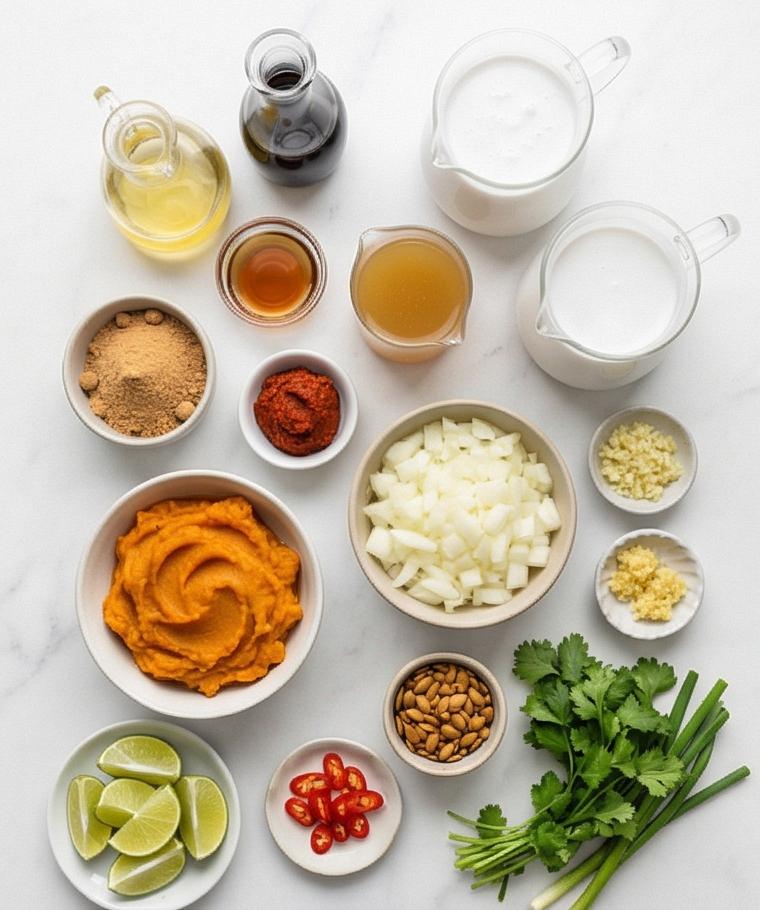
- Neutral oil: The cooking medium that lets aromatics soften without burning; substitute with melted ghee for nuttiness or avocado oil for high-heat resilience. Choose a light oil with a high smoke point.
- Yellow onion/shallots: Provide sweetness and body; swap with leeks for a milder base. Pick firm, dry bulbs with no soft spots.
- Thai red curry paste: The spice backbone and color; use less for mild heat or a mild curry paste for gentler flavor. Look for pastes with real chile and shrimp paste for depth.
- Pumpkin purée: The star ingredient that gives texture and sweetness; canned is convenient, or roast and mash sugar or Kabocha squash for a richer taste.
Essential Kitchen Tools and Why They Matter
A few simple tools make this Thai Pumpkin Soup Recipe smooth to prepare and help you get great texture and flavor.
- Large heavy-bottomed pot: : Ensures even heat for softening aromatics and simmering without hot spots; a Dutch oven works great.
- Immersion blender or countertop blender: : For a perfectly silky purée; immersion is faster and less messy, countertop blenders give very smooth results in batches.
- Ladle and wooden spoon: : Gentle stirring and controlled serving — a heatproof spoon helps prevent scratching your pot.
- Citrus zester or microplane: : Brightens the soup with finely grated lime zest; a coarse zester will be too chunky.
- Measuring spoons and cups: : Accuracy matters for balancing curry, salt, and lime; taste and adjust as you go.
Step-by-Step Preparation Guide
Step 1: Soften the aromatics in shimmering oil
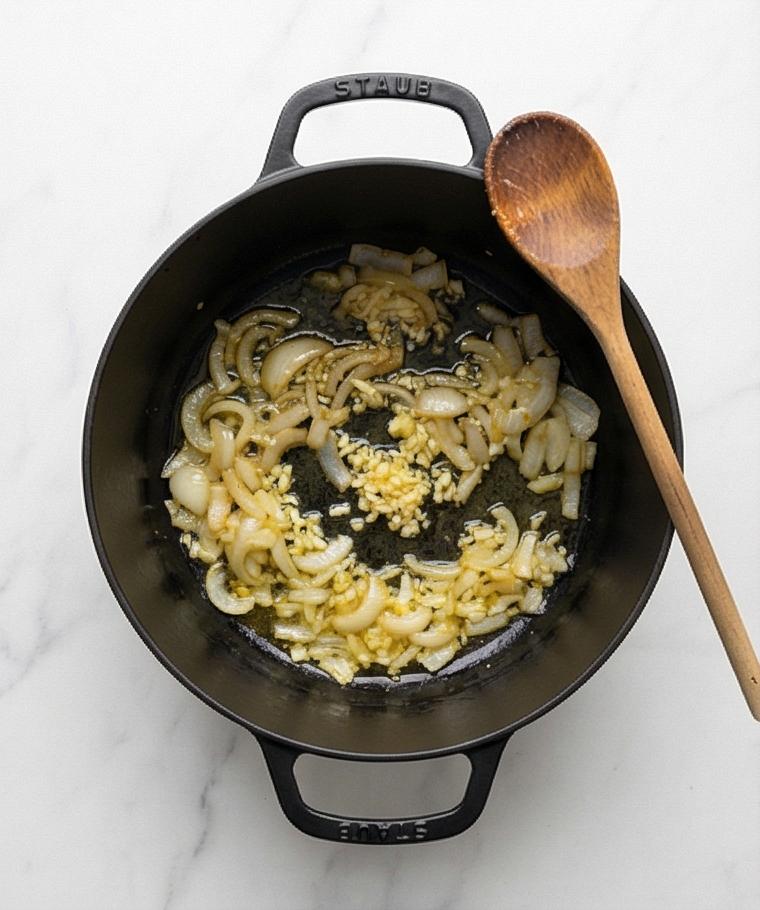
Heat two tablespoons of neutral oil in your large, heavy-bottomed pot until it shimmers, then add the finely chopped yellow onion or shallots. Gently cook, stirring occasionally, until the pieces are translucent, soft, and glossy but not browned — the texture should feel tender and slightly jammy with a faint sheen of oil coating each fragment. This is the aromatics base that will carry the curry and pumpkin, so aim for even, soft pieces rather than color.
Step 2: Build aromatic lift with garlic and ginger
Add the minced garlic and finely minced fresh ginger to the softened onions and keep the movement gentle and continuous so nothing browns. In the pot you’ll see tiny pale flecks of garlic swelling and the ginger releasing thin ribbons of fibrous texture; the aroma should jump forward. The goal here is just-fragrant, slightly softened bits that are visibly tender and integrated into the glossy onion blanket.
Step 3: Brown the curry paste and sugar to deepen flavor
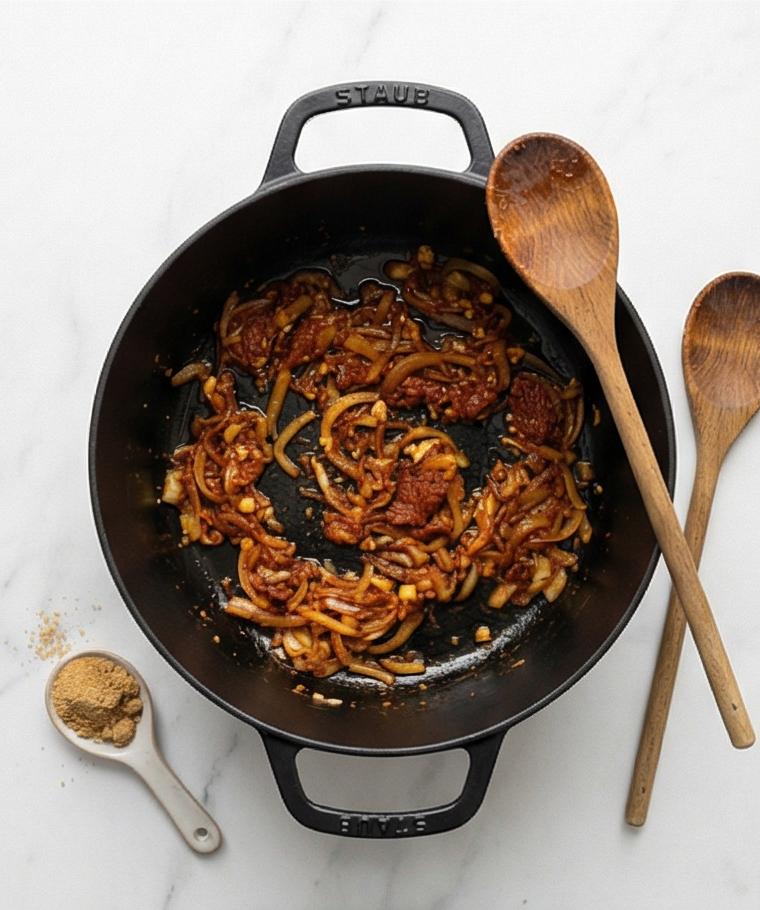
Spoon in the Thai red curry paste and sprinkle the light brown (or palm) sugar, stirring constantly as the paste fries in the oil and aromatics. Visually, the paste will darken to a richer brick-red-brown, glossy and slightly oil-separated at the edges, clinging to the softened aromatics. You should notice a concentrated, caramelized sheen forming — a compact, fragrant paste matrix ready to coat pumpkin.
Step 4: Incorporate pumpkin purée and hydrate with broth, then simmer
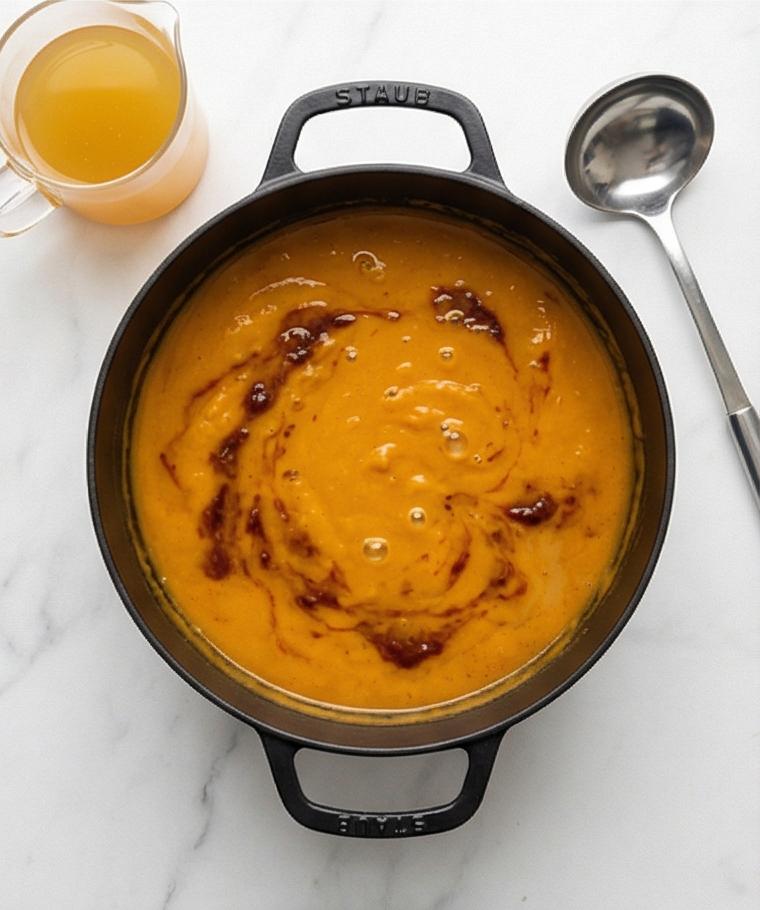
Stir the pumpkin purée into the curry-and-aromatic base until every spoonful of pumpkin is evenly coated and the mixture looks like a cohesive, thick orange sauce. Pour in the low-sodium broth while stirring to loosen the texture: the surface will transform from paste-coated veg to a fluid, deep-golden-orange soup with visible swirls of darker curry. Bring to a gentle boil, then reduce to a steady simmer so small occasional bubbles gather — the body should thicken and the flavors meld into a unified velouté.
Step 5: Purée until completely smooth and silky
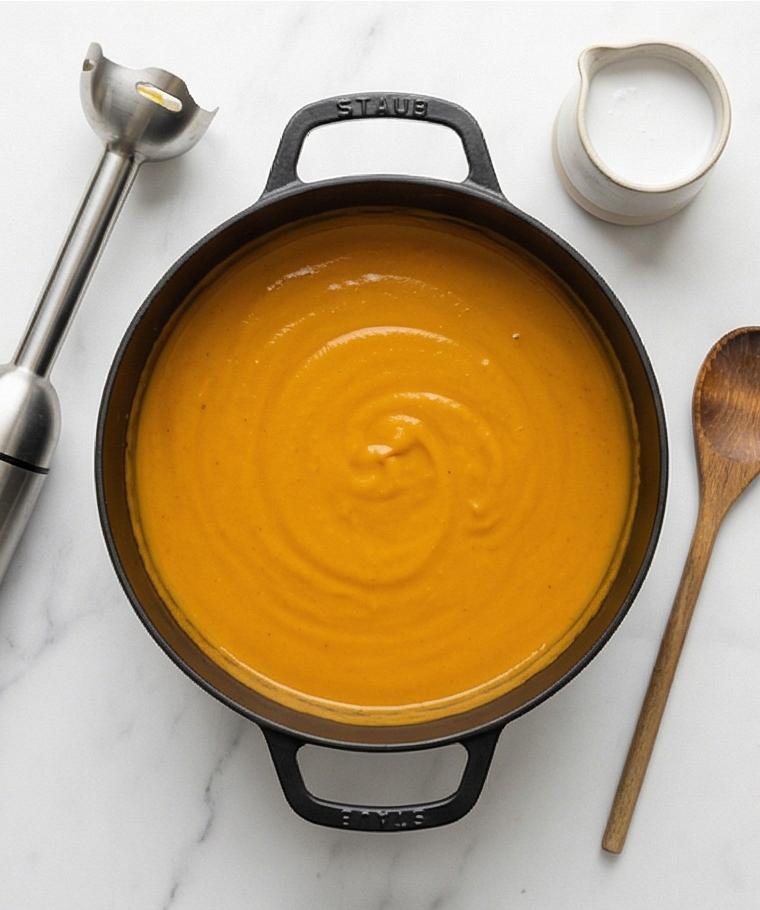
Turn off the heat and blend the soup until uniformly velvety — no fibrous bits, no lumps, just a satiny, dense orange liquid that coats a spoon. If using an immersion blender, the pot will show a glassy, homogeneous surface with faint concentric ripples; if using a countertop blender, return the smooth batches to the pot so the texture is consistent. This is the critical textural milestone: creamy but with body, not watery.
Step 6: Enrich, season, and gently warm to finish
Over very low heat, fold in the full‑fat coconut milk, fish sauce, soy/tamari, kosher salt, and white pepper, stirring until the surface is uniformly creamy and the color shifts to a paler, luscious orange. Warm just to steaming — small wisps rising, but never a hard boil — so the coconut integrates without breaking. Stir in lime juice and grated zest, taste and adjust with extra fish sauce, lime or a teaspoon of rice vinegar and sriracha if you like it brighter or spicier; the goal is a harmonious balance of sweet, salty, tangy, and warm spice.
Step 7: Finish with herbs, seeds, and serve warm
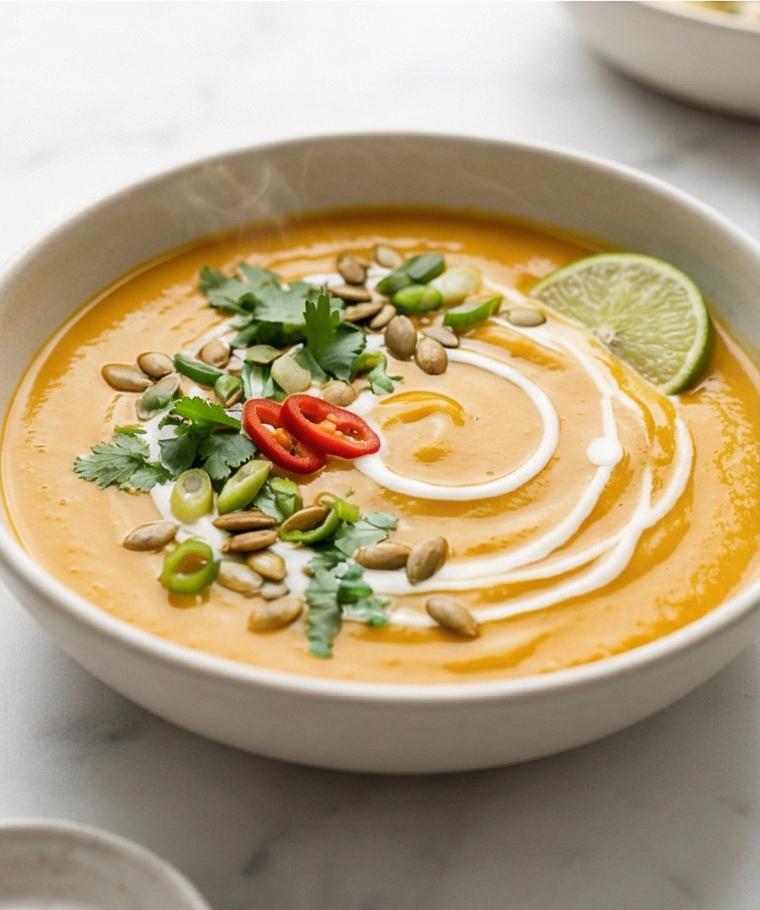
Stir in the chopped cilantro off the heat, let the soup settle for a couple of minutes, then ladle into warm shallow bowls. Garnish each bowl with more cilantro, thinly sliced green onions, toasted pumpkin seeds for crunchy contrast, a few thin red chili slices for color, and a delicate spiral or zigzag of extra coconut milk. Serve immediately with lime wedges so each diner can brighten to taste.
Making It Your Own
I often tinker with heat and texture. For a vegetarian version I swap fish sauce for extra tamari and a splash of mushroom soy; the soup stays savory and layered. In autumn I use roasted Kabocha for a nuttier edge and a hint more sweetness. To make it heartier for winter meals, I stir in cooked lentils or add a swirl of peanut butter for richness.
For a citrus-forward twist, increase lime juice by a teaspoon and finish with Thai basil instead of cilantro for a fresher, peppery lift. Small changes make a big difference.
How to Serve
When I host, I ladle the Thai Pumpkin Soup Recipe into warmed shallow bowls so the soup stays hot longer and the garnishes sit prettily on the surface. For a casual supper, pair it with steamed jasmine rice or a crusty baguette. For a multi-course dinner, serve a modest cup as a first course and follow with a light fish or salad.
Scale easily: double the recipe and keep it on a low simmer in a covered pot for guests, or half for intimate two-person meals. Place garnishes in small bowls so guests can personalize spice, herbs, and nutty crunch.
Storage and Reheating Tips
Cool the soup quickly by transferring to shallow containers before refrigerating; it keeps well for up to 4 days. The flavors often deepen overnight, so leftovers can taste even better the next day.
To reheat, warm gently over low heat, stirring occasionally so the coconut milk reincorporates without breaking. If the soup has thickened in the fridge, thin with a splash of broth or water and re-season with a squeeze of lime before serving.
Oops-Proofing: Common Mistakes and How to Avoid Them
Too much heat at the start can scorch aromatics and curry paste. Keep the temperature moderated when sweating onions and frying paste so you get flavor without bitterness.
Under-seasoning after adding coconut milk is common; always finish with lime and fish sauce or soy to bring brightness and balance. Taste at the end and adjust in small increments.
Final Thoughts
Give this Thai Pumpkin Soup Recipe a try when you want something that feels special but comes together quickly. It’s flexible, forgiving, and full of layered flavor — perfect for busy weeknights or cozy gatherings.
Frequently Asked Questions
- What can I use instead of fish sauce? You can use low-sodium soy sauce or tamari for a vegetarian alternative; add a little mushroom soy or miso for extra umami.
- Can I make this ahead for a dinner party? Yes, the soup stores well and often tastes better the next day; reheat gently and add fresh lime before serving.
- Is canned pumpkin purée the same as fresh? Canned purée is convenient and consistent, but roast and purée fresh pumpkin or Kabocha for a deeper, sweeter flavor.
- How do I control the heat? Start with 2 tablespoons of red curry paste and add more to taste; use less sriracha or omit it entirely for mild soup.
- Can I freeze this soup? Yes, freeze in airtight containers for up to 3 months; thaw overnight in the fridge and reheat gently, then re-season.
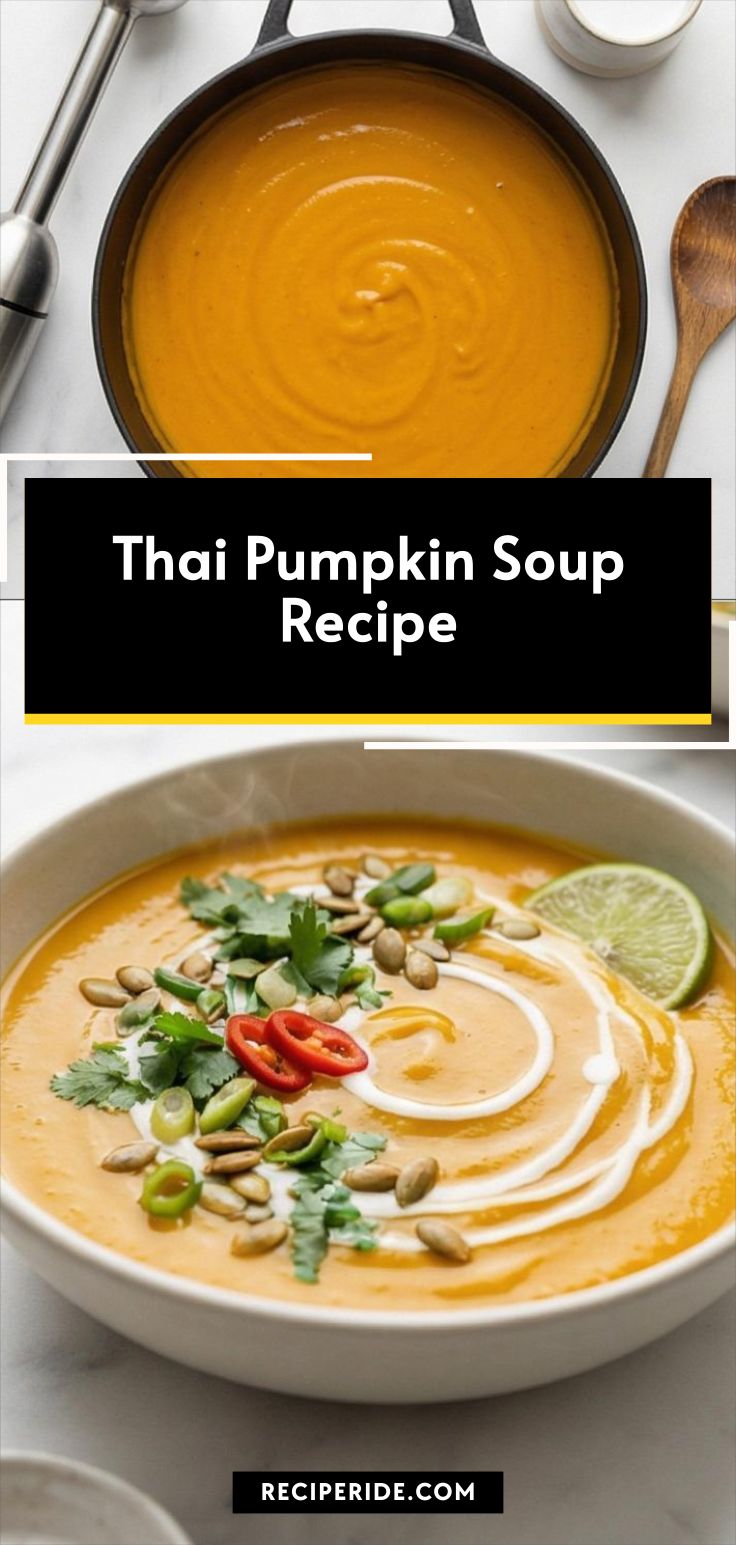
Thai Pumpkin Soup Recipe
Make the Thai Pumpkin Soup Recipe: a creamy, spicy pumpkin-coconut soup ready in about 40 minutes.
Ingredients
Instructions
Step 1: Soften the aromatics in shimmering oil
Heat two tablespoons of neutral oil in your large, heavy-bottomed pot until it shimmers, then add the finely chopped yellow onion or shallots. Gently cook, stirring occasionally, until the pieces are translucent, soft, and glossy but not browned — the texture should feel tender and slightly jammy with a faint sheen of oil coating each fragment. This is the aromatics base that will carry the curry and pumpkin, so aim for even, soft pieces rather than color.
Step 2: Build aromatic lift with garlic and ginger
Add the minced garlic and finely minced fresh ginger to the softened onions and keep the movement gentle and continuous so nothing browns. In the pot you’ll see tiny pale flecks of garlic swelling and the ginger releasing thin ribbons of fibrous texture; the aroma should jump forward. The goal here is just-fragrant, slightly softened bits that are visibly tender and integrated into the glossy onion blanket.
Step 3: Brown the curry paste and sugar to deepen flavor
Spoon in the Thai red curry paste and sprinkle the light brown (or palm) sugar, stirring constantly as the paste fries in the oil and aromatics. Visually, the paste will darken to a richer brick-red-brown, glossy and slightly oil-separated at the edges, clinging to the softened aromatics. You should notice a concentrated, caramelized sheen forming — a compact, fragrant paste matrix ready to coat pumpkin.
Step 4: Incorporate pumpkin purée and hydrate with broth, then simmer
Stir the pumpkin purée into the curry-and-aromatic base until every spoonful of pumpkin is evenly coated and the mixture looks like a cohesive, thick orange sauce. Pour in the low-sodium broth while stirring to loosen the texture: the surface will transform from paste-coated veg to a fluid, deep-golden-orange soup with visible swirls of darker curry. Bring to a gentle boil, then reduce to a steady simmer so small occasional bubbles gather — the body should thicken and the flavors meld into a unified velouté.
Step 5: Purée until completely smooth and silky
Turn off the heat and blend the soup until uniformly velvety — no fibrous bits, no lumps, just a satiny, dense orange liquid that coats a spoon. If using an immersion blender, the pot will show a glassy, homogeneous surface with faint concentric ripples; if using a countertop blender, return the smooth batches to the pot so the texture is consistent. This is the critical textural milestone: creamy but with body, not watery.
Step 6: Enrich, season, and gently warm to finish
Over very low heat, fold in the full‑fat coconut milk, fish sauce, soy/tamari, kosher salt, and white pepper, stirring until the surface is uniformly creamy and the color shifts to a paler, luscious orange. Warm just to steaming — small wisps rising, but never a hard boil — so the coconut integrates without breaking. Stir in lime juice and grated zest, taste and adjust with extra fish sauce, lime or a teaspoon of rice vinegar and sriracha if you like it brighter or spicier; the goal is a harmonious balance of sweet, salty, tangy, and warm spice.
Step 7: Finish with herbs, seeds, and serve warm
Stir in the chopped cilantro off the heat, let the soup settle for a couple of minutes, then ladle into warm shallow bowls. Garnish each bowl with more cilantro, thinly sliced green onions, toasted pumpkin seeds for crunchy contrast, a few thin red chili slices for color, and a delicate spiral or zigzag of extra coconut milk. Serve immediately with lime wedges so each diner can brighten to taste.
Notes
- Use full-fat coconut milk for the creamiest texture.
- Taste and adjust seasoning after adding coconut milk; lime and fish sauce brighten the soup.
- Roast fresh squash if you prefer homemade purée for a deeper flavor.