Birria Ramen Recipe is one of those dishes I make when friends are coming over and I want the kitchen to smell like something unforgettable. The first time I made this Birria Ramen Recipe I was surprised how the smoky, layered chile broth and tender shredded beef turned simple ramen into a celebration. I love how the broth feels deep and savory without being one-note, and the jammy eggs add a counterpoint that feels almost luxurious. If you like bold flavors and comforting noodles, this Birria Ramen Recipe will become a reliable weekend project that rewards patience.
How This Recipe Became My Rainy-Day Favorite
I remember the first rainy day I tried the Birria Ramen Recipe: the house felt cold, and the sound of rain on the window made everything slow and cozy. I spent the morning picking through dried chiles, their leathery skins fragrant with a citrusy heat, and the kitchen warmed as the pot slowly browned. By the time the broth was simmering, the whole apartment smelled like slow comfort and celebration at once. When I finally ladled the glossy broth over noodles and topped them with marinated eggs, it felt like a small ritual. Each spoonful was rich and velvety, with bright lime cuts and cilantro on top making the flavors sing. Sharing that bowl with a friend felt like handing over something made with time and attention, and it turned an ordinary afternoon into a memory.
The Building Blocks of This Broth
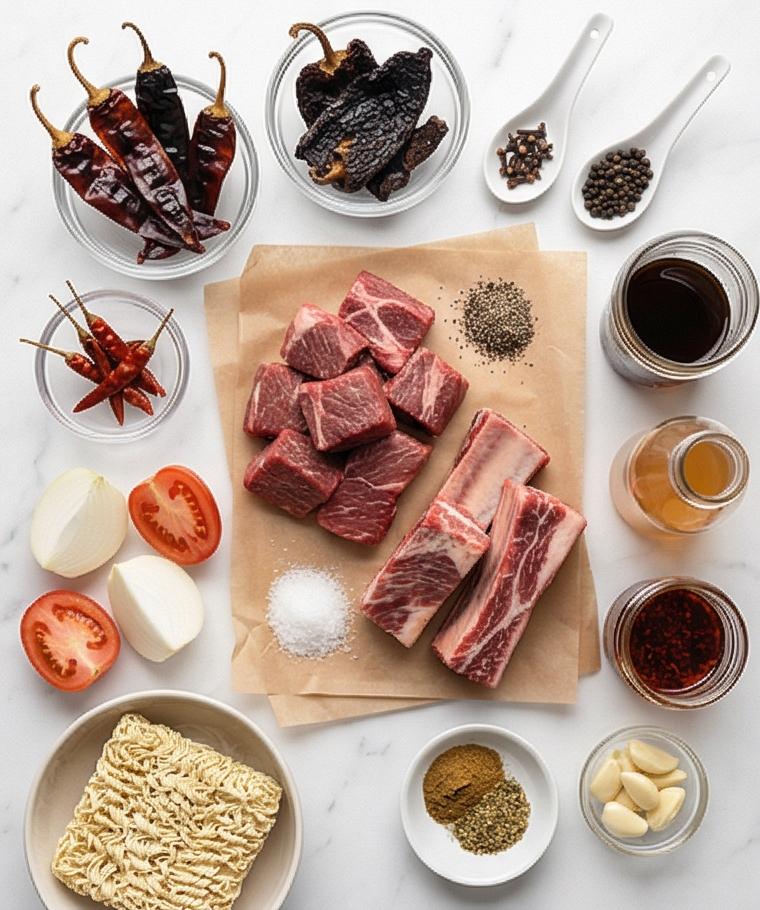
- Dried Chiles (guajillo, ancho, pasilla, chiles de árbol): The soul of the broth; use fewer chiles de árbol if you want milder heat. Substitute with a mix of chipotle or pasilla bajio for a smokier note.
- Beef (chuck and short ribs): Provides fat, collagen, and deep meatiness; chuck is economical and short ribs add richness. Lamb shoulder can be used for a different profile.
- Onion, garlic, tomatoes, carrots, celery: Aromatics that round out the chile heat and add body; roast or char them for extra depth.
- Beef broth and bay leaves: The liquid backbone; low-sodium broth lets you control seasoning. Use kombu-infused water for umami twists.
Essential Kitchen Tools and Why They Matter
A few reliable tools make this Birria Ramen Recipe approachable and keep the results consistent. A heavy-bottomed pot or Dutch oven gives even heat for searing and slow simmering so you get a good fond and steady low simmer. A blender is necessary to emulsify the chile puree into a silky sauce; if you have a high-speed blender the texture will be smoother. A fine-mesh strainer helps remove skins for a clean broth. For alternatives, a large skillet can replace the Dutch oven for searing, and an immersion blender works if you don’t own a blender. Good tongs and a slotted spoon make handling hot meat easier and safer.
Step-by-Step Preparation Guide
Step 1: Prepare the dried chiles and aromatics
Work through the dried peppers first — remove stems and most seeds from the guajillo, ancho, pasilla and the stems from the chiles de árbol, then tear them into large pieces so they toast evenly. Peel and quarter the white onion, core and quarter the Roma tomatoes, crush the garlic cloves lightly. Lay the whole spices (cloves, black peppercorns) nearby and keep the soy/mirin marinade liquids sealed in small jars for later. This is about tidy, tactile prep: leathery torn chiles, glossy tomato quarters, and a pile of paper-towel–dried garlic and onion ready for heat.
Step 2: Toast and soften the chiles
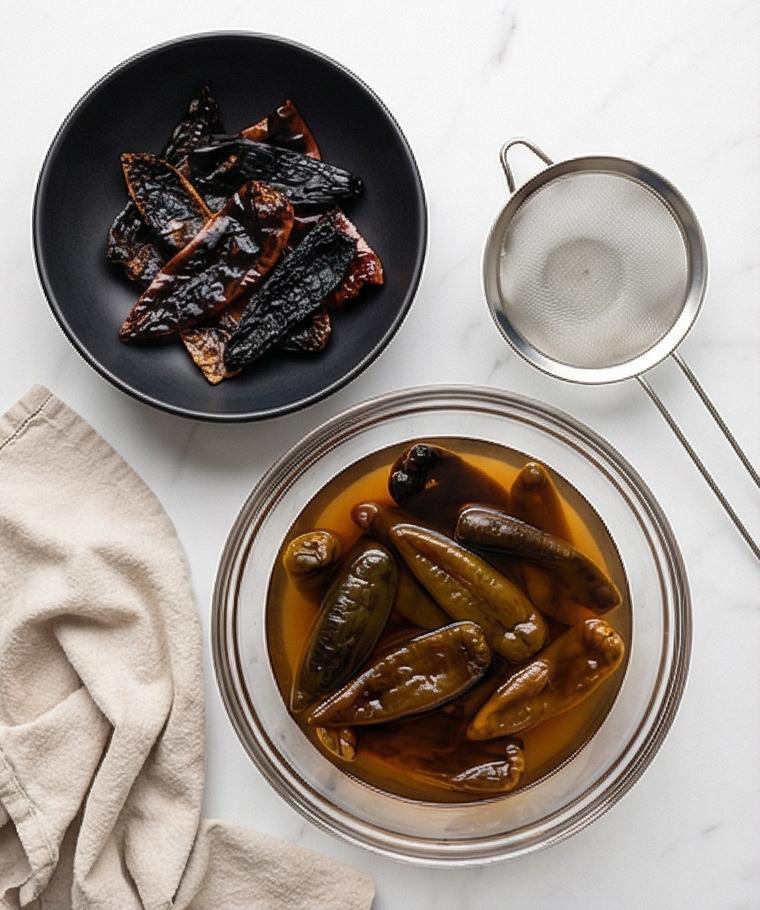
Toast the torn chiles briefly until they darken in spots and become fragrant — you want to see a subtle surface blistering and a deeper mahogany where they touched the skillet (no burnt black bits). Transfer the toasted peppers into a heatproof glass bowl and pour 3 cups of just-boiled water over them so they sink; press them down, cover, and let them relax into soft, pliable, deeply colored pieces for 20–30 minutes. The soaking liquid will be amber and aromatic; reserve it.
Step 3: Season and sear the beef
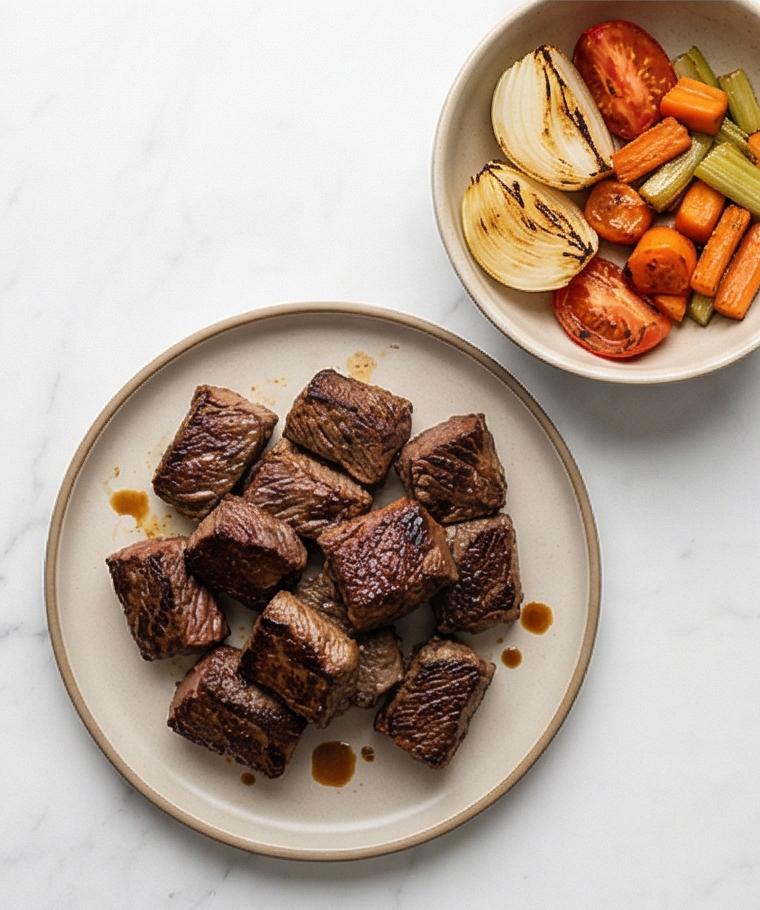
Pat the chuck and short ribs dry, rub evenly with kosher salt and freshly ground black pepper, and sear in batches until every surface has a deeply browned, crusty exterior with a pronounced lacquered fond on the cooking surface. Present the result as a tidy pile of beef chunks with dark, caramelized edges and a small pool of browned juices clinging to the meat — concentrated, savory, and texturally crisp at the crust.
Step 4: Brown the aromatics and toast the spices
In the same pot with the remaining rendered fat, cook the quartered onion, carrot pieces, and celery until the edges caramelize and the vegetables become tender with flecks of brown. Add quartered tomatoes so their skins begin to collapse and release juices, then toss in crushed garlic, whole cloves, and whole peppercorns for a minute until intensely fragrant. Sprinkle in ground cumin, dried oregano and cinnamon and toast briefly until their oils bloom. Turn off the heat and transfer all the softened, browned vegetables and fragrant spices into a blender jar, scraping up every savory bit.
Step 5: Blend, strain, and build the sauce
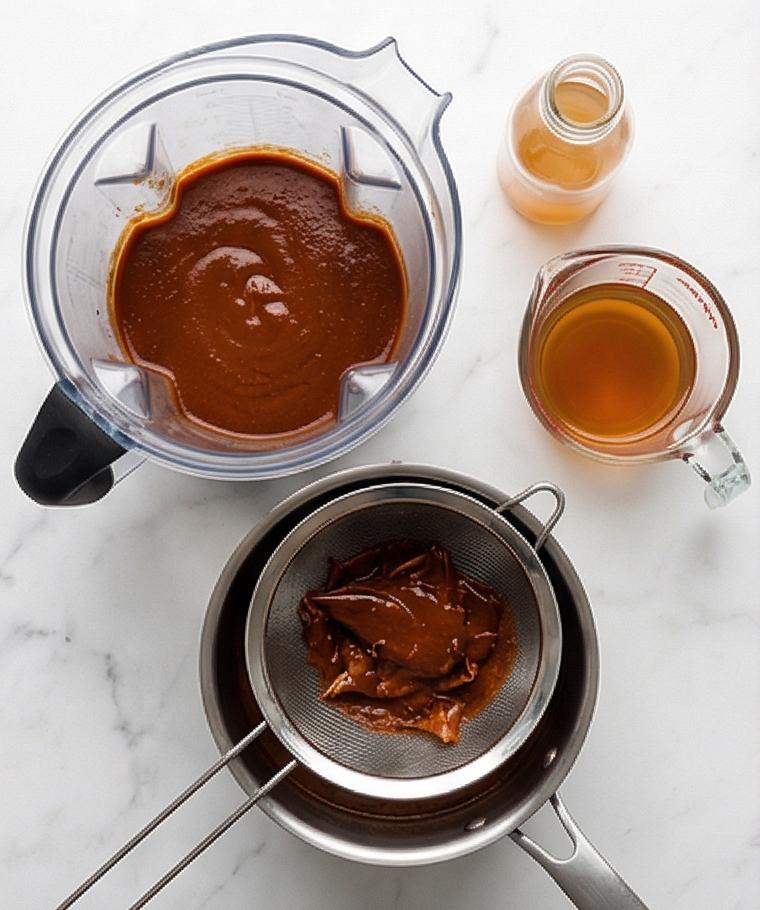
Drain the softened chiles (reserve extra soaking liquid), add them to the blender with the cooked vegetables, pour in 1 cup of the reserved chile soaking liquid, 2 cups of beef broth and apple cider vinegar, and blend on high until the mixture is silky and homogeneous — a glossy, deep red-brown puree with a fine, almost velvet mouthfeel. Carefully strain the blended sauce through a fine-mesh sieve into a clean pot, pressing to extract the smoothest, most aromatic liquid while leaving coarse skins behind. The strained sauce should be satin-smooth with a visible sheen of red oil.
Step 6: Combine with stock and simmer to tender
Return the seared beef and its juices to the pot with the strained chile sauce, add the remaining beef broth, water, bay leaves and just enough reserved chile soaking liquid to barely cover the meat. Bring to a gentle boil, then reduce to a low, steady simmer with the lid slightly ajar and cook until the beef is ultra-tender and shreddable — about 2 1/2 to 3 hours. The finished simmer stage should show a deep mahogany broth with a thin glossy film of fat, and meat fibers beginning to separate at the edges.
Step 7: Make the ramen eggs while the birria simmers
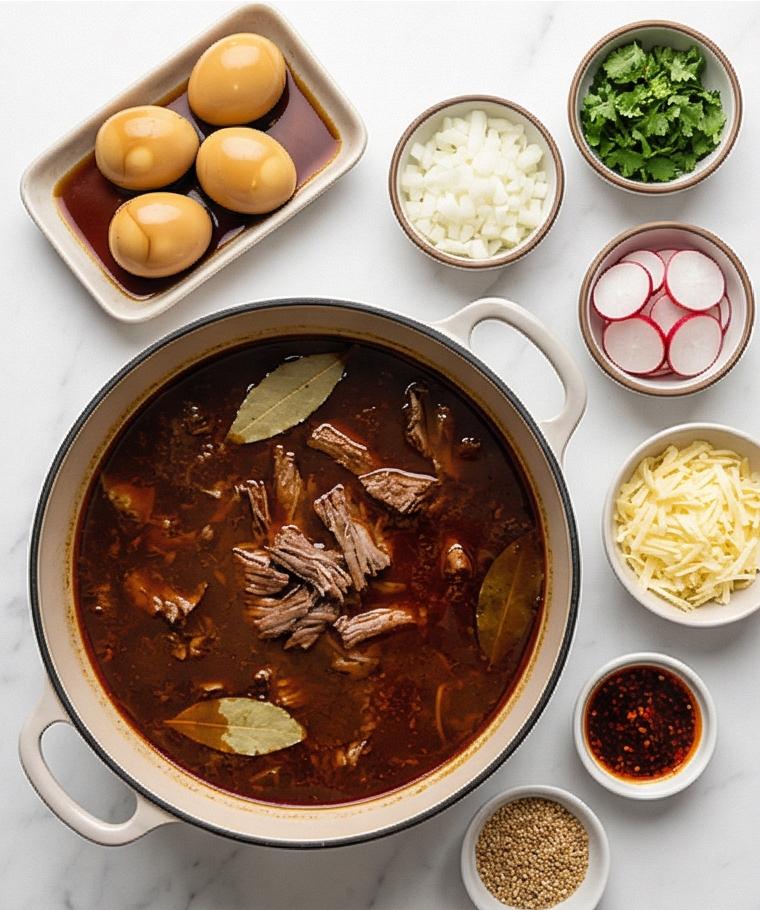
Gently soft-boil room-temperature eggs for about 6 1/2–7 minutes, plunge them into an ice bath, peel carefully under running water, and transfer them to a soy-mirin-sugar marinade so they take on a glossy, amber stain and a slightly sweet-salty seasoning. Let them sit at least 30 minutes (overnight if you prefer deeper color). The result should be tender white exteriors with syrupy, jammy yolks waiting to be halved.
Step 8: Finish the meat, skim, and prep accompaniments
When the beef is fork-tender, lift it out, discard bay leaves and bones, and shred the meat into tender threads, discarding excess gristle. Skim most of the surface fat from the birria broth leaving a thin, silky glazing layer for richness; taste and adjust salt. Keep the shredded beef warm in the broth. Meanwhile finely chop white onion and cilantro, thinly slice radishes, shred Oaxaca or low-moisture mozzarella, cut nori into thin strips, and slice limes into wedges. Boil the ramen until just al dente, drain well and divide into serving bowls.
Step 9: Assemble and serve the birria ramen
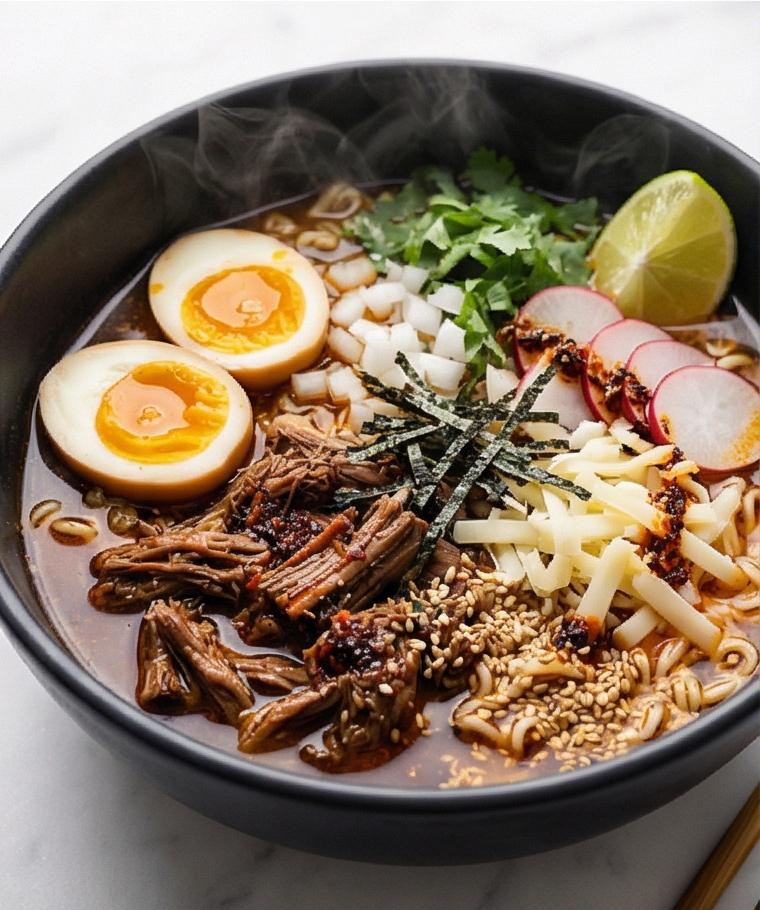
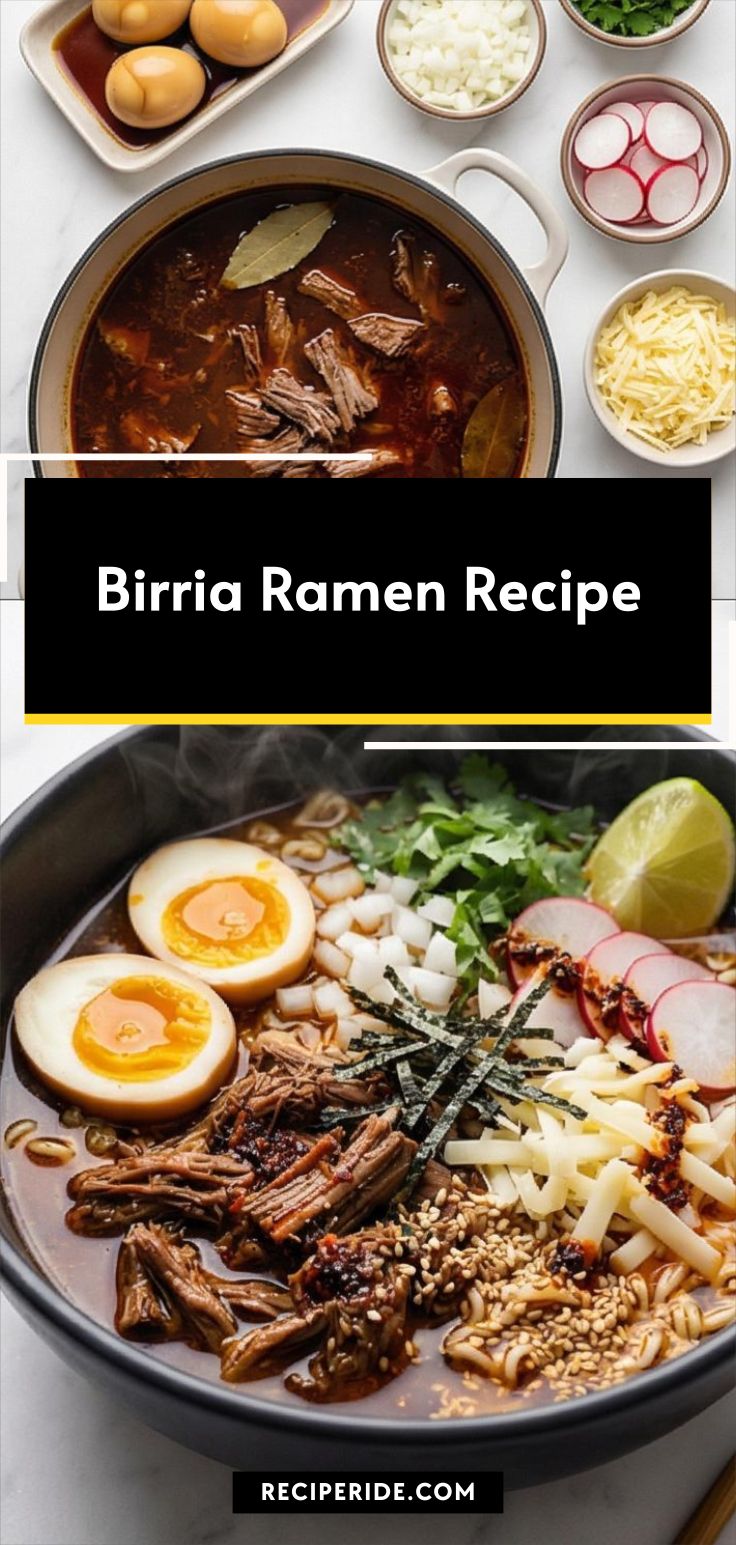
Ladle hot, glossy mahogany birria broth and a generous heap of shredded beef over the hot noodles so the broth shimmers and the meat sinks into noodle strands. Halve the marinated eggs and place two halves atop each bowl to reveal jammy, custardy yolks. Finish with a sprinkle of finely chopped onion and cilantro, a few thin radish slices, melty threads of shredded cheese if using, a drizzle of chili oil or chili crisp, a pinch of toasted sesame seeds, and a couple thin nori strips. Serve piping hot with lime wedges on the side for bright acidity and encourage gentle squeezing to balance the rich, layered textures.
Making It Your Own
I treat the Birria Ramen Recipe as a template. For a vegetarian test, I swapped shredded king oyster mushrooms and roasted beets with smoked soy to finish a rich broth; it was surprising how much depth the mushrooms brought. For a spicier, regional riff, I added a few smoked chipotle chiles and finished bowls with pickled red onion. In winter I keep the simmer longer to coax out deeper flavors; in summer I char extra tomatoes and use less broth for a brighter, sharper bowl.
Try small experiments: swap short ribs for beef shank for gelatinous mouthfeel, or add a splash of aged sherry in place of some vinegar. Each change nudges the Birria Ramen Recipe in a new, delicious direction.
How to Serve
If you are hosting, cook the Birria Ramen Recipe a little ahead: keep the broth warm on the lowest heat, and toss noodles briefly just before serving so they stay springy. For a dinner party of six, double the noodles but keep the shard of meat ratio high so each bowl still feels generous. Lay out bowls and toppings—chopped onion, cilantro, radish slices, shredded cheese, nori, lime wedges, and chili oil—so guests can build their bowls.
For a more casual meal, ladle broth and shredded beef over noodles in large family-style bowls so everyone digs in. If you want to make it kid friendly, reduce chiles de árbol and offer extra lime and cheese as bright, approachable counters.
Storage and Reheating Tips
Store the birria broth and shredded meat separately from the noodles for best texture. Refrigerate in airtight containers for up to 4 days; freeze portions of broth and meat for up to 3 months.
To reheat, slowly warm the broth on the stove until it gently shimmers, then add shredded beef to heat through. Bring the broth back to a simmer before ladling over freshly cooked noodles so the noodles do not get soggy.
Common Mistakes and How to Avoid Them
Undercooking the meat will leave it tough; simmer long enough until the beef is shred-easy and you see the strands falling apart. Give it time and low steady heat.
Using too many chile seeds or burning the chiles will make the broth bitter. Toast chiles briefly and watch for blisters, not blackening, and discard most seeds for a clean, balanced heat.
Final Thoughts
If you try the Birria Ramen Recipe, plan for a relaxed day in the kitchen and reward yourself with a bowl that feels both comforting and celebratory. It takes time, but the payoff is a complex, glossy broth and tender meat that makes every spoonful worth it.
Frequently Asked Questions
- What cut of beef is best for Birria Ramen Recipe? I recommend chuck and short ribs for richness and gelatinous texture.
- Can I make the broth ahead of time? Yes. Make the broth and meat a day or more ahead; it actually improves as flavors meld.
- How spicy will the Birria Ramen Recipe be? The heat depends on chiles de árbol; use 2 for moderate heat and 4 for a spicier broth.
- Can I freeze leftovers? Yes. Freeze broth and meat separately in airtight containers for up to 3 months.
- Are the ramen eggs necessary? They are optional but highly recommended for texture and a slightly sweet-salty contrast.
Birria Ramen Recipe
Make Birria Ramen Recipe tonight: rich, smoky beef broth poured over ramen with jammy eggs and bold toppings.
Ingredients
Instructions
Step 1: Prepare the dried chiles and aromatics
Work through the dried peppers first — remove stems and most seeds from the guajillo, ancho, pasilla and the stems from the chiles de árbol, then tear them into large pieces so they toast evenly. Peel and quarter the white onion, core and quarter the Roma tomatoes, crush the garlic cloves lightly. Lay the whole spices (cloves, black peppercorns) nearby and keep the soy/mirin marinade liquids sealed in small jars for later. This is about tidy, tactile prep: leathery torn chiles, glossy tomato quarters, and a pile of paper-towel–dried garlic and onion ready for heat.
Step 2: Toast and soften the chiles
Toast the torn chiles briefly until they darken in spots and become fragrant — you want to see a subtle surface blistering and a deeper mahogany where they touched the skillet (no burnt black bits). Transfer the toasted peppers into a heatproof glass bowl and pour 3 cups of just-boiled water over them so they sink; press them down, cover, and let them relax into soft, pliable, deeply colored pieces for 20–30 minutes. The soaking liquid will be amber and aromatic; reserve it.
Step 3: Season and sear the beef
Pat the chuck and short ribs dry, rub evenly with kosher salt and freshly ground black pepper, and sear in batches until every surface has a deeply browned, crusty exterior with a pronounced lacquered fond on the cooking surface. Present the result as a tidy pile of beef chunks with dark, caramelized edges and a small pool of browned juices clinging to the meat — concentrated, savory, and texturally crisp at the crust.
Step 4: Brown the aromatics and toast the spices
In the same pot with the remaining rendered fat, cook the quartered onion, carrot pieces, and celery until the edges caramelize and the vegetables become tender with flecks of brown. Add quartered tomatoes so their skins begin to collapse and release juices, then toss in crushed garlic, whole cloves, and whole peppercorns for a minute until intensely fragrant. Sprinkle in ground cumin, dried oregano and cinnamon and toast briefly until their oils bloom. Turn off the heat and transfer all the softened, browned vegetables and fragrant spices into a blender jar, scraping up every savory bit.
Step 5: Blend, strain, and build the sauce
Drain the softened chiles (reserve extra soaking liquid), add them to the blender with the cooked vegetables, pour in 1 cup of the reserved chile soaking liquid, 2 cups of beef broth and apple cider vinegar, and blend on high until the mixture is silky and homogeneous — a glossy, deep red-brown puree with a fine, almost velvet mouthfeel. Carefully strain the blended sauce through a fine-mesh sieve into a clean pot, pressing to extract the smoothest, most aromatic liquid while leaving coarse skins behind. The strained sauce should be satin-smooth with a visible sheen of red oil.
Step 6: Combine with stock and simmer to tender
Return the seared beef and its juices to the pot with the strained chile sauce, add the remaining beef broth, water, bay leaves and just enough reserved chile soaking liquid to barely cover the meat. Bring to a gentle boil, then reduce to a low, steady simmer with the lid slightly ajar and cook until the beef is ultra-tender and shreddable — about 2 1/2 to 3 hours. The finished simmer stage should show a deep mahogany broth with a thin glossy film of fat, and meat fibers beginning to separate at the edges.
Step 7: Make the ramen eggs while the birria simmers
Gently soft-boil room-temperature eggs for about 6 1/2–7 minutes, plunge them into an ice bath, peel carefully under running water, and transfer them to a soy-mirin-sugar marinade so they take on a glossy, amber stain and a slightly sweet-salty seasoning. Let them sit at least 30 minutes (overnight if you prefer deeper color). The result should be tender white exteriors with syrupy, jammy yolks waiting to be halved.
Step 8: Finish the meat, skim, and prep accompaniments
When the beef is fork-tender, lift it out, discard bay leaves and bones, and shred the meat into tender threads, discarding excess gristle. Skim most of the surface fat from the birria broth leaving a thin, silky glazing layer for richness; taste and adjust salt. Keep the shredded beef warm in the broth. Meanwhile finely chop white onion and cilantro, thinly slice radishes, shred Oaxaca or low-moisture mozzarella, cut nori into thin strips, and slice limes into wedges. Boil the ramen until just al dente, drain well and divide into serving bowls.
Step 9: Assemble and serve the birria ramen
Ladle hot, glossy mahogany birria broth and a generous heap of shredded beef over the hot noodles so the broth shimmers and the meat sinks into noodle strands. Halve the marinated eggs and place two halves atop each bowl to reveal jammy, custardy yolks. Finish with a sprinkle of finely chopped onion and cilantro, a few thin radish slices, melty threads of shredded cheese if using, a drizzle of chili oil or chili crisp, a pinch of toasted sesame seeds, and a couple thin nori strips. Serve piping hot with lime wedges on the side for bright acidity and encourage gentle squeezing to balance the rich, layered textures.
Notes
- Reserve some chile soaking liquid to adjust heat and texture of the sauce.
- Strain the blended chile sauce through a fine-mesh sieve for a glossy, smooth broth.
- Marinate ramen eggs overnight for deeper color and flavor.
- Keep noodles separate until serving to avoid sogginess.
- Reduce chiles de árbol if feeding sensitive eaters.