Cottage Cheese Scramble Recipe is my go-to for mornings when I want something that feels both indulgent and light. I first tried this twist on scrambled eggs when I had a jar of cottage cheese to use up, and the extra creaminess won me over immediately. It cooks up faster than you think and stays tender longer than a plain scramble, so you can sip your coffee without worrying about rubbery eggs. If you love breakfast that balances rich, creamy texture with fresh herbs and bright tomatoes, this Cottage Cheese Scramble Recipe will become a weekday favorite.
How This Dish Sneaked Into My Weekend Ritual
I remember the morning clearly – rain on the windows, a playlist of lo-fi humming in the background, and a half-empty container of small-curd cottage cheese calling my name. I whisked the eggs and cottage cheese without much ceremony, but the moment the mixture hit the warm buttered skillet and began to puff into pillowy curds, it felt like a little kitchen victory. The scallions released that subtle onion perfume, the spinach wilted into bright green ribbons, and a smattering of sharp cheddar melted into creamy pockets. I felt cozy and proud at once – like I had discovered a simple trick that made ordinary eggs taste thoughtful and grown-up. That sensory mix – the soft curds, the glossy butter, the fresh herb finish – is why Cottage Cheese Scramble Recipe still makes my week feel a little kinder.
Primary Ingredients and Why They Matter
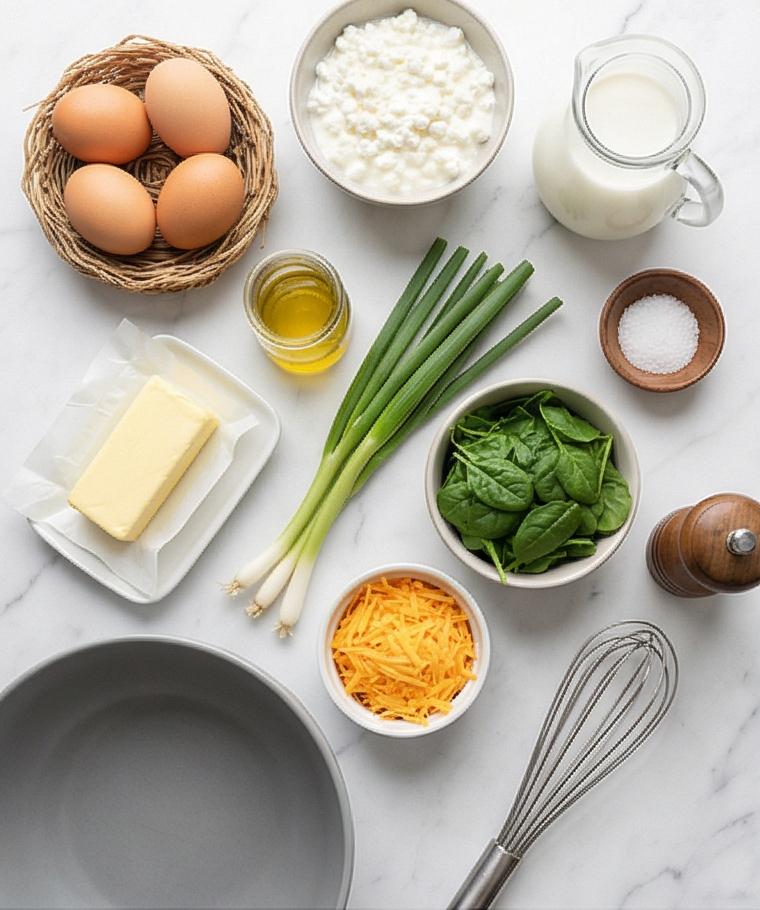
- 4 large eggs: The base and structure – use room temperature eggs for even cooking. Substitute with pasteurized egg products if needed.
- Small-curd cottage cheese: The secret for creaminess and gentle curds; ricotta can be a substitute but use slightly less liquid.
- Whole milk or half-and-half: Adds silkiness – omit for a denser scramble or use oat milk for dairy-free texture compromises.
- Unsalted butter: For mouthfeel and browning control – use ghee for a nutty flavor or oil for a lighter finish.
- Green onion, spinach, cheddar: Flavor and color – swap chives, arugula, or gouda depending on what you have.
Essential Kitchen Tools and Why They Help
A few simple tools make the Cottage Cheese Scramble Recipe feel effortless. A medium mixing bowl gives you room to whisk the eggs and cottage cheese into a mostly uniform batter, and a whisk is preferable to a fork so you actually aerate the mix. A nonstick or well-seasoned skillet is essential for gentle heat and easy curd formation – if you use stainless steel, add a teaspoon of neutral oil to prevent sticking. A heatproof silicone spatula with a wooden handle lets you fold and push curds without scratching the pan. Finally, small prep bowls keep mix-ins organized so you can cook without scrambling your mise en place.
Step-by-Step Preparation Guide.
Step 1: Combine eggs, cottage cheese, and seasonings
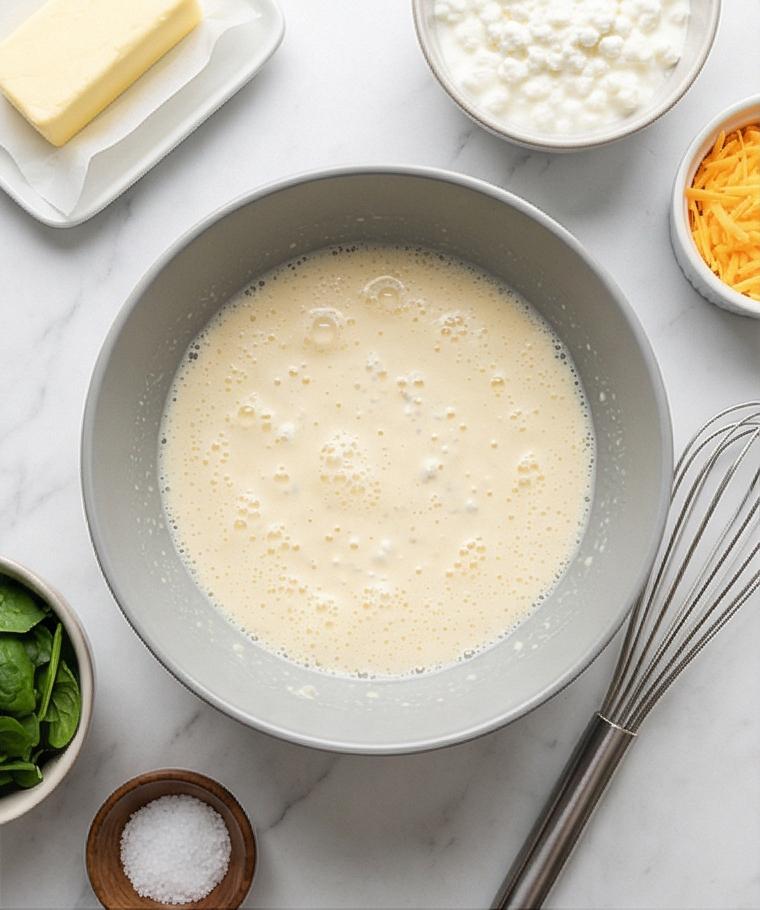
Crack four large eggs into a medium matte grey ceramic mixing bowl. Add the well-stirred small-curd cottage cheese, the whole milk or half-and-half, a pinch of fine sea salt and freshly ground black pepper. Whisk vigorously for 30-45 seconds until the mixture becomes mostly uniform and lightly frothy, with tiny, dispersed curd specks still visible – the aeration is important for a soft, pillowy scramble.
Step 2: Prepare the mix-ins and mise en place
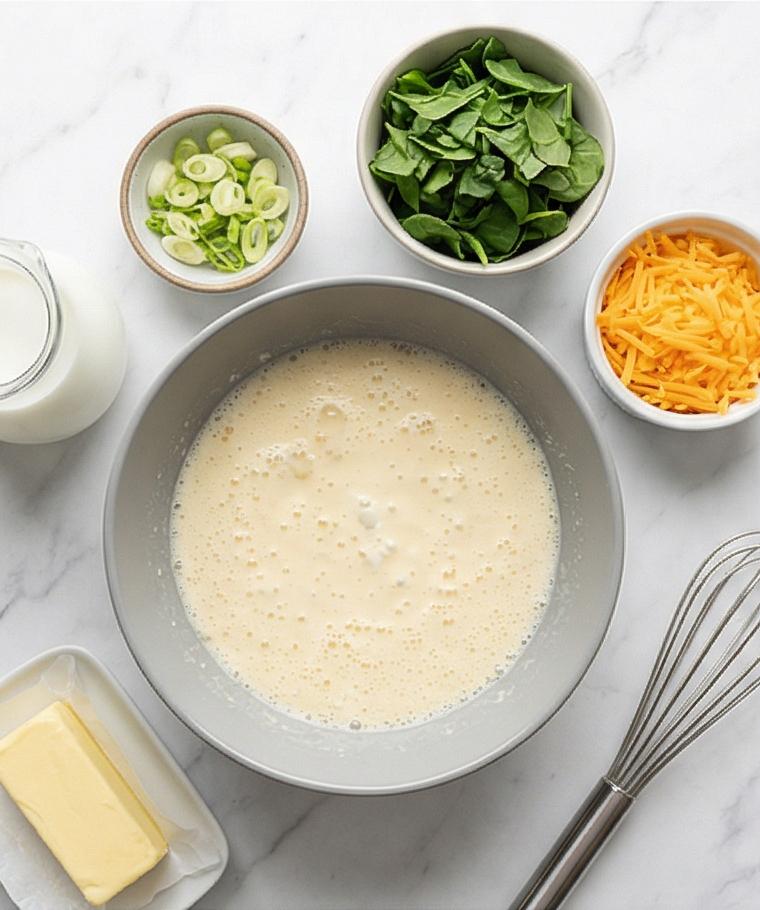
Finely slice the white and light-green parts of the scallion, loosely chop the baby spinach, and shred the sharp cheddar if using. Arrange each element in small ceramic bowls and a little glass jar for the milk so everything sits ready and harmonious on the marble; keep the same small bowls and jar throughout for visual continuity. This is the calm, organized moment before heat.
Step 3: Melt butter and sweat the scallions
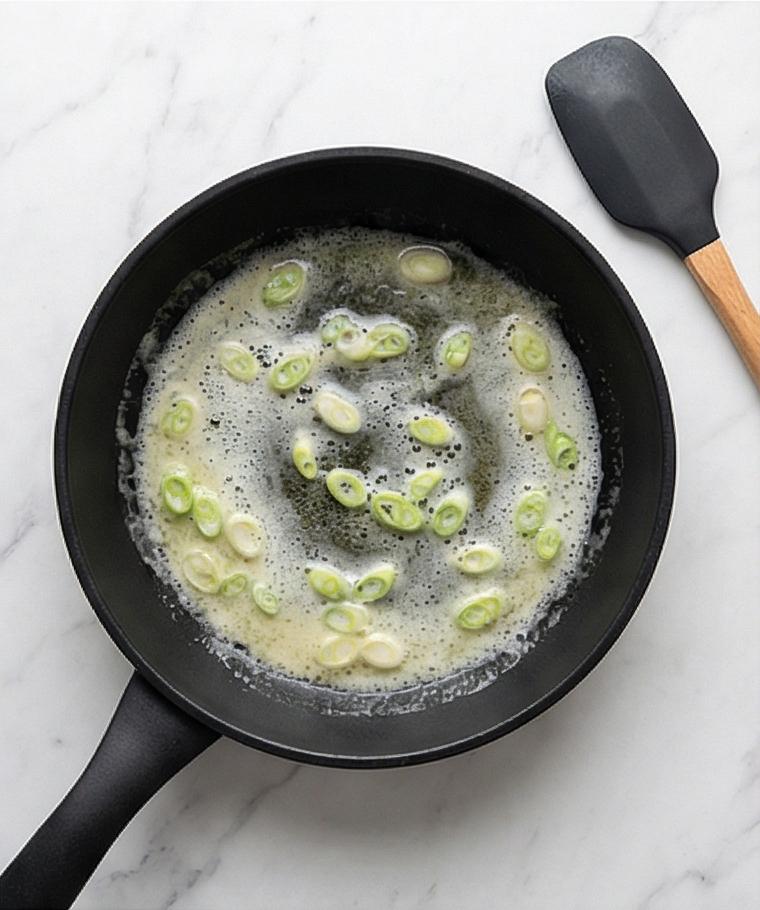
Place a well-seasoned matte-black skillet (8-10 inch) on the surface and add the cold unsalted butter – and a teaspoon of neutral oil only if you had chosen a stainless steel pan earlier – then let it melt slowly until it just foams, not browns. Tilt the pan so the butter coats the base evenly, then add the sliced scallion and stir for 20-30 seconds until fragrant and softened but not browned. Capture the gentle foam, glossy butter sheen, and softened onion pieces; no stove is shown, only the skillet resting on the marble.
Step 4: Pour, set, and form curds
Briefly whisk the egg mixture again and pour it into the warm skillet as a thin, even layer. Let it sit undisturbed for 10-15 seconds until the outer edges begin to set while the center remains liquid and glossy. Then, using a heatproof silicone spatula with a wooden handle, push the set edges into the center in slow, broad strokes, allowing uncooked egg to flow out – repeat every few seconds so thick, creamy curds form without browning. This is the tactile, slow coagulation stage where texture changes visibly.
Step 5: Fold in greens and cheese, finish, and plate
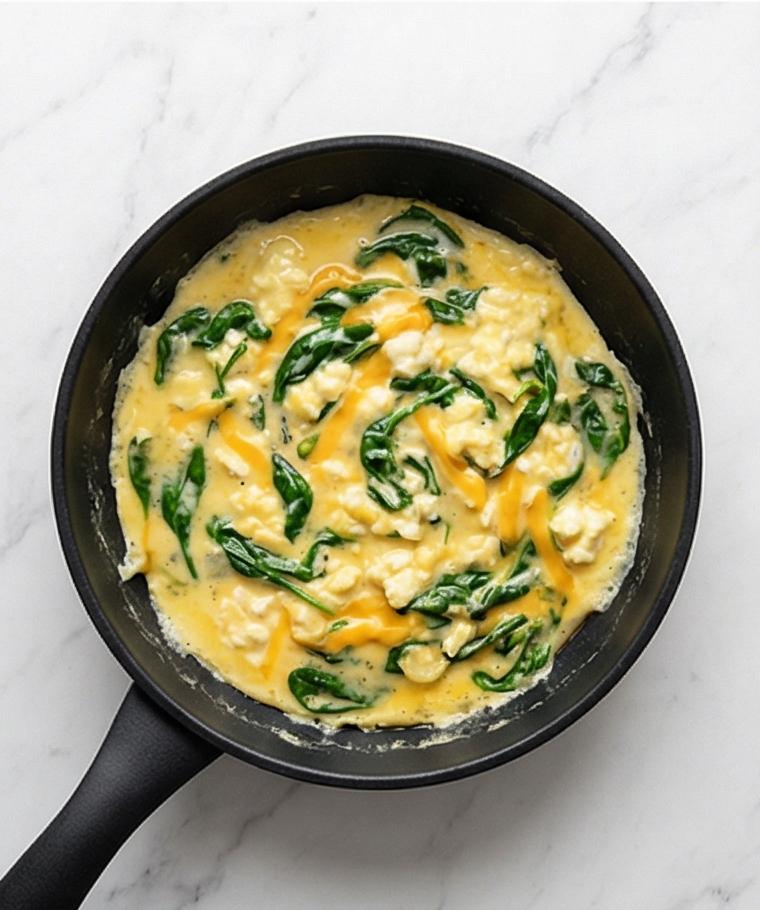
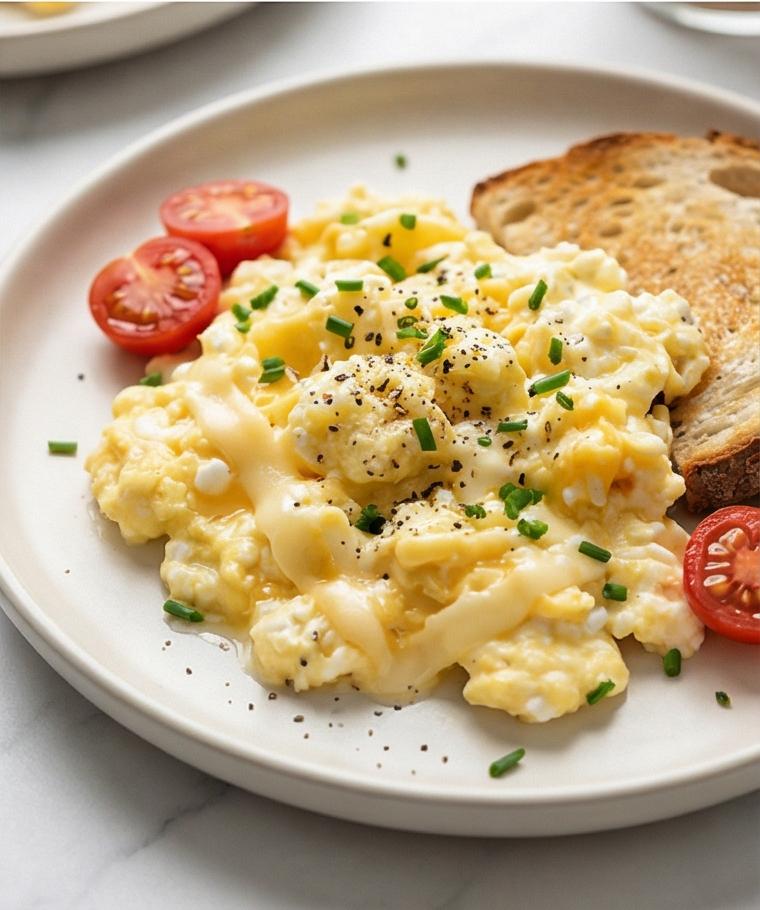
When the eggs reach about 70-80% set – creamy, soft curds with a slightly wet sheen – gently fold in the chopped spinach and shredded cheddar for just 30-60 seconds until the spinach wilts and the cheese melts. Remove the skillet from heat while the eggs still look a touch softer than desired, taste and adjust seasoning with a final pinch of salt and pepper, then immediately transfer the creamy cottage cheese scramble to warm plates or onto toast. Garnish each serving with chopped fresh herbs and optional halved cherry tomatoes, and serve right away for best texture.
Making It Your Own
I like to experiment with different cheeses – swapping sharp cheddar for crumbled feta turns the Cottage Cheese Scramble Recipe into something tangy and Mediterranean in a flash. For a smoky twist, try a bit of grated smoked gouda and a handful of roasted corn. If you want it vegetarian but lighter, skip the cheddar and add extra herbs like dill and parsley. For a dairy-free attempt, use a soft tofu scramble with a touch of nutritional yeast and omit the cottage cheese – it is not the same but makes a decent stand-in in a pinch.
How to Serve
Think of the Cottage Cheese Scramble Recipe as the centerpiece of a casual brunch spread. Serve on warm toast or folded into small tortillas for handheld comfort. If hosting, keep the scramble slightly underdone in a warmed pan and finish it at the table, letting guests pick their own toppings – halved cherry tomatoes, extra herbs, hot sauce, and more cheese. For larger groups double the eggs and cottage cheese and cook in batches to keep texture consistent; transfer finished portions to a warmed shallow dish and cover with foil while you finish the rest.
Storage and Reheating Tips
Cooked eggs with cottage cheese are best eaten fresh, but you can store leftovers in an airtight container in the refrigerator for up to 48 hours. Cool quickly and refrigerate within two hours to preserve texture and safety.
To reheat, warm gently in a nonstick skillet over low heat with a teaspoon of butter or a splash of milk, stirring slowly until just warm. Avoid the microwave when possible, but if you must, use short bursts at low power and stir between heats to reduce rubberiness.
Common Missteps and How to Dodge Them
Overcooking is the number one mistake – eggs continue to cook after you remove the pan from heat, so pull them when they still look a touch softer than you want. Also, skipping the room-temperature step can make the scramble cook unevenly and tighten up.
Using too-high heat will brown and toughen the curds – keep it gentle and patient. If your pan sticks, add a touch more butter next time or switch to nonstick to protect the delicate curds.
Final Thoughts and an Invitation
Give the Cottage Cheese Scramble Recipe a try this week – it is an easy way to elevate ordinary eggs and add a creamy, satisfying texture to your morning. I hope you find the same small delight in the steam, the herb finish, and the way it pairs with simple toast.
Frequently Asked Questions.
- Q: Can I make Cottage Cheese Scramble Recipe ahead of time? A: You can prepare components ahead, but finish the scramble just before serving for best texture.
- Q: Is cottage cheese necessary? A: It is the key for the signature creaminess, but ricotta can be used as a substitute with slight texture differences.
- Q: Can I freeze leftovers? A: I do not recommend freezing this dish – the texture changes too much once thawed.
- Q: How can I make it vegan? A: Try silken tofu blended for creaminess and add kala namak for an eggy note, though it will differ from the original Cottage Cheese Scramble Recipe.
- Q: What side dishes pair well? A: Light salads, crusty toast, roasted tomatoes, or simple sautéed mushrooms all complement the scramble.

Cottage Cheese Scramble Recipe
Make Cottage Cheese Scramble Recipe for a fluffy, creamy breakfast in minutes.
Ingredients
Instructions
Step 1: Combine eggs, cottage cheese, and seasonings
Crack four large eggs into a medium matte grey ceramic mixing bowl. Add the well-stirred small-curd cottage cheese, the whole milk or half-and-half, a pinch of fine sea salt and freshly ground black pepper. Whisk vigorously for 30–45 seconds until the mixture becomes mostly uniform and lightly frothy, with tiny, dispersed curd specks still visible — the aeration is important for a soft, pillowy scramble.
Step 2: Prepare the mix-ins and mise en place
Finely slice the white and light-green parts of the scallion, loosely chop the baby spinach, and shred the sharp cheddar if using. Arrange each element in small ceramic bowls and a little glass jar for the milk so everything sits ready and harmonious on the marble; keep the same small bowls and jar throughout for visual continuity. This is the calm, organized moment before heat.
Step 3: Melt butter and sweat the scallions
Place a well-seasoned matte-black skillet (8–10 inch) on the surface and add the cold unsalted butter — and a teaspoon of neutral oil only if you had chosen a stainless steel pan earlier — then let it melt slowly until it just foams, not browns. Tilt the pan so the butter coats the base evenly, then add the sliced scallion and stir for 20–30 seconds until fragrant and softened but not browned. Capture the gentle foam, glossy butter sheen, and softened onion pieces; no stove is shown, only the skillet resting on the marble.
Step 4: Pour, set, and form curds
Briefly whisk the egg mixture again and pour it into the warm skillet as a thin, even layer. Let it sit undisturbed for 10–15 seconds until the outer edges begin to set while the center remains liquid and glossy. Then, using a heatproof silicone spatula with a wooden handle, push the set edges into the center in slow, broad strokes, allowing uncooked egg to flow out — repeat every few seconds so thick, creamy curds form without browning. This is the tactile, slow coagulation stage where texture changes visibly.
Step 5: Fold in greens and cheese, finish, and plate
When the eggs reach about 70–80% set — creamy, soft curds with a slightly wet sheen — gently fold in the chopped spinach and shredded cheddar for just 30–60 seconds until the spinach wilts and the cheese melts. Remove the skillet from heat while the eggs still look a touch softer than desired, taste and adjust seasoning with a final pinch of salt and pepper, then immediately transfer the creamy cottage cheese scramble to warm plates or onto toast. Garnish each serving with chopped fresh herbs and optional halved cherry tomatoes, and serve right away for best texture.
Notes
- Use room-temperature eggs for more even, tender curds.
- Pull the scramble off heat when slightly underdone; residual heat finishes it.
- Store leftovers up to 48 hours and reheat gently in a skillet with a splash of milk.
- Substitute ricotta for cottage cheese in a pinch, but expect a slightly different texture.