I’ve always believed that a great brunch starts with a simple, sparkling glass that catches the eye and lifts the spirit. There’s something magical about the way a bright orange hue meets a cascade of bubbles, turning an ordinary morning into a celebration. When I first learned how to make Mimosas, I was instantly hooked by the effortless elegance of this classic cocktail. It’s quick, it’s refreshing, and it never fails to bring smiles around the table.
A Sunlit Morning Memory
It was a rainy Saturday in late spring, and my kitchen smelled of fresh citrus and warm toast. I was hosting a small gathering of friends who were still in pajamas, and I wanted something that felt festive without demanding a full bar set‑up. I grabbed a chilled flute, poured the orange juice, and watched the bubbles rise like tiny fireworks. The moment we added the strawberry garnish, the room lit up with laughter and clinking glasses. That simple ritual became a cherished ritual, reminding me that the best moments often come from the smallest, most thoughtful touches.
The Star Players
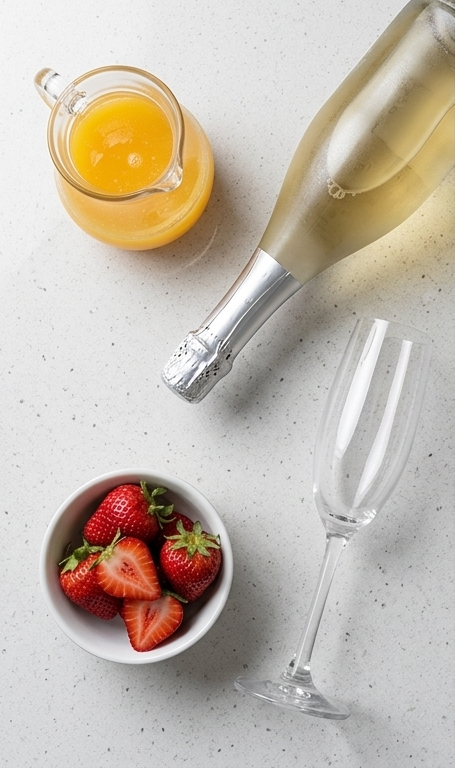
- Orange Juice: Fresh, chilled orange juice provides the bright, tangy base that balances the wine’s acidity. Look for juice with no added sugar for the cleanest flavor.
- Champagne (or Sparkling Wine): A dry brut champagne or a crisp Cava adds effervescence and a subtle yeasty note. If you prefer a sweeter profile, try a demi‑sec.
- Strawberry: A ripe strawberry adds a pop of color and a hint of natural sweetness. You can substitute with a slice of orange or a sprig of mint for a different aroma.
Essential Tools for a Perfect Mimosa
- Champagne Flute: The slender shape preserves bubbles and showcases the layered colors.
- Juice Pitcher: A small, chilled pitcher makes it easy to pour without spilling.
- Jigger or Measuring Cup: Guarantees the ideal 1:2 juice‑to‑wine ratio for consistency.
- Fresh Strawberries: A small knife for slicing and a plate for garnish.
Step-by-Step Preparation Guide
Step 1: Pour the orange
Take a chilled, slender champagne flute and gently pour fresh, cold orange juice into the base until the glass is about one-third full. Pour slowly so the juice settles cleanly at the bottom, showing a saturated, pulpy orange layer with tiny oil specks and a cool beaded condensation on the outside of the flute. This simple, quiet action sets the bright citrus foundation and lets the color and texture of the juice anchor the composition.
Step 2: Top with sparkling wine
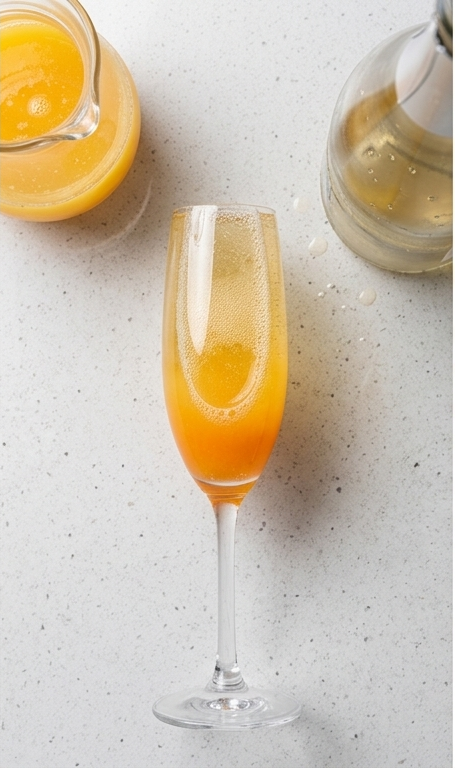
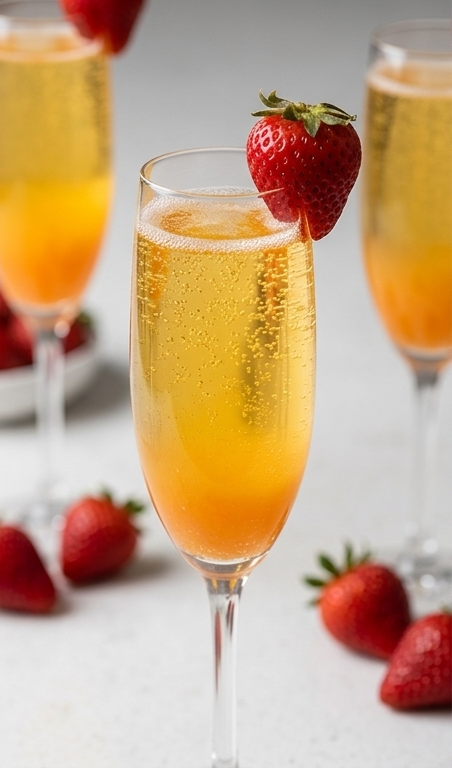
Carefully top the orange juice with chilled brut sparkling wine or prosecco, pouring slowly so a delicate column of tiny, active bubbles forms and a fine golden gradient develops between the orange base and the clear effervescence above. You should see a lively crown of micro-bubbles at the surface and a soft, rising trail of carbonation—this is the defining visual transformation, the lively marriage of juice and bubbles that makes a Mimosa.
Step 3: Garnish and serve
Finish by resting a ripe, glossy strawberry on the rim or placed gently beside the flute, its red tone popping against the golden-orange liquid. Place the filled flute on the same chilled surface and present it for a quiet cheers—bright, effervescent, and ready to sip, the strawberry garnish adding a fresh contrast in color and texture.
Making It Your Own
I love experimenting with the classic base to match the season or my guests’ preferences. For a tropical twist, swap the orange juice for fresh pineapple or mango puree and garnish with a tiny umbrella. In winter, a splash of cranberry juice adds a festive tartness, while a rosemary sprig lends an aromatic depth. If you’re avoiding alcohol, replace the sparkling wine with sparkling water or a non‑alcoholic cider for a bright, bubbly mocktail. Each variation keeps the spirit of how to make Mimosas alive while offering a fresh palate experience.
How to Serve
When hosting a brunch, line up a tray of chilled flutes and let guests build their own Mimosas, ensuring each glass gets the perfect 1:2 ratio. For a larger crowd, pre‑mix the orange juice and wine in a pitcher, then pour into individual glasses to keep the bubbles lively. Adjust the quantity by scaling the ingredients—four glasses need about one cup of juice and two cups of wine. The key is to keep everything cold; a bowl of ice water for the flutes works wonders.
Storage and Reheating Tips
Mimosas are best enjoyed fresh, but if you need to prep ahead, store the orange juice and sparkling wine separately in the refrigerator. Mix them just before serving to preserve the fizz. If you accidentally let the drink sit too long and the bubbles fade, a quick splash of fresh sparkling wine can revive the sparkle. Remember, the garnish should be added at the last moment to avoid soggy fruit.
Common Mistakes and How to Avoid Them
One frequent slip is over‑filling the glass with juice, which drowns the bubbles. Stick to the one‑third rule for a balanced drink. Another pitfall is using warm juice or wine; the chill is essential for that crisp, refreshing bite. Finally, avoid shaking the sparkling wine—pour it gently to keep the bubbles intact.
Final Thoughts
I hope you feel inspired to bring a touch of sparkle to your next gathering. With just a few simple steps, you can master how to make Mimosas that delight the eyes and palate alike. Cheers to bright mornings and bubbly moments!
Frequently Asked Questions
- Can I use store‑bought orange juice? Yes, but choose a brand with no added sugar for the cleanest taste.
- What’s the best wine for a Mimosa? A dry brut champagne or a crisp Cava works best; avoid overly sweet varieties.
- How do I keep the bubbles from disappearing? Keep both the juice and wine well‑chilled and pour slowly.
- Can I make a non‑alcoholic version? Absolutely—swap the sparkling wine for sparkling water or a non‑alcoholic cider.
- What garnish works besides strawberries? Try orange slices, raspberries, or a sprig of mint for a fresh twist.
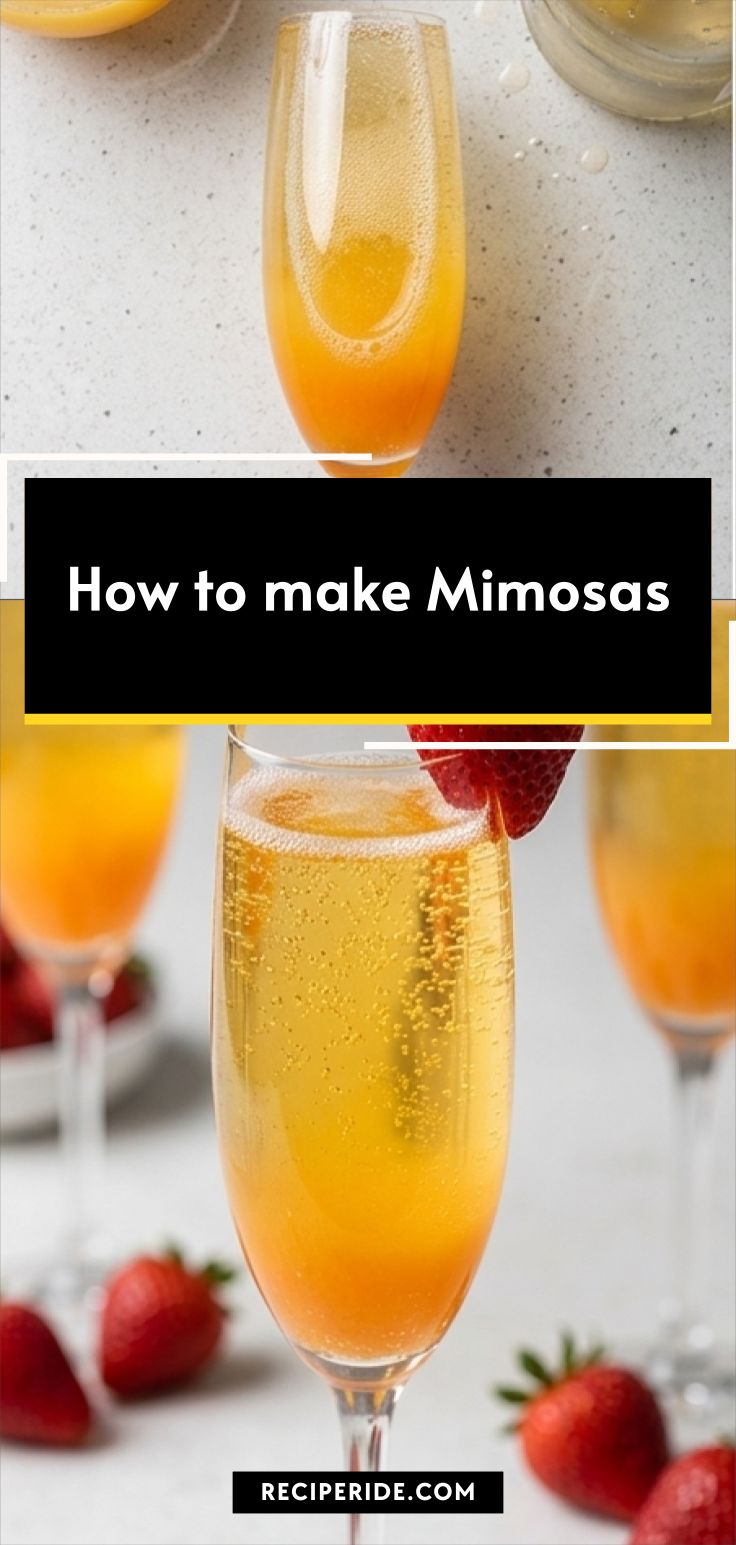
How to make Mimosas
Learn how to make Mimosas quickly with fresh orange juice, sparkling wine, and a strawberry garnish for a perfect brunch drink.
Ingredients
Instructions
Step 1: Pour the orange
Take a chilled, slender champagne flute and gently pour fresh, cold orange juice into the base until the glass is about one-third full. Pour slowly so the juice settles cleanly at the bottom, showing a saturated, pulpy orange layer with tiny oil specks and a cool beaded condensation on the outside of the flute. This simple, quiet action sets the bright citrus foundation and lets the color and texture of the juice anchor the composition.
Step 2: Top with sparkling wine
Carefully top the orange juice with chilled brut sparkling wine or prosecco, pouring slowly so a delicate column of tiny, active bubbles forms and a fine golden gradient develops between the orange base and the clear effervescence above. You should see a lively crown of micro-bubbles at the surface and a soft, rising trail of carbonation—this is the defining visual transformation, the lively marriage of juice and bubbles that makes a Mimosa.
Step 3: Garnish and serve
Finish by resting a ripe, glossy strawberry on the rim or placed gently beside the flute, its red tone popping against the golden-orange liquid. Place the filled flute on the same chilled surface and present it for a quiet cheers—bright, effervescent, and ready to sip, the strawberry garnish adding a fresh contrast in color and texture.
Notes
- Use freshly squeezed orange juice for the brightest flavor.
- Keep all components chilled to maintain fizz.
- Adjust the juice‑to‑wine ratio to taste, but 1:2 is classic.
- Add garnish right before serving to keep it fresh.
- For a non‑alcoholic version, substitute sparkling water.