Slow Cooker Ribs
I love a recipe that makes the kitchen smell like comfort and celebration at once, and these Slow Cooker Ribs do exactly that. Theyre simple enough for a weekday dinner yet special enough for a backyard gathering. I first made these when I wanted tender, saucy ribs without babysitting a grill for hours. The flavors are straightforward, but the slow-cook finish turns them into something you keep coming back to.
What makes these Slow Cooker Ribs worth trying is how consistent they are. With just a handful of spices and good BBQ sauce, you get fall-off-the-bone texture and a glossy glaze that looks like you slaved over the ribs all day. If you want an easy, impressive main that frees you to prep sides or chat with guests, this is it.
How This Recipe Became My Rainy-Day Favorite
I remember the first time I made these Slow Cooker Ribs on a rainy weekend. The house felt like it was breathing warm, spiced air while the rain tapped the windows. I pulled the slow cooker lid back mid-afternoon and the ribs were already sending tiny, sticky ribbons of sauce to the edges of the pot. The meat was so tender it surrendered at the first nudge of a fork, and that moment felt like a small victory. I served them with a simple slaw and warm cornbread, and everyone at the table started talking softer, the kind of soft I only hear when people are savoring food. There was laughter and that satisfied silence between bites, and after that afternoon these Slow Cooker Ribs became my go-to when I wanted food that felt like a hug.
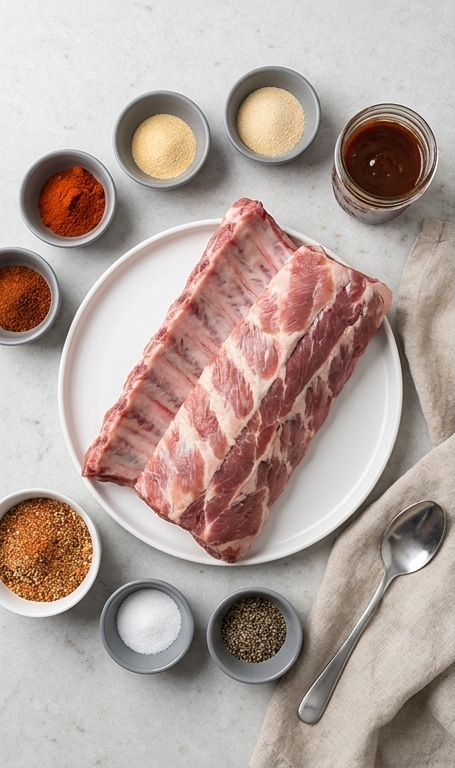
The Main Ingredients and What They Do
- Baby back pork ribs: The backbone of the dish. Choose racks with even marbling for tenderness. Short on pork ribs? Country-style ribs or spare ribs work but adjust cook time slightly.
- Paprika: Adds color and a mild sweet pepper note. Smoked paprika amps the smoky flavor if you like.
- Garlic powder: Provides a steady, savory base. Fresh garlic can be used but expect a more pronounced bite.
- Onion powder: Rounds out the aromatics. Shallot powder is a fine substitute.
- Chili powder: Brings warmth and mild heat. Adjust down for a gentler result or swap for cayenne if you want more punch.
- Salt and black pepper: Essential for seasoning and balance. Kosher salt is easy to control; finish with flaky sea salt if you like more texture.
- BBQ sauce: The final lacquer. Use your favorite bottle or homemade sauce for more personality.
Essential Kitchen Tools and Why They Matter
Start with a short intro.
- Slow cooker: The star tool that creates low, even heat. If yours runs hot, check temperatures and shorten the time a bit.
- Sharp boning or chef knife: For trimming and cutting racks into manageable pieces. A dull knife makes trimming messy and unsafe.
- Butter knife and paper towel: Handy for loosening that membrane without tearing the meat.
- Mixing bowl and small jar: One for the dry rub, a jar or small pouring jug for drizzling sauce so you have control while coating.
- Tongs and wide platter: For lifting delicate, fork-tender racks and letting the juices collect. A torch or broiler is optional for finishing if you like caramelized edges.
Step-by-Step Preparation Guide
Step 1: Remove membrane and size the racks
Start by checking each baby back rack for the thin white membrane on the bone side; if present, loosen it with the edge of a butter knife, grip it with a paper towel and peel it away so the rub can penetrate. Cut each full rack into two pieces (or smaller pieces) so they fit comfortably in the cooking vessel — trimming is purely about fit and even cooking, not flavor. Keep the trimmed ribs stacked on a plate while you prepare the seasonings.
Step 2: Mix the dry rub and season the meat
In a small bowl combine paprika, garlic powder, onion powder, chili powder, salt and black pepper until evenly blended. Pat the ribs dry with paper towels, then generously rub the spice mix over every meaty surface, working the rub into crevices so each bite will carry flavor. Let the seasoned racks rest briefly while you ready the sauce and cooker.
Step 3: Arrange ribs and add the first layer of sauce
Place the rubbed ribs meaty side up in the slow cooker or a deep vessel in slightly overlapping layers so they sit snugly. Pour one cup of the BBQ sauce into a glass jar or small pouring jug and drizzle it evenly over the racks, reserving the remaining half cup for finishing. Cover and set the cooker to begin the long, slow transformation.
Step 4: Slow-cook until tender and succulent
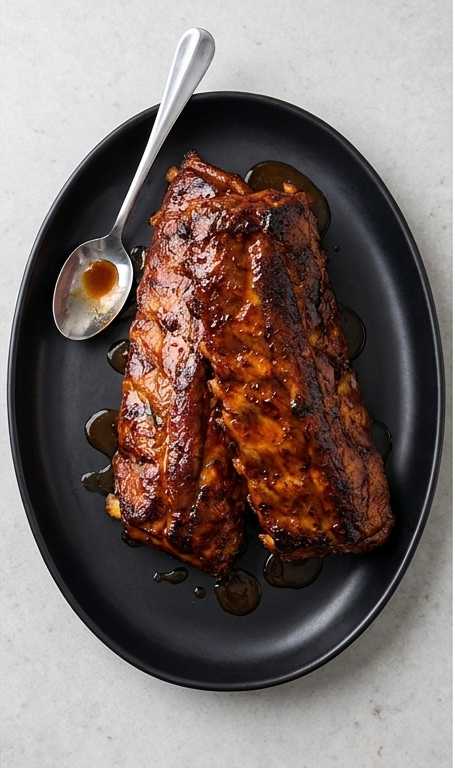
Cook on low for about 8 hours or on high for about 4 hours, until the meat is tender and beginning to pull away from the bone — the ribs should feel very soft when tested with a fork and be visibly juicy, with the sauce having mellowed into a glossy, slightly reduced coating. When they reach this fork-tender milestone, transfer the racks carefully to a wide serving platter or shallow ceramic dish so the juices and glaze collect beneath them.
Step 5: Optional — caramelize and char the glaze
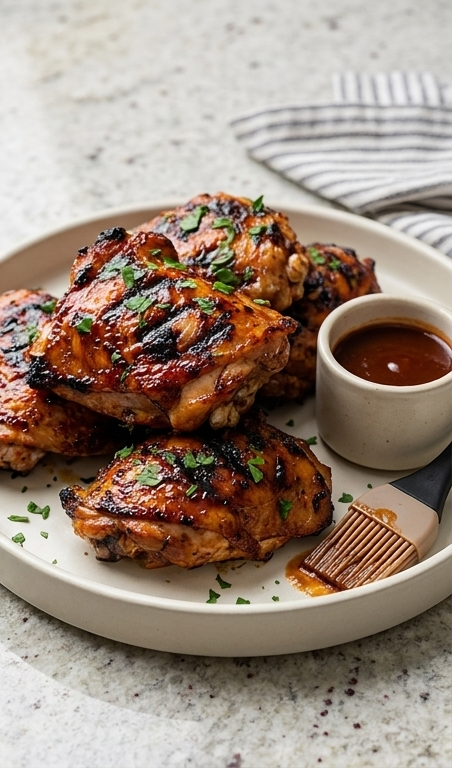
For a deeper caramelized edge, preheat a broiler or very hot grill and brush the ribs with the reserved ½ cup of BBQ sauce. Arrange them on a foil-lined tray and watch closely for 3–6 minutes until the sauce becomes glossy and begins to char at the edges — short bursts of high heat are what create the lacquered, slightly sticky bark. If you prefer, you can recreate that high-heat finish with a culinary torch for pinpoint charring instead of the broiler.
Step 6: Rest, slice and serve with extra sauce
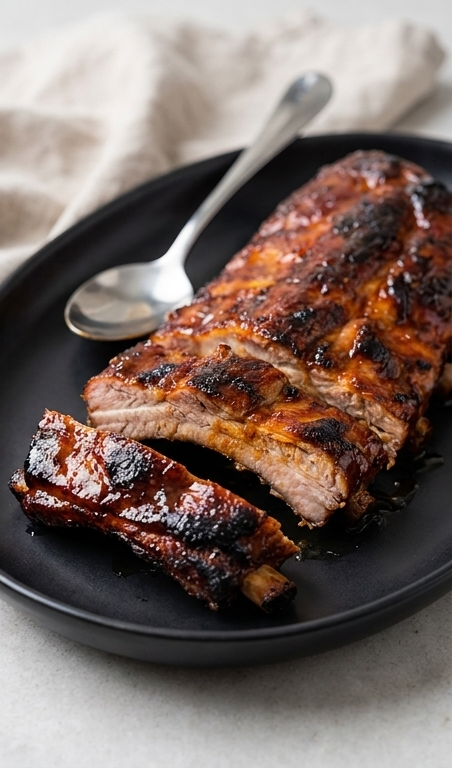
Let the ribs rest briefly so the juices settle, then slice between the bones into serving portions. Arrange the glossy, caramelized pieces back on the same platter, spoon extra BBQ sauce into a small glass jar or silver spoon nearby for passing, and garnish the board with a neutral linen for contrast. Serve warm, encouraging guests to dab more sauce as they like.
Making It Your Own
I like to tinker, and these Slow Cooker Ribs are forgiving of experiments. For a tangier profile, swap half the BBQ sauce for a vinegar-based sauce right before finishing. Try smoked paprika and a splash of liquid smoke if you want a campfire note without a grill. For a spicier version, add a teaspoon of hot sauce into the reserved glaze.
For a lighter take, trim visible fat and serve with a bright apple-cabbage slaw to balance richness. Vegetarian friends can enjoy a similar method with whole roasted cauliflower steaks and the same glaze for a plant-forward twist.
Regional spins are fun: add molasses and ground mustard for a Southern style, or use a sweeter, fruit-forward sauce for a Kansas City vibe.
How to Serve
If Im hosting, I arrange the ribs on a large wooden board lined with butcher paper and set small bowls of extra BBQ sauce, pickles, and slaw around the platter. For a casual buffet, slice the ribs and stack them so guests can help themselves. To scale up, double the spice mix and use two slow cookers or cook in batches and keep warm at a low oven temperature.
Pairings that work well include buttery mashed potatoes, grilled corn, and a crisp green salad to cut the richness. For a party, offer soft rolls so people can make little rib sandwiches or sliders. Garnish with chopped parsley or a sprinkle of flaky salt for the finishing touch.
Storage and Reheating Tips
Cool the ribs to near room temperature, then refrigerate in an airtight container for up to 3 days. Keep the sauce separate if you prefer to reheat it alongside the meat to prevent the glaze from breaking down.
To reheat, warm gently in a low oven at 300 F until heated through, brushing with extra sauce to revive gloss and moisture. For quicker reheating, microwave in short bursts with a damp paper towel to keep them from drying out.
Common Mistakes and How to Avoid Them
Overcrowding the cooker can lead to uneven cooking. Leave space for heat circulation and, if needed, cut racks into smaller pieces so they nest without compressing.
Skipping the membrane step makes it harder for the rub to penetrate. Take the extra minute to remove it. Also, dont skip the brief broil or torch step if you want that caramelized finish; it transforms the appearance and texture.
Final Thoughts
Give these Slow Cooker Ribs a try the next time you want an easy, show-stopping main. Theyre forgiving, flavorful, and scale well, so youre likely to return to this recipe again and again.
Frequently Asked Questions
- Can I use spare ribs instead of baby back ribs? Yes. Spare ribs will work but may need a bit more cook time and trimming for fit.
- Can I double this recipe for a crowd? Yes. Use two slow cookers or cook in batches to avoid overcrowding and ensure even tenderness.
- Is it necessary to remove the membrane? It is highly recommended. Removing the membrane helps the rub and sauce penetrate and makes for more tender eating.
- How do I get a sticky glaze without burning the sauce? Brush on the reserved sauce and broil briefly while watching closely. Short bursts of high heat create caramelization without burning.
- Can I make these ahead of time? Yes. Cook and refrigerate, then reheat gently and finish under the broiler or with a torch for best results.
Slow Cooker Ribs
Slow Cooker Ribs: Cook tender, fall-off-the-bone ribs in your slow cooker with simple spices and BBQ glaze.
Ingredients
Instructions
Step 1: Remove membrane and size the racks
Start by checking each baby back rack for the thin white membrane on the bone side; if present, loosen it with the edge of a butter knife, grip it with a paper towel and peel it away so the rub can penetrate. Cut each full rack into two pieces (or smaller pieces) so they fit comfortably in the cooking vessel — trimming is purely about fit and even cooking, not flavor. Keep the trimmed ribs stacked on a plate while you prepare the seasonings.
Step 2: Mix the dry rub and season the meat
In a small bowl combine paprika, garlic powder, onion powder, chili powder, salt and black pepper until evenly blended. Pat the ribs dry with paper towels, then generously rub the spice mix over every meaty surface, working the rub into crevices so each bite will carry flavor. Let the seasoned racks rest briefly while you ready the sauce and cooker.
Step 3: Arrange ribs and add the first layer of sauce
Place the rubbed ribs meaty side up in the slow cooker or a deep vessel in slightly overlapping layers so they sit snugly. Pour one cup of the BBQ sauce into a glass jar or small pouring jug and drizzle it evenly over the racks, reserving the remaining half cup for finishing. Cover and set the cooker to begin the long, slow transformation.
Step 4: Slow-cook until tender and succulent
Cook on low for about 8 hours or on high for about 4 hours, until the meat is tender and beginning to pull away from the bone — the ribs should feel very soft when tested with a fork and be visibly juicy, with the sauce having mellowed into a glossy, slightly reduced coating. When they reach this fork-tender milestone, transfer the racks carefully to a wide serving platter or shallow ceramic dish so the juices and glaze collect beneath them.
Step 5: Optional — caramelize and char the glaze
For a deeper caramelized edge, preheat a broiler or very hot grill and brush the ribs with the reserved ½ cup of BBQ sauce. Arrange them on a foil-lined tray and watch closely for 3–6 minutes until the sauce becomes glossy and begins to char at the edges — short bursts of high heat are what create the lacquered, slightly sticky bark. If you prefer, you can recreate that high-heat finish with a culinary torch for pinpoint charring instead of the broiler.
Step 6: Rest, slice and serve with extra sauce
Let the ribs rest briefly so the juices settle, then slice between the bones into serving portions. Arrange the glossy, caramelized pieces back on the same platter, spoon extra BBQ sauce into a small glass jar or silver spoon nearby for passing, and garnish the board with a neutral linen for contrast. Serve warm, encouraging guests to dab more sauce as they like.
Notes
- Remove the membrane for better flavor penetration and tenderness.
- Reserve half cup of BBQ sauce for finishing to get a glossy glaze.
- If short on time, cook on high for about 4 hours instead of 8 on low.
- Use a torch or quick broil for caramelized edges without drying out the meat.