I have a soft spot for bubbly mornings and lazy brunches, so Tropical Mango Mimosas quickly became a staple for my weekend gatherings. The first time I mixed mango nectar with a crisp, dry prosecco I knew I had something special: bright, tropical fruit that plays perfectly against the dry bubbles. It is easy, festive, and just the right kind of indulgence when you want to celebrate without fuss. I still reach for this Tropical Mango Mimosas recipe whenever friends drop by or when a normal Saturday needs a sunny lift.
How This Recipe Became My Sunny-Brunch Ritual
The recipe for Tropical Mango Mimosas arrived in my life on a humid Saturday when mangoes were at their peak. I remember slicing into a mango that smelled like summer and imagining it in a glass with cold prosecco. The first sip was like catching a sunset in a flute: bright mango sweetness, a clean dryness from the bubbly, and those fizzy notes that make conversation lighter. I served it on my small balcony, the glass rim dewy with condensation, and my friends kept asking for another round. The sound of tiny bubbles and the sight of golden liquid catching the light became part of the memory. Since then Tropical Mango Mimosas has been my go-to for spring showers, casual celebrations, and even quiet mornings when I just want something cheerful. It is simple enough to make on the fly but feels thoughtful enough to serve to guests, which is exactly the balance I want in a brunch cocktail.
Main Ingredients and Why They Matter
- Champagne or Prosecco: The backbone of the drink. Choose a drier bubbly to balance mango sweetness. Substitute with cava or a dry sparkling wine if needed. Look for recent vintage bottles and chill well.
- Mango Nectar or Mango Juice: Adds tropical body and color. If you want less sweetness, mix with a splash of soda water or use diluted mango purée. For a fresher taste, blend ripe mango with a touch of water and strain.
- Strawberries or Mango Slices: Simple garnish that adds aroma and visual contrast. You can swap for a lime wheel or edible flower for a different vibe.
Essential Kitchen Tools and Why They Help
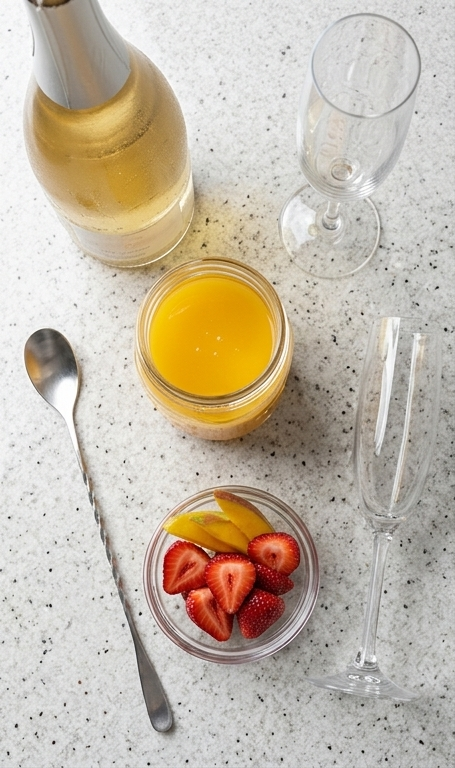
A few basic tools make Tropical Mango Mimosas feel effortlessly polished. A chilled bottle of bubbly is most important, but having the right tools speeds things up and improves presentation. If you do not have a flute, use a narrow wine glass to keep bubbles lively. For pitchers, a long-handled spoon helps layer the liquids with less foam.
- Champagne flutes or narrow wine glasses: They concentrate aroma and keep bubbles. If you do not have flutes, use any tall glass.
- Clear glass pitcher: Great for batches and showing off the color. A stainless carafe works too.
- Back-of-spoon or long-handled spoon: Helps preserve carbonation when adding mango nectar.
- Sharp paring knife: For clean fruit slices and attractive garnishes.
Step-by-Step Preparation Guide
Step 1: Pour the Bubbles
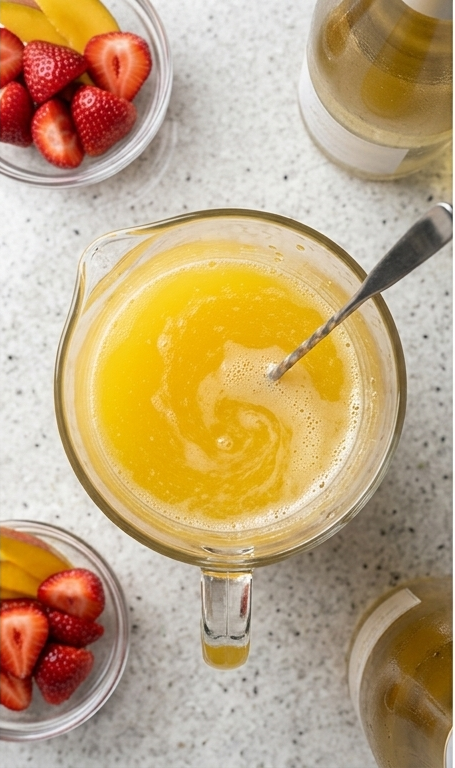
Pour the chilled champagne or prosecco into an elegant flute or into a clear glass pitcher if you’re making a batch. Aim for about two parts bubbly — let the stream nestle against the glass so a fine crown of bubbles forms along the surface. Keep the pour steady and slow to preserve lively effervescence; you’ll see delicate, pearly bubbles clinging and rising, a soft foam lip around the rim, and a crystalline sparkle against the clear glass.
Step 2: Add the Mango Nectar
Top the champagne with mango nectar or mango juice to taste (about one part mango to two parts bubbly as a starting point). If using a pitcher, pour the mango nectar over the back of a spoon or down the inside to preserve carbonation; for a single flute, gently spoon the nectar atop the champagne so layers briefly swirl. The resulting center-state is a luminous, sunny yellow drink with suspended micro-bubbles and a slightly viscous sheen from the mango — vibrant, glistening, and unmistakably tropical.
Step 3: Garnish with Fresh Fruit
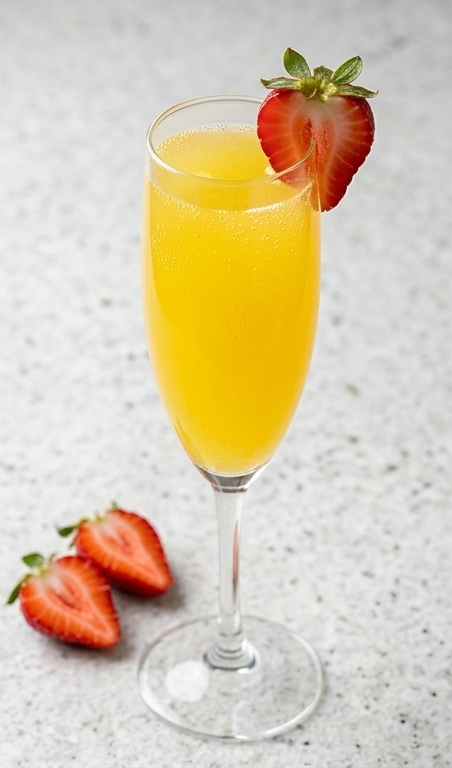
Choose a glossy ripe strawberry slice or a slim mango wedge to perch on the flute’s rim. The red of a strawberry or deep orange of mango creates a crisp visual counterpoint to the mango-yellow drink. Tuck a couple of halved strawberries or thin mango slices on the surface nearby as casual companions; they should look juicy with visible seeds or fibrous mango texture, adding a fresh, tactile accent.
Step 4: Serve the Mimosa
Bring the flute close to eye level and admire the translucence: a bright, sunlit yellow with tiny rising bubbles, a thin foam lip, and a glossy fruit garnish catching the light. Present the flute upright on the Luna Pearl granite surface with a couple of fruit halves artfully placed beside it — the scene should feel minimalist, celebratory, and utterly refreshing.
Making It Your Own
Try a few playful swaps to put your stamp on Tropical Mango Mimosas. For a lighter, lower-sugar version, use half mango nectar and half sparkling water instead of all juice. When I made a batch for a summer picnic, I added a splash of lime juice to brighten the profile and it cut through the mango sweetness beautifully. If you prefer more texture, blend fresh mango with a touch of simple syrup and strain for a pulpy, luxurious variation.
If you want a nonalcoholic option, choose a quality nonalcoholic sparkling wine or soda water and follow the same ratios. For a tropical brunch twist, rim glasses with coconut sugar before pouring and garnish with toasted coconut flakes. In cooler months, swap mango for canned pineapple nectar and top with warm spices like a whisper of grated ginger for a cozy spin.
How to Serve
If you are hosting, plan one bottle of bubbly for every four guests if serving other drinks, or one bottle per two guests if mimosas are the main cocktail. For a large brunch, prepare a pitcher with two parts bubbly to one part mango nectar so guests can self-serve. Keep extra chilled mango nectar and glasses on ice in a large bowl so refills are easy.
For elegant presentation, use matching flutes, small plates with fruit garnishes, and a simple linen runner. If you want a relaxed vibe, set up a mimosa station with chilled bottles, a carafe of mango nectar, bowls of sliced strawberries and mango, and small tongs for garnishes. Label the station so guests know the ratio and can experiment with stronger or milder pours.
Storage and Reheating Tips
Mimosas are best enjoyed immediately, so there is no reheating involved. If you must prepare ahead, mix mango nectar and chill separately from the bubbly. Keep both cold until right before serving; combine at the last minute to retain fizz.
If you have leftover mango nectar, store it in a sealed container in the refrigerator for up to three days. Avoid mixing with bubbly until serving time, since carbonation will dissipate and the texture will flatten if stored already combined.
Common Mistakes and How to Avoid Them
One common mistake is pouring the mango too quickly and losing all the bubbles. Always pour slowly and consider the spoon trick to reduce foam. Another is choosing an overly sweet sparkling wine which makes the drink cloying; pick a dry or brut style to balance the mango.
Also, skip overripe mangoes that have fermented notes. Look for fruit with a fragrant, fresh scent instead. If garnishes wilt, keep them on ice until serving so they stay bright and inviting.
Final Toast and Invitation
Give Tropical Mango Mimosas a try the next time you want a sunny, effortless cocktail that still feels celebratory. It is an easy recipe to scale, forgiving to adjust, and always a conversation starter. Pour a flute, add a mango slice, and enjoy the small, bright moments.
Frequently Asked Questions.
- Q: Can I use frozen mango purée instead of mango nectar? A: Yes, thaw and strain the purée to remove fibers, and dilute slightly to match the nectar consistency.
- Q: What bubbly is best for Tropical Mango Mimosas? A: Choose a dry prosecco, cava, or brut champagne for balance; sweeter sparkling wines can make it too sugary.
- Q: How far ahead can I prepare the mimosas? A: Mix components separately and combine just before serving to preserve bubbles.
- Q: Can this be made nonalcoholic? A: Absolutely, swap sparkling water or nonalcoholic sparkling wine for the bubbly and keep the same ratios.
- Q: How do I keep mimosas from tasting flat? A: Keep all ingredients very cold, pour slowly, and mix only at service time.
Tropical Mango Mimosas
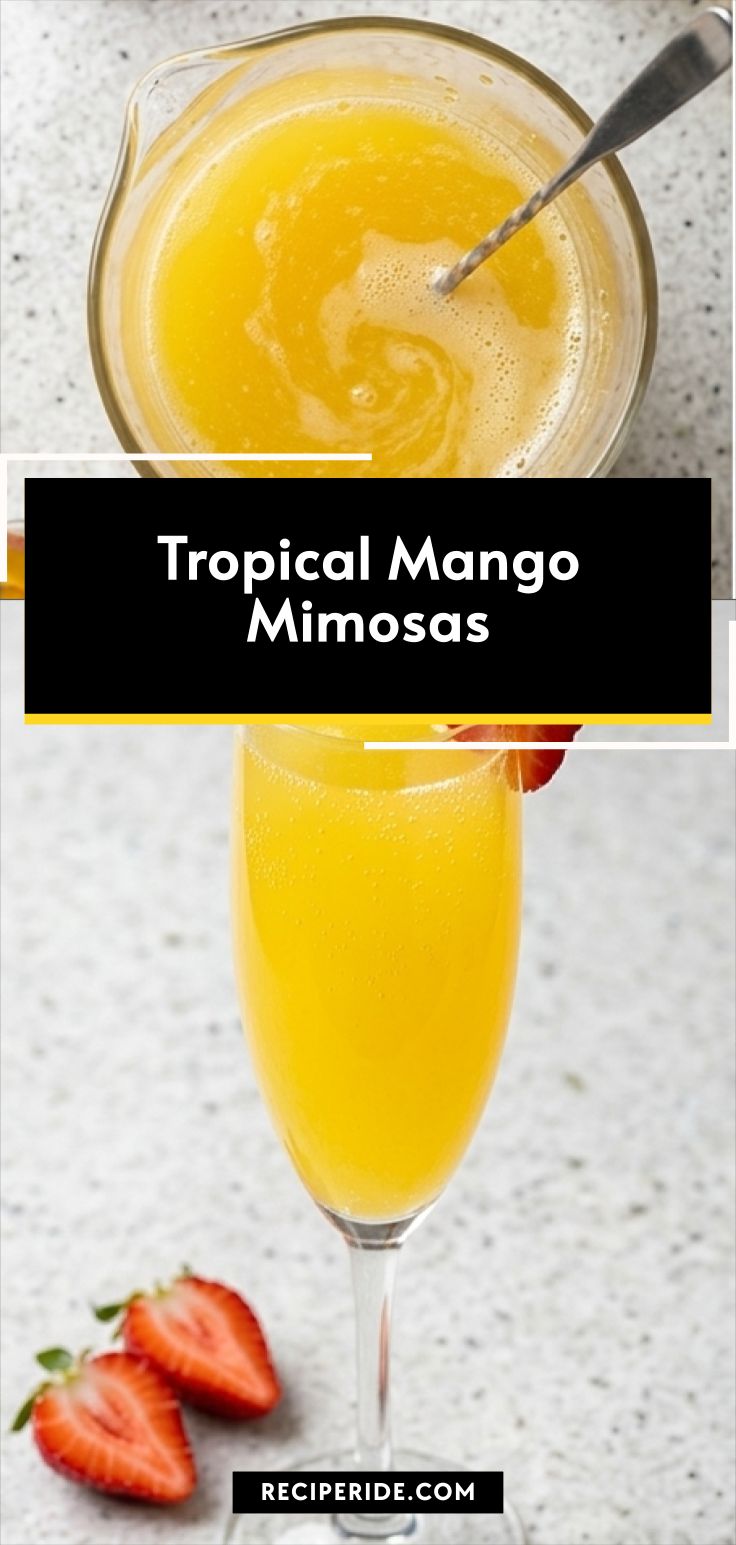
Make Tropical Mango Mimosas: mix dry bubbly with mango nectar for an easy, sunny brunch cocktail.
Ingredients
Instructions
Step 1: Pour the Bubbles
Pour the chilled champagne or prosecco into an elegant flute or into a clear glass pitcher if you’re making a batch. Aim for about two parts bubbly — let the stream nestle against the glass so a fine crown of bubbles forms along the surface. Keep the pour steady and slow to preserve lively effervescence; you’ll see delicate, pearly bubbles clinging and rising, a soft foam lip around the rim, and a crystalline sparkle against the clear glass.
Step 2: Add the Mango Nectar
Top the champagne with mango nectar or mango juice to taste (about one part mango to two parts bubbly as a starting point). If using a pitcher, pour the mango nectar over the back of a spoon or down the inside to preserve carbonation; for a single flute, gently spoon the nectar atop the champagne so layers briefly swirl. The resulting center-state is a luminous, sunny yellow drink with suspended micro-bubbles and a slightly viscous sheen from the mango — vibrant, glistening, and unmistakably tropical.
Step 3: Garnish with Fresh Fruit
Choose a glossy ripe strawberry slice or a slim mango wedge to perch on the flute’s rim. The red of a strawberry or deep orange of mango creates a crisp visual counterpoint to the mango-yellow drink. Tuck a couple of halved strawberries or thin mango slices on the surface nearby as casual companions; they should look juicy with visible seeds or fibrous mango texture, adding a fresh, tactile accent.
Step 4: Serve the Mimosa
Bring the flute close to eye level and admire the translucence: a bright, sunlit yellow with tiny rising bubbles, a thin foam lip, and a glossy fruit garnish catching the light. Present the flute upright on the Luna Pearl granite surface with a couple of fruit halves artfully placed beside it — the scene should feel minimalist, celebratory, and utterly refreshing.
Notes
- Chill the bubbly and mango nectar well before serving
- Pour mango over the back of a spoon to preserve carbonation
- Use dry prosecco or cava to balance mango sweetness
- Prepare components separately and combine at serving time
- Strain fresh mango purée to avoid fibrous texture