I love the way oven-roasting concentrates flavor while keeping things easy, and this Oven Baked Ribs Recipe is one of those go-to dinners that feels like a treat with very little fuss. It starts with a simple mustard base and a brown sugar spice rub that caramelizes into a glossy, sticky crust. I first tested this Oven Baked Ribs Recipe on a slow Sunday and kept refining the timing until the meat was consistently tender and the glaze perfectly set. If you want tender ribs without firing up the grill, this method delivers reliably every time.
How This Recipe Became My Rainy-Day Favorite
The first time I made the Oven Baked Ribs Recipe it was raining hard and the neighborhood smelled like wet pavement and maple trees. I remember the small, warm kitchen light and the hush of the oven as the sugar in the rub bubbled and browned under the broiler. My hands smelled faintly of smoked paprika and mustard while I brushed the glaze on, and the house filled with a deep, sweet aroma that felt like comfort. I carried the pan to the table wrapped in foil and watched the steam rise when we cut into the ribs; the meat pulled away from the bone and an instant hush fell over the room. That rainy night turned a simple recipe into a memory I return to whenever I want something soulful and uncomplicated.
The Ingredients That Make It Sing
This Oven Baked Ribs Recipe balances sweet, smoky, and savory elements so each component earns its place. Choose fresh ribs with even meat coverage and trim membrane for a smooth surface. Dijon acts as the glue for the rub and can be swapped for yellow mustard in a pinch. Liquid smoke is optional; smoked paprika works as a gentler substitute that still adds depth. The spice rub gives both texture and caramelized flavor, while the barbecue sauce finishes with gloss and tang.
- Baby Back Ribs: The star protein; look for firm, evenly meaty racks. Substitute spare ribs if you like a meatier cut, but allow longer cooking time.
- Dijon Mustard: Acts as an adhesive and flavor bridge; yellow mustard is a fair swap.
- Liquid Smoke: Adds concentrated smokiness; replace with smoked paprika for milder smoke.
- Spice Rub: Provides sweet and savory caramelization; you can mute cayenne for less heat.
- Barbecue Sauce: Finishes with sweetness and shine; choose a flavor profile that pairs with your rub.
Essential Kitchen Tools
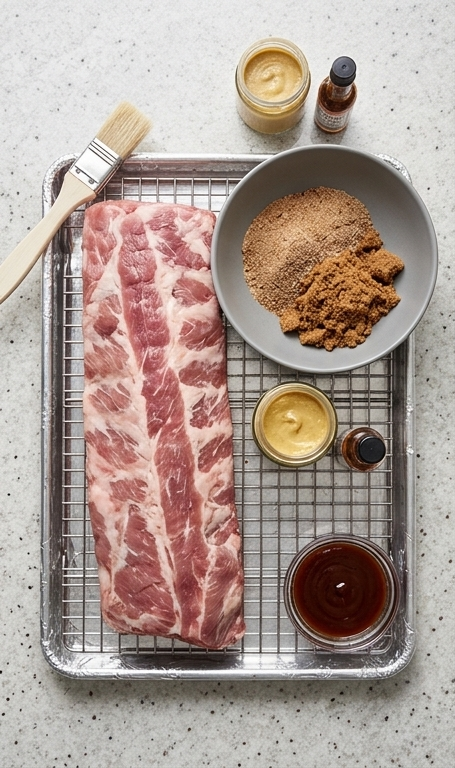
A few simple tools make this Oven Baked Ribs Recipe easy and repeatable. A sturdy rimmed baking sheet and a cooling rack allow heat to circulate under the ribs so the underside does not steam. A broiler-safe pan and a good basting brush help form that caramelized crust. Use a shallow glass jar for mixing mustard and liquid smoke so you can brush evenly. If you don’t have a rack, stack the ribs on a bed of halved onions or potatoes to lift them off the pan.
- Rimmed baking sheet: Collects drippings and withstands high heat.
- Cooling or roasting rack: Keeps ribs elevated for even cooking.
- Small glass jar: Handy for mixing and brushing the mustard base.
- Matte ceramic or mixing bowl: For whisking the spice rub uniformly.
- Basting brush: For thin, even layers of mustard and sauce.
Step-by-Step Preparation Guide
Step 1: Prep the pan and position the ribs
Line a rectangular baking sheet with two layers of aluminum foil and set a rectangular cooling rack into the pan so heat can circulate. Unwrap the rack of ribs and place the whole slab bone-side down on the rack, trimming excess membrane if needed so the surface is even. Keep a small clear glass jar of Dijon mustard and a tiny bottle of liquid smoke nearby on the same side of the pan for the next step; everything sits neatly on the Luna Pearl granite surface and remains covered until you begin seasoning.
Step 2: Whisk the dry rub to a uniform texture
In a matte grey ceramic bowl combine the dark brown sugar, ground smoked paprika, granulated garlic, granulated onion, kosher salt, black pepper, cumin, ancho, ground mustard and cayenne. Whisk thoroughly until the brown sugar is evenly coated with the spices and the mixture reads like a damp, sandy paste—no big clumps, the sugar granules still visible for good caramelization. Leave the bowl and a small spoon nearby; the bowl will be used again in the next action so the vessel remains consistent.
Step 3: Spread the mustard base and press on the rub
Stir the Dijon and liquid smoke together in the clear glass jar just enough to emulsify, then brush a thin, even layer over both sides of the ribs so the mustard acts as an adhesive. Sprinkle the matte grey ceramic bowl’s spice rub liberally over the mustarded meat and gently pat it into the surface until the rub clings—focus on an even coat so pockets of sugar are distributed for future caramelization. If you want deeper flavor, cover the pan tightly with foil and chill overnight; otherwise proceed immediately.
Step 4: Broil briefly to caramelize and brown the crust
Move the prepared pan to the top rack position and broil close to the heat for 4–5 minutes, watching closely until the sugar in the rub starts to bubble, darken and form a textured, crackly crust across the surface of the ribs. You should see glossy, molten sugar spots and a mottled mahogany-brown crust; remove the pan once that dramatic surface transformation is achieved and let the pan sit while you lower the oven for the long roast.
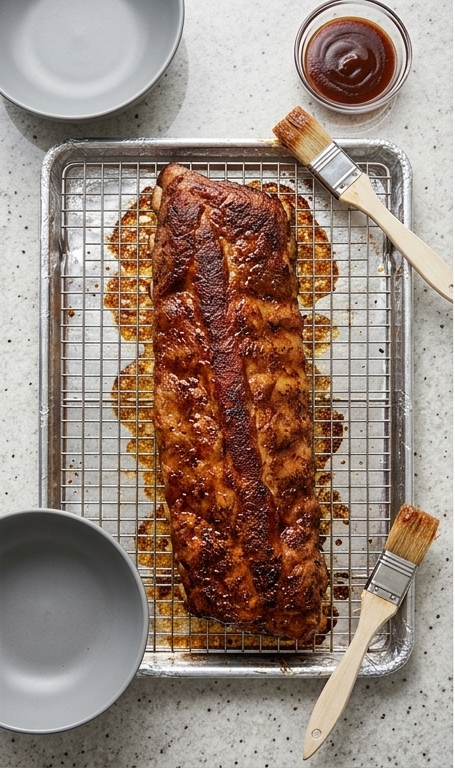
Step 5: Roast low and slow until the meat relaxes from the bone
Set the oven to 300°F and move the baking sheet to the middle rack; roast the ribs uncovered for the appropriate time (about 1½–2 hours for baby backs, 2½–3 hours for spare ribs). Halfway through the roast lay a sheet of foil loosely over the ribs to slow surface drying—this keeps the interior moist while the exterior continues to age into tenderness. The surface will progressively darken, the meat pulling back slightly from the bones as connective tissue breaks down.
Step 6: Glaze and finish for a glossy, sticky coat
With roughly 30 minutes remaining, lightly brush the ribs with the barbecue sauce from the clear glass bowl so a thin, even glaze forms. Cover the pan again and continue roasting until the meat is fork-tender in the thickest part; the sauce will set into a shiny, slightly tacky lacquer with toasted sugar notes and a layered spice profile.
Step 7: Rest the ribs to settle the juices
Remove the pan from the oven and keep the ribs covered with foil on the baking sheet for about 15 minutes so the juices redistribute and the glaze firms just enough to slice cleanly. This gentle rest keeps the exterior glossy but not runny and the interior succulent.
Step 8: Slice between the bones and arrange to serve
Transfer the cooked rack to a rectangular wooden board lined with parchment (or present right on the foil-lined baking sheet if you prefer minimal fuss). Cut between the bones into individual ribs, fan them into a neat rectangular composition, place the same clear glass bowl of extra barbecue sauce nearby for dipping, and sprinkle fresh parsley for a bright green contrast. Arrange a small nest of golden fries and a chilled soda bottle in the soft background if desired, then serve while still warm.
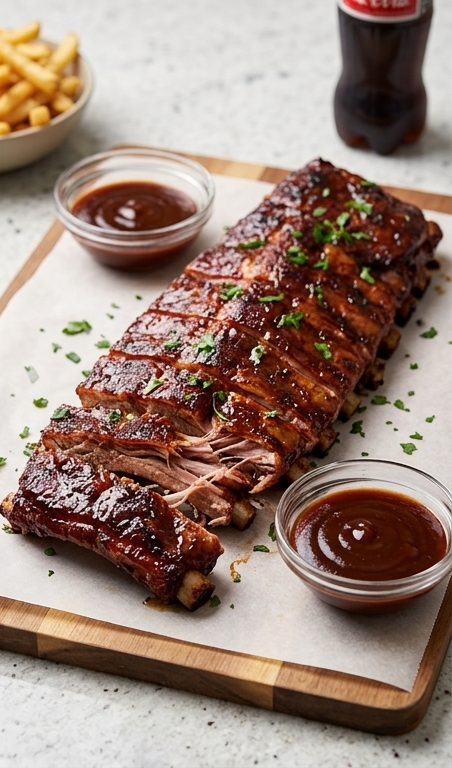
Making It Your Own
I like to experiment with the spice balance depending on the season. For a summer cookout vibe I up the smoked paprika and use a fruit-forward barbecue sauce. In cooler months I add a touch more cumin and swap in chipotle for ancho to give a deeper, cozier smoke note.
For dietary tweaks try a low-sugar rub by cutting the brown sugar by half and choosing a sugar-free barbecue sauce. If you prefer vegetarian options, translate the profile to roasted cauliflower steaks with the same rub and glaze.
Regional twists work well. Try using mustard-heavy Carolina-style sauce in place of the BBQ glaze for a tangy finish, or a Korean-inspired glaze with gochujang mixed into the barbecue sauce for a spicy-sweet spin.
How to Serve
When I host, I slice the rack into individual ribs and fan them on a warm wooden board for a rustic look. Place a small bowl of extra barbecue sauce and a handful of pickles on the board to cut through the richness. For 4 people, one 4 pound rack usually works if you serve two sides and a salad.
To scale up, stack two racks on separate pans and keep one warm in a low oven set to 200°F while the other finishes. For a more formal dinner, plate two ribs per person with a neat spoonful of sauce, a bright slaw, and roasted baby potatoes.
Storage and Reheating
Leftover ribs keep well. Cool the cooked ribs to room temperature, then wrap tightly in foil or store in an airtight container in the refrigerator for up to 4 days. For longer storage, freeze in sealed bags for up to 3 months; thaw overnight in the fridge before reheating.
Reheat gently to preserve texture. Warm in a 300°F oven, wrapped in foil with a splash of apple juice or water to create steam, about 20 to 30 minutes until heated through. Finish under the broiler or with a quick brush of extra sauce for shine.
Common Mistakes and How to Avoid Them
One frequent error is skipping the broil step or watching it too casually. That brief broil is what caramelizes the sugar and gives the crust texture. Keep a close eye for those glossy, bubbling spots so it does not burn.
Another misstep is overbaking without moisture. If the surface dries too much, tent with foil earlier and add a splash of liquid under the ribs to maintain humidity. Also, trimming the membrane unevenly can make the rub stick inconsistently, so remove it carefully.
Final Thoughts
If you want a dependable, flavorful rack without fuss, give this Oven Baked Ribs Recipe a try. It rewards a little attention at the start and then lets the oven do the rest, returning tender, glossy ribs that are easy to share. I hope it becomes one of your favorite weeknight or weekend recipes.
Frequently Asked Questions.
- What type of ribs should I use and how long will they take? Use baby back ribs for faster cooking and about 1.5 to 2 hours at 300°F; spare ribs need 2.5 to 3 hours.
- Can I prepare the ribs the night before? Yes, you can apply the mustard and rub, then cover and refrigerate overnight for deeper flavor.
- Is liquid smoke necessary? No, it is optional. Smoked paprika works well if you prefer not to use liquid smoke.
- How do I know when the ribs are done? The meat should pull back from the bones and be fork-tender in the thickest part.
- Can I make this recipe on a grill? Yes, you can adapt the rub and finish over indirect heat, but timing and technique will differ.
Oven Baked Ribs Recipe
Make the Oven Baked Ribs Recipe for tender, caramelized ribs with a sticky glaze. Try it tonight and serve warm.
Ingredients
Instructions
Step 1: Prep the pan and position the ribs
Line a rectangular baking sheet with two layers of aluminum foil and set a rectangular cooling rack into the pan so heat can circulate. Unwrap the rack of ribs and place the whole slab bone-side down on the rack, trimming excess membrane if needed so the surface is even. Keep a small clear glass jar of Dijon mustard and a tiny bottle of liquid smoke nearby on the same side of the pan for the next step; everything sits neatly on the Luna Pearl granite surface and remains covered until you begin seasoning.
Step 2: Whisk the dry rub to a uniform texture
In a matte grey ceramic bowl combine the dark brown sugar, ground smoked paprika, granulated garlic, granulated onion, kosher salt, black pepper, cumin, ancho, ground mustard and cayenne. Whisk thoroughly until the brown sugar is evenly coated with the spices and the mixture reads like a damp, sandy paste—no big clumps, the sugar granules still visible for good caramelization. Leave the bowl and a small spoon nearby; the bowl will be used again in the next action so the vessel remains consistent.
Step 3: Spread the mustard base and press on the rub
Stir the Dijon and liquid smoke together in the clear glass jar just enough to emulsify, then brush a thin, even layer over both sides of the ribs so the mustard acts as an adhesive. Sprinkle the matte grey ceramic bowl’s spice rub liberally over the mustarded meat and gently pat it into the surface until the rub clings—focus on an even coat so pockets of sugar are distributed for future caramelization. If you want deeper flavor, cover the pan tightly with foil and chill overnight; otherwise proceed immediately.
Step 4: Broil briefly to caramelize and brown the crust
Move the prepared pan to the top rack position and broil close to the heat for 4–5 minutes, watching closely until the sugar in the rub starts to bubble, darken and form a textured, crackly crust across the surface of the ribs. You should see glossy, molten sugar spots and a mottled mahogany-brown crust; remove the pan once that dramatic surface transformation is achieved and let the pan sit while you lower the oven for the long roast.
Step 5: Roast low and slow until the meat relaxes from the bone
Set the oven to 300°F and move the baking sheet to the middle rack; roast the ribs uncovered for the appropriate time (about 1½–2 hours for baby backs, 2½–3 hours for spare ribs). Halfway through the roast lay a sheet of foil loosely over the ribs to slow surface drying—this keeps the interior moist while the exterior continues to age into tenderness. The surface will progressively darken, the meat pulling back slightly from the bones as connective tissue breaks down.
Step 6: Glaze and finish for a glossy, sticky coat
With roughly 30 minutes remaining, lightly brush the ribs with the barbecue sauce from the clear glass bowl so a thin, even glaze forms. Cover the pan again and continue roasting until the meat is fork-tender in the thickest part; the sauce will set into a shiny, slightly tacky lacquer with toasted sugar notes and a layered spice profile.
Step 7: Rest the ribs to settle the juices
Remove the pan from the oven and keep the ribs covered with foil on the baking sheet for about 15 minutes so the juices redistribute and the glaze firms just enough to slice cleanly. This gentle rest keeps the exterior glossy but not runny and the interior succulent.
Step 8: Slice between the bones and arrange to serve
Transfer the cooked rack to a rectangular wooden board lined with parchment (or present right on the foil-lined baking sheet if you prefer minimal fuss). Cut between the bones into individual ribs, fan them into a neat rectangular composition, place the same clear glass bowl of extra barbecue sauce nearby for dipping, and sprinkle fresh parsley for a bright green contrast. Arrange a small nest of golden fries and a chilled soda bottle in the soft background if desired, then serve while still warm.
Notes
- For deeper flavor, apply the rub and chill the ribs overnight before roasting.
- Keep a close eye during the broil step to avoid burning the sugar in the rub.
- Rest the ribs 15 minutes after cooking to let juices redistribute.
- Reheat wrapped in foil at 300°F with a splash of apple juice to keep moist.
- Freeze leftovers in sealed bags for up to 3 months.