I fell in love with the Blueberry Lemon Scones Recipe the first time I made it on a sleepy Sunday morning. The bright lemon scent filled the kitchen and the blueberries popped like tiny fireworks against the pale dough. I make these scones whenever friends drop by because they are fast to assemble and always feel a little special. You will notice how the glaze and warm scone crumbs invite conversation before the coffee finishes brewing.
There is something about the combination of tart lemon and sweet blueberries that makes this Blueberry Lemon Scones Recipe impossible to resist. It balances freshness and comfort in a single bite, and it is the kind of recipe you keep coming back to because it reliably hugs the edges just right.
How These Scones Became My Rainy-Day Favorite
The first time I baked the Blueberry Lemon Scones Recipe I remember a rainstorm tapping every window. I had one lemon left in the crisper and a punnet of blueberries that were begging to be used. As the oven warmed I rubbed the lemon zest into the flour and the kitchen suddenly smelled like a bakery. When the scones came out, steam rose and the glaze set into glossy ribbons. I handed one to my partner and we both stood in the drizzle, warm scone in hand, and felt that tiny domestic joy that makes ordinary days feel gentle. Now, whenever thunder raps against the roof, I make these scones and the house feels like a small happy place.
The Ingredients That Make the Magic
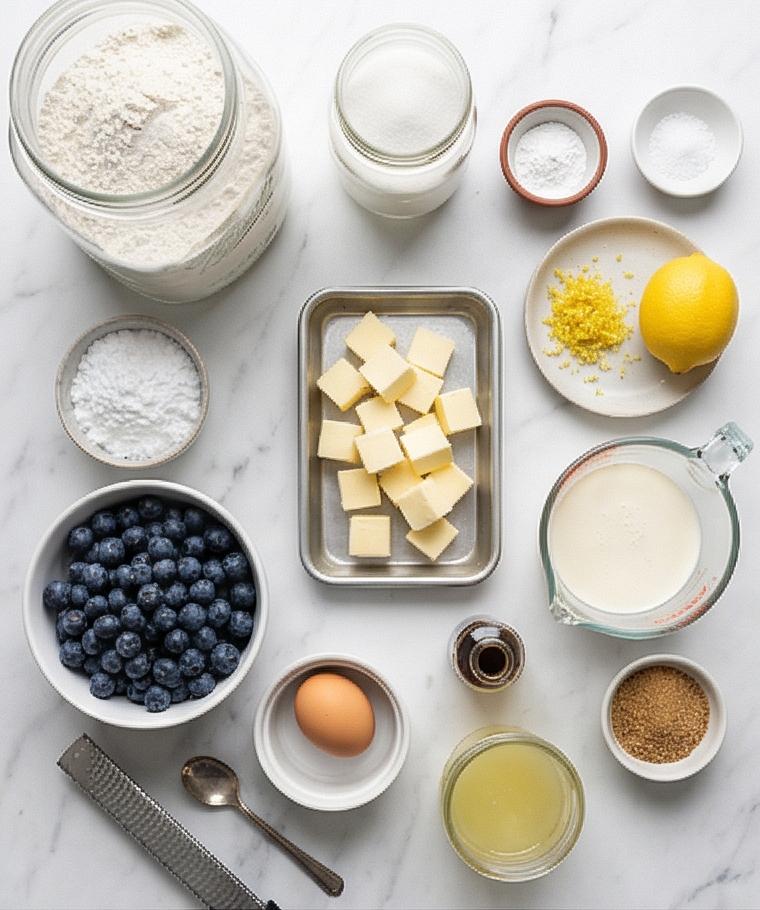
These ingredients each play a clear role in the Blueberry Lemon Scones Recipe: they provide structure, lift, fat, and that bright citrus note. Choose ripe, fragrant lemons and firm blueberries for the best results. If you need swaps, frozen berries work fine unthawed and you can use cultured buttermilk thinned with a little cream instead of heavy cream in a pinch.
- All-purpose flour: Provides structure; spoon and level for accuracy and use unbleached if possible.
- Granulated sugar: Adds sweetness and helps with browning; reduce slightly for less sweet scones.
- Baking powder: The leavening agent; make sure it is fresh for good rise.
- Fine sea salt: Enhances flavor; use kosher if you prefer but adjust amount.
- Lemon zest: The citrus star; use unwaxed lemons and grate finely.
- Unsalted butter: For flakiness and flavor; keep it very cold for flaky layers.
- Blueberries: Fresh or frozen; toss in a little flour to prevent bleeding.
- Heavy cream, egg, vanilla: Combine to moisten and enrich the dough.
- Coarse sugar: Optional topping for crunch.
- Powdered sugar and lemon juice: Make the glaze; adjust for thickness with a splash of milk.
Essential Kitchen Tools I Rely On
A few simple tools make the Blueberry Lemon Scones Recipe effortless and keep the results consistent. You do not need fancy equipment, just reliable basics.
- Large mixing bowl: Keeps dry ingredients easy to whisk and fold.
- Pastry cutter or two knives: For cutting cold butter into the flour; a food processor works but do not overheat the butter.
- Bench scraper or sharp knife: Helps turn and cut the dough into clean wedges.
- Parchment paper or silicone mat: Prevents sticking and helps even browning.
- Measuring cups and a scale: A kitchen scale yields the most consistent results.
- Baking sheet and a rack: For baking and cooling the scones properly.
Step-by-Step Preparation Guide
Step 1: Prep the sheet and heat the oven
Preheat the oven to 400°F (200°C). Line a large rectangular baking sheet with a sheet of parchment paper or a silicone baking mat and set it aside on the Carrara marble surface so everything will be ready when the dough is formed.
Step 2: Combine dry ingredients, zest, and cut in butter
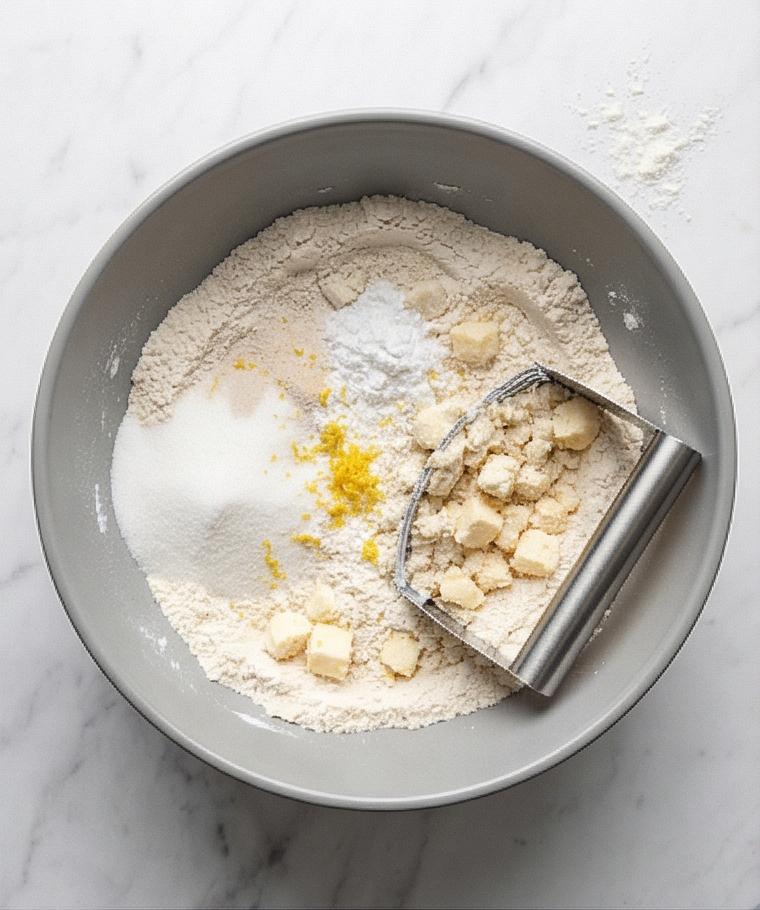
In a large mixing bowl, whisk together the all-purpose flour, granulated sugar, baking powder, and fine sea salt until evenly combined. Add the finely grated lemon zest and use your fingertips to briefly rub the zest into the dry mix so the citrus oils perfume the flour. Add the very cold, cubed unsalted butter and work it into the dry ingredients using a pastry cutter or two knives until the mixture resembles coarse crumbs with pea-sized butter pieces remaining; move quickly so the butter stays cold.
Step 3: Incorporate blueberries and whisk the wet mix, then fold into a shaggy dough
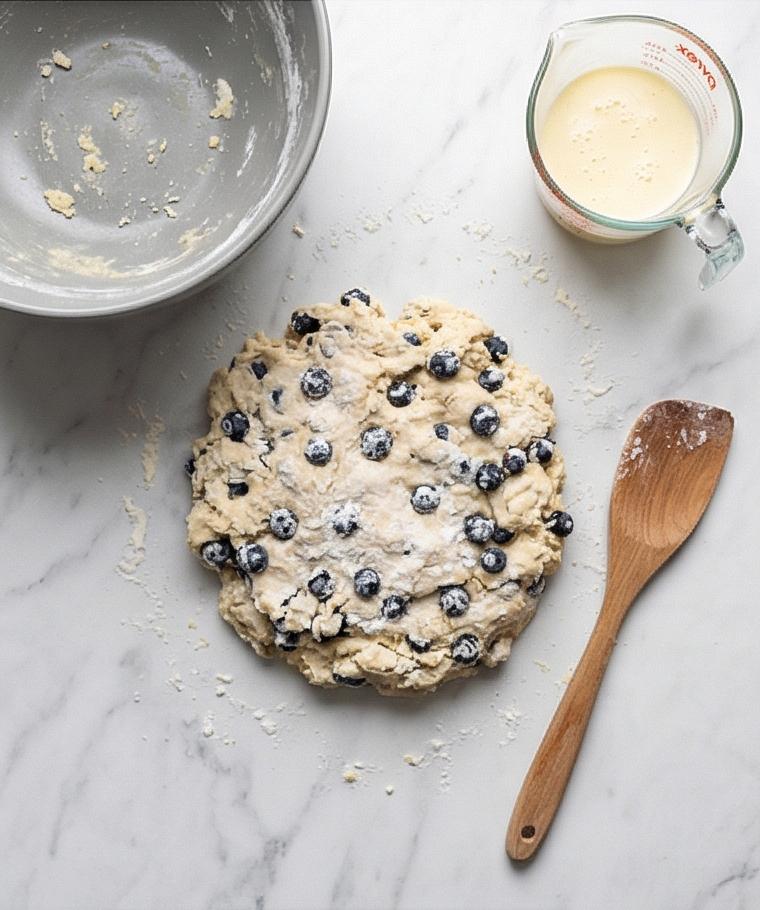
Gently toss the blueberries with a few spoonfuls of the flour-butter mixture so they are lightly coated and less likely to bleed. In a separate measuring jug whisk together the cold heavy cream, the cold egg, and the vanilla until smooth. Make a well in the dry mixture, pour the wet mixture in, and fold gently with a spatula until the dough just comes together—slightly shaggy, slightly sticky, with blueberries visible throughout. Avoid overworking so the scones stay tender.
Step 4: Turn out, shape into a disc, and cut into wedges
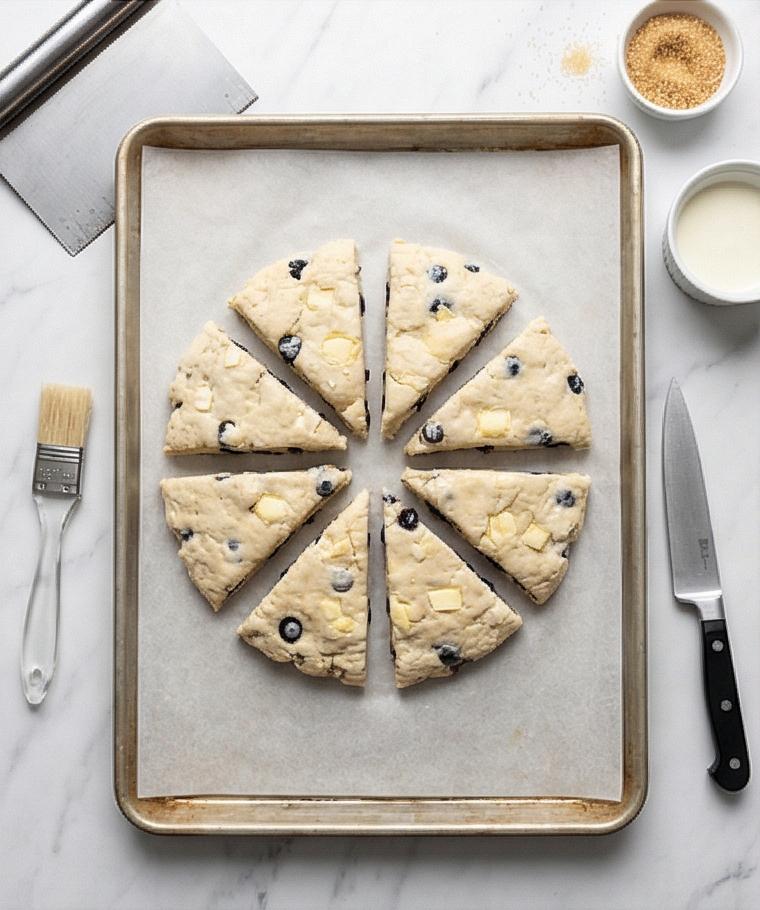
Lightly flour the marble surface and your bench scraper. Turn the dough out, fold it over onto itself 2–3 times to bring it together, and press it into a round disc about 7–8 inches (18–20 cm) across and roughly 3/4–1 inch (2–2.5 cm) thick. Press any loose blueberries back in, then use a sharp knife or bench scraper to cut the disc into 8 equal wedges. Transfer the wedges to the prepared rectangular baking sheet, spacing them so they have room to spread.
Step 5: Chill briefly, brush with cream and sprinkle sugar, then bake
For the best rise and neat shape, chill the arranged scone wedges on the lined baking sheet in the refrigerator for 20–30 minutes or in the freezer for 10–15 minutes. Just before baking, brush the tops lightly with cold heavy cream and, if desired, sprinkle coarse or turbinado sugar for an extra crunchy finish. Bake the chilled wedges on the same rectangular sheet at 400°F (200°C) until the tops are lightly golden and the edges show a deeper golden brown; remove the sheet and let the scones rest for a few minutes to set.

Step 6: Make the lemon glaze and finish the warm scones
While the scones cool until warm (not hot), whisk together sifted powdered sugar, fresh lemon juice, a touch of lemon zest if using, and a pinch of fine sea salt until smooth and glossy. Adjust with a teaspoon or two of milk or extra lemon juice only if the glaze needs thinning to a thick but pourable consistency. Generously drizzle the glaze over the warm scones allowing it to run slightly down the sides; let it set for about 10 minutes. Arrange the glazed scones on a low rectangular serving platter to maintain the straight-lined geometry that echoes the baking sheet and serve slightly warm or at room temperature.

Making It Your Own
I treat the Blueberry Lemon Scones Recipe as a flexible canvas. For a dairy-free version I swap the heavy cream for a full-fat coconut milk and use a plant-based butter; the texture is slightly different but still comforting. In autumn I tried swapping blueberries for chopped pears and a pinch of cardamom which was lovely with the lemon zest. If you want gluten-free scones try a 1-to-1 gluten-free flour blend and add an extra tablespoon or two of cream if the dough feels dry.
For a party I sometimes double the recipe and bake on two sheets to keep a steady stream of warm scones available. Little changes like lemon-thyme or a handful of toasted almonds let you personalize the recipe without losing what makes it work.
How to Serve
When I host brunch I arrange the Blueberry Lemon Scones Recipe on a low platter and invite guests to help themselves. Serve them slightly warm so the glaze is set but the interior is tender. Offer small bowls of clotted cream, butter, and a jar of good jam so people can choose their topping.
For a larger crowd, keep the scones warm in a low oven (about 200°F / 95°C) on the baking sheet for short periods, replenishing the platter as needed. These scones pair beautifully with a crisp green salad for a light lunch, or with strong tea and coffee for a relaxed morning gathering.
Storage and Reheating Tips
Store completely cooled scones in an airtight container at room temperature for up to two days. If you need to keep them longer, refrigerate for up to five days or freeze for up to two months. Wrap individually in plastic wrap and place in a zip-top bag so they do not pick up any freezer odors.
To reheat, warm at 325°F (160°C) for 8 to 10 minutes from frozen, or 5 to 7 minutes if refrigerated, until warmed through. A quick 10 to 15 second zap in the microwave will soften them but can make the edges chewy; a low oven gives the best texture.
Common Mistakes and How to Avoid Them
Overworking the dough will lead to dense scones, so fold just until the dough comes together. Keep the butter very cold and handle the dough lightly to preserve flaky pockets.
If the blueberries bleed, they were likely wet or overhandled; toss them in a little flour before folding. Also, using old baking powder will give flat scones, so check the date and replace if needed.
Final Thoughts and Encouragement
Give the Blueberry Lemon Scones Recipe a try even if you are short on time. The steps are straightforward and the payoff is huge: bright lemon, juicy blueberries, and a tender crumb that feels like a small celebration. You will be surprised at how often this becomes your go-to for guests and quiet mornings alike.
Frequently Asked Questions.
- Q: Can I use frozen blueberries instead of fresh? A: Yes, you can use frozen blueberries unthawed; toss them in a little flour so they are less likely to bleed into the dough.
- Q: What if I do not have heavy cream? A: You can substitute full-fat buttermilk or whole milk with a bit more butter, but the scones will be slightly less rich.
- Q: How can I make the scones less sweet? A: Reduce the granulated sugar by 1 to 2 tablespoons and keep the glaze lighter or omit it entirely.
- Q: Why did my scones come out dense? A: Most likely the dough was overmixed or the butter was too warm; chill the dough and handle it gently next time.
- Q: Can I make the dough ahead? A: Yes, you can assemble the dough, shape the disc, wrap it, and refrigerate for up to 24 hours before cutting and baking.

Blueberry Lemon Scones Recipe
Bake Blueberry Lemon Scones Recipe for tender, bright scones; serve warm with butter or clotted cream.
Ingredients
Instructions
Step 1: Prep the sheet and heat the oven
Preheat the oven to 400°F (200°C). Line a large rectangular baking sheet with a sheet of parchment paper or a silicone baking mat and set it aside on the Carrara marble surface so everything will be ready when the dough is formed.
Step 2: Combine dry ingredients, zest, and cut in butter
In a large mixing bowl, whisk together the all-purpose flour, granulated sugar, baking powder, and fine sea salt until evenly combined. Add the finely grated lemon zest and use your fingertips to briefly rub the zest into the dry mix so the citrus oils perfume the flour. Add the very cold, cubed unsalted butter and work it into the dry ingredients using a pastry cutter or two knives until the mixture resembles coarse crumbs with pea-sized butter pieces remaining; move quickly so the butter stays cold.
Step 3: Incorporate blueberries and whisk the wet mix, then fold into a shaggy dough
Gently toss the blueberries with a few spoonfuls of the flour-butter mixture so they are lightly coated and less likely to bleed. In a separate measuring jug whisk together the cold heavy cream, the cold egg, and the vanilla until smooth. Make a well in the dry mixture, pour the wet mixture in, and fold gently with a spatula until the dough just comes together—slightly shaggy, slightly sticky, with blueberries visible throughout. Avoid overworking so the scones stay tender.
Step 4: Turn out, shape into a disc, and cut into wedges
Lightly flour the marble surface and your bench scraper. Turn the dough out, fold it over onto itself 2–3 times to bring it together, and press it into a round disc about 7–8 inches (18–20 cm) across and roughly 3/4–1 inch (2–2.5 cm) thick. Press any loose blueberries back in, then use a sharp knife or bench scraper to cut the disc into 8 equal wedges. Transfer the wedges to the prepared rectangular baking sheet, spacing them so they have room to spread.
Step 5: Chill briefly, brush with cream and sprinkle sugar, then bake
For the best rise and neat shape, chill the arranged scone wedges on the lined baking sheet in the refrigerator for 20–30 minutes or in the freezer for 10–15 minutes. Just before baking, brush the tops lightly with cold heavy cream and, if desired, sprinkle coarse or turbinado sugar for an extra crunchy finish. Bake the chilled wedges on the same rectangular sheet at 400°F (200°C) until the tops are lightly golden and the edges show a deeper golden brown; remove the sheet and let the scones rest for a few minutes to set.
Step 6: Make the lemon glaze and finish the warm scones
While the scones cool until warm (not hot), whisk together sifted powdered sugar, fresh lemon juice, a touch of lemon zest if using, and a pinch of fine sea salt until smooth and glossy. Adjust with a teaspoon or two of milk or extra lemon juice only if the glaze needs thinning to a thick but pourable consistency. Generously drizzle the glaze over the warm scones allowing it to run slightly down the sides; let it set for about 10 minutes. Arrange the glazed scones on a low rectangular serving platter to maintain the straight-lined geometry that echoes the baking sheet and serve slightly warm or at room temperature.
Notes
- Chill the dough briefly for a better rise and cleaner wedges.
- Use very cold butter and handle the dough minimally to keep scones tender.
- Toss blueberries in a little flour to prevent bleeding.
- Replace baking powder if it is older than 6 months for reliable rise.