Easy Beer Brats are my go-to for casual dinners and backyard gatherings. I first learned to make these brats on a rainy Sunday when I wanted something comforting but unfussy; the beer lends a mellow depth that turns simple sausages into something memorable. The balance of caramelized onions, sweet red pepper, and that glossy beer gravy is what makes Easy Beer Brats stand out, and you’ll be surprised how quickly this comes together. I always keep a stash of rolls and a cold can of lager for nights when I want big flavor with little fuss.
How This Recipe Became My Rainy-Day Favorite
The first time I cooked Easy Beer Brats for friends, the house smelled like a neighborhood pub—warm malt, sweet onion, and browned sausage fat. It was late afternoon, rain tapping the windows, and I wanted something to lift spirits without a lot of ceremony. The sound of the bratwurst sizzling in the skillet felt reassuring, and as the beer reduced into a shiny sauce the kitchen filled with a cozy, grown-up sweetness. We ate standing around the counter, napkins in hand, laughing as the rolls soaked up the gravy. That evening taught me that great food does not need complicated steps to make people happy. I still reach for this recipe when I want comfort and company in equal measure. The sensory memories—the hiss of the pan, the caramel edges on the onions, the first bite of a juicy brat in a toasted roll—are exactly why Easy Beer Brats are a permanent, beloved option in my weeknight rotation.
Ingredients You Need and Why They Matter
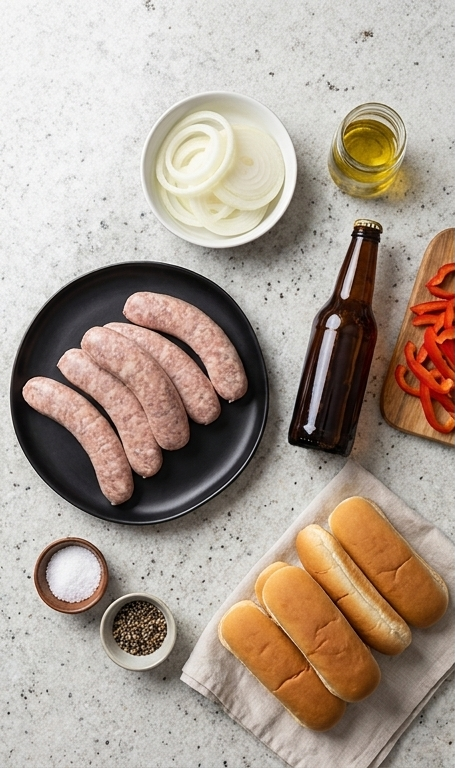
- Bratwurst: The star protein, bringing savory, juicy flavor and a coarse, satisfying texture. Substitute with kielbasa or smoked sausages if needed.
- Sweet Onion: Adds natural sweetness and helps form the glossy gravy; Vidalia or Spanish onions work well.
- Red Bell Pepper: Brings color and a mild sweetness; orange or yellow peppers can substitute.
- Malty Lager: Provides body and a toasty background flavor; use pale lager if you prefer lighter notes.
- Avocado Oil: High smoke point for browning; use canola or light olive oil instead.
- Rolls and Condiments: Rolls cradle the brats and soak sauce; choose quality rolls and offer mustard or sauerkraut on the side.
Essential Kitchen Tools and What They Do
A few reliable tools make this one-pan recipe effortless. A heavy skillet, preferably cast iron or stainless steel, gives even heat and builds the fond needed for depth. A good, long spatula or tongs helps turn links without piercing the casing, so the sausages stay juicy. A sharp chef’s knife and a sturdy cutting board make quick work of the onion and pepper. If you like, a splatter screen keeps the stove cleaner when browning. For alternatives: use a nonstick pan to reduce sticking, and metal tongs if you don’t have a spatula. These small choices speed up the process and keep the final dish tidy and delicious.
Step-by-Step Preparation Guide
Step 1: Brown the bratwursts
Heat a heavy skillet and add the oil, then lay the bratwurst links carefully so they sizzle gently; the goal is slow browning rather than an aggressive sear. Turn each link after the first side takes on an even, warm mahogany color and small beads of fat start to glisten along the casing. Move the browned links to a resting plate so the pan keeps the fond — you want those little browned bits for flavor in the next stage.
Step 2: Soften the onions and peppers
Using the same hot pan with those flavorful browned bits, add the thinly sliced sweet onion and red bell pepper and cook, stirring occasionally, until the onions relax into translucent ribbons and the peppers soften but still hold a bright red hue; the edges should pick up a touch of caramelized gold. Season lightly with salt and freshly ground black pepper and let the vegetables concentrate their sweet, savory juices in the pan.
Step 3: Simmer the brats in beer until the gravy is glossy
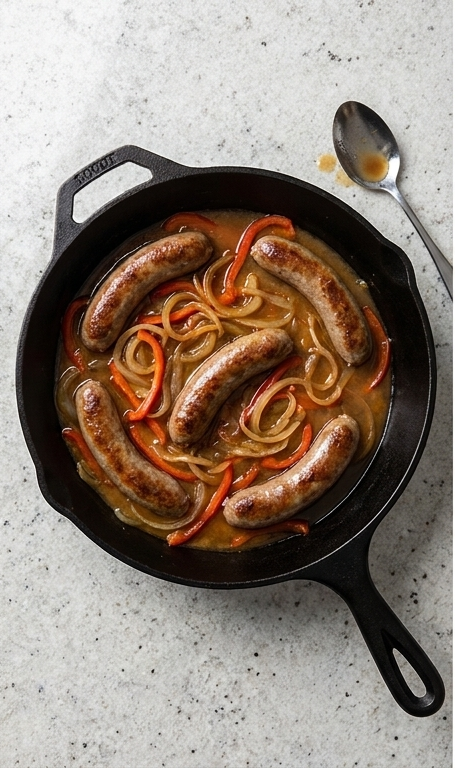
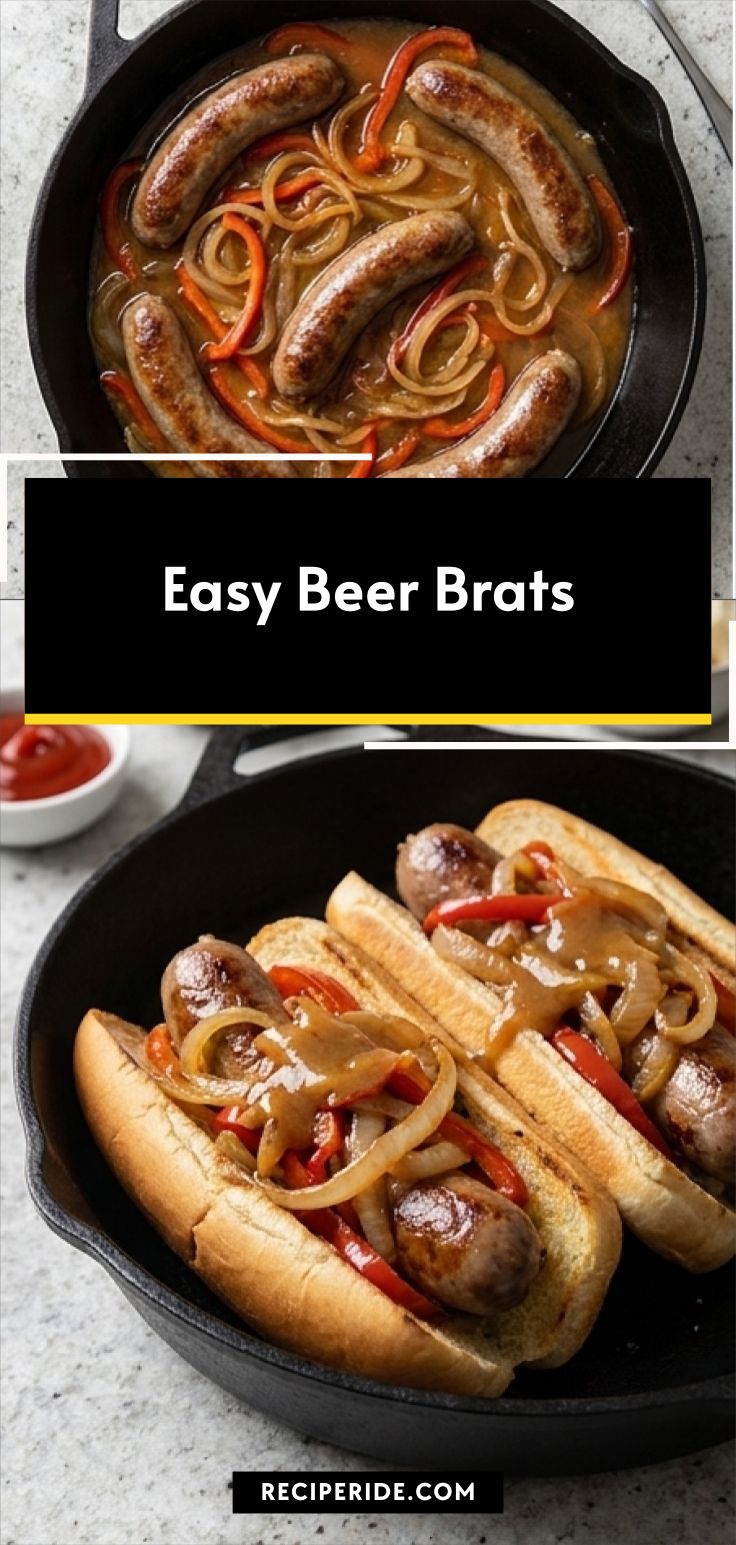
Nestle the browned bratwursts back among the softened onions and peppers, pour in the malty lager, and bring everything to a gentle simmer. As the beer reduces over 10–15 minutes, watch it thicken into a shiny, amber gravy that clings to the sausages and vegetables; skim any foam if needed. Taste and adjust seasoning — the final sauce should be rich, slightly sweet from the onion, and carry a mellow beer depth.
Step 4: Assemble and serve warm in toasted rolls
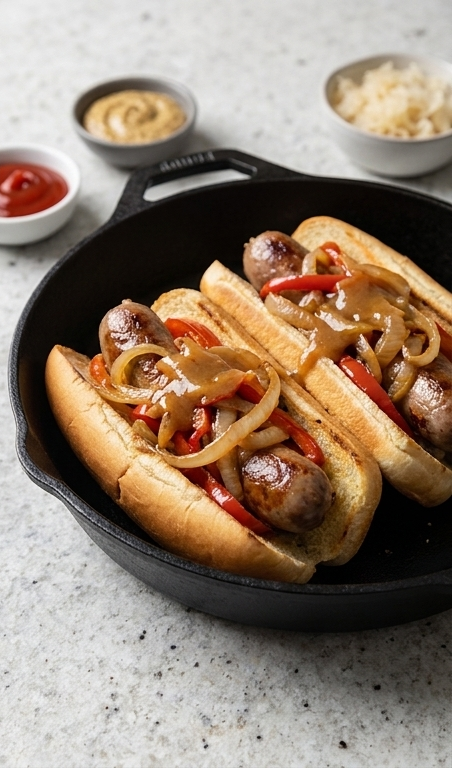
Split and toast the rolls until they are warm and just golden, then cradle each juicy brat inside a bun and pile on the caramelized onions and vibrant red peppers. Spoon a little of the beer-reduced gravy over the top so the casing glistens and the bun soaks a hint of sauce. Serve with small bowls of ketchup, spicy brown mustard, and sauerkraut on the side if you like.
Making It Your Own
Treat variations like small experiments. Try swapping bratwurst for a smoked sausage and finish with a splash of apple cider vinegar for a tangy lift. For a spicy version, brown the brats with sliced hot peppers and finish with a smear of chipotle mayo. If you want it vegetarian, use plant-based sausages and a vegetable stock-beer blend to mimic the depth. For a winter twist, add a pinch of caraway seed and a spoonful of Dijon to the gravy.
How to Serve
If you are hosting, set up a casual self-serve station: toasted rolls, a tray of brats with the onion-pepper topping, and small bowls of mustard, ketchup, and sauerkraut. For larger crowds, keep brats warm in a shallow oven (200 F) on a baking sheet covered lightly with foil. To scale down, halve the ingredients and use a smaller skillet so the brats brown properly. Garnish with chopped parsley or thinly sliced scallion for color when plating.
Storage and Reheating Tips
Cool leftovers to room temperature before refrigerating in an airtight container; they keep well for 3 to 4 days. Store the brats and the onion-pepper gravy together so the flavors mingle, or separate them if you prefer less soggy rolls.
To reheat, gently warm the brats and sauce in a skillet over low heat until heated through, adding a splash of water or beer to loosen the gravy if it has thickened. Avoid microwaving for long stretches, as the casing can split and dry the sausage.
Common Mistakes and How to Avoid Them
Crowding the pan during browning is the easiest way to lose that deep, nutty flavor. Give each brat some space so the surface can caramelize properly.
Over-reducing the beer can make the sauce too salty or intense. Keep an eye on the simmer and add a little water if it tightens too much. Also, resist repeatedly stabbing the sausages with a fork; use tongs to preserve juiciness.
Ready to Try It?
Give Easy Beer Brats a shot this week. They are fast, forgiving, and great for sharing; once you make them a couple of times you will find little tweaks that suit your taste. Invite friends or family, open a cold lager, and enjoy the simple comfort of a well-made brat.
Frequently Asked Questions.
- Can I use a different type of beer? Yes. A malty lager is recommended for balanced flavor, but pale lager, amber ale, or even a nonalcoholic beer will work. Avoid very bitter IPAs.
- How do I keep brats from splitting? Brown them gently over medium heat and avoid piercing the casing; use tongs or a spatula to turn them.
- Can I make this ahead? You can fully cook the brats and refrigerate, then reheat in a skillet with a splash of beer to freshen the sauce.
- What are good sides for Easy Beer Brats? Potato salad, crispy fries, or a simple green salad all pair nicely.
- Is there a vegetarian option? Yes. Use quality plant-based sausages and simmer in beer with vegetable stock and caramelized onions for similar depth.
Easy Beer Brats
Make Easy Beer Brats: brown brats, simmer in lager with onions and peppers, and serve in toasted rolls for a quick, flavorful meal.
Ingredients
Instructions
Step 1: Brown the bratwursts
Heat a heavy skillet and add the oil, then lay the bratwurst links carefully so they sizzle gently; the goal is slow browning rather than an aggressive sear. Turn each link after the first side takes on an even, warm mahogany color and small beads of fat start to glisten along the casing. Move the browned links to a resting plate so the pan keeps the fond — you want those little browned bits for flavor in the next stage.
Step 2: Soften the onions and peppers
Using the same hot pan with those flavorful browned bits, add the thinly sliced sweet onion and red bell pepper and cook, stirring occasionally, until the onions relax into translucent ribbons and the peppers soften but still hold a bright red hue; the edges should pick up a touch of caramelized gold. Season lightly with salt and freshly ground black pepper and let the vegetables concentrate their sweet, savory juices in the pan.
Step 3: Simmer the brats in beer until the gravy is glossy
Nestle the browned bratwursts back among the softened onions and peppers, pour in the malty lager, and bring everything to a gentle simmer. As the beer reduces over 10–15 minutes, watch it thicken into a shiny, amber gravy that clings to the sausages and vegetables; skim any foam if needed. Taste and adjust seasoning — the final sauce should be rich, slightly sweet from the onion, and carry a mellow beer depth.
Step 4: Assemble and serve warm in toasted rolls
Split and toast the rolls until they are warm and just golden, then cradle each juicy brat inside a bun and pile on the caramelized onions and vibrant red peppers. Spoon a little of the beer-reduced gravy over the top so the casing glistens and the bun soaks a hint of sauce. Serve with small bowls of ketchup, spicy brown mustard, and sauerkraut on the side if you like.
Notes
- Brown brats over medium heat to avoid splitting the casing
- Use a malty lager for the best gravy, or pale lager as a milder substitute
- Toast rolls just before serving so they absorb sauce without getting soggy
- Store brats and gravy together for richer leftovers, or separate if you prefer firmer rolls
- Reheat gently in a skillet with a splash of beer or water to revive the sauce
- Avoid overcrowding the pan; brown in batches if needed