I still remember the first time I made The Best Classic Mimosa for a sleepy Sunday brunch; the way the bubbles rose felt like a small celebratory miracle. I keep coming back to this simple combination because it is reliable, bright, and unfussy, and it always lifts the mood. Over the years I learned small tricks that make a big difference, and this version has become my go-to when I want something that’s effortless but feels special. The Best Classic Mimosa is an invitation more than a recipe: it asks you to slow down for a moment and enjoy the sparkle.
Why this one stands out
There is something intoxicating about the contrast of chilled dry sparkling wine and freshly squeezed orange juice, which is exactly why The Best Classic Mimosa deserves a spot at your next brunch. It’s special because it balances light elegance with everyday ease: the wine brings texture and lift, the orange juice brings sunlit flavor, and a splash of Grand Marnier lifts it toward something a little indulgent. It is quick to make, crowd-pleasing, and forgiving, so you can focus on conversation and good company rather than fuss.
How This Recipe Became My Rainy-Day Favorite
I learned to make The Best Classic Mimosa from a friend who insisted that rainy mornings deserved a little ceremony. One gray day I begrudgingly agreed to a small brunch and she popped a chilled bottle while the kettle simmered. The first sip was bright and unexpected, and I remember the tiny pulp flecks catching the light like confetti. It felt like a private indulgence, a tiny pocket of sunshine that changed the whole afternoon. Since then I reach for this recipe on slow weekends and stormy afternoons alike. It is simple, but the ritual of chilling the glasses, pouring slowly, and gathering around a small cluster of flutes always improves the mood. The memory of that first pour still makes me smile.
Primary Ingredients and How to Treat Them
- Sparkling Wine: The effervescence is the soul of The Best Classic Mimosa. Choose a dry sparkling wine like Prosecco, Cava, or Brut Champagne. Substitute with a good-quality sparkling rosé for a fruitier note. Look for lively bubbles and a clean finish.
- Orange Juice: Freshly squeezed is best for brightness and aroma; store-bought works in a pinch but may be sweeter and less vibrant. Substitute with blood orange or tangerine juice for seasonal flair.
- Grand Marnier: Optional but adds a warm orange-cognac depth for Grand Mimosas. Use Cointreau or an orange liqueur substitute if needed.
Essential Kitchen Tools and Why They Matter
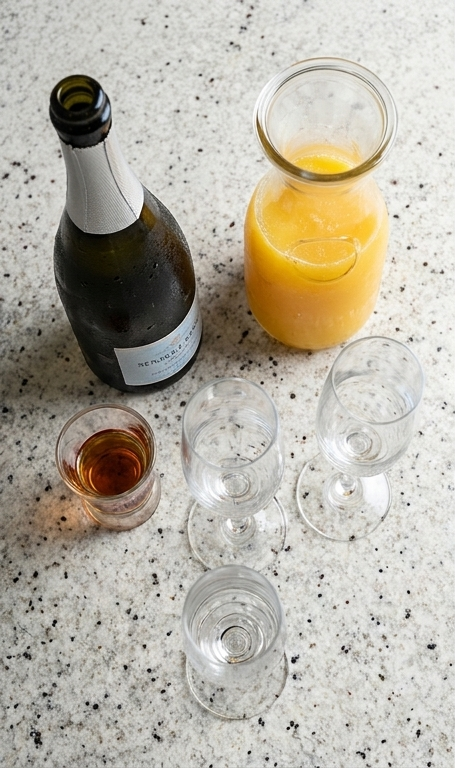
A few small tools make assembling The Best Classic Mimosa easy and elegant. Good glasses and a steady pour matter more than fancy equipment.
- Champagne flutes: Narrow glasses preserve the bubbles and show off the color. If you do not have flutes, use white wine glasses and pour gently.
- Jigger or measuring spoon: Helps if you add Grand Marnier so each glass stays balanced. Use a tablespoon measure as a substitute.
- Citrus juicer: Fresh juice is worth the extra step; a handheld reamer works fine if you do not own an electric juicer.
- Chilling space: A fridge or ice bucket to keep bottles and juice cold. Cold ingredients maintain fizz and brightness.
Step-by-Step Preparation Guide
Step 1: Add Grand Marnier (optional) and pour the sparkling wine
If you’re making Grand Mimosas, add one tablespoon of Grand Marnier into each of eight chilled champagne flutes first; otherwise skip this and proceed with the wine. Next, gently pour chilled dry sparkling wine into each flute until it is half full. Pour slowly to encourage a steady column of fine, effervescent bubbles — note the pale straw-gold liquid, the delicate bead of carbonation rising, and the cool condensation forming on the glass. Aim for even volume in every glass so the subsequent orange juice top will sit consistently across the set.
Step 2: Top with fresh orange juice and finish the mix
Using chilled, freshly squeezed orange juice, top each flute until the liquid reaches just below the rim so the wine and juice marry with a lively shimmer. Pour with a steady hand to preserve effervescence; you’ll see a soft gradient where the golden wine blends into the bright citrus, tiny pulp flecks suspended near the surface, and a thin foamy crown from the juice meeting the bubbles. Taste and adjust: for a brighter, more citrus-forward drink use a higher juice ratio, for more sparkle keep the wine-forward balance.
Step 3: Present the mimosas and serve
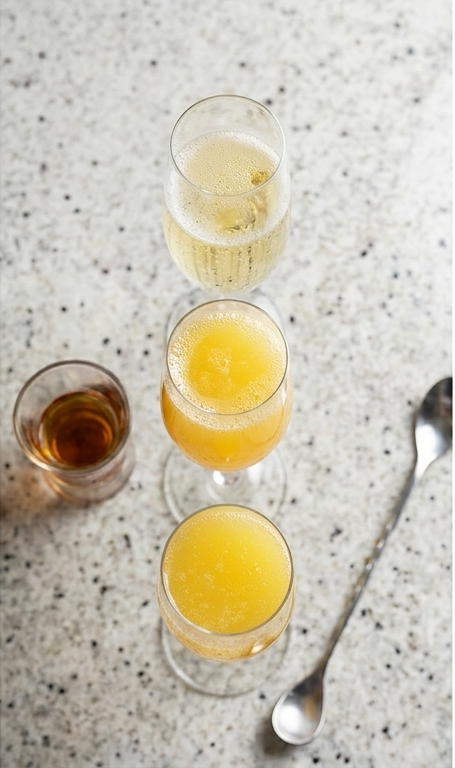
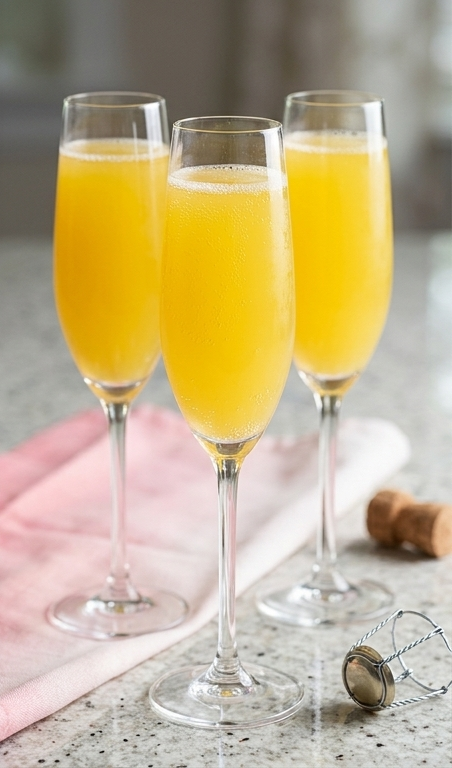
Arrange the finished mimosas as a small cluster for service: three elegant slim flutes in a neat trio or the full set of eight for a larger spread. The final drink should read as sunny, translucent yellow with persistent micro-bubbles rising in delicate streams and a very slight whitening of froth along the rim where juice met wine. Serve immediately while chilled and effervescent, with any used bottle, a jigger, and the popped cork and cage nearby as tasteful, minimal props.
Making It Your Own
I like to treat variations like small experiments. Try swapping the sparkling wine for a drier Cava if you want a brisk, mineral backbone, or pick a fruity sparkling rosé when you want a softer, berry-tinged profile. For a seasonal twist, use blood orange juice in winter for a deeper color and tang. If you need a nonalcoholic option, use a high-quality sparkling water or nonalcoholic sparkling wine and follow the same ratios; add a splash of orange bitters for complexity. For a touch of sweetness, stir a teaspoon of honey into the orange juice when it is warm so it dissolves evenly. Little changes let you tune The Best Classic Mimosa to the mood of the day.
How to Serve
When hosting, set everything up buffet style so guests can help themselves: chilling bottles, a pitcher of fresh juice, and an optional bottle of Grand Marnier. For eight people, plan on one 750ml bottle of sparkling wine and about 3 cups of juice, or scale down for smaller gatherings. Garnish sparingly: a thin orange wheel or a twist on the rim is elegant and simple. For a brunch spread, place mimosas near lighter bites like pastries, smoked salmon, or a fruit platter so the drink complements rather than competes. If you are serving a larger party, prepare jugs of pre-chilled juice and set staff or a friend to top flutes as needed so each glass is fresh and effervescent.
Storage and Reheating Tips
Mimosas are best enjoyed immediately, so storage is always about keeping components rather than the finished drink. Keep the sparkling wine chilled upright in the refrigerator and the orange juice in a covered pitcher for up to 48 hours; fresh-squeezed juice is best used within 24 hours for peak brightness.
If you have leftovers, do not try to re-carbonate a poured mimosa. Instead, pour remaining liquid back into a bottle or sealable container and chill, then top with fresh sparkling wine when ready to serve again. Never heat a mimosa; the bubbles and the character of the wine are lost with heat.
Common Mistakes and How to Avoid Them
One common error is using warm ingredients; warm juice flattens the sparkle quickly. Always chill both wine and juice until just before serving. Another mistake is overfilling the glass; leave a little space so the aromas can lift and the drink stays lively. If you add Grand Marnier, measure carefully so the liqueur does not overpower the balance. Finally, avoid very sweet store-bought juices if you want a crisp, elegant mimosa; fresh juice or a high-quality unsweetened bottled juice is a better choice.
Ready to Try It?
I hope you give The Best Classic Mimosa a try at your next brunch. It is quick, joyous, and forgiving, and with a few small notes of care you will have a drink that feels special without requiring over-the-top effort. Pour slowly, chill well, and enjoy the small ritual of bubbles and sunshine.
Frequently Asked Questions.
- What is the classic ratio for The Best Classic Mimosa? The classic ratio is roughly equal parts sparkling wine to orange juice, but many prefer a 2:1 wine-to-juice ratio for more sparkle.
- Can I use store-bought orange juice? Yes, but freshly squeezed orange juice offers brighter flavor and better aroma.
- Do I need Champagne? No, use Prosecco or Cava for excellent flavor at a friendly price; Champagne is optional.
- How far in advance can I prepare components? Chill the bottles and juice ahead, but assemble flutes just before serving to preserve effervescence.
- Can I make a nonalcoholic version? Absolutely; use a nonalcoholic sparkling wine or fizzy water and keep the same proportions.
The Best Classic Mimosa
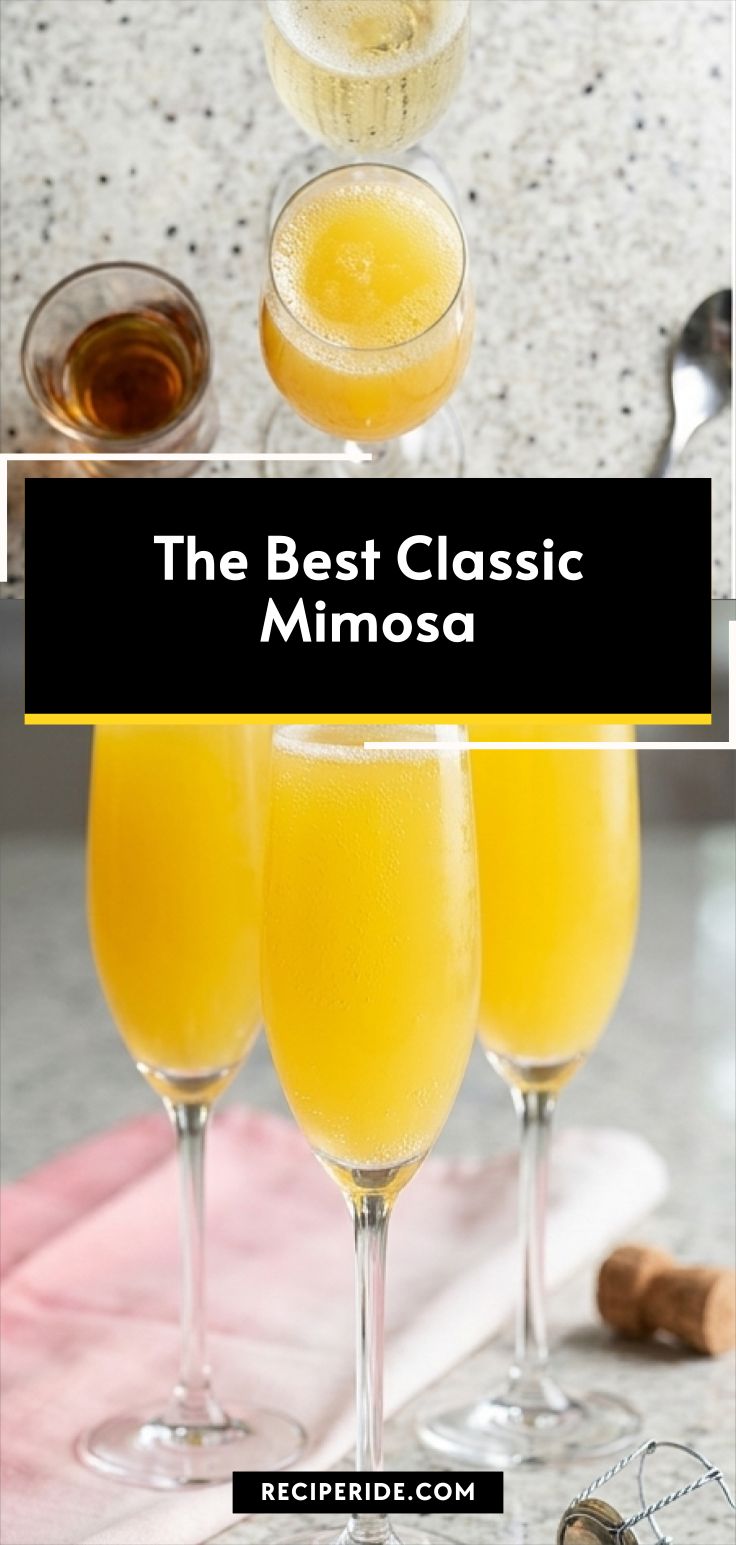
Make The Best Classic Mimosa with chilled sparkling wine and fresh orange juice for effortless brunch sparkle.
Ingredients
Instructions
Step 1: Add Grand Marnier (optional) and pour the sparkling wine
If you’re making Grand Mimosas, add one tablespoon of Grand Marnier into each of eight chilled champagne flutes first; otherwise skip this and proceed with the wine. Next, gently pour chilled dry sparkling wine into each flute until it is half full. Pour slowly to encourage a steady column of fine, effervescent bubbles — note the pale straw-gold liquid, the delicate bead of carbonation rising, and the cool condensation forming on the glass. Aim for even volume in every glass so the subsequent orange juice top will sit consistently across the set.
Step 2: Top with fresh orange juice and finish the mix
Using chilled, freshly squeezed orange juice, top each flute until the liquid reaches just below the rim so the wine and juice marry with a lively shimmer. Pour with a steady hand to preserve effervescence; you’ll see a soft gradient where the golden wine blends into the bright citrus, tiny pulp flecks suspended near the surface, and a thin foamy crown from the juice meeting the bubbles. Taste and adjust: for a brighter, more citrus-forward drink use a higher juice ratio, for more sparkle keep the wine-forward balance.
Step 3: Present the mimosas and serve
Arrange the finished mimosas as a small cluster for service: three elegant slim flutes in a neat trio or the full set of eight for a larger spread. The final drink should read as sunny, translucent yellow with persistent micro-bubbles rising in delicate streams and a very slight whitening of froth along the rim where juice met wine. Serve immediately while chilled and effervescent, with any used bottle, a jigger, and the popped cork and cage nearby as tasteful, minimal props.
Notes
- Chill glasses and ingredients well to preserve effervescence.
- Use freshly squeezed orange juice for brightest flavor.
- Measure Grand Marnier so it does not overpower the balance.
- Do not reheat or try to re-carbonate a poured mimosa.
- Garnish simply with an orange twist or wheel for elegance.